


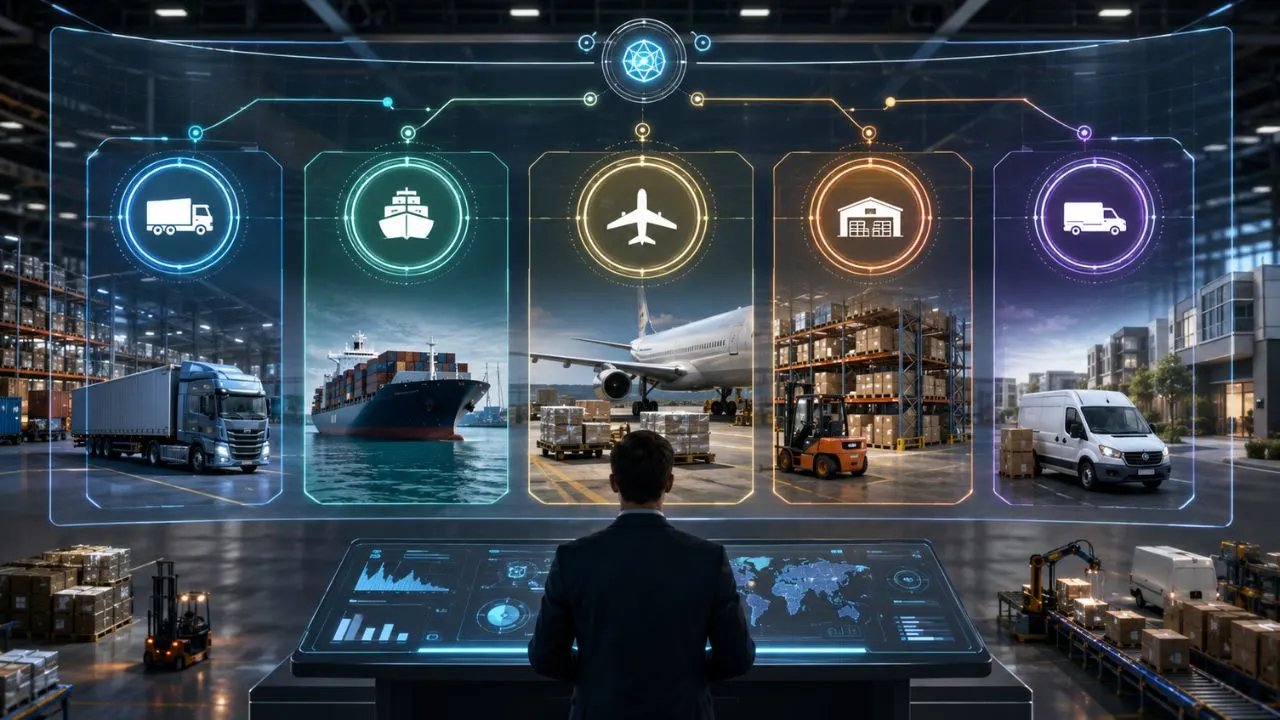
The logistics industry includes many businesses that move, store, handle, track, or distribute goods. Some companies own trucks and warehouses, while others arrange transportation without operating their own vehicles. A business may also manage inventory, pack products, clear shipments through customs, or deliver parcels to customers. Logistics business category classification helps place each company within the category that best matches its main activity.
Correct classification is important because different logistics activities may require different licenses, insurance policies, tax registrations, and safety controls. A trucking company does not operate in the same way as a freight forwarding agency or warehouse provider. The risks, equipment, staff skills, and legal responsibilities can also differ between these businesses. Clear classification helps regulators, customers, insurers, and business owners understand the service being offered.
Major classification systems normally place logistics activities within transportation, warehousing, postal, courier, and transport-support categories. The United States NAICS system places most such activities in Sector 48-49, Transportation and Warehousing. The United Nations ISIC system generally places transport and storage activities within Section H. Both systems classify businesses according to their primary economic activity rather than the word “logistics” in the company name.
A logistics company may perform several activities but still need to select one main business category. The correct choice usually depends on which activity generates the most revenue or represents the company’s main service. Additional activities may be registered under secondary classifications when local rules allow them. This article explains the main logistics business categories and how to select the most suitable classification.
What Is Logistics Business Category Classification?
Logistics business category classification is the process of grouping a company according to the services it performs. The categories may describe transportation, storage, cargo handling, delivery, forwarding, distribution, or supply chain coordination. Government agencies use classification codes to collect data and apply relevant business requirements. Companies also use these categories when registering, purchasing insurance, opening accounts, or bidding for contracts.
A classification system creates a common language for businesses that may use different marketing terms. One company may describe itself as a logistics provider, while another uses terms such as transport operator or distribution partner. Their official category depends on the actual activities completed for customers. This prevents businesses with very different operations from being treated as though they provide the same service.
The NAICS Transportation and Warehousing sector includes businesses that transport passengers or cargo, store goods, and support different transportation modes. The sector also covers related activities such as cargo handling, transport arrangement, and certain logistics services. These services may include inventory control, order fulfilment, packaging, labelling, and pick-and-pack work. The exact code depends on which service forms the company’s primary business activity.
The ISIC system also separates transportation, warehousing, postal activities, courier work, and supporting transport services. Its logistics-related support category includes freight forwarding, shipment organization, transport documentation, customs agency work, and logistics planning. This classification is useful for international comparison, although individual countries may use modified national versions. Business owners should therefore confirm the code required by the authority where the company is registered.
Why Correct Logistics Classification Matters
Correct classification helps a business register under the activity that accurately reflects its daily operations. Registration authorities may use the selected category to determine permits, reporting duties, or operating restrictions. A company transporting hazardous materials may face different requirements from a small parcel delivery service. Choosing an inaccurate category can lead to delays, penalties, rejected applications, or unsuitable insurance coverage.
Classification also affects the way customers understand a logistics company’s capabilities. A manufacturer looking for warehouse management may not need a business that only owns delivery vehicles. An online seller may require order fulfilment, inventory tracking, packing, and last-mile delivery in one service. Clear categories make it easier for customers to compare providers and select an appropriate partner.
Banks, insurers, investors, and contract managers may also examine the official business activity. A freight carrier faces vehicle, driver, cargo, and road liability risks that differ from those of a software-based logistics coordinator. An insurer needs accurate operational information before calculating premiums and coverage limits. Incorrect classification may leave important activities uncovered when a claim occurs.
Government agencies use business classifications to measure employment, production, trade, and industry growth. Consistent categories allow economic information to be compared across locations and time periods. International systems such as ISIC provide a structure that countries can adapt for national statistical use. Accurate reporting therefore supports both individual compliance and wider economic planning.
Freight Transportation Businesses
Freight transportation companies physically move goods between locations using road, rail, air, water, or pipelines. Their customers may include manufacturers, retailers, wholesalers, farms, construction businesses, and individual consumers. The company may operate locally, nationally, or across international borders. The correct classification normally depends on the main mode of transport used.
Road freight businesses operate trucks, vans, trailers, or other vehicles to transport cargo. Their services may include full truckload, less-than-truckload, container hauling, refrigerated transport, or local distribution. Some road carriers own their vehicles, while others work with contracted drivers or vehicle operators. Licensing, vehicle safety, driver qualifications, and cargo insurance are major parts of this category.
Rail, air, and water freight companies belong to separate transport categories because their equipment and operating systems differ. Air cargo businesses move time-sensitive or high-value shipments through aircraft and airport facilities. Water freight companies may transport containers, bulk materials, or other goods through seas, rivers, and coastal routes. Rail freight businesses move cargo through locomotives, wagons, terminals, and connected rail infrastructure.
Pipeline transportation is another distinct category used for products such as crude oil, natural gas, and refined petroleum. The NAICS Transportation and Warehousing sector includes separate subsectors for the major transport modes. ISIC Section H similarly covers scheduled and unscheduled freight transport by road, rail, water, air, and pipeline. Businesses should select the category matching the mode that forms their principal service.
Warehousing and Storage Businesses
Warehousing businesses store goods for customers before the products are sold, processed, transported, or distributed. They may provide short-term storage, long-term storage, inventory management, or specialised handling. Warehouses can serve retailers, manufacturers, importers, exporters, and e-commerce businesses. The service may be charged according to space, weight, pallets, units, or storage time.
General warehousing facilities store products that do not require highly specialised conditions. These goods may include furniture, packaged food, clothing, equipment, spare parts, and household products. The warehouse provider may receive, inspect, label, arrange, count, and release inventory. Some facilities also offer basic packing and order preparation services.
Specialised storage businesses handle goods requiring controlled environments or additional security. Cold storage facilities protect frozen, chilled, or temperature-sensitive products. Other specialised warehouses may store chemicals, agricultural products, vehicles, documents, or high-value goods. These activities may require special equipment, trained staff, monitoring systems, and regulatory approvals.
NAICS places warehousing and storage within Sector 48-49, while ISIC includes warehousing in Division 52. Support services connected with storage may include cargo handling, terminal activities, and transport coordination. A company performing both storage and order fulfilment should classify itself according to its main source of business activity. The service description should clearly explain whether storage, fulfilment, or transportation is the primary operation.
Freight Forwarding Businesses
A freight forwarder arranges the movement of goods without necessarily operating the vehicle, vessel, aircraft, or train. The forwarder connects shippers with carriers and coordinates the journey from origin to destination. Services may include route planning, carrier selection, shipment booking, documentation, and cargo consolidation. The company acts as an organizer and intermediary within the transportation process.
International freight forwarders often manage several transport modes during one shipment. A container may move by truck, ship, rail, and another truck before reaching the customer. The forwarder coordinates these stages and communicates with carriers, customs agents, terminals, and cargo owners. This category is therefore different from a carrier that physically performs one transport stage.
Freight forwarding may also include preparing waybills, arranging insurance, tracking shipments, and managing delivery schedules. Some businesses specialise in air freight, sea freight, road freight, or project cargo. Others provide multimodal forwarding across several countries and transport systems. Their value comes from planning and coordinating movement rather than simply providing storage or vehicle capacity.
ISIC Class 5229 specifically includes freight forwarding, transport arrangement, logistics planning, customs agency work, and transport documentation. It also includes organizing consignments and arranging transport by rail, road, sea, or air. Businesses providing these activities are generally classified under supporting transportation services rather than physical freight carriage. Local authorities may use a different code number, but the underlying activity remains transport coordination.
Courier and Parcel Delivery Businesses
Courier businesses collect, transport, and deliver documents, packages, and smaller shipments. Their services may cover same-day delivery, scheduled delivery, express parcels, or international shipments. Customers may include individuals, offices, online sellers, healthcare providers, and retail businesses. Speed, tracking, proof of delivery, and customer communication are central parts of this category.
Local courier companies often use motorcycles, bicycles, cars, or small vans. They may deliver food, legal documents, medicine, retail products, or business packages within one city. These companies differ from traditional freight carriers because they usually handle smaller items and shorter delivery windows. Their operations may depend heavily on route planning and mobile delivery applications.
Postal and parcel companies can operate larger networks involving sorting centres, delivery hubs, and long-distance transport. Shipments may pass through several facilities before reaching the final recipient. Some operators provide both standard postal services and premium express delivery. The correct classification depends on whether the business mainly performs postal, courier, freight, or platform services.
ISIC Division 53 includes postal and courier activities involving the collection, transport, and delivery of letters and parcels. NAICS also places courier and messenger activities within the wider Transportation and Warehousing sector. Businesses should check whether food delivery, passenger transport, and general courier work have separate local categories. The company’s actual service should guide registration rather than the type of vehicle used alone.
Third-Party Logistics Businesses
A third-party logistics provider, commonly called a 3PL, manages selected logistics activities for another business. The provider may handle warehousing, transportation, inventory control, order fulfilment, packing, and returns. Customers outsource these tasks so they can focus on manufacturing, sales, product development, or customer service. A 3PL may own logistics assets or combine owned and contracted resources.
E-commerce fulfilment companies are common examples of third-party logistics providers. They receive stock, store products, process online orders, pack items, and arrange final delivery. Their systems may connect directly with online stores and marketplaces. This creates a coordinated service that goes beyond basic warehouse space.
Some 3PL providers specialise in one industry or type of cargo. A healthcare logistics provider may manage temperature controls, expiry dates, and secure handling. An automotive provider may coordinate parts, production schedules, and factory deliveries. Specialisation allows the company to develop equipment, technology, and procedures for particular customer needs.
Official classification may not always provide one single code called third-party logistics. The company may be classified under warehousing, freight transportation arrangement, fulfilment, or another category based on its primary activity. NAICS notes that logistics services can include inventory management, labelling, packaging, order fulfilment, and transportation arrangement. A 3PL should therefore identify which service represents the largest or most important part of its operations.
Fourth-Party Logistics Businesses
A fourth-party logistics provider, commonly called a 4PL, manages a wider part of the customer’s supply chain. It may coordinate several carriers, warehouses, technology providers, and third-party logistics companies. The 4PL usually focuses on planning, integration, performance management, and strategic control. It may operate without owning trucks, warehouses, or other major logistics assets.
A 4PL provider can serve as the main contact between a customer and several logistics partners. It may select suppliers, negotiate contracts, monitor service levels, and improve network performance. The provider can also combine data from different transport and warehouse systems. This helps the customer view the supply chain through one management structure.
The difference between 3PL and 4PL services is mainly the level of control and coordination. A 3PL commonly performs specific operational tasks such as storage or distribution. A 4PL normally manages several providers and helps design the wider logistics strategy. However, companies sometimes use these labels differently in their marketing.
A 4PL business may be classified as a logistics consultant, transport arranger, supply chain manager, or support service provider. The correct category depends on whether the company mainly provides operational logistics, management services, software, or consulting. ISIC includes planning, designing, and supporting transportation, warehousing, and distribution within logistics support activities. Business owners should describe the service accurately when selecting the final registration code.
Cargo Handling and Terminal Support Businesses
Cargo handling businesses load, unload, transfer, sort, weigh, or temporarily protect goods during transportation. These activities may take place at ports, airports, railway terminals, warehouses, or distribution centres. The company may handle containers, pallets, bulk materials, luggage, or specialised cargo. Equipment can include cranes, forklifts, conveyors, loaders, and weighing systems.
Terminal operators manage facilities where passengers or goods enter, leave, or change transport modes. A freight terminal may provide vehicle access, cargo staging, loading space, documentation support, and security. Port and airport support businesses may also coordinate movement across restricted areas. These services support transportation without necessarily carrying the goods themselves.
Cargo handling must be separated from long-term storage when selecting a business category. Temporary holding during loading or transfer may remain part of cargo handling. Keeping products for customers over a longer period is more likely to be classified as warehousing. Companies performing both activities should identify which service is primary.
ISIC places cargo handling in Class 5224 and includes terminal and infrastructure support within related transport-support classes. Division 52 covers warehousing and support activities such as transport agencies, infrastructure operation, and cargo handling. These categories recognise that transport depends on more than carriers alone. Local classification systems may divide these services further according to the transport mode or facility type.
Cold Chain Logistics Businesses
Cold chain logistics manages products that must remain within controlled temperature ranges. Common goods include frozen food, fresh produce, medicines, vaccines, chemicals, and biological materials. The service may involve refrigerated transportation, cold storage, insulated packaging, and temperature monitoring. A failure at any stage can reduce product quality or make the shipment unsafe.
Refrigerated transport companies use temperature-controlled trucks, containers, aircraft spaces, or other equipment. Drivers and operators may need to monitor temperatures throughout the journey. Records can show whether the cargo remained within the required range. Emergency procedures are also needed when cooling equipment fails.
Cold storage facilities maintain chilled, frozen, or controlled environments for stored goods. They may use sensors, alarms, backup generators, and access controls to protect inventory. Different products can require different temperatures, humidity levels, and handling procedures. Businesses must understand the needs of each product before accepting it for storage.
Cold chain providers may fall under refrigerated freight transportation, warehousing, or specialised logistics categories. The correct classification depends on whether transportation, storage, packaging, or coordination is the main activity. A business offering several cold chain services may need primary and secondary codes. Industry-specific health, food, or pharmaceutical rules may apply in addition to the general logistics classification.
Reverse Logistics Businesses
Reverse logistics manages products moving from customers back toward sellers, manufacturers, repair centres, recyclers, or disposal facilities. It includes returns, repairs, refurbishment, recycling, product recalls, and reusable packaging collection. The direction is opposite to the normal flow of finished goods toward customers. This category has become important for online retail, electronics, manufacturing, and sustainability programs.
A returns management provider may receive returned products and inspect their condition. Items can then be restocked, repaired, repackaged, recycled, or rejected. The provider may also update inventory systems and issue information needed for refunds. Efficient processing helps businesses recover value and improve the customer experience.
Reverse logistics may also involve collecting defective, expired, or recalled products from the market. These goods may need secure transport, separation, documentation, and controlled disposal. Sensitive products can create safety, environmental, or data protection risks. The company must follow the rules applying to the product rather than treating every return as ordinary cargo.
There may not be one universal classification code for reverse logistics. The correct category can depend on whether the company mainly transports, warehouses, repairs, recycles, or disposes of returned goods. A business performing several stages should identify the activity producing the largest share of its value. The service agreement should also define ownership, responsibility, and handling standards for returned products.
E-Commerce Fulfilment and Distribution Businesses
E-commerce fulfilment businesses manage inventory and process orders for online sellers. They receive products, store stock, pick ordered items, pack parcels, and arrange delivery. Their systems may connect with websites, marketplaces, payment platforms, and courier networks. This allows orders to move automatically from the online store to the fulfilment centre.
Fulfilment differs from basic warehousing because it involves regular order processing and customer-specific packing. A traditional warehouse may mainly store pallets or bulk inventory for longer periods. A fulfilment centre usually handles individual units and many small daily orders. Speed, inventory accuracy, and integration with sales systems are especially important.
Distribution businesses move products from manufacturers or central warehouses to stores, dealers, branches, or final customers. They may operate distribution centres, delivery fleets, route-planning systems, and inventory networks. Some distributors purchase and resell products, while logistics providers move goods without taking ownership. Product ownership can affect whether the business belongs mainly to wholesale trade or logistics.
NAICS describes logistics services as potentially including order entry, fulfilment, packaging, labelling, inventory control, and pick-and-pack activities. A fulfilment company may therefore be classified under warehousing or another service category depending on its primary work. A distributor that earns income by reselling goods may require a wholesale or retail category instead. The business model must be examined carefully before selecting a logistics classification.
Customs Brokerage and Trade Support Businesses
Customs brokers help importers and exporters complete procedures required for international trade. They may prepare declarations, classify goods, calculate duties, and communicate with customs authorities. Their work helps shipments meet legal documentation and border clearance requirements. Brokers normally need detailed knowledge of trade rules and product classifications.
Trade support companies may also prepare shipping documents, certificates, permits, and commercial records. They can coordinate with freight forwarders, carriers, ports, warehouses, and government agencies. Missing or inaccurate documents may delay a shipment at the border. Careful documentation is therefore a major part of international logistics.
A customs broker is different from a freight carrier because the broker does not necessarily transport goods. The main service involves representation, documentation, and regulatory coordination. Some freight forwarders also provide customs brokerage as part of a wider logistics package. In that case, the primary activity should determine the main category.
ISIC logistics support activities include customs agency work, procurement of transport documents, and freight forwarding. These services appear within transportation support rather than physical cargo carriage. National authorities may require professional licensing in addition to ordinary business registration. Companies should confirm local customs rules before advertising brokerage or clearance services.
Logistics Technology and Software Businesses
Logistics technology companies provide software used to manage transportation, warehouses, routes, orders, or deliveries. Their products may include transport management systems, warehouse management systems, tracking platforms, and delivery applications. These tools can connect businesses, carriers, drivers, warehouses, and customers. The company may charge subscriptions, transaction fees, or software licensing payments.
A digital freight platform can match cargo owners with available carriers. It may provide pricing, booking, tracking, documentation, and payment tools. However, the platform may not physically carry or store the shipment. This difference can place the company in a software or information-service category rather than transportation.
Some technology companies take greater responsibility for the logistics transaction. They may set prices, select carriers, collect customer payments, or guarantee delivery performance. These activities can make classification more complicated because the business combines software and logistics coordination. Contracts and operating practices should show whether the company acts as a broker, carrier, agent, or technology provider.
A business should not select a transportation category simply because its software serves the logistics industry. Classification normally follows the company’s own primary economic activity. A software developer may belong to a technology category even when every customer is a transport company. Professional advice may be needed when the platform also arranges or controls physical shipments.
How NAICS Classifies Logistics Businesses
NAICS is used in the United States, Canada, and Mexico to classify establishments by economic activity. The system organizes businesses into sectors, subsectors, industry groups, industries, and national industries. Most physical logistics activities appear within Sector 48-49, Transportation and Warehousing. The detailed code depends on the service and transportation mode.
Transportation categories cover road, rail, air, water, transit, pipeline, and other transport activities. Warehousing, courier services, and transportation support activities also have their own classifications. A business may need to review several detailed codes before finding the closest match. The official description and exclusions are more useful than selecting a code based only on its title.
NAICS generally classifies an establishment according to its primary activity. A company operating separate facilities may classify each establishment differently when the activities are distinct. For example, a warehouse and a trucking terminal owned by one company may not always use the same establishment code. Registration and reporting rules determine whether separate codes are required.
The current detailed U.S. system is the 2022 NAICS structure, although proposed updates for 2027 are under consideration. Businesses should use the version requested by the specific agency, bank, insurer, or contract form. An older form may still refer to a previous NAICS edition. The official Census Bureau search tool should be checked before submitting an important classification.
How ISIC Classifies Logistics Businesses
ISIC is an international system maintained by the United Nations for classifying economic activities. It helps countries produce comparable statistics and design national classification systems. Transportation and storage activities are generally placed within Section H. This section covers passenger and freight transport, storage, cargo handling, and related support services.
Land transport appears in Division 49, water transport in Division 50, and air transport in Division 51. Warehousing and transport-support activities appear in Division 52. Postal and courier activities appear in Division 53. These divisions separate physical movement from storage, delivery, and supporting operations.
ISIC Class 5229 covers other transportation support activities closely connected with logistics. It includes freight forwarding, transport organization, customs agents, transport documents, and logistics planning. This category is particularly relevant to companies that coordinate movement without operating the main transport asset. It also covers support for transportation, warehousing, and distribution operations.
Countries may adapt ISIC into national systems with different names or additional levels of detail. A code used in one country may not match the code required in another country. International businesses should therefore review the classification rules in every registration location. ISIC remains useful as a broad reference for understanding where logistics activities normally belong.
How to Choose the Right Logistics Business Category
Begin by writing a clear description of what the company does for its customers. List each service, the equipment used, the staff involved, and the way the company earns revenue. Separate physical transport, storage, coordination, consulting, and software activities. This exercise usually reveals which activity should be treated as primary.
Next, compare the business description with the official classification definitions. Read the included activities, excluded activities, and notes attached to each possible code. A similar-sounding title may be incorrect when the detailed description excludes the company’s actual service. Official definitions should take priority over informal industry labels.
Review revenue, employee time, assets, and customer contracts when the business performs several activities. The largest revenue source may provide a useful indication of the primary category. However, the authority may use another test based on employment, output, or the nature of each establishment. Ask the relevant registration office when the official method is unclear.
Keep written records explaining why the selected code was chosen. These records can help when applying for insurance, finance, licenses, or government contracts. Review the classification when the business adds a new major service or changes its operating model. A company that begins as a broker may need a different category after purchasing vehicles and directly carrying freight.
Common Logistics Classification Mistakes
One common mistake is selecting a broad logistics code without reviewing the detailed activity description. The term logistics can include transport, warehousing, forwarding, fulfilment, software, and consulting. These services may belong to different official categories. A broad description can therefore hide the company’s actual responsibilities and risks.
Another mistake is confusing freight forwarding with freight transportation. A forwarder normally arranges transport, while a carrier physically moves the cargo. Some companies perform both activities, but the roles remain legally and operationally different. Registration, contracts, and insurance should accurately reflect which role the company performs.
Businesses may also classify themselves as logistics providers when their main activity is wholesale distribution. A wholesaler usually purchases goods and resells them, while a logistics provider handles goods for customers. Ownership of inventory and the source of revenue can change the correct category. The company should examine its business model rather than focusing only on warehouse and delivery activities.
A final mistake is keeping an old classification after the business has changed. A small courier may later add warehouses, freight forwarding, customs support, or a software platform. The original category may no longer represent the primary operation. Regular reviews help keep registrations, insurance policies, contracts, and licenses accurate.
Future Trends in Logistics Business Classification
Logistics businesses are combining services that were previously offered by separate companies. A modern provider may manage warehousing, fulfilment, delivery, returns, and technology through one contract. This creates classification challenges because one company can operate across several traditional categories. Authorities may continue refining classification rules as integrated business models expand.
Digital freight platforms are also changing the difference between software providers and transport intermediaries. Some platforms only provide technical tools, while others control pricing, carrier selection, and customer transactions. Their legal and economic role depends on the level of responsibility they accept. Classification must therefore examine real operations rather than marketing language.
Automation is changing warehouse, terminal, and delivery activities. Robots, sensors, artificial intelligence, and tracking systems can improve speed and visibility. However, technology does not automatically change the company’s primary business category. A highly automated warehouse is still mainly a warehousing business when storage and fulfilment remain its central services.
Sustainability services may create additional specialised logistics activities. Companies are expanding electric delivery, reusable packaging, route optimization, recycling, and reverse logistics programs. These services can overlap with transport, technology, waste management, and consulting categories. Businesses should review classification whenever a new service becomes a major source of revenue.
Conclusion
Logistics business category classification identifies the main economic activity performed by a company. Common categories include freight transportation, warehousing, courier services, forwarding, cargo handling, and customs support. Newer business models may also involve fulfilment, reverse logistics, supply chain management, and digital platforms. The correct category depends on the actual service rather than the company name.
Transportation businesses are generally classified according to the mode used to move cargo. Warehousing companies are classified according to storage and related fulfilment activities. Freight forwarders and brokers usually fall within transportation support because they arrange rather than physically perform transport. Courier and postal businesses have separate categories for collecting and delivering letters or parcels.
NAICS and ISIC provide recognised structures for understanding logistics classifications. NAICS places most logistics operations within Sector 48-49, Transportation and Warehousing. ISIC places transportation and storage within Section H and divides activities into more detailed classes. National systems may adapt these structures, so businesses must check local rules before registration.
Business owners should describe every service, identify the primary revenue activity, and compare it with official definitions. Secondary categories may be appropriate when the company performs several significant services. The classification should be reviewed when operations, assets, or revenue sources change. Accurate classification supports licensing, insurance, taxation, reporting, customer trust, and long-term business growth.
Frequently Asked Questions
What category does a logistics business fall under?
Most logistics businesses fall under transportation, warehousing, courier, or transportation-support categories. The correct category depends on the company’s primary service and local classification system.
Is freight forwarding the same as freight transportation?
No, freight forwarders normally arrange shipments, while freight carriers physically move the cargo. A company performing both services may require primary and secondary activity codes.
What is the NAICS category for logistics?
Most U.S. logistics activities appear within NAICS Sector 48-49, Transportation and Warehousing. A more detailed code is selected according to transport, storage, courier, or support activities.
What is the ISIC category for logistics?
Most logistics activities appear within ISIC Section H, Transportation and Storage. Freight forwarding and logistics coordination commonly fall under transportation-support activities.
Can one logistics company have several classifications?
Yes, a company may use one primary classification and additional secondary codes when it performs several major activities. The exact approach depends on local registration and reporting rules.