


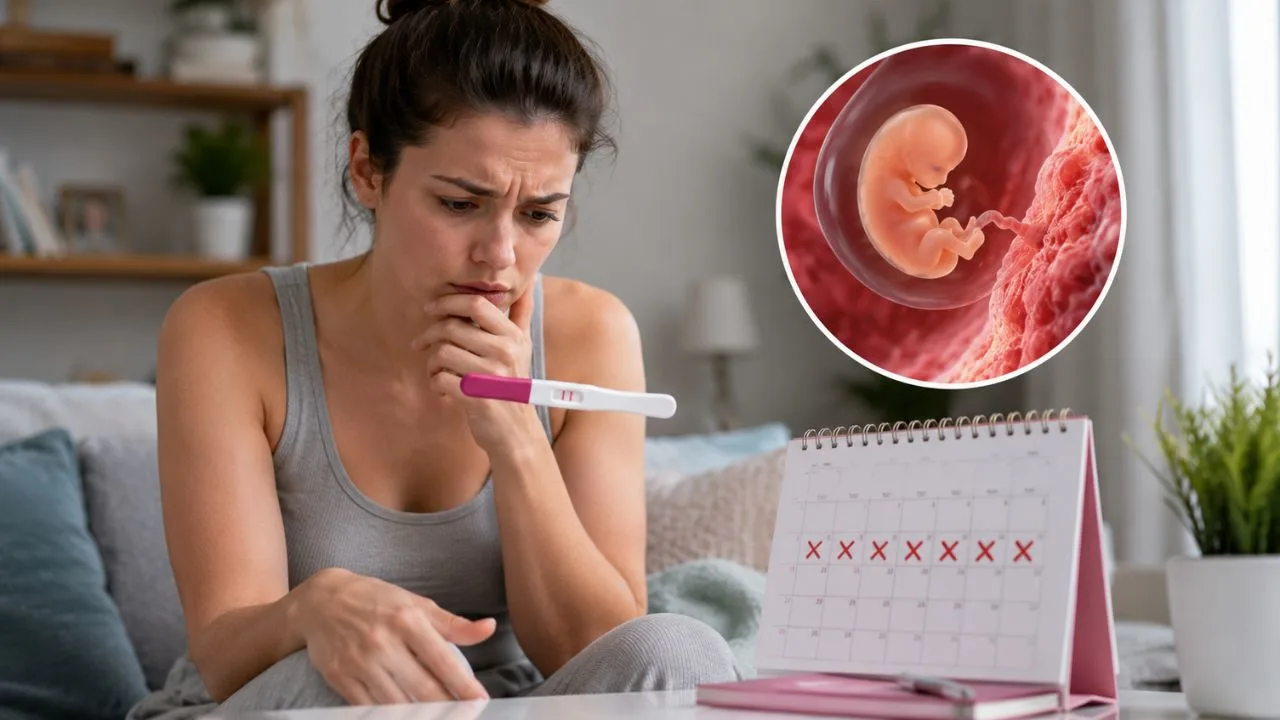
Can You Get Your Period and Still Be Pregnant in the First Month?
Noticing bleeding around the time your period is due can make pregnancy difficult to understand. You may assume the bleeding confirms that you are not pregnant, especially when it looks similar to your usual menstrual flow. However, some people experience spotting or bleeding during the first weeks of pregnancy.
You cannot have a true menstrual period while an ongoing pregnancy is developing. Menstruation occurs when pregnancy has not happened and the uterus sheds its lining. During pregnancy, hormonal changes maintain that lining so it can support the developing pregnancy rather than being released as a normal period.
However, vaginal bleeding can still happen during the first month of pregnancy. Light implantation-time spotting, changes in the cervix, bleeding after sex, infection, or a small collection of blood near the pregnancy may be responsible. Bleeding can also be a warning sign of miscarriage or ectopic pregnancy.
The appearance of blood alone cannot tell you whether you are pregnant or whether the pregnancy is healthy. A home pregnancy test, your symptoms, and sometimes blood tests or an ultrasound are needed. This guide explains how early-pregnancy bleeding differs from a period and when medical care is necessary.
Can You Have a Period and Still Be Pregnant?
No, you cannot have a true menstrual period during an ongoing pregnancy. A period is the shedding of the uterine lining that normally occurs when an egg has not been fertilized or a pregnancy has not implanted. Pregnancy hormones interrupt the menstrual cycle and help maintain the uterine lining.
You can, however, experience bleeding that appears at approximately the same time your period would normally arrive. Because of this timing, many people initially mistake early-pregnancy spotting for a light or unusual period. They may not realize they are pregnant until another expected period does not appear.
First-month bleeding may be pink, red, or brown and can range from a few spots to a flow that requires a pad. Some bleeding lasts only a few hours, while other episodes come and go over several days. Its appearance does not reliably identify the cause.
The safest wording is that you can bleed and still be pregnant, but you cannot continue having normal menstrual periods during pregnancy. Any bleeding after a positive pregnancy test should be reported to a qualified healthcare professional, even when it is light and painless.
What Does “The First Month of Pregnancy” Mean?
Pregnancy is usually dated from the first day of your last menstrual period rather than the day fertilization occurred. This means the first two weeks of a typical 28-day pregnancy timeline happen before ovulation and conception have taken place.
Fertilization usually occurs around the middle of the menstrual cycle, although the timing varies. The fertilized egg then travels toward the uterus and begins attaching to the uterine lining several days later. By the time your next period is due, you may already be considered approximately four weeks pregnant.
This dating system explains why someone may call bleeding in the “first month” a period. The bleeding may occur near week four, when the next menstrual period was expected. If it is lighter or shorter than usual, pregnancy may still be possible.
Irregular cycles make the timeline harder to estimate. Ovulation can occur earlier or later than expected, especially with stress, illness, breastfeeding, polycystic ovary syndrome, recent contraception changes, or naturally unpredictable periods. Testing is more reliable than calculating pregnancy from symptoms alone.
Why Does a True Period Stop During Pregnancy?
During a normal menstrual cycle, the uterine lining thickens in preparation for a possible pregnancy. If pregnancy does not occur, hormone levels decline, and the lining breaks down. Blood and tissue then leave the body through the vagina as a menstrual period.
When pregnancy begins, the body produces human chorionic gonadotropin, commonly known as hCG. This hormone supports continued progesterone production during early pregnancy. Progesterone helps maintain the uterine lining instead of allowing it to shed in the usual menstrual pattern.
A normal period would involve losing much of the lining needed to support an implanted pregnancy. That is why regular menstruation and an ongoing pregnancy do not happen at the same time. Bleeding in pregnancy comes from another source or process.
People sometimes say they had monthly periods throughout pregnancy, but these episodes were technically pregnancy-related bleeding rather than menstruation. Recurrent bleeding should always be discussed with a maternity professional because its cause may change as the pregnancy progresses.
Why Can You Bleed During the First Month of Pregnancy?
Early-pregnancy bleeding has several possible causes, and some are less serious than others. Light spotting may occur around the time the pregnancy attaches to the uterine lining. Increased blood flow to the cervix may also make it bleed more easily.
Sex, a pelvic examination, or a cervical screening procedure can sometimes trigger light bleeding because the cervix becomes softer and contains more blood vessels during pregnancy. The bleeding is often limited, but its cause should not be assumed without considering other symptoms.
Infections affecting the vagina, cervix, or urinary tract may also cause bleeding or blood noticed when wiping. Additional symptoms can include unusual discharge, odor, itching, burning, pelvic discomfort, or pain while urinating or having sex.
More serious causes include miscarriage, ectopic pregnancy, or, rarely, abnormal pregnancy tissue. Sometimes tests do not identify a clear reason for light bleeding, yet the pregnancy continues normally. Because the possibilities vary, the amount of bleeding is only one part of the assessment.
Implantation-Type Spotting
Some people notice light spotting approximately one to two weeks after fertilization. This is commonly called implantation bleeding because it occurs around the time the fertilized egg attaches to the uterine lining. It may happen close to the date a menstrual period was expected.
This spotting is generally described as lighter than an ordinary period. It may appear as a few pink, light-red, or brown spots on underwear or toilet paper. It often lasts for a shorter time and may not become steadily heavier like a typical menstrual flow.
Timing and appearance cannot confirm implantation bleeding. Light spotting may come from the cervix, hormonal changes, infection, or another source. You also cannot determine whether a pregnancy is progressing normally simply because the blood is brown or limited.
Take a pregnancy test when your period is due rather than relying on the spotting pattern. Contact a healthcare professional when bleeding continues, becomes heavier, returns repeatedly, or appears with pain, weakness, fever, dizziness, or other concerning symptoms.
Cervical Changes and Bleeding After Sex
Pregnancy causes increased blood flow to the reproductive organs, including the cervix. The cervical tissue may become softer and more sensitive than usual. Minor contact can therefore cause small blood vessels near its surface to bleed.
Light spotting may appear after penetrative sex, a pelvic examination, or another activity that irritates the cervix. It may be pink or red initially and become brown as the older blood leaves the body. It often stops without developing into heavy flow.
Bleeding after sex does not automatically mean the pregnancy has been harmed. Sex is generally not a cause of miscarriage in an uncomplicated pregnancy. However, bleeding should still be reported, particularly when it is more than spotting or occurs repeatedly.
Avoid assuming the cervix is responsible when you also have significant cramping, one-sided pelvic pain, dizziness, fever, unusual discharge, or heavy bleeding. Those symptoms may indicate an infection, pregnancy complication, or another condition requiring assessment.
Can Hormonal Changes Cause Period-Like Bleeding?
Hormonal changes in very early pregnancy may contribute to spotting around the date a period was expected. This may create a confusing pattern in which someone experiences pregnancy symptoms but also sees a small amount of menstrual-like blood.
Hormonal spotting is usually lighter and shorter than the person’s regular period. However, there is no reliable home method for determining that hormones are the cause. Bleeding patterns can overlap between harmless spotting, miscarriage, and ectopic pregnancy.
Breakthrough bleeding can also occur when someone recently stopped hormonal contraception, missed pills, used emergency contraception, or has an irregular menstrual cycle. In those situations, the bleeding may be unrelated to pregnancy while pregnancy remains possible.
A pregnancy test is therefore important whenever there has been unprotected sex or contraceptive failure. Do not use the presence of bleeding as proof that emergency contraception worked or that your usual birth-control method has completely prevented pregnancy.
What Is a Subchorionic Hematoma?
A subchorionic hematoma is a collection of blood between the pregnancy membranes and the wall of the uterus. It may cause light spotting, a heavier flow, or no visible bleeding at all. The collection is often discovered during an early ultrasound.
The amount and color of bleeding can vary. Some people experience one episode, while others have intermittent brown or red discharge. A small collection may gradually be reabsorbed without requiring specific treatment.
The effect on pregnancy depends on factors such as the hematoma’s size, position, symptoms, and stage of pregnancy. Many pregnancies continue normally, but larger collections or ongoing bleeding may require closer monitoring by a maternity professional.
An ultrasound is needed to identify this condition; symptoms alone cannot diagnose it. Follow the instructions provided by your clinician, and seek prompt care when bleeding becomes heavy or is accompanied by worsening cramps, weakness, dizziness, or severe pain.
Can Bleeding Mean a Miscarriage?
Bleeding is one possible sign of early pregnancy loss, but not every person who bleeds is miscarrying. Light spotting is relatively common during the first trimester, and many pregnancies continue after an episode of bleeding.
Bleeding associated with miscarriage may become heavier than spotting and can be accompanied by menstrual-like cramps, lower-back pain, clots, fluid, or pregnancy tissue. Pregnancy symptoms may decrease, although symptoms naturally change and cannot confirm a loss.
A miscarriage cannot be diagnosed from bleeding alone. Healthcare professionals may use ultrasound findings, pelvic examination, and repeated hCG blood tests to determine whether the pregnancy is developing as expected.
Contact a healthcare professional promptly when bleeding becomes similar to or heavier than a period, continues for more than a day, or occurs with cramps. Seek urgent help for severe pain, faintness, rapid weakness, or bleeding that quickly soaks through pads.
Could Bleeding Be an Ectopic Pregnancy?
An ectopic pregnancy occurs when a fertilized egg implants outside the main cavity of the uterus, most commonly within a fallopian tube. The pregnancy cannot continue normally and may cause dangerous internal bleeding if the tube ruptures.
Early symptoms may include vaginal bleeding, a missed period, and lower-abdominal or pelvic pain. The discomfort may be stronger on one side, although pain patterns vary. Some people initially have only mild symptoms or no clear warning signs.
A ruptured ectopic pregnancy may cause sudden severe abdominal pain, shoulder-tip pain, rectal pressure, dizziness, fainting, weakness, or collapse. This is a medical emergency that requires immediate treatment.
Any person who could be pregnant and has bleeding with one-sided pain, shoulder pain, dizziness, or faintness should seek urgent assessment. A low or negative home test taken very early does not make severe symptoms safe to ignore.
How Is Pregnancy Bleeding Different From a Period?
A typical period often begins lightly, becomes heavier, and then gradually decreases over several days. It may include familiar cramps and follow your usual cycle timing. Early-pregnancy spotting is often lighter, shorter, or noticeably different from your regular menstrual pattern.
Pregnancy spotting may consist of a few pink or brown marks rather than enough blood to fill a pad. It may stop and restart or appear only when wiping. However, pregnancy-related bleeding can sometimes be red or heavy, so color and amount are not perfect guides.
Clots are more common during a heavier menstrual flow or miscarriage, but small clots can occur for different reasons. Brown blood usually means the blood took longer to leave the body; it does not prove that the cause is harmless.
Consider the full picture, including whether the flow matches your normal period, whether contraception failed, and whether you have pregnancy symptoms. Only a pregnancy test and appropriate clinical evaluation can provide a dependable answer.
Can Pregnancy Bleeding Be as Heavy as a Period?
Some people experience pregnancy bleeding that resembles a menstrual period. The flow may be red, last several days, or require pads. A person can therefore be pregnant even when the bleeding initially seems more substantial than spotting.
Heavier bleeding is less consistent with simple implantation-time spotting and deserves prompt medical advice. It may be related to a subchorionic bleed, miscarriage, ectopic pregnancy, cervical condition, infection, or another cause.
The speed at which pads become soaked matters. Bleeding that rapidly fills a pad, passes large clots, or continues increasing requires urgent evaluation, especially when combined with significant pain, dizziness, faintness, or weakness.
Do not use tampons or menstrual cups to measure unexplained pregnancy bleeding. A pad makes it easier to monitor the amount and reduces internal contact while you are waiting for advice. Record how often you need to change it.
When Should You Take a Pregnancy Test?
Most home pregnancy tests can be used from the first day your period is missed. By this point, many pregnancies have produced enough hCG to be detected in urine when the test is performed correctly.
If you do not know when your period is due, take a test at least 21 days after the last episode of unprotected sex. This timing is more reliable than trying to identify pregnancy by spotting, breast tenderness, nausea, or other symptoms.
Follow the product instructions carefully, including how long to expose the test to urine and when to read the result. Reading it too early or much later than directed can lead to confusion.
Testing too early can produce a negative result even when pregnancy has begun. If the result is negative but the bleeding was unusual, your period remains absent, or pregnancy symptoms continue, repeat the test after a few days.
Can You Get a Negative Test and Still Be Pregnant?
Yes, a pregnancy test may be negative when it is performed before enough hCG has entered the urine. Late ovulation can make someone less far along than expected, even when their calendar suggests the period should already have started.
Diluted urine and incorrect test use may also contribute to a false-negative result. Although many tests work at any time of day, using urine after a long hold may help when testing very early because it can contain a higher concentration of hCG.
Repeat the test after a few days if pregnancy remains possible. hCG usually increases during early pregnancy, which may make a later test easier to interpret. Confirm the expiration date and use a new test according to its exact directions.
Contact a healthcare professional when repeated tests are negative but the period does not arrive, or when you have persistent pain or unusual bleeding. Other hormonal, gynecological, or medical conditions can also delay menstruation.
What Should You Do After a Positive Test and Bleeding?
Contact an obstetrician, midwife, primary care clinician, or local early-pregnancy service for advice. Explain how far along you may be, when the bleeding began, its color and amount, and whether you have pain, dizziness, fever, discharge, or other symptoms.
Use a pad to monitor the flow and note whether it is becoming lighter or heavier. Record any clots or tissue and the number of pads used. This information can help the healthcare team determine how urgently you need assessment.
Do not blame yourself or assume that ordinary movement caused the bleeding. Normal daily activity usually does not cause an early pregnancy loss. Avoid starting bed rest, progesterone, pain medicine, or another treatment unless a clinician advises it.
If you know that your blood type is Rh negative, mention it when reporting the bleeding. Recommendations about anti-D immunoglobulin depend on the pregnancy stage, the amount of bleeding, local clinical guidance, and your individual circumstances.
How Doctors Evaluate Early-Pregnancy Bleeding
The healthcare professional will ask about the date of your last period, pregnancy test results, previous pregnancies, ectopic-pregnancy risk factors, bleeding pattern, and pain. They may also ask about contraception, fertility treatment, infection symptoms, and blood type.
A urine or blood pregnancy test may be performed. Blood testing can measure the level of hCG, and a repeat sample may be needed to understand how the level is changing. A single hCG number cannot always determine whether a pregnancy is healthy.
An ultrasound may be performed through the abdomen or vagina to look for the pregnancy’s location and development. In the earliest weeks, it may be too soon to see a pregnancy clearly, even when the pregnancy test is positive.
When the findings are uncertain, the clinician may arrange repeat blood tests and another ultrasound. Follow-up is important until the pregnancy’s location and progress are confirmed, particularly when ectopic pregnancy has not been ruled out.
What Can You Safely Do While Waiting for Advice?
Use pads rather than tampons or menstrual cups so you can monitor the bleeding. Change pads regularly, wash normally, and avoid placing unprescribed products inside the vagina. Note the color, amount, duration, pain, and any other symptoms.
Rest when you feel tired, but strict bed rest does not guarantee that bleeding will stop or prevent miscarriage. Gentle daily movement is generally acceptable unless your healthcare professional gives you different instructions based on your condition.
Drink normally and eat regular meals. Bleeding and worry can make you feel weak or nauseated, but severe dizziness or faintness should not be managed only with food and water. It may indicate significant blood loss or internal bleeding.
Before taking pain medicine, check which options are appropriate during pregnancy. Acetaminophen may be suitable for many people, but personal conditions and other medicines matter. Avoid using leftover prescriptions or hormonal medication without professional guidance.
When Does Bleeding Require Emergency Care?
Seek emergency care for severe or worsening abdominal or pelvic pain, particularly when it is concentrated on one side. Sudden pain can signal internal bleeding or another urgent pregnancy complication.
Shoulder-tip pain, dizziness, fainting, unusual weakness, confusion, or collapse are serious warning signs. These symptoms can occur when an ectopic pregnancy ruptures and blood irritates structures inside the abdomen.
Heavy bleeding also requires immediate assessment. Warning signs include rapidly soaking through a pad, passing large amounts of blood or tissue, or feeling faint and unwell while the bleeding continues.
Call emergency services rather than driving yourself when you may lose consciousness or cannot safely travel. Do not delay because the pregnancy test was faint, the pregnancy is only a few weeks along, or the bleeding initially seemed like a period.
Can You Bleed Every Month During Pregnancy?
Some people report recurring bleeding around the same date each month, but these episodes are not true periods. Once pregnancy begins, the normal cycle of ovulation and menstrual shedding has stopped.
Repeated bleeding may come from cervical sensitivity, infection, a blood collection, placental changes later in pregnancy, or another condition. The cause cannot be determined simply because the bleeding appears to follow a monthly pattern.
Bleeding later in pregnancy has a different range of possible causes than bleeding in the first month. Any new bleeding during the second or third trimester should be reported promptly to the maternity team.
Do not assume repeated bleeding is safe because a previous episode was harmless. Each episode should be assessed according to its amount, timing, associated symptoms, pregnancy stage, and your clinician’s instructions.
Final Thoughts
You cannot have a normal menstrual period and remain pregnant, but you can experience vaginal bleeding during the first month of pregnancy. This bleeding may appear near the date your period was due and can therefore be easy to misinterpret.
Light spotting can occur because of early implantation-time changes, cervical sensitivity, sex, infection, or a small collection of blood. Many people with early spotting continue to have healthy pregnancies, but symptoms alone cannot confirm that everything is normal.
Take a pregnancy test from the first day of a missed period or at least 21 days after unprotected sex when your cycle timing is unclear. Repeat a negative test after a few days when pregnancy is still possible.
Report bleeding after a positive test and seek urgent help for heavy flow, severe cramps, one-sided pain, shoulder pain, dizziness, or fainting. Early assessment is particularly important because an ectopic pregnancy can initially look like an unusual period.
Can you bleed like a period and still be pregnant?
Yes, pregnancy-related bleeding can sometimes resemble a period. However, it is not true menstruation and should be assessed when it is heavy, persistent, painful, or occurs after a positive test.
How do I know if it is my period or pregnancy bleeding?
Pregnancy spotting is often lighter or shorter than a normal period, but the patterns can overlap. Take a pregnancy test when your period is due rather than relying only on color or flow.
Can implantation bleeding fill a pad?
Implantation-type spotting is generally light and should not rapidly soak a pad. Period-like or heavy bleeding may have another cause and should be discussed with a healthcare professional.
When should I test after unusual bleeding?
Test from the first day of a missed period or at least 21 days after unprotected sex if you do not know when your period is due. Repeat the test after a few days if it is negative but pregnancy remains possible.
Does bleeding mean I am having a miscarriage?
No. Early bleeding does not always mean miscarriage, and many pregnancies continue normally. Heavier bleeding, clots, cramps, or worsening pain require prompt medical assessment.