


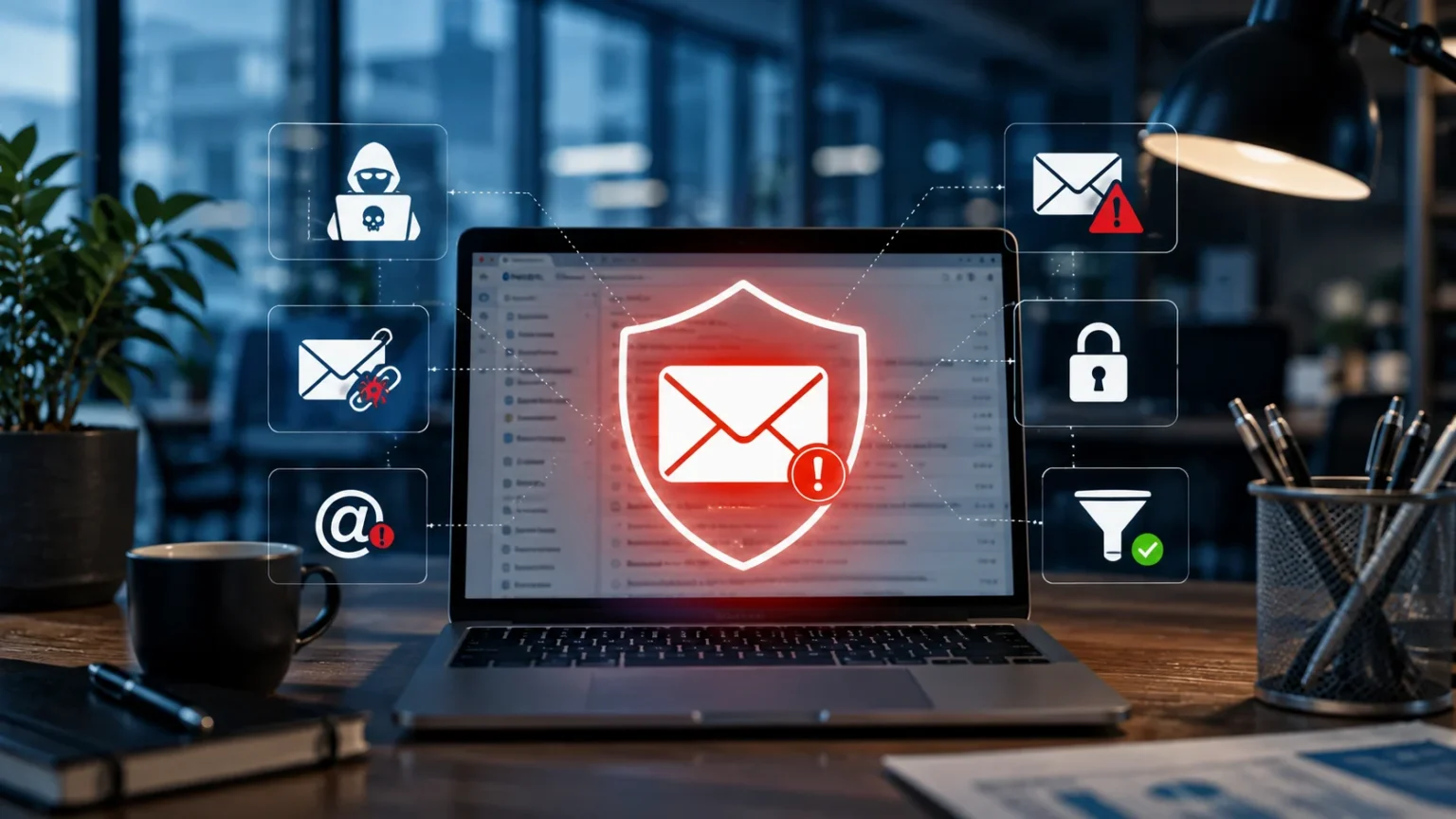
What Is Email Security? Threats and Best Practices
Email remains one of the most widely used communication tools for businesses, employees, customers, and service providers. It is also one of the most frequently targeted channels for cyberattacks because people routinely exchange links, documents, credentials, financial information, and sensitive business data through their inboxes. Attackers understand that convincing one person to click a malicious link or approve a fraudulent payment can sometimes be easier than directly attacking a well-protected network.
Email security refers to the technologies, policies, processes, and user practices designed to protect email accounts, messages, systems, and data from cyber threats. These protections help organizations identify phishing attempts, malicious attachments, account takeovers, impersonation attacks, spam, malware, and unauthorized access. Modern email protection increasingly combines threat intelligence, behavioral analysis, identity controls, authentication standards, and automated detection to identify suspicious messages before they cause harm.
The challenge has become more complex as attackers improve social engineering techniques and use artificial intelligence to create believable messages at scale. A fraudulent email may copy a company’s tone, imitate an executive, reference real projects, or create a convincing payment request. Traditional spam filters remain useful, but organizations now need layered email security strategies that consider sender identity, message content, user behavior, malicious links, attachments, and abnormal account activity.
Understanding email security can help businesses protect employees while reducing the likelihood of data breaches, fraud, malware infections, and credential theft. This guide explains how email security works, the most common email threats, the technologies used to stop attacks, and practical email security best practices organizations can apply. It also explores authentication standards, employee awareness, cloud email protection, and the role of modern security tools in securing business communication.
What Is Email Security?
Email security is the practice of protecting email communication from unauthorized access, manipulation, cyberattacks, and data loss. It covers the email account itself, the infrastructure used to send and receive messages, the content inside messages, and the users who interact with them. Effective protection helps ensure legitimate communication continues while suspicious or malicious activity is identified before it creates significant security or business problems.
Modern email security solutions inspect incoming and outgoing messages for indicators of risk. They may analyze sender information, URLs, attachments, message content, authentication results, reputation data, and unusual communication patterns. When a message appears dangerous, the security system may block it, quarantine it, rewrite suspicious links, remove malicious attachments, or warn the recipient before allowing interaction with the content.
Security also extends beyond message filtering because attackers frequently target the accounts behind email systems. If criminals steal an employee’s password or authentication token, they may access legitimate mailboxes and send fraudulent messages from trusted addresses. Strong identity security, multi-factor authentication, session monitoring, and suspicious login detection therefore play an important role in protecting email environments from account takeover.
Email security should ultimately be viewed as a combination of technology and human behavior. Security platforms can block many threats, but attackers continuously create new techniques designed to bypass automated defenses. Employees need enough awareness to recognize suspicious requests and know how to report them. Organizations that combine technical controls with clear procedures and user education are better positioned to reduce email-related risk.
Why Is Email Security Important?
Email is deeply integrated into everyday business operations, making it a valuable target for cybercriminals. Employees use it to communicate with executives, customers, vendors, financial teams, and external partners. Attackers can exploit these trusted relationships by impersonating familiar people or organizations. A successful email attack may result in stolen credentials, unauthorized payments, sensitive data exposure, malware infections, or wider access to business systems.
Another reason email security matters is that many attacks begin with social engineering rather than technical exploitation. A carefully written message can persuade an employee to open a document, visit a fraudulent login page, or disclose confidential information. Because legitimate business messages often contain similar requests, malicious emails can be difficult to identify. Effective security systems look beyond obvious spam characteristics and evaluate additional context around the message.
Email accounts can also provide attackers with a valuable starting point for broader compromise. After gaining access to a mailbox, criminals may review previous conversations, identify valuable contacts, reset passwords, or impersonate the account owner. They can then send highly believable messages from an authentic address. Protecting email credentials and monitoring unusual mailbox behavior are therefore important parts of preventing larger cybersecurity incidents.
The financial and reputational consequences of email attacks can also be substantial. A fraudulent payment request may create direct financial loss, while stolen customer information can damage trust and potentially create regulatory obligations. Operational disruption may continue long after the original malicious message is removed. Strong email security helps reduce these risks by preventing attacks, detecting suspicious activity early, and supporting faster incident response.
How Does Email Security Work?
Email security begins when a message enters or leaves an organization’s email environment. Security systems evaluate multiple characteristics to determine whether the message should be delivered, blocked, quarantined, or subjected to additional inspection. These checks may include sender reputation, authentication results, attachment types, embedded links, message patterns, known malicious indicators, and similarities to previously identified phishing campaigns.
Many platforms also analyze the relationships between senders and recipients. A message requesting an urgent bank transfer from someone who has never previously contacted the recipient may deserve additional scrutiny. Behavioral analytics can identify unusual communication patterns that traditional signature-based filtering might overlook. This becomes especially important when attackers use clean infrastructure or newly created domains that have not yet developed a negative reputation.
Attachments and URLs receive particular attention because attackers frequently use them to deliver malware or steal credentials. Security platforms may inspect documents, execute suspicious files in isolated environments, analyze redirected URLs, and compare domains against threat intelligence. Some systems continue checking links after email delivery because a previously safe webpage can later be changed to host malicious content.
After delivery, email security can continue through account monitoring and response capabilities. Suspicious login activity, unusual forwarding rules, unexpected message sending, or changes in mailbox behavior may indicate that an account has been compromised. Security teams can investigate these events and take actions such as resetting credentials, removing malicious messages, revoking sessions, or temporarily restricting an account while the incident is contained.
What Are the Most Common Email Security Threats?
Phishing is one of the most common email security threats and involves messages designed to trick recipients into taking unsafe actions. Attackers may impersonate banks, cloud services, delivery companies, employers, or coworkers. The message might ask the user to click a link, download a document, confirm a password, or provide personal information. Effective phishing emails often create urgency so recipients act before carefully examining the request.
Malware is another major threat delivered through email. Cybercriminals may attach malicious files or direct users toward websites that attempt to install harmful software. The malware could steal information, provide remote access, monitor activity, or prepare the system for ransomware. Modern attackers may use password-protected archives, scripts, documents, and other techniques intended to bypass basic attachment scanning and reach the recipient’s device.
Business Email Compromise represents a particularly serious threat because it focuses on trusted business communication. Attackers may impersonate executives, suppliers, accountants, or other people involved in financial transactions. They often request wire transfers, changes to payment information, gift card purchases, or disclosure of sensitive records. These attacks can be difficult to detect because they may contain no traditional malware or obviously malicious links.
Account takeover creates additional risk because attackers gain access to a legitimate mailbox rather than simply imitating one. Once inside, they can study existing conversations and send messages that match normal communication patterns. They may create forwarding rules, delete evidence, or wait for a valuable financial conversation. Strong authentication and account monitoring are therefore essential alongside traditional message filtering.
What Is Phishing in Email Security?
Phishing is a form of social engineering in which attackers send fraudulent messages designed to manipulate recipients into revealing information or completing harmful actions. The message may appear to come from a trusted company, coworker, manager, government agency, or online service. Attackers often imitate familiar branding and communication styles so recipients feel comfortable following the instructions they receive.
A phishing email frequently directs the recipient toward a fraudulent website designed to resemble a legitimate login page. When the user enters credentials, the attacker captures them and may attempt to access the real account. Other phishing messages ask victims to open malicious files or provide information directly by email. The attacker relies heavily on trust, urgency, curiosity, or fear rather than exploiting a purely technical weakness.
Modern phishing campaigns have become more convincing because criminals can research organizations and personalize messages quickly. Attackers may reference job titles, business relationships, recent events, or publicly available information. Artificial intelligence can also help criminals produce polished language and create variations of fraudulent messages at scale. Users can therefore no longer rely on poor grammar or obvious spelling mistakes as dependable warning signs.
Reducing phishing risk requires several layers of protection. Email filtering can block many malicious messages before they reach users, while multi-factor authentication can reduce the impact of stolen passwords. Employees should also learn to verify unexpected requests independently and report suspicious messages. Organizations benefit most when technical controls and user awareness support each other rather than treating phishing solely as an employee problem.
What Is Spear Phishing?
Spear phishing is a more targeted form of phishing that focuses on a specific person, team, or organization. Instead of sending the same generic message to thousands of recipients, attackers gather information about their target and create communication that appears personally relevant. This personalization can make spear phishing significantly more convincing and difficult for recipients to recognize.
Attackers may research company websites, social media profiles, professional networking platforms, press releases, and previous data breaches before writing the message. They can use information such as employee names, job responsibilities, suppliers, executives, or current projects. A fraudulent request that references a real colleague or familiar business activity may appear much more credible than an obvious mass phishing email.
Senior executives, finance employees, system administrators, and people with access to valuable information are frequent targets. However, attackers may also target less senior employees when their accounts provide a pathway into the organization. One compromised user can potentially give criminals access to internal conversations or applications that help them launch additional attacks against more valuable targets.
Defending against spear phishing requires contextual security controls and strong verification practices. Employees should be particularly cautious when a message requests sensitive information, credential entry, financial transfers, or changes to established procedures. Security teams can use behavioral analytics and identity signals to identify unusual communication patterns. Strong authentication adds another defense if an employee is successfully tricked into providing a password.
What Is Business Email Compromise?
Business Email Compromise, often abbreviated as BEC, is an email-based fraud technique in which attackers impersonate or compromise trusted business identities. The goal is commonly to persuade an employee to transfer money, change bank details, disclose sensitive information, or perform another valuable action. Unlike many traditional email attacks, BEC may contain no malware or obviously malicious links.
Attackers frequently spend time researching the organization before attempting fraud. They may identify executives, suppliers, finance employees, payment processes, and important business relationships. Some criminals compromise real email accounts and monitor conversations until the right opportunity appears. They may then insert themselves into an ongoing discussion and provide fraudulent payment instructions that seem to fit naturally within the conversation.
Common examples include fake invoice requests, executive impersonation, payroll changes, supplier payment redirection, and fraudulent property or legal transactions. The attacker often creates urgency or confidentiality to discourage the recipient from checking the request with another person. Because the email may appear to come from a familiar contact, normal spam filtering alone may not reliably stop the attack.
Organizations can reduce BEC risk by combining technical protection with financial verification procedures. High-value payments or changes to banking information should be verified through a trusted communication channel separate from the original email. Domain authentication, impersonation detection, multi-factor authentication, and mailbox monitoring can provide additional protection. Clear business processes are particularly valuable because they prevent one convincing email from becoming sufficient authorization for sensitive transactions.
How Malware Spreads Through Email
Malware can reach users through malicious attachments, embedded links, compromised websites, or legitimate services abused by attackers. A message may claim to contain an invoice, shipping notice, resume, financial statement, shared document, or business proposal. The attachment or link is designed to appear relevant enough that the recipient interacts with it before considering whether the message might be dangerous.
Attackers use many file types depending on the security environment and campaign. Malicious archives, scripts, documents, disk images, executables, and other file formats may be used to hide or deliver harmful code. Some attacks rely on social engineering instructions that convince the user to enable functionality or execute commands manually. This allows criminals to bypass controls that prevent files from running automatically.
Email security platforms can reduce malware risk through attachment scanning, file reputation, sandboxing, content disarm and reconstruction, and behavioral analysis. Sandboxing allows suspicious files to execute in an isolated environment where security systems can observe what they attempt to do. If the file behaves like malware, it can be blocked before reaching the employee or removed from the mailbox.
Endpoint security provides an additional layer when malicious content reaches a device. EDR and endpoint protection platforms can monitor files, scripts, processes, and system behavior after execution. Organizations should also keep operating systems and applications updated because attackers may attempt to exploit known vulnerabilities through email-delivered content. Layered protection ensures that one filtering failure does not automatically become a successful compromise.
What Is Email Spoofing?
Email spoofing involves falsifying sender information so a message appears to come from someone other than the actual sender. Attackers may imitate a company’s domain, executive address, supplier, or trusted online service. The goal is to make recipients believe the message is legitimate so they are more likely to follow instructions, click links, download attachments, or provide sensitive information.
A spoofed address can look convincing because email was not originally designed with strong sender authentication built into every communication. Attackers can take advantage of weakly protected domains or confusing display names to create messages that appear legitimate. Some techniques imitate the visible sender name while using a different underlying address, while others attempt to forge the domain shown in message headers.
Sender authentication standards such as SPF, DKIM, and DMARC help organizations protect their domains from certain spoofing techniques. These standards allow receiving systems to determine whether a message is authorized and whether important parts of the email remained intact during delivery. When properly configured, they can reduce the likelihood that criminals successfully send fraudulent messages using the organization’s domain.
Authentication does not eliminate every impersonation attack because criminals can register lookalike domains or compromise legitimate accounts. For example, they might replace a letter in a company name or use a similar domain designed to fool users. Effective email security therefore combines authentication with domain monitoring, impersonation detection, filtering, employee awareness, and clear processes for verifying sensitive requests.
What Are SPF, DKIM, and DMARC?
Sender Policy Framework, commonly known as SPF, allows a domain owner to specify which mail servers are authorized to send email on behalf of the domain. Receiving email systems can compare the sending server against this published policy. SPF helps detect certain forms of unauthorized sending, although it has limitations and works best when combined with additional email authentication standards.
DomainKeys Identified Mail, or DKIM, adds a cryptographic signature to outgoing email. The receiving system can use information published in DNS to verify the signature and determine whether the signed portions of the message were altered after sending. DKIM provides additional confidence about message integrity and the domain responsible for signing the email.
Domain-based Message Authentication, Reporting and Conformance, known as DMARC, builds on SPF and DKIM by allowing domain owners to define policies for messages that fail authentication and alignment checks. Organizations can request that receiving systems monitor, quarantine, or reject certain unauthenticated messages. DMARC reporting also provides visibility into who is attempting to send email using the organization’s domain.
Implementing these standards correctly can significantly strengthen protection against direct domain spoofing. However, organizations need careful configuration because legitimate third-party services may send email on their behalf. Marketing platforms, customer-support systems, payment services, and business applications may all require authorization. Testing and monitoring help organizations enforce strong policies without accidentally blocking legitimate business communication.
Why Multi-Factor Authentication Matters for Email
Passwords alone can be stolen through phishing, malware, credential stuffing, or previous data breaches. If an email account relies entirely on a password, obtaining that credential may give an attacker immediate access. Multi-factor authentication adds another verification requirement, making it more difficult for criminals to sign in even when they successfully obtain the user’s password.
Different forms of MFA provide different levels of protection. Authentication applications, hardware security keys, passkeys, and other stronger methods generally provide better resistance to phishing than basic password-only access. Organizations should consider phishing-resistant authentication for accounts with access to sensitive information or administrative privileges, particularly when email accounts can be used to reset passwords for other business systems.
Attackers sometimes attempt to bypass MFA through techniques such as repeated approval prompts, stolen session tokens, social engineering, or fraudulent login pages that relay authentication requests. This means MFA should not be treated as an absolute guarantee of account safety. Conditional access, device trust, session monitoring, and suspicious login detection can provide additional layers around the authentication process.
Email accounts deserve particularly strong identity protection because they often provide access to confidential conversations and password reset messages. A compromised mailbox can allow attackers to impersonate employees, access business information, or target trusted contacts. Combining strong MFA with secure recovery procedures and least-privilege access significantly reduces the risk created by stolen email credentials.
How Email Security Protects Against Account Takeover
Account takeover occurs when an unauthorized person gains control of a legitimate user’s mailbox. The attacker may obtain credentials through phishing, password reuse, malware, or stolen authentication sessions. Because messages originate from a genuine account, fraudulent emails sent after takeover can be considerably more convincing than ordinary spoofed messages and may bypass some traditional security filters.
Security teams can detect possible takeover by monitoring abnormal account activity. Unexpected logins, unusual geographic locations, new forwarding rules, suspicious inbox rules, large message downloads, or sudden increases in outbound email can indicate compromise. Behavioral analytics can compare current activity with established patterns to identify changes that deserve investigation.
Strong password policies and multi-factor authentication provide important preventive controls, but session management also matters. Attackers who steal authentication tokens may sometimes maintain access without repeatedly entering credentials. Organizations should have procedures for revoking active sessions, resetting compromised credentials, reviewing authentication methods, and removing malicious mailbox rules after identifying suspicious access.
Users should also know how to report unusual account behavior quickly. Unexpected sent messages, missing emails, password reset notifications, or unfamiliar sign-in alerts may indicate unauthorized activity. Fast reporting allows security teams to investigate while evidence is still available. Rapid containment can prevent a compromised account from being used to attack additional employees, customers, suppliers, or business partners.
What Is Secure Email Gateway Protection?
A Secure Email Gateway, often called an SEG, is a security system that inspects email traffic before messages reach users or leave the organization. It acts as a control point where malicious messages, spam, suspicious attachments, and policy violations can be identified. Gateways may be deployed as cloud services, integrated platforms, or infrastructure connected to an organization’s email environment.
Secure email gateways typically use several detection methods rather than relying on one filter. These can include reputation checks, anti-spam engines, malware scanning, sender authentication, URL analysis, attachment inspection, sandboxing, and threat intelligence. Combining multiple signals makes it more difficult for attackers to bypass protection using simple changes to message content or infrastructure.
Outgoing messages can also be examined for security and compliance concerns. Organizations may use policies to identify sensitive information, prevent certain attachments from leaving the company, or detect compromised accounts sending unusually large amounts of email. Data Loss Prevention capabilities can sometimes be integrated with email gateways to reduce accidental or unauthorized disclosure of important information.
Traditional gateways remain valuable, but modern cloud email environments have encouraged the growth of integrated and API-based security approaches. These tools may analyze messages inside cloud mailboxes and use identity, behavioral, and collaboration data that gateways cannot always access. Many organizations therefore evaluate multiple approaches based on their architecture, risk exposure, and existing email provider.
How AI Is Changing Email Security
Artificial intelligence is influencing both email attackers and defenders. Cybercriminals can use AI tools to produce polished phishing emails, translate messages, personalize communication, and create large numbers of variations quickly. This reduces some of the obvious mistakes that historically helped users recognize fraudulent messages. Attackers can also combine publicly available information with automated writing tools to make targeted emails appear more credible.
Security platforms can use machine learning and AI to analyze message characteristics that are difficult to capture with simple rules. Models may examine communication patterns, writing behavior, sender-recipient relationships, unusual requests, and similarities to known attacks. These contextual signals can help identify suspicious messages even when the sender domain or attachment has not previously been classified as malicious.
AI-assisted security tools can also help analysts investigate email incidents. They may summarize suspicious conversations, identify unusual entities, connect related alerts, and recommend investigative steps. This can reduce repetitive work when security teams receive large volumes of potentially harmful messages. Human analysts still need to validate findings and consider business context before taking disruptive actions.
Organizations should avoid assuming that AI automatically eliminates phishing or social engineering. Attackers and defenders continue adapting to each other’s techniques, and no detection model is perfect. Strong email security still requires authentication, identity protection, filtering, secure processes, user awareness, and incident response. AI becomes most useful when it strengthens these existing layers rather than replacing them.
Email Security Best Practices for Businesses
Businesses should start with strong identity protection for every email account. Multi-factor authentication should be enabled wherever practical, and administrative accounts should receive additional safeguards. Password reuse should be discouraged because credentials exposed through unrelated services can be tested against corporate accounts. Organizations should also maintain secure account recovery procedures so attackers cannot bypass strong login protections through weak reset processes.
Domain authentication should be another priority. Properly configuring SPF, DKIM, and DMARC can reduce unauthorized use of the company’s domain and improve the trustworthiness of legitimate email. Organizations should gradually move toward stronger DMARC enforcement after confirming authorized sending services. Regular monitoring is necessary because marketing platforms and other third-party systems may change over time.
Employees should receive practical security awareness training that reflects current attack techniques. Training should help users identify suspicious requests, verify payment changes, report potential phishing, and understand that professional-looking messages can still be fraudulent. Short and regular education is often more useful than relying only on occasional lengthy training because email threats evolve continuously.
Finally, organizations should connect email security with broader incident response and monitoring. Alerts involving suspicious email, identities, endpoints, and cloud applications should be investigated together when possible. Security teams should maintain clear procedures for compromised mailboxes, malicious messages, and fraudulent financial requests. Prepared organizations can contain incidents faster because responsibilities and response actions are already understood.
How Employees Can Identify Suspicious Emails
Employees should pay attention to the purpose of a message rather than judging safety only by appearance. A well-designed email with correct grammar, company branding, and a familiar display name can still be malicious. Unexpected requests involving passwords, financial information, sensitive documents, gift cards, payments, or urgent account verification deserve additional scrutiny even when the message looks professional.
The sender address should be examined carefully when a request seems unusual. Attackers may use domains that contain subtle spelling changes or additional words that resemble legitimate organizations. However, checking the address alone is not sufficient because genuine accounts can be compromised. Context matters, particularly when a familiar person suddenly requests an action that does not match normal business procedures.
Users should also be cautious with unexpected links and attachments. Hovering over a link may reveal a different destination than the visible text, although sophisticated attacks can still use convincing URLs or compromised websites. When possible, users should navigate directly to trusted services rather than signing in through unexpected email links. Attachments from unknown or unexpected senders should receive similar caution.
Most importantly, employees should have an easy way to report suspicious messages. Security teams can investigate questionable emails more effectively when users report them rather than deleting them silently. Reporting also allows defenders to determine whether the same attack targeted other employees. A supportive reporting culture improves organizational security because early warnings from one employee can protect many others.
How to Secure Email for Remote and Hybrid Workers
Remote and hybrid work creates additional security considerations because employees access email from different networks, devices, and locations. Traditional security controls focused entirely on office networks may provide less coverage when employees work elsewhere. Cloud-based email security, endpoint protection, strong authentication, and conditional access policies can provide more consistent protection regardless of physical location.
Organizations should define which devices are allowed to access corporate email. Managed devices can receive security updates, endpoint protection, encryption, and configuration policies more consistently than unmanaged personal devices. When personal-device access is necessary, organizations may use application-level controls or restricted access policies to reduce the amount of sensitive information stored outside managed environments.
Public and home networks also require consideration. Although modern email services typically use encrypted connections, attackers may still target devices or credentials through fake Wi-Fi networks, malicious websites, or phishing. Employees should avoid bypassing security warnings and use approved security tools when required by the organization. Remote work policies should focus on practical protection without making secure behavior unnecessarily difficult.
Security teams should also monitor authentication activity for unusual patterns. A login from a new country, unfamiliar device, or impossible sequence of locations can indicate stolen credentials or tokens. Risk-based access controls can require additional verification or block suspicious attempts. Combining email security with identity and endpoint visibility provides stronger protection for users working beyond the traditional corporate network.
How Email Security Supports Data Loss Prevention
Email can create data loss risk because sensitive information can leave an organization through attachments, message bodies, or forwarding. Sometimes this happens accidentally when an employee sends information to the wrong person. In other cases, compromised accounts or malicious insiders may intentionally attempt to transfer valuable data outside the organization. Email security controls can help identify and reduce these risks.
Data Loss Prevention systems can inspect outgoing messages for information matching defined policies. Depending on organizational requirements, these policies may identify financial records, personal information, confidential documents, customer data, or other protected content. The system can warn the user, require approval, encrypt the message, quarantine it for review, or prevent delivery when a policy violation is detected.
Context is important because not every message containing sensitive information represents a security incident. Employees may legitimately need to send certain information to approved recipients. Effective policies should therefore consider users, destinations, business processes, and data classifications. Excessively strict rules can disrupt legitimate work, while policies that are too broad may fail to prevent meaningful data exposure.
Organizations should combine DLP technology with access controls and user education. Sensitive information should be available only to employees who require it, reducing the amount of data that can be exposed through a single account. Clear instructions about approved sharing methods also help employees make safer decisions. Email DLP works best as one part of a wider information protection strategy.
How Email Security Fits Into Zero Trust
Zero Trust security assumes that access should not automatically be trusted simply because a user appears to be inside an organizational network. Every important request should be evaluated using factors such as identity, device condition, location, risk, and required access. Email security fits naturally into this approach because email accounts represent valuable identities and communication channels that attackers frequently target.
Strong authentication provides one foundation by verifying more than a password before granting mailbox access. Conditional access can add further context by considering the device, location, user risk, or sign-in behavior. A legitimate password used from an unusual device may trigger additional verification. These controls reduce the likelihood that stolen credentials alone provide unrestricted access to corporate email.
Zero Trust principles also encourage least-privilege access. Email administrators and service accounts should receive only the permissions necessary for their responsibilities. Excessive mailbox access or administrative privileges can increase the damage caused by compromise. Regular access reviews help organizations identify old accounts, unnecessary permissions, and configurations that no longer reflect current job responsibilities.
Email content itself should also be treated carefully because a message from a familiar account is not guaranteed to be safe. Compromised users can send malicious links or fraudulent instructions from trusted addresses. Zero Trust encourages continuous verification rather than assuming that prior trust remains valid forever. Combining identity, message, endpoint, and behavioral signals creates stronger email protection.
What Are the Limitations of Email Security?
No email security platform can identify every malicious message with complete accuracy. Attackers continuously modify domains, infrastructure, message content, and social engineering techniques to avoid detection. Some highly targeted attacks contain no malicious attachment or link and instead rely entirely on convincing language. Security technologies therefore need to be combined with verification procedures and employee awareness.
False positives can also create operational challenges. Legitimate messages may occasionally be quarantined because they resemble suspicious activity or originate from unfamiliar infrastructure. If filtering is too aggressive, employees may miss important customer or supplier communication. Organizations need processes for reviewing blocked messages while preventing users from casually bypassing security controls when a genuine threat is present.
Encrypted or password-protected content can make automated inspection more difficult. Attackers may intentionally hide malicious files inside encrypted archives and provide the password within the same email. Security platforms increasingly detect suspicious patterns around these techniques, but organizations should still educate employees about unexpected protected attachments. Endpoint defenses provide another opportunity to detect malicious behavior if the file reaches a device.
Email security also cannot compensate for weak business processes. A convincing message can still cause financial loss if one employee has unrestricted authority to change supplier payment details without independent verification. Strong cybersecurity therefore includes procedural controls alongside technology. Organizations reduce risk most effectively when authentication, filtering, employee behavior, financial procedures, and incident response reinforce one another.
How to Choose an Email Security Solution
Organizations should begin by understanding which threats create the greatest risk within their environment. A small company may prioritize phishing and account takeover protection, while a large enterprise may additionally require advanced impersonation detection, data loss prevention, sandboxing, encryption, compliance controls, and integration with security operations platforms. Clear requirements make product comparisons more meaningful.
Detection quality should receive significant attention during evaluation. Security teams should determine how the platform handles phishing, malicious links, suspicious attachments, spoofing, BEC, compromised accounts, and emerging threats. Testing realistic email scenarios can provide better insight than comparing feature lists alone. Organizations should also examine how quickly the provider updates detections when new campaigns and malicious infrastructure appear.
Integration with the existing email and security environment is equally important. The platform should work effectively with the organization’s email provider, identity system, endpoint security, SIEM, XDR, and incident response processes where appropriate. Analysts should be able to investigate suspicious messages without unnecessary manual steps. Strong integration can shorten the time between detection and containment.
Organizations should also evaluate usability, reporting, administration, performance, vendor support, data handling, and total cost. A powerful security platform provides limited value if administrators cannot configure it properly or employees regularly bypass it. A controlled proof of concept can help businesses measure detection accuracy and operational impact before making a larger deployment decision.
What to Do After a Phishing Email Is Reported
When an employee reports a suspected phishing email, security teams should first evaluate whether the message is genuinely malicious. Analysts can inspect the sender, authentication results, URLs, attachments, headers, and related threat intelligence. They should also determine whether the message targeted additional employees. Quickly identifying the campaign’s scope helps prevent other recipients from interacting with the same content.
If the message is confirmed as malicious, organizations should remove or quarantine copies from other mailboxes when their platform supports that capability. Malicious domains, URLs, senders, or file indicators may also be blocked. Security teams should check whether any recipients clicked the link, opened the attachment, provided credentials, or performed the requested action before the message was reported.
Users who entered credentials may need immediate password resets, session revocation, authentication review, and additional account monitoring. If a malicious file executed, endpoint investigation may be required to determine whether malware established persistence or performed other actions. Financial requests require separate verification because attackers may already have attempted to redirect payments or obtain sensitive information.
After containment, teams should use the incident to improve future defenses. Detection rules can be updated, similar messages searched across the environment, and targeted awareness provided when appropriate. The objective should not be to blame users who reported the attack. Fast reporting is valuable because it gives defenders an opportunity to protect the rest of the organization before the campaign succeeds elsewhere.
Building a Layered Email Security Strategy
A strong email security strategy begins with preventing as many malicious messages as possible from reaching users. Spam filtering, malware scanning, URL protection, attachment analysis, sender reputation, domain authentication, and impersonation detection can block different attack techniques. Using multiple detection methods is important because attackers frequently design messages specifically to bypass one type of security control.
The next layer focuses on identity and account protection. Multi-factor authentication, strong recovery methods, conditional access, least privilege, and suspicious login monitoring make it more difficult for attackers to take over legitimate mailboxes. Account protection remains essential even when message filtering is excellent because employees may lose credentials through websites, malware, or services outside the corporate email environment.
User behavior and business procedures create another important layer. Employees should understand how to report suspicious messages, while sensitive processes should require independent verification. Financial transfers, bank account changes, password resets, and confidential data requests should not depend solely on one email. Simple verification procedures can stop attacks that successfully bypass sophisticated technical controls.
The final layer is detection and response after suspicious activity occurs. Organizations need visibility into mailbox activity, endpoint behavior, identity events, and related security alerts. Incident response procedures should explain how to contain compromised accounts and remove malicious messages. Layered email security accepts that prevention will never be perfect and ensures organizations can still detect and respond when an attack gets through.
Final Thoughts on Email Security
Email security remains essential because email combines valuable information, trusted relationships, and frequent human interaction in one communication channel. Attackers use phishing, business email compromise, malware, spoofing, and account takeover because these methods can bypass technical defenses by manipulating people. Organizations therefore need security strategies that protect both email technology and the business processes built around it.
Modern email protection goes far beyond basic spam filtering. Strong defenses combine secure email gateways, behavioral detection, threat intelligence, SPF, DKIM, DMARC, multi-factor authentication, endpoint protection, and account monitoring. Each control addresses a different part of the attack chain. When these technologies work together, organizations gain more opportunities to identify malicious activity before significant damage occurs.
People remain an important part of the defense, but security should not depend entirely on employees recognizing every attack. Phishing messages are becoming increasingly convincing, and legitimate accounts can be compromised. Organizations should make secure behavior easy by providing clear reporting tools, verification procedures, strong authentication, and automated protections that reduce the number of dangerous decisions employees need to make.
Ultimately, effective email security is about reducing opportunities for attackers while improving an organization’s ability to detect and respond when something goes wrong. Businesses that combine technology, identity security, employee awareness, and well-designed processes create a stronger defense against modern email threats. Regularly reviewing these controls helps keep protection relevant as communication technologies and attacker techniques continue to evolve.
Frequently Asked Questions
What is email security in simple terms?
Email security is the protection of email accounts and messages from threats such as phishing, malware, spoofing, fraud, and unauthorized access. It combines technical controls, authentication, monitoring, and safe user practices.
What is the biggest threat to email security?
Phishing and social engineering remain major email risks because attackers can manipulate users into revealing credentials or approving fraudulent actions. Business email compromise and account takeover can be particularly damaging.
How can businesses improve email security?
Businesses can improve protection by using strong email filtering, MFA, SPF, DKIM, DMARC, employee awareness training, endpoint security, and verification procedures for sensitive or financial requests.
Can email security stop phishing completely?
No security solution can block every phishing attempt. Layered controls can significantly reduce risk, while employee reporting and strong authentication help limit damage when malicious messages bypass filters.
Why is multi-factor authentication important for email?
MFA adds another verification requirement beyond the password. It can prevent many account takeovers when attackers steal credentials through phishing, password reuse, or other methods.