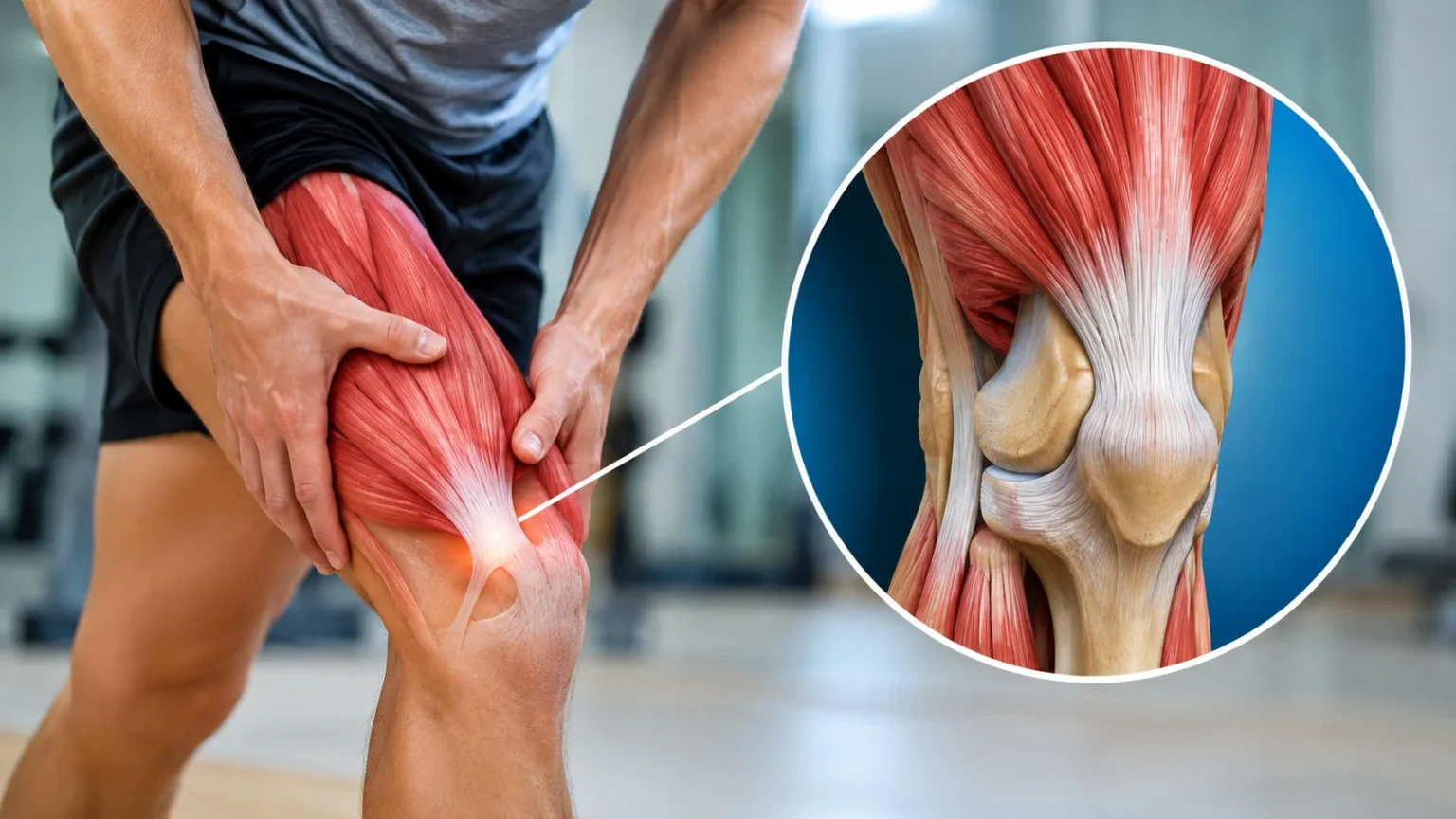
The quadriceps tendon is a strong band of connective tissue located just above the kneecap. It connects the quadriceps muscles in the front of the thigh to the patella, helping you straighten your knee, walk, climb stairs, and perform everyday activities. This tendon plays an important role in knee stability and lower-body movement.
Although the quadriceps tendon is designed to handle considerable force, repetitive stress, sudden injuries, and certain medical conditions can affect its function. Common problems include tendon irritation, tendinopathy, inflammation, and partial or complete tears. Understanding its anatomy, symptoms, and treatment options can help you recognize potential problems and protect your knee health.
What Is the Quadriceps Tendon?
The quadriceps tendon is a thick, durable structure that connects the quadriceps muscle group to the upper portion of the kneecap. It forms an important part of the knee’s extensor mechanism, which allows you to straighten your leg. Without this connection, the quadriceps muscles cannot effectively transfer force to extend the knee.
Tendons are made primarily of strong collagen fibers that help transmit muscle forces to bones. The quadriceps tendon contains layers of fibers contributed by the different quadriceps muscles. These fibers work together to support knee extension and distribute forces during activities such as standing, walking, running, and jumping.
Unlike ligaments, which usually connect one bone to another, tendons connect muscles to bones. The quadriceps tendon is particularly important because it helps link powerful thigh muscles to the knee joint. Its strength and flexibility allow it to handle substantial mechanical demands while supporting normal movement and functional stability.
Where Is the Quadriceps Tendon Located?
The quadriceps tendon location is directly above the patella, commonly called the kneecap. It extends from the lower portion of the quadriceps muscles to the superior border of the patella. You can identify its general position at the front of your knee, just above the upper edge of the kneecap.
The tendon lies between the quadriceps muscle group and the patella, where it forms part of the extensor mechanism. Its fibers blend with surrounding connective tissues that help stabilize the kneecap during movement. Below the kneecap, the patellar tendon continues the connection toward the tibia, or shinbone.
Understanding the location of this tendon can help explain why certain knee problems produce discomfort above the kneecap. Tenderness in this area may involve the quadriceps tendon, although several nearby structures can cause similar symptoms. A healthcare professional can evaluate the affected tissues and determine the source of persistent pain.
Quadriceps Tendon Anatomy and Structure
The quadriceps tendon anatomy is closely related to the four muscles that make up the quadriceps femoris group. These include the rectus femoris, vastus lateralis, vastus medialis, and vastus intermedius. Together, they contribute tendon fibers that attach to the patella and allow the thigh muscles to influence knee movement.
The tendon has a layered arrangement, with contributions from different quadriceps muscles blending into a strong connective structure. Its collagen fibers are organized to resist the pulling forces generated during knee extension. However, the tendon is not completely rigid because it must accommodate changing loads and joint positions during movement.
The quadriceps tendon also interacts with the kneecap and surrounding retinacular tissues that help maintain knee stability. These structures form a coordinated system rather than functioning independently. Healthy tendon tissue, adequate muscle strength, and proper joint mechanics all contribute to effective movement and the distribution of forces around the knee.
What Is the Main Function of the Quadriceps Tendon?
The primary quadriceps tendon function is to transfer force from the quadriceps muscles to the patella. This force is then transmitted through the patellar tendon to the tibia, allowing the knee to straighten. The entire mechanism supports essential movements, including walking, rising from a chair, and climbing stairs.
The tendon also helps control knee bending when the quadriceps muscles contract while lengthening. This type of muscle action occurs during activities such as walking downstairs, lowering into a squat, or landing from a small jump. The tendon transmits significant forces during these movements and helps the knee manage changing physical demands.
Another important role involves supporting functional knee stability during daily activities. The quadriceps tendon works with surrounding muscles, ligaments, and joint structures to maintain controlled movement. Although it does not stabilize the knee independently, its connection to the quadriceps makes it essential for coordinated lower-body strength and mobility.
Common Quadriceps Tendon Problems
Several conditions can affect the quadriceps tendon, ranging from temporary irritation to serious structural injuries. One common problem is quadriceps tendinopathy, which involves tendon pain and changes associated with repeated loading. People who frequently jump, run, or perform demanding knee-extension activities may experience symptoms when training loads exceed their current capacity.
A quadriceps tendon tear is another important condition that can occur after a sudden forceful movement or injury. Tears may be partial, affecting some tendon fibers, or complete, disrupting the tendon connection. Complete tears are serious injuries that can prevent normal active knee extension and often require prompt surgical evaluation.
Other possible problems include tendon inflammation, degenerative changes, and irritation near the tendon attachment. Symptoms can overlap with patellofemoral pain, bursitis, or other knee conditions. Because different problems require different management approaches, identifying the underlying cause is more useful than assuming every case of pain above the kneecap represents tendon damage.
Quadriceps Tendonitis and Tendinopathy Explained
Quadriceps tendonitis refers to inflammation or irritation affecting the quadriceps tendon, usually near its attachment above the kneecap. The term is commonly used to describe pain associated with repetitive knee loading. However, persistent tendon symptoms often involve structural and functional changes that are more accurately described as tendinopathy.
Quadriceps tendinopathy can develop when repeated mechanical demands exceed the tendon’s ability to recover and adapt. Activities involving frequent jumping, sprinting, squatting, or rapid changes in direction may contribute to symptoms. Sudden increases in training intensity or exercise volume can also place additional stress on an unprepared tendon.
The condition often causes localized discomfort above the kneecap during physically demanding activities. Some people experience stiffness after resting or discomfort when climbing stairs and performing squats. Symptoms may improve with appropriate load management and rehabilitation, but prolonged or worsening pain should be assessed to rule out more serious injuries.
Quadriceps Tendon Tear: Causes and Symptoms
A quadriceps tendon tear occurs when some or all of the tendon fibers separate or rupture. This injury may happen during a sudden forceful quadriceps contraction, particularly when the knee is bent. Falls, awkward landings, and unexpected changes in body position can place substantial stress on the tendon.
Partial tears may cause pain, swelling, tenderness, and reduced strength while leaving some knee-extension ability intact. Complete ruptures can produce sudden pain, difficulty walking, and an inability to actively straighten the knee. Some people also develop bruising or a noticeable gap above the kneecap, although these signs are not always present.
Certain factors, including older age, chronic tendon degeneration, kidney disease, diabetes, and particular medications, may increase the risk of tendon rupture. However, injuries can also occur without obvious underlying conditions. Sudden loss of knee-extension ability after an injury requires urgent medical assessment because delayed treatment may complicate recovery.
Common Symptoms of Quadriceps Tendon Pain
The most common symptom of quadriceps tendon pain is discomfort directly above the kneecap. This discomfort may develop gradually after repeated activity or appear suddenly following an injury. Some people describe a localized ache, while others experience sharper pain during movements that place greater force through the quadriceps.
Additional symptoms can include tenderness, stiffness, swelling, and difficulty performing activities such as squatting or climbing stairs. Pain may become noticeable during exercise, especially when the knee repeatedly bends under load. In some cases, the affected area feels sensitive when touched, although tenderness alone cannot confirm a specific tendon condition.
More serious injuries may produce marked weakness, difficulty bearing weight, or an inability to lift the straightened leg. These symptoms can indicate damage to the knee’s extensor mechanism. If symptoms develop suddenly after trauma, especially with major weakness or an inability to straighten the knee, seek urgent medical care.
What Causes Quadriceps Tendon Injuries?
Quadriceps tendon injuries can result from repeated overload, sudden trauma, or changes in tendon health over time. Repetitive activities may create demands that exceed the tendon’s current ability to recover. This can happen when someone increases training intensity too quickly, performs unfamiliar exercises, or returns to demanding activity without sufficient preparation.
Sudden injuries often involve a powerful quadriceps contraction while the knee is flexed. The tendon may experience substantial force during falls, awkward landings, or movements intended to prevent a fall. Although healthy tendons are strong, extreme mechanical stress or underlying tissue changes can contribute to tearing.
Several health conditions and medications can also influence tendon integrity. Diabetes, chronic kidney disease, inflammatory disorders, and long-term corticosteroid exposure are recognized risk factors for tendon problems. Fluoroquinolone antibiotics have also been associated with tendon injury, making it important to discuss medication-related concerns with a qualified healthcare professional.
How Is a Quadriceps Tendon Injury Diagnosed?
Diagnosing a quadriceps tendon injury begins with reviewing symptoms, activity history, and any recent trauma. A healthcare professional may ask when the pain started and whether you experienced sudden weakness or difficulty walking. Understanding how symptoms change during movement helps distinguish repetitive tendon problems from injuries requiring more urgent investigation.
A physical examination typically evaluates tenderness, swelling, knee movement, and the ability to actively extend the leg. The clinician may also assess the position of the kneecap and check for a palpable gap above it. However, swelling and pain can sometimes make examination findings difficult to interpret, particularly after an acute injury.
Imaging studies may be recommended when the diagnosis remains uncertain or significant tendon damage is suspected. Ultrasound can help assess tendon structure, while magnetic resonance imaging provides detailed information about tears and surrounding tissues. X-rays do not directly show tendon fibers but may reveal associated bone abnormalities or changes in kneecap position.
Treatment Options for Quadriceps Tendon Problems
Quadriceps tendon treatment depends on whether the problem involves tendinopathy, a partial tear, or a complete rupture. Mild overuse conditions are often managed through activity modification and progressive rehabilitation. Reducing movements that significantly aggravate symptoms can help create an opportunity for recovery without necessarily requiring complete inactivity.
Physical therapy commonly focuses on gradually improving quadriceps strength, knee control, and tolerance to mechanical loading. A clinician may recommend carefully selected exercises based on symptoms and functional ability. Ice may provide temporary pain relief, while medications should be used only when appropriate and according to professional advice.
Complete quadriceps tendon ruptures usually require surgical repair, followed by a structured rehabilitation program. Some partial tears may be treated without surgery when the knee-extension mechanism remains functional. Treatment decisions depend on the injury’s severity, individual health, and clinical findings, making professional assessment particularly important after sudden traumatic symptoms.
Quadriceps Tendon Exercises and Rehabilitation
Appropriate quadriceps tendon exercises can support recovery by gradually improving muscle strength and the tendon’s ability to tolerate loading. Rehabilitation often begins with movements selected according to pain, injury severity, and functional limitations. Exercises should be prescribed or adapted to the specific diagnosis, especially when a tendon tear is suspected.
For uncomplicated tendinopathy, a rehabilitation professional may introduce controlled quadriceps contractions and gradually progress toward strengthening movements. Examples can include supported knee-extension exercises, modified squats, or other carefully selected activities. The appropriate exercise range and resistance depend on symptoms, tolerance, and the stage of recovery rather than a universal routine.
Progression should be gradual, with attention to discomfort during exercise and symptoms afterward. Persistent increases in pain or swelling may indicate that the current loading level needs adjustment. Following a surgical repair or significant tear, rehabilitation must follow the treating clinician’s restrictions because premature loading can threaten healing.
How to Prevent Quadriceps Tendon Injuries
Preventing every tendon injury is not possible, but sensible training habits can reduce avoidable stress. Gradually increasing exercise intensity, duration, and resistance allows the musculoskeletal system time to adapt. Sudden changes in training demands may increase injury risk, particularly when combined with fatigue or inadequate recovery between demanding sessions.
A balanced strengthening program can help support knee function by developing the quadriceps, hamstrings, gluteal muscles, and other lower-body muscles. Proper movement technique and suitable exercise progression are also important. Before demanding physical activity, a gradual warm-up can prepare your muscles and joints for the movements you plan to perform.
Pay attention to recurring discomfort above the kneecap rather than repeatedly training through worsening symptoms. Adjusting activity early may prevent minor problems from becoming more persistent. Adequate recovery, appropriate footwear for your activity, and professional advice when symptoms continue can all contribute to healthier long-term knee function.
Quadriceps Tendon vs. Patellar Tendon
The quadriceps tendon and patellar tendon are closely connected but occupy different positions around the knee. The quadriceps tendon attaches the thigh muscles to the upper portion of the kneecap. The patellar tendon extends from the lower portion of the kneecap to the tibial tuberosity on the shinbone.
Both structures contribute to the knee’s extensor mechanism, allowing the quadriceps muscles to straighten the leg. They work together to transfer muscular force across the front of the knee. However, their different anatomical locations mean that injuries can produce tenderness in different areas and may require different treatment considerations.
Quadriceps tendinopathy typically causes discomfort above the kneecap, while patellar tendinopathy more commonly produces pain below it. Nevertheless, pain location alone cannot establish a reliable diagnosis. Other knee conditions can create similar symptoms, so persistent discomfort or functional limitations should be evaluated rather than attributed automatically to either tendon.
When Should You See a Doctor for Quadriceps Tendon Pain?
Medical evaluation is recommended when pain above the kneecap persists, worsens, or repeatedly interferes with normal activities. Difficulty climbing stairs, recurring swelling, or reduced knee strength may indicate a problem requiring assessment. Early evaluation can help identify contributing factors and guide appropriate changes to exercise or daily activity.
Seek urgent medical attention after a sudden injury if you cannot actively straighten your knee, cannot perform a straight-leg raise, or have major difficulty walking. Significant swelling, deformity, or a suspected tendon rupture also requires prompt evaluation. These symptoms can indicate serious structural damage rather than routine exercise-related soreness.
A hot, markedly swollen knee accompanied by fever or feeling unwell also warrants urgent assessment because infection or other conditions may be involved. Do not rely on self-diagnosis when symptoms are severe or unusual. A healthcare professional can determine whether physical therapy, imaging, medication, or specialist treatment is necessary.
Conclusion
The quadriceps tendon is an essential part of the knee’s extensor mechanism, connecting the powerful thigh muscles to the kneecap. Its primary function is to transfer force that allows knee straightening and controlled lower-body movement. Healthy tendon function supports everyday activities, including walking, standing, climbing stairs, and participating in recreational exercise.
Common quadriceps tendon problems include tendinopathy, irritation, and partial or complete tears. Symptoms may range from localized discomfort above the kneecap to significant weakness and loss of knee-extension ability. Understanding these differences is important because mild overuse conditions and complete tendon ruptures require very different treatment approaches.
Protecting your quadriceps tendon involves sensible activity progression, balanced strengthening, and appropriate recovery. Persistent pain should be assessed, while sudden loss of knee-extension ability requires urgent medical attention. With timely diagnosis and suitable treatment, many people can improve knee function and return to their usual activities safely.
Frequently Asked Questions
Where is the quadriceps tendon located?
The quadriceps tendon is located directly above the kneecap. It connects the quadriceps muscles at the front of the thigh to the upper border of the patella, helping straighten the knee.
What does quadriceps tendon pain feel like?
Quadriceps tendon pain commonly causes tenderness or aching just above the kneecap. Discomfort may increase during squats, stair climbing, running, or jumping, depending on the underlying condition.
Can a quadriceps tendon heal without surgery?
Mild tendinopathy and some partial tendon tears can improve without surgery through appropriate treatment and rehabilitation. Complete ruptures usually require surgical repair, so a medical diagnosis is essential.
How long does quadriceps tendon recovery take?
Recovery depends on the injury’s severity. Mild irritation may improve within weeks, while persistent tendinopathy can take months. Surgical tendon repairs often require several months of supervised rehabilitation.
What happens if the quadriceps tendon tears?
A quadriceps tendon tear can cause sudden pain, swelling, weakness, and difficulty straightening the knee. Complete tears may prevent active knee extension and require urgent medical assessment and surgical treatment.