


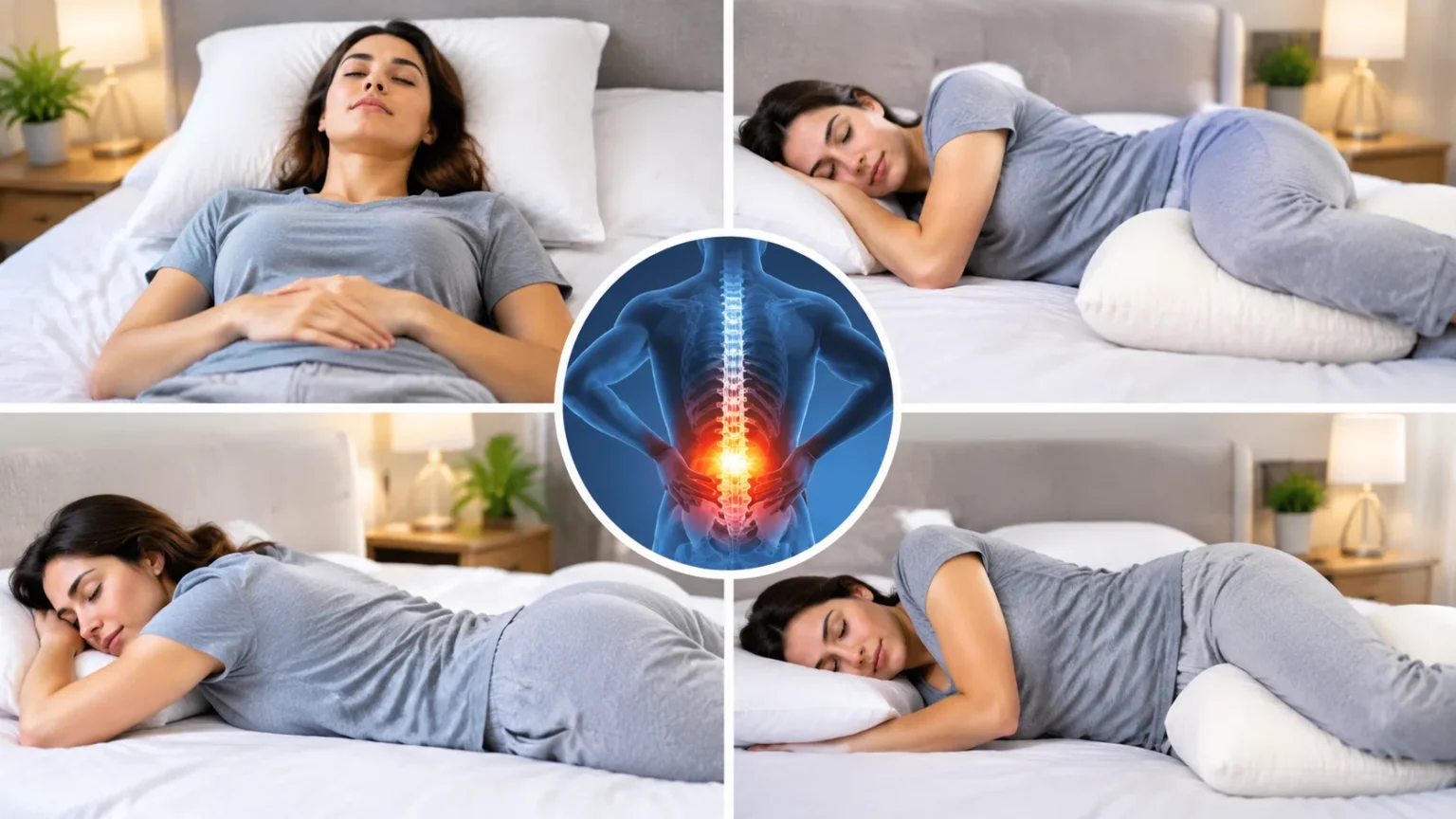
Lower back pain can make it difficult to fall asleep, stay comfortable, and wake up feeling refreshed. Choosing the right sleeping positions for lower back pain may help reduce pressure on your spine, relax tense muscles, and improve your overall sleep quality. However, the most comfortable position often depends on what is causing your discomfort.
Sleeping on your back with a pillow under your knees or on your side with a pillow between your knees can provide helpful support. Small changes to your mattress, pillows, and bedtime routine may also improve comfort. This guide explains the possible causes of nighttime back pain and practical ways to find relief.
Why Does Lower Back Pain Get Worse While Sleeping?
Lower back pain often becomes more noticeable at night because your body stays in similar positions for extended periods. An uncomfortable sleeping posture may place additional pressure on your lower spine, surrounding muscles, and joints. Poor spinal support can also increase stiffness after several hours of rest. Understanding these factors helps you choose positions that support more comfortable sleep.
Your mattress and pillows can also influence how your back feels overnight. A mattress that allows your hips to sink too deeply may leave your spine in an uncomfortable position. Similarly, an unsuitable pillow can affect neck alignment and overall posture. These problems do not necessarily cause an underlying back condition, but they may contribute to existing discomfort.
Certain health conditions can make nighttime pain particularly troublesome. Muscle strains, irritated spinal joints, and some nerve-related conditions may become uncomfortable in specific resting positions. Inflammatory conditions can also cause stiffness after periods of inactivity. If your pain regularly interrupts sleep or becomes progressively worse, a healthcare professional can help identify the underlying cause.
Common Causes of Lower Back Pain at Night
Muscle strain is a common reason people experience lower back discomfort while sleeping. Lifting heavy objects, making sudden movements, or spending long periods in awkward positions can irritate back muscles. The resulting discomfort may become more noticeable when you lie down or change positions. Mild strains often improve with time, appropriate movement, and comfortable resting positions.
Spinal conditions can also contribute to persistent nighttime discomfort. Herniated discs, degenerative changes, and irritated nerves may cause pain that changes with body position. Some people experience symptoms extending into the buttocks or legs, particularly when nerves are affected. Because these conditions produce different symptoms, the best sleeping position may vary from one person to another.
Daily habits can influence how your lower back feels when bedtime arrives. Long periods of sitting, limited physical activity, and repetitive movements may contribute to stiffness or muscle tension. An unsupportive sleep surface can make these symptoms more noticeable overnight. However, persistent pain should not automatically be blamed on posture or mattress quality without considering other possible causes.
Sleeping on Your Back for Lower Back Pain Relief
Back sleeping can be a comfortable option because it allows your body weight to spread across a relatively large surface. This position may help maintain a balanced posture when your mattress provides appropriate support. However, lying completely flat can feel uncomfortable for some people. Adding support beneath your knees may reduce tension around the lower back.
To try this position, lie comfortably on your back and place a pillow beneath both knees. The pillow should raise your knees slightly without creating an awkward bend at your hips. Keep your shoulders relaxed and use a head pillow that supports your neck naturally. Adjust the pillow height until your lower back feels reasonably comfortable.
Some people benefit from placing a small rolled towel beneath the natural curve of their lower back. However, additional lumbar support is not necessary for everyone and may increase discomfort if positioned incorrectly. Start with minimal support and make changes based on how your body responds. Avoid forcing your spine into a particular shape if the position causes pain.
How to Sleep on Your Side With Lower Back Pain
Side sleeping is another commonly recommended position for people experiencing lower back discomfort. It can support a relatively neutral spinal posture when the hips, shoulders, and neck are comfortably aligned. However, allowing the upper leg to fall forward may rotate the pelvis and increase tension. A pillow between the knees can help reduce this unwanted twisting.
To improve your side sleeping posture, lie on either side with your knees slightly bent. Place a supportive pillow between your knees so your upper leg remains comfortably positioned. Your head pillow should fill the space between your shoulder and head without bending your neck excessively. A body pillow may provide additional support for your arms and legs.
Neither the left nor right side is universally better for lower back pain. Personal comfort, existing medical conditions, and individual sleeping habits influence which side feels most supportive. If one side increases discomfort, gently try the opposite side instead. The goal is to maintain a relaxed position that does not aggravate your symptoms throughout the night.
Is the Fetal Position Good for Lower Back Pain?
The fetal position involves lying on your side with your knees drawn toward your body. A gently curled posture may feel comfortable for some people experiencing back pain or nerve-related symptoms. It can change the position of the lower spine and surrounding structures. However, the same posture may worsen discomfort for others, depending on their condition.
To try a relaxed fetal position, lie on your side and slowly bend your knees toward your chest. Avoid pulling your legs excessively close or rounding your back more than feels natural. Place a pillow between your knees if it improves hip and pelvic alignment. Your shoulders, neck, and arms should remain relaxed rather than tightly curled.
People with certain disc-related problems sometimes find that bending forward reduces their discomfort, while others experience the opposite effect. Therefore, the fetal position should not be considered a guaranteed solution for herniated discs or sciatica. Pay attention to symptoms in your back and legs when adjusting positions. Stop using any posture that increases pain, tingling, or numbness.
Why Stomach Sleeping May Make Lower Back Pain Worse
Sleeping on your stomach can be uncomfortable for some people with lower back pain. This position may increase the curve of the lower spine, especially when the mattress provides insufficient support. Turning your head to one side can also place your neck in an awkward position. However, stomach sleeping does not automatically cause back problems for everyone.
If you naturally sleep on your stomach, you may not need to change positions immediately. Instead, try placing a thin pillow beneath your pelvis or lower abdomen to reduce excessive lower-back arching. A low-profile head pillow may also help limit neck bending. Adjust these supports carefully and remove them if they increase discomfort.
Changing a long-established sleeping habit can take time, particularly when you frequently move during the night. If stomach sleeping consistently worsens your symptoms, experiment with side sleeping and appropriate pillow support. A body pillow can make the transition more comfortable for some individuals. Focus on reducing discomfort rather than forcing yourself to maintain an unfamiliar position.
How Pillows Help Support Your Lower Back While Sleeping
Pillows are useful for more than supporting your head during sleep. When positioned correctly, they can help maintain comfortable alignment between your spine, hips, and legs. Their effectiveness depends on your preferred sleeping position and individual body proportions. Choosing the right pillow placement may reduce unnecessary pressure on sensitive areas of your lower back.
Back sleepers can experiment with placing a pillow beneath their knees, while side sleepers may prefer support between their knees. These adjustments help keep the legs and pelvis in more comfortable positions. People who move frequently might benefit from a body pillow that supports several areas. The most effective arrangement is usually the one that feels natural and reduces symptoms.
Your head pillow also deserves attention because neck support contributes to overall sleeping comfort. A pillow that is too high or too low may leave your neck in an awkward position. Side sleepers generally need enough height to accommodate shoulder width, while back sleepers may prefer a lower profile. Replace pillows that have lost their shape or no longer provide dependable support.
Choosing the Best Mattress for Lower Back Pain
Your mattress can affect how comfortably your spine rests throughout the night. A surface that is excessively soft may allow certain body areas to sink more deeply than others. Conversely, an extremely firm mattress may create uncomfortable pressure around the hips and shoulders. The ideal mattress balances support with enough cushioning to accommodate your natural body shape.
Medium-firm mattresses are often a reasonable starting point for people experiencing nonspecific lower back pain. Some research suggests they may improve comfort compared with very firm mattresses, although individual responses vary. Your weight distribution, sleeping position, and personal preferences also influence mattress suitability. No single mattress type can guarantee relief for every person.
Before purchasing a new mattress, consider whether your current one is visibly sagging or consistently uncomfortable. A suitable mattress topper may improve comfort when the underlying mattress remains structurally supportive. However, a topper cannot reliably correct a severely worn-out mattress. Whenever possible, try different firmness levels and choose a product with a reasonable trial or return policy.
How to Change Sleeping Positions Without Increasing Pain
Changing positions during sleep is normal and does not necessarily indicate a problem. Your body naturally moves to improve comfort and reduce prolonged pressure on certain areas. However, sudden twisting can feel uncomfortable when your lower back is already sensitive. Learning to reposition yourself gently may make nighttime movements easier and less disruptive.
When turning from your back onto your side, try moving your shoulders and hips together rather than twisting sharply through your waist. Keep your knees comfortably bent and use your arms to assist the movement. This approach can help limit unnecessary strain during position changes. Move slowly enough to identify whether a particular movement increases your discomfort.
Getting out of bed may also require extra care when your back feels stiff. Try rolling onto your side before using your arms to push your upper body upright while lowering your legs toward the floor. This technique can make the transition more manageable for some people. Once seated, stand gradually and allow your body to adjust before walking.
Bedtime Habits That May Help Reduce Lower Back Pain
A consistent bedtime routine can support better sleep when lower back discomfort is present. Gentle movement during the evening may help reduce stiffness that develops after prolonged sitting or inactivity. For example, taking a short walk or performing comfortable mobility exercises can help some people relax. Avoid movements that increase pain or produce new nerve-related symptoms.
Applying gentle warmth to tense back muscles may provide temporary relief before bedtime. A warm shower or appropriately used heating pad can help some people feel more comfortable. Follow product safety instructions, avoid excessive heat, and do not fall asleep with an ordinary heating pad switched on. Heat may ease muscle tension, but it does not address every underlying cause.
Your bedroom environment can also influence sleep quality when discomfort makes resting difficult. Keeping the room comfortably cool, limiting disruptive noise, and maintaining a regular sleep schedule may help. Avoid spending long periods using your phone in uncomfortable positions before bedtime. Small improvements in your evening habits can complement suitable sleeping positions and medical care when needed.
What to Do When You Wake Up With Lower Back Pain
Waking up with lower back pain can make ordinary morning activities feel difficult. Stiffness may develop after spending several hours in one position, particularly when muscles or joints are already sensitive. Before getting out of bed, try moving your arms and legs gently within a comfortable range. Avoid sudden movements or aggressive stretching immediately after waking.
Once you are upright, light activity may help your body feel less stiff. Walking around your room or completing a few gentle movements can be a comfortable starting point. Some people benefit from carefully practicing pelvic tilts or other simple mobility exercises recommended by a healthcare professional. Stop any movement that produces sharper pain or worsening symptoms.
If your back repeatedly hurts after sleeping, look for patterns rather than assuming one cause. Consider whether your symptoms change with mattress firmness, pillow placement, or particular sleeping positions. Keeping brief notes about morning stiffness and nighttime discomfort may help identify useful adjustments. Persistent symptoms deserve professional evaluation, especially when they affect everyday activities or sleep quality.
Sleeping Positions for Lower Back Pain With Sciatica
Sciatica generally refers to symptoms caused by irritation or compression of nerves contributing to the sciatic nerve. It may produce pain that travels from the lower back or buttock into one leg. Some people also experience tingling, numbness, or weakness. Symptoms can change depending on posture, movement, and the underlying cause of nerve irritation.
Side sleeping with a pillow between the knees may feel comfortable for some people with sciatica. Others prefer lying on their backs with a pillow beneath their knees to support their legs. Neither position is universally best because different spinal problems respond differently to movement and posture. Gentle adjustments are preferable to forcing a position that increases radiating symptoms.
When sciatica interferes with sleep, changing positions alone may not provide enough relief. A healthcare professional can assess your symptoms and recommend suitable treatment, movement strategies, or physical therapy. Seek prompt medical advice if pain is associated with increasing leg weakness or significant numbness. Identifying the underlying cause is important for choosing an appropriate approach.
When Should You See a Doctor for Nighttime Lower Back Pain?
Occasional lower back discomfort may improve with comfortable sleep positions, gentle activity, and time. However, pain that persists for several weeks, repeatedly interrupts sleep, or limits daily activities deserves medical attention. A clinician can evaluate potential causes and recommend appropriate care. Early assessment is especially useful when symptoms are worsening rather than gradually improving.
Certain symptoms require more urgent evaluation because they may indicate a serious underlying problem. Seek immediate medical care if back pain occurs with new loss of bladder or bowel control, numbness around the groin, or severe or progressive leg weakness. Significant pain following a serious accident also needs urgent assessment. These symptoms should not be managed through sleeping-position changes alone.
Other warning signs include unexplained fever, significant unexplained weight loss, or persistent pain that remains severe regardless of position. Pain associated with a history of cancer or other serious medical conditions also requires appropriate evaluation. Although many cases of lower back pain are not dangerous, unusual symptoms should not be ignored. Professional guidance can help identify the cause and appropriate treatment.
Conclusion
Finding comfortable sleeping positions for lower back pain can improve rest and make nighttime discomfort easier to manage. Back sleeping with support beneath the knees and side sleeping with a pillow between the knees are useful options to try. A relaxed fetal position may also help certain individuals. The most effective choice depends on your symptoms, comfort, and underlying condition.
Supportive pillows, a suitable mattress, and gentle bedtime habits can make sleeping more comfortable. Small adjustments may reduce unnecessary pressure and help your muscles relax during rest. However, there is no universally perfect posture or mattress for every person with back pain. Pay attention to how your body responds and avoid positions that consistently worsen symptoms.
If your lower back pain continues, becomes more severe, or affects your daily activities, seek medical advice rather than relying only on home adjustments. Identifying the cause can help you choose suitable treatment and prevent unnecessary discomfort. With appropriate support, healthy sleep habits, and professional care when needed, more comfortable nights may be possible.
Frequently Asked Questions
What Is the Best Sleeping Position for Lower Back Pain?
Sleeping on your back with a pillow beneath your knees or on your side with a pillow between your knees may help. The best position depends on your individual comfort and symptoms.
Is Sleeping on Your Side Good for Lower Back Pain?
Yes, side sleeping can help some people maintain comfortable spinal alignment. Placing a pillow between your knees may reduce pelvic twisting and unnecessary pressure on your lower back.
Should You Sleep With a Pillow Under Your Lower Back?
A small rolled towel beneath the lower back may help some back sleepers, but it is not necessary for everyone. Remove it if the added support increases discomfort.
Can a Bad Mattress Cause Lower Back Pain?
An unsupportive mattress can contribute to discomfort or worsen existing lower back symptoms. However, mattress quality is only one possible factor, and persistent pain may have another underlying cause.
How Can I Relieve Lower Back Pain While Sleeping?
Try adjusting your sleeping position, using supportive pillows, and choosing a comfortable mattress. Gentle evening movement may also help, but persistent or worsening symptoms should be evaluated by a healthcare professional.