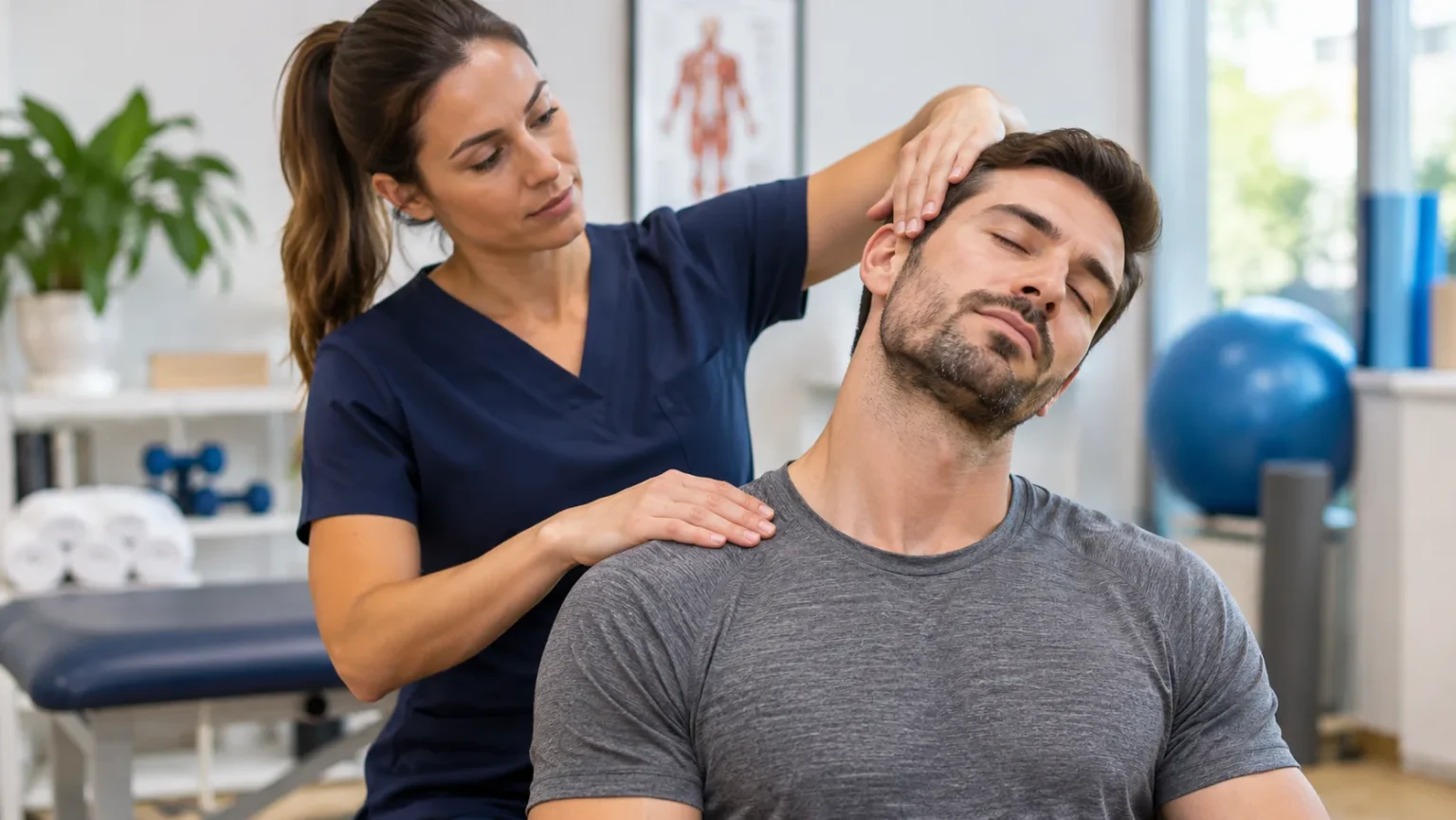
Neck strain can make everyday activities uncomfortable, especially when turning your head, working at a computer, driving, or sleeping. The discomfort may develop after sudden movement, unfamiliar exercise, or prolonged activity that places stress on the neck muscles. Although many mild strains improve with time, persistent stiffness and pain can interfere with normal movement. Physical therapy for neck strain may help restore mobility, improve muscle function, and support recovery.
Physical therapy uses carefully selected exercises, movement techniques, and education to address musculoskeletal problems. Treatment is adjusted according to the individual’s symptoms, injury severity, and physical abilities. However, not every episode of neck pain requires formal rehabilitation, and certain warning signs need medical assessment first. This guide explains the benefits of physical therapy for neck strain, common treatment approaches, recovery expectations, safety precautions, and practical prevention strategies.
What Is a Neck Strain?
A neck strain occurs when muscles or tendons supporting the cervical spine become overstretched or injured. These tissues help control head movement and maintain comfortable positioning during everyday activities. A strain may develop suddenly or after repeated physical demands. Symptoms commonly include pain, tenderness, stiffness, and difficulty moving the neck comfortably.
The neck contains several muscle groups that work together to support the head. These include the upper trapezius, levator scapulae, and deeper cervical muscles. Irritation affecting these structures may produce discomfort around the neck, shoulders, or upper back. However, pain in these areas does not automatically mean a muscle strain is responsible.
Neck strains vary in severity, from mild muscular irritation to more significant tissue injury. Some people notice discomfort immediately after an activity, while others develop symptoms gradually. A medical assessment may be needed when the cause is uncertain. Understanding the injury helps guide appropriate treatment rather than relying on exercises that may not suit the condition.
Common Causes of Neck Muscle Strain
Neck strain can occur when muscles experience more force or repeated loading than they can comfortably tolerate. Sudden movements, physical activity, and awkward positions are common contributing factors. Carrying heavy objects or performing unfamiliar exercises may also increase muscular demands. The exact cause often depends on recent activities and individual circumstances.
Prolonged desk work may contribute to discomfort when people remain in one position for extended periods. Looking at a screen, reading, or using a phone can involve sustained muscle activity. However, there is no single posture that automatically causes neck injury. Limited movement variety and uncomfortable working arrangements may be more relevant.
Neck symptoms may also develop after a collision, fall, or sudden acceleration and deceleration of the head. These situations can involve injuries beyond an ordinary muscle strain. Significant trauma requires appropriate medical assessment before starting exercises. Identifying how the pain began helps determine whether physical therapy, medical investigation, or another approach is most suitable.
Common Symptoms of Neck Strain
Neck strain commonly causes localized pain, muscle tenderness, and stiffness around the cervical region. Some people experience discomfort when turning their head or looking upward and downward. The pain may also extend toward the shoulders or upper back. Symptoms can vary according to the affected tissues and the intensity of the injury.
Muscular discomfort may become more noticeable during prolonged activities or after remaining in one position. Certain movements can produce a pulling sensation or temporary restriction. Some people also experience tension-related headaches. However, headaches have many possible causes, and their presence does not independently confirm a neck strain.
Symptoms such as persistent numbness, tingling, or weakness may suggest nerve involvement rather than a simple muscular problem. Fever, severe headache, or unexplained neurological changes can indicate conditions requiring medical attention. A clinician can assess these findings and determine whether further testing is appropriate. Recognizing unusual symptoms helps prevent delays in necessary care.
How Physical Therapy Helps Neck Strain Recovery
Physical therapy aims to improve comfortable movement and restore function following musculoskeletal problems. For neck strain, treatment may involve gentle exercises, activity guidance, and progressive strengthening. A physical therapist considers the person’s symptoms, movement limitations, and daily responsibilities. This helps create a plan suited to the individual’s recovery needs.
One important goal is reducing unnecessary movement restriction. Pain can sometimes cause people to avoid turning or moving the neck, which may contribute to stiffness. Carefully selected exercises can help restore confidence in normal movement. However, therapy should not involve forcing painful positions or ignoring symptoms that suggest a more serious condition.
Physical therapy also helps people understand how to manage activity during recovery. A therapist may explain ways to adjust work habits, exercise routines, and other daily movements. These strategies can reduce repeated aggravation while maintaining appropriate activity. The overall purpose is to support recovery and functional independence rather than provide temporary symptom relief alone.
Benefits of Physical Therapy for Neck Pain
One potential benefit of physical therapy is improved neck mobility. Gentle movement exercises may help reduce stiffness and restore a comfortable range of motion. This can make activities such as checking surroundings while walking or turning toward another person easier. Progress depends on the cause and severity of the symptoms.
Physical therapy can also improve strength and muscular endurance in the neck and surrounding areas. Supporting muscles contribute to coordinated movement and help manage everyday physical demands. Strengthening exercises are introduced gradually according to individual tolerance. Better muscle function may improve comfort during repeated activities, although results vary between patients.
Another benefit is education about pain management and recovery. Understanding which activities are safe can reduce unnecessary fear of movement. Therapists may also provide strategies for managing recurring discomfort and returning to regular exercise. Effective rehabilitation combines appropriate movement with realistic expectations rather than promising immediate or permanent pain relief.
What Happens During the First Physical Therapy Session?
The first physical therapy appointment usually begins with a discussion of symptoms and medical history. The therapist may ask when the pain started, which movements make it worse, and how it affects everyday activities. Previous injuries and relevant medical conditions are also important. This information helps determine whether rehabilitation is appropriate.
A physical examination may include checking neck movement, muscle tenderness, strength, and shoulder function. The therapist may also assess sensation or other neurological signs when indicated. Some movements are used to understand how symptoms respond to activity. However, testing should remain appropriate to the person’s condition and should not involve unnecessary force.
After the assessment, the therapist may explain possible contributing factors and discuss a treatment plan. This could include gentle exercises, activity modifications, and a schedule for reviewing progress. If symptoms suggest a condition outside the therapist’s scope, medical referral may be recommended. A clear explanation helps patients understand treatment goals and expected recovery.
Gentle Range-of-Motion Exercises for Neck Strain
Range-of-motion exercises are commonly included in rehabilitation when movement is safe and appropriate. They aim to maintain or gradually restore comfortable neck movement. Examples include gentle turning, looking slightly upward or downward, and controlled side bending. However, the exact exercises depend on the injury and professional assessment.
A therapist may recommend slow neck rotations performed within a comfortable range. The goal is to move smoothly without forcing the head beyond what feels manageable. Sudden movements and aggressive stretching are generally avoided during early recovery. If an exercise causes increasing pain, dizziness, or unusual symptoms, it should be stopped.
Gentle movement can help people regain confidence after mild neck strain. However, exercise should not be used to test how much pain the neck can tolerate. Repeatedly pushing into painful positions may aggravate sensitive tissues. Individualized recommendations help ensure that mobility exercises support recovery rather than create additional discomfort.
Neck Strengthening Exercises in Physical Therapy
Strengthening exercises may become appropriate after the initial pain and irritability begin improving. Neck muscles help stabilize and move the head during everyday activities. Improving their endurance can support comfortable function. However, the intensity and timing of strengthening should reflect individual symptoms and recovery progress.
Some rehabilitation programs use gentle isometric exercises, where muscles produce force without substantial joint movement. Others incorporate controlled movements of the neck and shoulder region. A physical therapist may also address weakness in nearby muscles. The exact approach depends on examination findings and the person’s activity requirements.
Strengthening should progress gradually rather than beginning with demanding resistance. Excessive effort can aggravate symptoms, particularly when tissues remain sensitive. Rest between exercise sessions may also be important. Professional guidance helps patients distinguish appropriate muscular effort from discomfort suggesting that an exercise needs adjustment.
Shoulder and Upper Back Exercises for Neck Strain
The neck works closely with muscles surrounding the shoulders and upper back. These structures help control shoulder blade movement and support the upper body during daily activities. Physical therapy may therefore include exercises beyond the cervical spine. Improving coordination in neighboring regions can support more comfortable movement.
Shoulder blade movements, gentle rowing patterns, and controlled upper-back exercises may be considered when appropriate. The goal is not to force the shoulders into one rigid position throughout the day. Instead, rehabilitation encourages comfortable movement and sufficient muscular endurance. Exercise selection depends on the individual’s symptoms and functional needs.
Upper-back mobility may also be included when limited movement contributes to discomfort during daily tasks. However, not every person with neck strain requires the same exercises. Some may benefit more from gradual activity changes than additional strength work. A personalized program helps avoid unnecessary exercises and focuses on meaningful improvements.
Manual Therapy and Hands-On Treatment
Manual therapy refers to selected hands-on techniques used by qualified healthcare professionals to address musculoskeletal symptoms. In neck rehabilitation, these may include gentle soft-tissue techniques or carefully selected joint mobilization. Their purpose may involve temporary pain relief or improved movement. They are not necessary for every patient.
Hands-on treatment is usually considered alongside exercise and education rather than as a complete treatment by itself. Research suggests that some combinations of approaches can help selected people with neck pain. However, benefits vary, and not every technique is appropriate for every condition. A therapist should explain the expected purpose and limitations of treatment.
Forceful neck manipulation carries risks, including rare but potentially serious complications. It is especially important to avoid such treatment when warning signs or relevant medical conditions are present. Patients should discuss concerns and alternatives before agreeing to procedures. Safer, lower-force approaches may be more appropriate depending on the clinical situation.
Heat and Cold Therapy for Neck Strain
Heat and cold are commonly used for temporary relief from mild musculoskeletal discomfort. A cold pack may feel soothing after a recent minor strain, while gentle warmth may help with muscular stiffness. Neither treatment repairs injured tissues directly. Their usefulness depends on individual comfort and the condition being treated.
Cold packs should be wrapped in a protective cloth rather than placed directly against the skin. Heating products should also be used carefully to avoid burns. People with reduced skin sensation or certain circulation problems may need additional precautions. A healthcare professional can advise whether these methods are suitable.
Some patients find that heat or cold makes it easier to begin gentle movement. Others notice little benefit. The goal is symptom management rather than forcing a particular treatment method. If discomfort is severe, persistent, or accompanied by unusual symptoms, additional assessment is more important than repeatedly applying temperature-based remedies.
How Long Does Physical Therapy for Neck Strain Take?
Recovery time depends on the severity of the strain, individual health, and whether other structures are involved. Mild neck strains may improve over days or a few weeks. More significant injuries can require longer recovery periods. There is no fixed physical therapy schedule that suits every patient.
Some people need only a small number of appointments for assessment and exercise guidance. Others benefit from continued rehabilitation when pain, weakness, or functional limitations persist. Progress is usually evaluated through movement, comfort, and everyday activities. The number of sessions should reflect actual needs rather than an automatic treatment package.
Recovery may not follow a perfectly consistent pattern. Symptoms can fluctuate as people return to work, exercise, and other responsibilities. Temporary discomfort does not always mean new damage has occurred. However, worsening pain or new neurological symptoms require reassessment. Regular communication with the treating clinician helps keep rehabilitation appropriate.
Safety Tips During Neck Strain Rehabilitation
Safety begins with confirming that the symptoms are appropriate for physical therapy. A simple muscular strain may respond to conservative treatment, but serious injuries require medical assessment. Significant trauma, fever with severe neck stiffness, or new neurological symptoms should not be ignored. Treatment decisions should reflect the possible underlying cause.
During rehabilitation, exercises should be performed within a manageable range without forcing the neck into painful positions. Avoid copying advanced stretches or resistance exercises without understanding their suitability. Rapid movements and excessive pressure can aggravate sensitive tissues. The therapist should explain how to recognize when an exercise needs modification.
Patients should also report dizziness, new numbness, weakness, or unusual headaches that occur during treatment. These symptoms may require stopping the activity and seeking medical advice. Sudden neurological changes or severe symptoms warrant emergency assessment. An effective rehabilitation program prioritizes safety, gradual progress, and clear communication.
When Should You See a Doctor for Neck Pain?
A medical assessment is recommended when neck pain persists, worsens, or significantly interferes with everyday activities. Repeated symptoms despite reasonable self-care may indicate a need for further evaluation. Numbness, tingling, or weakness extending into the arm also deserves attention. These findings may suggest involvement beyond an ordinary muscle strain.
Seek urgent medical care after significant trauma or when pain is accompanied by severe headache, fever, or marked neck stiffness. Sudden difficulty speaking, loss of coordination, or new weakness can indicate a neurological emergency. Chest pain or breathing difficulties alongside neck discomfort also require urgent assessment. These symptoms should not be treated as routine muscle tension.
A healthcare professional may recommend imaging or specialist evaluation when clinical findings justify additional testing. However, uncomplicated neck strain does not always require scans. The decision depends on symptoms, examination findings, and medical history. Timely assessment helps ensure that rehabilitation begins only when serious conditions have been appropriately considered.
How to Prevent Future Neck Strains
Preventing recurring neck discomfort often involves maintaining comfortable activity and avoiding sudden increases in physical demands. Regular movement can help reduce stiffness associated with prolonged sitting. Gradual strengthening may also improve muscular endurance. However, there is no single exercise or posture that guarantees prevention.
Workstation adjustments can make computer use more comfortable. Keep commonly used equipment within easy reach and position the screen where it can be viewed without unnecessary strain. Change sitting positions periodically rather than maintaining one rigid posture. These habits may reduce prolonged muscular loading during work or study.
Warm-ups before demanding exercise and gradual progression are also useful habits. Avoid suddenly increasing lifting intensity or exercise volume after a long break. Adequate recovery, sleep, and general physical activity support musculoskeletal health. People with recurring neck problems may benefit from individualized guidance to identify activities that consistently aggravate symptoms.
Conclusion
Physical therapy for neck strain can help improve comfortable movement, muscular endurance, and everyday function. Treatment may involve gentle mobility exercises, progressive strengthening, education, and selected hands-on techniques. The most appropriate approach depends on the cause and severity of the symptoms. Not every episode of mild neck pain requires formal rehabilitation.
Safe recovery involves gradual activity, realistic expectations, and attention to warning signs. Exercises should not be forced through significant pain, and treatment should be adjusted when symptoms change. Persistent numbness, weakness, or severe discomfort requires medical evaluation. Serious neurological symptoms, major trauma, and certain accompanying medical signs need urgent attention.
Understanding the benefits and safety considerations of physical therapy can help people make informed decisions about neck strain recovery. A qualified clinician can recommend exercises that match individual needs and activity goals. Comfortable movement and steady progress are more important than rushing through treatment. Appropriate rehabilitation can support a safer return to work, exercise, and daily activities.
Frequently Asked Questions
Is physical therapy good for a neck strain?
Physical therapy can help improve mobility, strength, and everyday function after a neck strain. Treatment should be individualized according to symptoms, injury severity, and the person’s physical abilities.
How long does physical therapy take for neck strain?
Mild strains may improve within days or a few weeks, while more significant injuries can require longer rehabilitation. The number of therapy sessions depends on recovery progress and functional limitations.
What exercises help with neck strain?
Gentle neck movements, suitable isometric exercises, and selected shoulder or upper-back activities may support recovery. The best exercises depend on the injury and should not cause worsening symptoms.
Can physical therapy make neck pain worse?
Some activities may temporarily increase discomfort, but significant or progressively worsening pain should not be ignored. Exercises and hands-on treatments should be adjusted or stopped when concerning symptoms develop.
When should I avoid neck exercises?
Avoid neck exercises until medically assessed if you have significant trauma, severe unexplained pain, new weakness, unusual neurological symptoms, or fever with marked neck stiffness. Emergency symptoms require immediate care.