


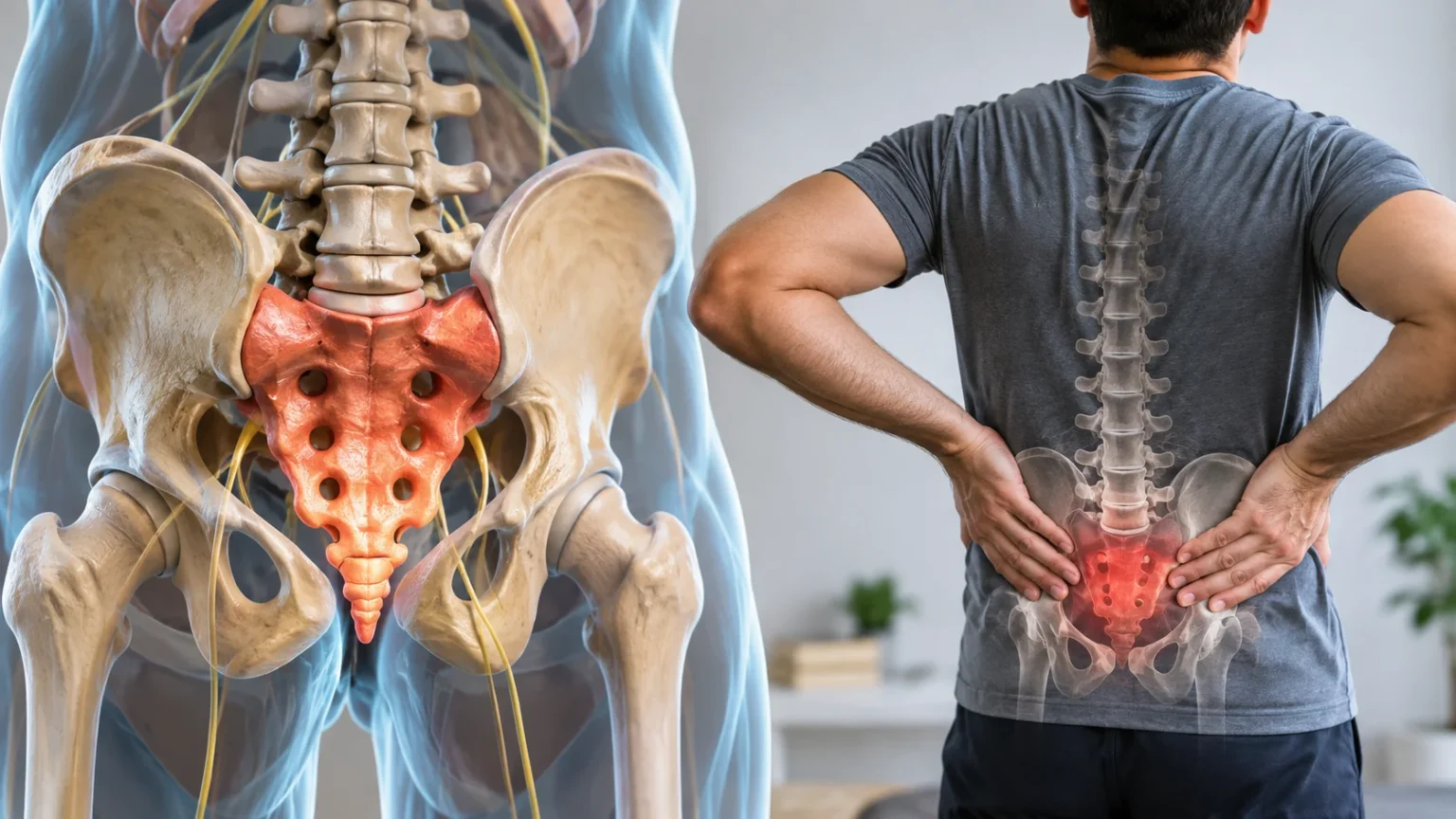
The sacrum location is at the bottom of the spine, between the two hip bones and just above the tailbone. It is a triangular bone that connects the lower backbone to the pelvis. Although it is not easily visible, the sacrum plays an important role in supporting body weight, maintaining balance, and allowing movement.
Many people become interested in sacrum anatomy when they experience lower back pain, stiffness, or discomfort near the hips. Understanding where the sacrum sits can help explain how the spine, pelvis, muscles, and nerves work together. This knowledge is also useful when learning about posture, walking, and common back conditions.
The sacrum is more than a simple connection between bones. Its structure helps distribute forces between the upper body and lower limbs while protecting important nerve pathways. This guide explains the sacrum’s location, anatomy, functions, associated joints, and common causes of discomfort.
Where Is the Sacrum Located?
The sacrum is located at the base of the vertebral column, directly below the lumbar spine and above the coccyx. It sits between the left and right hip bones, forming the back portion of the pelvis. Its broad upper surface connects with the fifth lumbar vertebra, commonly called L5.
You can identify the general sacrum location by looking at the lower back just above the buttocks. The bone lies beneath layers of muscles, ligaments, and other soft tissues. Its upper portion is relatively wide, while the lower end narrows toward the tailbone.
The sacrum occupies a central position in the body’s skeletal framework. This placement allows it to transfer forces from the spine into the pelvis and legs. Because it connects several important structures, problems involving the sacrum or nearby joints can sometimes contribute to lower back and pelvic discomfort.
What Is the Sacrum Bone?
The sacrum is a large, triangular bone made from five vertebrae that gradually fuse during development. These vertebrae are commonly labeled S1 through S5. Fusion generally progresses through adolescence and early adulthood, creating a single strong structure in most adults.
Unlike the movable vertebrae in the neck and upper back, the fused sacral vertebrae provide stability rather than extensive movement. Their combined structure supports loads transferred through the lumbar spine. The bone also contains openings that allow nerves and blood vessels to pass through important pathways.
The sacrum forms part of both the vertebral column and the bony pelvis. Its shape helps it fit securely between the hip bones. This relationship makes it essential for standing, walking, sitting, and maintaining balance during everyday activities.
Sacrum Anatomy and Main Structures
The sacrum has several important anatomical features, including its base, apex, anterior surface, posterior surface, and lateral regions. The broad base faces upward toward the lumbar spine. Its narrower apex points downward and connects with the coccyx through the sacrococcygeal joint.
The anterior surface of the sacrum faces the pelvic cavity and has a relatively smooth, curved appearance. Four pairs of anterior sacral foramina provide passages for the anterior rami of sacral spinal nerves. These structures are important for communication between the spinal nerves and surrounding tissues.
The posterior surface is rougher and contains ridges created by the fusion of vertebral structures. It also features posterior sacral foramina, which transmit posterior rami of sacral nerves. These anatomical landmarks help explain how the sacrum supports surrounding tissues and protects nerve pathways.
How Many Vertebrae Make Up the Sacrum?
The human sacrum typically develops from five separate sacral vertebrae. These vertebrae are identified as S1, S2, S3, S4, and S5. During childhood and adolescence, they are not completely fused, allowing normal skeletal growth and development.
As a person matures, the individual sacral vertebrae gradually join together. The fusion process generally continues into early adulthood, although timing varies between individuals. Once the vertebrae have fused, they form a rigid structure that provides stability to the lower spine.
Some people naturally have anatomical variations involving the number or fusion of sacral vertebrae. For example, the lowest lumbar vertebra may partially fuse with the sacrum, a variation called sacralization. These differences are often discovered during medical imaging and do not always cause symptoms.
What Is the Main Function of the Sacrum?
One of the primary functions of the sacrum is transferring body weight from the spine into the pelvis. When standing, forces travel through the lumbar vertebrae into the sacral base. The sacrum then distributes these forces toward the hip bones through the sacroiliac joints.
The sacrum also helps stabilize the pelvis during movement. Its strong connections with surrounding bones and ligaments limit excessive motion. This stability is important when walking, running, lifting objects, or changing positions throughout the day.
Another important function involves protecting the sacral nerve roots and providing attachment points for muscles and ligaments. These structures contribute to pelvic stability, movement, and nerve communication. Together, they help the lower body function efficiently during normal physical activities.
Sacrum Location Compared With the Tailbone
The sacrum and tailbone are connected structures, but they are not the same bone. The sacrum is the larger triangular bone at the base of the spine. The tailbone, also called the coccyx, is a smaller structure located immediately below it.
The sacrum typically consists of five fused vertebrae, while the coccyx usually contains three to five vertebral segments, most commonly four. These segments may fuse to varying degrees during adulthood. Both bones contribute to pelvic anatomy, but their shapes and functions differ.
The coccyx primarily provides attachment points for ligaments, muscles, and parts of the pelvic floor. It also contributes to weight support when sitting, especially while leaning backward. The sacrum plays a larger role in transferring body weight and stabilizing the connection between the spine and pelvis.
Sacrum vs Lumbar Spine: Key Differences
The lumbar spine consists of five large, movable vertebrae located in the lower back. These bones are labeled L1 through L5 and support much of the upper body’s weight. Their joints and intervertebral discs allow movements such as bending, extending, and rotating within normal limits.
The sacrum sits immediately below the lumbar spine and consists of fused vertebrae. Unlike the lumbar region, it provides very limited movement between its fused segments. Its main purpose is maintaining stability and transferring forces between the spine and pelvis.
The connection between L5 and S1 is known as the lumbosacral junction. This area experiences considerable mechanical stress during everyday movement. Problems affecting the nearby discs, joints, muscles, or nerves may contribute to lower back discomfort and related symptoms.
What Are the Sacroiliac Joints?
The sacroiliac joints, often called SI joints, connect the sacrum to the left and right iliac bones of the pelvis. These joints are located on either side of the lower sacrum. Strong ligaments support them and help control movement between the spine and pelvis.
Unlike highly mobile joints such as the shoulder, the sacroiliac joints allow only small amounts of movement. Their main function is transferring forces between the upper body and lower limbs. This limited mobility provides stability during standing, walking, and other weight-bearing activities.
The SI joints can sometimes become sources of pain or inflammation. Discomfort may occur around the lower back, buttocks, or nearby pelvic regions. However, similar symptoms can arise from other structures, so a medical assessment is important when pain persists.
Muscles and Ligaments Connected to the Sacrum
Several important muscles attach to or originate near the sacrum. These include portions of the gluteus maximus, piriformis, and multifidus muscles. Their combined actions support pelvic stability, hip movement, and control of the lower spine during physical activity.
Strong ligaments also help connect the sacrum to surrounding structures. The sacroiliac ligaments stabilize the joints between the sacrum and pelvis. Other important supporting structures include the sacrotuberous and sacrospinous ligaments, which help limit excessive movement and support pelvic mechanics.
Muscles and ligaments work together to maintain stability during everyday activities. Weakness, irritation, or altered movement patterns in nearby tissues may contribute to discomfort in the lower back or pelvic region. However, pain location alone cannot identify which specific structure is responsible.
Sacral Nerves and Their Functions
The sacrum contains a canal that continues from the vertebral canal and provides a pathway for sacral nerve roots. These nerves exit through openings in the sacrum or through its lower end. They contribute to important functions involving the pelvis and lower limbs.
Sacral spinal nerves are labeled S1 through S5. Different nerve roots participate in sensory and motor functions, including portions of leg movement, pelvic floor control, and sensation around the pelvic region. Their branches also contribute to nerve networks that serve surrounding tissues.
Some sacral nerve roots are involved in bladder, bowel, and sexual functions. Because these pathways are important, certain neurological symptoms require prompt medical attention. New urinary retention, loss of bladder or bowel control, or numbness around the groin should be evaluated urgently.
Common Causes of Sacrum Pain
Pain around the sacrum can develop from several different conditions. Sacroiliac joint irritation, muscle strain, and ligament-related problems are possible causes. Symptoms may appear after unusual physical activity, prolonged sitting, or movements that place additional stress on the lower back.
Degenerative changes in the lumbar spine can also produce discomfort near the sacral region. Disc problems, nerve irritation, and arthritis may cause pain that spreads toward the buttocks or legs. The exact location of pain does not always reveal its underlying source.
Less commonly, sacral fractures, inflammatory conditions, infections, or other medical disorders may cause significant discomfort. Persistent or worsening pain should not automatically be attributed to muscle strain. A healthcare professional can assess symptoms, medical history, and examination findings to determine appropriate next steps.
Sacroiliac Joint Pain and Sacrum Discomfort
Sacroiliac joint pain often develops near one side of the lower back or upper buttock. Some people experience discomfort on both sides, while others notice pain that extends into the thigh. Symptoms may become more noticeable during certain movements or prolonged positions.
Activities such as climbing stairs, standing on one leg, or getting out of a chair may aggravate SI joint discomfort in some individuals. However, these symptoms are not unique to sacroiliac problems. Hip conditions, lumbar spine disorders, and muscular issues may produce similar experiences.
Diagnosing sacroiliac joint pain usually involves a clinical examination and consideration of other possible causes. Healthcare professionals may use several physical tests rather than relying on one movement. Treatment depends on the diagnosis and may involve exercise, physical therapy, or other medically appropriate interventions.
Sacrum Pain During Sitting or Walking
Sacral discomfort while sitting may be related to pressure, posture, or irritation of surrounding tissues. Extended periods in one position can increase stiffness in the lower back and pelvic region. However, pain directly over the tailbone may involve the coccyx rather than the sacrum.
Walking-related discomfort can occur when movements place additional stress on the sacroiliac joints, hips, or lumbar spine. Some people notice symptoms after long distances, while others experience pain during shorter activities. Muscle fatigue and changes in movement patterns may also contribute.
Because different conditions can produce similar symptoms, treatment should address the underlying cause. Changing positions regularly and avoiding activities that clearly worsen symptoms may provide temporary relief. Persistent pain, difficulty walking, or symptoms following an injury deserve professional evaluation.
How Doctors Diagnose Sacrum Problems
Diagnosing sacrum-related conditions begins with a review of symptoms and medical history. A healthcare professional may ask about pain location, recent injuries, physical activities, and associated neurological symptoms. This information helps identify possible causes and determine whether further testing is necessary.
A physical examination may assess movement, muscle strength, sensation, and tenderness around the lower back and pelvis. Specific tests can help evaluate the sacroiliac joints and nearby structures. However, no single physical examination finding can reliably diagnose every source of sacral pain.
Medical imaging may be recommended when symptoms or examination findings suggest particular conditions. X-rays can show certain bone abnormalities, while MRI provides more information about soft tissues, nerves, inflammation, and some fractures. CT scans may offer detailed views of bone structures when clinically appropriate.
Treatment Options for Sacrum Pain
Treatment for sacrum pain depends on the underlying condition and symptom severity. Some cases improve with activity modification, gentle movement, and time. Healthcare professionals may also recommend suitable pain-relief measures or physical therapy based on the patient’s specific needs.
Physical therapy often focuses on improving movement, muscle strength, and control around the hips, pelvis, and lower back. A therapist may recommend exercises targeting the gluteal muscles, abdominal muscles, and other supporting structures. The goal is to improve function without unnecessarily aggravating symptoms.
More persistent conditions sometimes require additional medical treatment. Depending on the diagnosis, clinicians may consider medications, targeted injections, or specialist evaluation. Surgery is uncommon for routine sacroiliac discomfort and is generally reserved for selected conditions when other approaches are insufficient.
Exercises That May Support Sacrum Health
Gentle exercises can help maintain mobility and improve the strength of muscles surrounding the sacrum. Walking, controlled pelvic movements, and appropriately selected stretching exercises may support general lower back function. However, exercise choices should match individual comfort levels and medical circumstances.
Glute bridges are commonly used to strengthen muscles that help support the pelvis and hips. Bird dog exercises can improve trunk control and coordination when performed correctly. These movements should be introduced gradually, with attention to technique and any symptoms that develop.
Stretching the hip muscles may also help some people who experience stiffness around the lower back and pelvis. However, aggressive stretching is not appropriate for every condition. Stop exercises that cause sharp or increasing pain, and seek professional guidance if symptoms persist or worsen.
How to Protect Your Sacrum During Daily Activities
Maintaining comfortable movement habits can help reduce unnecessary strain around the lower back and pelvis. Change positions regularly when sitting for extended periods, and use a chair that supports a comfortable posture. Small adjustments throughout the day may help reduce stiffness and fatigue.
When lifting objects, keep the load close to your body and avoid sudden twisting under heavy resistance. Use your hips and knees to help control the movement while maintaining a comfortable spinal position. Proper lifting techniques can reduce unnecessary stress on the lower back and surrounding structures.
Regular physical activity also supports muscle strength, mobility, and general skeletal health. Activities such as walking, swimming, and appropriately planned strengthening exercises can be useful. The most effective routine is one that matches your abilities, health needs, and tolerance for movement.
Important Facts About the Sacrum
The sacrum is one of the most important connections between the spine and pelvis. Its triangular shape and strong ligament attachments allow it to transfer substantial forces during movement. Despite its relatively small size compared with the entire skeleton, it plays a central role in stability.
The sacrum’s development also makes it anatomically distinctive. It begins as separate vertebral segments that gradually fuse into one bone. Variations in shape, curvature, and fusion are relatively common and may be identified during imaging examinations.
Another important fact is that pain near the sacrum does not necessarily originate from the bone itself. Nearby muscles, joints, discs, ligaments, and nerves can produce symptoms in the same region. Understanding these relationships helps explain why accurate diagnosis matters when discomfort becomes persistent.
Conclusion
The sacrum location is at the bottom of the spine, between the hip bones and directly above the coccyx. This triangular bone connects the lumbar spine to the pelvis and provides an important foundation for body movement. Its fused vertebrae, strong ligaments, and surrounding joints contribute to stability and weight distribution.
Understanding sacrum anatomy helps explain how the lower back, hips, and pelvis work together. The sacrum also contains important nerve pathways and provides attachment points for muscles and ligaments. Problems involving these structures may contribute to lower back pain, pelvic discomfort, or movement difficulties.
Although occasional discomfort near the sacrum may improve with appropriate self-care, persistent or worsening symptoms deserve medical attention. Maintaining regular movement, suitable strength, and comfortable daily habits can support general spinal health. Learning about the sacrum makes it easier to recognize its essential role in the human body.
Frequently Asked Questions
Where exactly is the sacrum located?
The sacrum is located at the base of the spine, between the hip bones and above the tailbone. It forms the back portion of the pelvis and connects directly to the fifth lumbar vertebra.
Is the sacrum the same as the tailbone?
No, the sacrum and tailbone are separate bones. The sacrum is a larger triangular structure formed from five fused vertebrae, while the smaller coccyx lies immediately below it.
What does sacrum pain feel like?
Sacrum-area pain may feel like aching, stiffness, or localized discomfort in the lower back or upper buttocks. Symptoms vary depending on whether the source involves joints, muscles, nerves, or other structures.
Can sacrum pain cause leg pain?
Yes, some conditions affecting structures near the sacrum can cause pain that spreads into the buttocks or legs. However, lumbar nerve irritation and other disorders can produce similar symptoms.
What is the main purpose of the sacrum?
The sacrum supports the connection between the spine and pelvis, transfers body weight toward the lower limbs, and provides stability during movement. It also protects nerve pathways and anchors important muscles and ligaments.