
Choosing a content management system is one of the most important decisions involved in building a website. The platform affects how easily content can be published, how much customization is possible, what the website costs to maintain, and whether the business can change direction without rebuilding everything from the beginning.
WordPress has remained a leading choice because it serves several types of users at once. A beginner can publish articles with a visual editor, a designer can customize layouts with themes and blocks, and a developer can create plugins, integrations, APIs, and completely custom digital experiences.
Its popularity remains exceptional in 2026. W3Techs reported on July 19, 2026, that WordPress powered 41.2% of all measured websites and held 59.1% of the market among websites using a known content management system. Those figures place it far ahead of every individual CMS competitor in the same dataset.
WordPress is not automatically the perfect platform for every project, but its combination of ownership, flexibility, publishing tools, extensions, ecommerce capabilities, community support, and developer freedom makes it one of the strongest all-purpose CMS options available. This guide explains why many users consider WordPress the best CMS in the world.
What Is WordPress?
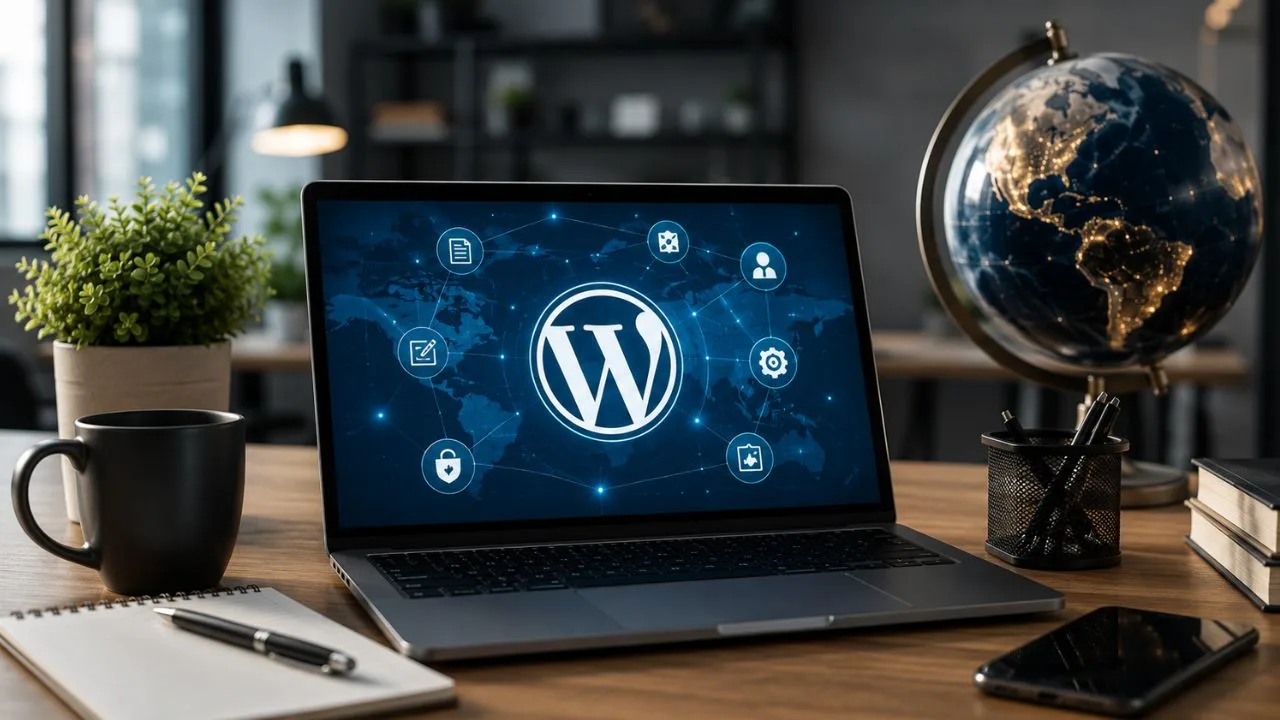
WordPress is an open-source content management system used to build, publish, and manage websites. A CMS allows users to create pages, upload media, organize content, manage contributors, and update a website through an administrative dashboard instead of manually editing every page in code.
The platform began with a strong focus on publishing, but it is no longer limited to traditional blogs. WordPress.org describes the software as suitable for business websites, portfolios, government sites, magazines, news publications, communities, website networks, and custom applications.
WordPress separates content, design, and functionality into connected layers. Content is managed through posts, pages, media, and structured information; themes control much of the presentation; and plugins add features that are not included in the core installation.
This structure makes WordPress both approachable and expandable. A small website can begin with a theme and a few essential plugins, while an experienced development team can use custom code, APIs, specialized hosting, and external services to create a much more complex platform.
WordPress.org vs. WordPress.com
WordPress.org refers to the open-source software that can be downloaded and installed on a compatible hosting account. This version is commonly called self-hosted WordPress because the website owner chooses the hosting provider and takes responsibility for configuration, updates, backups, and maintenance.
WordPress.com is a hosted website service built around WordPress technology. It combines the CMS with managed hosting and offers different plans with varying levels of storage, customization, plugin access, ecommerce support, and technical control.
The two options serve different needs. WordPress.com can simplify setup for users who prefer an integrated service, while self-hosted WordPress generally provides more direct control over hosting, files, databases, themes, plugins, monetization methods, and custom development.
When people describe WordPress as the most flexible CMS, they are usually referring primarily to the self-hosted software available through WordPress.org. Understanding this difference prevents businesses from choosing a plan that does not provide the level of control their project requires.
Is WordPress Really the Best CMS for Everyone?
The word best depends on the website’s purpose, budget, technical resources, and long-term requirements. A platform that is ideal for a content-driven business may not be ideal for a temporary landing page, a highly specialized internal application, or a store owner who wants every technical decision managed by one provider.
WordPress is strongest when a project needs control, content publishing, customization, search visibility, integrations, and the ability to grow. It is particularly useful when the website may expand from a few pages into a publication, membership platform, ecommerce store, directory, learning website, or multisite network.
Its openness also creates responsibilities. Website owners must select reliable hosting, keep software updated, use well-maintained plugins, create backups, and protect administrative accounts. A poorly managed WordPress installation can become slow, unstable, or insecure, just as a poorly maintained application built with another technology can.
Therefore, WordPress should be called the best all-round CMS rather than the only sensible CMS. Its advantage comes from the unusually broad range of problems it can solve without forcing every website into one fixed design, hosting company, pricing structure, or business model.
WordPress Has Unmatched CMS Market Adoption
Market share alone does not prove that a product is perfect, but it does reveal whether the platform has achieved broad real-world acceptance. As of July 19, 2026, WordPress powered 41.2% of all websites measured by W3Techs and nearly six out of every ten websites using a recognized CMS.
This adoption creates practical benefits. Hosting providers understand WordPress requirements, agencies recruit WordPress developers, freelancers specialize in it, software companies build integrations for it, and businesses can usually find experienced help without depending on one original developer.
The platform has also survived major changes in web design, mobile usage, ecommerce, social media, search, cloud hosting, and visual editing. Longevity matters because a business website may remain active for many years and should not depend on a product that may disappear after a short period.
WordPress continues to receive active releases rather than surviving only because of older installations. It has 7.0 launched in May 2026, and version 7.0.2 was released on July 17, 2026, demonstrating that the project remains under active development and security maintenance.
WordPress Is Free and Open-Source Software
The WordPress software is distributed under the GNU General Public License, version 2 or later. This license allows people to use, study, modify, and redistribute the software under its terms rather than depending on permission from a proprietary website platform.
Open source does not mean that running a professional website costs nothing. Businesses may still pay for hosting, domain registration, premium extensions, development, maintenance, security, design, and marketing. The important difference is that the core software is not controlled through a compulsory per-site licensing fee.
Developers can inspect the code, adapt it for unusual requirements, contribute improvements, and build commercial products around it. Website owners are not limited to the features that one software company chooses to include in a closed platform.
This freedom creates a competitive marketplace around WordPress. Businesses can compare hosts, agencies, developers, themes, plugins, payment providers, and support services instead of being required to purchase every important capability from one vendor.
Website Owners Retain Greater Control
Self-hosted WordPress gives the website owner direct control over the site’s database, media, files, content, hosting environment, and code. WordPress officially emphasizes ownership of website content and data as one of the platform’s central benefits.
This control can be valuable when a business needs to change hosting providers, introduce a custom feature, modify its checkout process, connect a specialist service, or create a backup strategy that fits internal requirements. The website is not restricted to a single provider’s standard roadmap.
Greater ownership can also reduce platform lock-in. Moving a complex website is never effortless, but an open system with accessible files, databases, importers, exporters, APIs, and a large professional ecosystem provides more migration options than many closed builders.
Control must be matched with responsibility. The owner or technical provider needs to manage backups, updates, hosting quality, plugin selection, access control, and performance. WordPress offers freedom, but it does not remove the need for competent website management.
WordPress Can Build Almost Any Type of Website
One of WordPress’s biggest strengths is that the same core CMS can support very different projects. Official WordPress documentation lists blogs, portfolios, business sites, publications, government websites, communities, and networks among the platform’s possible uses.
Plugins and custom development expand that list further. WordPress can support ecommerce stores, directories, appointment systems, online courses, gated content, membership communities, event listings, multilingual websites, donation platforms, property listings, and customer portals.
This versatility allows a website to evolve without immediately switching platforms. A consultant may begin with a simple service website, add a blog, introduce online booking, sell downloadable resources, and eventually create a paid membership area within the broader WordPress environment.
Not every advanced function should be assembled from unrelated plugins. Complex, high-risk, or business-critical features may require custom development and careful architecture. The advantage is that WordPress gives experienced teams several ways to build rather than limiting them to one predefined collection of features.
The Plugin Ecosystem Is Exceptionally Large
Plugins are software extensions that add or modify WordPress functionality. They can provide contact forms, search optimization controls, backups, ecommerce, analytics, caching, security tools, memberships, event calendars, payment integrations, accessibility improvements, and thousands of other capabilities.
WordPress.org describes its plugin repository as the largest directory of free and open-source WordPress plugins. The directory provides individual listings, update information, ratings, installation data, support forums, and compatibility details for submitted extensions.
The ecosystem is still growing. The official Plugins Team reported that it reviewed 12,713 plugin submissions during 2025, representing a substantial increase from the previous year. This continuing activity indicates that developers are still building new WordPress products rather than treating the platform as a closed or declining ecosystem.
A large directory does not mean every plugin is suitable. Website owners should examine update history, active support, reviews, compatibility, developer reputation, security practices, and whether the feature is genuinely needed before installing an extension.
Themes Make Professional Design More Accessible
A WordPress theme controls the visual presentation and structural styling of a website. Themes provide a starting point for typography, colors, templates, headers, footers, content layouts, archives, and responsive behavior.
The official WordPress theme directory advertised more than 14,000 free themes in July 2026, with filters for accessibility readiness, ecommerce, block patterns, translation support, layouts, and different website subjects.
Businesses can begin with a free theme, purchase a professionally supported commercial theme, or commission a custom design. This range makes WordPress suitable for both limited budgets and highly specialized brand systems.
A theme should be selected for more than its homepage demonstration. Performance, accessibility, mobile behavior, update support, code quality, compatibility, and ease of maintenance matter more than decorative effects that may not suit the actual content.
The Block Editor Makes Page Building More Flexible
The WordPress block editor organizes content into reusable elements such as headings, paragraphs, images, buttons, columns, videos, galleries, lists, and embeds. Users can move and style these blocks without manually writing the HTML for every page.
With a compatible block theme, the Site Editor can also manage broader design areas such as templates, headers, footers, navigation, styles, and patterns. WordPress documentation confirms that blocks available in the content editor can also be used within the Site Editor.
Patterns provide prearranged groups of blocks that can be inserted and adapted. They help teams create consistent calls to action, service sections, testimonials, pricing areas, and article layouts without rebuilding the same structure each time.
The block system gives WordPress a strong balance between visual editing and structured content. Beginners can assemble pages visually, while developers can create custom blocks, control design options, and build reusable systems that protect brand consistency.
WordPress Makes Content Publishing Straightforward
WordPress was built around publishing, and content management remains one of its strongest areas. Users can create posts and pages, upload images, organize categories, schedule publication, save drafts, review revisions, and control whether content is public, private, or password protected.
The editor is familiar to people who have used document-creation software. Writers can format text, add headings, insert media, create links, and preview changes without needing to ask a developer to update every article.
This independence is important for marketing teams. A company that can publish service updates, case studies, landing pages, news, and educational content internally can respond faster than one that needs a technical deployment for every textual change.
WordPress also separates content from much of the theme presentation. A redesign can therefore change how existing content is displayed without requiring the organization to manually recreate every article and page.
WordPress Supports Editorial Teams and User Roles
Business websites are rarely managed by one person forever. WordPress includes a role-and-capability system that can give different users different levels of access according to their responsibilities.
Standard roles include administrators, editors, authors, contributors, and subscribers. The permissions associated with those roles control whether a person can publish content, edit another writer’s work, manage settings, install software, or perform other administrative actions.
This structure supports safer collaboration. A freelance writer does not necessarily need administrator access, and a customer-service employee may require only the capabilities related to their assigned workflow.
Plugins and custom code can extend the role system when a project requires more detailed permissions. Organizations can create approval processes, specialized editorial roles, restricted content areas, and access rules tailored to departments or membership levels.
WordPress Provides a Strong SEO Foundation
WordPress generates organized pages, editable titles, headings, media information, links, taxonomies, and human-readable URL options that can support search engine optimization. WordPress.org states that the core software is optimized for search engines and can be extended with dedicated SEO plugins for more detailed control.
The CMS makes it easy to publish the types of content commonly used in organic search strategies. Businesses can create service pages, product information, local landing pages, tutorials, comparison articles, case studies, glossaries, and frequently asked questions within one publishing system.
SEO plugins can add controls for metadata, canonical URLs, XML sitemaps, structured data, redirects, social previews, indexing rules, and content analysis. These tools do not guarantee rankings, but they make important technical and editorial settings more accessible.
Search performance still depends on content quality, competition, website speed, crawlability, internal linking, reputation, and user satisfaction. WordPress is SEO-friendly when configured well, but installing the CMS or an SEO plugin does not automatically create an effective search strategy.
WordPress Works Extremely Well for Content Marketing
Content marketing requires more than publishing isolated blog posts. Businesses need a system for organizing topics, connecting educational material with commercial pages, updating old content, embedding media, and guiding readers toward relevant actions.
WordPress supports categories, tags, custom post types, taxonomies, archives, menus, internal links, authors, revisions, and scheduled publishing. These capabilities make it possible to build a structured content library rather than a collection of disconnected pages.
Marketing teams can also repurpose content within the platform. A webinar can become a video page, transcript, article series, downloadable guide, newsletter archive, and landing page while remaining connected to the same website.
The CMS therefore supports both immediate publication and long-term information architecture. A carefully planned WordPress website can grow into an authoritative resource that attracts search visitors, supports sales conversations, and answers customer questions.
WooCommerce Turns WordPress Into an Ecommerce Platform
WooCommerce is an open-source ecommerce platform built for WordPress. It can transform a content website into an online store while allowing the owner to manage products, orders, customers, content, and marketing within the broader WordPress environment.
The core platform can support physical goods, digital products, variations, coupons, shipping, taxes, inventory, and different payment methods. Extensions and integrations add subscriptions, bookings, memberships, advanced shipping, product bundles, accounting connections, and other specialized functions.
This combination is particularly valuable for content-led commerce. A business can publish buying guides, tutorials, product comparisons, customer stories, and search-optimized category pages directly beside the store instead of managing content and ecommerce through unrelated systems.
WooCommerce also preserves much of the open-source flexibility associated with WordPress. Store owners can choose their hosting and service providers, but they must also manage performance, security, compatibility, checkout reliability, and ongoing technical maintenance.
WordPress Can Scale Beyond a Small Website
WordPress is often associated with blogs and small businesses, but the software itself is not restricted to small projects. Scalability depends on architecture, code quality, hosting infrastructure, caching, database optimization, traffic patterns, and operational processes.
A lightweight WordPress site can run on affordable shared hosting, while a high-traffic publication or ecommerce platform may use managed cloud infrastructure, content delivery networks, object caching, load balancing, search services, and specialized database configurations.
The CMS also includes WordPress Multisite, which allows several websites to be managed within one WordPress installation. Official documentation describes business networks that share themes or plugins while maintaining different regional content as one possible Multisite use case.
Scaling should be planned rather than assumed. Poorly coded plugins, unoptimized images, excessive database requests, and inadequate hosting can damage performance, while a carefully engineered WordPress system can support substantial content, users, and traffic.
WordPress Multisite Supports Website Networks
WordPress Multisite enables administrators to create and manage several related sites from one WordPress installation. The network can use subdirectories, subdomains, or mapped domains depending on its configuration.
This can suit universities, franchises, media networks, international organizations, or companies with multiple regional and departmental websites. Themes and plugins may be managed centrally while each site maintains its own content.
Central administration can improve consistency and reduce duplicated maintenance. A network administrator can control available themes, plugins, users, updates, and shared technical standards from one broader system.
Multisite also adds complexity. Migration, plugin compatibility, server configuration, domain mapping, permissions, and database management require careful planning, so it should be chosen for a genuine network requirement rather than because it sounds more advanced.
Developers Can Customize WordPress Deeply
WordPress provides extensive developer resources for themes, plugins, blocks, commands, hooks, custom post types, taxonomies, metadata, authentication, database interaction, and administrative interfaces. This allows development teams to change both public-facing experiences and internal workflows.
Developers can use actions and filters to extend behavior without directly modifying core files. This approach makes custom functionality easier to maintain across WordPress updates when it is implemented according to established development practices.
The platform can also connect with customer relationship systems, payment services, marketing tools, inventory platforms, analytics products, search technologies, and private business applications. Custom development is not limited to changing colors or adding simple widgets.
This depth is one reason WordPress can serve both beginners and technical teams. The dashboard offers an accessible publishing experience, while the underlying platform provides enough extensibility for developers to build highly specialized solutions.
The REST API Supports Headless and Integrated Websites
The WordPress REST API allows applications to send and receive WordPress data using JSON. Official developer documentation explains that it supports interaction with site content and provides a foundation for the block editor and other custom interfaces.
A development team can use WordPress as a headless CMS, meaning editors manage content in WordPress while a separate frontend displays it through another technology. This approach can support websites, applications, kiosks, or other digital channels drawing from the same content source.
The API can also connect WordPress with external systems. Developers can retrieve or update posts, media, users, custom content types, and permitted business data according to the project’s authentication and security design.
Headless architecture is not automatically faster, cheaper, or better. It introduces separate frontend development, deployment, hosting, preview, caching, and maintenance requirements, but WordPress provides the technical foundation when that architecture is justified.
WordPress Supports International and Multilingual Projects
WordPress itself is available in numerous languages, and the official feature overview states that the platform can be installed and used in more than 70 languages. This helps administrators and contributors work in interfaces suited to their language preferences.
Themes and plugins can also be prepared for translation through WordPress internationalization standards. A global community of translators contributes language packs for core software and extensions.
A single WordPress installation does not provide complete bilingual or multilingual content management automatically. Official documentation explains that multilingual publishing normally requires an appropriate plugin, a multisite structure, or another planned implementation.
With the right setup, businesses can create translated pages, language-specific URLs, regional content, localized navigation, and international SEO signals. The implementation should be planned carefully to prevent duplicate content, inconsistent translations, and confusing user journeys.
Accessibility Is Part of the WordPress Project
Accessibility means designing websites and tools that people with disabilities can use directly or through assistive technologies. WordPress maintains a dedicated Accessibility Team that contributes knowledge and improvements to the core project.
Official WordPress coding standards expect code integrated into core, WordPress.org sites, and official plugins to work toward WCAG 2.2 Level AA requirements. WordPress 7.0 also included additional accessibility improvements across the core software.
The official theme directory provides an “accessibility ready” filter, helping users identify themes reviewed against additional accessibility requirements. This label is useful, but it does not guarantee that every finished website will remain accessible after content and plugins are added.
Website accessibility remains the responsibility of the implementation team. Theme selection, heading structure, color contrast, keyboard access, form labels, alternative text, captions, error messages, and content decisions all affect the final experience.
WordPress Has an Active Security Process
WordPress maintains a dedicated Security Team that investigates vulnerabilities, coordinates responsible disclosure, develops fixes, and works with hosting and security providers. The project states that its development process includes code review and security hardening.
The platform supports automatic background updates for many maintenance and security releases. WordPress also provides controls for enabling automatic updates for plugins and themes, although site owners should still maintain backups and test important changes.
The July 17, 2026 release of WordPress 7.0.2 addressed critical and high-severity security issues, and automatic updates were forced for affected versions because of the severity. This example shows both that vulnerabilities can occur and that active maintenance remains essential.
Security depends on the complete website, not WordPress core alone. Hosting, passwords, administrator access, themes, plugins, backups, firewalls, monitoring, and update practices all influence risk, so an abandoned installation should never be treated as secure simply because it uses a popular CMS.
Backups and Portability Support Business Continuity
A reliable website needs a recovery plan. WordPress websites generally consist of database content and files containing uploads, themes, plugins, and configuration, all of which can be included in an appropriate backup strategy.
Official WordPress guidance explains that a proper backup of both the database and files can restore a website after data loss, technical failure, or another serious problem. Backups should be stored independently rather than existing only on the same server as the live website.
The open structure also supports migration between compatible hosting environments. Businesses can move a self-hosted WordPress installation when performance, pricing, service, or regulatory requirements change, although complex sites may require professional migration support.
Backup systems should be tested rather than merely installed. A successful backup notification is not enough if the organization has never confirmed that the stored data can be restored correctly within an acceptable period.
WordPress Has a Large Support and Learning Community
The popularity of WordPress has produced an extensive support ecosystem. Users can find official documentation, developer handbooks, community forums, training materials, local events, agencies, freelancers, hosting specialists, and commercial product support.
The WordPress.org support forums include dedicated areas for installation, troubleshooting, development, networking, accessibility, mobile applications, themes, and plugins. Individual directory plugins and themes may also provide links to their related support forums.
Learn WordPress provides lessons combining videos, practical exercises, quizzes, and written material for users and contributors at different skill levels. This reduces dependence on random tutorials that may be outdated or inaccurate.
WordCamps and other official WordPress events cover subjects including content creation, SEO, marketing, development, design, ecommerce, enterprise systems, community building, and artificial intelligence. These events help knowledge move between users, professionals, and contributors worldwide.
WordPress Offers Strong Long-Term Value
WordPress can be cost-effective because the core software is free, many themes and plugins have free editions, and businesses can select services according to their budgets. A basic informational website and an advanced ecommerce platform do not need to use the same hosting or development model.
The platform also supports gradual investment. A new business can begin with a modest site and later improve its theme, hosting, content, integrations, marketing tools, and custom features as revenue and requirements grow.
Long-term value comes from avoiding unnecessary rebuilding. When the information architecture and technical foundation are planned well, a WordPress site can receive new designs and functions while retaining its existing content, URLs, users, and business data.
Costs can still rise when a site accumulates premium subscriptions, overlapping plugins, custom maintenance, and inadequate hosting. WordPress provides pricing flexibility, but disciplined architecture is necessary to prevent a seemingly inexpensive setup from becoming inefficient.
WordPress Reduces Dependence on One Vendor
Proprietary website builders usually combine software, hosting, billing, templates, and technical rules within one company’s service. This convenience can be valuable, but leaving the platform may require rebuilding features or accepting limited export options.
Self-hosted WordPress separates the CMS from the hosting provider. Businesses can move between hosts, hire different agencies, replace individual plugins, redesign the theme, or integrate new services without abandoning the entire content-management platform.
The large talent market also reduces dependence on one developer. If a freelancer or agency becomes unavailable, another experienced WordPress professional can usually inspect the installation and continue the work, provided that the website was built according to reasonable standards.
Vendor independence is not the same as effortless portability. Custom code, proprietary page builders, plugin-specific data, and poorly documented systems can create their own lock-in, so businesses should consider portability when selecting every major component.
WordPress Continues to Evolve
WordPress is not frozen in the blogging era. The project continues to improve the block editor, Site Editor, patterns, design tools, APIs, performance, accessibility, collaboration, and developer workflows through regular releases.
WordPress 7.0 was released on May 20, 2026, and official developer updates during 2026 discussed continuing work on content types, design controls, APIs, responsive styling, and collaboration-related features.
The platform is also experimenting with new development workflows involving artificial intelligence and browser-based WordPress environments. Official 2026 developer updates highlighted an MCP server for WordPress Playground and emerging AI-related APIs.
Not every experimental feature should be used immediately on a production website. The important point is that WordPress remains an actively developed ecosystem capable of adapting to changing publishing and development practices.
WordPress vs. Wix and Squarespace
Wix and Squarespace provide managed environments that can be easier for people who want hosting, templates, support, and software administration bundled into one service. They may be suitable for smaller projects that prioritize simplicity over extensive control.
WordPress generally offers broader flexibility in hosting, code access, content structure, extensions, and custom development. A business can choose among many technical providers rather than working within one company’s product boundaries.
Managed builders can reduce maintenance responsibilities, while self-hosted WordPress requires someone to oversee updates, backups, performance, and security. The most convenient option depends on whether the user values reduced administration or greater ownership.
WordPress is usually stronger when the website is expected to grow, publish substantial content, integrate with specialist services, or require custom features. A hosted builder may be more practical when the website is small, standardized, and unlikely to change significantly.
WordPress vs. Shopify
Shopify is a commerce-first hosted platform designed to simplify store setup, payments, hosting, and ecommerce operations. It can be an excellent choice for merchants who want an integrated retail system and do not need deep control over the underlying platform.
WordPress with WooCommerce is more open and content-flexible. It can suit businesses that need a powerful publication, customized buying journey, unusual product structure, membership system, or specialist integration alongside ecommerce.
WooCommerce owners have more choices, but they also manage more moving parts. Hosting, updates, extension compatibility, checkout performance, taxes, backups, and security require greater technical responsibility than many hosted-store arrangements.
The decision should therefore reflect the business model. Shopify often prioritizes managed commerce convenience, while WordPress and WooCommerce prioritize flexibility, content ownership, and architectural control.
WordPress vs. Webflow
Webflow combines visual design, hosting, content management, and frontend development tools in a managed platform. It can be attractive to designers who want detailed visual control without creating every layout through traditional coding.
WordPress offers a broader plugin ecosystem, larger professional market, open-source licensing, and more hosting freedom. It is often easier to extend into ecommerce, memberships, directories, large publications, and custom editorial systems through its established ecosystem.
Webflow may provide a more controlled visual environment, while WordPress implementations can vary greatly according to the selected theme, builder, plugins, and developer. WordPress quality depends heavily on architectural choices.
Both platforms can produce professional websites. WordPress is usually the stronger general-purpose CMS, while Webflow can be appealing for design-led marketing sites where the visual building workflow is the primary requirement.
WordPress vs. Drupal
Drupal is another open-source content management system known for structured content, permissions, and complex enterprise or institutional implementations. It can be highly effective when a project has sophisticated data and governance requirements.
WordPress generally has a gentler learning curve for ordinary publishers and a larger marketplace of ready-made themes, plugins, hosting services, and freelancers. Its editing experience can therefore be easier for smaller teams to adopt.
Drupal may provide advantages for certain complex applications, but those benefits often require more specialized development resources. WordPress can reach a wider range of users without removing the possibility of custom engineering.
The right decision depends on the project rather than platform popularity. An organization should compare content models, security requirements, integrations, editorial roles, maintenance capacity, and total ownership cost before selecting either CMS.
When WordPress May Not Be the Best Choice
WordPress may be unnecessary for a one-page temporary campaign that can be served as a simple static site. Adding a database, administration system, plugins, and maintenance responsibilities may create complexity without providing meaningful value.
A fully managed commerce platform may suit a merchant who wants minimal technical involvement and is comfortable operating within the provider’s system. WordPress offers more control, but not every owner wants to manage that control.
A highly specialized real-time application may also need a custom framework rather than a traditional CMS as its primary foundation. WordPress can integrate with applications, but it should not be forced to perform tasks better handled by purpose-built technology.
The correct platform is the one that meets the project’s requirements with reasonable cost, risk, and maintenance. WordPress deserves serious consideration for most content-driven websites, but responsible recommendations should acknowledge cases where another solution is more appropriate.
How to Choose a WordPress Theme
Begin by identifying the website’s content and functional requirements. A theme should support the information architecture and brand system rather than forcing the business to imitate a demonstration website created for a different purpose.
Choose a theme with active maintenance, clear documentation, responsive design, sensible accessibility, and compatibility with current WordPress versions. The official theme directory provides information and filters that can support this evaluation.
Avoid themes that include numerous unrelated features, bundled plugins, excessive animations, and proprietary shortcodes that make future migration difficult. A focused theme with clean foundations is often more sustainable than a visually impressive package containing unnecessary complexity.
Test the theme using real content before making a final decision. Long headings, product images, tables, forms, menus, mobile layouts, and accessibility tools may reveal problems that are not visible in a polished demonstration.
How to Choose WordPress Plugins Safely
Install a plugin only when it solves a defined problem. Every extension adds code, settings, update requirements, and a possible point of conflict, so a smaller collection of purposeful plugins is usually easier to maintain.
Review the developer, update history, support activity, compatibility information, documentation, ratings, and active installations. Directory inclusion is useful, but it should not replace your own assessment of whether the plugin is maintained and appropriate.
Avoid installing several plugins that perform overlapping tasks. Multiple caching, security, optimization, or page-building systems can conflict and make it difficult to identify which component controls a setting.
Test major plugin changes on a staging copy and create a verified backup before updating a business-critical website. WordPress provides update tools, but responsible maintenance includes preparation for the possibility that an extension update may create an unexpected compatibility problem.
How to Keep WordPress Fast
Performance begins with reliable hosting suited to the website’s traffic and functionality. A small blog, membership system, and high-volume WooCommerce store have different processor, memory, database, and caching requirements.
Use optimized images, efficient themes, well-coded plugins, caching, and a content delivery network where appropriate. Remove unused extensions and investigate slow database queries instead of installing several optimization tools without understanding the problem.
Measure important page types separately. A fast homepage does not prove that product searches, checkout pages, logged-in dashboards, or long articles perform equally well.
Speed should be treated as an operational discipline rather than a one-time plugin setting. New content, tracking scripts, advertisements, fonts, integrations, and extensions can gradually change website performance.
How to Keep WordPress Secure
Install WordPress only from official sources and keep the core software, themes, and plugins updated. Official hardening guidance emphasizes current software, secure passwords, appropriate file permissions, backups, monitoring, and careful plugin management.
Use unique administrator credentials and multifactor authentication where possible. Remove unused accounts, give users only the permissions they need, and avoid sharing one administrator login among an entire team.
Choose reputable hosting, maintain off-site backups, monitor security activity, and protect login and administrative areas. Security plugins can help, but they do not replace updates, strong access controls, and secure server configuration.
Review the site regularly. An extension that was reliable two years ago may become abandoned, and an old staging site may create risk even when the primary website is carefully maintained.
How to Decide Whether WordPress Is Right for You
Choose WordPress when you need a content-focused website with room to expand. It is particularly strong for businesses that expect to publish regularly, compete in search, add integrations, sell online, manage multiple contributors, or maintain control over their data.
Confirm that someone can manage the technical responsibilities. This may be an internal administrator, a managed WordPress host, a freelance professional, or an agency with a clear maintenance agreement.
Estimate the complete cost rather than looking only at the free software. Hosting, design, plugins, development, content, maintenance, security, backups, and support should all be included in the decision.
Finally, plan for the next several years rather than only the launch date. WordPress is most valuable when its flexibility, portability, publishing strength, and extensibility support the website’s future direction.
Final Thoughts on Why WordPress Is the Best CMS
WordPress has earned its position through more than popularity. It combines approachable publishing tools with open-source freedom, a vast ecosystem, strong content management, ecommerce capabilities, developer APIs, user roles, and several paths for customization.
Its market leadership creates practical advantages for website owners. WordPress skills, hosting, extensions, documentation, and professional services are available across a broad international ecosystem rather than through one controlling provider.
The platform is not maintenance-free and should not be treated as an automatic solution. Poor plugin choices, weak hosting, neglected updates, and unclear architecture can undermine the advantages that make WordPress powerful.
When implemented responsibly, WordPress remains one of the most adaptable, owner-friendly, and future-ready content management systems available. That balance of usability and freedom is the strongest reason it continues to be considered the best CMS in the world.
Frequently Asked Questions
1. Why is WordPress considered the best CMS?
WordPress combines easy content publishing with extensive themes, plugins, ecommerce tools, APIs, and custom development options. Its open-source model also gives website owners greater control over hosting, data, and functionality.
2. Is WordPress good for beginners?
Yes. Beginners can use themes, blocks, patterns, and plugins to build and update websites without coding. More complex customization may still require an experienced designer, developer, or managed hosting provider.
3. Is WordPress suitable for large websites?
Yes, when it is supported by suitable hosting, caching, optimized code, database planning, security, and professional maintenance. WordPress Multisite can also manage networks of related websites from one installation.
4. Is WordPress secure?
WordPress has an active security team and receives regular maintenance and security updates. The final website’s security also depends on hosting, passwords, plugins, themes, backups, monitoring, and timely maintenance.
5. Is WordPress better than Shopify or Wix?
WordPress generally provides more ownership, customization, publishing flexibility, and hosting choice. Shopify or Wix may be easier for users who prefer a fully managed platform and are comfortable with more standardized functionality.