


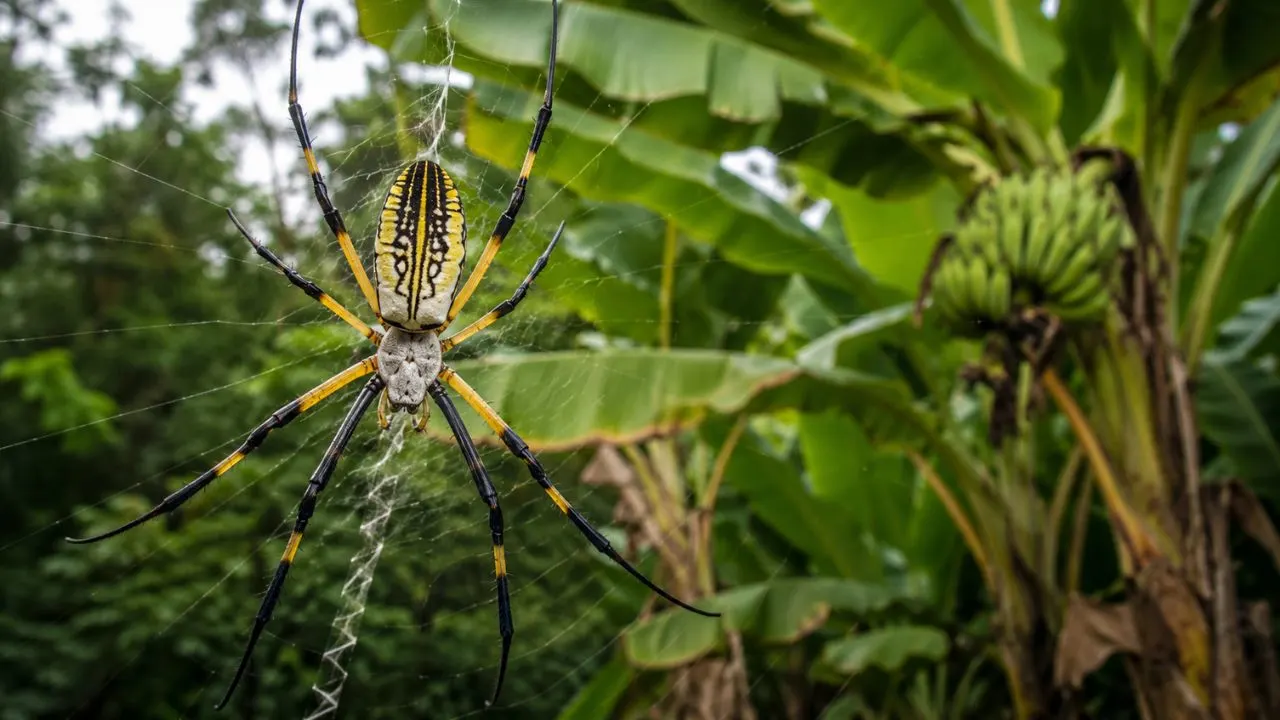
Banana Spider: Facts You Should Know Before It’s Too Late
Seeing a large yellow, orange, or brown spider suspended in an enormous web can be alarming. Many people call this animal a banana spider, but the name does not point to one clearly defined species in every country or region.
In the southeastern United States, banana spider usually refers to the golden silk orb-weaver. This striking spider builds large golden-colored webs between trees, shrubs, trails, utility lines, and other structures where flying insects regularly pass.
In Central and South America, however, the same nickname may be used for wandering spiders in the Phoneutria genus. These spiders do not live permanently in large orb webs and have venom that can cause much more serious symptoms.
Understanding this difference is essential before deciding whether a spider is harmless, beneficial, or potentially dangerous. This guide explains banana spider identification, size, habitat, diet, web-building behavior, bite symptoms, and the safest response to an unexpected encounter.
What Is a Banana Spider?
Banana spider is an informal common name rather than a precise scientific classification. Depending on the location and speaker, it may describe a golden silk orb-weaver, a Brazilian wandering spider, or another large yellowish spider.
The North American banana spider is generally Trichonephila clavipes, formerly classified as Nephila clavipes. It is also known as the golden silk spider or golden silk orb-weaver because of the distinctive color of its web.
Another animal called a banana spider belongs to the Phoneutria genus. These wandering spiders are native to parts of Central and South America and are sometimes found near human homes, plantations, stored materials, or dark hiding places.
Using location, body shape, markings, behavior, and web type is more reliable than relying on the nickname alone. When an identification could affect medical decisions, a qualified local expert should examine a clear photograph rather than depending on a general online description.
Why Are They Called Banana Spiders?
The golden silk orb-weaver may be called a banana spider because mature females often display yellow, golden, tan, orange, or brown coloring. Their elongated bodies and bright markings may remind some observers of a ripening banana.
Brazilian wandering spiders received the nickname partly because some species may shelter among banana plants or plantation materials. Rare reports of spiders arriving with imported fruit have also increased public awareness of the name.
This shared nickname creates unnecessary confusion. A large orb-weaver sitting peacefully in a circular web presents a very different level of risk from a defensive wandering spider hidden inside clothing, footwear, boxes, or plant material.
Scientific names are therefore useful when accuracy matters. Trichonephila clavipes identifies the American golden silk orb-weaver, while Phoneutria refers to the medically significant group commonly called Brazilian wandering or armed spiders.
How to Identify a Golden Silk Banana Spider
A female golden silk orb-weaver has a long, cylindrical abdomen rather than the rounded body seen in some garden spiders. Its body may contain silver, yellow, orange, tan, or brown areas arranged in noticeable patterns.
The long legs often display brown, orange, or dark bands. Females also have brush-like hair tufts on parts of several legs, creating a distinctive appearance that can help separate them from similar orb-weavers.
The spider usually sits near the upper portion of a large asymmetrical web. The silk may appear yellow or golden when illuminated by sunlight, although lighting and viewing angle can change how strongly the color is seen.
Males look dramatically different from females. They are much smaller, slender, and darker and may remain unnoticed near the edge or central area of the female’s large web.
How to Identify a Brazilian Wandering Spider
Brazilian wandering spiders are robust, fast-moving hunting spiders that spend much of their time walking rather than waiting in a large capture web. Their bodies are generally brown or gray with patterns that can vary between species.
They have long, powerful legs and may appear similar to harmless tropical hunting spiders. Color, leg bands, and underside markings are not always enough for a nonexpert to make a safe identification.
When threatened, some Phoneutria spiders raise the front portion of the body and hold their front legs upward. This defensive posture is a warning and should never be treated as an invitation to approach or capture the spider.
A wandering spider should not be identified solely through a dramatic pose seen in an online photograph. Geographic location and expert examination are important because several unrelated spiders can appear similar from a distance.
Banana Spider Size
Female golden silk orb-weavers are among the largest web-building spiders in North America. Their body length may reach approximately 24 to 40 millimeters, while the long legs make the complete spider appear considerably larger.
The male golden silk spider is much smaller, commonly measuring only several millimeters in body length. This difference is so extreme that several males may appear as tiny dark spiders sharing the much larger female’s web.
A spider’s apparent size can also be exaggerated by its position. When the long legs are fully extended in a web, the animal may seem palm-sized even though the body itself is much shorter.
Brazilian wandering spider size varies by species and individual. Because size overlaps with many harmless spiders, a large leg span should never be used as the only evidence that a spider is dangerous.
Where Do Golden Silk Banana Spiders Live?
Golden silk orb-weavers occur across warm parts of the Americas. Their range includes Florida and other southeastern areas of the United States, the Caribbean, Central America, and parts of South America.
They are commonly found along woodland edges, forest trails, clearings, gardens, citrus groves, and waterways. These spaces provide stable attachment points and regular flight paths used by insects.
Their webs may stretch between trees, shrubs, fences, roof edges, utility structures, and garden features. Hikers sometimes notice them only after walking directly into the strong supporting strands.
The spiders generally remain outdoors where prey is abundant. A golden silk orb-weaver found near a home is not normally trying to enter or attack the people living inside.
Where Do Brazilian Wandering Spiders Live?
Brazilian wandering spiders are mainly associated with tropical regions of Central and South America. Different species have different ranges, so not every Phoneutria spider occurs in every country.
They may shelter under logs, rocks, vegetation, fallen leaves, banana plants, and other protected locations. Some enter houses, storage areas, sheds, clothing, footwear, or boxes while looking for darkness and cover.
Their wandering behavior increases the possibility of accidental contact. A bite may occur when a hidden spider is pressed against the skin, stepped on, trapped in clothing, or disturbed by a hand.
Travelers and residents in regions where these spiders occur should shake out shoes and clothing before use. Hands should not be placed blindly inside dark containers, dense vegetation, stacked materials, or hidden crevices.
What Does a Banana Spider Web Look Like?
The golden silk orb-weaver builds a large circular or oval capture web made partly from yellow-golden silk. The main web may reach one to two meters across when sufficient support and space are available.
Its web is often asymmetrical, with the central hub positioned closer to the upper section. The female commonly waits near this area and responds to vibrations produced by struggling insects.
Additional supporting strands and barrier webs may surround the main orb. These structures can make the complete web appear messy or three-dimensional when viewed from the side.
Unlike many spiders that frequently rebuild an entire web, the golden silk orb-weaver may maintain a semipermanent structure. Damaged sections can be repaired while much of the existing framework remains in place.
Why Is Banana Spider Silk Golden?
The silk of golden orb-weavers can show a warm yellow or golden tone under natural light. This coloration is most noticeable when sunlight passes through strands at certain angles.
A web’s appearance can change with shade, background color, moisture, age, and viewing position. Some sections may look bright gold, while others appear nearly transparent or pale yellow.
Researchers have long been interested in golden orb-weaver silk because it combines flexibility, light weight, and impressive performance. The spider nevertheless produces several silk types for different structural and biological purposes.
The web is built for catching prey rather than displaying color to humans. Its strength and placement allow it to slow or hold flying insects until the spider can reach and wrap them.
What Do Banana Spiders Eat?
Golden silk banana spiders mainly eat small and medium-sized flying insects. Their prey may include flies, mosquitoes, moths, bees, wasps, beetles, butterflies, and dragonflies that become trapped in the web.
When an insect struggles, vibrations travel through the silk and alert the spider. The spider approaches carefully, bites or restrains the prey, and may wrap it with additional silk before feeding.
These spiders can therefore contribute to natural insect control around gardens, forests, farms, and homes. They do not eliminate every pest, but they are part of a larger ecosystem of predators.
Brazilian wandering spiders hunt without a large permanent prey-catching web. They may eat insects and other small animals they encounter while moving through vegetation, forest litter, and sheltered spaces.
Are Banana Spiders Aggressive?
Golden silk orb-weavers are not naturally interested in attacking people. They normally remain in their webs, avoid unnecessary contact, and rely on their size and silk to capture insect prey.
A bite is most likely when the spider is grabbed, trapped, squeezed, or pressed against bare skin. Simply standing near the web or observing the spider from a respectful distance does not normally provoke an attack.
Brazilian wandering spiders may defend themselves more actively when cornered or disturbed. Their warning posture and rapid movement can appear aggressive, but the behavior is primarily intended to discourage a perceived threat.
Never test a spider’s temperament by touching it, poking the web, or attempting to hold it. Even relatively harmless species can bite when they have no safe route of escape.
Are Golden Silk Banana Spiders Venomous?
Golden silk orb-weavers possess venom because they use it to immobilize insect prey. The presence of venom does not automatically mean that a spider presents a serious threat to humans.
Their bites are uncommon and usually occur only after handling or pinching. Reported effects are generally limited to temporary localized pain, mild redness, or slight swelling.
Individual reactions can differ, particularly in people with allergies or other health conditions. Any bite causing widespread hives, facial swelling, breathing difficulty, faintness, or rapidly worsening symptoms requires urgent medical care.
The safer description is that golden silk spiders are venomous but not generally considered medically dangerous. Their large appearance is much more intimidating than their usual effect on people.
Are Brazilian Banana Spiders Dangerous?
Some Phoneutria species have medically significant neurotoxic venom. Their bites can cause severe local pain and may produce symptoms affecting the nervous system, heart, breathing, and other parts of the body.
Possible symptoms include spreading pain, sweating, nausea, vomiting, agitation, excessive salivation, vision changes, dizziness, and a rapid heartbeat. Serious cases may develop breathing difficulties and require emergency treatment.
Not every bite delivers the same amount of venom, and some produce mainly local effects. It is impossible to determine the severity safely by waiting for the bite to become unbearable.
Anyone bitten by a suspected Brazilian wandering spider should seek urgent local medical care. Children, older adults, and people developing systemic symptoms may be at greater risk of serious complications.
Banana Spider Bite Symptoms
A golden silk orb-weaver bite may cause an immediate pinching or stinging sensation. Mild redness, tenderness, itching, or swelling can develop around the bite site and usually remains localized.
More significant symptoms suggest either an unusual reaction, infection, or a different type of spider. Severe pain, muscle spasms, repeated vomiting, sweating, weakness, breathing trouble, or spreading symptoms should not be ignored.
It is common for unexplained skin sores to be blamed on spiders even when no spider was seen. Bacterial infections, allergic reactions, insect bites, and inflammatory skin conditions may produce similar marks.
A healthcare professional should examine a worsening wound, blistering, fever, pus, darkening skin, spreading redness, or persistent pain. Do not rely on photographs alone to diagnose a spider bite.
What to Do After a Banana Spider Bite
Move away from the spider without attempting to crush or capture it with bare hands. Wash the bite gently with soap and clean water, then remove rings or tight items before swelling develops.
Apply a wrapped cool pack for short periods to reduce discomfort. Keep the affected area comfortably positioned and avoid cutting the skin, sucking the wound, or applying chemicals and unverified remedies.
Take a clear photograph from a safe distance when this can be done without delaying care. Geographic location, the spider’s appearance, and the circumstances of the bite may help medical professionals assess likely risk.
Contact local emergency services or a poison center immediately for serious symptoms or a suspected Phoneutria bite. Breathing difficulty, fainting, severe spreading pain, repeated vomiting, confusion, or rapid deterioration requires emergency attention.
Should You Kill a Golden Silk Banana Spider?
A golden silk orb-weaver usually does not need to be killed. It provides natural insect control and generally remains peacefully within its web throughout the active season.
When the web is away from doors, walkways, play areas, or frequently used equipment, the simplest option is to leave the spider alone. It can be observed without touching the web or disturbing the animal.
If the web blocks an essential path, contact a local pest professional or wildlife expert for advice. Carefully redirecting support strands may sometimes encourage rebuilding elsewhere, but direct handling should be avoided.
A spider that cannot be confidently identified should be treated cautiously. Keep children and pets away while obtaining guidance from a local extension office, pest specialist, or qualified arachnid expert.
How to Keep Banana Spiders Away From Walkways
Regularly inspect outdoor paths, porches, sheds, garden gates, and play spaces during warm months. Early web construction is easier to notice and manage before a large mature web crosses a busy route.
Reduce bright outdoor lighting near doors when it is unnecessary. Lights attract flying insects, and areas with abundant prey may become attractive web-building locations for orb-weavers.
Trim excessive vegetation that touches buildings or narrows walking paths. Removing unused supports and keeping frequently traveled spaces open may reduce convenient attachment points.
Avoid broad pesticide spraying simply because a large spider is present. These chemicals may kill beneficial insects and other wildlife without correcting the environmental features that attracted the spider.
Banana Spider Eggs and Life Cycle
In temperate areas, golden silk orb-weavers generally follow a seasonal life cycle. Young spiders develop through the warmer months, while mature females become especially noticeable in late summer and fall.
The female produces egg sacs containing many eggs surrounded by protective silk. These sacs may be placed away from the main web in vegetation or another sheltered location.
Adult spiders usually disappear when colder weather arrives, but the protected eggs survive until environmental conditions support hatching. The young spiderlings later disperse and begin constructing their own small webs.
Removing one visible female does not guarantee that no spiders will appear the following year. Nearby habitat, insect availability, weather, and surviving egg sacs all influence future populations.
Male vs. Female Banana Spiders
Female golden silk orb-weavers are far larger and more colorful than males. The large spider occupying the middle or upper portion of the web is therefore usually female.
Males are small, dark brown, and slender. One or more may live along the edge of a female’s web, where they can be overlooked or mistaken for young spiders.
This size difference is called sexual dimorphism. A large female can invest more energy in producing eggs, while the smaller male reaches maturity and moves through the web differently.
Finding several spiders in one web does not necessarily indicate an infestation. The smaller individuals may be males, young spiders, or tiny species that take advantage of insects and leftover material around the web.
Banana Spider vs. Joro Spider
The Joro spider and golden silk banana spider belong to the same broader group of golden orb-weavers. Both produce large webs and have long legs with noticeable bands or markings.
A female Joro often displays bright yellow and dark bands across the abdomen, with bluish-green areas and red markings beneath. The golden silk orb-weaver has a more elongated abdomen with silver, yellow, tan, and orange coloring.
Their ranges can overlap in parts of the southeastern United States. Joro spiders are an introduced species expanding through the region, while Trichonephila clavipes is native to the Americas.
Photographs should show the upper and lower body, legs, and web when possible. A local extension expert can provide a more dependable identification than comparing one partial image with social media posts.
Common Myths About Banana Spiders
One common myth is that every banana spider is deadly. The nickname includes both relatively harmless golden silk orb-weavers and medically significant wandering spiders, making blanket claims inaccurate.
Another myth is that large spiders carry the most dangerous venom. Body size does not reliably predict medical risk, and some much smaller spider species can cause more serious human symptoms.
People also claim that banana spiders regularly chase humans. Orb-weavers stay near their webs, while wandering spiders may move quickly when escaping or defending themselves rather than deliberately hunting people.
Finally, not every spider found near bananas is a Brazilian wandering spider. Many harmless spiders, insects, and other animals shelter around fruit plants, boxes, storage spaces, and agricultural materials.
When to Seek Medical Help
Seek urgent help after any suspected Phoneutria bite, particularly in Central or South America. Do not wait for whole-body symptoms to develop before contacting local medical services.
Emergency attention is also necessary for difficulty breathing, facial or throat swelling, fainting, confusion, muscle spasms, widespread sweating, repeated vomiting, vision changes, or rapidly spreading pain.
Arrange prompt medical assessment when the bite area becomes increasingly red, hot, swollen, dark, blistered, or filled with pus. Fever and worsening tenderness may indicate infection or another condition.
Bring a photograph when available, but do not transport a live spider in an unsafe container. Medical treatment should be based on symptoms, location, and professional assessment rather than risking another bite.
Final Thoughts
The most important banana spider fact is that the name does not describe only one species. In North America, it commonly refers to the impressive but generally harmless golden silk orb-weaver.
The golden silk banana spider builds large golden webs, eats flying insects, and rarely bites unless physically handled or trapped. Its intimidating size does not make it an aggressive threat to people.
In parts of South America, banana spider may refer to Phoneutria wandering spiders with medically important venom. Suspected bites from these spiders require urgent professional evaluation.
Observe unidentified spiders from a safe distance, use geographic location and behavior as identification clues, and avoid handling them. Accurate identification prevents unnecessary fear while ensuring that potentially dangerous encounters receive timely medical care.
Frequently Asked Questions
Is a banana spider poisonous?
Banana spiders are venomous rather than poisonous, but risk depends on the species. Golden silk orb-weaver bites are usually mild, while Phoneutria bites can cause serious illness.
Can a banana spider kill a human?
Deaths from Brazilian wandering spider envenomation are rare but have occurred. The golden silk orb-weaver commonly called a banana spider in the United States is not generally considered deadly.
What should I do if I see a banana spider?
Keep a safe distance and avoid touching the spider or web. Leave a golden orb-weaver alone when possible, but contact a local expert when identification is uncertain.
Do banana spiders live inside houses?
Golden silk orb-weavers normally build outdoor webs. Brazilian wandering spiders may sometimes enter buildings or hide in shoes, clothing, boxes, and other dark spaces.
What does a banana spider bite look like?
A mild bite may cause localized redness, swelling, and pain, but appearance alone cannot identify the spider. Severe pain or whole-body symptoms require urgent medical evaluation.