


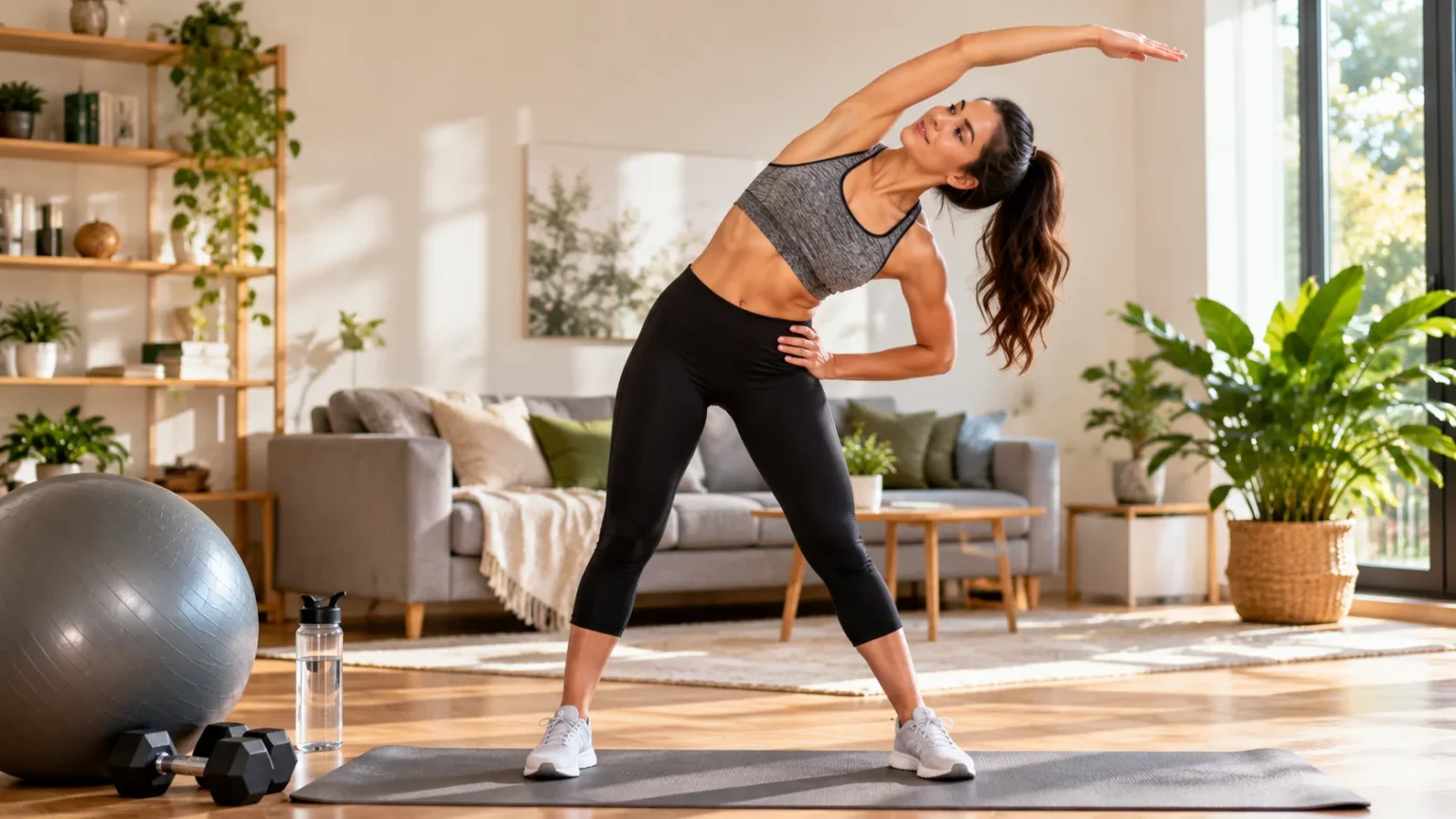
What Is a Side Bend?
A side bend is a simple movement that involves gently bending the upper body sideways while maintaining control of the spine and hips. It is commonly used in stretching routines, yoga sessions, fitness workouts, and physical therapy exercises. This movement helps improve lateral flexibility, encourages spinal mobility, and engages muscles that support everyday bending and reaching activities.
The side bend exercise primarily involves the oblique muscles, quadratus lumborum, and other muscles surrounding the abdomen and lower back. Depending on how the movement is performed, it can function as a gentle stretch or a strengthening exercise. Standing, seated, and weighted variations allow individuals to select an approach that matches their mobility, comfort, and experience.
What Are the Benefits of Side Bend Exercises?
Side bend exercises can improve flexibility through the sides of the torso and support comfortable movement during everyday activities. Reaching overhead, bending sideways, and changing body positions all involve lateral trunk motion. Practicing gentle side bends may help maintain mobility in the muscles and joints involved in these movements, particularly when combined with other exercises.
Another potential benefit is improved awareness of core muscle engagement and postural control. During controlled side bending, the abdominal and back muscles work together to guide movement and support the spine. Learning to move smoothly without excessive twisting or leaning forward can help individuals develop better coordination during fitness exercises and routine physical tasks.
Side bends can also provide a convenient movement break during periods of prolonged sitting. Gentle stretching may temporarily reduce feelings of stiffness around the waist, ribs, and back. However, side bends are not a guaranteed treatment for back discomfort, and their benefits depend on individual mobility, exercise technique, and overall physical activity habits.
What Muscles Do Side Bends Work?
Side bends involve several muscles responsible for moving and stabilizing the trunk. The internal and external obliques, located along the sides of the abdomen, contribute to lateral bending and rotational control. These muscles also help support the torso during walking, lifting, and other activities that require coordinated movements between the upper and lower body.
The quadratus lumborum is another important muscle involved in side bending. Located deep in the lower back, it helps produce lateral trunk movement and stabilize the lumbar region and pelvis. The spinal erector muscles also contribute to maintaining posture and controlling movement, particularly when the body returns from a bent position to an upright stance.
Other muscles may assist depending on the variation performed. The abdominal muscles contribute to trunk stability, while shoulder and upper-back muscles help position the arms during overhead stretching. Rather than isolating one muscle completely, side bends involve coordinated muscular activity that supports controlled movement and overall functional mobility.
How to Perform a Standing Side Bend Correctly
Begin a standing side bend by placing your feet approximately hip-width apart and distributing your weight evenly. Keep your knees comfortable, maintain a relaxed posture, and allow your shoulders to settle naturally. Position your arms beside your body or place one hand on your hip before beginning the sideways movement.
Slowly lean your upper body to one side while keeping your chest facing forward. Move only as far as feels comfortable, avoiding excessive twisting, bouncing, or forcing the movement. You may raise the opposite arm overhead for a gentle stretch, provided the shoulder position remains comfortable and your breathing stays relaxed.
Return gradually to the starting position using controlled movement rather than quickly pulling yourself upright. Repeat the same movement on the opposite side to encourage balanced mobility. A small range of motion is completely acceptable, especially when learning the exercise or returning to movement after a period of inactivity.
How to Do a Seated Side Bend
The seated side bend offers an alternative for individuals who prefer a supported position during stretching. Sit upright on a stable chair with both feet resting comfortably on the floor. Keep your hips evenly supported and your shoulders relaxed, allowing your spine to maintain a natural position before starting the movement.
Place one hand beside your hip and gently lift the opposite arm overhead if comfortable. Slowly lean your torso sideways without lifting the opposite hip excessively from the chair. Focus on creating a comfortable stretch along the side of your body rather than trying to reach as far as possible.
Return to the upright position and repeat the movement on the other side. Keep your breathing steady and avoid using sudden movements to increase the stretch. This variation can be useful during desk breaks, gentle mobility routines, and beginner exercise sessions where balance or standing comfort may be a concern.
What Is a Dumbbell Side Bend?
A dumbbell side bend is a resistance exercise that uses an external weight to challenge the muscles involved in lateral trunk movement. Unlike a gentle stretching variation, the weighted movement places additional demands on the obliques and supporting muscles. It is generally more appropriate for individuals who already understand basic side-bending mechanics and can maintain controlled posture.
During the exercise, a dumbbell is typically held beside one leg while the torso moves through a limited sideways range. The trunk muscles help control the movement and return the body to an upright position. Proper technique emphasizes stability and smooth motion rather than using momentum or attempting to bend through the largest possible range.
Weighted side bends are optional rather than essential for building a strong core. Exercises such as side planks, carries, and other controlled stability movements can also challenge the abdominal muscles. Individuals with existing back problems or uncertainty about resistance training should seek appropriate professional guidance before introducing additional loading.
Side Bend Stretch vs. Side Bend Exercise
A side bend stretch and a strengthening exercise may look similar, but they serve different purposes. Stretching generally emphasizes comfortable lengthening of the muscles along the side of the torso. Strengthening variations focus on producing or resisting movement under muscular tension, often involving resistance, longer holds, or carefully controlled repetitions.
During a side bend stretch, the goal is usually to explore a comfortable range of motion without forcing the body into an extreme position. The movement may be held briefly while breathing naturally. In contrast, a strengthening exercise uses muscular effort to control the torso, maintain stability, or return against resistance.
Both approaches can contribute to a balanced fitness routine when performed appropriately. Stretching may support flexibility and movement comfort, while strengthening helps develop muscular capacity and control. Choosing between them depends on personal goals, current abilities, and whether a particular movement feels comfortable during exercise.
How Side Bends Support Core Strength
Core strength involves more than performing traditional abdominal exercises such as crunches or sit-ups. The core includes several muscle groups that help control spinal movement, stabilize the pelvis, and support daily activities. Side bends challenge some of these muscles by requiring the trunk to move sideways or resist unwanted movement.
During controlled side bending, the oblique muscles contribute to producing and managing lateral trunk motion. The quadratus lumborum and other supporting muscles also help maintain balance and guide the torso. Adding appropriate resistance can increase the muscular challenge, although heavier loads are not necessary for everyone.
A balanced core training program should include different movement patterns and stability exercises. Side planks, bird dogs, and controlled trunk movements can complement side bends by challenging muscles in different ways. Combining suitable exercises may help improve muscular coordination and functional strength without relying on one movement alone.
Are Side Bends Good for Spinal Mobility?
Side bends encourage lateral movement of the spine, which is one component of overall spinal mobility. The spine also participates in forward bending, backward bending, and rotation during everyday activities. Practicing comfortable movements in different directions can help individuals maintain awareness of their available range of motion.
Gentle side bending may help people notice differences in flexibility between the left and right sides of the torso. These differences are common and do not automatically indicate an injury or serious problem. Moving gradually and avoiding forced positions allows individuals to explore comfortable mobility without placing unnecessary stress on sensitive areas.
Spinal mobility varies depending on age, activity levels, medical history, and individual anatomy. Side bends should therefore be adapted to personal comfort rather than performed according to a fixed target range. Anyone experiencing persistent pain, radiating symptoms, or significant movement limitations should seek professional advice before continuing exercises that aggravate their symptoms.
Common Side Bend Mistakes to Avoid
One common side bend mistake is leaning forward or backward instead of moving primarily sideways. Excessive trunk rotation can change the intended movement and make it harder to control posture. Keeping the chest generally oriented forward and using a comfortable range helps maintain a smoother exercise pattern.
Another mistake involves forcing the torso into a deeper stretch through bouncing or sudden movements. Stretching aggressively may irritate sensitive muscles or joints without providing additional meaningful benefits. A gradual approach allows individuals to recognize their natural movement limits and adjust the exercise before discomfort develops.
Holding the breath or using excessive resistance can also interfere with controlled exercise performance. Breathing naturally helps maintain a relaxed rhythm, while appropriate resistance allows better attention to technique. When performing weighted variations, prioritizing movement quality over the amount of weight can make the exercise more manageable and reduce unnecessary strain.
How to Breathe During Side Bend Exercises
Breathing is an important part of performing side bends comfortably and with control. Many people unintentionally hold their breath when concentrating on new movements or trying to stretch farther. Maintaining a natural breathing pattern helps avoid unnecessary tension and allows greater awareness of how the torso moves.
During a gentle standing stretch, inhale comfortably before beginning the sideways movement. Exhale naturally as you lean into a comfortable position, without forcing the breath or movement. Continue breathing steadily if holding the stretch briefly, and return upright whenever you need to reset your posture.
For strengthening variations, use a consistent breathing rhythm that supports smooth movement. Avoid prolonged breath-holding, particularly when performing loaded exercises or if you have been advised to avoid straining. Controlled breathing can improve exercise awareness, although there is no single breathing pattern that every person must follow.
How Often Should You Practice Side Bends?
The appropriate frequency for side bends depends on whether they are performed as gentle mobility exercises or more demanding strengthening movements. Comfortable stretches may be included regularly in a general movement routine. However, frequency should reflect individual tolerance, recovery needs, and how the body responds to the exercise.
Beginners can start with a few slow repetitions on each side and gradually adjust according to comfort. There is no need to achieve a deep stretch or perform large numbers of repetitions. Consistent, controlled movement is generally more useful than attempting excessive exercise volume during the first few sessions.
Weighted side bends may require more recovery than gentle mobility exercises because they challenge muscles through additional resistance. Allowing adequate rest between demanding sessions helps support normal muscular recovery. A balanced exercise schedule should also include other strength, flexibility, and aerobic activities rather than focusing exclusively on side bends.
Side Bend Variations for Different Fitness Levels
The standing side bend is a straightforward starting point for people learning lateral trunk movement. It requires no special equipment and allows individuals to adjust the range according to their comfort. Beginners may keep both hands on their hips to concentrate on posture, balance, and smooth sideways movement.
A seated side bend provides another option, especially when a person prefers additional support or a more stable position. The overhead arm variation can create a different stretching sensation along the upper torso. Individuals with limited shoulder mobility can keep the arm lowered while still practicing gentle movement through the trunk.
More experienced exercisers may explore controlled side planks, resistance-band movements, or weighted variations when appropriate. These exercises place different demands on the abdominal and back muscles and are not interchangeable in every situation. Progression should depend on comfort, technique, and strength rather than assuming that more difficult variations always produce better results.
Side Bend vs. Side Plank: What’s the Difference?
Side bends and side planks both involve the muscles along the sides of the torso, but they use different movement patterns. A side bend involves lateral trunk movement, while a side plank primarily challenges the body to resist movement. This distinction affects how muscles are recruited and what each exercise contributes to a workout.
During side bending, the obliques and supporting spinal muscles help control the torso as it moves sideways. A side plank requires sustained muscular effort to maintain body alignment against gravity. Depending on the variation, the shoulder, hip, and other stabilizing muscles may also contribute significantly to the exercise.
Neither exercise is automatically superior because each offers different training benefits. Side bends may be useful for mobility and controlled lateral strength, while side planks emphasize trunk stability and endurance. Including suitable variations of both can provide a more varied core routine when they match an individual’s capabilities and exercise goals.
Can Side Bends Help With Lower Back Stiffness?
Gentle side bends may provide temporary relief from certain feelings of muscular stiffness by encouraging comfortable trunk movement. Long periods of sitting or limited physical activity can leave some people feeling less mobile. Slowly exploring lateral movement may help reduce this sensation when the exercise does not aggravate existing symptoms.
However, lower back stiffness can have many causes, including muscle tension, joint conditions, and other medical concerns. Side bends are not an appropriate solution for every type of back discomfort. Pain that worsens during movement, spreads into the legs, or occurs alongside other concerning symptoms requires professional assessment.
People with persistent back problems should avoid forcing movements that trigger discomfort. A healthcare professional or qualified physical therapist can help determine whether side bending belongs in an appropriate exercise program. Comfortable walking, general movement, and individualized strengthening may also support mobility, depending on the underlying condition.
How to Include Side Bends in a Daily Routine
Side bends can be incorporated into everyday movement routines without requiring a dedicated workout session. A few controlled repetitions may fit naturally into a morning mobility sequence or a brief movement break. The exercise can be performed in a comfortable standing or seated position, depending on available space and personal preference.
For individuals who spend considerable time sitting, gentle movement breaks can provide opportunities to change posture and stretch. Side bends may be combined with shoulder movements, comfortable trunk rotations, and short walks. Changing positions regularly can help prevent prolonged inactivity from dominating the day, even when each movement break is brief.
During structured workouts, side bends may be included in a warm-up, mobility session, or core training routine. Stretching variations generally require minimal preparation, while weighted exercises benefit from appropriate warm-up and technique. The most useful routine is one that fits individual abilities, encourages consistency, and avoids unnecessary discomfort.
Important Safety Tips Before Performing Side Bends
Before performing side bends, make sure the surrounding area provides enough room for comfortable movement. Wear clothing that allows unrestricted motion and choose a stable surface when exercising while standing. Begin gently, particularly if you are unfamiliar with lateral trunk movements or have recently experienced reduced mobility.
A side bend should create a manageable stretching sensation or muscular effort rather than sharp or increasing pain. Stop the exercise if you experience dizziness, unusual discomfort, or symptoms that suggest the movement is not appropriate. Avoid pushing through pain simply to complete a planned number of repetitions or achieve a deeper position.
People with recent spinal injuries, certain back conditions, or movement restrictions should consult an appropriate healthcare professional before attempting unfamiliar exercises. Individual guidance may be necessary when symptoms are persistent or previous treatments have included specific activity limitations. Adapting the exercise to personal needs supports safer participation and more comfortable movement.
Conclusion
The side bend is a versatile movement that can support lateral flexibility, trunk coordination, and core muscle engagement. It can be performed while standing, sitting, or using appropriate resistance, making it adaptable to different exercise preferences. Understanding the muscles involved and the purpose of each variation helps individuals choose movements that suit their abilities.
Proper side bend technique emphasizes comfortable range of motion, steady breathing, and controlled movement. Avoiding excessive twisting, aggressive stretching, and unnecessary resistance can make the exercise easier to manage. Combining side bends with other mobility and strengthening exercises supports a more balanced approach to physical activity and everyday functional movement.
Whether used during a gentle stretching break or as part of a structured fitness session, side bends can offer a convenient way to explore sideways trunk movement. Progress should remain gradual and guided by individual comfort rather than rigid performance targets. With suitable modifications and attention to technique, the exercise can become a practical component of a varied movement routine.
Frequently Asked Questions (FAQs)
What Is a Side Bend Exercise?
A side bend is a movement where the torso bends sideways while the hips remain relatively stable. It can be performed as a gentle stretch or a strengthening exercise for the core and back muscles.
What Muscles Do Side Bends Target?
Side bends primarily engage the internal and external obliques and the quadratus lumborum. Other abdominal and spinal muscles assist with controlling movement, maintaining posture, and stabilizing the torso during different exercise variations.
Are Side Bends Good for Beginners?
Yes, gentle standing and seated side bends can be suitable for beginners. Starting with a comfortable range of motion and controlled breathing helps people learn the movement without unnecessary strain or resistance.
Can Side Bends Reduce Belly Fat?
Side bends can strengthen certain core muscles, but they cannot selectively remove fat from the waist. Changes in body fat are influenced by multiple factors, and targeted exercises do not determine where fat is lost.
Is It Safe to Do Side Bends Every Day?
Gentle side bends may be practiced regularly when they feel comfortable and do not aggravate symptoms. More demanding weighted variations may require recovery time, depending on exercise intensity and individual physical condition.