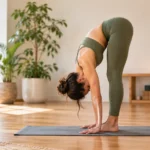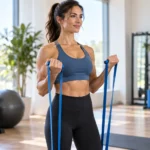


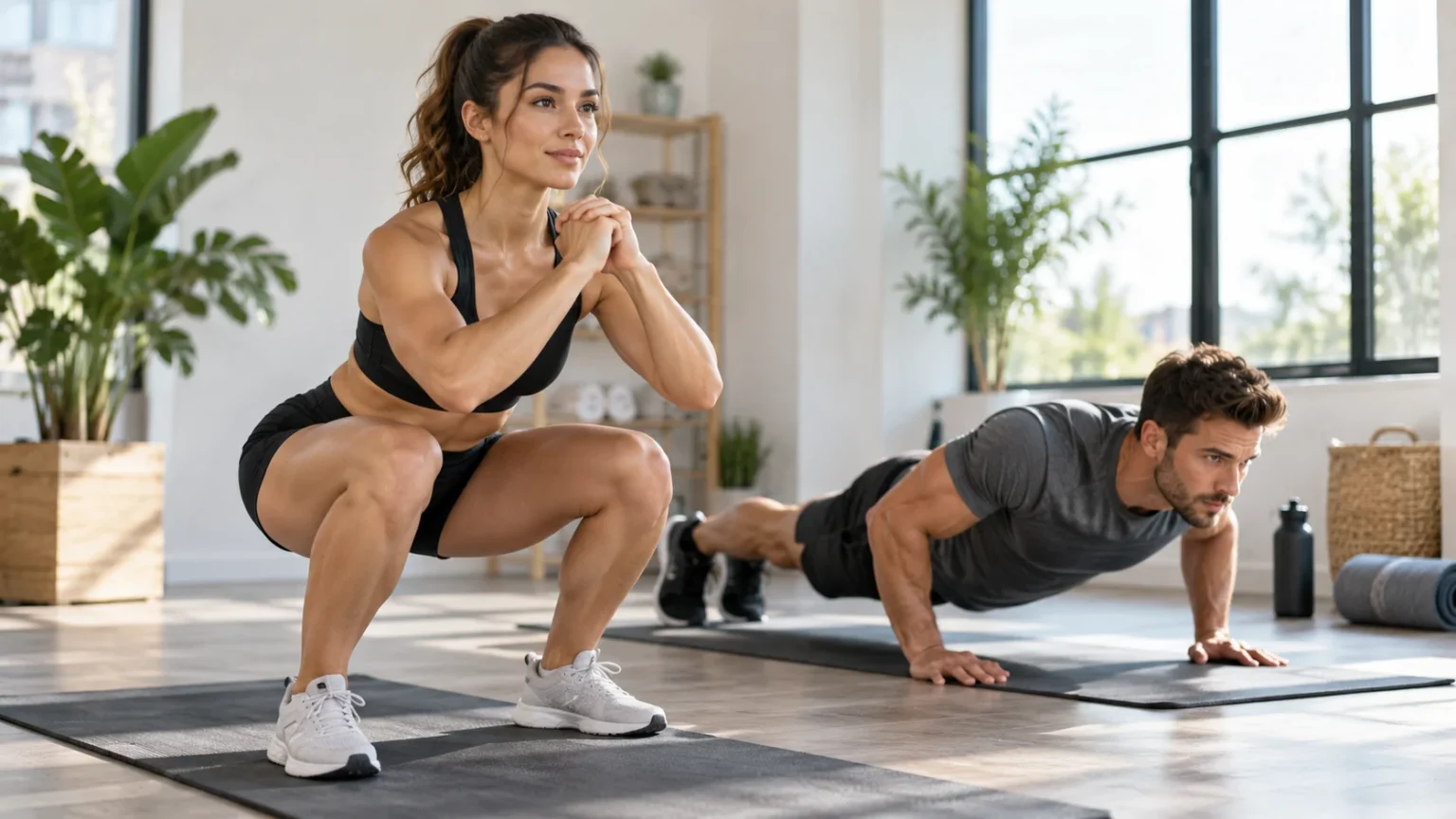
What Are Body Weight Exercises and How Do They Work?
Body weight exercises are movements that use your own body as resistance to develop strength, mobility, coordination, and physical endurance. Unlike traditional gym workouts, these exercises generally require little or no equipment, making them convenient for home training. Popular examples include squats, push-ups, lunges, planks, and glute bridges, which engage different muscle groups through controlled movements.
The main principle behind bodyweight training is using gravity, positioning, and movement patterns to challenge your muscles. When you perform a squat or push-up, your muscles work to support and move part of your body against resistance. Adjusting your technique, range of motion, or exercise variation can change the difficulty without requiring additional weights.
Body weight workouts are suitable for many fitness levels because movements can be modified according to individual abilities. Beginners can start with supported exercises, while experienced individuals may choose more challenging variations. Whether your goal is improving everyday movement, developing functional strength, or maintaining an active lifestyle, bodyweight exercise provides a flexible training option.
Key Benefits of Body Weight Exercises for Overall Fitness
One major benefit of body weight exercises is their ability to develop functional strength through natural movement patterns. Activities such as squatting, pushing, balancing, and stepping resemble movements used in everyday life. Practicing these patterns regularly can improve muscular control and make routine activities, including climbing stairs or lifting household objects, feel more manageable.
Bodyweight training can also support muscular endurance, balance, coordination, and joint mobility. Exercises involving multiple muscle groups encourage the body to work as an integrated system rather than isolating individual muscles. With consistent practice and appropriate progression, these workouts can contribute to overall physical fitness while supporting healthy movement habits.
Another advantage is accessibility, since most exercises can be performed at home, outdoors, or while traveling. You do not need an expensive gym membership or specialized workout equipment to begin. Short, manageable sessions can fit into busy schedules, making bodyweight training a practical choice for building a sustainable exercise routine.
How to Perform Body Weight Exercises With Proper Form
Correct exercise technique is essential for making bodyweight workouts effective and reducing unnecessary strain. Start by learning the basic movement pattern before increasing repetitions or choosing advanced variations. Focus on comfortable joint alignment, controlled movement, and steady breathing rather than rushing through exercises simply to complete a larger number of repetitions.
During lower-body movements, such as squats and lunges, aim to keep your knees moving comfortably in line with your feet. Maintain a stable trunk while allowing your hips, knees, and ankles to move naturally. During upper-body exercises, position your shoulders comfortably and avoid forcing your joints into painful or awkward positions.
Breathing also plays an important role in maintaining control during exercise. Try to breathe steadily, generally exhaling during the more demanding portion of a movement and inhaling during the easier phase. If you experience sharp pain, dizziness, or unusual discomfort, stop the activity and consider whether your technique or exercise selection needs adjustment.
Squats: A Foundational Lower-Body Exercise
Squats are among the most widely practiced body weight exercises because they strengthen the muscles involved in sitting, standing, and climbing stairs. The movement primarily engages your quadriceps, glutes, and other muscles supporting the hips and legs. Squats also challenge balance and trunk stability when performed with appropriate control and comfortable positioning.
To perform a bodyweight squat, stand with your feet approximately shoulder-width apart and your toes pointing in a comfortable direction. Bend your hips and knees as though sitting toward a chair, keeping your feet grounded. Lower only as far as you can comfortably control before pressing through your feet to return upright.
Beginners may find chair squats especially useful because the chair provides a clear movement target and additional confidence. More experienced exercisers can explore different stances, tempos, or pauses to vary the challenge. Squat depth does not need to look identical for everyone, since mobility, individual anatomy, and comfort influence the appropriate range of motion.
Push-Ups: Building Upper-Body Strength Without Weights
Push-ups are effective bodyweight movements that challenge the chest, shoulders, triceps, and muscles responsible for maintaining trunk stability. They develop pushing strength while encouraging coordination between the upper body and core. Because push-ups offer several modification options, they can be included in training routines across a wide range of experience levels.
Begin with your hands slightly wider than shoulder-width and position your body in a comfortable, supported alignment. Bend your elbows to lower your chest toward the supporting surface while keeping the movement controlled. Press through your hands to return to the starting position, avoiding uncomfortable shoulder positions or excessive strain through your lower back.
If floor push-ups feel too challenging, practice against a stable wall or sturdy elevated surface. These variations reduce the resistance while allowing you to develop movement confidence and upper-body control. As your strength improves, you can gradually choose lower surfaces or attempt floor push-ups without feeling pressured to progress before you are ready.
Lunges: Improving Balance, Coordination, and Leg Strength
Lunges are useful body weight exercises for strengthening the legs while challenging balance and single-leg control. They primarily target the quadriceps and glutes, with additional support from muscles surrounding the hips and ankles. Because lunges involve stepping or split-stance positioning, they can also improve coordination during everyday activities that require weight shifting.
To perform a reverse lunge, stand upright and step one foot backward into a comfortable split stance. Bend both knees as you lower your body, maintaining steady balance and controlled movement. Push through your front foot to return to standing, then repeat on the same side or alternate legs according to your comfort.
Beginners can hold a sturdy chair or countertop for balance while learning the movement. Shorter or shallower lunges may also be appropriate when full-depth movements feel difficult or uncomfortable. Forward lunges, reverse lunges, and stationary split squats provide different training challenges, allowing you to select the variation that best matches your current abilities.
Planks: Strengthening the Core and Supporting Stability
Planks are popular bodyweight exercises designed to challenge the muscles responsible for stabilizing your trunk. They engage the abdominal muscles alongside the shoulders, hips, and other supporting muscle groups. Developing trunk endurance through exercises such as planks can contribute to better movement control during daily activities and other forms of exercise.
Begin in a forearm plank position with your elbows beneath your shoulders and your body comfortably aligned. Engage your abdominal muscles while breathing normally, avoiding excessive arching or rounding through your lower back. Hold the position for a manageable period, ending the exercise when you can no longer maintain comfortable and controlled form.
Beginners can practice planks against a wall, on an elevated surface, or with their knees supported on the floor. These adjustments make the exercise more accessible while still providing meaningful muscular engagement. Rather than focusing on holding a plank for the longest possible time, prioritize consistent technique and gradually improve endurance as your strength develops.
Glute Bridges: Supporting Hip Strength and Movement
Glute bridges are accessible bodyweight movements that primarily strengthen the gluteal muscles while also involving the hamstrings and trunk stabilizers. The exercise emphasizes hip extension, an important movement used during walking, standing, and climbing stairs. It can be especially useful for people who want to include hip-focused strengthening in a simple home workout.
To perform a glute bridge, lie comfortably on your back with your knees bent and feet resting on the floor. Gently engage your abdominal muscles and press through your feet to lift your hips. Raise your hips to a comfortable height without excessively arching your back, then slowly lower your body with control.
You can adjust the exercise by changing your foot position slightly or adding a brief pause at the top. Beginners should first focus on learning the basic movement without experiencing discomfort in the lower back. With consistent practice, glute bridges can become a useful component of a balanced lower-body strength and mobility routine.
Mountain Climbers: Combining Core Control and Cardio
Mountain climbers are dynamic body weight exercises that combine trunk stability with continuous leg movement. They engage the shoulders, abdominal muscles, hip flexors, and supporting muscle groups while potentially increasing your heart rate. The movement can be included in conditioning sessions, although the intensity depends on speed, exercise duration, and individual fitness level.
Start in a supported high-plank position with your hands beneath or slightly ahead of your shoulders. Slowly bring one knee toward your chest before returning your foot to its starting position. Alternate legs while keeping your trunk reasonably stable, focusing on smooth movement instead of bouncing or forcing your hips into uncomfortable positions.
Beginners can perform standing mountain climbers against a wall or use an elevated surface for additional support. Slow repetitions are often more useful initially because they allow you to maintain control and practice coordination. Once comfortable, you can gradually increase movement speed while continuing to prioritize technique, breathing, and manageable effort.
How to Create a Balanced Body Weight Workout Routine
A balanced body weight workout should include movements that challenge major muscle groups without concentrating exclusively on one area. Squats and lunges develop lower-body strength, while push-ups provide an upper-body pushing challenge. Planks and glute bridges support trunk and hip stability, creating a practical foundation for a well-rounded exercise session.
Beginners might start with a few familiar exercises and perform one or two manageable sets of each movement. Choose repetitions that allow you to maintain comfortable form without pushing to exhaustion. Include short rest periods between sets, and adjust the session according to your energy, experience, and recovery needs.
As your confidence develops, introduce additional movements that support your personal fitness goals. For example, you might include supported balance exercises, gentle mobility activities, or safe pulling movements when appropriate equipment is available. A balanced routine should leave room for recovery and enjoyable physical activities rather than becoming an exhausting daily obligation.
Common Bodyweight Training Mistakes and How to Avoid Them
One common mistake during bodyweight training is rushing through exercises without maintaining proper control. Performing movements too quickly can make it difficult to notice unstable positioning or discomfort. Slowing down helps you understand how each exercise feels and allows your muscles to work through a manageable movement range.
Another mistake involves choosing advanced exercise variations before developing the necessary strength and coordination. Difficult movements are not automatically more beneficial, especially when they compromise technique or create unnecessary joint stress. Starting with suitable modifications allows you to improve gradually while building confidence and reducing the likelihood of avoidable exercise-related discomfort.
Neglecting rest and repeatedly training through pain can also interfere with progress. Muscles and connective tissues need opportunities to adapt after unfamiliar or demanding activity. Pay attention to fatigue, vary your exercises appropriately, and remember that consistent, manageable training is generally more sustainable than forcing yourself through intense workouts every day.
Tips for Making Body Weight Exercises More Effective
Consistency is one of the most valuable factors in developing strength through body weight exercises. Establish a realistic training routine that fits comfortably around school, work, family responsibilities, or other commitments. Regular, manageable sessions allow you to practice movements and gradually become more comfortable without relying on unnecessarily demanding workouts.
Use exercise modifications to match your abilities rather than comparing your performance with other people. Wall push-ups, chair squats, and supported lunges can provide meaningful benefits when performed with care. As movements become easier, adjust one element at a time, such as range of motion, resistance, or repetitions, while maintaining good technique.
Supporting your exercise routine with adequate sleep, nutritious meals, and appropriate hydration can improve overall well-being and recovery. Enjoyable movement outside structured workouts, such as walking or recreational activities, also contributes to an active lifestyle. The most effective bodyweight training approach is one that you can practice safely, comfortably, and consistently over time.
Conclusion
Body weight exercises offer a convenient and adaptable way to improve strength, muscular endurance, balance, and movement coordination. Familiar exercises such as squats, push-ups, lunges, planks, and glute bridges can form the foundation of an effective routine. Because many movements require minimal equipment, bodyweight training can be practiced in different environments and adapted to individual fitness levels.
Proper form, comfortable movement, and gradual progression are essential for building confidence and supporting safe exercise habits. Start with manageable variations, focus on controlled repetitions, and allow your body enough recovery between demanding sessions. Remember that improvement is not measured solely by exercise difficulty or the number of repetitions completed.
Whether you are beginning a fitness routine or looking for a practical way to stay active, bodyweight training offers considerable flexibility. Choose movements that support your goals, pay attention to your body’s responses, and prioritize consistency over intensity. With a balanced approach, body weight exercises can become a valuable part of long-term physical fitness and everyday well-being.
Frequently Asked Questions (FAQs)
What are the best body weight exercises for beginners?
Chair squats, wall push-ups, supported lunges, glute bridges, and modified planks are excellent beginner-friendly options. These movements develop foundational strength and coordination while allowing adjustments based on individual comfort and ability.
Can body weight exercises build muscle without weights?
Yes, body weight exercises can support muscle development when they provide an appropriate challenge. Gradually progressing exercise variations, maintaining proper technique, and allowing sufficient recovery can help improve muscular strength over time.
How often should you do body weight exercises?
The ideal frequency depends on your experience, exercise intensity, and recovery needs. Beginners can start with two or three nonconsecutive strength-training sessions weekly and adjust gradually according to their abilities and comfort.
Are body weight exercises effective for overall fitness?
Yes, bodyweight training can improve muscular strength, endurance, coordination, and balance. Combining strength exercises with enjoyable aerobic activities and mobility work supports a broader, well-rounded approach to physical fitness.
Do you need equipment for body weight exercises?
Most basic bodyweight movements require no specialized equipment. A comfortable exercise surface, supportive footwear when appropriate, and a stable chair or wall for modifications are often sufficient for getting started.