

What Is a Resistance Band Arm Workout?
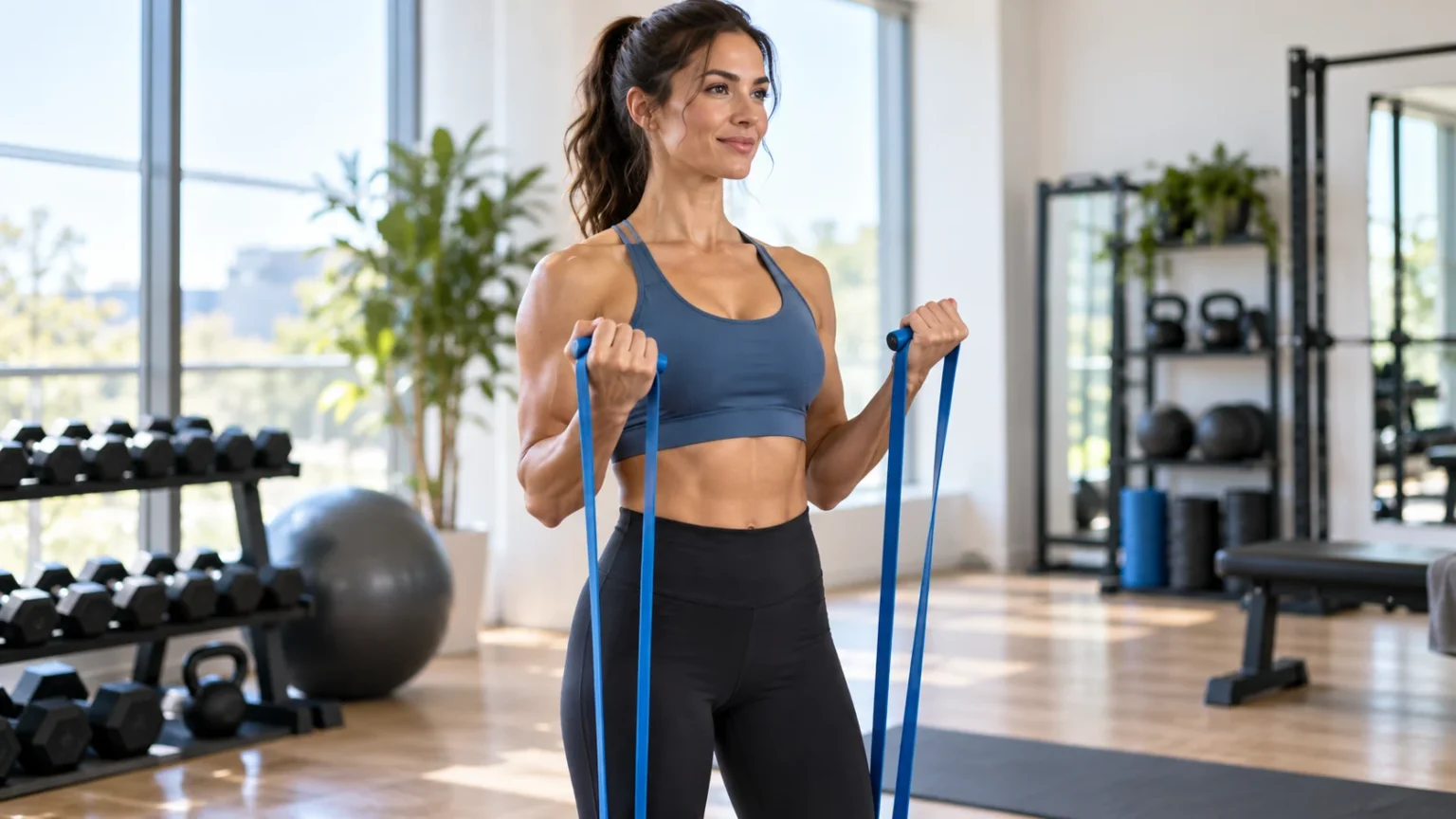
A resistance band arm workout is a strength-training routine that uses elastic bands to challenge the muscles in your arms and upper body. Unlike traditional weights, resistance bands create tension as they stretch during movement. This adjustable resistance allows you to perform different exercises that target the biceps, triceps, shoulders, and supporting upper-body muscles.
Resistance bands are available in different sizes, shapes, and resistance levels, making them suitable for many fitness abilities. Some bands have handles, while others come in flat strips or continuous loops. Their lightweight design makes them convenient for home workouts, travel, physical therapy programs, and general strength-training routines without requiring large exercise machines.
A properly designed resistance band arm workout can improve muscular strength, endurance, and movement coordination. Beginners can start with light resistance and gradually increase difficulty as their technique improves. Understanding correct exercise form and choosing appropriate resistance are important for making each movement effective while avoiding unnecessary strain.
How Do Resistance Bands Work for Arm Training?
Resistance bands work by creating tension when stretched beyond their resting length. As you pull or push against the band, your muscles generate force to control the movement. The amount of resistance generally increases as the band stretches farther, although the exact resistance depends on the band’s material, thickness, and design.
This changing resistance creates a different training experience compared with dumbbells or traditional weight machines. During certain movements, the exercise may feel easier at the beginning and more challenging near the end. However, the resistance pattern depends on the exercise setup, joint position, and direction of the band’s pull.
Resistance bands can challenge muscles through many common upper-body movement patterns. They allow exercises such as biceps curls, triceps extensions, shoulder presses, and lateral raises. When used with proper technique and sufficient resistance, bands can support meaningful strength improvements as part of a consistent resistance-training program.
Benefits of Resistance Band Arm Workouts
One major benefit of resistance band arm workouts is their ability to strengthen the upper-body muscles without requiring heavy gym equipment. Bands can challenge the biceps, triceps, and shoulders through controlled movements. Regular training may improve muscular endurance, grip control, and the ability to perform everyday tasks involving pushing, pulling, and lifting.
Resistance bands are also convenient because they are lightweight and easy to store. A small collection of bands can provide different resistance levels for several exercises. This flexibility makes them useful for people who prefer exercising at home, have limited workout space, or need portable equipment while traveling.
Another advantage is the ability to adjust exercise difficulty gradually. Changing band tension, exercise position, or resistance level can increase or decrease the challenge. This makes resistance band training useful for beginners and experienced exercisers, provided the movements match their current strength, mobility, and physical capabilities.
Muscles Targeted During a Resistance Band Arm Workout
Resistance band arm workouts primarily target the biceps and triceps, which control important movements around the elbow. The biceps help bend the elbow and assist with forearm rotation. The triceps straighten the elbow and contribute to pushing movements, making both muscle groups important for everyday upper-body activities.
The shoulder muscles also participate in many resistance band exercises. The deltoids help raise and position the arms, while the rotator cuff muscles support shoulder stability. Depending on the movement, muscles around the upper back and chest may also contribute to controlling the shoulder joint and maintaining proper exercise technique.
The forearm muscles and grip stabilizers become active when holding bands or handles securely. These muscles help control wrist position and maintain tension during pulling movements. Including a variety of exercises can develop balanced upper-body strength while reducing the tendency to focus on only one isolated muscle group.
How to Choose the Right Resistance Band
Choosing an appropriate resistance band is important for maintaining correct form and controlling exercise intensity. Bands are available in different resistance levels, commonly described as light, medium, heavy, or extra heavy. However, these labels are not standardized, and resistance can vary significantly between manufacturers and band designs.
Beginners should select a band that allows smooth movement without excessive strain or loss of balance. The exercise should feel challenging while still allowing you to complete the planned repetitions with consistent technique. If the band causes jerking, shoulder elevation, or uncontrolled wrist movement, a lighter option may be more suitable.
Band length and style also influence exercise performance. Handle bands may feel comfortable for curls and presses, while flat therapy bands can offer flexibility for controlled movements. Inspect the band before every session and avoid using equipment with visible cracks, tears, or weakened connections that could cause it to snap.
How to Warm Up Before a Resistance Band Arm Workout
A short warm-up prepares your muscles and joints for the movements involved in resistance training. Gentle arm movements, shoulder circles, and comfortable elbow bending can help you become familiar with the intended exercise positions. The goal is to gradually increase activity and improve movement readiness without creating unnecessary fatigue.
Begin with relaxed shoulder rolls and slow arm movements that remain within a comfortable range. You can also practice light pulling motions without resistance to prepare your upper-body muscles. Avoid forcing your joints into extreme positions or stretching aggressively when the muscles are still warming up.
After general movement, try a few repetitions using a very light resistance band. This allows you to practice exercise technique before introducing greater tension. A warm-up does not need to be complicated, but it should help you feel prepared and confident before beginning the main strength-training routine.
Resistance Band Biceps Curl: Proper Form and Benefits
The resistance band biceps curl is a popular exercise for strengthening the muscles at the front of the upper arms. It primarily targets the biceps brachii and also involves other elbow-flexing muscles. This movement can help improve strength for everyday activities such as carrying objects and lifting items toward the body.
Stand with your feet comfortably apart and position the center of the resistance band securely beneath your feet. Hold the band ends or handles with your palms facing forward. Keep your elbows near your sides and slowly bend them to raise your hands toward your shoulders without swinging your upper body.
Lower your hands gradually while maintaining control of the band tension. Avoid leaning backward or allowing your wrists to bend excessively during the movement. Choose resistance that allows consistent repetitions, and focus on smooth elbow bending rather than attempting to lift the band as quickly as possible.
Resistance Band Hammer Curl for Arm Strength
The resistance band hammer curl is a variation of the traditional biceps curl that uses a neutral grip. This means your palms face inward toward each other throughout the movement. The exercise challenges the brachialis, brachioradialis, and biceps, contributing to overall elbow-flexor strength and forearm involvement.
Begin by standing on the center of a suitable resistance band while holding the handles at your sides. Keep your palms facing inward and your elbows comfortably positioned near your torso. Slowly bend your elbows to raise your hands toward your shoulders while keeping your upper arms relatively still.
Return your hands to the starting position with controlled movement. Avoid using momentum or allowing the shoulders to roll forward while performing the exercise. The hammer curl can complement standard biceps curls by challenging the elbow-flexing muscles through a different forearm position.
Resistance Band Triceps Extension Exercise
The triceps extension targets the muscles along the back of the upper arms. These muscles help straighten the elbows and contribute to movements such as pushing doors, pressing objects, and supporting the upper body. Resistance band triceps extensions can be performed using several positions depending on available equipment and personal comfort.
For an overhead variation, hold one end of a suitable band securely behind your upper back while gripping the other end above your shoulder. Keep your torso steady and slowly straighten the working elbow against the band’s resistance. Move only through a comfortable range and avoid forcing your shoulder into an uncomfortable position.
Bend your elbow slowly to return to the starting position. Keep the movement controlled and avoid arching your lower back to compensate for the resistance. If overhead positioning causes shoulder discomfort, a different triceps exercise may be more appropriate for your mobility and strength level.
Resistance Band Triceps Kickback
The triceps kickback is another exercise that focuses on elbow extension and upper-arm strength. It involves straightening the elbow while the upper arm remains positioned alongside the body. The exercise can be performed with a light resistance band and may be useful for individuals who prefer avoiding overhead triceps movements.
Begin by placing one end of the band securely beneath your foot and holding the other end in the same-side hand. Hinge slightly at your hips while keeping your torso supported and your upper arm close to your body. Start with your elbow bent and slowly extend your forearm backward against the resistance.
Return your forearm to the starting position without allowing your shoulder to swing. Focus on moving through the elbow while keeping the rest of your body relatively stable. Light resistance is often sufficient when learning this movement, especially because controlling the band tension can become more difficult near full extension.
Resistance Band Shoulder Press
The resistance band shoulder press strengthens the deltoid muscles and involves the triceps during the pressing movement. It also requires coordination between the shoulder joints and surrounding stabilizing muscles. This exercise can be included in a broader upper-body routine when overhead movement is comfortable and appropriate.
Stand with the center of the band securely positioned beneath your feet and hold the handles near shoulder height. Keep your wrists aligned with your forearms and your torso stable. Slowly press your hands upward through a comfortable range while avoiding excessive arching through your lower back.
Lower the handles toward shoulder height with controlled movement. Avoid forcing your elbows into uncomfortable positions or pushing beyond your available shoulder mobility. If the band creates excessive tension or causes discomfort, choose lighter resistance or use an alternative shoulder-strengthening exercise.
Resistance Band Lateral Raise for Shoulder Strength
The resistance band lateral raise targets the middle portion of the deltoid muscles, which help lift the arms away from the body. This movement contributes to shoulder strength and upper-body coordination. It can be performed with a suitable resistance band while standing in a stable position.
Place the band securely beneath your feet and hold an end in each hand. Keep your elbows slightly bent and your shoulders relaxed while slowly raising your arms outward. Lift only to a comfortable height and avoid shrugging your shoulders or leaning backward to overcome the resistance.
Lower your arms gradually while maintaining control. The exercise should feel challenging without requiring momentum or sudden movements. Using lighter resistance often allows better technique because lateral raises place significant demands on the shoulder muscles even with relatively modest tension.
Resistance Band Front Raise Exercise
The resistance band front raise strengthens the anterior deltoid, which contributes to lifting the arm forward. This muscle also works during pressing and reaching activities. Front raises can complement other shoulder exercises, although they may not be necessary when a workout already includes sufficient pressing movements.
Stand on the center of the band and hold the handles in front of your thighs. Keep your elbows slightly bent and slowly lift your arms forward through a comfortable range. Avoid leaning backward or using your lower back to help raise the resistance during the movement.
Return your hands toward your thighs in a controlled manner. Focus on maintaining smooth movement and comfortable shoulder positioning throughout each repetition. People with shoulder irritation should avoid forcing the movement and may benefit from guidance when selecting suitable exercises for their individual needs.
Resistance Band Reverse Fly for Upper-Body Support
The resistance band reverse fly targets muscles around the back of the shoulders and upper back. These include the posterior deltoids and several muscles that contribute to shoulder blade movement. Training these areas can complement exercises focused on the biceps, triceps, and front of the shoulders.
Hold a light resistance band in front of your chest with your arms extended but not locked. Keep your shoulders relaxed and gently pull your hands apart while controlling the movement. Allow your shoulder blades to move naturally without forcing them together or arching your lower back.
Slowly return your hands toward the starting position while maintaining light tension. Avoid pulling the band beyond your comfortable shoulder range or allowing it to snap back. This exercise is often most effective with manageable resistance that permits controlled movement rather than a very heavy band.
Resistance Band Arm Workout for Beginners
A beginner resistance band arm workout should focus on learning a few basic movements before introducing additional exercises. Biceps curls, triceps extensions, and light shoulder exercises can provide a useful starting point. Selecting manageable resistance allows you to practice proper technique while building confidence with the elastic tension.
Start with one or two sets of approximately eight to twelve controlled repetitions for each selected exercise. Take comfortable breaks between movements and pay attention to your breathing and joint positioning. The goal is to develop consistency rather than complete as many repetitions as possible during the first workout.
As strength improves, gradually increase resistance or add another set when appropriate. Avoid increasing every exercise difficulty at the same time because this can make fatigue harder to manage. Beginners can combine resistance band arm training with walking, lower-body strength exercises, and other enjoyable activities for balanced physical conditioning.
Resistance Band Arm Workout at Home
Resistance band workouts are convenient for home exercise because they require minimal space and equipment. You can perform many arm exercises in a small, clear area without needing a weight bench or large machines. A suitable band and enough room to move comfortably are often sufficient for a basic upper-body session.
Before starting, inspect the surrounding area and ensure that the floor provides stable footing. Keep the band away from sharp surfaces and avoid standing where slipping could occur. If an exercise requires an anchor point, use only equipment specifically designed and securely installed for that purpose.
A home routine can include biceps curls, hammer curls, triceps kickbacks, and selected shoulder movements. Choose exercises that target different muscles without unnecessarily repeating the same movement pattern. Maintaining a simple routine may help improve consistency while allowing you to gradually develop strength and movement control.
Resistance Bands vs. Dumbbells for Arm Workouts
Resistance bands and dumbbells are both effective tools for strengthening the upper-body muscles. Dumbbells provide resistance through gravity, while elastic bands create tension as they stretch. These differences influence how resistance changes throughout an exercise and can make certain movements feel different even when they target similar muscles.
Resistance bands offer advantages in portability, storage, and exercise flexibility. Dumbbells may make it easier to measure and increase resistance in consistent weight increments. Neither option is automatically superior for every person, and meaningful strength improvements are possible with both when exercises provide sufficient challenge.
Choosing between bands and dumbbells depends on personal preferences, training goals, and available equipment. Some individuals prefer bands for home workouts, while others enjoy using free weights in a gym. Combining both tools can provide exercise variety and different resistance patterns within a balanced strength-training program.
Common Mistakes During Resistance Band Arm Workouts
One common mistake is choosing a band that creates more resistance than you can control. Excessive tension may cause swinging, awkward joint positions, or incomplete movements. Using lighter resistance allows you to concentrate on proper technique and gradually develop the strength needed for more demanding exercises.
Another mistake involves allowing the band to snap back during the lowering phase. This reduces movement control and may create unnecessary strain or injury risk. Slow, deliberate repetitions help maintain consistent tension while training the muscles through both lifting and lowering portions of an exercise.
Poor band positioning can also affect exercise safety. Standing on a band incorrectly, using unreliable anchors, or continuing to use damaged equipment may cause sudden release of tension. Inspect equipment carefully and ensure that bands remain secure throughout every exercise, especially during movements near the face or head.
Best Practices for Resistance Band Arm Training
Focus on proper body alignment and controlled movement during every resistance band exercise. Keep your wrists comfortably aligned, avoid unnecessary shoulder tension, and maintain stable footing. These habits help you perform each repetition consistently while reducing the likelihood of using momentum instead of the intended muscles.
Progress gradually by selecting resistance that matches your strength and current abilities. When an exercise becomes easier, consider increasing resistance slightly or adjusting repetitions rather than immediately choosing the strongest band. Allow adequate recovery between challenging sessions so your muscles can adapt to the demands of resistance training.
Include different movement patterns to develop balanced upper-body strength. Biceps curls, triceps extensions, shoulder presses, and upper-back exercises challenge different muscles and joint actions. A varied routine supports general fitness while avoiding excessive dependence on one exercise or isolated muscle group.
How Often Should You Do Resistance Band Arm Workouts?
The ideal training frequency depends on your experience, workout intensity, and recovery needs. Many people can include resistance band arm exercises in strength-training sessions two or three times weekly. However, the appropriate schedule varies according to exercise difficulty and how much additional upper-body training is performed.
Beginners may benefit from starting with fewer sessions and allowing recovery time between challenging workouts. Muscles adapt when training is balanced with rest and appropriate nutrition. If soreness or fatigue interferes with normal movement, reducing the workload temporarily may help maintain a sustainable routine.
Experienced individuals may train their arms more frequently by adjusting exercise intensity and total training volume. However, greater frequency does not automatically produce better results. Consistency, sufficient resistance, proper technique, and recovery are important factors for improving muscular strength over time.
How Long Does It Take to See Results?
Results from a resistance band arm workout depend on training consistency, exercise intensity, and individual physical conditioning. Some people notice improved coordination and greater confidence with exercises within the first few sessions. Meaningful muscular strength improvements generally develop through repeated training over several weeks.
Early progress often reflects improvements in movement efficiency and the nervous system’s ability to coordinate muscle activity. Exercises that initially feel challenging may become easier as technique improves. These changes can occur before visible differences in muscle size, which are not necessary indicators of improved fitness.
Long-term strength development requires gradual progression and adequate recovery. Increasing resistance appropriately and maintaining a balanced training routine can help challenge muscles as they adapt. Progress should be evaluated through comfortable movement, improved control, and functional strength rather than appearance alone.
Safety Tips for Resistance Band Arm Exercises
Inspect resistance bands before every workout to identify cracks, tears, thinning areas, or damaged handles. Elastic materials can wear down with repeated use and exposure to certain environmental conditions. Replace damaged bands immediately rather than attempting to repair them or continuing to exercise with unreliable equipment.
Avoid stretching a band beyond the manufacturer’s recommended limits or positioning it where an unexpected release could strike your face. Secure footing and appropriate equipment setup are particularly important during standing exercises. Keep movements controlled and select resistance levels that allow you to maintain balance without unnecessary compensation.
Stop exercising if you experience sharp pain, unusual numbness, dizziness, or significant discomfort around a joint. People recovering from shoulder, elbow, or wrist injuries may require modifications to standard movements. A qualified healthcare professional can help identify appropriate exercises when medical conditions or persistent symptoms affect upper-body function.
Conclusion
A resistance band arm workout provides a convenient and flexible way to strengthen the biceps, triceps, shoulders, and supporting upper-body muscles. Elastic bands allow you to perform a variety of movements without requiring extensive gym equipment. With appropriate resistance and consistent practice, they can support muscular strength, endurance, and everyday movement.
Correct exercise technique is essential for getting the most benefit from resistance band training. Controlled repetitions, secure equipment positioning, and suitable resistance levels can help make workouts more effective. Beginners should develop confidence with simple movements before progressing to heavier bands or more challenging exercise variations.
A balanced arm workout should include different movement patterns while allowing adequate recovery between demanding sessions. Combine resistance band exercises with other suitable strength and physical activities for overall fitness. By following sensible training habits and prioritizing comfort and control, you can build functional upper-body strength over time.
Frequently Asked Questions
1. Can You Build Arm Strength With Resistance Bands?
Yes, resistance bands can improve arm strength when they provide sufficient resistance and are used consistently. Exercises such as biceps curls, triceps extensions, and shoulder presses can challenge several important upper-body muscles.
2. Are Resistance Band Arm Workouts Good for Beginners?
Yes, resistance band workouts are suitable for many beginners because resistance levels can be adjusted. Starting with light bands helps individuals learn correct exercise technique before progressing toward more challenging movements.
3. How Many Repetitions Should I Do With Resistance Bands?
Beginners may start with one or two sets of eight to twelve controlled repetitions per exercise. The ideal number depends on resistance level, training experience, and the ability to maintain proper form.
4. Can I Do Resistance Band Arm Exercises Every Day?
Light movement may be comfortable daily, but challenging strength workouts generally require recovery time. Training the same muscles intensely every day may increase fatigue and reduce exercise quality.
5. Are Resistance Bands Better Than Dumbbells for Arm Workouts?
Both resistance bands and dumbbells can effectively improve muscular strength. Bands offer portability and adjustable elastic resistance, while dumbbells provide measurable weight resistance. The best choice depends on individual goals and preferences.