

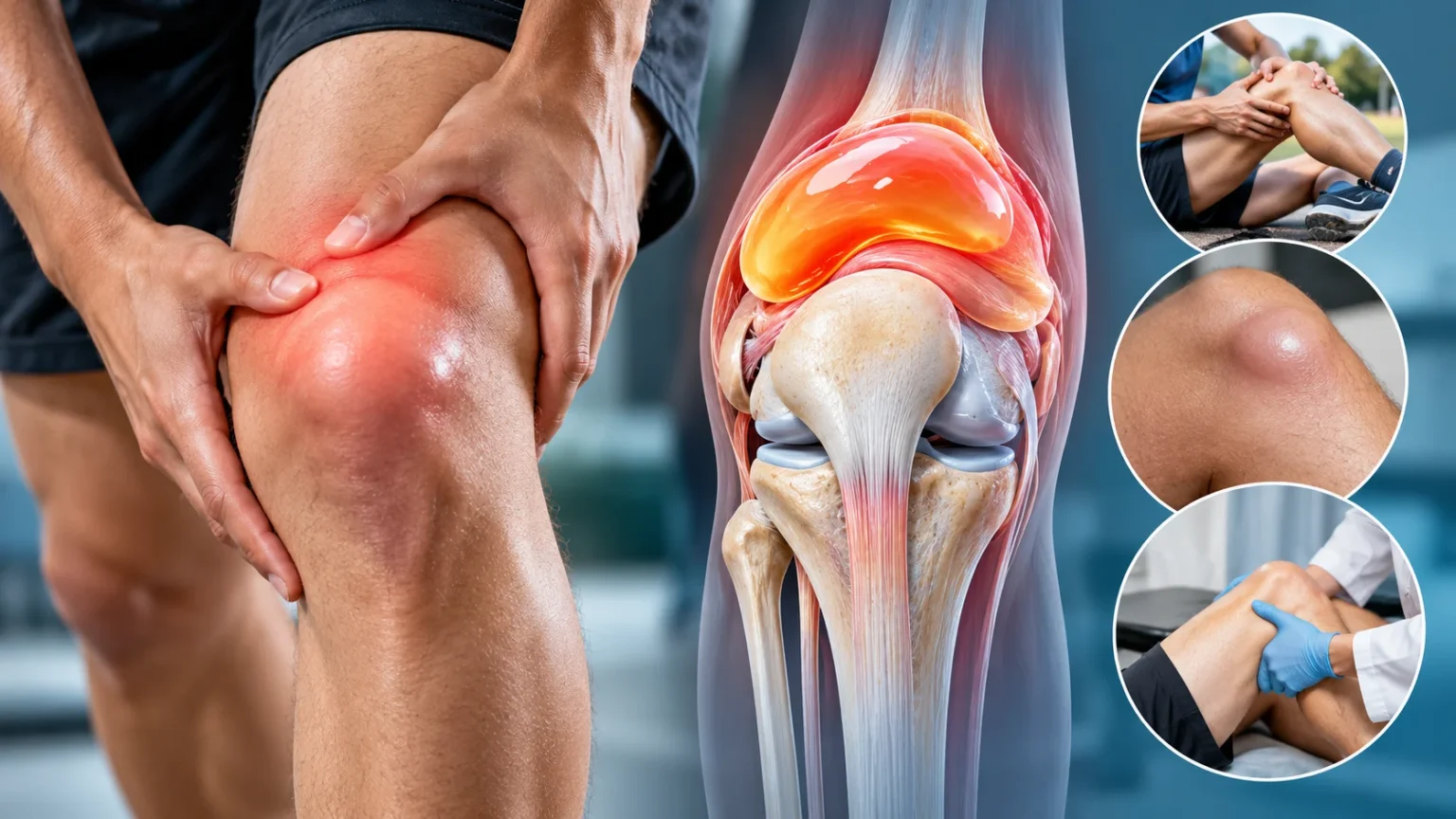
Suprapatellar effusion refers to excess fluid collecting in the suprapatellar pouch, a space located just above the kneecap and connected to the knee joint. The condition may develop after an injury, inflammation, arthritis, infection, or another problem affecting the knee. Depending on the cause, swelling may appear suddenly or gradually and can range from mild fullness to significant discomfort.
Because knee swelling can result from many different conditions, suprapatellar effusion is usually considered a sign rather than a disease by itself. Some cases improve with rest and simple supportive care, while others require medical evaluation and targeted treatment. Understanding the possible causes, symptoms, diagnostic process, and treatment options can help you know when professional care is needed.
What Is Suprapatellar Effusion?
Suprapatellar effusion occurs when more fluid than normal collects inside the knee joint and extends into the suprapatellar recess above the patella. A small amount of synovial fluid normally lubricates the knee and helps the joint move smoothly. When injury, irritation, or inflammation increases fluid production, visible or detectable swelling may develop.
The suprapatellar pouch is part of the knee joint capsule, so fluid found in this area usually reflects a broader knee joint effusion. Depending on the amount of fluid present, the area above the kneecap may look puffy or feel full. Larger effusions can make bending or straightening the knee uncomfortable and may limit normal movement.
A suprapatellar effusion does not automatically reveal what caused the swelling. It can occur with minor overuse as well as more serious problems such as ligament injuries, inflammatory arthritis, fractures, or joint infection. Determining the underlying cause is important because treatment depends on why fluid accumulated rather than simply on the presence of swelling.
Common Causes of Suprapatellar Effusion
Traumatic knee injuries are a common cause of joint effusion. Falls, sports injuries, twisting movements, or direct blows can damage ligaments, cartilage, menisci, bones, or surrounding tissues. Injured structures may trigger inflammation or bleeding inside the joint, leading fluid to collect around the knee and in the suprapatellar pouch.
Arthritis is another frequent cause of knee swelling. Osteoarthritis can irritate the joint lining as cartilage gradually wears down, while inflammatory conditions such as rheumatoid arthritis may cause more pronounced inflammation. Crystal-related arthritis, including gout and calcium pyrophosphate deposition disease, can also produce sudden pain, warmth, and significant fluid accumulation.
Other causes include infection, overuse, bursitis near the knee, and certain systemic conditions that promote inflammation. In some cases, surgery or another recent procedure can temporarily increase joint fluid. Because several conditions can produce similar symptoms, persistent or unexplained swelling should be assessed rather than assumed to come from simple overuse.
Symptoms of Suprapatellar Effusion
The most noticeable symptom is often swelling around or above the kneecap. The knee may look larger than the opposite side, and the area above the patella can appear rounded or puffy. Some people notice only mild fullness, while a larger effusion may create obvious tension and make the knee feel heavy or unusually tight.
Pain varies depending on the underlying cause. Some people experience a dull ache or pressure, while injuries and inflammatory conditions may cause sharper or more intense discomfort. Pain may worsen when walking, climbing stairs, squatting, bending the knee, or standing for long periods, particularly when swelling places additional pressure inside the joint.
Stiffness and reduced range of motion are also common. A swollen knee may become difficult to bend fully or straighten completely, and movement can feel restricted even when pain is limited. Additional symptoms such as warmth, redness, instability, clicking, locking, or difficulty bearing weight may provide important clues about the condition causing the effusion.
How Suprapatellar Effusion Is Diagnosed
Diagnosis usually begins with a medical history and physical examination. A healthcare professional may ask when the swelling started, whether an injury occurred, how quickly the knee enlarged, and which activities increase discomfort. They may also check tenderness, warmth, range of motion, stability, and whether fluid appears to be moving within the joint.
Imaging may be recommended depending on the suspected cause. An X-ray can help identify fractures, arthritis, or changes in bone structure, while ultrasound can show joint fluid and guide certain procedures. Magnetic resonance imaging may be considered when damage to ligaments, menisci, cartilage, or other soft tissues is suspected.
In some situations, a clinician may remove a sample of joint fluid through a procedure called arthrocentesis or joint aspiration. The fluid can be examined for blood, crystals, bacteria, and inflammatory cells. This can be particularly important when infection, gout, or another inflammatory condition is being considered as the cause of sudden knee swelling.
Suprapatellar Effusion After a Knee Injury
When swelling develops after trauma, the timing can provide useful information. Rapid swelling within a short period after a significant injury may suggest bleeding inside the joint, which can occur with certain ligament tears, fractures, or other structural damage. Swelling that develops more slowly may be associated with irritation or inflammation caused by a less severe injury.
Knee injuries can also produce symptoms beyond the effusion itself. A person may hear or feel a pop, experience instability, develop bruising, or find that the knee locks during movement. Difficulty putting weight on the leg or inability to fully move the joint may indicate that the injury requires prompt medical evaluation.
Resting the knee immediately after an injury may reduce additional irritation, but significant swelling should not automatically be treated as a minor sprain. If the knee becomes very swollen, unstable, severely painful, or difficult to use, a healthcare professional can determine whether imaging or further testing is needed to identify internal damage.
Treatment for Suprapatellar Effusion
Treatment depends on the condition causing fluid to accumulate. For mild swelling related to temporary overuse or a minor injury, reducing activities that aggravate the knee may be helpful. Applying a cold pack for short periods, using appropriate compression, and elevating the leg can sometimes reduce swelling and discomfort during the early stages.
Pain-relieving or anti-inflammatory medicines may be appropriate for some people, but medication choice depends on individual health conditions and other medicines being taken. Nonsteroidal anti-inflammatory drugs are not suitable for everyone, particularly people with certain stomach, kidney, cardiovascular, or bleeding problems. A pharmacist or healthcare professional can provide guidance when medication safety is uncertain.
More significant effusions may require treatment directed at the specific diagnosis. This could include physical therapy, joint aspiration, treatment for arthritis, antibiotics for infection, or management of ligament or cartilage injuries. Surgery is not required for most simple effusions, but it may be considered when substantial structural damage or another condition cannot be managed adequately with conservative care.
Can Suprapatellar Effusion Be Drained?
Joint aspiration can remove excess fluid when a clinician believes the procedure is appropriate. A sterile needle is inserted into the joint to withdraw synovial fluid, which may decrease pressure and provide temporary relief when the knee is significantly swollen. The procedure can also supply a fluid sample that helps determine why the effusion developed.
Draining fluid does not necessarily cure the underlying problem. If arthritis, infection, crystals, or structural injury continues irritating the joint, fluid may return after aspiration. For that reason, doctors generally combine information from the fluid analysis, physical examination, symptoms, and imaging when deciding what additional treatment is needed.
Joint aspiration should be performed using appropriate sterile technique by a trained healthcare professional. Attempting to drain a swollen joint at home can introduce infection or damage nearby structures. People with recurrent knee swelling should seek evaluation to identify the reason the effusion keeps returning instead of repeatedly focusing only on removing fluid.
Exercises and Recovery From Knee Effusion
Movement can be helpful during recovery, but the appropriate level of exercise depends on the cause and severity of the swelling. When pain and inflammation begin improving, gentle range-of-motion activities may help prevent excessive stiffness. Returning immediately to high-impact exercise while the knee remains swollen can aggravate irritated tissues and delay recovery.
Strengthening the muscles that support the knee can improve stability and function after certain injuries or episodes of arthritis-related swelling. Exercises may focus on the quadriceps, hamstrings, gluteal muscles, and surrounding structures. A physical therapist can modify exercises according to pain, mobility, strength, and the specific diagnosis affecting the knee.
Progress should generally be gradual. Increased swelling or substantial pain after activity may indicate that the knee is being overloaded. People recovering from ligament, meniscus, fracture, surgical, or inflammatory conditions may need a more structured rehabilitation plan before returning to running, sports, heavy lifting, or other demanding activities.
How Long Does Suprapatellar Effusion Take to Heal?
Recovery time varies widely because suprapatellar effusion can result from many different conditions. Mild irritation from temporary overuse may improve relatively quickly once aggravating activities are reduced. A more significant injury involving cartilage, ligaments, or other joint structures may require several weeks or longer before swelling and function return toward normal.
Chronic conditions can produce recurring effusions rather than one short episode. Osteoarthritis and inflammatory arthritis, for example, may cause periods of increased swelling followed by improvement. Managing the underlying condition, maintaining appropriate activity, and following an individualized treatment plan may reduce how frequently these episodes occur.
The amount of swelling alone does not always predict recovery time. A relatively small effusion may accompany a condition requiring treatment, while larger swelling can sometimes settle once the underlying irritation improves. Persistent swelling, repeated episodes, worsening pain, or failure to regain normal movement should be discussed with a healthcare professional.
When to See a Doctor for Knee Effusion
Medical assessment is appropriate when knee swelling is significant, unexplained, persistent, or repeatedly returns. Evaluation is also important after a substantial injury, particularly if you cannot comfortably bear weight, the knee feels unstable, movement is severely restricted, or the joint becomes rapidly swollen. These symptoms may indicate internal damage requiring further investigation.
Seek urgent medical care for a swollen knee accompanied by fever, marked warmth, redness, severe pain, or feeling generally unwell. These symptoms can occur with joint infection, which requires prompt diagnosis and treatment. Delaying care for a suspected infected joint can increase the risk of serious complications and damage to the joint.
You should also obtain medical advice when swelling occurs with calf pain, pronounced leg swelling, numbness, significant discoloration, or other unusual symptoms. Knee swelling has many possible causes, and an examination can help distinguish a routine inflammatory response from a problem that requires more immediate or specialized treatment.
Conclusion
Suprapatellar effusion describes excess fluid collecting in the knee joint and extending into the space above the kneecap. It can develop because of injuries, osteoarthritis, inflammatory conditions, crystal arthritis, infection, or repeated irritation. Common symptoms include visible swelling, stiffness, discomfort, reduced movement, and a feeling of pressure around the knee.
Treatment should focus on the underlying reason for the effusion. Mild cases may improve with activity modification, cold therapy, elevation, and appropriate rehabilitation, while other conditions may require medication, physical therapy, aspiration, antibiotics, or treatment for structural knee damage. Correct diagnosis is particularly important when swelling appears suddenly or repeatedly.
Most importantly, severe or unexplained knee swelling should not be ignored. A hot, red, extremely painful knee accompanied by fever requires urgent medical attention, while persistent or injury-related swelling also deserves professional assessment. Identifying the cause early can help guide appropriate treatment and support a safer return to normal movement.
FAQs
Is suprapatellar effusion the same as water on the knee?
Suprapatellar effusion is a form of knee joint fluid accumulation and may be described informally as water on the knee. The fluid collects within the joint and can extend into the suprapatellar pouch above the kneecap.
Is suprapatellar effusion serious?
It can be mild or potentially serious depending on the cause. Temporary irritation may settle with conservative care, while infection, fractures, major ligament injuries, or inflammatory diseases may require prompt medical treatment.
Can suprapatellar effusion go away on its own?
Some mild effusions caused by overuse or minor irritation may improve as inflammation settles. Persistent, recurrent, rapidly developing, or painful swelling should be medically assessed to identify and treat the underlying cause.
Should I exercise with suprapatellar effusion?
Gentle movement may be appropriate in some cases, but strenuous exercise can worsen swelling when the knee is actively irritated. Exercise recommendations depend on the cause, so significant injuries or persistent effusions should be professionally evaluated.
What happens if knee effusion is left untreated?
The outcome depends on the cause. Mild swelling may resolve, but untreated infection, inflammatory disease, or structural injury can lead to worsening pain, joint damage, reduced mobility, or recurring swelling.