

Can You Really Lose Belly Fat With Exercise?
Losing belly fat at home is possible, but it is important to understand how fat loss actually works. Exercise can help you burn calories, improve fitness, and support overall fat loss, but you cannot choose exactly where your body loses fat first. Belly fat usually decreases as your total body fat gradually comes down through consistent movement, nutrition, sleep, and healthy habits.
The most effective home workouts combine cardiovascular exercise with strength-based movements that engage several muscle groups. This approach helps increase energy expenditure while also building or maintaining muscle. Exercises such as mountain climbers, squats, burpees, high knees, and plank variations can create a challenging full-body workout without requiring expensive equipment or a gym membership.
Your results will depend on factors such as your starting fitness level, eating habits, activity level, genetics, sleep, and consistency. Instead of expecting a dramatic change in a few days, focus on building habits you can maintain for several weeks and months. Gradual progress is generally more realistic and sustainable than extreme workout plans or promises of instant belly fat loss.
Exercise 1: Mountain Climbers
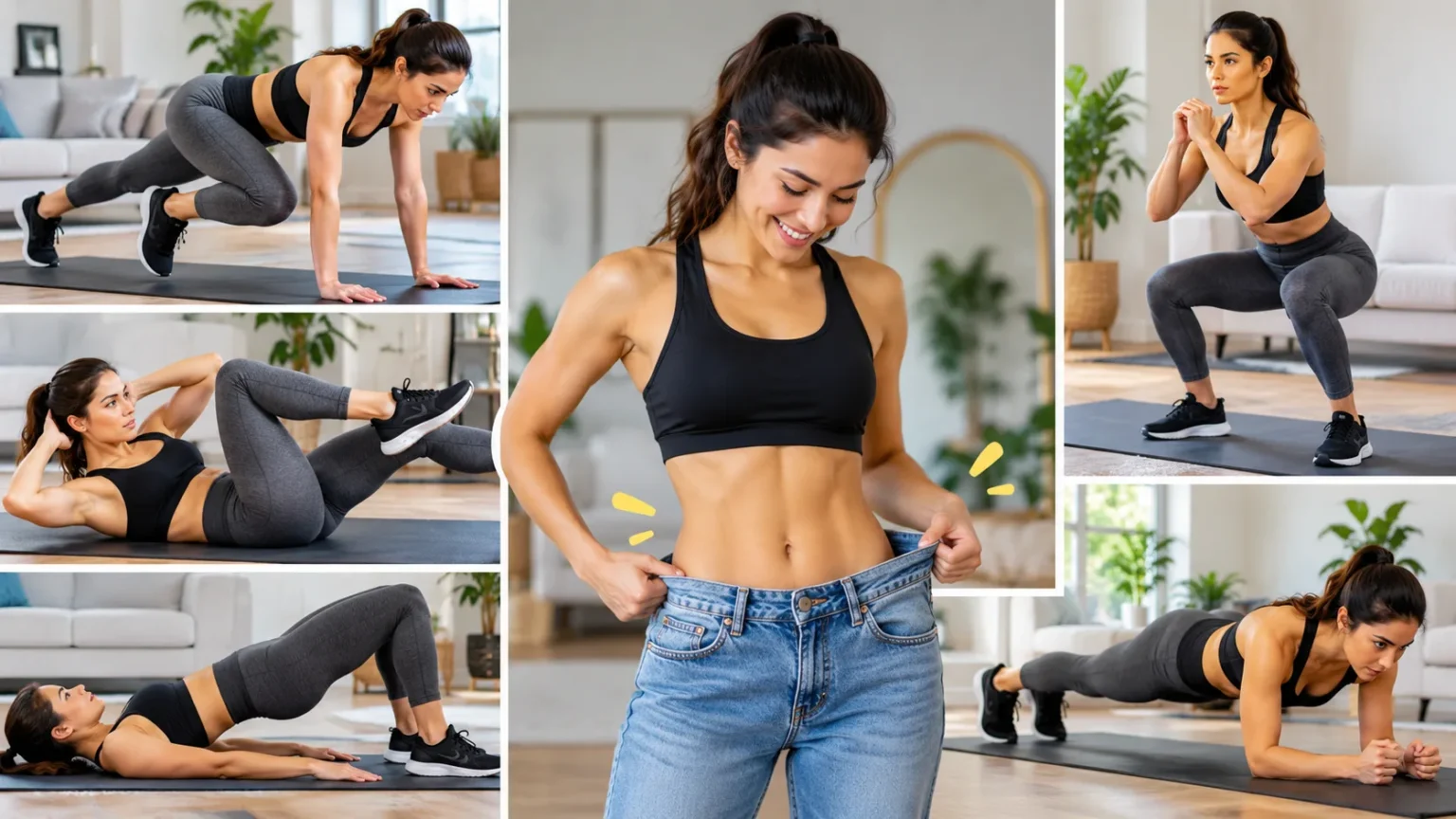
Mountain climbers are a dynamic full-body exercise that combines cardiovascular activity with core engagement. Start in a high plank position with your hands directly beneath your shoulders and your body forming a straight line from head to heels. Bring one knee toward your chest, return it to the starting position, and quickly alternate legs while keeping your upper body stable.
Beginners can perform mountain climbers slowly and focus on maintaining good form before increasing speed. Keep your abdominal muscles engaged and avoid allowing your hips to rise too high or drop toward the floor. Moving with control protects your lower back while making the exercise more effective for your core, shoulders, legs, and cardiovascular system.
Try performing mountain climbers for 20 to 30 seconds, followed by 30 to 45 seconds of rest. As your fitness improves, gradually increase the work interval to 40 or 60 seconds. Including several rounds in a home workout can raise your heart rate and help increase overall calorie expenditure, which supports gradual body fat reduction when combined with balanced eating habits.
Exercise 2: Bodyweight Squats
Bodyweight squats are one of the most practical exercises for anyone trying to become more active at home. They work large muscle groups in the legs and hips, including the quadriceps, hamstrings, and glutes. Because multiple muscles are involved at the same time, squats can be a useful addition to workouts designed to improve strength and support overall fat loss.
Stand with your feet approximately shoulder-width apart and point your toes slightly outward if that feels comfortable. Push your hips back and bend your knees as though you are sitting into a chair while keeping your chest lifted. Lower only as far as you can comfortably control, then press through your feet to return to the standing position.
Begin with two or three sets of 10 to 15 repetitions and take a short rest between sets. Once regular squats feel easier, you can increase repetitions, slow down each repetition, or progress to more challenging variations such as squat pulses. Focus on technique rather than speed because controlled repetitions can make the exercise more effective while reducing unnecessary strain.
Exercise 3: High Knees
High knees are a simple cardio exercise that can quickly increase your heart rate without requiring much space. Stand upright and alternately drive your knees upward while moving your arms naturally, similar to running in place. The movement works your legs while also requiring your abdominal muscles to stabilize your torso throughout the exercise.
You do not need to lift your knees extremely high when you are just beginning. Start at a comfortable pace and gradually increase the speed as your coordination and endurance improve. Try to land softly on the balls of your feet and keep your posture upright instead of leaning far backward or forward during the movement.
Perform high knees for 20 to 30 seconds and rest before repeating for several rounds. You can also alternate high knees with lower-impact exercises such as walking in place or bodyweight squats. Including short bursts of cardiovascular exercise in your home routine can help increase daily energy expenditure and support weight management when practiced consistently.
Exercise 4: Burpees
Burpees combine several movements into one exercise, making them challenging but efficient for home workouts. A traditional burpee includes a squat, plank position, return to standing, and optional jump. Because your arms, legs, core, and cardiovascular system are all involved, burpees can increase exercise intensity quickly and contribute to a high-energy workout.
To perform a basic burpee, stand upright, bend your knees, and place your hands on the floor. Step or jump your feet backward into a plank, then bring them forward again and return to standing. Beginners can remove the jump and step their feet back one at a time to reduce impact while still practicing the main movement pattern.
Start with five to eight repetitions or work for about 15 to 20 seconds before resting. Burpees can become tiring quickly, so maintaining good form is more important than completing a large number of repetitions. Gradually increase your volume as your strength and conditioning improve rather than pushing through exhaustion and allowing your technique to break down.
Exercise 5: Plank With Knee Drives
Plank knee drives combine core stability with controlled leg movement, making them useful for strengthening the midsection while also engaging the shoulders and hips. Begin in a high plank position and keep your hands underneath your shoulders. Slowly bring one knee toward your chest, return it, and repeat with the opposite leg while keeping your torso as stable as possible.
Unlike fast mountain climbers, plank knee drives can be performed at a slower pace to place more emphasis on control. Tighten your abdominal muscles and avoid twisting excessively as your knee moves forward. If the full plank position feels difficult, you can practice regular planks first and gradually introduce knee movements once you become stronger.
Perform eight to twelve knee drives on each side or work for 20 to 30 seconds. Rest before repeating another set and stop if you feel sharp discomfort in your wrists, shoulders, or lower back. Stronger core muscles will not directly burn belly fat, but they can improve stability, posture, movement quality, and performance during full-body workouts.
How to Combine These 5 Exercises Into a Home Workout
A simple fat-loss workout can include all five exercises in one circuit. Perform mountain climbers, squats, high knees, burpees, and plank knee drives one after another with short breaks between movements. After completing all five exercises, rest for one or two minutes before starting another round, depending on your current fitness level.
Beginners can start with 20 seconds of work followed by 40 seconds of rest for each exercise. Complete two rounds at first and gradually increase to three or four rounds as your endurance improves. More experienced exercisers can use longer work intervals, shorter rest periods, or additional rounds to increase the difficulty without needing extra equipment.
Aim to perform this workout several times per week while allowing enough recovery between harder sessions. You can also alternate these workouts with walking, cycling, stretching, or lighter activity. A varied routine is often easier to maintain than repeating an exhausting workout every day, and recovery helps your muscles adapt to training.
How Often Should You Exercise to Reduce Belly Fat?
Consistency matters more than doing extremely long workouts once in a while. A realistic weekly routine may include three to five days of planned exercise, depending on intensity and experience. You can combine short home workouts with regular walking and other forms of daily movement to increase your overall activity without turning every session into a high-intensity workout.
Strength-focused movements such as squats and controlled plank exercises can be performed several times per week, while intense cardio circuits may require more recovery. Listen to your body and avoid repeatedly training through significant soreness or fatigue. Beginners should increase workout volume gradually so joints, muscles, and cardiovascular fitness have time to adapt.
Daily movement outside formal workouts also contributes to overall energy expenditure. Walking to nearby places, taking stairs, completing household tasks, or standing more frequently can all add activity throughout the day. These habits may seem small, but they can support a broader fat-loss plan when combined with regular exercise and appropriate nutrition.
Nutrition Matters for Losing Belly Fat
Exercise can support fat loss, but nutrition plays an important role in determining whether your body is consistently using more energy than it receives. You do not need an extreme diet to make progress. Building meals around vegetables, fruit, whole grains, protein-rich foods, and healthy fats can support energy levels and make your eating habits easier to maintain.
Protein can be particularly useful because it supports muscle maintenance and can help meals feel more satisfying. Examples include eggs, fish, chicken, yogurt, beans, lentils, tofu, and other protein-rich foods that fit your preferences. Try to balance portions rather than eliminating entire food groups or following highly restrictive diets that become difficult to sustain.
Sugary drinks, frequent high-calorie snacks, and oversized portions can make fat loss more difficult if they regularly increase your total calorie intake. You do not need to avoid every enjoyable food, but being aware of portions can make a significant difference. Sustainable eating habits generally work better than short-term diets followed by returning to old patterns.
Sleep and Stress Can Affect Your Progress
Exercise and nutrition are often the main focus of belly fat loss plans, but sleep also matters for recovery and appetite regulation. Poor sleep can leave you tired, reduce workout performance, and make it harder to maintain healthy eating habits. Establishing a regular bedtime routine and allowing enough time for sleep can support your fitness efforts.
Stress can also influence eating patterns and daily activity. Some people eat more calorie-dense foods when stressed, while others lose motivation to exercise or prepare balanced meals. Finding practical strategies such as walking, meditation, relaxing hobbies, or spending time with supportive people can make healthy routines easier to maintain during stressful periods.
You do not need to eliminate every source of stress or sleep perfectly every night to make progress. Instead, treat recovery as another part of your overall fitness plan. Consistent exercise, balanced nutrition, adequate rest, and manageable stress levels work together more effectively than relying on one intense workout to change your body.
Common Mistakes to Avoid When Trying to Lose Belly Fat
One common mistake is performing hundreds of crunches because you expect them to specifically burn abdominal fat. Core exercises can strengthen abdominal muscles, but they cannot force the body to remove fat from one exact location. A combination of full-body activity, strength training, cardio exercise, and balanced eating is more useful for reducing overall body fat.
Another mistake is exercising too hard every day without giving your body time to recover. Excessive training can leave you constantly sore, tired, and less motivated to continue. Building intensity gradually allows you to improve fitness while reducing the likelihood that your workout plan becomes too demanding to maintain.
Avoid comparing your progress with dramatic transformation photos or unrealistic claims online. Fat-loss speed varies between people because bodies respond differently based on genetics, lifestyle, age, starting point, and many other factors. Measure progress through improvements in endurance, strength, consistency, energy levels, clothing fit, and gradual physical changes rather than expecting immediate results.
How Long Does It Take to Notice Results?
There is no single timeline for losing belly fat because each person’s body and lifestyle are different. Some people may notice changes in energy, endurance, or clothing fit within several weeks, while visible fat loss may take longer. Progress generally depends on how consistently your exercise routine and eating habits create conditions that support overall fat reduction.
Avoid weighing yourself several times per day because body weight naturally changes due to hydration, food intake, and other normal factors. If you choose to track weight, look at longer-term trends rather than individual readings. Waist measurements, workout performance, photos, and how your clothes fit can provide additional ways to monitor progress.
The most effective routine is one you can continue after the first few weeks. Instead of chasing rapid results, aim to become gradually stronger, fitter, and more consistent with healthy habits. When exercise, nutrition, recovery, and daily activity become part of your lifestyle, changes in body composition have a better chance of being sustainable.
Conclusion
The top five exercises to lose belly fat naturally at home include mountain climbers, bodyweight squats, high knees, burpees, and plank knee drives. These movements engage multiple muscle groups, raise your heart rate, and can help increase overall calorie expenditure. They require little or no equipment, making them practical for home fitness routines.
Remember that no individual exercise can specifically remove fat from your stomach. Belly fat generally decreases as part of overall body fat loss, so combine regular exercise with balanced nutrition, sufficient sleep, stress management, and daily movement. A sustainable plan is far more useful than relying on extreme workouts or quick-fix promises.
Start at an intensity that matches your current fitness level and gradually make your workouts more challenging. Focus on proper form, consistent activity, and realistic progress instead of trying to achieve immediate changes. Over time, these habits can support improved fitness, stronger muscles, healthier weight management, and gradual reductions in overall body fat.
Frequently Asked Questions
Which exercise is best for losing belly fat at home?
No single exercise specifically burns belly fat. Full-body movements such as mountain climbers, squats, burpees, and high knees can increase calorie expenditure and support overall fat loss when combined with appropriate nutrition.
Can I lose belly fat by exercising for 10 minutes a day?
Ten minutes of exercise is a useful starting point, especially for beginners. However, overall results depend on your total activity, eating habits, sleep, consistency, and whether your routine gradually becomes more challenging.
Do planks burn belly fat?
Planks strengthen your core muscles but do not directly burn fat specifically from your belly. They are most effective when included in a broader routine that combines cardiovascular activity, strength training, and balanced nutrition.
How many days a week should I do these exercises?
Many beginners can start with three workouts per week and increase gradually depending on recovery and fitness level. On other days, lighter activities such as walking or stretching can help maintain regular movement.
Can I lose belly fat without going to the gym?
Yes. Home workouts, walking, bodyweight exercises, and balanced eating can all support fat loss without a gym membership. The key is maintaining consistent habits and gradually increasing your overall activity and fitness level.