Lower back stiffness can make everyday activities like sitting, standing, bending, and walking feel uncomfortable. Whether you spend long hours at a desk or regularly participate in physical activities, tension around your lower back can affect how easily you move. Gentle low back stretches may help improve flexibility, reduce feelings of tightness, and support comfortable daily movement.
Stretching is a simple way to introduce movement into your routine without requiring expensive equipment or a gym membership. However, not every stretch is suitable for every type of back discomfort. Learning proper techniques, understanding the benefits, and recognizing when to avoid certain movements can help you build a safe and effective stretching routine.
What Are Low Back Stretches?
Low back stretches are gentle movements designed to improve flexibility and mobility in the muscles and joints around the lumbar spine. These exercises commonly target the lower back, hips, glutes, and surrounding tissues that contribute to everyday movement. They are often included in mobility programs, rehabilitation exercises, and general fitness routines.
The lumbar spine contains five vertebrae that support the upper body while allowing controlled bending, extending, and rotating movements. Muscles such as the erector spinae, quadratus lumborum, and surrounding core muscles help stabilize this region. Stretching exercises encourage comfortable movement through these structures without requiring excessive force or complicated techniques.
Low back stretching routines can include movements performed while lying down, sitting, standing, or kneeling. Some exercises directly mobilize the lumbar spine, while others focus on nearby muscles that influence pelvic and hip movement. The most appropriate stretches depend on individual flexibility, comfort, activity levels, and any existing medical conditions.
Why Does the Lower Back Feel Tight?
Lower back tightness can develop for several reasons, including prolonged sitting, unfamiliar physical activity, and temporary muscular fatigue. Staying in one position for extended periods may make muscles and joints feel stiff when you begin moving again. This sensation does not necessarily mean that the muscles are physically shortened or damaged.
Muscular tension may also occur when the body responds to discomfort, stress, or changes in activity. The lower back works closely with the abdominal muscles, hips, and pelvis to support movement. When these structures become fatigued or sensitive, certain activities may feel uncomfortable, even without a specific muscle injury.
Some cases of lower back stiffness involve underlying conditions such as arthritis, disc-related problems, or nerve irritation. Therefore, stretching should not automatically be considered the solution to every type of back pain. Persistent symptoms, worsening discomfort, or pain accompanied by neurological changes may require assessment from a qualified healthcare professional.
Key Benefits of Low Back Stretches
One of the main benefits of low back stretches is improving comfortable movement around the lumbar spine and surrounding muscles. Gentle stretching may help reduce temporary stiffness after prolonged sitting or physical activity. Improved movement tolerance can make everyday tasks like reaching, bending, and changing positions feel easier for some people.
Stretching may also encourage relaxation by providing an opportunity to move slowly and breathe comfortably. When performed without excessive force, these exercises can help people become more aware of muscle tension and body positioning. This awareness may be useful when developing healthier movement habits throughout the day.
Another benefit is the convenience of incorporating stretching into a balanced mobility routine. Many low back stretches require only a comfortable floor surface or supportive chair. Although stretching alone cannot prevent or treat every cause of back pain, it can complement regular exercise, appropriate strengthening, and other healthy movement habits.
How to Stretch Your Lower Back Safely
Before beginning a stretching routine, choose a comfortable space where you can move without slipping or losing balance. Start with gentle movements rather than immediately attempting deep stretches. A few minutes of easy walking or relaxed movement may help you feel more comfortable before performing floor-based exercises.
Move slowly into each position and stop when you notice a mild, comfortable stretching sensation. Avoid bouncing, forcing your joints, or attempting to push through sharp pain. Some people find holding a gentle stretch for approximately 15–30 seconds comfortable, although shorter holds or repeated controlled movements may be more suitable.
Pay attention to how your symptoms respond during and after stretching. Mild muscular effort may be normal, but increasing pain, numbness, or radiating discomfort should not be ignored. If you have an existing spinal condition, recent injury, or unexplained symptoms, seek professional guidance before attempting movements that could aggravate your condition.
Knee-to-Chest Stretch for Lower Back Relief
The knee-to-chest stretch is a commonly used movement that gently brings the lower back and hips into a flexed position. Begin by lying on your back with your knees bent and feet resting on the floor. Keep your shoulders relaxed and allow your spine to settle comfortably against the supporting surface.
Slowly bring one knee toward your chest while keeping the opposite foot on the floor. Hold your leg behind the thigh or around the shin, depending on what feels comfortable. Gently draw the knee closer until you notice a mild stretching sensation around the lower back or buttock, without forcing the movement.
Maintain the position briefly while breathing naturally, then lower your foot to the floor and switch sides. You can repeat the exercise a few times if it feels comfortable. Avoid pulling aggressively or continuing if the movement increases back pain, particularly if bending your spine tends to aggravate existing symptoms.
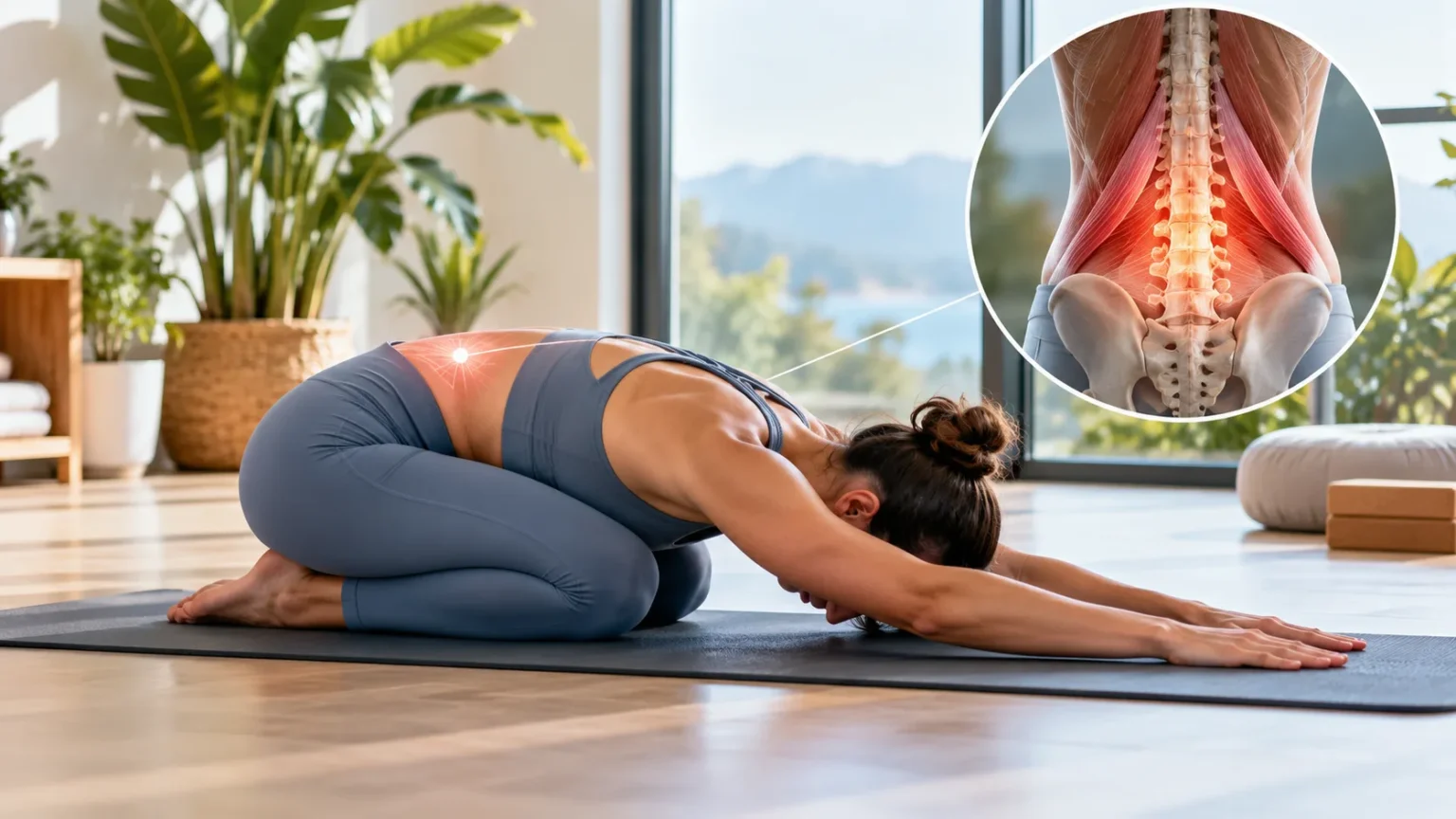
Child’s Pose Stretch for the Lower Back
Child’s pose is a gentle yoga-inspired position that can stretch the back and surrounding muscles. Begin on your hands and knees with a comfortable amount of space between your knees. Slowly shift your hips backward toward your heels while extending your arms forward along the floor.
Allow your torso to move toward your thighs without forcing your hips or spine into an uncomfortable position. Rest your forehead on a folded towel or cushion if needed, keeping your neck relaxed. You may notice a stretching sensation along the lower back, shoulders, or sides of the torso.
Breathe slowly and remain in the position for a comfortable period before returning to your starting position. If bending deeply causes knee discomfort, place a cushion between your thighs and calves or choose another stretch. People whose symptoms worsen with spinal flexion may find this movement unsuitable and should avoid forcing it.
Cat-Cow Stretch for Spinal Mobility
The cat-cow stretch combines gentle spinal flexion and extension to encourage movement through the back. Start on your hands and knees with your wrists positioned beneath your shoulders and knees beneath your hips. Maintain relaxed breathing and distribute your weight comfortably between your hands and knees.
For the cat movement, gently round your back toward the ceiling while allowing your head to follow naturally. Then move into the cow position by gradually allowing your abdomen to lower and your chest to open slightly. Keep both movements comfortable rather than trying to reach the largest possible spinal curve.
Repeat the sequence slowly while coordinating the movement with your breathing. This exercise can help you explore comfortable spinal motion and improve awareness of back positioning. If kneeling or supporting your weight through your wrists is uncomfortable, a seated variation may provide a more suitable alternative.
Supine Spinal Twist for Gentle Rotation
A supine spinal twist introduces controlled rotational movement while the body remains supported by the floor. Begin by lying on your back with your knees bent and feet resting comfortably. Extend your arms outward only as far as your shoulders allow, keeping your upper body relaxed throughout the movement.
Slowly lower both knees toward one side while allowing your hips and lower back to rotate gently. Keep the movement within a comfortable range rather than trying to bring your knees all the way to the floor. You may place a pillow beneath your knees to reduce the amount of rotation.
Return your knees to the center before repeating the movement on the opposite side. Breathe naturally and avoid using your arms to force a deeper twist. People with certain spinal conditions or symptoms aggravated by rotation should seek individualized advice before including this exercise in their stretching routine.
Pelvic Tilts for Lower Back Mobility
Pelvic tilts are small, controlled movements that help you become more aware of the relationship between your pelvis and lumbar spine. Begin by lying on your back with your knees bent and feet flat on the floor. Keep your shoulders relaxed and allow your arms to rest comfortably beside your body.
Gently engage your abdominal muscles and tilt your pelvis backward so your lower back moves slightly closer to the floor. Avoid lifting your hips into a bridge or holding your breath. After a brief pause, release the movement and allow your pelvis to return to a comfortable neutral position.
Repeat the exercise slowly while concentrating on smooth control rather than large movements. Pelvic tilts may be useful for practicing gentle lumbar movement, particularly when more demanding exercises feel difficult. However, they are not a universal treatment for back discomfort, and the movement should be adjusted according to individual symptoms.
Seated Lower Back Stretches for Desk Workers
Long periods of sitting can leave the back feeling stiff, making seated mobility exercises a convenient option during the workday. Begin by sitting upright in a stable chair with your feet resting on the floor. Keep your shoulders relaxed and allow your spine to move naturally rather than maintaining a rigid posture.
For a gentle seated stretch, slowly lean your torso forward from the hips and allow your hands to move toward your knees or thighs. Stop when you notice a comfortable stretching sensation without forcing your back into a rounded position. Return to sitting upright gradually while keeping your feet supported.
You can also practice small, comfortable seated rotations or side bends if these movements do not provoke symptoms. Taking regular movement breaks may be more helpful than relying on one stretch alone. Standing, walking briefly, and changing positions throughout the day can help reduce stiffness associated with prolonged sitting.
Standing Low Back Stretches for Everyday Mobility
Standing stretches offer a practical alternative when lying on the floor is inconvenient. One option is a gentle standing side bend that encourages movement through the trunk and surrounding muscles. Begin with your feet approximately hip-width apart, knees relaxed, and your weight distributed evenly between both legs.
Slowly reach one arm overhead and lean your torso slightly toward the opposite side. Keep your hips relatively steady and avoid twisting or forcing your spine into an uncomfortable position. You may feel a stretch along the side of your torso, including muscles that contribute to lower back movement.
Return to the center before repeating the movement on the opposite side. Use a stable chair or wall for support if your balance feels uncertain. Standing stretches can be incorporated into brief activity breaks, although people with balance problems or symptoms aggravated by side bending may need different exercises.
Hip Flexor Stretches and Their Connection to the Lower Back
The hip flexors are muscles located around the front of the hip that help lift the thigh toward the torso. They work alongside the abdominal and back muscles during walking and other movements. Limited hip mobility may influence how the pelvis and lumbar spine move, although it does not necessarily cause lower back pain.
A gentle half-kneeling hip flexor stretch can help improve flexibility around the front of the hip. Place one knee on a cushioned surface and position the opposite foot in front. Keeping your torso upright, gently shift your pelvis forward until you notice a comfortable stretch near the front of the kneeling-side hip.
Avoid arching your lower back to create a deeper stretching sensation. Instead, maintain a controlled pelvic position and move only as far as feels comfortable. If kneeling causes discomfort, a supported standing variation may be more appropriate, especially for people with sensitive knees or restricted mobility.
Glute and Piriformis Stretches for Lower Back Comfort
The gluteal muscles support hip movement and help coordinate forces between the pelvis and lower limbs. Tightness or discomfort around the buttocks may sometimes occur alongside lower back symptoms. Gentle glute stretches can improve hip flexibility, but their usefulness depends on the underlying cause of discomfort.
A common option is the lying figure-four stretch. Begin on your back with both knees bent, then place one ankle across the opposite thigh just above the knee. If comfortable, gently bring the supporting leg toward your body until you notice a mild stretch around the buttock or outer hip.
Hold the position without forcing your knee downward or pulling aggressively. Return to the starting position and repeat on the opposite side if appropriate. If this movement produces tingling, numbness, or radiating leg pain, stop the exercise because nerve-related symptoms may require a different approach.
Hamstring Stretches and Lower Back Flexibility
The hamstrings run along the back of the thighs and contribute to hip and knee movement. Because they attach to the pelvis, hamstring flexibility can influence certain movement patterns involving the hips. However, tight hamstrings are not always responsible for lower back pain, and stretching them is not necessary for everyone.
A gentle lying hamstring stretch can be performed using a towel or exercise strap. Lie on your back with one knee bent and the other leg raised comfortably. Place the strap around the raised foot and gradually straighten the knee only until you feel a mild stretch along the back of the thigh.
Keep your pelvis relatively stable and avoid pulling the leg beyond a comfortable range. You do not need to straighten your knee completely to benefit from the movement. Stop if stretching produces sharp pain or nerve-like symptoms, particularly discomfort that travels below the knee.
Best Time to Perform Low Back Stretches
There is no single perfect time to perform low back stretches because individual preferences and activity levels vary. Some people prefer gentle movement in the morning to reduce feelings of stiffness after sleeping. Others find brief stretching sessions helpful after prolonged sitting or during breaks from everyday activities.
Stretching after light activity may feel more comfortable because your body has already been moving. For example, a short walk before stretching can help you transition into mobility exercises gradually. Avoid forcing intense stretches immediately after waking or when your muscles feel particularly sensitive or uncomfortable.
The most useful stretching schedule is one that fits naturally into your day and does not aggravate symptoms. Consistent, comfortable movement is generally more practical than occasional aggressive stretching sessions. If your back becomes increasingly uncomfortable after a particular routine, modify the exercises or seek guidance before continuing.
How Often Should You Stretch Your Lower Back?
Many people can include gentle low back stretches in their regular movement routine, provided the exercises remain comfortable. A brief session involving a few controlled movements may be enough to reduce temporary feelings of stiffness. The appropriate frequency depends on your symptoms, flexibility, physical activity, and personal goals.
Rather than following a rigid stretching schedule, pay attention to how your body responds. Some individuals may enjoy short daily sessions, while others prefer stretching after exercise or during periods of stiffness. Increasing the duration or intensity is not always necessary, especially when simple movements already provide the desired comfort.
Stretching works best when combined with other forms of movement rather than replacing them. Regular walking, appropriate strength training, and changing positions throughout the day can support back function. People recovering from injury or managing persistent symptoms may benefit from a personalized program designed by a qualified healthcare professional.
Common Mistakes to Avoid During Low Back Stretches
One common mistake is stretching too aggressively in an attempt to release tight muscles quickly. Forcing the spine or surrounding tissues beyond a comfortable range may increase irritation rather than provide relief. A gentle stretching sensation is usually sufficient, and movements should never require pushing through sharp or worsening pain.
Another mistake is holding your breath while attempting difficult positions. Breath-holding can increase unnecessary tension and make it harder to relax during a stretch. Try to breathe naturally while allowing the movement to develop gradually, and avoid treating deeper stretching as an automatic sign of better results.
Ignoring symptom changes is also a concern, especially for people experiencing ongoing back discomfort. An exercise that feels comfortable for one person may worsen symptoms in another. If a particular movement consistently increases pain or causes tingling, numbness, or radiating discomfort, stop and seek appropriate guidance.
When Should You Avoid Stretching Your Lower Back?
You should avoid movements that cause sharp pain, worsening symptoms, or unusual neurological sensations. Stretching is not always suitable immediately after an injury or during certain painful spinal conditions. If you experience significant discomfort following a fall, accident, or sudden injury, medical assessment may be necessary before beginning exercises.
Certain warning signs require urgent attention rather than a home stretching routine. These include new bladder or bowel control problems, numbness around the groin, or severe or progressive leg weakness. Such symptoms may indicate significant nerve involvement and should be evaluated through emergency medical care.
People with osteoporosis, recent spinal surgery, fractures, or other diagnosed spinal conditions may require specific movement precautions. Deep bending and twisting can be unsuitable in some situations, even when they appear gentle. A healthcare professional can help identify safe alternatives based on the underlying condition and individual movement capabilities.
Low Back Stretches vs Strengthening Exercises
Stretching and strengthening exercises support physical function in different ways. Stretching primarily focuses on flexibility, comfortable movement, and tolerance to certain positions. Strengthening exercises challenge muscles to produce and control force, which can help the body manage everyday activities more efficiently.
Exercises such as glute bridges, appropriately modified bird dogs, and controlled core movements may complement a stretching routine. These movements train muscles that contribute to trunk and hip stability. The most suitable exercise choices depend on individual symptoms, physical ability, and whether certain movements improve or worsen comfort.
A balanced approach often includes mobility, strength, and regular physical activity rather than focusing exclusively on flexibility. Strong muscles do not guarantee freedom from back pain, just as flexible muscles do not automatically prevent injuries. Gradual progression and consistent participation in comfortable activities are generally more useful than relying on one exercise category.
Conclusion
Low back stretches can be a practical way to improve flexibility, encourage comfortable spinal movement, and manage occasional stiffness. Exercises such as knee-to-chest stretches, child’s pose, cat-cow movements, and pelvic tilts offer different ways to explore mobility around the lumbar spine. Their usefulness depends on individual comfort, movement preferences, and underlying health conditions.
Safe stretching involves slow movements, relaxed breathing, and avoiding positions that worsen symptoms. You do not need to stretch deeply or perform complicated exercises to benefit from regular mobility practice. Gentle movements that fit your daily routine can complement walking, strengthening exercises, and other activities that support physical function.
Although stretching may help with temporary tightness, it is not a guaranteed treatment for persistent lower back pain. Ongoing discomfort, significant movement limitations, or unusual neurological symptoms deserve appropriate medical attention. A personalized approach can help you identify suitable exercises while supporting long-term comfort and mobility.
Frequently Asked Questions
What are the best stretches for lower back pain?
Gentle knee-to-chest movements, cat-cow stretches, and pelvic tilts may help some people with lower back stiffness. The best exercise depends on your symptoms, and any movement that worsens pain should be avoided.
Is it safe to stretch your lower back every day?
Daily gentle stretching may be appropriate when movements are comfortable and do not worsen symptoms. However, people with existing spinal conditions or persistent pain may need individualized guidance regarding exercise selection, intensity, and frequency.
How long should I hold a lower back stretch?
Many gentle stretches can be held for approximately 15–30 seconds if comfortable. Shorter holds or repeated controlled movements may also be useful, particularly when longer positions cause discomfort or increased muscle tension.
Can stretching improve lower back flexibility?
Yes, consistent and comfortable stretching may improve movement range and flexibility around the lower back and hips. Results vary, and combining mobility exercises with general physical activity can support broader movement capacity.
Should I stretch my lower back if it hurts?
Mild discomfort may sometimes respond to gentle movement, but stretching should not increase pain. Stop if symptoms worsen, and seek medical attention for persistent pain or warning signs such as progressive weakness or new bladder problems.