
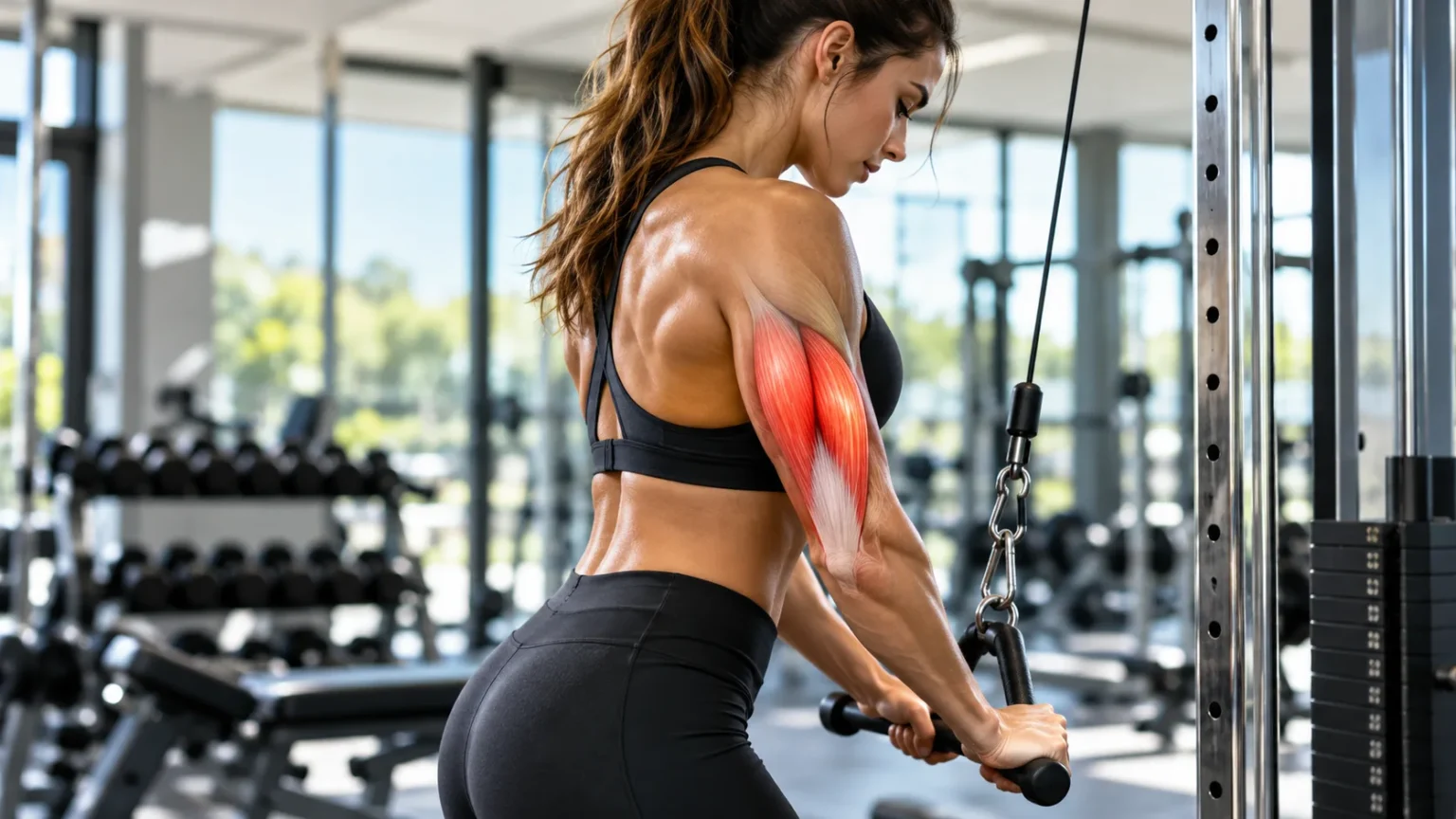
The triceps are an important group of muscles located at the back of the upper arm. They help straighten the elbow, support upper-body movements, and contribute to everyday activities such as pushing doors, lifting objects, and reaching overhead. Understanding what triceps are can help you learn how your arms work and why these muscles are important for strength, movement, and physical function.
Many people associate the triceps with gym workouts and upper-arm exercises. However, these muscles do much more than contribute to exercise performance. They support normal elbow movement, assist with certain shoulder movements, and work alongside other muscles during everyday activities. Without proper triceps function, many routine upper-body movements would become more difficult.
This guide explains triceps anatomy, muscle functions, the three triceps heads, and their role in upper-body movement. It also explores common triceps exercises, differences between the triceps and biceps, possible muscle injuries, and practical ways to maintain healthy arm function. Whether you are studying human anatomy or learning about fitness, these facts provide a useful introduction.
What Are Triceps?
The triceps are muscles located along the back of each upper arm. Their full anatomical name is the triceps brachii, which means three-headed muscle of the arm. The name comes from the three separate muscle heads that join into a common tendon near the elbow. Together, they perform important movements involving the elbow and shoulder.
The triceps extend from parts of the shoulder blade and upper arm bone toward the elbow. Their primary function is elbow extension, which means straightening the arm. This movement occurs during many activities, including pushing and reaching. The triceps also help control certain movements when the elbow bends under resistance.
Although the triceps are often discussed in bodybuilding, they are essential for everyday physical function. They work with other muscles to coordinate arm movement and provide appropriate strength. Their importance extends beyond appearance or exercise performance. Understanding their location and function helps explain how the upper body performs ordinary tasks.
Where Are the Triceps Located?
The triceps are located on the posterior, or back, portion of the upper arm. They extend along the humerus, which is the bone connecting the shoulder and elbow. Part of the muscle also originates from the scapula, commonly called the shoulder blade. The three muscle heads combine near the elbow through a common tendon.
The triceps occupy a substantial portion of the upper arm’s muscle structure. Their position allows them to generate force when the elbow straightens. The muscle can be felt contracting during certain pushing movements. However, its precise shape and appearance vary naturally according to anatomy, genetics, and individual movement habits.
Understanding triceps location is useful when studying muscle function or discussing upper-arm discomfort. Pain near the back of the arm may involve the triceps, but surrounding tendons, joints, and nerves can also contribute. Location alone cannot identify an injury. A healthcare professional can evaluate persistent symptoms and determine the likely source.
Understanding the Three Heads of the Triceps
The triceps brachii consists of three anatomical sections called the long head, lateral head, and medial head. Each head has a different attachment location, but all contribute to elbow extension. Together, they form a coordinated muscle group that supports upper-arm function. Their arrangement allows the triceps to participate in several different movements.
The long head begins at the shoulder blade and crosses both the shoulder and elbow joints. The lateral and medial heads originate from different regions of the upper arm bone. These anatomical differences influence their roles during movement. However, the three heads generally work together rather than operating as completely independent muscles.
Understanding the different triceps heads can help explain why various activities challenge the muscle in different ways. Some movements involve changes in shoulder position, while others emphasize elbow motion. This affects muscle length and mechanical demands. A balanced understanding of anatomy is more useful than assuming every exercise isolates one head completely.
What Is the Long Head of the Triceps?
The long head is one of the three parts of the triceps brachii muscle. It originates from the infraglenoid tubercle of the scapula, a small area below the shoulder socket. Unlike the other two heads, it crosses both the shoulder and elbow joints. This gives it a role in movements involving both regions.
The long head contributes to elbow extension while also assisting with shoulder extension and adduction. These movements involve bringing the arm backward or toward the body in particular positions. It works alongside other muscles during these activities. Its contribution changes depending on joint position and the physical demands of the movement.
The long head is involved in many upper-body activities, including reaching, pushing, and controlled arm movement. Its two-joint arrangement means shoulder position can influence how the muscle functions. However, exercise selection should consider the complete upper-body movement rather than focusing on one muscle section alone. Comfortable movement and suitable strength training help support normal function.
What Is the Lateral Head of the Triceps?
The lateral head is located toward the outer portion of the back of the upper arm. It originates from the posterior surface of the humerus above the radial groove. This section contributes to elbow extension and works with the other triceps heads during arm movement. It is commonly discussed in strength training and anatomy education.
The lateral head becomes active during many pushing and elbow-straightening movements. Its contribution varies according to the demands of the activity and the force required. It does not operate independently from the rest of the triceps. Instead, the nervous system coordinates muscular activity to produce efficient movement.
Understanding the lateral head is useful when learning how the triceps generate force. Different elbow positions and resistance demands can influence muscle activity, although no single exercise completely isolates this section. The primary goal of appropriate training should be overall strength and function. Muscle appearance alone does not determine performance or health.
What Is the Medial Head of the Triceps?
The medial head lies deeper within the triceps muscle and originates from the posterior humerus below the radial groove. It contributes to elbow extension during many everyday movements. Because of its deeper position, it is less visible than the other heads. However, it remains an important part of normal upper-arm function.
The medial head works alongside the long and lateral heads to straighten the elbow. It contributes during movements requiring different levels of force. Its activity helps maintain coordinated elbow function across everyday tasks. The three triceps heads combine their actions rather than functioning as completely separate systems.
Although the medial head receives less attention in popular fitness discussions, it is essential for normal elbow movement. Understanding its role helps explain why balanced upper-body activity matters. Exercises involving elbow extension generally recruit several parts of the triceps. Training should prioritize comfortable movement and appropriate functional capacity.
What Do the Triceps Muscles Do?
The primary function of the triceps is elbow extension, which involves straightening the arm at the elbow joint. This action is essential during pushing movements and numerous daily activities. The muscle also helps control elbow movement when external forces act on the arm. Coordinated triceps activity contributes to smooth and efficient upper-body function.
The long head of the triceps assists with certain shoulder movements because it crosses the shoulder joint. The entire muscle group works alongside surrounding muscles to coordinate arm actions. For example, pushing an object involves not only the triceps but also shoulder and chest muscles. These structures work together to generate and control movement.
The triceps also contribute to stability during activities that place demands on the upper body. Supporting body weight through the arms and controlling certain reaching movements involve coordinated muscle activity. However, different tasks recruit the triceps to varying degrees. Understanding these functions highlights their importance beyond conventional gym exercises.
Triceps vs. Biceps: What’s the Difference?
The triceps and biceps are two major muscle groups located in the upper arm. The triceps are primarily found at the back, while the biceps are located toward the front. Their main functions differ because they act on the elbow in opposite directions. Both contribute to normal upper-body coordination.
The biceps brachii helps bend the elbow and turn the forearm into a palm-up position. The triceps brachii primarily straightens the elbow. During many movements, these muscles coordinate to control joint position and movement speed. Their actions help make everyday tasks such as carrying and reaching more manageable.
Both muscle groups contribute to arm strength and functional movement, although neither works entirely alone. Shoulder position, forearm muscles, and other surrounding structures influence upper-body mechanics. A balanced exercise program may include movements involving both elbow flexion and extension. Developing general functional strength is more important than comparing the appearance of individual muscles.
Why Are Triceps Important in Everyday Life?
Triceps muscles contribute to many ordinary activities that require pushing or straightening the arms. Opening heavy doors, reaching for objects, and moving items away from the body involve elbow extension. The triceps provide some of the muscular force needed for these tasks. Their function helps support independence during daily routines.
The triceps also participate in activities such as sports, household work, and recreational movement. Their contribution changes depending on the task and body position. Some activities require quick force production, while others involve slow and controlled movement. The muscle works with surrounding joints and muscles to meet these demands.
Maintaining comfortable triceps function can support everyday mobility and physical confidence. Weakness or injury may make certain tasks more difficult, particularly those involving pushing movements. However, normal variation in strength is expected between individuals. Appropriate physical activity and medical care when needed can help maintain functional upper-arm health.
Common Exercises That Work the Triceps
Several upper-body exercises involve the triceps because they require elbow extension. Common examples include push-ups, cable pressdowns, and certain pressing movements. Different activities place different demands on the triceps and surrounding muscles. Exercise selection should reflect individual experience, available equipment, and physical capacity.
Push-ups involve the triceps alongside the chest, shoulders, and trunk muscles. Pressing movements similarly recruit several muscle groups rather than isolating the triceps entirely. Specialized resistance exercises can emphasize elbow extension more directly. However, suitable loading and movement control are more important than selecting complicated exercises.
Beginners and younger individuals should prioritize appropriate supervision and comfortable movement rather than demanding resistance levels. Painful exercises or unfamiliar equipment can create unnecessary injury risks. A qualified exercise professional can recommend suitable activities according to personal needs. The goal is to develop functional strength while maintaining healthy joint movement.
How Do Triceps Work During Push-Ups?
Push-ups are a common upper-body exercise involving coordinated movement at the shoulders and elbows. The triceps contribute by helping straighten the elbows as the body moves away from the supporting surface. Chest and shoulder muscles also provide important force. The exercise requires coordination between several muscle groups.
Different push-up variations change the mechanical demands placed on the upper body. Hand positioning, body angle, and overall movement range influence how the muscles contribute. However, no single variation guarantees complete isolation of the triceps. Proper exercise selection depends on physical capacity and comfortable joint function.
Push-ups may not be appropriate for everyone, particularly individuals with wrist, elbow, or shoulder discomfort. Modified exercises can sometimes provide more manageable alternatives. A trained instructor can help determine suitable options. The aim should be controlled movement and functional strength rather than forcing difficult repetitions.
What Causes Triceps Muscle Pain?
Triceps muscle pain can develop for several reasons, including unfamiliar physical activity, muscle strain, or tendon irritation. Repetitive upper-body movements may also contribute to discomfort. Some people experience temporary soreness after exercise, while others develop pain following a specific injury. The underlying cause influences appropriate treatment.
Triceps strains involve injury to muscle fibers and may produce tenderness, weakness, or discomfort during elbow extension. Tendon-related problems can cause pain near the back of the elbow. However, symptoms in this area may also originate from joints or nerves. A medical assessment can help distinguish between different possible causes.
Mild exercise-related soreness often improves with appropriate recovery and comfortable movement. However, severe pain, significant swelling, bruising, or substantial weakness requires professional evaluation. Sudden loss of normal arm function should not be ignored. Understanding the possible causes supports safer decisions about physical activity and recovery.
How Long Does a Triceps Injury Take to Heal?
The recovery time for a triceps injury depends on the affected tissue and severity of damage. Mild muscle strains may improve within a few weeks, while more significant injuries can require longer rehabilitation. Tendon injuries may follow different recovery patterns. Individual health and activity demands also influence healing.
Pain may improve before full strength and movement tolerance return. This means returning immediately to demanding activities may not always be appropriate. Gradual rehabilitation can help restore comfortable function. A healthcare professional may recommend specific modifications based on examination findings and recovery progress.
Some triceps injuries involve partial or complete tendon tears that require specialist evaluation. These conditions cannot be managed through general stretching or routine exercise alone. Persistent weakness or significant pain deserves medical assessment. Appropriate diagnosis helps establish realistic recovery expectations and suitable treatment options.
How to Keep Your Triceps Healthy
Maintaining triceps health involves regular, appropriate physical activity and balanced upper-body movement. Activities that use the arms during everyday tasks can help maintain functional capacity. Suitable strengthening exercises may provide additional benefits when performed according to individual abilities. Consistent movement is generally more useful than occasional excessive physical demands.
The triceps work alongside several other muscles, making balanced upper-body conditioning important. Shoulder mobility, elbow comfort, and coordination all contribute to normal arm function. Repetitive activities may require occasional breaks or adjustments when discomfort develops. Understanding personal limits helps reduce unnecessary irritation.
Adequate recovery is also an important part of maintaining muscle health. Sleep, balanced nutrition, and comfortable activity levels support normal physical function. Pain that repeatedly returns should not be ignored. A healthcare professional can assess persistent symptoms and recommend appropriate treatment or rehabilitation.
Interesting Facts About the Triceps Muscle
The name triceps brachii comes from Latin terms describing a three-headed muscle of the arm. Its three heads share a common attachment near the elbow. This structure allows the muscle to coordinate elbow extension during different activities. The triceps are an important component of upper-body anatomy.
Another interesting fact is that only the long head of the triceps crosses the shoulder joint. The lateral and medial heads originate from the humerus and primarily contribute to elbow movement. These anatomical differences influence how the muscle responds to different joint positions. However, all three heads contribute to overall triceps function.
The triceps also play an important role in controlling movement rather than simply generating force. During certain activities, they help regulate how quickly the elbow bends under resistance. This coordinated muscular control contributes to smooth everyday movements. Understanding these functions provides a more complete picture of how upper-arm muscles work.
Conclusion
The triceps are essential muscles located at the back of the upper arm. Their three heads, known as the long, lateral, and medial heads, work together to straighten the elbow and support coordinated upper-body movement. The long head also contributes to certain shoulder actions. Understanding triceps anatomy helps explain their role in everyday physical activities.
These muscles are involved in pushing, reaching, carrying, and various recreational movements. Exercises such as push-ups and resistance-based pressing activities can strengthen the triceps when performed appropriately. However, training should prioritize comfortable movement, safe progression, and individual physical needs. Muscle health involves more than exercise performance or appearance.
Maintaining healthy triceps function can support arm strength, mobility, and independence during everyday tasks. Regular physical activity, balanced movement, and appropriate recovery contribute to overall upper-body health. Persistent pain or weakness should be assessed by a healthcare professional. Learning how the triceps work provides a useful foundation for understanding human movement and muscle function.
Frequently Asked Questions
What are triceps in simple words?
Triceps are muscles located at the back of the upper arms. Their main job is to straighten the elbows, helping with everyday movements such as pushing, reaching, and lifting objects.
How many muscles are in the triceps?
The triceps brachii is one muscle with three heads: the long head, lateral head, and medial head. These sections work together to produce elbow extension and support arm movement.
What is the difference between triceps and biceps?
The triceps are located at the back of the upper arm and mainly straighten the elbow. The biceps are located at the front and help bend the elbow and rotate the forearm.
What exercises strengthen the triceps?
Push-ups, appropriate pressing exercises, and resistance-based elbow extension movements can strengthen the triceps. Exercise selection should match individual abilities, and unfamiliar activities should be performed with appropriate guidance.
Why are triceps important?
Triceps help straighten the elbows and support everyday activities involving pushing, reaching, and upper-body movement. They also contribute to coordinated joint control and functional arm strength.