The glute bridge is a simple lower-body exercise that strengthens the glutes, hamstrings, hips, and core without requiring complicated equipment. It can be performed almost anywhere, making it useful for beginners, home workouts, rehabilitation programs, and strength-training routines. Although the movement looks easy, proper technique is important for getting the most benefit while reducing unnecessary pressure on the lower back.
Adding glute bridges to your exercise routine can support hip strength, pelvic stability, posture, and overall lower-body function. The movement can also be modified as your strength improves, progressing from basic bodyweight bridges to weighted or single-leg variations. Understanding correct form, common mistakes, benefits, and practical training tips can help you perform the exercise more effectively.
What Is a Glute Bridge?
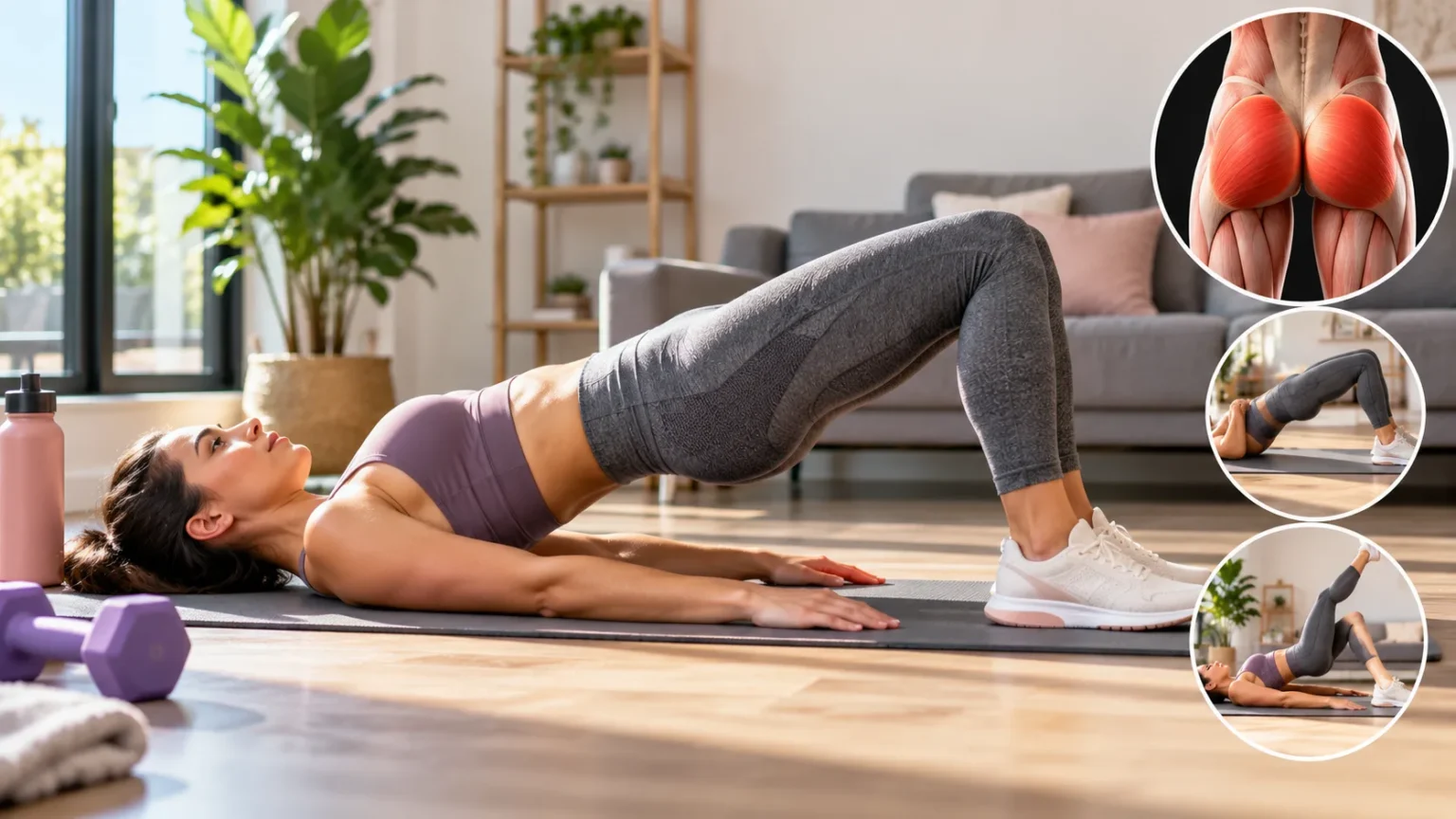
A glute bridge is a bodyweight exercise performed while lying on your back with your knees bent and feet placed on the floor. You lift your hips upward by contracting your glute muscles until your body forms a relatively straight line from your shoulders toward your knees. The hips are then lowered back down with control.
The exercise primarily targets the gluteus maximus, which is the largest muscle in the buttocks and plays an important role in hip extension. The hamstrings, core muscles, and smaller hip stabilizers also contribute during the movement. Because your upper body remains supported by the floor, the glute bridge is generally easier to learn than many standing lower-body exercises.
Glute bridges are commonly included in strength training, warm-ups, rehabilitation programs, and mobility routines. They can help people learn how to activate their glutes before progressing to exercises such as squats, lunges, hip thrusts, and deadlifts. The movement can also be adapted for different fitness levels by changing resistance, tempo, or leg position.
How to Perform a Glute Bridge Correctly
Start by lying flat on your back with your knees bent and your feet about hip-width apart. Place your feet comfortably close to your hips, while keeping your arms relaxed beside your body. Your head, shoulders, and upper back should remain supported by the floor throughout the exercise.
Brace your core gently and press through your feet as you squeeze your glutes and raise your hips. Continue lifting until your hips are extended without excessively arching your lower back. At the top, your shoulders, hips, and knees should form a controlled line while your knees remain approximately aligned with your feet.
Pause briefly at the top and focus on contracting your glutes rather than pushing the hips as high as possible. Lower your hips slowly until they approach the floor, then begin the next repetition. Controlled movement usually provides better muscle engagement than quickly bouncing the hips up and down through each repetition.
What Muscles Do Glute Bridges Work?
The primary muscle worked during a glute bridge is the gluteus maximus. This powerful muscle helps extend the hip when standing up, walking uphill, running, jumping, or lifting objects. Strengthening it can improve lower-body force production while also supporting many everyday movements that require stable and efficient hip extension.
The hamstrings located along the back of the thighs also contribute to hip extension during the exercise. However, they should not completely dominate the movement. If you mainly feel the exercise in your hamstrings rather than your glutes, adjusting foot position or improving glute activation may help distribute the work more effectively.
Your abdominal muscles and deeper core stabilizers also help maintain proper body position. They work with the muscles around the pelvis and lower back to prevent excessive spinal movement while your hips rise. This combination makes the glute bridge useful for developing coordination between the hips, core, and surrounding stabilizing muscles.
Benefits of Glute Bridges
One major benefit of glute bridges is improved glute strength. Strong glute muscles support hip extension and help with movements such as standing, climbing stairs, running, and lifting. Improving glute strength may also make compound exercises more efficient by allowing the hips to contribute properly instead of placing excessive demand on surrounding muscles.
Glute bridges can also support hip and pelvic stability. The muscles surrounding the hips help control the position of the pelvis during walking, running, and strength training. Improving their strength and coordination can contribute to better movement quality, especially when glute bridges are combined with other lower-body exercises.
Another advantage is accessibility. You do not need a gym, barbell, or specialized machine to perform the basic version, making it convenient for home exercise. The movement is also easy to modify, allowing beginners to focus on basic control while more experienced people can add resistance or advanced variations.
Common Glute Bridge Form Mistakes
One common mistake is excessively arching the lower back at the top of the movement. This often happens when someone tries to lift the hips higher after full hip extension has already been reached. Instead of forcing additional height, focus on squeezing the glutes while keeping your ribs and pelvis in a controlled position.
Another mistake is allowing the knees to collapse inward. Your knees should generally track in the same direction as your feet throughout the exercise. If they repeatedly fall toward each other, reducing the range of motion or practicing better lower-body alignment may help improve control before adding additional resistance.
Foot placement can also affect how the exercise feels. If your feet are positioned too far from your hips, your hamstrings may perform more of the work. If they are too close, the movement may feel uncomfortable at the knees, so experiment with a comfortable position that allows strong glute engagement without joint discomfort.
How Many Glute Bridges Should You Do?
Beginners can often start with two or three sets of approximately 8 to 15 controlled repetitions. The exact number depends on strength, fitness level, and why you are performing the exercise. Technique should remain the priority, so stop the set when you can no longer maintain controlled hip movement or proper alignment.
If you can easily complete many repetitions without feeling challenged, increasing resistance may be more useful than continually adding repetitions. A resistance band, dumbbell, or other appropriate weight can make the exercise more demanding. Progress gradually so you can maintain good form as the difficulty increases.
Training frequency also depends on your overall exercise program. Glute bridges may be used several times per week as part of strength training, warm-ups, or rehabilitation when appropriate. Remember that your glutes are also trained during squats, lunges, deadlifts, step-ups, and other lower-body movements, so total training volume should be considered.
Glute Bridge Variations for Different Fitness Levels
Beginners should usually become comfortable with the standard bodyweight glute bridge before progressing to more demanding versions. Slowing the lowering phase or holding the top position for several seconds can increase difficulty without adding external weight. These variations encourage better control and can help improve awareness of glute contraction.
A resistance-band glute bridge involves placing a loop band around the thighs, usually above the knees. Pressing gently outward against the band while bridging can increase involvement from muscles that help stabilize the hips. The knees should remain controlled rather than being forced excessively outward throughout the movement.
More advanced options include weighted glute bridges and single-leg glute bridges. A weighted version increases resistance by placing an appropriate load across the hips, while the single-leg variation challenges each side independently. These exercises require greater stability and strength, so progression should occur only after mastering basic bridge technique.
Glute Bridge vs Hip Thrust
Glute bridges and hip thrusts both involve hip extension and primarily target the glute muscles, but their setup differs. Glute bridges are generally performed with the shoulders on the floor, which creates a somewhat smaller movement range. Hip thrusts usually involve supporting the upper back on a bench while lowering and extending the hips through a larger range.
The basic glute bridge is often easier for beginners because the floor provides significant stability. It also requires minimal equipment and can be useful when learning how to contract the glutes effectively. Hip thrusts may be more suitable when someone wants to use heavier resistance and progressively overload the glutes during dedicated strength training.
Neither exercise is automatically better for everyone. The right choice depends on your goals, experience, available equipment, and comfort. Many workout programs include both exercises because glute bridges work well for activation or moderate resistance, while hip thrusts can provide greater loading potential for strength and muscle development.
How to Get More From Your Glute Bridges
Focus on movement quality rather than trying to complete repetitions as quickly as possible. Lift your hips under control, pause briefly when your glutes are fully contracted, and lower slowly. Using a deliberate tempo can make a relatively simple bodyweight exercise considerably more challenging while helping you notice whether the correct muscles are working.
Breathing can also help maintain proper form. Exhale gently as you lift your hips and inhale as you lower back toward the floor. Avoid holding your breath unnecessarily, particularly during lighter bodyweight sets, because relaxed and controlled breathing can make it easier to maintain core stability throughout the exercise.
Progress the movement when standard repetitions become easy. You might increase resistance, add a pause, perform additional sets, or move to a more challenging bridge variation. Progression should be gradual because adding too much difficulty before establishing good technique can cause other muscles to compensate and reduce the effectiveness of the exercise.
When to Avoid or Modify Glute Bridges
Glute bridges should generally feel like muscular work around the glutes and surrounding muscles rather than sharp joint pain. If the movement causes significant pain in the lower back, knees, hips, or another area, stop and reassess your technique. Continuing through sharp or worsening pain is not necessary for gaining strength.
People recovering from recent surgery, significant injuries, or certain musculoskeletal conditions may need an individualized exercise plan. A healthcare professional or physical therapist can determine whether glute bridges are appropriate and recommend modifications based on current strength, mobility, symptoms, and recovery goals.
You may also need to reduce the range of motion temporarily if full hip extension causes discomfort. Performing a smaller, pain-free bridge can sometimes provide a starting point while strength and mobility improve. Exercise selection should always match your current abilities rather than forcing your body into a range it cannot comfortably control.
Conclusion
The glute bridge is a simple but effective exercise for strengthening the glutes while also engaging the hamstrings, core, and muscles surrounding the hips. It requires minimal equipment and can fit easily into home workouts, gym routines, warm-ups, and certain rehabilitation programs.
Proper technique makes the exercise more effective. Keep your feet stable, knees aligned, core controlled, and lower back neutral while lifting through the hips. Concentrating on glute contraction instead of simply raising the hips as high as possible can improve muscle engagement and reduce unnecessary compensation.
As your strength improves, glute bridges can be progressed using slower repetitions, resistance bands, added weight, or single-leg variations. Build difficulty gradually and pay attention to how your body responds. Consistent, well-controlled practice can make the glute bridge a valuable part of a balanced lower-body strength program.
FAQs
Are glute bridges good for beginners?
Yes. Glute bridges are generally beginner-friendly because they require minimal equipment and provide a stable starting position. Beginners should focus on controlled repetitions and proper hip extension before adding resistance or advanced variations.
How many glute bridges should I do daily?
There is no required daily number. Beginners may start with two or three sets of 8 to 15 repetitions several times per week, depending on their overall workout routine and recovery.
Do glute bridges make your glutes stronger?
Yes. Glute bridges directly train the gluteus maximus through hip extension. Consistent training with gradually increasing resistance or difficulty can help improve glute strength when combined with appropriate recovery and overall lower-body training.
Why do I feel glute bridges in my hamstrings?
Your hamstrings naturally assist during hip extension, but excessive hamstring involvement may result from foot placement or limited glute activation. Moving your feet slightly closer to your hips may help you feel the glutes more.
Are glute bridges good for lower back pain?
Glute bridges may strengthen muscles that support the hips and pelvis, but they are not appropriate for every cause of back pain. Persistent or significant lower back pain should be evaluated before starting a new exercise program.