

The human body is an amazing living system made of many connected parts. Every second, these parts perform important jobs without needing your attention. Your heart pumps blood, your lungs collect oxygen, and your brain controls your actions. Together, they keep you alive, active, and able to understand the world.
Learning how the human body works can help you understand everyday experiences. It explains why your breathing becomes faster when you run and why your stomach makes sounds when you are hungry. It also helps you understand why sleep, food, water, and exercise are important. Even simple actions involve several body systems working together.
The body is not controlled by one organ working alone. Instead, organs communicate and support one another throughout the day and night. Your lungs place oxygen in your blood, while your heart moves that blood around your body. Your brain then adjusts your breathing and heartbeat based on what you are doing.
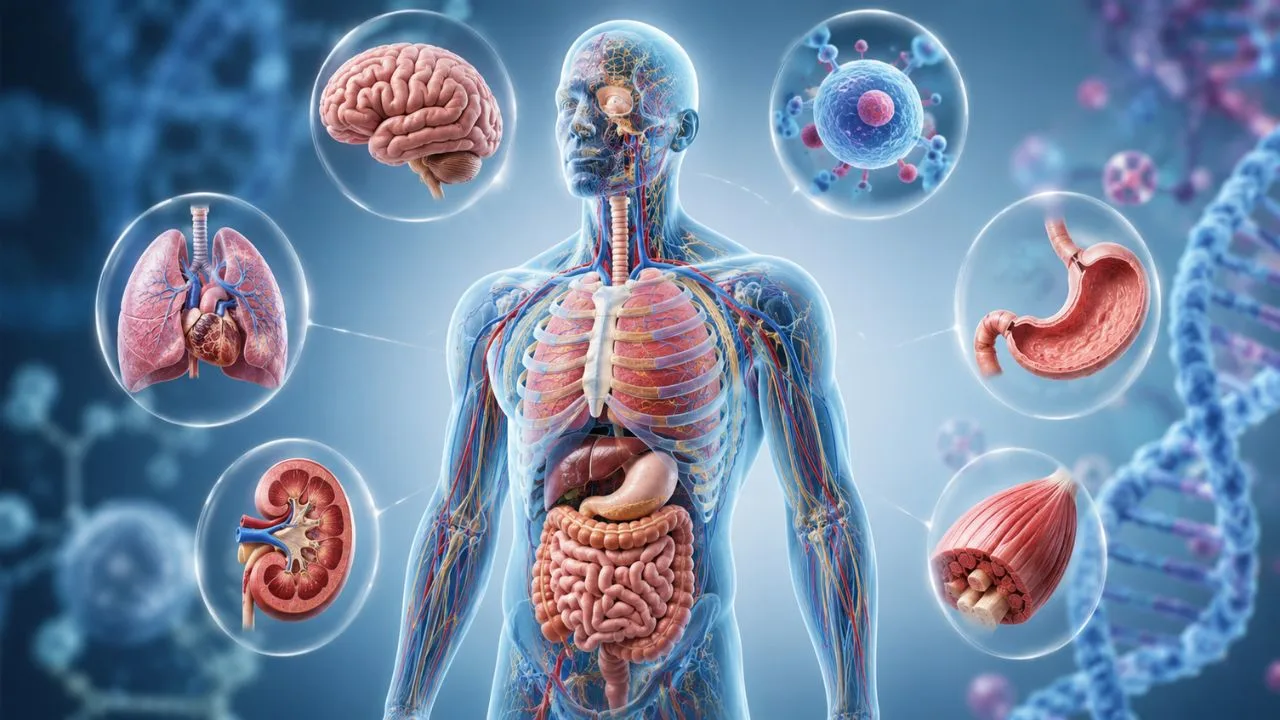
This guide explains the main body systems in clear and simple language. You will learn how the brain, heart, lungs, stomach, bones, muscles, and other organs perform their jobs. You will also see how these systems connect to one another. The result is one complete body that can grow, learn, move, heal, and stay balanced.
The Body Is Built From Cells
Your body is made from tiny living units called cells. Cells are so small that most of them can only be seen through a microscope. Different cells have different shapes and jobs inside the body. Muscle cells help you move, while nerve cells carry important messages.
Groups of similar cells join together to form tissues. Muscle tissue, for example, can tighten and relax to create movement. Nerve tissue carries information between the brain and different body parts. Each type of tissue has a special purpose that supports the whole body.
Several tissues combine to create an organ. Your heart contains muscle tissue, nerve tissue, blood vessels, and other supporting tissues. These parts work together so the heart can pump blood. Other organs include the brain, lungs, stomach, liver, kidneys, and skin.
Organs that perform connected jobs form body systems. The digestive system processes food, while the respiratory system manages breathing. The circulatory system moves blood, oxygen, and nutrients around the body. Cells, tissues, organs, and systems therefore work as connected levels of one living structure.
How the Brain and Nervous System Work
The brain is the main control center of the human body. It helps you think, remember, speak, learn, and make decisions. It also controls many actions that happen automatically, including breathing and heart rate. Even while you sleep, your brain continues managing important body functions.
The spinal cord is a long pathway that connects the brain with the body. It travels from the brain through the center of the backbone. Nerves branch from the spinal cord and reach the skin, muscles, and organs. Together, the brain, spinal cord, and nerves form the nervous system.
Nerve cells, called neurons, carry electrical and chemical messages around the body. When you touch something hot, nerves in your skin quickly send a warning message. Your brain receives that information and tells your muscles to move your hand. This communication can happen in a very small part of a second.
Different parts of the brain perform different jobs. Some areas help with movement, while others process sight, sound, language, emotion, or memory. The cerebellum helps coordinate balance and controlled movement. Lower areas of the brain manage essential functions such as breathing, swallowing, and heartbeat.
How the Heart and Blood Circulation Work
The heart is a strong muscular organ located inside your chest. Its main job is to pump blood through a network of blood vessels. It continues beating while you work, exercise, rest, and sleep. This steady movement of blood is known as circulation.
Blood carries oxygen and nutrients to cells throughout the body. It also collects carbon dioxide and other waste materials that cells no longer need. Arteries usually carry blood away from the heart. Veins usually return blood from the body to the heart.
Blood that is low in oxygen enters the right side of the heart. The heart pumps it toward the lungs, where it releases carbon dioxide and collects fresh oxygen. The oxygen-rich blood then returns to the left side of the heart. From there, it is pumped to the brain, muscles, organs, and other tissues.
Your heartbeat changes according to your body’s needs. During exercise, working muscles need more oxygen and energy. The brain signals the heart to beat faster so more blood can reach those muscles. When you rest, the heart usually slows because the body needs less immediate energy.
How the Lungs and Breathing System Work
The respiratory system brings oxygen into the body and removes carbon dioxide. It includes the nose, throat, windpipe, airways, and lungs. When you breathe in, air travels through these passages toward the lungs. When you breathe out, waste gas leaves through the same general pathway.
Inside the lungs are millions of tiny air sacs called alveoli. These air sacs are surrounded by very small blood vessels called capillaries. Oxygen moves from the alveoli into the nearby blood. At the same time, carbon dioxide moves from the blood into the air sacs.
After collecting oxygen, the blood returns to the heart. The heart then sends this oxygen-rich blood around the body. Cells use oxygen to release energy from nutrients. This energy supports movement, growth, repair, thinking, and many other activities.
Your breathing rate changes automatically throughout the day. You breathe faster when running because your muscles use more oxygen and produce more carbon dioxide. You breathe more slowly when resting because your energy needs are lower. The brain continuously adjusts breathing to keep oxygen and carbon dioxide at useful levels.
How the Digestive System Processes Food
The digestive system breaks food into smaller substances that the body can absorb. It includes the mouth, food pipe, stomach, intestines, liver, pancreas, and gallbladder. Each organ completes a different part of the process. Together, they turn meals into nutrients that cells can use.
Digestion begins inside the mouth before food reaches the stomach. Your teeth cut and crush food into smaller pieces. Saliva moistens the food and begins breaking down certain carbohydrates. Your tongue then helps push the food toward the throat for swallowing.
Food moves down the esophagus and enters the stomach. The stomach mixes food with acid, enzymes, and strong muscular movements. This process changes the food into a soft mixture. The mixture then slowly moves into the small intestine for further digestion.
Most nutrients are absorbed through the walls of the small intestine. They enter the blood and travel to cells that need energy, growth, or repair. The large intestine absorbs much of the remaining water. Material that the body cannot use eventually leaves as solid waste.
How Bones, Joints, and Muscles Create Movement
The skeletal system gives the body shape, strength, and support. It includes bones, joints, cartilage, and other connecting tissues. Your skeleton helps you stand upright and protects delicate organs. The skull protects the brain, while the ribs help protect the heart and lungs.
Bones are living structures rather than dry, lifeless objects. They contain cells, nerves, blood vessels, minerals, and bone marrow. Bone marrow inside certain bones produces important blood cells. Bones can also repair themselves after many injuries.
Joints are places where two or more bones meet. Some joints allow wide movement, while others allow only a small amount. The knee, elbow, shoulder, and hip are common examples of movable joints. Cartilage and other tissues help reduce rubbing between the bones.
Muscles create movement by tightening and relaxing. Many skeletal muscles are connected to bones by strong tissues called tendons. When a muscle tightens, it pulls on a bone and moves a joint. Walking, smiling, writing, blinking, and throwing all require controlled muscle action.
How the Immune System Protects the Body
The immune system protects the body from harmful germs and damaged cells. It includes white blood cells, tissues, organs, proteins, and physical barriers. These parts identify possible threats and respond to them. The immune system works throughout the body rather than staying in one location.
Your skin is one of the body’s first protective barriers. It helps prevent many germs from entering the tissues underneath. Mucus in the nose and airways can trap dust and unwanted particles. Stomach acid can also destroy many germs that arrive with food.
When germs enter the body, immune cells search for signs of danger. Some cells attack germs directly, while others create proteins called antibodies. Antibodies recognize particular targets and help the body respond more effectively. The immune system can sometimes remember a germ after meeting it.
Fever, swelling, and redness can be signs of an immune response. These reactions may help the body fight infection and repair damaged tissue. However, the immune system does not always work perfectly. It can sometimes react too strongly or mistakenly attack harmless substances.
How the Kidneys and Urinary System Remove Waste
The urinary system removes certain wastes and extra water from the blood. Its main parts are the kidneys, ureters, bladder, and urethra. The kidneys are two bean-shaped organs located toward the back of the abdomen. They continuously filter blood as it passes through them.
During filtration, the kidneys separate useful substances from unwanted material. The body keeps many needed nutrients, minerals, and water. Extra water and dissolved wastes become urine. This process also helps control the balance of fluids and minerals inside the body.
Urine moves from each kidney through a narrow tube called a ureter. It then collects inside the bladder until you are ready to release it. The bladder is a stretchy muscular organ that can hold urine temporarily. Urine finally leaves through another tube called the urethra.
The urinary system works closely with the circulatory system. Blood brings waste materials to the kidneys for filtering. Cleaned blood returns to circulation, while unwanted materials leave in urine. This system helps maintain a stable internal environment for the body’s cells.
How Hormones Control Growth and Change
Hormones are chemical messengers produced by organs called glands. They travel through the bloodstream to reach particular cells and tissues. Hormones can affect growth, mood, sleep, hunger, energy, and reproduction. They often work more slowly than nerve messages but may have longer effects.
The endocrine system includes glands such as the pituitary, thyroid, adrenal glands, and pancreas. Each gland produces hormones for particular body functions. The pituitary gland helps control growth and communicates with other glands. The thyroid helps manage how quickly the body uses energy.
Hormones are especially important during puberty. They guide changes in height, body shape, skin, hair, emotions, and reproductive development. These changes do not happen at exactly the same age for everyone. Each person’s body follows its own general pattern and speed.
Hormone levels can change throughout the day and during different stages of life. Sleep, stress, meals, exercise, and illness may influence these levels. The brain and endocrine system communicate closely to maintain balance. This teamwork helps the body respond to changing needs and surroundings.
How the Skin Protects and Senses
The skin is the largest organ covering the outside of the body. It creates a protective layer between internal tissues and the environment. Skin helps block germs, dirt, harmful substances, and excessive water loss. It also protects many sensitive structures underneath it.
Tiny nerve endings inside the skin detect touch, pressure, pain, heat, and cold. These nerves send information to the brain through the nervous system. The brain studies the signals and creates an appropriate response. This is why you quickly notice a sharp object or hot surface.
Skin also helps control body temperature. When you become warm, sweat glands release moisture onto the skin. As the sweat evaporates, it can help cool the body. Blood vessels near the skin can also widen or narrow to manage heat.
Hair and nails are connected to the skin system. Hair provides some protection and helps the body sense light movement. Nails protect the ends of the fingers and toes. They also make it easier to pick up small objects and perform detailed tasks.
How All Body Systems Work Together
No body system can keep you healthy completely on its own. Every organ depends on support from other organs and systems. The brain needs oxygen from the lungs and nutrients from the digestive system. The heart must then deliver these materials through the bloodstream.
Think about what happens when you run. The nervous system tells your muscles to move in a controlled pattern. Your breathing becomes faster to collect more oxygen. Your heart rate rises to deliver oxygen and nutrients to the working muscles.
The digestive system provides the fuel needed for physical activity. The kidneys help control fluid balance as the body produces heat and sweat. The skin cools the body, while hormones help manage energy use. Bones, joints, and muscles support every step you take.
This teamwork is the main answer to how the human body works. It is not simply a collection of separate organs. It is a connected network that constantly shares information, materials, and energy. Every body system contributes to keeping the internal environment stable.
Simple Ways to Keep Your Body Healthy
A balanced diet gives the body nutrients for energy, growth, and repair. Try to eat different fruits, vegetables, protein foods, grains, and other nourishing choices. No single food provides everything the body needs. Variety helps support different organs and body systems.
Water is needed for circulation, digestion, temperature control, and waste removal. Your body loses water through breathing, sweating, urine, and bowel movements. Drinking regularly helps replace this lost fluid. You may need more water during exercise or hot weather.
Regular movement strengthens the heart, lungs, bones, muscles, and brain. Exercise does not always need to involve a difficult sports routine. Walking, cycling, swimming, dancing, and active games can all be helpful. The best activity is usually one you enjoy and can repeat safely.
Sleep gives the body time to rest, repair, and organize information. Healthy habits also include washing your hands, caring for your teeth, and avoiding harmful substances. Pay attention when your body feels unwell or behaves differently. Speak with a parent, guardian, doctor, or trusted adult when you need help.
Final Thoughts
The human body works through the teamwork of cells, tissues, organs, and body systems. Each part has a special job, but it also depends on other parts. The heart, lungs, brain, stomach, muscles, and kidneys continuously exchange information and materials. This cooperation allows the body to stay alive and active.
Many body processes happen without conscious effort. You do not need to remind your heart to beat or your stomach to digest lunch. Your nervous system, hormones, and organs manage these actions automatically. This gives you the freedom to learn, play, communicate, and explore.
Understanding the body can help you make better health choices. Food, exercise, water, sleep, hygiene, and medical care all support normal body functions. Small daily habits can affect many systems at the same time. Taking care of one area often benefits the rest of the body.
Your body is always working, even when you are sitting quietly. It adjusts to activity, temperature, food, stress, sleep, and changing surroundings. Although every person is different, the main body systems perform similar essential jobs. Together, they form one remarkable living system.