


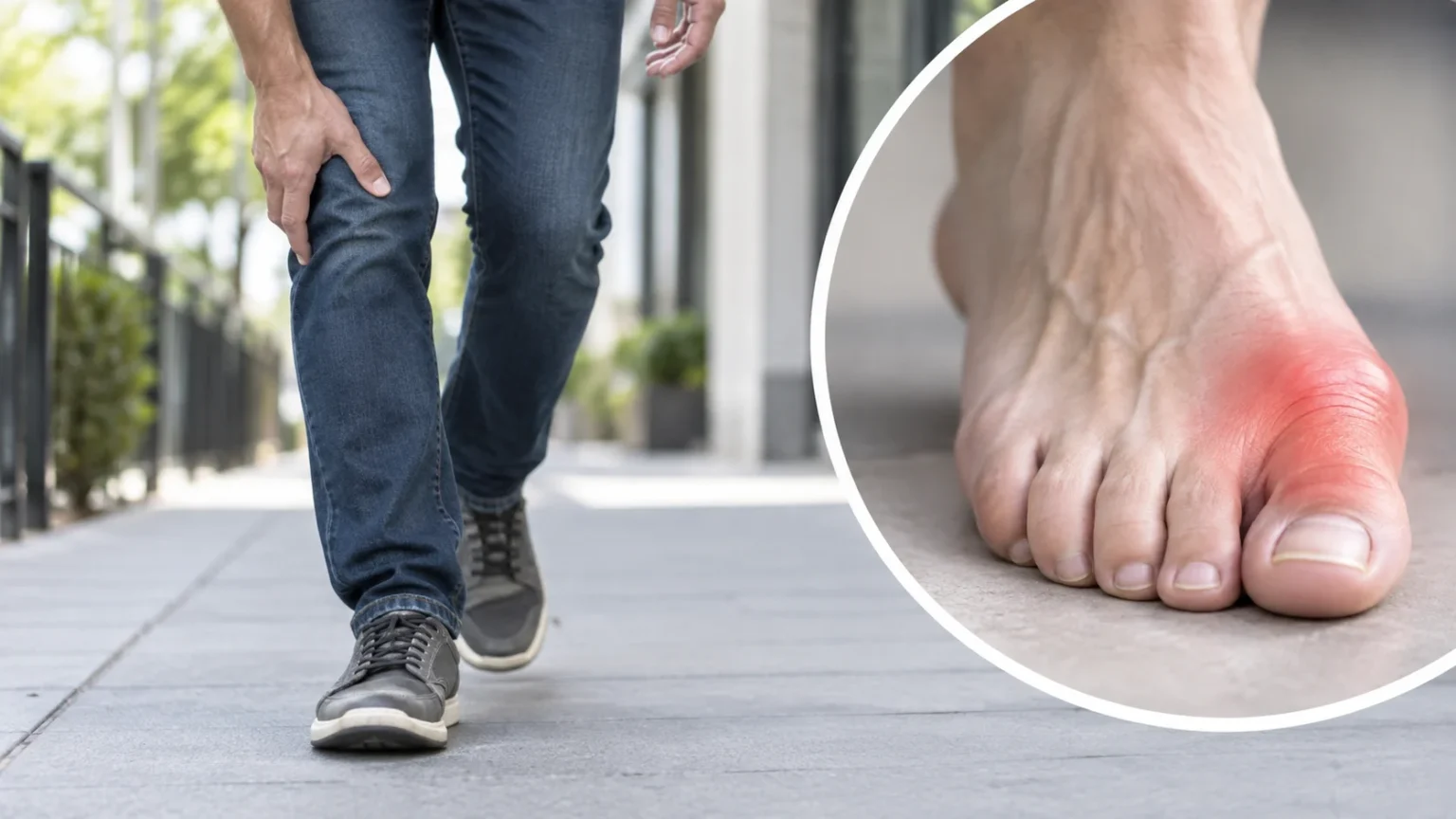
Big toe pain when walking can make an ordinary activity surprisingly uncomfortable. Because the big toe helps you push off the ground with every step, pain in this area can affect balance, walking speed, and the way your entire foot moves. The cause may be something simple, such as tight shoes, or a condition involving the joint, bone, tendon, nail, or surrounding tissue.
The location, timing, and type of pain often provide useful clues. Some people notice sharp pain during push-off, while others experience swelling, stiffness, burning, or tenderness around the big toe joint. Understanding the most common causes can help you decide whether simple self-care may be enough or whether the symptoms deserve medical evaluation.
Why Does the Big Toe Hurt When Walking?
The big toe carries considerable pressure during walking because it helps stabilize the foot and propel your body forward. As your heel lifts from the ground, your weight shifts toward the front of the foot and the big toe bends. Any irritation affecting the joint, surrounding tissues, or nearby bones can therefore become more noticeable during this phase.
Pain may come from overuse, an injury, footwear pressure, inflammation, arthritis, or changes in foot structure. The exact location can help narrow down possibilities. Pain directly inside the joint may suggest arthritis or gout, while tenderness underneath the toe may involve the sesamoid bones or surrounding soft tissues.
It is also helpful to notice whether the pain started suddenly or developed gradually. Sudden pain after a specific movement may indicate a sprain or fracture, while slowly increasing discomfort often occurs with arthritis, bunions, or repetitive stress. Persistent pain should not be ignored, especially when it begins changing the way you walk.
Bunions and Big Toe Joint Pain
A bunion is a bony prominence that develops along the inner side of the foot near the base of the big toe. As the joint alignment changes, the big toe may gradually angle toward the second toe. Pressure from footwear and repeated walking can then cause tenderness, redness, swelling, and aching around the affected joint.
People with bunions often notice discomfort after spending long periods on their feet or wearing narrow shoes. The joint may feel stiff, and certain footwear can rub directly against the prominent area. Over time, altered joint mechanics can make walking increasingly uncomfortable and may contribute to additional pressure elsewhere across the front of the foot.
Wide shoes with adequate toe space can often reduce irritation around a bunion. Padding and supportive footwear may also make walking more comfortable, but they do not reverse the underlying structural change. If pain becomes persistent, limits daily activities, or continues despite footwear changes, a healthcare professional can evaluate treatment options.
Arthritis in the Big Toe Joint
Arthritis can affect the joint at the base of the big toe and cause pain, swelling, and reduced movement. Osteoarthritis commonly develops after years of wear, previous injury, or repeated stress on the joint. When the joint becomes increasingly stiff, pushing off during walking can become painful because the toe cannot bend normally.
A condition called hallux rigidus describes progressive stiffness and arthritis in the big toe joint. Early symptoms may include discomfort during running, climbing stairs, or walking uphill. As the condition advances, even ordinary walking can hurt, and some people develop a noticeable bump on the top of the joint from underlying bone changes.
Supportive shoes with a firm or rocker-style sole may reduce how much the painful joint bends during walking. Activity modification can also help limit irritation during flare-ups. Because treatment depends on the severity of joint damage, ongoing stiffness or restricted movement should be assessed rather than repeatedly managed with self-treatment alone.
Could Big Toe Pain Be Gout?
Gout is an inflammatory form of arthritis caused by uric acid crystals collecting inside a joint. The big toe is one of the classic locations for a gout attack. Symptoms often develop rapidly and can include intense pain, warmth, redness, swelling, and extreme tenderness around the joint.
Unlike many overuse conditions, gout pain may become severe even when you are not walking. Some people wake during the night with sudden throbbing pain and find that even light pressure from a bedsheet feels uncomfortable. Attacks can improve after several days, but recurring episodes can eventually damage the affected joint.
A first episode of sudden severe swelling around the big toe should be medically evaluated because infections and other conditions can sometimes look similar. Gout treatment may include medicines that control inflammation during attacks and, when appropriate, treatment to manage uric acid over the long term. Diet and hydration may also form part of a broader management plan.
Turf Toe and Other Big Toe Sprains
Turf toe occurs when the big toe bends upward beyond its normal range and injures the ligaments around the joint. It is common in sports but can happen during any activity involving a forceful push-off or sudden awkward movement. Pain usually develops at the base of the toe and may worsen when walking or trying to bend it.
Mild sprains may cause tenderness and slight swelling, while more significant injuries can make it difficult to push off the foot normally. Bruising may also appear around the joint. People sometimes continue walking on the injury, but doing so can prolong symptoms if the damaged tissues repeatedly experience the same stress.
Resting from aggravating activities and limiting excessive toe movement can help minor sprains settle. Supportive or stiff-soled footwear may reduce painful bending during daily activities. Severe pain, substantial swelling, instability, or difficulty putting weight on the foot should prompt professional evaluation to rule out a more serious ligament injury or fracture.
Sesamoiditis and Pain Under the Big Toe
Two small bones called sesamoids sit beneath the big toe joint and help tendons function during movement. Repetitive pressure on these bones and surrounding tissues can cause a condition known as sesamoiditis. Pain is usually felt underneath the ball of the foot near the big toe rather than directly on top of the joint.
Sesamoiditis often develops gradually in runners, dancers, athletes, or people who frequently place pressure on the front of their feet. The discomfort may become worse when walking barefoot, wearing thin-soled shoes, or pushing off forcefully. Some people also notice tenderness when pressing directly beneath the big toe joint.
Reducing activities that repeatedly load the area can allow irritated tissues to recover. Cushioned shoes or padding that redistributes pressure away from the sesamoids may also make walking more comfortable. Because fractures of the sesamoid bones can produce similar pain, persistent or severe symptoms should be assessed if they do not improve.
Could a Fracture Cause Pain While Walking?
A fracture involving the big toe can happen after dropping a heavy object on the foot, striking the toe, or forcefully bending it. Stress fractures may also develop gradually from repeated loading rather than one dramatic injury. Pain generally becomes worse when weight is placed through the injured area during standing or walking.
Swelling, bruising, tenderness, and difficulty moving the toe can accompany a fracture. The toe may occasionally look crooked after a significant injury, although many fractures do not produce obvious deformity. Continuing to walk normally on a painful injury can increase discomfort and may interfere with proper healing depending on the location and severity.
Seek prompt assessment if you cannot bear weight comfortably, the toe appears deformed, pain is severe, or symptoms followed significant trauma. A clinician may recommend imaging to confirm the diagnosis. Treatment can range from protection and activity modification to more specialized care when the joint or bone alignment is significantly affected.
Ingrown Toenails and Other Surface Causes
Not all big toe pain comes from the joint or bone. An ingrown toenail can cause sharp tenderness along one side of the nail when the edge grows or presses into surrounding skin. Walking becomes uncomfortable when footwear compresses the inflamed area, particularly if the toe box is narrow.
Redness, swelling, warmth, and tenderness around the nail are common. Infection may develop if bacteria enter damaged skin, producing increasing pain or drainage. People with diabetes, reduced circulation, or conditions affecting wound healing should be especially cautious about trying to cut deeply around an ingrown nail themselves.
Blisters, calluses, corns, and irritated skin can also produce pain while walking because footwear repeatedly places pressure on the same location. Inspecting the toe may reveal a surface problem that explains the discomfort. If redness spreads, drainage appears, or the area becomes increasingly swollen, professional evaluation is safer than continuing home treatment.
How Footwear Can Cause Big Toe Pain
Shoes that are too narrow can compress the big toe and surrounding joints every time you walk. High heels may increase pressure across the front of the foot, while shoes that are too short can push the toe against the front of the shoe. Repeated pressure can aggravate bunions, irritated nails, arthritis, and other existing problems.
The right shoe should provide enough room for the toes to move without excessive sliding. Cushioning and sole stiffness may also matter depending on the cause of pain. For example, a very flexible shoe can worsen discomfort in some people with painful big toe arthritis because the joint bends more during push-off.
Your walking mechanics can influence pressure through the toe as well. Problems involving the ankle, arch, knees, or overall movement pattern may change how forces travel through the foot. Broader strengthening can sometimes support better movement mechanics; people rebuilding abdominal stability may also find carefully selected core exercises useful as part of a wider exercise plan, although they do not directly treat big toe pain.
What You Can Do at Home for Mild Big Toe Pain
If pain is mild and there was no major injury, reducing activities that clearly aggravate the toe is a sensible first step. Temporarily cutting back on running, jumping, long walks, or other repetitive activities may give irritated tissues time to settle. You do not necessarily need complete inactivity if normal daily movement remains comfortable.
Cold packs wrapped in a cloth may help with temporary soreness or swelling after activity. Supportive shoes with enough toe room can reduce unnecessary pressure, and avoiding high heels or tight footwear may prevent additional irritation. The exact approach should depend on whether the discomfort appears related to pressure, overuse, or a minor strain.
Avoid forcing the toe through painful stretches or repeatedly testing movements that trigger sharp discomfort. Painkillers may be appropriate for some people, but medications are not suitable for everyone because of health conditions, interactions, pregnancy, allergies, or other factors. A pharmacist or healthcare professional can advise whether a particular option is appropriate for you.
When Big Toe Pain Needs Medical Attention
Big toe pain deserves medical attention when it is severe, persists despite reasonable self-care, or repeatedly returns. You should also consider evaluation if walking becomes difficult, the joint becomes increasingly stiff, or swelling does not improve. A persistent change in gait can place additional stress on other parts of the foot, ankle, knee, or leg.
Seek more urgent care after a significant injury if the toe looks deformed, you cannot put weight on the foot, or there is an open wound. Sudden severe redness, warmth, swelling, and pain also deserve assessment because gout and infection can sometimes produce similar symptoms. Fever or rapidly spreading redness increases concern for infection.
People with diabetes, poor circulation, nerve damage, or impaired wound healing should be especially careful with foot problems. Small sores, nail infections, or pressure injuries can become more serious in these situations. Rather than waiting for symptoms to worsen, early professional assessment can help identify the cause and reduce the risk of complications.
How Big Toe Pain Is Diagnosed and Treated
A healthcare professional will usually begin by asking when the pain started, where it is located, and which activities make it better or worse. They may examine joint movement, swelling, tenderness, skin changes, footwear, and the way you walk. Details about previous injuries, medical conditions, exercise habits, and sudden attacks can help narrow down possible causes.
Imaging is not required for every case, but X-rays may be useful when a fracture, arthritis, or structural problem is suspected. Other tests may occasionally be needed depending on the symptoms. For example, sudden joint inflammation may require additional evaluation when gout, infection, or another inflammatory condition is being considered.
Treatment depends entirely on the diagnosis. Options may include footwear modification, activity changes, physical therapy, padding, orthotics, medications, or temporary protection of an injured joint. Some structural or advanced joint conditions occasionally require procedures or surgery, but many causes of big toe pain can be managed successfully without an operation.
Conclusion
Big toe pain when walking can result from several different problems, including bunions, arthritis, gout, sprains, sesamoid irritation, fractures, ingrown toenails, and footwear pressure. The pattern of symptoms often provides useful clues. Pain underneath the toe, inside the joint, or around the nail can each point toward different possible causes.
For mild discomfort without significant injury, temporary activity modification and better-fitting supportive shoes may help. Avoid repeatedly pushing through sharp pain, especially if the toe is swollen or your walking pattern has changed. Persistent symptoms deserve evaluation because an accurate diagnosis is more useful than repeatedly treating the pain without knowing why it is happening.
Seek medical care sooner when pain is severe, the toe is deformed, weight-bearing is difficult, or redness and swelling develop suddenly. Foot problems also require extra caution in people with diabetes or poor circulation. Identifying the cause early can help protect comfortable movement and prevent a minor issue from becoming a long-term problem.
FAQs
Why does my big toe hurt only when I walk?
Walking places pressure through the big toe during push-off. Pain that appears mainly with movement may come from arthritis, a sprain, sesamoid irritation, a bunion, footwear pressure, or another mechanical problem.
Can big toe pain go away on its own?
Minor irritation or overuse pain may improve with rest and footwear changes. Persistent, recurring, or worsening pain should be assessed because conditions such as arthritis, fractures, gout, or structural problems may require targeted treatment.
How do I know if big toe pain is gout?
Gout often causes sudden, intense joint pain with redness, warmth, swelling, and extreme tenderness. Because infection and other conditions can appear similar, a first severe episode should be evaluated rather than diagnosed based on symptoms alone.
Should I walk if my big toe hurts?
Gentle walking may be reasonable when discomfort is mild and does not worsen afterward. Stop or reduce activity if walking causes sharp pain, increasing swelling, limping, or difficulty putting normal weight through the foot.
What kind of doctor treats big toe pain?
A primary care doctor can evaluate many causes and refer you when needed. Depending on the diagnosis, treatment may involve a podiatrist, orthopedic specialist, rheumatologist, physical therapist, or another appropriate healthcare professional.