
Diastasis recti happens when the connective tissue between the two sides of the rectus abdominis becomes stretched and the abdominal wall widens. It is especially common during and after pregnancy, but it can also occur in men and people who experience repeated increases in abdominal pressure. Symptoms can include abdominal doming, reduced core control, or a feeling of weakness through the midsection.
Exercise cannot simply “close a gap” overnight, but appropriate movement can improve how the abdominal wall manages pressure and supports the trunk. The main goal is usually better coordination between the diaphragm, deep abdominal muscles, pelvic floor, and surrounding muscles. Improved control can make everyday activities such as lifting, walking, bending, and exercising feel more stable.
The best diastasis recti exercises generally begin with controlled breathing and low-load core movements before progressing toward more demanding exercises. Form matters more than intensity, especially during the early stages. If an exercise causes pain, strong abdominal bulging, pelvic pressure, or worsening symptoms, reduce the difficulty and consider seeking guidance from a qualified healthcare professional.
Start With Diaphragmatic Breathing and Deep Core Activation
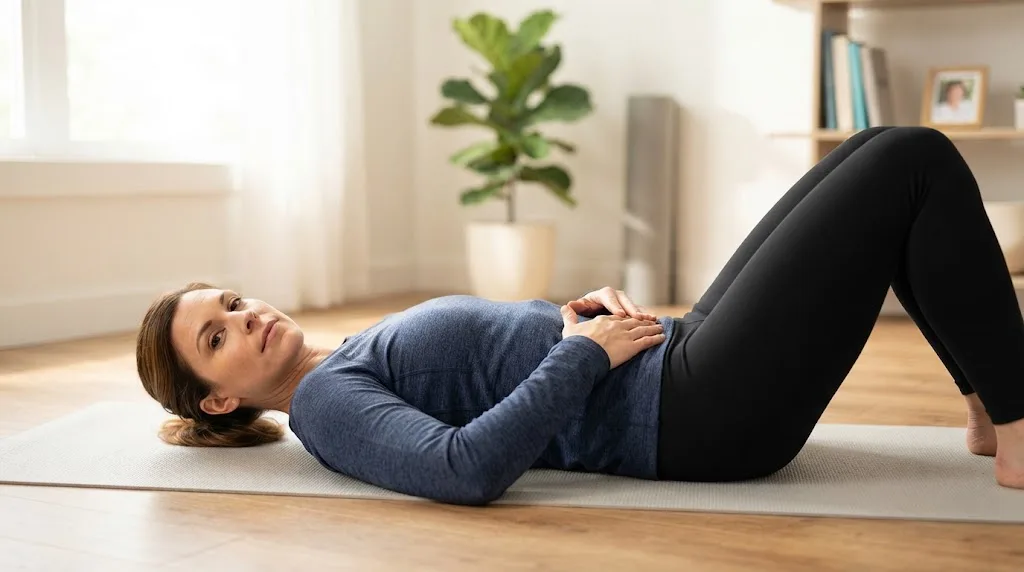
Diaphragmatic breathing is a useful starting point because breathing and abdominal pressure are closely connected. Lie comfortably on your back with your knees bent and place your hands around your lower ribs. Inhale slowly, allowing your ribs and abdomen to expand naturally rather than forcing the stomach outward or holding tension throughout the breath.
As you exhale, gently draw the lower abdomen inward while maintaining relaxed breathing. Think about lightly tightening a corset around your midsection instead of aggressively sucking in your stomach. The contraction should feel controlled and subtle, allowing you to breathe normally while your deep abdominal muscles begin participating more effectively in trunk support.
Practice several slow breaths before moving into harder diastasis recti exercises. This breathing pattern can later be used during heel slides, bridges, marching, and other movements to improve pressure management. Avoid holding your breath because breath-holding can increase internal abdominal pressure and may make it harder to maintain smooth control through the abdominal wall.
Pelvic Tilts for Gentle Core Control
Pelvic tilts are simple exercises that can help reconnect the abdominal muscles with controlled movement of the pelvis. Lie on your back with your knees bent, feet resting comfortably on the floor, and spine in a relaxed neutral position. Take a slow breath in, then begin the movement during your exhale while lightly engaging the lower abdominal area.
Gently tilt your pelvis so your lower back moves slightly toward the floor without forcing it down. Hold the position briefly, then return to neutral with control. The movement should remain small and comfortable rather than becoming a large hip motion, and your shoulders, jaw, and upper body should stay relaxed throughout each repetition.
Pelvic tilts can improve awareness of spinal position and deep core engagement before progressing to more demanding movements. Begin with a small number of slow repetitions and focus on consistency instead of speed. If you notice abdominal doming or feel yourself pushing outward through the midline, reduce the effort and reconnect with your breathing technique.
Heel Slides for Better Abdominal Stability
Heel slides introduce gentle leg movement while asking the trunk to remain stable. Start on your back with both knees bent and feet on the floor. Engage your deep abdominal muscles lightly during an exhale, then slowly slide one heel away from your body while keeping the pelvis steady and avoiding excessive arching through the lower back.
Slide the heel only as far as you can while maintaining abdominal control. Slowly bring the foot back toward the starting position and repeat on the opposite side. Your stomach should remain relatively controlled without noticeable bulging, and your hips should not rotate from side to side as your leg moves across the floor.
The benefit of heel slides comes from teaching your core to manage movement created by your legs. This skill carries over to walking, climbing stairs, lifting, and other everyday activities that require the trunk and limbs to work together. Progress by increasing the sliding distance gradually rather than rushing toward larger movements before you are ready.
Bent-Knee Fallouts for Core and Hip Coordination
Bent-knee fallouts are another low-impact exercise that challenges your abdominal muscles without requiring a traditional sit-up. Lie on your back with your knees bent and feet flat on the floor. Take a comfortable breath, engage the deep core gently, and slowly allow one knee to move outward while keeping the opposite leg and pelvis as still as possible.
Only lower the knee as far as you can without your hips rolling toward the moving side. Bring the knee back to center slowly before changing legs. Keeping the movement controlled is more important than reaching the floor because excessive range may cause compensation through the pelvis or abdominal wall.
This exercise can improve coordination between the hips, pelvis, and abdominal muscles. Better hip control can reduce unnecessary movement through the trunk during daily activities and exercise. If your abdominal midline begins to dome or your pelvis shifts noticeably, use a smaller range of motion until your strength and control improve.
Glute Bridges for Core and Hip Strength
Glute bridges strengthen the hips while teaching the core to remain stable during a larger movement. Begin on your back with your knees bent, feet about hip-width apart, and arms relaxed beside you. Exhale gently, engage your abdominal muscles, and press through your feet to lift your hips without pushing your stomach forcefully outward.
Raise your hips until your body forms a comfortable line from your shoulders toward your knees. Avoid lifting so high that your lower back becomes excessively arched. Pause briefly while squeezing your glutes, then lower your hips slowly while keeping your ribs and pelvis controlled instead of allowing the movement to become fast or uncontrolled.
Strong glutes support the pelvis and can reduce unnecessary stress through the lower back and abdominal wall. Bridges can therefore be a useful addition to a diastasis recti exercise routine once basic breathing feels comfortable. Progress can include longer holds or additional repetitions, but good pressure management should remain the priority throughout every variation.
Supine Marching for Progressive Core Strength
Supine marching increases the challenge by asking your core to stabilize your pelvis while one foot leaves the floor. Lie on your back with your knees bent and feet planted firmly. After a gentle exhale, engage your deep abdominal muscles and slowly lift one foot a short distance while keeping the opposite foot and pelvis completely steady.
Return the foot to the floor before lifting the other leg. Avoid pulling the knee aggressively toward your chest or allowing your lower back to arch as the foot rises. Begin with a very small movement because even lifting the heel slightly can provide enough challenge when rebuilding abdominal control after pregnancy or a period of core weakness.
As your coordination improves, you may gradually lift the knee higher or progress toward controlled tabletop movements if appropriate. The goal is not to reach an advanced position quickly. Your progression should depend on whether you can maintain smooth breathing, stable alignment, and minimal abdominal doming through every repetition.
Modified Bird Dog for Functional Core Stability
Bird dog trains the core to resist rotation while the arms and legs move, making it useful for developing functional stability. Start on your hands and knees with your wrists under your shoulders and knees under your hips. Keep your spine comfortable and gently engage your deep abdominal muscles without pulling your stomach inward as hard as possible.
Begin with a simpler version by sliding one foot backward while keeping the toes on the floor. If this feels controlled, gradually lift the leg or extend the opposite arm while maintaining a steady pelvis. Avoid twisting your hips, dropping your stomach toward the floor, or holding your breath as you try to maintain the position.
This exercise can strengthen the abdominal wall, back, shoulders, and hips together rather than isolating one muscle group. That makes it useful as you move from rehabilitation-style exercises toward normal strength training. Progress slowly, especially if extending both an arm and the opposite leg causes abdominal doming or loss of balance.
Improve Posture Without Constantly Holding Your Stomach In
Posture can influence how pressure is distributed through the abdomen, but good posture does not mean standing rigidly or pulling your stomach inward all day. Aim for a comfortable position where your ribs sit naturally over your pelvis and your body can breathe freely. Constant abdominal bracing can create unnecessary tension and make normal breathing more difficult.
Think about movement quality across your entire body rather than focusing only on your stomach. Hip mobility, upper-back positioning, neck alignment, and breathing mechanics can all affect how comfortable you feel during exercise. If you are also improving upper-body alignment, gentle exercises such as chin tucks can fit naturally into a broader posture and mobility routine.
During lifting, bending, or getting out of bed, try to avoid sudden breath-holding and uncontrolled straining. Exhaling during the most difficult part of a movement can help you manage abdominal pressure more effectively. Good movement habits practiced throughout the day can complement your exercise routine and gradually improve confidence in your core.
Common Diastasis Recti Exercise Mistakes to Avoid
One common mistake is choosing exercises solely because they are described as “core exercises.” Crunches, planks, leg raises, and other demanding movements are not automatically harmful, but they may be too challenging during certain stages of recovery. Your ability to manage pressure, maintain alignment, and avoid significant doming should guide exercise selection more than the exercise name itself.
Another mistake is aggressively pulling the stomach inward during every movement. Excessive bracing can interfere with breathing and may create tension through the pelvic floor and surrounding muscles. Aim for gentle abdominal engagement that allows you to breathe, move, and respond naturally instead of keeping your midsection rigid throughout an entire workout.
Progressing too quickly can also create problems. Adding heavy resistance or advanced movements before mastering basic control may lead to compensations such as back arching, rib flaring, breath-holding, or abdominal bulging. Treat easier exercises as skill-building rather than something you need to rush through, because strong foundations make later strength training safer and more effective.
How to Build a Diastasis Recti Exercise Routine
Begin with a short routine that includes breathing practice and two or three controlled exercises. For example, you could combine diaphragmatic breathing, heel slides, pelvic tilts, and gentle bridges several times per week. Perform enough repetitions to practice good movement without continuing until fatigue causes you to lose abdominal control or compensate through other parts of your body.
Progress gradually as exercises become easier and your ability to control pressure improves. You might increase repetitions, add longer holds, expand your range of motion, or move from supported exercises toward functional positions. Progress should feel challenging but manageable, and you should still be able to breathe normally rather than straining through each repetition.
Individual recovery varies, particularly after pregnancy, abdominal surgery, or long periods of inactivity. Seek professional assessment if you have persistent pain, a suspected hernia, pelvic floor symptoms, significant weakness, or difficulty progressing safely. A pelvic health physical therapist or other qualified clinician can evaluate your movement and recommend exercises suited to your individual situation.
Conclusion
Diastasis recti exercises work best when they focus on coordination, breathing, pressure management, and gradual strength development rather than simply trying to make an abdominal gap disappear. Gentle movements such as pelvic tilts, heel slides, bent-knee fallouts, bridges, and controlled marching can create a useful starting point for rebuilding confidence and core function.
Good form should remain the priority as your exercise routine becomes more challenging. Watch for abdominal doming, breath-holding, excessive back arching, or uncontrolled pelvic movement, as these signs may indicate that an exercise is currently too difficult. Reducing the range or returning to an easier variation can often help you regain better control.
Recovery does not need to be rushed. Consistent practice, sensible progression, and attention to how your body responds are more valuable than completing advanced core exercises quickly. If symptoms continue or you are unsure about your technique, professional guidance can help you develop a safer and more individualized exercise plan.
FAQs
How often should I do diastasis recti exercises?
Many people can practice gentle core exercises several times per week, depending on comfort and recovery. Focus on quality, breathing, and control rather than performing large numbers of repetitions every day.
Can exercise completely fix diastasis recti?
Exercise can improve core function, pressure management, strength, and abdominal wall coordination. Changes in the visible gap vary between individuals, so functional improvement is often a more useful goal than gap width alone.
Are planks safe with diastasis recti?
Planks may be appropriate once you can manage abdominal pressure without significant doming or discomfort. Beginners often benefit from easier core exercises first before gradually progressing toward full plank variations.
How long does diastasis recti recovery take?
Recovery time varies depending on severity, activity level, pregnancy history, tissue changes, and exercise consistency. Some people notice improved control within weeks, while meaningful strength development may take several months.
When should I see a professional about diastasis recti?
Seek professional guidance if you experience persistent pain, pelvic floor symptoms, a suspected hernia, severe weakness, or worsening abdominal bulging. A pelvic health physical therapist can assess your core function and movement.