
The trap muscles, formally known as the trapezius muscles, are large muscles that cover much of the upper back, shoulders, and neck. They play an important role in posture, shoulder movement, neck control, and upper-body stability. Because these muscles are involved in so many everyday movements, tightness, strain, and discomfort can develop relatively easily.
You use your trapezius muscles when lifting your shoulders, moving your shoulder blades, carrying bags, working at a computer, exercising, and even maintaining an upright posture. When the muscles are strong and working properly, they help support efficient movement across the neck and shoulders. Problems can develop when they become overworked, weak, injured, or continuously tense.
Understanding where the trap muscles are located and how they function can make it easier to recognize common problems. It can also help you understand why certain stretches, strengthening exercises, and posture changes may improve comfort. This guide explains the anatomy, function, common issues, warning signs, and practical ways to support healthy trapezius muscles.
What Are the Trap Muscles?
The trapezius is a broad, flat muscle that extends across the upper portion of your back and neck. There is one trapezius muscle on each side of the body, and together they form a shape that resembles a large trapezoid. These muscles connect several important areas of the spine, shoulders, and skull.
Although people often think of the traps as simply the muscles between the neck and shoulders, they cover a much larger area. They extend from the back of the head and neck down through the upper and middle back. Their fibers also connect to structures around the shoulder blade and collarbone.
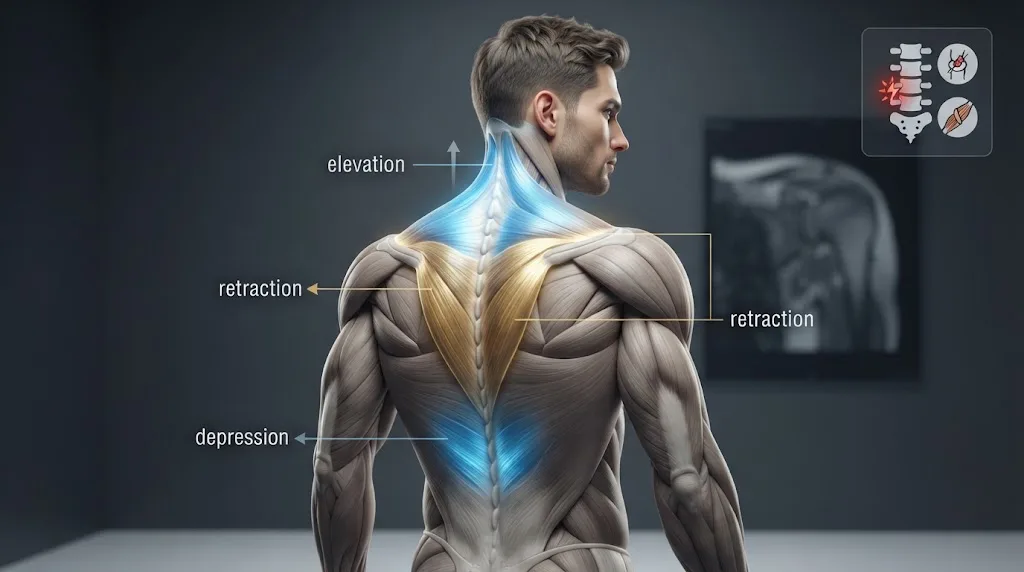
Because of their size and location, the trapezius muscles participate in several different movements rather than performing only one job. Different sections of the muscle contribute to shoulder elevation, depression, rotation, and retraction. This makes the traps essential for both everyday posture and more demanding upper-body activities.
Where Are the Trap Muscles Located?
The trapezius begins near the base of the skull and extends downward along the upper portion of the spine. From there, muscle fibers spread outward toward the shoulders and shoulder blades. This broad positioning allows the muscle to influence both the neck and the movement of the scapula, commonly called the shoulder blade.
The upper fibers are found around the back and sides of the neck and extend toward the tops of the shoulders. These are the fibers people commonly feel becoming tight after long hours at a desk or during stressful periods. They are also the most visible part of the traps when the muscle is well developed.
The middle and lower portions sit farther down the upper back and attach around the shoulder blades. These areas help stabilize and position the scapula during arm movement. Although they may receive less attention than the upper traps, they are equally important for shoulder mechanics, posture, and balanced upper-body movement.
Upper, Middle, and Lower Trapezius Explained
The upper trapezius helps elevate the shoulder blade, which happens when you shrug your shoulders. It also contributes to upward rotation of the scapula when you raise your arm overhead. In addition, the upper fibers assist with certain neck movements and help support the position of the head.
The middle trapezius primarily helps pull the shoulder blades toward the spine, a movement known as scapular retraction. This action is important when maintaining upright posture, rowing, pulling objects toward the body, or stabilizing the shoulders. Weak middle traps may contribute to rounded shoulders and poor upper-back control.
The lower trapezius helps pull the shoulder blades downward and contributes to upward rotation during overhead arm movement. It works closely with other shoulder muscles to maintain proper scapular positioning. Balanced activity between the upper, middle, and lower sections is important because overusing one area while neglecting another can affect movement quality.
What Do the Trap Muscles Do?
One of the main functions of the trapezius muscles is controlling the shoulder blades during upper-body movement. The traps help elevate, lower, rotate, and retract the scapula depending on which fibers are active. These movements create a stable base that allows the arms and shoulders to move more efficiently.
The trapezius also contributes to neck and head control. Certain fibers assist with extending, rotating, and bending the neck while helping maintain a stable head position. This becomes particularly important during prolonged sitting, driving, computer work, lifting, and activities where the head must remain upright for extended periods.
Another important function involves posture and upper-body stability. The traps cooperate with muscles of the shoulders, back, chest, and core to maintain alignment. When these muscles work together properly, the upper body can handle lifting, reaching, pushing, pulling, and overhead movements with less unnecessary strain on individual structures.
Why Do Trap Muscles Become Tight?
Trap tightness often develops after spending long periods in positions that place continuous demand on the neck and shoulders. Sitting at a computer, looking down at a phone, or driving for hours can keep the upper traps active for extended periods. Over time, the muscles may begin to feel stiff, sore, or fatigued.
Stress can also contribute to upper trapezius tension because many people unconsciously raise or tighten their shoulders when feeling anxious or pressured. Repeated tension can create a persistent feeling of tightness around the base of the neck. Poor sleep positions or carrying heavy bags on one side may make the problem worse.
Exercise can also leave the traps feeling tight, especially after heavy lifting or unfamiliar upper-body movements. Shrugs, deadlifts, rows, overhead presses, and loaded carries can place considerable demand on these muscles. Temporary muscle soreness may be normal after training, but persistent pain or worsening symptoms deserve closer attention.
Common Causes of Trap Muscle Pain
Muscle strain is one of the most common reasons for trap pain. A strain can occur when muscle fibers are overloaded during lifting, sudden movement, sports, or repetitive activity. Symptoms may include tenderness, stiffness, discomfort with movement, and pain that becomes more noticeable when the affected muscle is contracted or stretched.
Poor posture may also contribute to discomfort, particularly when the head remains forward and the shoulders stay rounded for long periods. This position can change how muscles around the neck and shoulder blades share workload. Some areas may become overactive and tense while others become relatively weak or less efficient.
Trap pain can also come from problems that are not located directly inside the trapezius muscle. Neck joints, nerves, shoulder conditions, headaches, and other nearby structures may cause pain that is felt around the traps. Persistent, severe, radiating, or unexplained pain should therefore not automatically be assumed to be simple muscle tightness.
Signs Your Trap Muscles May Be Overworked
An overworked trapezius may feel constantly tight even when you are not exercising. You might notice aching around the neck, tops of the shoulders, or between the shoulder blades after sitting or working for long periods. Some people also describe a heavy or tired feeling across the upper back by the end of the day.
Frequent stiffness may make turning or tilting the head uncomfortable. Shoulder movement can also feel restricted when the surrounding muscles remain tense. Trigger points or particularly tender areas may develop, although pressing aggressively into painful spots is not always the best solution and can sometimes increase irritation.
Another sign can be repeated discomfort during activities such as carrying bags, lifting weights, typing, or holding your phone. If symptoms keep returning despite rest and basic changes, the underlying movement or workload may need attention. Weakness, numbness, tingling, or pain extending into the arm should be assessed more carefully.
Trap Muscles and Posture
The trapezius plays an important role in helping position the shoulder blades and support the upper back. Good posture does not mean holding the shoulders rigidly backward all day, but it does require the muscles to adapt efficiently to different positions. Strong, well-coordinated traps can contribute to better control during sitting, standing, and movement.
Rounded shoulders and a forward head position may change the demands placed on different regions of the trapezius. The upper traps can become overactive while the middle and lower portions may not contribute effectively enough. Improving posture usually requires more than simply stretching the neck because strength, movement habits, and workstation setup may all matter.
Core strength and general trunk control can also influence how the upper body is positioned during movement and exercise. People rebuilding abdominal function may use appropriate programs such as diastasis recti exercises when relevant to their needs. Balanced training across the core, back, and shoulders can support more efficient posture than focusing on one muscle alone.
Best Stretches for Tight Trap Muscles
A gentle upper trap stretch can be performed by sitting tall and slowly tilting one ear toward the same-side shoulder. Keep the opposite shoulder relaxed instead of allowing it to lift. You should feel a mild stretch along the side of the neck and upper shoulder rather than sharp pain or strong pulling.
Slow neck movements can also help reduce the feeling of stiffness after prolonged sitting. Controlled rotation from side to side and gentle chin movements may encourage comfortable mobility around the neck and upper traps. Avoid forcing the neck into extreme positions, especially if you are already experiencing significant pain, dizziness, numbness, or neurological symptoms.
Stretching works best when combined with changes to the activity causing the tightness. If you stretch for several minutes but immediately return to an uncomfortable workstation for hours, symptoms may quickly return. Regular movement breaks, relaxed breathing, position changes, and strengthening often provide a more complete approach to ongoing muscle tension.
Best Exercises to Strengthen the Traps
Rows are useful for strengthening the muscles around the shoulder blades, including the middle trapezius. Using resistance bands, cables, dumbbells, or machines, pull the elbows backward while maintaining controlled shoulder movement. Avoid aggressively squeezing the shoulder blades or using excessive weight, because smooth technique is generally more valuable than forcing a large range.
Prone or standing Y-shaped raises can target the lower trapezius when performed with light resistance and good control. Raise the arms diagonally overhead while maintaining a comfortable neck position and avoiding unnecessary shoulder shrugging. Because the lower traps can be harder to isolate, starting with body weight or very light resistance may help improve movement quality.
Shrugs and loaded carries can strengthen the upper trapezius when appropriate for your training level. Hold resistance securely and control the movement rather than rapidly bouncing the shoulders up and down. A balanced program should generally train all regions of the trapezius along with the rotator cuff, upper back, shoulders, and core.
How to Reduce Trap Tension During Desk Work
Start by arranging your workstation so you do not constantly reach forward or look downward. Keep the screen at a comfortable viewing height and place commonly used items close enough to avoid excessive shoulder movement. Your chair, keyboard, desk height, and screen position should allow you to work without continuously lifting or rounding your shoulders.
Take regular movement breaks rather than trying to maintain one supposedly perfect posture throughout the entire day. Stand up, walk briefly, move your shoulders, and change position whenever possible. Muscles generally tolerate varied positions better than remaining completely static for hours, even when the starting posture appears technically correct.
Pay attention to unnecessary shoulder tension while typing or using a mouse. People often unknowingly shrug their shoulders during concentrated work, especially when the desk or arm position feels awkward. Relaxing the shoulders, supporting the forearms appropriately, and periodically checking your posture can reduce continuous demand on the upper trapezius.
When Trap Muscle Pain May Need Medical Attention
Mild muscle soreness after exercise or prolonged desk work often improves with rest, gentle movement, and temporary activity modification. However, pain that is severe, worsening, persistent, or repeatedly returning deserves professional assessment. A healthcare professional can help determine whether symptoms are coming from the trapezius or another structure in the neck, shoulder, or upper back.
Seek prompt medical attention if trap-area pain follows significant trauma or is associated with major weakness, loss of coordination, numbness, or persistent tingling. Symptoms involving the chest, difficulty breathing, severe headache, faintness, or sudden neurological changes also require appropriate medical evaluation rather than home stretching or exercise.
You should also be cautious if pain interferes with sleep, normal daily activities, or comfortable neck and shoulder movement for an extended period. Treatment depends on the actual cause rather than simply the location of pain. Getting a clear assessment can prevent you from repeatedly treating muscle tightness when another condition requires attention.
How to Keep Your Trap Muscles Healthy
Regular movement is one of the simplest ways to support healthy trap muscles. Avoid spending most of the day in one position, especially if your work involves screens or prolonged sitting. Walking, changing posture, moving your shoulders, and performing comfortable neck mobility throughout the day can reduce the accumulated strain associated with prolonged inactivity.
Strength training can improve the ability of the traps and surrounding muscles to handle everyday loads. Include pulling movements, controlled overhead work, scapular exercises, and appropriate shoulder strengthening according to your experience level. Gradual progression is important because suddenly increasing exercise volume or weight may create more muscle soreness than your body can comfortably tolerate.
Recovery matters just as much as training. Adequate sleep, sensible exercise programming, stress management, and attention to recurring discomfort can help prevent minor irritation from becoming persistent. Instead of trying to eliminate every sensation of tightness, focus on maintaining comfortable movement, adequate strength, varied activity, and a workload your body can tolerate.
Conclusion
The trap muscles are large, important muscles extending across the neck, shoulders, and upper back. Their upper, middle, and lower fibers help control the shoulder blades, support posture, assist neck movement, and stabilize the upper body. Because they perform so many jobs, the traps can become tight or painful when overloaded or poorly coordinated.
Common problems include muscle tension, exercise-related soreness, strain, and discomfort associated with prolonged sitting or repetitive positions. Gentle mobility, appropriate strengthening, better workstation habits, and regular movement can often help with minor muscle-related symptoms. Balanced training is particularly important because every section of the trapezius contributes differently to healthy shoulder mechanics.
Not every pain around the trapezius is caused by the muscle itself. Persistent pain, weakness, numbness, tingling, trauma-related symptoms, or significant loss of movement should be evaluated appropriately. Understanding how your traps work can help you make better decisions about exercise, posture, recovery, and when professional guidance may be needed.
FAQs About Trap Muscles
Where are the trap muscles located?
The trapezius muscles extend from the back of the head and neck across the shoulders and down into the upper and middle back. They connect with several structures around the spine and shoulder blades.
What causes tight trap muscles?
Long periods of sitting, stress, poor workstation positioning, repetitive activity, heavy lifting, and unfamiliar exercise can contribute to trap tightness. Persistent symptoms may sometimes come from nearby neck or shoulder structures.
How do you loosen tight trap muscles?
Gentle neck stretching, shoulder movement, regular activity breaks, relaxed breathing, and changing prolonged positions may help. Strengthening the upper back and addressing the activity causing tension can also be useful.
What exercises build the trap muscles?
Rows, shrugs, loaded carries, and Y-shaped raises can strengthen different regions of the trapezius. Exercise selection and resistance should match your ability, with controlled movement prioritized over excessive weight.
When should I worry about trapezius pain?
Seek medical advice for severe or persistent pain, significant injury, weakness, numbness, tingling, or symptoms extending into the arm. Sudden neurological, breathing, or chest symptoms require prompt medical attention.