


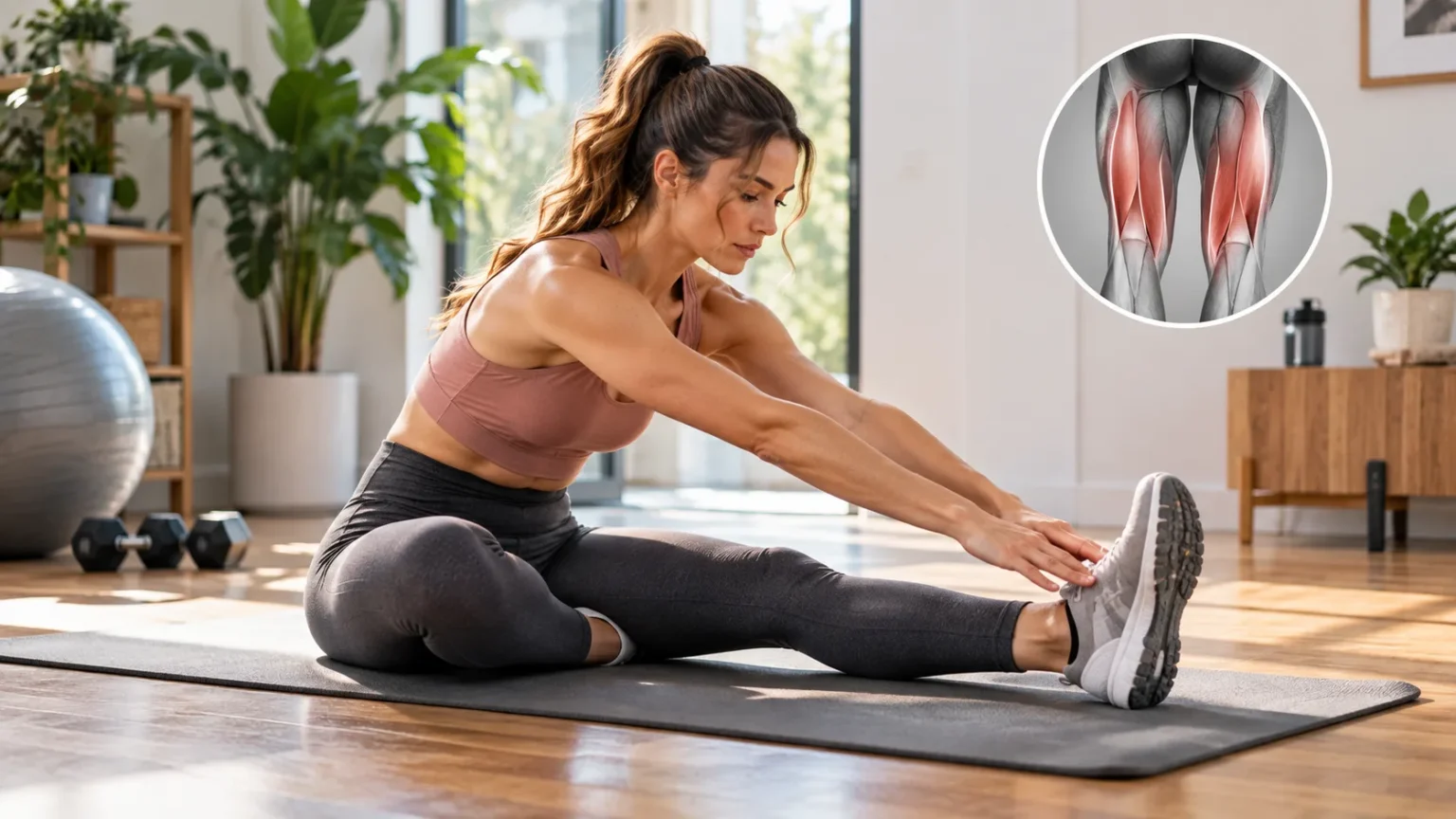
Strong hamstrings support walking, running, lifting, balance, posture, and many everyday movements. These muscles run along the back of the thigh and work closely with the glutes, hips, knees, and lower back. When they are weak, everyday activities can feel harder, and the surrounding muscles may need to compensate.
Fortunately, strengthening your hamstrings does not require complicated equipment or advanced workouts. A few well-chosen exercises performed consistently can make a noticeable difference in strength, control, and mobility. The key is to use proper form, progress gradually, and choose movements that train the hamstrings through different ranges of motion.
What Are the Hamstrings and What Do They Do?
The hamstrings are a group of three muscles located at the back of each thigh. They include the biceps femoris, semitendinosus, and semimembranosus. Together, these muscles help bend the knee, extend the hip, stabilize the pelvis, and control movement during activities such as walking, climbing stairs, running, and lifting objects.
Your hamstrings work closely with the gluteal muscles and other muscles around the hips and knees. During a hip hinge, for example, the hamstrings help control the lowering phase and assist with returning the body to an upright position. They also contribute to slowing the leg during running, which places significant demand on them.
Because the hamstrings cross both the hip and knee joints, strengthening them effectively requires more than one exercise pattern. Hip-dominant movements such as Romanian deadlifts train them differently from knee-dominant movements such as hamstring curls. Using both types of exercises can create more balanced development and better functional strength.
Why Strong Hamstrings Matter
Strong hamstrings help support efficient movement and provide stability around the knees and hips. They can improve performance during running, jumping, climbing, lifting, and other lower-body activities. Better hamstring strength may also help you control movements more effectively, particularly when slowing down, changing direction, or managing uneven terrain.
Weak hamstrings can cause other muscle groups to take on more work than they should. The quadriceps, glutes, calves, and lower back may compensate during movement, which can affect technique and comfort. Improving posterior-chain strength creates better balance between the muscles on the front and back of the legs.
Hamstring strength is especially valuable as people age because muscle mass and strength naturally tend to decline over time. Resistance training can help preserve lower-body function and confidence during daily activities. Strong legs support walking speed, balance, stair climbing, and the ability to get up from chairs or the floor more easily.
Start With the Glute Bridge
The glute bridge is a simple beginner-friendly exercise that strengthens the glutes while also engaging the hamstrings. Lie on your back with your knees bent and feet flat on the floor. Press through your feet and lift your hips until your body forms a straight line from your shoulders toward your knees.
Avoid lifting your hips so high that your lower back begins to arch excessively. Keep your abdominal muscles gently engaged and focus on squeezing your glutes at the top. You should feel tension through the back of the thighs and hips rather than pressure concentrated in your lower back.
Begin with two or three sets of 8 to 15 repetitions. As the movement becomes easier, try single-leg bridges or place your feet slightly farther from your hips to increase hamstring involvement. You can also add resistance with a band or weight across the hips once bodyweight repetitions no longer feel challenging.
Use Romanian Deadlifts to Build Strength
Romanian deadlifts are one of the most effective exercises for strengthening the hamstrings through a hip-hinge movement. Stand with your feet around hip-width apart and hold weights in front of your thighs. Push your hips backward while keeping a slight bend in your knees and your spine in a comfortable neutral position.
Lower the weights only as far as you can while maintaining control and feeling tension through the hamstrings. You do not need to reach the floor for the exercise to work. Once you feel a strong but comfortable stretch at the back of the thighs, drive your hips forward and return to standing.
Beginners can practice the hip hinge without weights before adding dumbbells, kettlebells, or a barbell. Start with a manageable load that allows clean technique for every repetition. Increasing weight too quickly can shift stress away from the hamstrings and make it harder to maintain good posture and movement control.
Add Hamstring Curls to Your Routine
Hamstring curls strengthen the muscles through knee flexion, which complements hip-hinge exercises. You can perform them using a resistance band, exercise machine, stability ball, or sliders. The goal is to bend the knee against resistance while keeping the movement controlled and avoiding unnecessary swinging or momentum.
A simple home version uses sliders or towels under your heels on a smooth floor. Begin in a bridge position, slowly slide your feet away from your body, and then pull them back toward your hips. Keep your hips elevated as much as comfortably possible while maintaining tension through the hamstrings.
If sliding curls are too difficult, use resistance-band curls from a standing or lying position. Start with a range of motion you can control and gradually increase resistance. Two or three sets of 8 to 15 repetitions can provide a useful starting point, depending on your current strength and exercise experience.
Try Single-Leg Exercises for Better Balance
Single-leg movements challenge the hamstrings while also improving balance, coordination, and hip stability. The single-leg Romanian deadlift is a useful example because it trains one side at a time. Stand on one leg, hinge forward from the hip, and allow the opposite leg to extend behind you while keeping your pelvis controlled.
You do not need to use weights immediately. Practicing the movement with body weight and holding a wall or chair can help you develop balance first. Once your technique improves, you can add a light dumbbell or kettlebell to increase resistance without sacrificing stability or proper hip alignment.
Single-leg exercises can also reveal differences between your left and right sides. Minor differences are common, but noticeable weakness on one side may benefit from extra attention. Train both sides with good form rather than adding excessive repetitions to the weaker leg, especially if there is pain or previous injury.
Strengthen Hamstrings With Hip Thrusts
Hip thrusts primarily target the glutes, but the hamstrings also contribute to hip extension and stability during the movement. Position your upper back against a stable bench with your feet planted firmly on the floor. Drive your hips upward until your torso and thighs create a relatively straight line.
Foot position influences which muscles work most during hip thrusts. If your feet are too close to your body, the quadriceps may become more involved, while placing them too far away can make the hamstrings work harder. Experiment with a comfortable position while keeping your knees stable and your feet firmly planted.
Bodyweight hip thrusts are suitable for beginners, while resistance can be increased using dumbbells, barbells, resistance bands, or machines. Progress gradually and avoid chasing heavy weight before mastering technique. Controlled repetitions with a brief pause at the top can help maintain tension and improve movement awareness.
How Often Should You Train Your Hamstrings?
For many people, training the hamstrings two or three times per week is enough to build strength. This schedule provides regular stimulation while giving the muscles time to recover between workouts. Your ideal frequency depends on training intensity, exercise selection, overall activity level, age, recovery, and fitness goals.
You do not need to perform every hamstring exercise in the same session. One workout might include Romanian deadlifts and bridges, while another includes curls and single-leg movements. Rotating exercises can train the muscles through different movement patterns while preventing each session from becoming unnecessarily long or repetitive.
Recovery is just as important as training. Muscles need sufficient sleep, nutrition, and time between demanding sessions to adapt effectively. If your hamstrings remain very sore, weak, or uncomfortable several days after exercise, reduce the training volume or resistance rather than repeatedly pushing through excessive fatigue.
How to Progress Hamstring Exercises Safely
Strength improves when your muscles gradually face greater challenges. You can progress by adding resistance, increasing repetitions, improving range of motion, slowing the lowering phase, or moving toward more demanding exercise variations. You do not need to increase every variable simultaneously, and small improvements can produce meaningful results over time.
A useful approach is to first improve technique and repetition quality. Once you can comfortably perform the top end of your planned repetition range, increase resistance slightly. Your final few repetitions should feel challenging, but you should still be able to maintain good posture and control without relying on momentum.
Avoid judging progress only by how much weight you lift. Better balance, greater control, improved range of motion, and reduced fatigue are also signs of increasing strength. Consistency usually matters more than aggressive progression, particularly for beginners or anyone returning to exercise after a long period of inactivity.
Should You Stretch Your Hamstrings Too?
Strengthening and stretching serve different purposes, and many people can benefit from including both. Strength exercises help the muscles produce and control force, while stretching may improve flexibility when limited range of motion is genuinely present. However, feeling tight does not always mean the hamstrings simply need more stretching.
Sometimes the sensation of tightness can relate to muscle weakness, prolonged sitting, movement habits, or other factors. Stretching repeatedly without addressing strength may not solve the underlying issue. Combining controlled resistance exercises with comfortable mobility work can provide a more balanced approach than relying on long stretches alone.
Use gentle stretches after warming up or at a separate time from demanding strength work. Avoid forcing the leg into painful positions or bouncing aggressively. A mild pulling sensation can be normal, but sharp pain, tingling, numbness, or symptoms traveling down the leg should not be treated as ordinary muscle tightness.
How Lifestyle and Body Changes Can Affect Hamstring Strength
Daily habits influence muscle strength more than many people realize. Long periods of sitting can reduce opportunities to use the hips and legs through full ranges of motion, while low activity levels can gradually reduce muscular capacity. Regular walking, strength training, and movement breaks can help maintain function alongside structured workouts.
Age-related and hormonal changes can also influence muscle mass, recovery, and body composition. During life stages such as menopause, changes in activity, sleep, muscle mass, and abdominal weight may affect how comfortable certain exercises feel. Learning about factors such as menopause belly can help people adapt exercise routines to changing bodies without abandoning strength training.
The goal should be to meet your body where it is rather than comparing current performance with earlier years. Exercises can be modified through lighter resistance, shorter ranges, slower tempos, or additional support. Gradual training remains useful across many ages and fitness levels when movements are chosen appropriately.
Common Hamstring Training Mistakes to Avoid
One common mistake is using too much weight before learning the correct movement pattern. During Romanian deadlifts, for example, people sometimes bend excessively through the knees or round the back instead of hinging at the hips. Reducing resistance often makes it easier to feel the hamstrings and develop proper control.
Another mistake is performing only one type of hamstring exercise. Hip-hinge movements are valuable, but knee-flexion exercises such as curls provide a different challenge. Combining both movement patterns can help develop the hamstrings more completely while also supporting performance in activities where the muscles need to function across both joints.
Training through pain is another problem. Muscle fatigue and mild soreness after unfamiliar exercise can occur, but sharp or worsening pain should not be ignored. If an exercise repeatedly causes discomfort, stop and reassess technique, resistance, and range of motion instead of assuming that pain is necessary for strength gains.
When to Seek Professional Advice
A fitness professional or physical therapist can be helpful if you are unsure about exercise technique or need modifications. Individual guidance may be especially useful after an injury, surgery, or extended period of inactivity. A professional can assess movement patterns and recommend exercises that match your current abilities and goals.
Seek medical evaluation if hamstring pain begins suddenly during activity, especially if it is accompanied by swelling, bruising, weakness, or difficulty walking. These symptoms may suggest an injury rather than normal exercise soreness. Persistent pain that does not improve with rest and gradual activity adjustment also deserves appropriate assessment.
People with significant knee, hip, back, neurological, or cardiovascular conditions may need personalized exercise advice before beginning a demanding strength program. This does not necessarily mean avoiding hamstring training. Instead, professional guidance can help identify safer variations and appropriate levels of resistance so exercise supports recovery and long-term function.
Conclusion
Strengthening your hamstrings does not require complicated workouts or expensive equipment. Bridges, Romanian deadlifts, curls, hip thrusts, and single-leg exercises can train the muscles effectively when performed with proper technique. Using a combination of hip-extension and knee-flexion movements helps develop more complete hamstring strength.
Progress gradually by increasing resistance, repetitions, range of motion, or exercise difficulty as your strength improves. Training two or three times per week works well for many people, especially when combined with adequate recovery and balanced lower-body training. Consistency and good technique matter more than trying to lift heavy weights immediately.
Pay attention to how your body responds and avoid pushing through sharp or persistent pain. Adapt exercises to your mobility, experience, and current fitness level, and seek professional guidance when necessary. With regular practice, stronger hamstrings can support better movement, balance, lower-body performance, and confidence during everyday activities.
FAQs
What is the best exercise for strengthening hamstrings?
Romanian deadlifts are highly effective because they strengthen the hamstrings through hip extension. Combining them with hamstring curls provides a more complete routine by also training knee-flexion strength.
Can I strengthen my hamstrings at home?
Yes. Bridges, sliding hamstring curls, single-leg deadlifts, and resistance-band curls can all be performed at home. You can gradually add bands or weights as bodyweight exercises become easier.
How long does it take to strengthen hamstrings?
Many people notice improvements in control and strength within several weeks of consistent training. More significant changes usually require longer-term progressive resistance training, adequate recovery, and regular practice.
How many times a week should I train hamstrings?
Training the hamstrings about two or three times per week is suitable for many people. Leave enough recovery time between challenging sessions, particularly when using heavier resistance or unfamiliar exercises.
Should I stretch tight hamstrings before strengthening them?
Gentle mobility can be helpful, but stretching is not always the only solution for tightness. A balanced routine that includes strengthening, controlled movement, and appropriate flexibility work is usually more useful.