


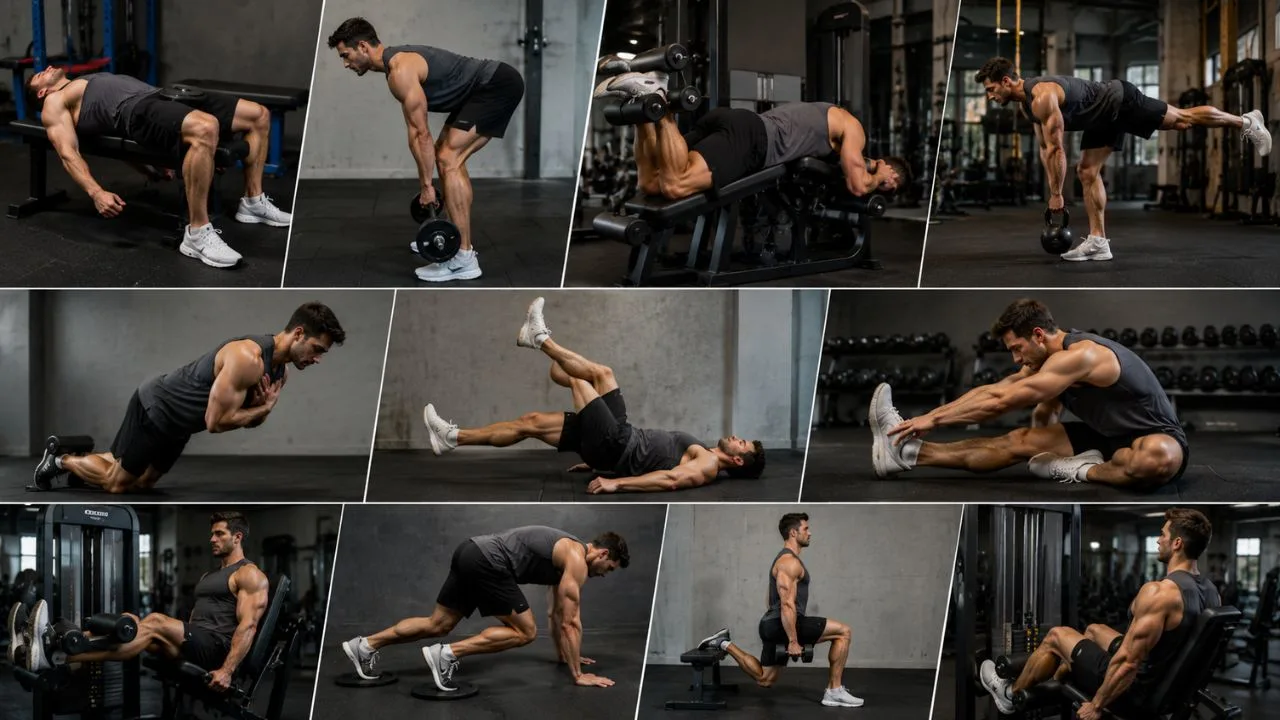
Hamstring Exercises: Build Stronger Legs and Prevent Injuries
Strong hamstrings help you walk, run, jump, and move with better balance every day. If these muscles are weak, you may experience poor performance, muscle tightness, or even injuries. Adding hamstring exercises to your weekly routine is one of the easiest ways to improve lower-body strength. They also help support your knees, hips, and overall movement.
Whether you are an athlete, a beginner, or someone who simply wants to stay active, hamstring workouts are important for long-term fitness. These exercises can be performed in the gym or with simple hamstring exercises at home using little or no equipment. Regular training improves flexibility, posture, and muscle endurance. It also helps you move with greater confidence during daily activities.
Many people focus only on their quadriceps and forget the muscles at the back of their legs. This muscle imbalance can lead to weak hamstrings, poor posture, and a higher chance of injury. Learning how to strengthen hamstrings is an important step toward building a balanced lower body. Strong muscles also make sports and workouts feel easier.
This guide covers the best exercises for hamstrings, beginner-friendly workouts, home routines, stretches, and strength-building tips. You will also learn proper exercise techniques and common mistakes to avoid during training. Every workout is simple enough for beginners while remaining effective for experienced athletes. By following these exercises consistently, you can build stronger and healthier hamstrings safely.
What Are the Hamstrings?
The hamstrings are a group of three muscles located on the back of your upper leg. They connect your hips to your knees and work together whenever you walk, run, bend, or jump. Healthy hamstrings make everyday movements easier and help protect your lower body from injury. Understanding these muscles helps you train them more effectively.
Many people think only athletes need strong hamstrings, but everyone benefits from training them regularly. These muscles play an important role in standing up, climbing stairs, and maintaining balance throughout the day. Weak hamstrings can make simple movements feel harder than they should. Strengthening them improves both fitness and daily life.
The hamstrings also work closely with your glutes, calves, and quadriceps during lower-body movements. When these muscles are balanced, your body moves more smoothly and efficiently. This reduces unnecessary stress on your knees and lower back. Good muscle balance also improves sports performance.
Learning about your hamstrings makes it easier to choose the right hamstring muscles exercises for your fitness goals. Whether you train at home or in the gym, understanding muscle function improves workout results. It also helps prevent injuries caused by poor exercise technique. Knowledge is the first step toward stronger legs.
Hamstring Muscle Anatomy
Your hamstrings are made up of three muscles called the biceps femoris, semitendinosus, and semimembranosus. These muscles work together to bend your knee and extend your hip during movement. They are active whenever you run, squat, or lift objects from the ground. Each muscle has a different role but they always work as a team.
The hamstrings attach near your pelvis and run down the back of your thigh before connecting below your knee. Because they cross two major joints, they help control many lower-body movements. This is why healthy hamstrings are important for both strength and flexibility. Keeping them strong improves overall body function.
These muscles store energy when you move quickly and release it during activities like sprinting and jumping. Strong hamstrings improve speed, power, and balance while reducing muscle fatigue. Athletes often focus on hamstring strength exercises because of these important benefits. Everyday exercisers gain similar advantages through regular training.
Understanding muscle anatomy also helps you perform hamstring strengthening exercises with better technique. When you know which muscles are working, it becomes easier to feel the correct movement. Better form leads to safer workouts and faster progress. Small improvements in technique make a big difference over time.
Why Strong Hamstrings Matter
Strong hamstrings help you move safely during sports, workouts, and everyday activities like walking or climbing stairs. They work with your glutes and quadriceps to produce smooth and powerful movement. Healthy muscles also improve balance and reduce unnecessary strain on your joints. This makes daily life easier and more comfortable.
People with strong hamstrings often experience fewer muscle strains and knee injuries than those with weak muscles. These muscles absorb force during running, jumping, and sudden changes in direction. Proper strength protects your body during high-impact activities. Injury prevention is one of the biggest reasons to train them regularly.
Building stronger hamstrings also improves posture by supporting your hips and lower back correctly. Better posture reduces muscle tension and helps you stand and walk with greater confidence. It also makes many other exercises easier to perform safely. Strong muscles improve both appearance and movement.
Whether you enjoy sports or simply want to stay healthy, strengthening hamstrings should be part of every fitness routine. You can achieve excellent results through gym workouts or home hamstring exercises using body weight or resistance bands. Consistency matters more than using heavy weights. Small improvements add up over time.
Common Causes of Weak Hamstrings
One of the biggest causes of weak hamstrings is sitting for long periods without regular physical activity. Spending hours at a desk shortens the muscles and reduces their overall strength. Over time, this may lead to stiffness, poor posture, and reduced flexibility. Regular movement helps prevent these problems.
Ignoring lower-body training is another common reason people develop weak hamstrings. Many workouts focus mainly on the front of the legs while forgetting the muscles behind them. This imbalance increases the risk of muscle strains and knee pain. A balanced workout routine strengthens all major leg muscles.
Poor exercise technique can also prevent your hamstrings from becoming stronger. Using momentum instead of controlled movement reduces muscle activation during workouts. Learning proper form helps target the correct muscles more effectively. Good technique always produces better long-term results.
Recovery is equally important because muscles become stronger while resting after exercise. Without enough sleep, healthy nutrition, and recovery time, progress slows down significantly. Stretching and light movement also support muscle recovery between workouts. Healthy habits are essential for building stronger hamstrings.
Benefits of Hamstring Exercises
Regular hamstring exercises improve strength, flexibility, balance, and athletic performance while reducing the risk of injury. Strong hamstrings also make daily activities easier because they support healthy movement patterns. Whether you train at home or in the gym, these exercises provide long-term health benefits. Consistency is the key to seeing lasting improvements.
Increase Lower Body Strength
Strong hamstrings make your entire lower body more powerful during activities like walking, running, squatting, and jumping. They work together with your glutes and quadriceps to create smooth and controlled movement. Better strength also improves stability during sports and everyday activities. This makes movement safer and more efficient.
Regular hamstring workouts increase muscle endurance and improve overall leg performance over time. As your muscles become stronger, lifting, climbing stairs, and exercising become easier. Better strength also helps reduce fatigue during physical activity. Small improvements build confidence with every workout.
You do not always need heavy gym equipment to build stronger hamstrings. Many hamstring workouts at home use body weight, resistance bands, or simple household items. These exercises are effective for beginners and experienced athletes alike. Training consistently matters more than expensive equipment.
As your lower-body strength improves, other exercises become easier to perform with proper technique. Strong hamstrings also improve balance between the front and back of your legs. This balanced development reduces stress on your joints during movement. Healthy muscles create better overall fitness.
Improve Flexibility and Mobility
Flexible hamstrings allow your legs to move through a full range of motion without feeling tight or uncomfortable. This makes everyday activities like bending, walking, and climbing stairs much easier. Adding exercises for tight hamstrings to your routine helps improve movement over time. Better flexibility also reduces muscle stiffness after long periods of sitting.
Regular stretching and hamstring strengthening exercises work together to improve mobility. Strong muscles become more effective when they can move freely through their full range of motion. Better mobility helps you perform squats, lunges, and other lower-body exercises with proper form. This reduces unnecessary stress on your joints.
Many people think stretching alone is enough, but combining strength and flexibility training gives better results. Simple top hamstring stretches before or after workouts help keep the muscles healthy and relaxed. These stretches also improve blood flow and support muscle recovery. Consistent practice leads to noticeable improvements.
Improved flexibility helps athletes perform better and also benefits people who spend long hours sitting. Healthy hamstrings allow smoother movement during sports, exercise, and daily tasks. You may also notice less muscle tightness and better posture. Flexible muscles support a healthier and more active lifestyle.
Reduce Injury Risk
One of the biggest benefits of hamstring strengthening is lowering the risk of muscle strains and other lower-body injuries. Strong muscles can handle more force during running, jumping, and sudden direction changes. This makes them less likely to become overstretched or torn. Injury prevention should be a goal for every fitness level.
Weak hamstrings often create muscle imbalances that increase pressure on the knees and lower back. Balanced leg strength improves movement and helps protect important joints during exercise. Regular exercises to strengthen hamstrings reduce these imbalances over time. Healthy muscles work together more efficiently.
Proper warm-ups and controlled movement are just as important as the exercises themselves. Rushing through a workout or using poor technique increases the chance of injury. Learning the correct form for each hamstring exercise helps you train safely. Good habits produce better long-term results.
Recovery also plays a major role in preventing injuries because tired muscles are more likely to become strained. Getting enough sleep, eating healthy foods, and stretching after workouts all support muscle repair. Taking rest days allows your body to recover properly. Healthy recovery habits improve overall performance.
Enhance Athletic Performance
Strong hamstrings help athletes run faster, jump higher, and change direction more quickly during sports. These muscles create power whenever you sprint, kick, or push off the ground. Regular hamstring workouts improve speed, balance, and overall athletic ability. Better performance comes from consistent training.
Sports such as football, basketball, soccer, tennis, and track all depend heavily on healthy hamstrings. Powerful muscles help athletes move with greater control while reducing fatigue during competition. Many professional athletes include best hamstring workouts in every training program. These exercises build strength that transfers directly into sports.
Explosive exercises combined with hamstring strength exercises improve muscle coordination and reaction time. Better coordination allows smoother movement and faster responses during games or workouts. Strong muscles also improve endurance throughout long training sessions. Every improvement supports better athletic performance.
Even if you do not play sports, stronger hamstrings help you move more confidently throughout the day. Daily activities become easier because your muscles produce more strength with less effort. Building athletic ability also improves overall fitness and health. Everyone benefits from stronger and healthier legs.
Support Better Posture and Balance
Healthy hamstrings help keep your hips and pelvis in the correct position during standing and walking. Balanced muscles reduce pressure on your lower back and improve your natural posture. Better posture helps you move more comfortably throughout the day. Strong muscles support your entire body.
Poor posture often develops when the front and back leg muscles become unbalanced. Regular hamstring exercises strengthening help restore proper muscle balance between your quadriceps and hamstrings. Balanced muscles improve body alignment during movement. This reduces unnecessary stress on your joints.
Strong hamstrings also improve balance by helping control lower-body movements during walking, running, and standing. Better balance lowers the risk of falls while making exercise safer. Older adults and beginners especially benefit from improved stability. Healthy muscles provide better body control.
Combining strengthening hamstring muscles with stretching creates stronger and more flexible legs. This combination improves posture while supporting healthy movement patterns. Small improvements become noticeable after several weeks of regular exercise. Consistency is the secret to lasting results.
10 Best Hamstring Exercises
The best hamstring exercises strengthen the muscles while improving flexibility, balance, and overall lower-body performance. These exercises can be performed at home or in the gym using body weight, dumbbells, barbells, or resistance bands. Beginners should start with simple movements before progressing to more advanced workouts. Proper form is always more important than lifting heavy weights.
1. Romanian Deadlift
The Romanian deadlift is one of the most effective hamstring strengthening exercises because it targets the back of your legs and glutes at the same time. Stand with your feet shoulder-width apart while holding a barbell or dumbbells. Keep your back straight as you slowly lower the weight toward your knees. Return to the starting position by pushing your hips forward.
This exercise teaches proper hip movement while building strength throughout your entire posterior chain. Slow and controlled movement activates the hamstrings more effectively than rushing through each repetition. Beginners should practice with light weights until they learn the correct technique. Good form helps prevent lower back strain.
The Romanian deadlift also improves balance, posture, and overall athletic performance. Strong hamstrings make lifting, running, and jumping much easier during sports and everyday life. Many strength coaches consider this one of the best hamstring workouts available. It belongs in nearly every lower-body routine.
Start with two or three sets of ten to twelve repetitions using a comfortable weight. Increase the resistance gradually as your strength improves over time. Never round your back while performing this exercise. Controlled movement always produces better results.
2. Glute Bridge
The glute bridge is an excellent hamstring exercise at home because it requires no equipment and is easy for beginners. Lie on your back with your knees bent and your feet flat on the floor. Press through your heels while lifting your hips toward the ceiling. Hold briefly before lowering yourself back down slowly.
Although the glute bridge mainly targets the glutes, it also strengthens the hamstrings and lower back. The movement improves hip stability while supporting better posture during daily activities. It is a safe exercise for people of most fitness levels. Beginners can perform it almost anywhere.
As your strength improves, you can make the exercise more challenging by lifting one leg or adding a resistance band. These progressions increase hamstring activation without requiring gym equipment. They are perfect for home hamstring workouts. Small changes keep the exercise effective.
Perform two to four sets of twelve to fifteen repetitions while focusing on controlled movement. Avoid pushing with your lower back instead of your hips. Squeeze your glutes at the top of every repetition. Good technique produces stronger muscles and better results.
3. Single-Leg Deadlift
The single-leg deadlift improves hamstring strength while developing balance and coordination at the same time. Stand on one leg while holding a light dumbbell or simply use your body weight. Slowly bend forward at the hips while extending the opposite leg behind you. Return to the starting position under complete control.
This movement trains each leg separately, helping fix muscle imbalances that may develop over time. Stronger individual legs improve overall stability during sports and daily activities. It is one of the most effective exercises to strengthen hamstrings. Beginners should practice without weights first.
Keeping your core tight and your back straight throughout the movement is very important. Looking at one spot on the floor helps improve balance during each repetition. Move slowly instead of rushing through the exercise. Controlled movement improves muscle activation.
Complete two or three sets of eight to twelve repetitions on each leg. Rest briefly before switching sides to maintain good form. Increase difficulty only after mastering bodyweight movement. Quality always matters more than quantity.
4. Nordic Hamstring Curl
The Nordic hamstring curl is one of the most effective hamstring strength exercises for building strong and healthy legs. It mainly uses your body weight to strengthen the muscles through slow, controlled movement. This exercise is popular among athletes because it helps improve strength while reducing the risk of hamstring injuries. It is challenging, so beginners should start slowly.
Kneel on a soft mat and have someone hold your ankles, or secure your feet under a sturdy object. Keep your body straight from your knees to your shoulders as you slowly lean forward. Lower yourself as far as you can while controlling the movement with your hamstrings. Use your hands to catch yourself before gently pushing back to the starting position.
The goal is not to lower your body all the way on your first attempt. Even a small controlled movement helps build strength over time. As your muscles become stronger, you will be able to lower yourself further without losing control. Patience and consistency are the keys to success.
Perform two or three sets of five to eight repetitions because this exercise is very demanding. Rest for one to two minutes between each set to allow your muscles to recover. Focus on quality instead of completing many repetitions. Good form always gives better results.
5. Stability Ball Hamstring Curl
The stability ball hamstring curl is one of the best hamstring workouts for improving strength, balance, and core stability. It challenges several muscle groups while placing extra focus on your hamstrings. This exercise is suitable for both beginners and intermediate fitness levels. It is often included in lower-body training programs.
Lie on your back with your heels resting on a stability ball and your arms at your sides. Lift your hips off the floor until your body forms a straight line. Slowly pull the ball toward your body by bending your knees while keeping your hips raised. Extend your legs again with control before repeating the movement.
Your hamstrings work hard to control both the pulling and extending phases of the exercise. At the same time, your glutes and core help keep your body stable. This combination improves strength while also developing better balance. It is a great full-body movement.
Complete two or three sets of ten to fifteen repetitions using slow and controlled movement. Avoid letting your hips drop during the exercise because this reduces hamstring activation. Keep your core engaged throughout every repetition. Proper technique produces the best results.
6. Good Morning Exercise
The good morning exercise is an excellent exercise for hamstrings because it strengthens the muscles while improving hip movement. It also works the glutes, lower back, and core at the same time. This movement teaches proper body mechanics that carry over into many other exercises. Beginners should practice with body weight before adding resistance.
Stand with your feet shoulder-width apart while placing your hands behind your head or holding a light barbell across your shoulders. Keep your back straight as you push your hips backward and bend forward slightly. Lower until you feel a stretch in your hamstrings before returning to the starting position. Move slowly throughout the exercise.
The good morning exercise helps improve posture by strengthening the muscles along the back of your body. Better posture reduces stress on your lower back and improves daily movement. It is also useful for athletes who want stronger hamstrings for sports performance. Consistency brings steady improvements.
Perform two or three sets of ten to twelve repetitions while focusing on proper form. Never round your back during the movement because this increases injury risk. Start with light resistance and increase weight gradually. Good technique is more important than heavy lifting.
7. Kettlebell Swing
The kettlebell swing is a powerful hamstring workout that builds strength, speed, and endurance. It mainly uses hip movement instead of arm strength to lift the kettlebell. This explosive exercise targets the hamstrings, glutes, and core while improving cardiovascular fitness. It is popular in both strength and conditioning programs.
Stand with your feet slightly wider than shoulder-width apart while holding a kettlebell with both hands. Swing the kettlebell backward between your legs before driving your hips forward to lift it to chest height. Let the kettlebell swing naturally back down while maintaining control. Repeat the movement using your hips rather than your arms.
This exercise teaches explosive hip power that improves running, jumping, and many sports movements. It also burns calories while strengthening important lower-body muscles. Strong hamstrings help create the force needed for each swing. Proper technique is essential for safety.
Begin with two or three sets of twelve to fifteen repetitions using a light kettlebell. Keep your back straight and your core tight during every repetition. Avoid squatting too deeply because this is a hip-hinge movement. Smooth and controlled swings produce the best results.
8. Resistance Band Leg Curl
The resistance band leg curl is one of the easiest hamstring exercises at home because it requires very little equipment. Resistance bands are affordable, portable, and suitable for all fitness levels. This exercise directly targets the hamstrings without placing excessive stress on the joints. It is perfect for beginners and home workouts.
Secure one end of the resistance band to a stable object and attach the other end around your ankle. Stand facing the anchor point while holding onto a wall or chair for balance. Bend your knee slowly to pull your heel toward your glutes before lowering it back down. Perform the movement with complete control.
Resistance bands provide constant tension throughout the exercise, making your muscles work during both lifting and lowering phases. This improves strength while protecting your knees and lower back. It is also useful during hamstring rehab exercises because resistance can be adjusted easily. Beginners find this exercise simple to learn.
Perform two or three sets of twelve to fifteen repetitions on each leg. Choose a resistance band that allows smooth movement without sacrificing technique. Increase resistance gradually as your strength improves. Controlled repetitions create better muscle growth.
9. Dumbbell Stiff-Leg Deadlift
The dumbbell stiff-leg deadlift is a simple yet effective hamstring muscles workout that builds strength and flexibility together. It focuses on the muscles at the back of your legs while also strengthening your glutes and lower back. Dumbbells make this exercise accessible for both gym and home workouts. Proper form is essential for safe training.
Stand with a dumbbell in each hand and keep your feet about shoulder-width apart. Hold the weights close to your legs while pushing your hips backward and lowering the dumbbells slowly. Stop when you feel a gentle stretch in your hamstrings before returning to a standing position. Keep your knees slightly bent throughout the movement.
This exercise increases hamstring strength while improving flexibility through a controlled range of motion. It also teaches correct hip movement that transfers to many other strength exercises. Better movement patterns reduce injury risk and improve athletic performance. Practice slowly until you master the technique.
Complete two or three sets of ten to twelve repetitions with light to moderate weights. Never round your back or bounce at the bottom of the movement. Focus on smooth and controlled repetitions instead of heavy lifting. Good form leads to better long-term progress.
10. Step-Up Exercise
The step-up is a practical exercise for hamstrings at home that strengthens your legs while improving balance and coordination. It also works the glutes, quadriceps, and calves during every repetition. You only need a sturdy bench, step, or platform to perform this movement. It is suitable for beginners and advanced exercisers alike.
Place one foot firmly on the platform and press through your heel to lift your body upward. Bring your other foot onto the platform before stepping back down slowly. Repeat all repetitions on one leg before switching to the other side. Move with control throughout the exercise.
Step-ups improve single-leg strength, making everyday activities like climbing stairs much easier. They also help correct muscle imbalances between your left and right legs. Strong hamstrings provide stability throughout the movement. Better balance reduces the risk of falls and injuries.
Perform two or three sets of ten to twelve repetitions per leg using body weight or light dumbbells. Increase the height of the platform or add weights as your strength improves. Always step down slowly to protect your knees. Controlled movement produces the greatest benefits.
Hamstring Stretches to Improve Flexibility
Stretching is just as important as strengthening because flexible muscles move better and recover faster after exercise. Adding top hamstring stretches to your routine helps reduce stiffness and improves your range of motion. Regular stretching also supports better posture and lowers the risk of muscle strains. Spending just a few minutes stretching each day can make a big difference.
Standing Hamstring Stretch
The standing hamstring stretch is one of the easiest exercises for tight hamstrings and can be done almost anywhere. Stand tall and place one heel on a low step or bench while keeping your leg straight. Slowly lean forward from your hips until you feel a gentle stretch in the back of your thigh. Hold the position without bouncing.
Keep your back straight during the stretch instead of rounding your shoulders forward. A straight back helps target the hamstring muscles more effectively while protecting your spine. You should feel a gentle pull but never sharp pain. Stretch only as far as feels comfortable.
Hold the stretch for twenty to thirty seconds before switching to the other leg. Repeat the movement two or three times on each side for the best results. Regular stretching gradually improves flexibility over time. Consistency is more important than stretching deeply.
This simple stretch is perfect before light exercise or after completing your hamstring workouts at home. It helps your muscles relax while improving blood flow. Better flexibility supports stronger and healthier legs. Make it part of your daily routine.
Seated Hamstring Stretch
The seated hamstring stretch is another excellent way to improve flexibility without needing any equipment. Sit on the floor with one leg extended and the other bent inward toward your body. Reach toward your toes while keeping your back as straight as possible. Stop when you feel a comfortable stretch.
Avoid forcing yourself to touch your toes because flexibility improves gradually with practice. Stretching too hard may cause discomfort or injury instead of helping your muscles. Slow and controlled movement produces the best results. Relax and breathe normally throughout the stretch.
Hold the position for twenty to thirty seconds before changing legs. Repeat two or three times on each side to improve flexibility evenly. Stretching after hamstring strengthening exercises can help reduce muscle tightness. Regular practice makes everyday movement easier.
This stretch is ideal for students, office workers, and anyone who sits for long periods. Sitting often causes the hamstrings to become tight and stiff. Daily stretching helps reverse these effects over time. Healthy muscles improve posture and movement.
Lying Hamstring Stretch with a Strap
The lying hamstring stretch is gentle and works well for beginners, seniors, and people recovering from injuries. Lie flat on your back and loop a towel or exercise strap around one foot. Slowly raise your leg toward the ceiling while keeping it as straight as possible. Pull gently until you feel a comfortable stretch.
Because you are lying down, your back remains supported throughout the movement. This makes it easier to focus on stretching the hamstrings without putting pressure on the lower back. It is one of the safest hamstring rehab exercises for improving flexibility. Always move slowly.
Hold the stretch for twenty to thirty seconds before lowering your leg carefully. Repeat two or three times on each side while breathing slowly and evenly. Never force the movement beyond your natural flexibility. Gentle stretching produces better long-term progress.
This exercise is also useful after long walks, sports, or hamstring workout home routines. It relaxes tired muscles and supports recovery after physical activity. Better flexibility helps reduce soreness and stiffness. Regular stretching keeps your legs healthy.
Dynamic Leg Swings
Dynamic leg swings are active stretches that prepare your muscles for movement before exercise. Unlike static stretches, they keep your body moving while increasing blood flow to the muscles. They are often included in warm-ups before hamstring workouts or sports activities. Dynamic stretching helps improve performance.
Stand beside a wall or sturdy object for balance while swinging one leg forward and backward. Begin with small movements before gradually increasing the height of each swing. Keep your upper body relaxed and avoid forcing the movement. Smooth swings work better than fast ones.
Perform ten to fifteen swings on each leg before changing sides. The goal is to warm up the muscles rather than stretch them as deeply as possible. Dynamic movements prepare your hamstrings for running, jumping, and lifting. They also improve coordination.
Adding dynamic stretches before best hamstring workouts helps reduce injury risk during exercise. Warm muscles respond better to strength training and athletic activities. Spending just a few minutes warming up improves workout quality. Good preparation leads to better performance.
Hamstring Exercises for Beginners
Beginners should start with simple movements that build strength while teaching proper exercise technique. These basic hamstring exercises develop healthy movement patterns before progressing to more difficult workouts. Starting slowly reduces injury risk and builds confidence. Consistency is the most important part of any fitness routine.
Bodyweight Glute Bridge
The bodyweight glute bridge is one of the easiest hamstring exercises for beginners because it requires no equipment. Lie on your back with your knees bent and your feet flat on the floor. Push through your heels and lift your hips until your body forms a straight line. Lower yourself slowly before repeating.
This exercise strengthens the hamstrings, glutes, and lower back while improving hip stability. It is suitable for people of every fitness level and is often included in rehabilitation programs. Beginners quickly learn the correct movement pattern. Strong hips support healthier legs.
Complete two or three sets of twelve to fifteen repetitions while moving slowly. Focus on squeezing your glutes and hamstrings at the top of every repetition. Avoid arching your lower back during the movement. Controlled repetitions produce better muscle activation.
As your strength improves, you can increase difficulty by adding a resistance band or performing the exercise with one leg. These progressions continue building strength without making the movement too complicated. Gradual improvement is the safest approach. Practice regularly for the best results.
Wall Hamstring Curl
The wall hamstring curl is a simple hamstring exercise at home that strengthens the muscles using only your body weight. Lie on your back with your feet against a wall and your knees slightly bent. Slowly slide your feet downward while controlling the movement with your hamstrings. Return to the starting position carefully.
This movement improves muscle control while placing very little stress on the knees. It is ideal for beginners or anyone returning to exercise after a break. Slow movement activates the muscles more effectively. Good technique matters more than speed.
Perform two or three sets of ten to fifteen repetitions while maintaining smooth control. Rest briefly between each set before continuing. As your muscles become stronger, increase the number of repetitions gradually. Small improvements lead to steady progress.
The wall hamstring curl is also useful during hamstring strengthening programs because it teaches proper muscle activation. It prepares beginners for more advanced exercises later. Practicing regularly builds confidence and strength. Simple exercises often produce excellent results.
Standing Leg Curl
The standing leg curl is one of the easiest easy hamstring exercises for beginners because it requires no special equipment. Stand upright while holding a chair or wall for balance if needed. Slowly bend one knee and bring your heel toward your glutes before lowering it back down. Repeat all repetitions before switching legs.
This exercise isolates the hamstrings without placing heavy pressure on the joints. It helps improve balance while strengthening one leg at a time. Single-leg training also corrects muscle imbalances between both sides. Better balance supports safer movement.
Complete two or three sets of twelve to fifteen repetitions on each leg. Perform the exercise slowly without swinging your leg or using momentum. Controlled movement keeps the focus on the hamstrings. Good technique improves muscle development.
The standing leg curl is perfect for beginners starting home hamstring exercises because it is safe and easy to learn. It can also be added to warm-ups or recovery workouts. Regular practice builds stronger and healthier muscles. Consistency creates lasting results.
Hamstring Exercises at Home
You do not need an expensive gym membership to build stronger hamstrings. Many hamstring exercises at home use only your body weight, resistance bands, or simple household items. These exercises improve strength, flexibility, and balance while fitting easily into your daily routine. Training at home is convenient and effective for all fitness levels.
No-Equipment Exercises
Bodyweight movements are some of the best at home hamstring exercises because they require no special equipment. Exercises like glute bridges, standing leg curls, single-leg deadlifts, and Nordic curls help strengthen the muscles naturally. They are suitable for beginners as well as experienced exercisers. Simple workouts can still produce excellent results.
No-equipment workouts allow you to train anywhere, whether you are at home, traveling, or exercising outdoors. These exercises improve muscle control while teaching proper movement patterns. They also reduce the need for expensive fitness equipment. Consistency is more important than having a gym.
Focus on slow, controlled repetitions instead of rushing through each exercise. Good technique activates the hamstrings more effectively and lowers the chance of injury. Performing each movement correctly helps build strength faster. Quality always beats quantity.
Aim to complete your home hamstring workout two or three times each week. Allow at least one day of rest between sessions so your muscles can recover. Recovery is an important part of muscle growth. Healthy habits support better results.
Resistance Band Workouts
Resistance bands are excellent tools for hamstring exercises for home because they provide adjustable resistance without taking up much space. They are affordable, lightweight, and suitable for beginners and advanced users alike. Band exercises challenge the muscles throughout the entire movement. This helps improve both strength and stability.
Popular resistance band exercises include leg curls, Romanian deadlifts, glute bridges, and standing kickbacks. These movements strengthen the hamstrings while also working the glutes and core. Using resistance bands makes home workouts more challenging. They are easy to carry and store.
Choose a resistance band that allows you to complete each exercise with proper form. If the band feels too easy, increase the resistance gradually as your muscles become stronger. Avoid sacrificing technique just to use a heavier band. Safe progression leads to better results.
Adding resistance bands to your hamstring strengthening exercises keeps your workouts interesting and effective. They provide enough variety to challenge your muscles without needing large gym machines. Regular training helps improve strength and flexibility. Simple equipment can deliver impressive progress.
Beginner Home Routine
A beginner hamstring workout at home should focus on learning proper form before increasing difficulty. Start with exercises such as glute bridges, standing leg curls, and bodyweight Romanian deadlifts. These movements strengthen the hamstrings while improving balance and coordination. Beginners should always train at a comfortable pace.
Perform each exercise for two or three sets of ten to fifteen repetitions. Rest for thirty to sixty seconds between sets to allow your muscles to recover. As your strength improves, gradually increase the number of repetitions or resistance. Slow progress is safer than rushing.
Always begin your workout with a short warm-up and finish with gentle stretching. Warming up prepares your muscles for exercise, while stretching improves flexibility and recovery. This combination helps reduce the risk of injury. Healthy habits support long-term success.
Following a regular home hamstring workout schedule two or three times each week produces steady improvements. Staying consistent is more important than performing long or difficult workouts. Small efforts repeated over time lead to noticeable strength gains. Patience always pays off.
Hamstring Exercises at the Gym
Gym workouts provide access to equipment that helps strengthen the hamstrings through different movement patterns. Combining free weights with machines creates a balanced hamstring muscles workout for improving strength and muscle growth. Beginners should start with lighter weights while learning proper technique. Safe lifting always comes first.
Machine Leg Curl
The machine leg curl is one of the most popular hamstring muscle exercises because it directly targets the back of the thighs. Sit or lie on the machine, depending on the equipment, and position your legs correctly. Slowly curl the weight toward your body before lowering it with control. Avoid swinging the weight.
This exercise isolates the hamstrings better than many other movements, making it ideal for building muscle strength. Because the machine guides the movement, beginners can focus on proper technique. Controlled repetitions improve muscle activation. Slow movement is more effective than fast lifting.
Choose a weight that allows you to complete ten to fifteen repetitions with good form. Lifting too much weight too soon may reduce exercise quality and increase injury risk. Increase resistance only when you can perform every repetition correctly. Progress gradually.
Machine leg curls fit well into almost every hamstring strengthening program because they are simple and highly effective. They help improve muscle balance while supporting stronger lower-body performance. Regular use leads to noticeable strength gains. Consistency delivers the best results.
Barbell Romanian Deadlift
The barbell Romanian deadlift is considered one of the best hamstring workouts for building strength and muscle size. This exercise targets the hamstrings, glutes, and lower back through controlled hip movement. It also improves posture and lifting technique. Many athletes include it in their weekly training.
Stand with your feet shoulder-width apart while holding a barbell in front of your thighs. Push your hips backward as you lower the bar while keeping your back straight. Lower until you feel a stretch in your hamstrings before returning to the starting position. Move slowly and stay in control.
This exercise strengthens the entire back side of your body while improving flexibility. Strong hamstrings help you perform better in sports, lifting, and daily activities. Proper technique also protects your lower back during heavy lifts. Learning the movement correctly is essential.
Perform three sets of eight to twelve repetitions using a weight that challenges you without affecting your form. Increase the load gradually as your strength improves. Never round your back while lifting. Good technique always produces better long-term results.
Cable Hamstring Curl
The cable hamstring curl is another excellent exercise for hamstrings because it provides constant resistance throughout the movement. Attach an ankle strap to the cable machine and secure it around one ankle. Slowly bend your knee to bring your heel toward your glutes before lowering it back down. Repeat on both legs.
Cable exercises allow smooth movement while keeping constant tension on the hamstrings. This increases muscle activation during every repetition. Training one leg at a time also helps correct muscle imbalances. Balanced strength improves overall performance.
Keep your upper body stable throughout the exercise and avoid using momentum. Slow movement keeps the focus on the hamstrings rather than other muscles. Good control reduces injury risk while improving workout quality. Precision matters more than speed.
Complete two or three sets of twelve repetitions on each leg. Adjust the cable weight according to your strength level. Increase resistance only when your form remains perfect. Regular practice helps build stronger and healthier hamstrings.
Common Mistakes to Avoid
Many people perform hamstring exercises incorrectly without realizing it, which can slow progress and increase injury risk. Learning the most common mistakes helps you train more safely and effectively. Small improvements in technique often produce better results than lifting heavier weights. Good habits lead to long-term success.
Using Too Much Weight
Lifting weights that are too heavy is one of the most common mistakes during hamstring workouts. Heavy weights often cause poor form and reduce muscle activation. Instead of working the hamstrings properly, other muscles begin doing most of the work. This limits your progress.
Start with lighter weights until you master the correct movement. Focus on feeling your hamstrings working during every repetition. Increase resistance gradually as your technique improves. Safe progression builds stronger muscles.
Using manageable weights also lowers the risk of lower back injuries and muscle strains. Proper control allows your muscles to work through a full range of motion. Better movement creates better strength. Patience always produces better results.
Remember that muscle growth comes from consistent training, not from lifting the heaviest weight possible. Strong foundations lead to greater success later. Good technique is your greatest training tool. Train smart before training heavy.
Skipping Warm-Up
Skipping your warm-up is one of the biggest mistakes people make before starting hamstring workouts. Cold muscles are less flexible and more likely to become strained during exercise. A proper warm-up increases blood flow and prepares your body for movement. It also improves your overall workout performance.
Spend five to ten minutes doing light cardio such as walking, cycling, or jogging before training. Follow this with dynamic movements like leg swings and bodyweight squats. These exercises wake up your muscles without making you tired. Warm muscles respond better during strength training.
A good warm-up also improves balance, coordination, and flexibility before performing more challenging exercises. You will feel more comfortable moving through each repetition with better control. This reduces the chance of injury during your workout. Taking a few extra minutes is worth the effort.
Whether you are doing hamstring exercises at home or lifting weights in the gym, always begin with a proper warm-up. It prepares both your muscles and your mind for exercise. Good preparation leads to safer and more effective workouts. Make warming up a regular habit.
Poor Exercise Form
Poor technique is another common reason people fail to get the most from their hamstring strengthening exercises. Incorrect form reduces muscle activation and increases pressure on your joints. Over time, this may lead to discomfort or injury. Learning proper technique should always come first.
Move slowly and focus on each repetition instead of rushing through your workout. Keep your back straight during deadlifts and control every movement from start to finish. Avoid using momentum because it takes the work away from your hamstrings. Controlled movement produces better results.
If you are unsure about your form, practice with body weight before adding resistance. You can also watch instructional videos from trusted fitness professionals or ask a certified trainer for guidance. Small corrections often make a big difference. Good habits improve long-term progress.
Remember that perfect form is more valuable than lifting heavy weights. Proper technique helps build stronger muscles while protecting your body from unnecessary stress. Quality always beats quantity during exercise. Safe training creates lasting results.
Ignoring Recovery
Recovery is an important part of every hamstring strengthening program, yet many people overlook it. Your muscles grow stronger while resting, not while exercising. Without enough recovery time, your body cannot repair the small muscle fibers worked during training. This may slow your progress.
Aim to get seven to nine hours of sleep every night to support muscle recovery. Eating enough protein, drinking plenty of water, and following a balanced diet also help your muscles rebuild. Healthy habits improve both strength and energy levels. Recovery supports every workout.
Stretching after exercise helps reduce muscle tightness and improves flexibility over time. Gentle movement on rest days also keeps blood flowing to your muscles. Activities like walking or light cycling can help your body recover faster. Active recovery is often better than doing nothing.
Avoid training your hamstrings every day because they need time to heal between workouts. Most people achieve good results by training them two or three times each week. Rest days are just as important as workout days. Balanced training leads to better performance.
Sample Hamstring Workout Routine
A well-planned hamstring workout helps you build strength safely while improving flexibility and endurance. The right routine depends on your fitness level and experience. Beginners should focus on learning proper technique before increasing intensity. Consistency is more important than doing advanced exercises.
Beginner Routine
If you are new to exercise, start with simple hamstring exercises for beginners that teach proper movement. Begin with glute bridges, standing leg curls, and bodyweight Romanian deadlifts. These exercises strengthen the muscles without placing too much stress on your joints. Focus on quality over quantity.
Perform each exercise for two or three sets of ten to twelve repetitions. Rest for about one minute between sets so your muscles can recover. Use slow and controlled movements throughout every repetition. Good technique should always be your priority.
Finish your workout with gentle hamstring stretches to improve flexibility and reduce muscle tightness. Stretching after exercise supports recovery and helps your muscles stay healthy. It also prepares your body for your next workout. Recovery is part of the training process.
Complete this routine two times each week with at least one rest day between sessions. As your muscles become stronger, you can gradually increase the number of repetitions or resistance. Progress slowly and stay consistent. Small improvements create lasting results.
Intermediate Routine
Intermediate exercisers can combine bodyweight movements with resistance training for greater strength gains. Include Romanian deadlifts, stability ball curls, resistance band curls, and step-ups in your hamstring workouts. These exercises challenge your muscles from different angles. Variety helps improve overall performance.
Perform three sets of eight to twelve repetitions for each exercise using moderate resistance. Increase the weight only if you can maintain proper technique. Good form should always come before heavier lifting. Safe progression leads to better strength.
Add dynamic stretches before your workout and static stretches afterward to improve flexibility. A complete routine includes strength, mobility, and recovery exercises. This balanced approach reduces injury risk while supporting steady progress. Healthy muscles perform better.
Train your hamstrings two or three times each week depending on your recovery. Give your muscles enough rest between sessions to rebuild and grow stronger. Recovery supports long-term improvement. Stay patient and consistent.
Advanced Routine
Advanced athletes often use challenging best hamstring workouts that combine heavy lifting with explosive exercises. Romanian deadlifts, Nordic hamstring curls, kettlebell swings, and cable leg curls create a complete strength-building program. These exercises improve power, speed, and muscle endurance. They are ideal for experienced lifters.
Perform three to four sets of six to ten repetitions using challenging but manageable weights. Focus on perfect technique even when lifting heavy loads. Never sacrifice form just to increase weight. Quality remains the foundation of strength.
Include single-leg exercises to improve balance and correct muscle imbalances. Adding unilateral movements helps strengthen each leg equally while improving stability. Balanced muscles reduce injury risk and improve athletic performance. Strong legs work together more efficiently.
Recovery becomes even more important as training intensity increases. Prioritize sleep, healthy nutrition, stretching, and rest days to support muscle growth. Consistent recovery allows you to continue improving safely. Smart training delivers better long-term results.
Tips for Faster Results
Getting stronger hamstrings takes time, but following the right habits helps you see progress faster. Regular hamstring strengthening exercises, healthy nutrition, and proper recovery all work together to improve your results. There are no shortcuts to building strong muscles. Consistency always wins.
Train Consistently
Training regularly is the most important factor for building stronger hamstrings. Aim to complete your hamstring workouts at home or gym sessions two to three times each week. Consistent exercise allows your muscles to adapt and grow stronger over time. Missing workouts slows your progress.
Stick to a schedule that fits your lifestyle so exercising becomes a habit. Even short workouts performed consistently are better than long workouts done occasionally. Small efforts repeated every week create noticeable improvements. Consistency builds success.
Track your workouts by writing down the exercises, sets, and repetitions you complete. This helps you measure progress and stay motivated. Watching yourself improve encourages you to keep going. Progress creates confidence.
Remember that building strength takes patience. Your muscles need time to adapt to training. Keep showing up and trust the process. The results will come with time.
Focus on Proper Form
Using proper form is one of the best ways to get the most from your hamstring exercises. Correct technique ensures the hamstrings do the work instead of other muscles. It also protects your knees, hips, and lower back from unnecessary stress. Good form should always come before lifting heavier weights.
Move through every repetition slowly and with control rather than rushing. Keep your core tight, your back straight, and your movements smooth during each exercise. Controlled motion improves muscle activation and helps build strength more effectively. Quality repetitions always produce better results.
If you are learning a new exercise, practice using only your body weight first. Once you feel comfortable with the movement, add light resistance gradually. This approach helps build confidence while reducing the risk of injury. Master the basics before progressing.
Watching yourself in a mirror or recording your workouts can help identify mistakes. Small adjustments often improve your performance and make exercises feel easier. Good technique becomes natural with regular practice. Strong habits create stronger muscles.
Increase Resistance Gradually
Your muscles need new challenges to continue growing stronger over time. One of the safest ways to improve is by gradually increasing the weight, resistance band tension, or number of repetitions. This method is called progressive overload and is essential for hamstring strength exercises. Slow progress is safer than making big jumps.
Avoid adding too much resistance before mastering proper technique. Heavy weights with poor form increase the chance of injury and reduce exercise quality. Focus on moving correctly before increasing difficulty. Safe progression leads to lasting improvements.
You can also challenge your muscles by slowing down each repetition or adding an extra set. Small changes are often enough to continue making progress without increasing weight. Variety keeps your workouts interesting and effective. Your body responds well to gradual changes.
Keep track of your progress in a notebook or fitness app. Seeing improvements in strength and endurance helps you stay motivated. Celebrate small achievements along the way. Consistent progress builds confidence.
Prioritize Recovery and Nutrition
Recovery and nutrition are just as important as exercise when building stronger hamstrings. Your muscles repair and grow during rest, so getting enough sleep every night is essential. Aim for seven to nine hours of quality sleep whenever possible. A well-rested body performs better during workouts.
Eating a balanced diet with enough protein supports muscle growth and recovery. Foods such as chicken, fish, eggs, beans, yogurt, and nuts provide important nutrients for healthy muscles. Drinking enough water also helps your body recover after exercise. Healthy eating supports better performance.
Do not skip rest days because your muscles need time to recover from training. Light activities such as walking or gentle stretching can improve blood flow without adding stress. Recovery reduces soreness and prepares you for your next workout. Rest is part of getting stronger.
Combining good nutrition, proper hydration, quality sleep, and regular hamstring workouts creates the best environment for muscle growth. Healthy lifestyle habits support long-term fitness success. Strong muscles are built through consistent care. Balance is the key to lasting results.
Frequently Asked Questions
How Often Should You Train Hamstrings?
Most people should train their hamstrings two or three times each week for the best results. This gives the muscles enough time to recover while continuing to build strength. Beginners may start with two weekly sessions before increasing their training. Rest days are important for muscle growth.
The ideal training frequency depends on your fitness level and workout intensity. People lifting heavier weights may need more recovery than those performing bodyweight exercises. Listen to your body and avoid training sore muscles too often. Recovery helps prevent injuries.
You can combine hamstring exercises at home with other lower-body workouts during the week. Mixing different exercises keeps your routine interesting and works the muscles from different angles. Variety also improves overall fitness. Balanced training produces better results.
Consistency is more important than training every day. A regular schedule helps your muscles adapt and become stronger over time. Stay patient and trust the process. Long-term effort leads to lasting improvements.
What Is the Best Hamstring Exercise?
There is no single best exercise because each movement offers different benefits. However, the Romanian deadlift is widely considered one of the best hamstring workouts for building strength and muscle. It targets the hamstrings, glutes, and lower back at the same time. Many fitness experts recommend it.
Other excellent choices include Nordic hamstring curls, glute bridges, stability ball curls, and resistance band leg curls. Each exercise challenges the muscles in a slightly different way. Combining several exercises creates a more complete workout. Variety helps maximize results.
Beginners may prefer simple bodyweight exercises before progressing to weighted movements. Starting with easier exercises builds confidence and improves technique. As your strength increases, you can add more advanced movements. Gradual progress is the safest approach.
The best exercise is the one you can perform with proper form consistently. Good technique and regular practice are more important than choosing the most difficult movement. Stay consistent with your routine. Results will follow over time.
Can You Build Hamstrings at Home?
Yes, you can build strong hamstrings without visiting a gym. Many effective hamstring exercises for home use only body weight or simple equipment like resistance bands. Glute bridges, standing leg curls, step-ups, and single-leg deadlifts all provide excellent results. Home workouts are convenient and affordable.
Consistency matters much more than expensive equipment. Training two or three times each week while gradually increasing difficulty helps build muscle over time. Good technique remains essential during every workout. Small improvements lead to big changes.
Resistance bands and household furniture can make home workouts even more effective. A sturdy chair, step, or towel can be used for many different exercises. Simple equipment provides plenty of training options. You do not need a fully equipped gym.
Home workouts also save time because you can exercise whenever it fits your schedule. This makes it easier to stay consistent with your fitness routine. Regular practice builds stronger and healthier hamstrings. Home training can be highly effective.
How Long Does It Take to Strengthen Hamstrings?
Most people begin noticing improved strength after four to eight weeks of consistent training. The exact timeline depends on your fitness level, workout intensity, nutrition, and recovery habits. Beginners often see progress quickly because their muscles adapt to new exercises. Consistency is the biggest factor.
Following a structured hamstring strengthening program helps you make steady improvements over time. Increasing resistance gradually while maintaining proper form supports continuous progress. Skipping workouts may slow your results. Stay committed to your routine.
Eating enough protein and getting quality sleep also influence how quickly your muscles become stronger. Healthy habits outside the gym are just as important as the workouts themselves. Recovery allows your muscles to rebuild. Strong bodies are built through balanced habits.
Avoid comparing your progress with others because everyone improves at a different pace. Focus on becoming stronger than you were last week. Every workout brings you one step closer to your goal. Keep moving forward.
Should You Stretch Before or After Hamstring Exercises?
Both stretching and warming up have important roles in a successful workout. Before training, perform dynamic stretches such as leg swings to prepare your muscles for movement. Dynamic movements increase blood flow and improve flexibility without reducing strength. They help lower injury risk.
After completing your hamstring workouts, perform static stretches like seated or standing hamstring stretches. Holding each stretch for twenty to thirty seconds helps improve flexibility and reduce muscle tightness. Post-workout stretching also supports recovery. Relax and breathe normally throughout each stretch.
Avoid long static stretches before heavy strength training because they may temporarily reduce muscle power. Save deeper stretches until after your workout when your muscles are warm. This approach provides the greatest benefit. Timing matters.
Combining a dynamic warm-up with static stretching after exercise keeps your hamstrings flexible, healthy, and ready for future workouts. Both methods support better performance and recovery. A complete routine produces the best long-term results. Healthy habits lead to healthier muscles.
Conclusion
Adding hamstring exercises to your weekly fitness routine is one of the best ways to build stronger legs, improve flexibility, and reduce the risk of injuries. Whether you choose hamstring exercises at home, gym workouts, or simple bodyweight movements, consistency is the key to success. Focus on proper form, increase resistance gradually, and give your muscles enough time to recover between sessions. By following these tips and making hamstring training a regular habit, you can enjoy stronger muscles, better balance, improved athletic performance, and healthier movement for years to come.