


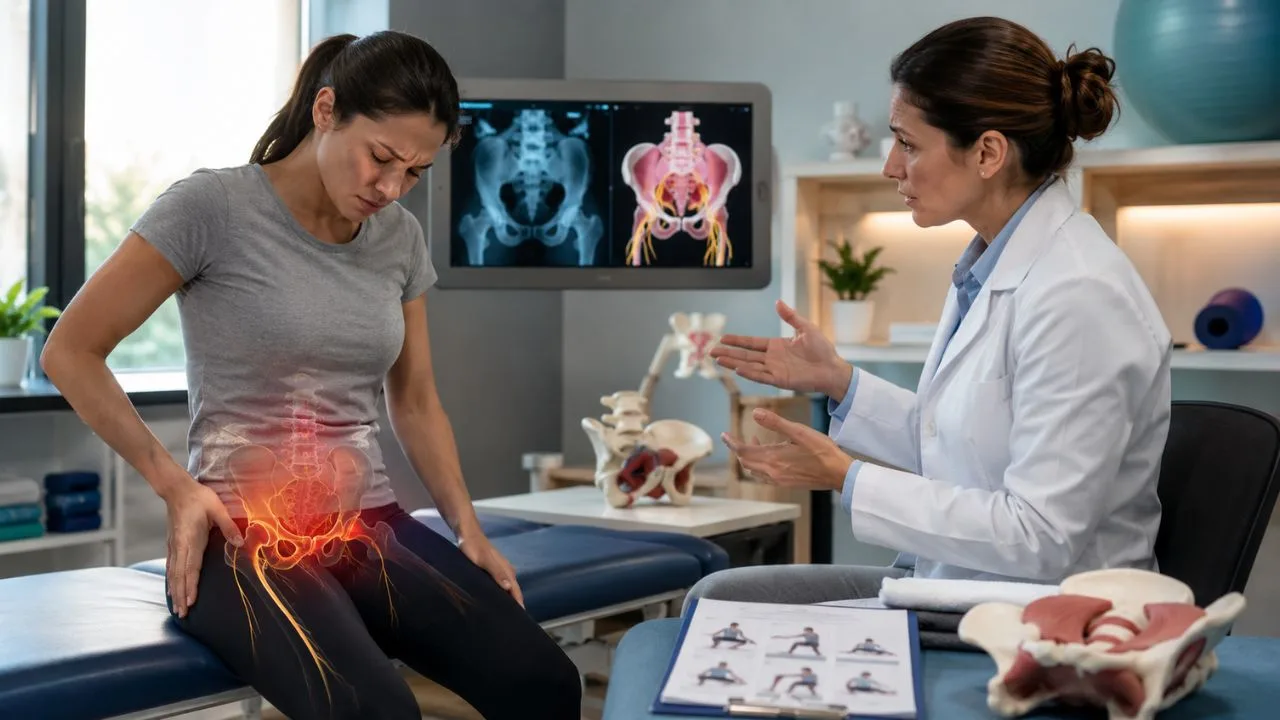
Pudendal Neuralgia and Chronic Pelvic Pain: Causes, Symptoms, and Treatment
Pudendal neuralgia is a form of neuropathic pelvic pain involving irritation, injury, or compression of the pudendal nerve. The discomfort may affect the genitals, perineum, anus, rectum, or deeper pelvic region. It is frequently described as burning, shooting, electric, tingling, or raw pain and is often aggravated by sitting.
For some people, the symptoms begin after childbirth, pelvic surgery, an injury, or prolonged pressure from cycling or sitting. For others, no single cause is found. The condition can affect people of any sex and may interfere with work, sleep, exercise, bowel or bladder function, sexual activity, and emotional wellbeing.
Pudendal neuralgia is challenging because its symptoms overlap with several urological, gynaecological, colorectal, musculoskeletal, spinal, and pelvic floor conditions. There is also no single blood test or scan that proves the diagnosis. Assessment therefore depends on the pain pattern, a physical examination, and investigations used to exclude other possible causes.
Treatment is usually individualised and may combine activity modification, pelvic health physiotherapy, neuropathic pain medication, psychological support, image-guided nerve blocks, neuromodulation, or surgery in carefully selected cases. Recent reviews continue to note that high-quality comparative research is limited, so dramatic or universal “cure” claims should be approached cautiously.
Key Takeaways
Pudendal neuralgia is nerve-related pain, not a single type of general pelvic discomfort. Its most characteristic pattern involves pain in the pudendal nerve territory, often extending from the anus toward the genitals and becoming more noticeable during sitting. Symptoms can nevertheless vary considerably between individuals.
Pudendal nerve entrapment is one possible cause, but the terms are not identical. Neuralgia refers to pain associated with an irritated or damaged pudendal nerve, whereas entrapment describes mechanical compression along the nerve’s pathway. Some patients have symptoms without clear evidence of a fixed anatomical entrapment.
Diagnosis is mainly clinical and requires careful exclusion of other conditions. The Nantes criteria can support recognition of pudendal neuralgia caused by entrapment, but examinations, imaging, and sometimes diagnostic nerve blocks may be needed to evaluate competing explanations and guide treatment.
Recovery is rarely based on one exercise or treatment. Many people need a staged plan involving pressure reduction, pelvic floor rehabilitation, medication, pain education, and specialist procedures when conservative care is insufficient. Treatment aims to reduce symptoms, restore function, and improve quality of life, even when complete pain elimination is not immediately possible.
What Is Pudendal Neuralgia?
Pudendal neuralgia is persistent or recurring pain associated with the pudendal nerve. It commonly produces neuropathic sensations such as burning, stabbing, pins and needles, electrical shocks, hypersensitivity, or numbness. The pain may be one-sided or affect both sides and can remain localised or spread through the perineal and genital region.
The pudendal nerve originates from the S2, S3, and S4 nerve roots in the sacral plexus. It travels through the pelvis and divides into branches supplying the anal region, perineum, penis or clitoris, and related pelvic structures. Irritation anywhere along this pathway may create symptoms in one or more of those areas.
Although pudendal neuralgia is often discussed alongside pudendal nerve entrapment, not every case results from visible compression. The nerve may be stretched, inflamed, scarred, or affected by repetitive pressure. Pelvic floor muscle overactivity may also coexist with nerve irritation and contribute to the overall pain experience.
Pudendal neuralgia may form one part of a broader chronic pelvic pain condition. Long-lasting pain can involve interactions between peripheral nerves, pelvic floor muscles, the spinal cord, the brain, sleep, stress, movement, and previous painful experiences. This does not make the symptoms imaginary; it explains why effective care often needs to address more than one system.
What Does the Pudendal Nerve Do?
The pudendal nerve is a mixed nerve, meaning it carries both sensory and motor signals. Its sensory branches transmit touch, pressure, pain, temperature, and sexual sensation from parts of the genitals, anus, anal canal, and perineal skin. This broad distribution explains why pudendal nerve pain can feel difficult to locate precisely.
Its motor fibres help control muscles involved in voluntary urinary and bowel continence, including parts of the external urethral and anal sphincters. The nerve also contributes to coordinated pelvic floor activity. Pudendal nerve problems may therefore be associated with urinary, bowel, or sexual symptoms, although these symptoms can also arise from many other conditions.
The nerve plays an important role in sexual sensation and function. Its dorsal branch carries sensory information from the penis or clitoris and contributes to normal sexual response. Irritation may be associated with painful intercourse, pain after sexual activity, altered genital sensation, difficulty reaching orgasm, or erectile difficulties.
Because the nerve travels close to pelvic ligaments, muscles, blood vessels, and bony landmarks, it can be affected by pressure or tissue changes along its route. One commonly discussed location is the pudendal canal, also called Alcock’s canal, although compression can occur elsewhere. A specialist assessment is needed to determine whether the nerve is likely involved and where.
How Is Pudendal Neuralgia Connected to Pelvic Pain?
Pelvic pain is a broad symptom rather than one specific diagnosis. It can originate from nerves, muscles, joints, reproductive organs, the urinary tract, the bowel, skin, or the spine. Pudendal neuralgia is one potential source, particularly when the pain follows the pudendal nerve distribution and becomes worse while sitting.
Nerve irritation may cause surrounding pelvic floor muscles to tighten protectively. Persistent muscle guarding can then increase pressure, restrict movement, create trigger points, and make bowel or bladder activity uncomfortable. This interaction can form a cycle in which nerve pain increases muscle tension and muscle tension further aggravates pain.
Chronic pelvic pain may also change how the nervous system processes sensory information. Over time, normally tolerable touch, clothing, movement, or pressure may feel painful. This increased sensitivity can explain why some people continue to experience substantial symptoms even when imaging does not reveal severe tissue damage or one clear structural cause.
This relationship is why pudendal nerve pain often benefits from multidisciplinary care. A plan may involve a pelvic health physiotherapist, pain specialist, neurologist, urologist, gynaecologist, colorectal specialist, or mental health professional. The exact team depends on the symptoms, suspected cause, and effects on daily function.
Common Symptoms of Pudendal Neuralgia
The most recognised symptom is burning, shooting, stabbing, tingling, or electric pain in the perineum, anus, rectum, vulva, vagina, clitoris, penis, or scrotum. Some people instead experience aching, pressure, numbness, hypersensitivity, or a foreign-body sensation sometimes described as sitting on a small object.
Pain is commonly aggravated by sitting and may improve when standing, lying down, or sitting on a pressure-relieving surface. Symptoms can gradually intensify during the day as sitting time accumulates. Cycling, driving, squatting, lifting, sexual activity, or bowel movements may also trigger or worsen discomfort in some individuals.
Possible urinary and bowel symptoms include urgency, frequency, pain during urination, constipation, painful bowel movements, incomplete-emptying sensations, or discomfort after toileting. These symptoms are not unique to pudendal neuralgia, so infections, bladder disorders, prostate conditions, bowel disease, and pelvic floor dysfunction may need to be considered.
Sexual symptoms may include pain during or after intercourse, pain with arousal, reduced or altered sensation, erection difficulties, painful ejaculation, or difficulty reaching orgasm. Because sexual dysfunction has physical and emotional consequences, it should be discussed respectfully with a clinician rather than dismissed as an unavoidable effect of chronic pain.
What Causes Pudendal Neuralgia?
Repeated pressure on the pudendal nerve is a recognised trigger. Long periods of sitting and activities such as cycling or horse riding may compress or irritate the nerve, particularly when posture, equipment, training volume, or recovery time repeatedly places pressure on the perineum. Not every person who cycles or sits extensively develops neuralgia.
Pregnancy and childbirth may stretch or compress pelvic nerves and muscles, especially after prolonged labour, difficult delivery, substantial perineal trauma, or instrument-assisted birth. Pelvic or abdominal surgery can also irritate the pudendal nerve directly or contribute through inflammation, scar tissue, positioning, or changes in nearby structures.
Other possible causes include falls, pelvic fractures, repetitive heavy lifting, severe straining, infection, radiation treatment, a mass pressing on the nerve, or anatomical entrapment between surrounding structures. Pelvic floor muscle spasm and connective-tissue restrictions may coexist with nerve irritation even when they are not the original cause.
In many cases, clinicians cannot identify one definitive trigger. Symptoms may arise from several contributing factors rather than one isolated injury. The absence of a clear event does not invalidate the pain, but it makes careful assessment more important because another pelvic, spinal, neurological, or organ-related condition may need treatment.
Who Is at Risk of Pudendal Neuralgia?
People whose work or lifestyle involves prolonged sitting may face repeated pressure on the pelvic region. Office workers, professional drivers, cyclists, and individuals with reduced mobility may notice symptoms after sustained sitting. Risk depends on many factors, however, and sitting alone is not enough to establish the diagnosis.
Those who have experienced pelvic surgery, childbirth trauma, a pelvic injury, or radiation treatment may also have greater risk of pudendal nerve irritation. Symptoms can begin shortly after an event or develop gradually as inflammation, muscle guarding, altered movement, or scar tissue affects the area.
Athletes whose activities involve repeated hip flexion, perineal pressure, heavy lifting, or prolonged saddle contact may develop pudendal neuropathy symptoms. Cyclists should pay attention to genital numbness rather than assuming it is a normal part of training, because numbness indicates that nerves or blood vessels are being placed under excessive pressure.
People with pelvic floor overactivity, chronic constipation, persistent straining, or another chronic pelvic pain condition may experience symptoms resembling or aggravating pudendal neuralgia. These factors do not necessarily mean the nerve is entrapped. A pelvic health evaluation can help distinguish weakness, overactivity, coordination problems, and nerve sensitivity.
Why Pudendal Neuralgia Is Often Misdiagnosed
Pudendal neuralgia is relatively uncommon, and many clinicians encounter it infrequently. Its symptoms also overlap with more familiar problems such as urinary tract infections, prostatitis, vulvodynia, haemorrhoids, endometriosis, pelvic floor dysfunction, sciatica, and interstitial cystitis. Patients may therefore receive several different explanations before pudendal nerve involvement is considered.
Routine imaging may appear normal because standard MRI, CT, and ultrasound tests are generally better at identifying masses, inflammation, major injuries, or organ disease than proving subtle pudendal nerve irritation. A normal scan does not automatically exclude neuralgia, but it also should not be treated as evidence that pudendal neuralgia is definitely present.
Pain descriptions can vary significantly. One person may report burning vulvar pain, another rectal pressure, and another penile numbness or pain after sitting. When symptoms are divided between several specialties, no individual clinician may initially see the complete pattern involving pain, bladder or bowel changes, and sexual function.
Misdiagnosis can also occur in the opposite direction. Pelvic pain may be labelled pudendal neuralgia even when the primary source is muscular, spinal, dermatological, inflammatory, infectious, or organ-related. This is why self-diagnosis based on one symptom or online diagram can delay treatment for another condition requiring different care.
Conditions That Can Resemble Pudendal Neuralgia
Pelvic floor dysfunction can produce perineal pain, urinary urgency, constipation, painful intercourse, and discomfort while sitting. Hypertonic pelvic floor muscles remain excessively tense and may create pain or pressure without primary pudendal nerve damage. Pelvic floor dysfunction and pudendal neuralgia can also occur together, making assessment more complex.
Vulvodynia, vestibulodynia, prostatitis, chronic pelvic pain syndrome, interstitial cystitis or bladder pain syndrome, endometriosis, and painful bowel conditions may produce overlapping symptoms. Infections, skin disorders, anal fissures, haemorrhoids, and sexually transmitted infections can also cause genital, rectal, or perineal discomfort.
Musculoskeletal and neurological possibilities include coccygodynia, sacroiliac dysfunction, piriformis-related pain, sciatica, sacral nerve problems, hip disorders, spinal nerve compression, and complex regional pain conditions. Pain from the lower back, sacrum, coccyx, or hip may be referred into the pelvis and mistakenly attributed to the pudendal nerve.
More serious but less common causes include tumours, fractures, inflammatory disease, severe infection, and cauda equina syndrome. Sudden saddle numbness, new bladder retention or incontinence, loss of bowel control, severe worsening weakness, or major changes in both legs require emergency assessment rather than a routine pudendal neuralgia appointment.
How Is Pudendal Neuralgia Diagnosed?
Diagnosis begins with a detailed medical history. A clinician may ask where the pain is located, how it feels, when it started, what makes it worse, and whether it changes with sitting, standing, toileting, exercise, or sexual activity. Previous childbirth, surgery, injury, cycling, infections, and bladder or bowel symptoms are also relevant.
The Nantes criteria are often used when pudendal nerve entrapment is suspected. The five central features are pain in the pudendal territory, pain that is worse while sitting, pain that does not usually wake the person at night, no objective sensory loss on examination, and relief following an anaesthetic pudendal nerve block.
A physical examination may assess skin sensation, pelvic floor muscle tone, tenderness, reflexes, spinal and hip movement, and whether pressure along the nerve reproduces symptoms. Depending on the patient and symptoms, this may include an external examination and a carefully explained vaginal or rectal examination performed with consent.
MRI, CT, ultrasound, electromyography, or other tests may be used to exclude alternative causes or gather supporting information. An image-guided pudendal nerve block may provide temporary relief and support the diagnosis, but a negative block does not always exclude nerve involvement because placement and technique affect the result.
Treatment Options for Pudendal Neuralgia
Treatment usually begins with conservative measures that reduce repeated nerve irritation. These may include limiting prolonged sitting, temporarily modifying cycling or aggravating exercise, avoiding tight clothing, addressing constipation, and changing positions regularly. Complete inactivity is not usually the goal; movement should be adjusted to remain tolerable and sustainable.
Specialist pelvic floor physical therapy may address muscle overactivity, trigger points, breathing patterns, posture, movement, and sensitivity around the painful area. Treatment should be based on assessment because some patients need relaxation and coordination rather than strengthening. Pelvic floor therapy may also support bowel, bladder, and sexual function.
Clinicians may prescribe neuropathic pain medicines such as amitriptyline, duloxetine, gabapentin, or pregabalin. Medication choice depends on symptoms, other health conditions, side-effect risks, and current medicines. These drugs do not mechanically release an entrapped nerve, but they may reduce abnormal pain signalling and make rehabilitation more manageable.
Specialist options include pudendal nerve blocks, transcutaneous electrical nerve stimulation, pulsed radiofrequency in selected settings, sacral neuromodulation, and surgical decompression when entrapment is strongly suspected and conservative treatment has failed. Evidence quality varies, and the 2026 EAU guideline continues to recommend established neuropathic-pain approaches while acknowledging limited evidence for individual interventions.
Pudendal Neuralgia Exercises
There is no universal exercise programme that safely treats every case of pudendal neuralgia. Exercise selection depends on whether the pelvic floor is overactive, weak, poorly coordinated, or reacting to another hip, spinal, or pelvic problem. A pelvic health physiotherapist can assess these differences before recommending a home routine.
Diaphragmatic breathing and pelvic floor “down-training” may be used when muscles remain tense. The intention is to allow the abdomen, ribs, and pelvic floor to move comfortably with breathing rather than forcing a strong stretch. Relaxation work should feel gentle and should not reproduce burning, numbness, or electric pain.
A therapist may also recommend short walks, carefully selected hip mobility, posture changes, graded strengthening, or movements that reduce sustained pressure. The correct exercises depend on examination findings. Aggressive hamstring, gluteal, or deep hip stretches can aggravate symptoms in some people if they increase neural tension or pelvic floor guarding.
Traditional Kegel exercises are not automatically appropriate for pudendal nerve pain. Repeatedly tightening an already overactive pelvic floor may increase pressure and discomfort. Strengthening should be introduced only when a clinician identifies weakness or poor control and confirms that contraction exercises are suitable for the individual condition.
Managing Pudendal Nerve Pain at Home
Reduce continuous sitting by changing position regularly and alternating between sitting, standing, and gentle movement. A clinician may recommend a pressure-relieving seat cushion that removes direct pressure from the painful region. Test seating adjustments gradually, because an unsuitable cushion can shift pressure to another sensitive area.
Keep bowel movements comfortable by drinking adequate fluids, eating appropriate fibre, and discussing persistent constipation with a healthcare professional. Straining can increase pelvic floor tension and aggravate symptoms. People with bowel disease or dietary restrictions should seek individual advice rather than making major fibre changes without guidance.
Track activities, sitting time, sleep, medications, menstrual changes where relevant, and symptom flares. A brief diary can help identify patterns without requiring constant monitoring of every sensation. Pacing is often more useful than repeatedly cycling between excessive activity on better days and complete rest after a severe flare.
Stress-management strategies, counselling, cognitive behavioural therapy, and pain education may reduce distress and help people respond to persistent symptoms. These approaches do not imply that the pain is imagined or caused solely by anxiety. They address the way chronic pain, fear, muscle tension, sleep, and nervous-system sensitivity can influence one another.
Conclusion
Pudendal neuralgia is a complex source of chronic pelvic and perineal pain that may affect sensation, sitting tolerance, bowel or bladder comfort, sexual health, work, and emotional wellbeing. Its symptoms deserve careful medical assessment because several other pelvic and neurological conditions can create a similar experience.
The diagnosis is usually based on a recognisable symptom pattern, physical examination, and exclusion of alternative causes rather than one definitive test. The Nantes criteria can provide useful structure when nerve entrapment is suspected, while imaging and diagnostic blocks may add supporting information or identify another explanation.
Treatment commonly progresses from nerve-protection strategies and specialised physical therapy to medication and targeted procedures. Surgery is generally reserved for selected patients with convincing evidence of entrapment who have not improved sufficiently with less invasive care. No intervention offers a guaranteed outcome for every patient.
Seek medical care when pelvic pain persists, repeatedly returns, or interferes with sitting, toileting, sexual activity, sleep, or daily responsibilities. Obtain urgent help for sudden severe pain, fever with pelvic symptoms, heavy bleeding, new urinary retention, loss of bowel or bladder control, worsening leg weakness, or new saddle-area numbness.
FAQs
How did I cure my pudendal neuralgia?
There is no guaranteed cure that works for everyone. Some people achieve substantial or lasting relief through activity changes, pelvic floor therapy, medication, nerve blocks, or carefully selected surgery, while others require ongoing symptom management.
How do I manage daily life with pudendal nerve pain?
Limit uninterrupted sitting, change positions frequently, use clinician-recommended pressure relief, prevent constipation, and pace aggravating activities. A pelvic health physiotherapist can help create a safer movement and rehabilitation plan.
Can anxiety cause pudendal neuralgia?
Anxiety alone does not prove pudendal nerve damage or entrapment. However, anxiety and stress may intensify chronic pelvic pain through muscle guarding, sleep disruption, fear of movement, and increased nervous-system sensitivity.
How did I cure my pudendal neuralgia in men?
There is no male-specific guaranteed cure. Treatment may include pelvic floor rehabilitation, pressure reduction, neuropathic pain medication, nerve blocks, and specialist procedures after conditions such as prostatitis, spinal disease, and pelvic floor dysfunction are evaluated.
When should I see my healthcare provider?
Arrange an assessment when genital, anal, perineal, or pelvic pain persists or affects daily life. Seek emergency help for sudden saddle numbness, bladder retention, loss of bowel or bladder control, worsening leg weakness, severe sudden pain, fever, or heavy bleeding.