


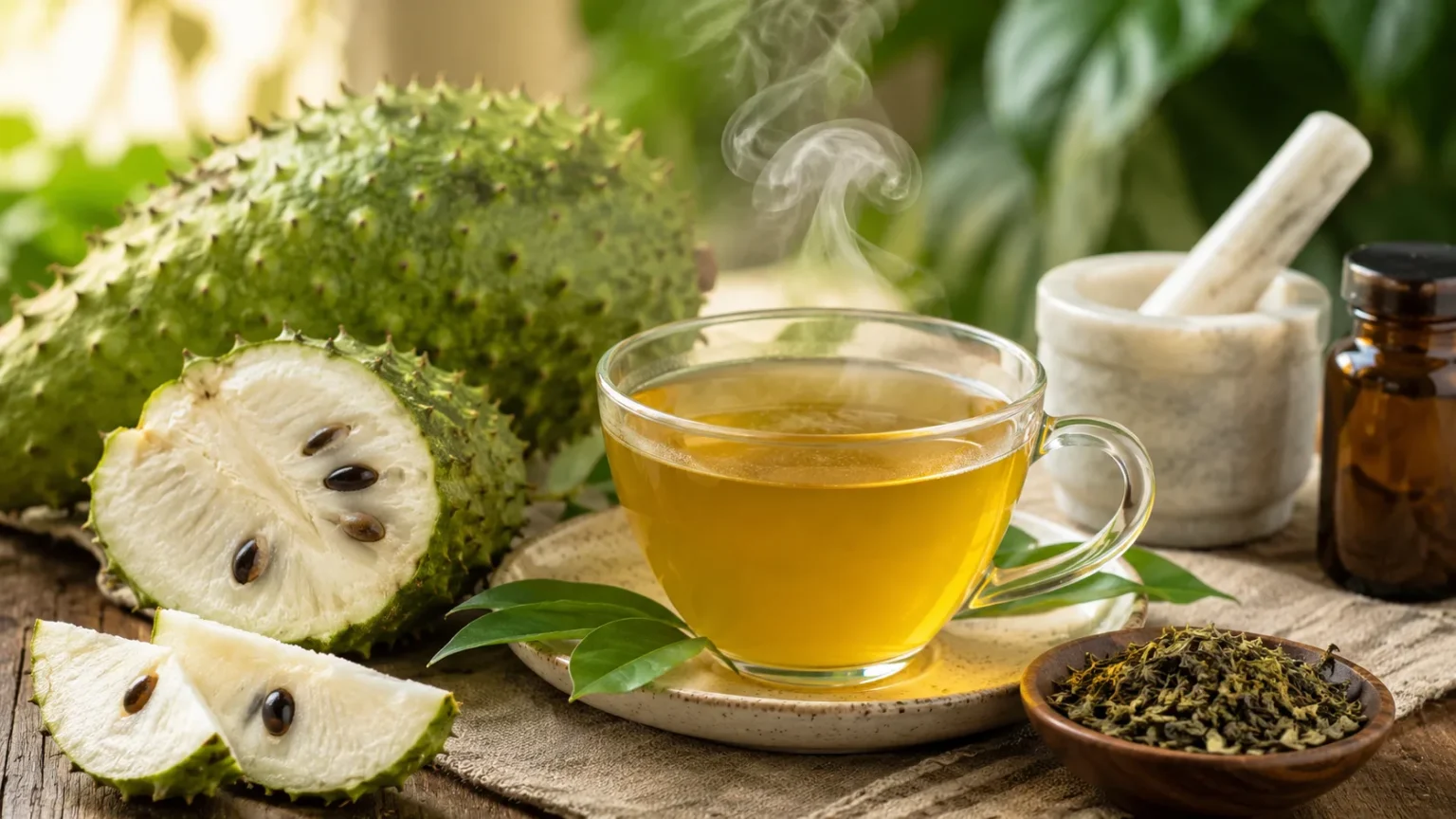
Soursop Tea: Benefits, Uses & Possible Side Effects
Soursop tea is an herbal drink usually prepared from the leaves of the Annona muricata tree, which also produces the tropical fruit known as soursop, graviola, or guanabana. The tea has a mild herbal flavor and a long history of traditional use for relaxation, digestion, inflammation, blood sugar, and general wellness. Interest has grown as laboratory research has identified antioxidants, alkaloids, and annonaceous acetogenins in the plant. However, many popular health claims go considerably further than current human evidence supports.
Soursop tea is especially controversial because some of the compounds being studied for potential biological benefits may also create safety concerns when consumed frequently or in concentrated forms. Annonacin and related acetogenins have demonstrated neurotoxic effects in experimental research, while epidemiological studies have raised concerns about heavy consumption of Annona products and neurological disorders. There is also no reliable evidence that soursop tea cures cancer despite widespread online claims. Understanding the difference between promising laboratory findings and proven human benefits is therefore essential before making soursop leaf tea a daily habit.
What Is Soursop Tea?
Soursop tea is generally made by steeping dried or fresh leaves from the Annona muricata tree in hot water. The same tree produces the large green fruit commonly called soursop, graviola, guanabana, or Brazilian paw paw. The tree grows naturally in tropical and subtropical regions and has been incorporated into traditional medicine across parts of Africa, the Caribbean, South America, and Southeast Asia. Different cultures use the fruit, leaves, bark, roots, and seeds for different purposes.
Most commercial soursop tea bags are made from dried leaves rather than the fruit itself. This distinction is important because soursop fruit and soursop leaf tea do not contain identical concentrations of plant chemicals. The leaves contain alkaloids, phenolic compounds, flavonoids, and annonaceous acetogenins, including compounds that can affect cellular energy production. The exact chemical profile varies according to plant variety, growing conditions, processing, storage, and brewing strength. As a result, one cup of tea may not be chemically equivalent to another.
Traditional preparations have been used for conditions ranging from fever and digestive complaints to high blood pressure, diabetes, inflammation, and infections. These historical uses have encouraged researchers to investigate Annona muricata extracts in laboratory and animal studies. Reviews describe antioxidant, antimicrobial, anti-inflammatory, metabolic, and cytotoxic activities among the plant’s experimentally observed properties. However, traditional use does not prove that a tea reliably treats any of these medical conditions in people.
Soursop tea is also different from soursop juice. Juice is produced from the fruit pulp and therefore contributes carbohydrates, calories, and nutrients that are largely absent from an unsweetened leaf infusion. One randomized human study investigating blood pressure actually used soursop fruit juice rather than leaf tea. Results from that research should not automatically be applied to tea brewed from leaves. The part of the plant and the preparation method matter whenever health effects are discussed.
The safest way to think about soursop tea is as a biologically active herbal beverage rather than an ordinary caffeine-free tea with no potential effects. It contains compounds scientists find interesting, but human research remains limited and no universally safe therapeutic dose has been established. A formal risk assessment of Annona muricata supplements concluded that insufficient long-term safety data prevent researchers from defining a safe intake level. This uncertainty becomes increasingly relevant when tea is consumed strongly or every day.
What Does Soursop Tea Contain?
Soursop leaves contain a complex mixture of naturally occurring plant chemicals rather than one single active ingredient. Scientific analyses have identified phenolic compounds, flavonoids, alkaloids, essential-oil components, and annonaceous acetogenins. These compounds have different biological activities and may behave differently depending on concentration. Brewing leaves in hot water extracts only some of them, and the final amount depends on how many leaves are used and how long they are steeped. This variability makes precise dosing difficult.
Annonaceous acetogenins are among the compounds that receive the greatest scientific attention. They have demonstrated strong effects on cellular energy pathways, including inhibition of mitochondrial complex I. This activity partly explains why extracts can damage certain cancer cells in laboratory experiments. Unfortunately, the same basic mechanism has also raised concerns about injury to normal nerve cells. Annonacin, one well-studied acetogenin, has produced neurotoxic effects in experimental models.
Soursop leaves also contain antioxidant compounds capable of interacting with reactive molecules in laboratory testing. A recent 2026 food-science study examining manufactured soursop tea described measurable bioactive compounds and antioxidant activity and investigated how those compounds changed during storage. This confirms that processed tea retains chemically active plant constituents. However, antioxidant measurements performed on a beverage do not tell us whether drinking that beverage prevents disease in humans.
Another important point is that the nutritional value of soursop fruit should not be confused with the nutritional value of its leaf tea. The fruit contains carbohydrate, fiber, vitamin C, potassium, and other nutrients, while a filtered unsweetened leaf infusion contains very little fiber and usually very few calories. Claims that soursop tea is a “great source of fiber” are therefore misleading. The fiber remains largely in the solid plant material rather than dissolving into the tea.
Commercial soursop teas may also contain ingredients beyond pure Annona muricata leaves. Manufacturers sometimes combine soursop with green tea, ginger, lemongrass, cinnamon, hibiscus, or sweeteners. Those ingredients can change caffeine content, flavor, medication interactions, and health effects. Anyone evaluating a tea for health reasons should read the complete ingredient list rather than assuming every product labeled “soursop tea” has the same composition.
Potential Antioxidant Benefits of Soursop Tea
Antioxidant activity is one of the most commonly discussed potential soursop tea benefits. Extracts from Annona muricata contain phenolic compounds and other phytochemicals capable of neutralizing or influencing reactive molecules in laboratory experiments. These findings have generated interest in the plant’s possible role in managing oxidative stress. Oxidative stress is involved in normal aging as well as many chronic diseases. However, antioxidant activity in a test tube cannot demonstrate that drinking tea prevents those conditions.
Research reviews consistently describe antioxidant effects across different soursop extracts. Leaves appear to contain several plant compounds capable of participating in antioxidant pathways, although concentrations vary greatly according to extraction method. A cup brewed with water is not equivalent to the concentrated alcohol or laboratory extracts frequently studied by researchers. This distinction is often lost when laboratory findings are translated into consumer health claims.
Antioxidants are also widely available from foods with much stronger nutritional evidence. Berries, vegetables, legumes, nuts, whole grains, coffee, cocoa, and conventional teas provide diverse polyphenols and nutrients. Someone does not need soursop tea specifically to obtain antioxidant compounds. The most consistently supported approach is eating a varied plant-rich diet rather than relying on a single herbal beverage marketed as a concentrated antioxidant remedy.
The amount consumed matters as well. Increasing an herbal product because it contains antioxidants does not necessarily increase health benefits indefinitely. Soursop contains biologically active acetogenins in addition to potentially beneficial phytochemicals, meaning higher exposure could also increase unwanted effects. This is one reason antioxidant claims should never be interpreted as permission to drink highly concentrated soursop leaf tea several times per day.
Soursop tea can therefore provide plant compounds with antioxidant activity, but that benefit should remain in perspective. Current human evidence does not demonstrate that drinking it prevents cancer, heart disease, dementia, or other chronic conditions through antioxidant effects. People who enjoy the tea occasionally may appreciate its flavor and plant chemistry without expecting medical results. Regular heavy consumption deserves greater caution because long-term safety has not been adequately established.
Soursop Tea and Inflammation
Soursop leaves have long been used traditionally for inflammatory complaints. Laboratory studies have found that Annona muricata extracts can influence inflammatory pathways and signaling molecules, which has encouraged interest in arthritis, pain, and other inflammation-related conditions. Researchers have identified several potentially active compounds within leaf extracts. These results make the plant scientifically interesting but do not prove that drinking soursop tea provides the same concentration or clinical effect.
Inflammation itself is also much more complicated than many wellness claims suggest. Short-term inflammation is a normal and necessary part of immune defense and tissue repair. Chronic inflammation may contribute to certain diseases, but its causes differ widely. Obesity, smoking, infections, autoimmune disorders, sleep problems, metabolic disease, and other factors can all influence inflammatory pathways. A single tea cannot simply “flush inflammation” from the body.
People sometimes drink soursop tea for arthritis or joint pain because of these anti-inflammatory claims. Human clinical evidence is not strong enough to recommend soursop tea as a treatment for osteoarthritis, rheumatoid arthritis, gout, or other joint disorders. These conditions have different causes and require different management. Persistent swelling, warmth, stiffness, or joint pain should be properly evaluated rather than repeatedly treated with herbal remedies.
There may still be value in enjoying caffeine-free herbal drinks as part of an overall healthy routine. Replacing heavily sweetened beverages with an unsweetened herbal infusion can reduce added sugar intake, while a warm beverage may feel relaxing. These practical effects should be distinguished from pharmacological treatment of inflammation. A drink can contribute positively to a dietary pattern without needing to act as medicine.
Claims that soursop tea works like an anti-inflammatory drug should therefore be treated skeptically. Research has not established an effective therapeutic dose, long-term benefits, or safety for inflammatory diseases. Concentrated extracts may also expose users to far more acetogenins than ordinary food use. Anyone taking medication for arthritis or inflammatory disease should discuss regular soursop supplementation with their healthcare professional before using it as complementary therapy.
Soursop Tea for Digestion
Soursop leaves have been used traditionally for stomach discomfort and digestive complaints. A warm herbal beverage may also feel soothing after meals, which can reinforce its reputation as a digestive tea. Laboratory and animal research has explored gastroprotective and anti-ulcer properties of Annona muricata extracts. However, evidence demonstrating that soursop leaf tea reliably improves indigestion, reflux, ulcers, or bowel problems in humans is limited.
One common misunderstanding is that soursop tea provides the same digestive fiber found in soursop fruit. The fruit pulp contains fiber, but brewed leaf tea does not contain meaningful quantities unless solid plant material is consumed. Tea may contribute to fluid intake, but it should not replace vegetables, fruit, legumes, and whole grains when improving fiber intake is the goal. Those foods provide much more reliable support for bowel regularity.
Some people drink the tea when experiencing bloating or gas. The warmth and fluid may provide temporary comfort, but chronic bloating can result from many conditions including constipation, lactose intolerance, irritable bowel syndrome, celiac disease, or other digestive disorders. Persistent symptoms should not be repeatedly masked with herbal products without identifying the cause. The same applies to recurring abdominal pain or significant changes in bowel habits.
Strong preparations may actually create gastrointestinal problems for certain users. Herbal products can cause nausea, stomach discomfort, or changes in bowel movements, especially when consumed on an empty stomach or in concentrated amounts. The fact that soursop is a natural plant does not guarantee that every part of the plant will feel gentle on the digestive tract. Starting with occasional moderate intake is more sensible than using concentrated preparations.
Soursop tea should therefore be viewed mainly as an herbal beverage rather than a proven digestive treatment. Someone who enjoys a mild cup after meals may continue to do so cautiously if no adverse effects occur. However, severe abdominal pain, vomiting, blood in stool, unexplained weight loss, or persistent diarrhea or constipation requires medical attention. These symptoms deserve diagnosis rather than stronger herbal tea.
Soursop Tea and Blood Sugar
Soursop is frequently promoted online as a natural way to lower blood sugar. Laboratory and animal studies have reported glucose-lowering effects from certain Annona muricata extracts, which creates a biological basis for further research. Memorial Sloan Kettering also notes that graviola may lower blood sugar and specifically advises people taking glucose-lowering medication to discuss its use with a healthcare provider.
Human evidence remains much less developed. There is not enough high-quality clinical research showing that drinking soursop leaf tea reliably reduces fasting glucose, A1C, or diabetes complications. Results from animals receiving concentrated extracts cannot be converted directly into recommendations for humans. The amount of active plant material in ordinary tea is also much less standardized than a laboratory preparation.
This distinction matters for people living with diabetes. Replacing prescribed medication with soursop tea can allow glucose levels to remain dangerously uncontrolled, increasing long-term risks to the kidneys, eyes, nerves, blood vessels, and heart. A natural remedy should never replace medication unless the prescribing healthcare professional specifically changes the treatment plan. Diabetes management depends on measurable glucose results rather than whether someone feels better after drinking a tea.
There is also a potential interaction concern. If soursop genuinely lowers blood glucose, combining concentrated tea or supplements with insulin or glucose-lowering medication could theoretically make glucose fall lower than intended. Symptoms of hypoglycemia can include shakiness, sweating, confusion, weakness, and rapid heartbeat. The magnitude of this interaction has not been well defined in clinical studies, which makes professional monitoring especially important.
For someone without diabetes, drinking unsweetened herbal tea instead of a sugary drink can still support healthier glucose management indirectly. This benefit comes from avoiding added sugar rather than a guaranteed medicinal action of soursop leaves. People interested in better blood sugar control will obtain more established benefits from dietary quality, regular activity, appropriate weight management, adequate sleep, and prescribed treatment when necessary.
Soursop Tea and Blood Pressure
Soursop is also traditionally associated with lowering blood pressure. Animal studies and experimental research have reported hypotensive effects, and Memorial Sloan Kettering advises caution for people already taking blood-pressure-lowering medicines. This suggests that the plant may contain compounds capable of affecting cardiovascular physiology. However, clinical evidence specifically involving soursop leaf tea remains limited.
One randomized controlled human trial provides some relevant evidence, but it used soursop fruit juice rather than tea. Researchers followed 143 adults with prehypertension and provided the treatment group with two 100-gram servings of soursop juice daily for three months. Systolic blood pressure decreased relative to the control group in certain analyses. These results should not automatically be attributed to leaf tea because fruit and leaves contain different chemical and nutritional profiles.
People with hypertension should therefore avoid replacing proven treatment with soursop tea. Blood pressure can remain dangerously high without noticeable symptoms, increasing the risk of stroke, heart disease, kidney damage, and other complications. Prescription antihypertensive medicines have standardized doses and extensive clinical evidence. A homemade tea with uncertain concentrations cannot provide the same predictable treatment.
Potential additive effects are also relevant. Someone taking blood pressure medication who begins drinking strong soursop tea regularly could theoretically experience more blood-pressure reduction than expected. Symptoms of low blood pressure may include dizziness, weakness, blurry vision, or fainting. Memorial Sloan Kettering specifically recommends discussing graviola with healthcare providers when antihypertensive medication is being used.
For general heart health, the broader dietary pattern remains more important than soursop tea. Vegetables, fruits, legumes, whole grains, nuts, adequate potassium, reduced excess sodium, regular physical activity, and appropriate medical treatment have considerably stronger evidence. An occasional cup of herbal tea can fit into that lifestyle, especially when unsweetened. It should not be marketed as a natural replacement for blood pressure management.
Does Soursop Tea Boost the Immune System?
Soursop tea is often advertised as an “immune-boosting” beverage because the plant contains antioxidant and antimicrobial compounds. Laboratory studies have indeed reported biological activity involving microorganisms and immune-related pathways. However, the phrase “boost immunity” is scientifically vague. A healthy immune system requires coordinated responses rather than constant stimulation, and there is no good evidence that soursop tea makes healthy people significantly more resistant to infections.
Nutrition plays an important role in normal immune function, but leaf tea provides very little protein, energy, zinc, iron, or many of the nutrients the immune system needs. Soursop fruit contains more conventional nutrients than leaf tea because the pulp provides vitamin C and other dietary components. Even then, eating one fruit cannot compensate for an otherwise inadequate diet. Overall nutrition matters more than a single “immune” food or beverage.
Laboratory antimicrobial activity is similarly easy to overinterpret. A plant extract that inhibits bacteria or viruses in a dish does not automatically treat infections inside the human body. Concentrations required in experiments may be far greater than those obtained by drinking tea. The immune system, metabolism, digestive tract, and distribution of compounds throughout the body further change how substances behave after consumption.
Someone with a cold or mild respiratory illness may still enjoy a warm soursop tea for comfort and hydration. That is different from claiming the beverage kills the virus responsible for the illness. Rest, fluids, appropriate symptom treatment, and medical evaluation when symptoms are serious remain the practical approach. Soursop tea should not delay antivirals, antibiotics, or other treatments when those medicines are medically indicated.
The same reasoning applies to chronic immune conditions. People with autoimmune diseases, weakened immune systems, organ transplants, or cancer treatment should discuss herbal supplements with their medical team because interactions may matter. “Natural immune support” can sound harmless while concealing substantial pharmacological uncertainty. Reliable treatment decisions require much more than antioxidant or antimicrobial laboratory results.
Soursop Tea and Cancer Claims
Cancer treatment is one of the most controversial claims surrounding soursop. Laboratory studies show that certain Annona muricata extracts and acetogenins can damage cancer cells or interfere with their energy metabolism. These findings are scientifically interesting and may help researchers investigate future compounds. They do not prove that drinking soursop tea treats cancer in humans. Cancer Research UK states that there is not enough reliable evidence supporting graviola as a cancer treatment.
The difference between laboratory research and clinical medicine is critical. Researchers can expose cancer cells directly to concentrated chemicals in a dish at doses that may be impossible or unsafe to achieve in a person. Human bodies absorb, metabolize, distribute, and eliminate compounds in complex ways. A substance capable of damaging cancer cells can also harm healthy tissue. Effective cancer treatment requires proving both meaningful clinical benefit and acceptable safety in carefully designed human trials.
A small randomized study did investigate Annona muricata leaf extract in 28 people who had undergone surgery for colorectal cancer. Serum from participants taking the extract showed greater cytotoxic activity against colorectal cancer cells in laboratory testing. However, the study did not demonstrate that the extract shrank tumors, prevented recurrence, extended survival, or cured cancer. The researchers specifically called for further study.
Memorial Sloan Kettering likewise states that graviola is promoted as an alternative cancer therapy but that there is no proof of benefit for cancer patients. This matters because abandoning surgery, chemotherapy, radiotherapy, immunotherapy, hormonal treatment, or targeted medicine in favor of soursop can allow cancer to progress. Herbal products may also interact with medications or affect medical testing.
The responsible conclusion is clear: soursop tea should not be described as a cancer cure. People undergoing cancer treatment who want to drink it should discuss the product with their oncology team, particularly when using concentrated leaves, extracts, capsules, or several cups daily. Complementary products are safest when they complement proven medical treatment rather than replace it.
How to Make Soursop Tea
Commercial soursop tea bags are the simplest option because the quantity of dried leaves is already portioned. Place a tea bag in a cup, add hot water, and follow the manufacturer’s recommended steeping time. Avoid assuming that steeping several bags for a long period will create more health benefits. Stronger preparation simply increases exposure to plant compounds, including those whose long-term safety remains uncertain.
Loose dried soursop leaves can also be brewed, although serving size is less standardized. The leaves are usually placed in hot water and steeped before the solids are removed. Homemade recipes online vary enormously, with some recommending only a small amount and others boiling many leaves for extended periods. Because no scientifically established therapeutic dose exists, highly concentrated recipes should be approached cautiously rather than treated as more effective.
Fresh leaves introduce additional concerns involving cleanliness, plant identification, and pesticide exposure. Anyone harvesting their own leaves needs to know that the tree is truly Annona muricata and that the leaves have not been treated with unsafe chemicals. Store-bought tea from a traceable producer provides more information about processing and ingredients. Regardless of source, visibly moldy, damaged, or contaminated leaves should not be brewed.
Soursop tea can be served warm or chilled. Lemon, ginger, cinnamon, or another culinary ingredient may be added for flavor, although every addition changes the beverage. People monitoring glucose should be particularly mindful of honey, sugar, syrups, or sweetened condensed milk. Plain soursop leaf tea itself is typically very low in calories, but heavily sweetening it can turn it into a significant source of added sugar.
The key preparation principle is moderation rather than concentration. There is no evidence that boiling leaves for hours or drinking increasingly dark tea improves medical outcomes. Because acetogenin exposure is part of the safety concern, seeking maximum extraction may actually be counterproductive. Soursop tea should be treated as an occasional herbal beverage rather than a homemade pharmaceutical preparation.
How Much Soursop Tea Should You Drink?
There is currently no medically established dose of soursop tea that has been proven both effective and safe for daily long-term consumption. This is important because many online sources confidently recommend one, two, or three cups per day without citing human safety research. A formal scientific risk assessment of Annona muricata supplements concluded that the available evidence was insufficient to establish a safe intake level.
Occasional consumption is very different from drinking concentrated tea every day for months or years. Neurotoxicity concerns surrounding annonacin and related compounds are particularly relevant to cumulative exposure. Researchers studying Caribbean populations have investigated whether repeated consumption of Annonaceae foods and herbal infusions contributes to unusual forms of parkinsonism. These studies cannot establish an exact dangerous dose, but they provide enough concern to challenge the idea that unlimited daily use is clearly safe.
People sometimes assume that if one cup is potentially healthy, four cups must provide four times the benefits. Herbal products rarely work in such a simple dose-response relationship. Greater intake can increase both active compounds and unwanted substances. Without a defined safe exposure, excessive use creates uncertainty without offering proven additional benefit.
Someone who occasionally enjoys commercially prepared soursop tea and has no relevant health problems may choose to treat it like other specialty herbal beverages. However, a person planning regular medicinal use should first speak with a healthcare professional, particularly if they take medication. The conversation becomes more important when the tea is highly concentrated or accompanied by soursop capsules and extracts.
Long-term daily use is difficult to recommend because safety data are inadequate. People with neurological disorders, low blood pressure, diabetes, kidney or liver disease, pregnancy, or complicated medication regimens have additional reasons to avoid self-prescribed high intake. When the benefits are uncertain and a safe dose has not been established, moderation is the more defensible approach.
Soursop Tea Side Effects
Reliable data describing the frequency of side effects from ordinary soursop tea are limited. Some users may experience no noticeable problems, while others can develop digestive discomfort, nausea, dizziness, or other symptoms. The absence of common short-term symptoms does not prove that frequent long-term use is harmless. Some safety concerns involve cumulative neurological exposure that would not necessarily create obvious effects after one cup.
The most significant concern involves neurotoxicity. Annonacin, an acetogenin found in soursop, inhibits mitochondrial complex I and has damaged dopamine-producing neurons in laboratory research. Experimental animal work has also shown that annonacin can reach the brain and produce neurodegenerative changes. These findings do not establish that an occasional cup causes Parkinson’s disease, but they provide a biologically plausible reason for avoiding heavy chronic exposure.
Human observational research has strengthened the concern. A 2022 study involving 180 Caribbean patients with degenerative parkinsonism found that consumption of Annonaceae products was associated with greater disease severity and cognitive deficits. The association included herbal tea consumption. Importantly, this study involved people who already had degenerative parkinsonism and does not prove that soursop tea causes Parkinson’s disease in otherwise healthy consumers.
Another safety review examining Annona muricata leaf extract found mixed evidence, including both potentially protective effects and neurotoxic findings. Researchers emphasized that animal doses cannot be translated directly into human risk. This uncertainty is precisely why definitive claims that soursop tea is either completely toxic or completely safe are inappropriate. More high-quality long-term human research is needed.
Anyone noticing tremor, unusual stiffness, balance problems, worsening movement symptoms, persistent numbness, or other neurological changes should not attempt to self-diagnose the cause. These symptoms can result from many conditions and require professional assessment. People who already have Parkinson’s disease, atypical parkinsonism, or another movement disorder should be particularly cautious about repeated soursop exposure and discuss herbal products with their neurologist.
Can Soursop Tea Affect the Liver or Kidneys?
The liver and kidneys help process and eliminate many compounds consumed through foods, medications, and herbal supplements. Concerns about soursop and these organs arise mainly from preclinical research and reports involving frequent or concentrated exposure rather than strong clinical evidence from ordinary tea consumption. Cancer Research UK cautions that frequent graviola use may potentially damage the kidneys and liver.
This does not mean that one cup of soursop tea automatically causes organ damage. The actual risk likely depends on concentration, frequency, plant part, individual susceptibility, medications, and overall health. Unfortunately, these variables have not been studied sufficiently to establish a clear threshold. That uncertainty is another reason daily concentrated use should not be treated as proven safe.
People with existing kidney disease should be particularly cautious about unregulated supplements or strong herbal teas. Reduced kidney function can alter how the body handles various compounds, while herbal products may contain contaminants or undeclared ingredients. Someone receiving dialysis or specialist kidney care should discuss any regular herbal remedy with the clinical team managing their treatment.
The same applies to liver disease. People with hepatitis, fatty liver disease, cirrhosis, elevated liver enzymes, or medication-related liver concerns should avoid assuming that plant products are automatically liver-friendly. Herbal supplements are a recognized source of liver injury in general, even when the individual product has a long history of traditional use. Medical monitoring is more reliable than “liver detox” marketing.
Warning symptoms such as yellowing of the skin or eyes, dark urine, persistent vomiting, unusual swelling, markedly reduced urination, or severe fatigue require medical assessment. Soursop tea should not be used to “clean” the liver or kidneys after these symptoms develop. These organs already perform the body’s detoxification functions, and significant changes in their function require diagnosis rather than stronger herbal preparations.
Soursop Tea Drug Interactions
Blood pressure medication is one of the clearest interaction concerns. Because soursop may lower blood pressure, combining concentrated preparations with antihypertensive drugs could theoretically produce excessive reductions. Memorial Sloan Kettering specifically advises people taking blood-pressure-lowering medicines to talk with their healthcare provider before using graviola.
Diabetes medications deserve similar caution. Laboratory and animal data suggest glucose-lowering effects, and Memorial Sloan Kettering warns that taking graviola alongside medicines that lower blood sugar may not be safe. People using insulin, sulfonylureas, or other glucose-lowering treatments should not begin concentrated soursop supplementation without monitoring and professional guidance.
Cancer treatment creates a broader interaction concern because chemotherapy, targeted treatments, immunotherapy, hormonal therapy, and other medicines differ greatly in how they are metabolized. There is not enough evidence to guarantee that soursop extracts do not alter treatment effects or side effects. Cancer Research UK recommends discussing complementary therapies with the medical team rather than taking them independently.
Memorial Sloan Kettering also advises avoiding graviola around certain medical imaging procedures because it may affect test results, including PET imaging. This is a useful reminder that herbal products can interact with healthcare in ways unrelated to conventional drug-drug interactions. Patients should tell clinicians about teas, supplements, powders, and extracts rather than reporting only prescription medication.
The most sensible strategy is to provide a pharmacist or doctor with the exact product label when regular soursop tea or supplements are being used. Combination teas may contain additional herbs with their own interactions. The more concentrated the product and the more medications someone takes, the more important this review becomes. Natural ingredients can have pharmacological effects precisely because they contain biologically active chemicals.
Who Should Avoid Soursop Tea?
People with Parkinson’s disease, atypical parkinsonism, or other significant movement disorders have strong reasons to avoid frequent soursop consumption unless their neurologist advises otherwise. Epidemiological and experimental research has raised concerns about annonaceous neurotoxins and degenerative neurological conditions. The evidence does not prove that occasional exposure causes Parkinson’s disease, but existing neurological illness shifts the risk-benefit calculation considerably.
People taking medication for diabetes or high blood pressure should also be cautious because soursop may enhance glucose- or blood-pressure-lowering effects. This does not necessarily mean that every person taking these medicines can never consume soursop fruit. The greater concern is frequent tea, extracts, or supplements intended to produce medicinal effects. A clinician can help decide whether monitoring or avoidance is appropriate.
Pregnant and breastfeeding individuals should avoid medicinal or concentrated soursop preparations because reliable safety data are lacking. Pregnancy is not an appropriate time to experiment with biologically active herbal products whose reproductive and neurological safety has not been adequately established. Culinary exposure to familiar foods and concentrated leaf tea are different situations. When uncertain, prenatal guidance should take priority over traditional recommendations.
People with significant liver or kidney disease should seek professional advice before using soursop tea regularly. Cancer Research UK notes potential concerns involving these organs with frequent graviola use. Individuals undergoing cancer treatment should likewise speak with their oncology team because soursop is not a proven anticancer therapy and may complicate treatment or testing.
Children should not be given concentrated soursop leaf tea as a daily medicinal beverage without pediatric guidance. Research establishing safe pediatric dosing does not exist, and children’s smaller body size can result in greater exposure relative to weight. A product marketed as an herbal wellness tea is not automatically appropriate for every age group. When evidence is limited, avoiding unnecessary exposure is usually the safer choice.
How to Choose Soursop Tea
Start by looking for a product that clearly identifies Annona muricata leaf as the ingredient. Labels that simply say “graviola blend” without showing quantities or other herbs make it difficult to understand what you are drinking. A simple product is especially helpful for anyone trying soursop for the first time because reactions are easier to connect to a specific ingredient.
Choose a manufacturer that provides traceable business information, lot numbers, expiration dates, and clear preparation instructions. Herbal teas can be affected by moisture, pesticides, microorganisms, and poor storage, so quality manufacturing matters. Extremely cheap products from unknown marketplace sellers may provide little accountability if contamination occurs. Attractive packaging cannot replace basic traceability and quality-control information.
Third-party testing can provide additional reassurance when available. Testing may evaluate pesticides, heavy metals, microorganisms, identity, or other contaminants depending on the laboratory. However, a generic “lab tested” statement does not reveal what was actually measured. Consumers interested in regular use can ask whether the company tests for contaminants and can provide a recent certificate corresponding to the product lot.
Avoid products making dramatic disease claims. A tea advertised as curing cancer, reversing diabetes, eliminating hypertension, or treating Parkinson’s disease is moving far beyond current clinical evidence. In particular, cancer-cure claims directly conflict with guidance from established cancer organizations. Exaggerated medical marketing should reduce confidence in a product rather than make it seem more effective.
Finally, remember that choosing a high-quality tea does not eliminate the intrinsic uncertainties surrounding soursop. A pure, uncontaminated Annona muricata product can still contain annonaceous acetogenins. Manufacturing quality can reduce contamination risks but cannot change the plant’s natural pharmacology. Product quality and biological safety are separate questions, and both matter when deciding whether regular use makes sense.
Conclusion
Soursop tea is an herbal beverage made primarily from the leaves of the Annona muricata tree. It contains a range of plant compounds, including polyphenols, alkaloids, and annonaceous acetogenins. Laboratory research has identified antioxidant, antimicrobial, anti-inflammatory, metabolic, and cytotoxic activities within soursop extracts. These findings help explain the considerable scientific and traditional interest surrounding the plant. They do not, however, establish soursop tea as a proven treatment for chronic disease.
Possible benefits involving blood sugar, blood pressure, inflammation, and digestion remain preliminary. One human randomized trial reported blood-pressure improvements with soursop fruit juice, but that cannot be assumed to prove the same effect from leaf tea. Other benefits are supported mainly by laboratory or animal studies rather than large clinical trials. Soursop tea should therefore complement a healthy lifestyle rather than replace evidence-based medical treatment.
Cancer claims require particular caution. Laboratory extracts can affect cancer cells, but Cancer Research UK states that reliable evidence does not show graviola works as a cancer treatment. A small human leaf-extract study did not establish tumor shrinkage, survival improvement, or a cancer cure. People undergoing cancer treatment should never stop proven therapy because of soursop marketing.
Safety is equally important. Annonacin and related compounds have demonstrated neurotoxic activity, while observational studies have linked Annonaceae consumption with neurological concerns in Caribbean populations. A 2022 study found herbal tea consumption associated with greater severity among people already living with degenerative parkinsonism. These findings do not mean one cup causes neurological disease, but they make heavy long-term consumption difficult to recommend.
Ultimately, occasional soursop tea may be enjoyed as an herbal beverage by some adults, but there is no established medicinal dose or proven safe long-term intake. Frequent concentrated use deserves caution, particularly for people with neurological disorders, diabetes, low blood pressure, liver or kidney disease, pregnancy, or complex medication regimens. Treat soursop as a biologically active plant with interesting research—not as a miracle cure disguised as tea.
FAQs About Soursop Tea
What is soursop tea?
Soursop tea is usually made by steeping leaves from the Annona muricata tree in hot water. The plant is also known as graviola, guanabana, and Brazilian paw paw.
What are the main benefits of soursop tea?
Soursop leaves contain plant compounds with antioxidant, anti-inflammatory, antimicrobial, and other activities in experimental studies. Strong human evidence proving major medical benefits from drinking the tea remains limited.
Is soursop tea good for inflammation?
Laboratory research suggests Annona muricata extracts can influence inflammatory pathways. There is not enough clinical evidence to recommend soursop tea as a treatment for arthritis or other inflammatory diseases.
Does soursop tea lower blood sugar?
Preclinical research suggests soursop may lower glucose, but strong human evidence for leaf tea is lacking. People taking diabetes medication should be cautious because additive glucose-lowering effects may be possible.
Can soursop tea lower blood pressure?
Soursop may have blood-pressure-lowering effects, although a notable human trial involved fruit juice rather than leaf tea. People taking antihypertensive medication should discuss regular soursop use with their healthcare provider.
Does soursop tea cure cancer?
No reliable evidence shows that soursop tea cures cancer. Laboratory studies are interesting, but established cancer organizations do not support graviola as an alternative cancer treatment.
Can soursop tea prevent cancer?
There is not enough human clinical evidence to conclude that soursop tea prevents cancer. Laboratory anticancer activity should not be interpreted as proven cancer prevention in people.
Is soursop tea safe to drink every day?
Long-term daily safety has not been established, and researchers have not identified a universally safe intake level for concentrated Annona muricata preparations. Frequent chronic use is therefore difficult to recommend.
Does soursop tea contain caffeine?
Pure soursop leaf tea is naturally caffeine-free. Combination products may contain black tea, green tea, or other caffeine-containing ingredients, so the complete label should always be checked.
Can soursop tea cause Parkinson’s disease?
Research does not prove that an occasional cup directly causes Parkinson’s disease. However, annonacin is neurotoxic experimentally, and heavy Annonaceae consumption has been associated with atypical parkinsonism and worsening disease severity in observational research.
What is annonacin?
Annonacin is an annonaceous acetogenin found in plants including soursop. It can inhibit mitochondrial complex I and has damaged dopamine-producing neurons in experimental research, which is why long-term high exposure raises concern.
Is soursop tea safe during pregnancy?
There is insufficient reliable evidence establishing the safety of medicinal soursop leaf tea during pregnancy. Pregnant individuals should avoid concentrated or regular medicinal use unless specifically advised by their healthcare professional.
Can I drink soursop tea with diabetes medicine?
Regular or concentrated use should be discussed with a healthcare professional because soursop may lower blood sugar and could potentially add to the effects of diabetes medication.
Can I drink soursop tea with blood pressure medicine?
Use caution. Soursop may lower blood pressure, potentially adding to the effects of antihypertensive medication and increasing the possibility of dizziness or excessively low blood pressure.
How many cups of soursop tea should I drink?
There is no scientifically established daily dose that has been proven both effective and safe for long-term use. Avoid assuming that online recommendations for several cups daily have been medically validated.
Is soursop fruit safer than soursop leaf tea?
Normal dietary consumption of soursop fruit is different from concentrated leaf tea or supplements. Memorial Sloan Kettering considers the fruit generally safe as food while recommending more caution with supplements and medicinal preparations.