


Phenol Peel: Benefits, Risks, Cost & Recovery
A phenol peel is one of the deepest and most intensive chemical skin-resurfacing treatments available. It uses phenol, often combined with croton oil in modern formulations, to remove damaged skin and trigger deep remodeling within the dermis. Unlike light “lunchtime” peels, a phenol peel can significantly improve deep wrinkles, severe sun damage, uneven pigmentation, and selected scars. The trade-off is substantial downtime and a much higher risk profile than superficial or medium-depth peels.
Because phenol can be absorbed through the skin and affect the heart, kidneys, nervous system, and other organs, this is not a treatment for home use or an ordinary spa procedure. Current dermatology literature emphasizes careful patient selection, controlled application, and medical monitoring by highly trained physicians. Recovery generally takes several weeks, while redness can last much longer. For properly selected patients, however, a single deep peel may produce dramatic results that remain visible for years.
What Is a Phenol Peel?
A phenol peel is a deep chemical peel designed to penetrate much farther into the skin than common glycolic, salicylic acid, or lighter TCA peels. Phenol, also called carbolic acid, causes controlled chemical injury that removes damaged surface layers and reaches the dermis. As healing occurs, new epidermal tissue develops and collagen remodeling can improve skin texture. Phenol peels are generally reserved for concerns that cannot be adequately treated with superficial resurfacing.
Modern deep peels are often referred to as phenol-croton oil peels. Croton oil helps determine how deeply the solution penetrates, while the concentration and application technique can be adjusted for different facial areas. Modern formulations often use lower concentrations than the classic Baker-Gordon peel developed decades ago. This allows experienced physicians to customize treatment rather than applying the same aggressive depth across the entire face.
A deep phenol peel primarily works through controlled destruction followed by regeneration. Phenol coagulates proteins within the epidermis and dermis, while the resulting wound-healing response stimulates production and remodeling of collagen. This can soften sharply etched lines and create substantial skin tightening compared with lighter chemical peels. Because the treatment intentionally produces a significant wound, however, careful wound care becomes essential during recovery.
Phenol peels are usually performed on the face rather than routinely used on the neck, chest, or other thinner areas. Different regions of skin heal differently, and aggressive peeling outside appropriate facial areas can increase the risk of scarring or unwanted pigment changes. Even within the face, an experienced physician may adjust treatment depth around the eyelids, mouth, cheeks, and jaw. Individualized technique is a major part of achieving a safer result.
A phenol peel should not be confused with over-the-counter chemical exfoliation. The American Academy of Dermatology warns that even some home chemical peels can produce serious injuries and recommends chemical peeling under the supervision of a licensed, trained provider. A deep peel goes much further and may require anesthesia, a surgical setting, dressings, and several follow-up visits. It should therefore be treated as a significant medical cosmetic procedure.
What Can a Phenol Peel Treat?
Deep facial wrinkles are among the strongest indications for a phenol peel. Lines around the mouth, sometimes called perioral or “smoker’s” lines, and deeply etched wrinkles elsewhere on the face may respond significantly because the peel reaches deeper collagen-containing layers. Superficial peels generally cannot produce comparable remodeling. For patients with advanced photoaging, the improvement can be much more noticeable after healing is complete.
Severe sun damage is another common reason doctors consider deep chemical resurfacing. Years of ultraviolet exposure can create roughness, mottled pigmentation, fine and deep wrinkles, and a leathery skin texture. A phenol peel removes heavily damaged surface tissue and stimulates regeneration underneath. The American Society of Plastic Surgeons lists sun-damaged skin and deeper wrinkles among conditions for which deep facial chemical peeling may be appropriate.
Selected acne scars may also improve, particularly when texture and depressed scarring are part of the concern. Chemical resurfacing encourages collagen remodeling that can soften transitions between scarred and surrounding skin. However, not every acne scar responds equally well to peeling. Ice-pick scars, rolling scars, and boxcar scars may require combinations of subcision, punch techniques, fillers, lasers, or other treatments instead.
Uneven pigmentation and blotchy facial appearance can sometimes improve after deep resurfacing, but pigment treatment requires exceptional caution. Phenol can permanently lighten treated skin and reduce its ability to tan normally. The final color may also contrast with untreated skin around the hairline or jaw. For this reason, pigment goals must be discussed carefully before treatment rather than assuming that deeper peeling always produces a more even complexion.
Phenol-croton oil peels have also been used in selected patients with certain precancerous sun-related changes, although evaluation by a dermatologist remains essential. Suspicious lesions should never simply be peeled without first determining whether they could represent skin cancer. A cosmetic resurfacing procedure does not replace biopsy or appropriate cancer treatment. Any new, changing, bleeding, or unusual lesion should be assessed before cosmetic peeling is planned.
Benefits of a Phenol Peel
The greatest benefit is the depth of rejuvenation that can be achieved from a single procedure. Light chemical peels usually require a series of treatments, while a deep phenol peel can create substantial change after one recovery period. Deep wrinkles can become softer, skin texture can appear smoother, and severe photoaging can improve. A 2024 clinical series of phenol-croton oil treatments reported marked improvement in treated wrinkles and acne scars.
Collagen remodeling is another important benefit. Deep chemical injury stimulates a prolonged wound-healing response that encourages new collagen formation and changes within the dermal framework. This can create visible tightening and smoothing beyond the simple removal of surface pigmentation. The effect is one reason deep phenol resurfacing can outperform gentle exfoliation when wrinkles are strongly etched into the skin.
Results can also be long-lasting. ASPS states that a single deep chemical peel can produce dramatic results that may remain visible for as long as about 10 years. That does not mean the skin stops aging, and new sun damage can still develop. Genetics, smoking, ultraviolet exposure, skincare, and normal aging all influence how long someone remains satisfied with the improvement.
A phenol peel can potentially address several aging concerns at the same time. Instead of separately treating fine lines, rough texture, mottled discoloration, and deeper wrinkles, carefully selected deep resurfacing may improve several features in one procedure. This can make it attractive to patients with advanced photoaging who want a substantial change. The benefit must still be weighed against weeks of downtime and potentially serious complications.
For the right patient, another advantage is that deep peeling is generally not something that needs to be repeated regularly. The AAD notes that a person can have only one deep peel, unlike superficial and medium peels that may be repeated. This reflects both the intensity and longevity of deep resurfacing. The goal is therefore a major one-time treatment rather than an ongoing series of increasingly aggressive peels.
Phenol Peel Risks and Side Effects
Redness, swelling, crusting, peeling, and significant sensitivity are expected after a phenol peel rather than unusual complications. The skin develops a controlled wound that needs time to rebuild its protective barrier. Swelling may remain noticeable for approximately two weeks, while redness can persist for several weeks or even months. Patients need to be psychologically prepared for looking dramatically different during the early stages of healing.
Permanent or long-lasting pigment change is one of the most important cosmetic risks. Deep phenol treatment may lighten the skin substantially, and treated skin may lose some of its normal ability to tan. Visible demarcation between treated and untreated skin is possible. Pigment complications require especially careful consideration in patients with darker or more reactive skin tones because treatment-induced color changes may be difficult or impossible to correct.
Scarring is uncommon when appropriately performed but can be serious when it occurs. Hypertrophic scars and keloids have been reported, particularly after excessive depth, poor healing, infection, or treatment of less suitable areas. A history of abnormal scarring should always be discussed during consultation. AAD and ASPS both emphasize following wound-care instructions carefully because scratching, premature makeup use, poor sun protection, and inadequate care can increase scarring risk.
Infection is another potential complication because the protective epidermal barrier is temporarily disrupted. Bacterial infections can occur, and previous herpes simplex infections may reactivate after resurfacing. Physicians frequently prescribe antiviral medication around medium or deep peeling when indicated. Patients should immediately report increasing pain, pus, spreading redness, fever, or other signs that suggest infection rather than normal healing.
Milia, acne-like eruptions, prolonged redness, contact dermatitis, eye irritation, and delayed healing have also been described. Rare complications can produce permanent cosmetic changes rather than temporary inconvenience. A 2024 review of irresponsible phenol-peel use highlighted risks including ectropion, keloids, facial scarring, and systemic toxicity. This risk profile is why provider qualifications matter far more than finding the lowest price.
Heart and Systemic Risks of Phenol
Phenol differs from many other peel agents because meaningful amounts can be absorbed through the skin. Once absorbed, phenol can enter the circulation and affect organs beyond the treated area. Cardiac arrhythmias are among its best-known systemic complications. Modern medical protocols therefore control the amount and pace of application rather than rapidly covering the entire face with a high-strength solution.
A 2025 review of phenol in dermatology emphasized that rapid skin absorption can lead to serious complications including cardiac arrhythmias, renal failure, neurotoxicity, and multiple-organ failure when exposure is excessive or technique is inappropriate. Fatal poisoning from cutaneous phenol exposure has also been reported historically and in contemporary literature. These are rare but potentially catastrophic complications.
The heart risk helps explain why deep facial treatment may be divided into smaller sections with timed intervals between them. AAD notes that during a deep peel, physicians treat small areas at a time partly to limit effects on the heart and lungs. Appropriate monitoring, hydration, patient selection, and careful dosing can reduce risk. These safety measures cannot be reproduced responsibly in a home bathroom or ordinary beauty salon.
People with known heart disease require especially careful assessment, and some may not be suitable candidates at all. ASPS specifically notes that phenol poses a special concern for individuals with heart disease and advises patients to disclose any cardiac history. Kidney and liver function can also matter because systemic phenol is metabolized and eliminated through these organs. A complete medical history is therefore part of treatment planning.
Recent research also shows why both alarmism and casual reassurance should be avoided. A 2024 retrospective report examined cardiac safety over 22 years of full-face phenol-croton oil peeling, reflecting continued efforts to refine safer medical protocols. At the same time, newer reviews continue to emphasize phenol’s inherent cardiotoxic potential. The reasonable conclusion is not that phenol is always unsafe, but that it requires specialist-level expertise, screening, and monitoring.
Who Is a Good Candidate for a Phenol Peel?
A typical candidate has significant facial photoaging that is severe enough to justify the downtime and risk of deep resurfacing. This might include deeply etched wrinkles, prominent sun damage, rough texture, or selected scars. Someone with only mild discoloration or early fine lines can usually achieve their goals using less aggressive options. Choosing the deepest possible peel simply because it sounds more powerful is not good cosmetic decision-making.
Skin type and pigmentation are central considerations. Deep phenol peels can produce significant hypopigmentation, and the treated skin may remain lighter than surrounding areas. Patients with darker skin tones may face a greater risk of obvious pigment mismatch, although treatment decisions are individualized. A dermatologist experienced in chemical peeling across different skin tones should determine whether another resurfacing method would offer a safer balance of benefit and risk.
Patients also need to be medically healthy enough for the procedure and recovery. Significant heart disease, certain kidney or liver conditions, abnormal wound healing, active infection, or other medical issues may make phenol unsuitable. A history of cold sores, keloids, medications, previous cosmetic procedures, and isotretinoin use should be discussed. AAD recommends giving the dermatologist a complete medical, medication, supplement, and cosmetic-treatment history before peeling.
Realistic expectations matter just as much as physical health. A phenol peel can improve wrinkles and texture but cannot reproduce the structural lifting of a facelift. It will not permanently stop aging, remove every scar, or create completely poreless skin. Someone expecting perfection may remain dissatisfied even after an objectively strong result. Consultation should include realistic before-and-after examples from patients with similar skin concerns.
Candidates must also be willing to follow demanding aftercare instructions. Deep peeling requires wound cleansing, ointment, sun avoidance, medication when prescribed, and several follow-up appointments. Picking crusts, exposing healing skin to the sun, or applying cosmetics too early can increase complications. A patient who cannot commit to several weeks of recovery may be better suited to a less aggressive resurfacing procedure.
Who Should Avoid or Reconsider a Phenol Peel?
People with significant cardiac disease should generally approach phenol peeling with particular caution because systemic absorption can trigger rhythm disturbances. The final decision depends on the individual’s health, treatment area, technique, and physician assessment. A responsible practitioner should not perform a deep phenol procedure before reviewing cardiovascular history. Cosmetic benefits never justify ignoring a meaningful medical contraindication.
People with poor wound healing or a history of abnormal scarring may also be poor candidates. Keloids and hypertrophic scars can be difficult to treat once they form. Active bacterial, fungal, or viral skin infections should be addressed before resurfacing. Previous herpes simplex outbreaks are particularly important because deep peeling can reactivate cold sores unless preventive treatment is used when appropriate.
Some dermatologic conditions may interfere with regeneration after a deep peel. A 2025 phenol safety review highlights frontal fibrosing alopecia as a condition associated with impaired healing and an increased risk of scarring after phenol-croton treatment. This illustrates why skin evaluation must extend beyond simply examining wrinkles. Hair follicles and their stem cells play important roles in re-epithelialization after deep injury.
Patients with darker skin or a strong history of post-inflammatory pigment problems may need alternative treatments. Deep chemical injury can result in either excessive darkening or permanent lightening, although phenol is particularly associated with hypopigmentation. The AAD notes that skin-of-color patients require providers with specific expertise because permanent pigment problems can occur after chemical peels. The deeper the procedure, the more significant the discussion becomes.
Anyone seeking a phenol peel from an unlicensed provider, salon, social-media seller, or home kit should avoid the procedure entirely in that setting. Deep phenol is not simply a stronger version of a cosmetic facial. Systemic toxicity, scarring, infection, and permanent color changes require medical prevention and management. If a provider cannot explain monitoring, emergency readiness, aftercare, and medical screening, choose another provider.
What Happens During a Phenol Peel?
Treatment begins well before the phenol touches the skin. A dermatologist or plastic surgeon first examines the skin, reviews medical history, discusses pigmentation and scarring risk, and determines whether deep resurfacing is appropriate. Some patients follow a skin-preparation regimen for several weeks beforehand. ASPS notes that pretreatment for deep peels may continue for up to eight weeks and can include prescription retinoic acid in selected cases.
On treatment day, the face is carefully cleansed and prepared. Because deep peeling is painful, sedation and local anesthetic may be used, while some deep-peel protocols involve anesthesia in a surgical setting. The AAD states that deep peeling must be performed in a surgical setting. Exact anesthesia and monitoring choices vary according to the physician, formulation, treatment extent, and patient.
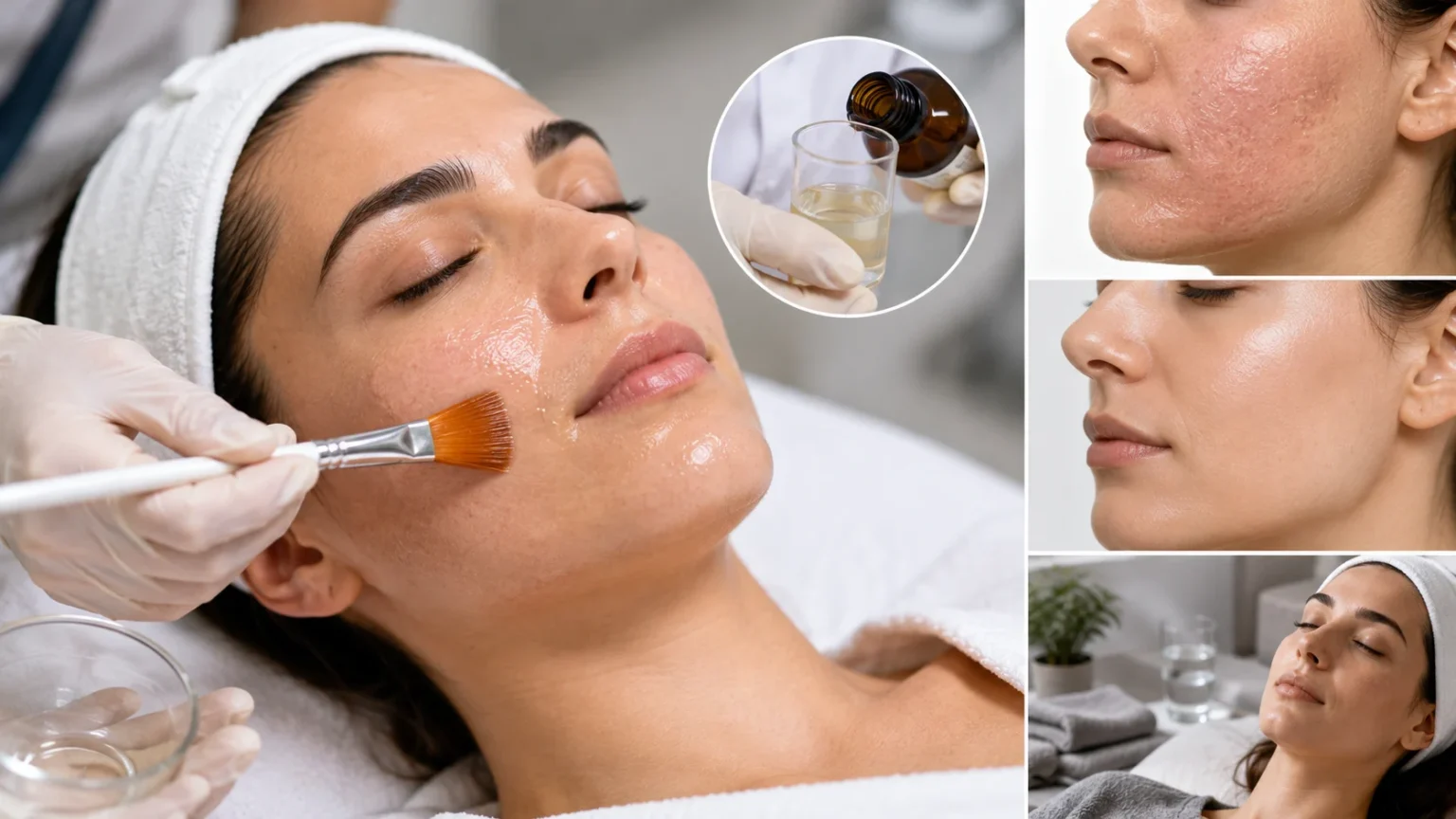
The phenol-containing solution is then applied carefully and gradually. Rather than rapidly coating the entire face, the physician may work through separate cosmetic units with controlled intervals. The skin develops a characteristic white appearance as proteins coagulate. Application depth may be modified around areas such as the eyes, mouth, cheeks, and jaw because skin thickness and healing characteristics are not uniform.
Once treatment is complete, the skin receives protective wound care. ASPS describes applying a thick ointment to reduce dryness and discomfort, while some techniques use tape or medicated gauze. The exact dressing varies with the formula and physician’s protocol. The patient receives detailed instructions because the next several days represent an active wound-healing period rather than ordinary post-facial flaking.
Patients normally need someone to drive them home after sedation and may require assistance during the initial recovery period. Pain medication and antiviral treatment may be prescribed according to individual need. The clinician also schedules close follow-up, particularly during the first week. Deep-peel safety extends beyond the procedure itself because early identification of infection, abnormal redness, or poor healing can prevent more serious complications.
Phenol Peel Recovery Timeline
The first few days are generally the most intense part of recovery. The face can become significantly swollen, red, raw, and uncomfortable as damaged skin begins to separate. Oozing, crusting, tightness, and a burning sensation may occur. Patients need to follow cleansing and ointment instructions precisely rather than trying to accelerate peeling by rubbing or removing skin. Healing tissue is fragile and easily injured.
During the first week, new epidermal tissue gradually forms as peeling and crusting continue. Depending on the protocol, protective ointment or dressings may remain part of daily care. Several follow-up visits may be needed to ensure normal healing. AAD recommends four to six daily soaks during deep-peel healing and ointment for approximately 14 days, although individual physicians may use different wound-care protocols.
Around the second and third weeks, most of the initial wound should have closed, but the new skin remains pink or red and highly sensitive. AAD gives a typical deep-peel healing period of approximately 14 to 21 days and states that makeup should generally wait at least 14 days. ASPS notes that many patients can return to work and some normal activities around two weeks after treatment.
Redness usually lasts much longer than the initial peeling stage. ASPS states that while swelling may largely settle around two weeks, redness can remain for as long as three months. Some people feel socially ready sooner, while others may prefer more recovery time because their skin remains visibly pink. Makeup should only be introduced after the treating physician confirms the surface has healed adequately.
Sun avoidance is crucial throughout recovery. AAD advises complete sun avoidance for approximately three to six months after a deep chemical peel, followed by consistent daily sun protection. Freshly resurfaced skin is particularly vulnerable to pigment changes and ultraviolet injury. Even an excellent procedure can develop an uneven result when aftercare and sun protection are neglected.
Phenol Peel Aftercare
The first rule of aftercare is to follow the treating physician’s wound-care instructions rather than generic routines found online. Different phenol-croton formulas and dressing techniques may require different cleansing schedules. Patients may need repeated soaks, prescribed ointments, moisturizers, and medications. Adding acids, retinoids, scrubs, vitamin C serums, or other active skincare before approval can irritate newly formed tissue.
Keeping healing skin adequately moisturized is particularly important. The AAD warns that allowing treated skin to become excessively dry and cracked can increase the risk of scarring. Ointments are often used early because they protect the damaged barrier and limit moisture loss. Once re-epithelialization is complete, the physician may transition the patient to a thick moisturizer.
Do not pick, scratch, or peel away crusts. Although loose skin may look tempting to remove, premature manipulation can tear immature tissue underneath. This increases the chance of infection, bleeding, scarring, and pigment changes. Significant itching, burning, or swelling should be reported rather than treated by scratching. The goal is controlled healing, not making the skin look normal as quickly as possible.
Sun protection eventually becomes a permanent part of preserving the result. Once the doctor permits sunscreen, use broad-spectrum protection consistently and supplement it with hats, shade, and sensible avoidance of strong ultraviolet exposure. Phenol-treated skin may not tan normally. Continued sun damage can also create new discoloration and wrinkles even after a technically excellent peel.
Patients should know which symptoms require urgent attention. Increasing rather than improving pain, pus, foul drainage, fever, spreading redness, abnormal scarring, severe swelling, chest symptoms, fainting, or irregular heartbeat are not routine cosmetic inconveniences. Contact the treating medical team promptly if recovery deviates from the expected course. A reputable practice should provide clear instructions for after-hours concerns.
How Much Does a Phenol Peel Cost?
Phenol peels cost considerably more than common superficial chemical peels because they require physician expertise, longer procedure time, intensive aftercare, and often anesthesia or a surgical facility. ASPS currently reports an average cost of approximately $1,829 for skin-resurfacing procedures such as chemical peels overall. That figure combines different depths and is not specific to full-face phenol treatment, which commonly costs more.
Patient-reported pricing gives a more phenol-specific but less standardized picture. RealSelf currently lists an average reported phenol-peel cost of about $4,717, with submitted prices ranging from approximately $850 to $8,000. These figures can include small treatment areas as well as extensive full-face procedures, so they should be used only as a planning reference. A personalized consultation remains necessary for an accurate quote.
Several factors influence the final price. Full-face treatment costs more than treating only the mouth or lower eyelids, and deeper or more complex resurfacing requires more physician time. Geographic location and provider expertise also affect pricing. Anesthesia, surgical-facility charges, prescriptions, follow-up care, and postoperative skincare may either be included in the quote or charged separately.
Most phenol peels are cosmetic, so health insurance generally does not cover them. AAD states that chemical peels performed for cosmetic purposes are not covered by insurance. Exceptions may occasionally exist when a procedure is part of medically necessary treatment, but patients should not assume coverage. Ask both the provider and insurer before scheduling if medical indications are involved.
Price should never be the main reason to choose a deep-peel provider. A very cheap treatment performed without proper medical monitoring can become extremely expensive if scarring, infection, pigment loss, or systemic toxicity requires treatment. ASPS emphasizes that provider qualifications and comfort with the surgeon are as important as cost. For phenol specifically, safety expertise should rank above finding the lowest quote.
Phenol Peel vs. TCA Peel and Laser Resurfacing
TCA peels can be performed at different depths, but many commonly used TCA treatments are medium-depth procedures rather than the very deep resurfacing produced by phenol-croton oil. Medium peels generally involve less downtime and systemic toxicity than traditional phenol. They may be appropriate for moderate pigmentation, fine lines, and some texture concerns. Multiple treatments may sometimes be needed to approach the desired improvement.
Phenol can deliver greater change in deeply etched wrinkles because it reaches farther into the dermis. The trade-off is longer healing, a greater risk of permanent pigment loss, and possible systemic toxicity. Someone with relatively mild photoaging usually has little reason to accept that risk. Treatment depth should match the severity of the problem rather than the patient’s desire for the “strongest” available procedure.
Ablative laser resurfacing with carbon dioxide or erbium-based systems offers another method of removing damaged skin while stimulating collagen remodeling. Lasers allow physicians to control treatment through energy settings and treatment patterns rather than chemical concentration. They also have specific risks, including pigment changes, infection, prolonged redness, and scarring. Whether laser or chemical resurfacing is preferable depends on skin characteristics, goals, physician expertise, and medical history.
Non-ablative lasers, fractional devices, microneedling, and radiofrequency procedures generally offer shorter recovery but less dramatic single-session change than a deep phenol peel. These options may appeal to people who cannot disappear from work or social activities for several weeks. Treatments can also be combined strategically rather than expecting one procedure to solve every concern. A consultation should compare realistic outcomes, downtime, and risks rather than simply technology names.
Phenol remains useful precisely because some experienced physicians can achieve dramatic results in carefully selected cases. A 2025 review describes its ability to produce intense and sustained collagen remodeling while also emphasizing potentially severe systemic complications. Modern resurfacing therefore does not make phenol obsolete, but it provides alternatives for patients whose risk profile or downtime tolerance makes deep chemical peeling unsuitable.
How Long Do Phenol Peel Results Last?
A deep phenol peel can produce some of the longest-lasting results available from chemical resurfacing. ASPS states that improvement from one deep chemical peel may remain visible for up to approximately 10 years. This longevity is related to the depth of dermal remodeling rather than simply temporary exfoliation. A superficial peel cannot reasonably be expected to produce the same duration of effect.
Results are not permanent because skin continues to age after treatment. Collagen changes with time, facial movement continues, and gravity affects deeper tissues that a peel cannot correct. New fine lines and pigmentation may gradually appear. The peel essentially resets some visible surface and dermal damage rather than freezing the face at a particular age.
Sun exposure has a major influence on longevity. Continued ultraviolet exposure accelerates collagen breakdown and encourages pigment changes, roughness, and new precancerous lesions. Someone who returns to tanning after a deep peel can undermine a result that required weeks of recovery. Broad-spectrum sunscreen, hats, and thoughtful sun avoidance should become long-term habits.
Smoking can also accelerate visible aging and impair healthy skin quality. Nutrition, sleep, skincare, genetics, and normal hormonal changes contribute as well. Prescription retinoids or other maintenance skincare may be introduced after complete healing when recommended by the dermatologist. Maintenance aims to preserve improvement rather than recreate the injury of another deep peel.
The AAD states that a person can have only one deep peel, which makes maintaining that result especially important. Future aging concerns are generally managed through skincare or different cosmetic procedures instead of repeatedly performing another full deep peel. Patients should discuss the long-term plan before treatment, including what can realistically be done five or ten years later.
How to Choose a Safe Phenol Peel Provider
Choose a physician with substantial experience specifically in deep chemical peeling, not simply someone who performs occasional superficial peels. A dermatologist, dermatologic surgeon, or appropriately board-certified plastic surgeon should be able to explain phenol chemistry, patient selection, cardiac risk, wound care, and complication management. Ask how many deep phenol-croton oil procedures the doctor performs and whether they can show comparable before-and-after results.
The treatment environment matters as well. AAD states that deep peeling must be carried out in a surgical setting, and serious phenol complications may require immediate medical response. Ask what monitoring is used and what equipment is available if an abnormal heart rhythm or other emergency occurs. A provider who dismisses these questions as unnecessary should not inspire confidence.
Ask exactly what formulation will be used. Modern phenol-croton oil peeling includes different formulations and depths rather than one universal solution. The physician should be able to explain why the chosen formula suits your skin and whether the full face or selected cosmetic units will be treated. This conversation also helps distinguish individualized medical treatment from a one-size-fits-all commercial package.
Review recovery support before paying a deposit. Ask who you contact after hours, when the first follow-up occurs, what antiviral or pain medications may be required, and what wound-care products are included. AAD recommends a next-day visit and several follow-ups during the first week after deep peeling. Strong postoperative support is part of the treatment, not an optional extra.
Finally, do not let dramatic social-media transformations override medical judgment. The AAD has highlighted increasing complications from cosmetic procedures and reported a fatal case involving phenol peeling performed by a nonexpert in Brazil. Deep phenol resurfacing can be effective, but its safety depends heavily on knowledgeable medical technique. Your provider choice may matter as much as the peel formula itself.
Conclusion
A phenol peel is a powerful deep chemical resurfacing procedure intended for significant wrinkles, severe sun damage, uneven texture, and selected scars. Unlike superficial peels, it reaches deep enough to trigger extensive dermal remodeling and collagen formation. This can create dramatic rejuvenation from a single treatment. Modern phenol-croton oil formulations allow experienced physicians to customize depth more precisely than older traditional formulas.
The main advantage is the degree and durability of improvement. Deep wrinkles can become less noticeable, texture can become smoother, and heavily photoaged skin can appear significantly rejuvenated. ASPS notes that results from one deep peel may remain visible for many years. However, phenol cannot stop future aging, replace a facelift, or guarantee perfect skin.
Recovery is substantial. Initial healing commonly requires approximately two to three weeks, while redness can persist for months. Patients need meticulous wound care, follow-up appointments, antiviral treatment when prescribed, and prolonged sun avoidance. Returning to work after around two weeks may be possible for some people, but looking completely “back to normal” can take considerably longer.
The most important drawback is risk. Phenol can cause scarring, infection, permanent pigment changes, prolonged redness, and potentially serious systemic toxicity. Modern literature continues to recognize cardiac arrhythmias, kidney injury, neurotoxicity, and multiple-organ complications as possible consequences of excessive exposure or unsafe technique. This is why phenol peeling belongs in experienced medical hands rather than salons or home kits.
For someone with advanced facial aging who is medically suitable and willing to accept significant downtime, a phenol peel may provide an improvement difficult to achieve with lighter treatments. For many others, medium peels, lasers, or less invasive procedures may offer a better risk-benefit balance. The safest decision begins with a detailed consultation focused on skin type, medical history, realistic goals, recovery tolerance, and the experience of the treating physician.
FAQs About Phenol Peels
What is a phenol peel?
A phenol peel is a deep chemical resurfacing procedure that uses phenol, often with croton oil, to remove damaged skin and stimulate deep collagen remodeling. It is considerably stronger than superficial glycolic or salicylic acid peels.
What does a phenol peel treat?
Phenol peels may improve deep facial wrinkles, severe sun damage, rough texture, uneven pigmentation, and selected acne scars. They are generally reserved for significant concerns because recovery and risks are substantial.
How much does a phenol peel cost?
ASPS reports an average of about $1,829 for skin-resurfacing procedures such as chemical peels overall, while patient-reported RealSelf data list phenol peels at about $4,717 on average. Full-face treatment, anesthesia, location, and provider expertise can make the final quote significantly higher or lower.
How long is phenol peel recovery?
Initial healing generally takes about 14 to 21 days. Swelling may settle around two weeks, while facial redness can remain noticeable for several weeks to as long as about three months.
Is a phenol peel painful?
A deep peel can be painful during application, which is why sedation and local anesthesia or other anesthesia may be used. Discomfort, burning, tightness, and tenderness can continue during early recovery and may require prescribed pain control.
Can a phenol peel remove deep wrinkles?
It can significantly soften many deep facial wrinkles, particularly heavily etched lines associated with photoaging. The amount of improvement depends on wrinkle depth, skin quality, treatment technique, and individual healing.
Are phenol peel results permanent?
Results can last many years, with ASPS stating that improvement may persist for up to approximately 10 years. The skin continues aging, however, so new wrinkles and sun damage can gradually develop.
Can a phenol peel cause heart problems?
Yes. Phenol can be absorbed through the skin and may cause cardiac arrhythmias, which is one reason controlled application and medical monitoring are essential. People with heart disease require particularly careful evaluation.
Can phenol peels cause permanent skin lightening?
Yes. Deep phenol treatment can produce substantial hypopigmentation, and treated skin may lose some ability to tan normally. This risk is particularly important when evaluating patients with darker skin tones.
Can a phenol peel cause scars?
Scarring is uncommon with skilled treatment but remains a recognized complication. Infection, excessive treatment depth, poor wound care, abnormal healing tendencies, and inappropriate treatment areas can increase the risk.
Can you get more than one phenol peel?
The AAD states that a person can have only one deep peel. Unlike superficial and medium peels, deep peeling is intended as a major one-time resurfacing procedure rather than something repeated routinely.
When can I wear makeup after a phenol peel?
AAD guidance says patients should generally wait at least 14 days after a deep peel before applying makeup. Your treating physician should confirm that the new epidermal surface has healed sufficiently before cosmetics are introduced.
How long should I avoid the sun after a phenol peel?
AAD advises total sun avoidance for roughly three to six months following a deep chemical peel. Long-term daily sunscreen and sun-protective behavior are also important for preserving the result.
Is a phenol peel better than a laser?
Neither treatment is universally better. Phenol can provide dramatic improvement for deep wrinkles and photoaging, while laser resurfacing may offer different levels of control and risk depending on the technology and patient.
Can I do a phenol peel at home?
No. Phenol can cause deep burns, permanent scars, pigment loss, dangerous heart rhythm changes, kidney injury, and other systemic complications. Deep phenol peeling should only be performed by an appropriately trained physician in a setting equipped for medical monitoring and complication management.