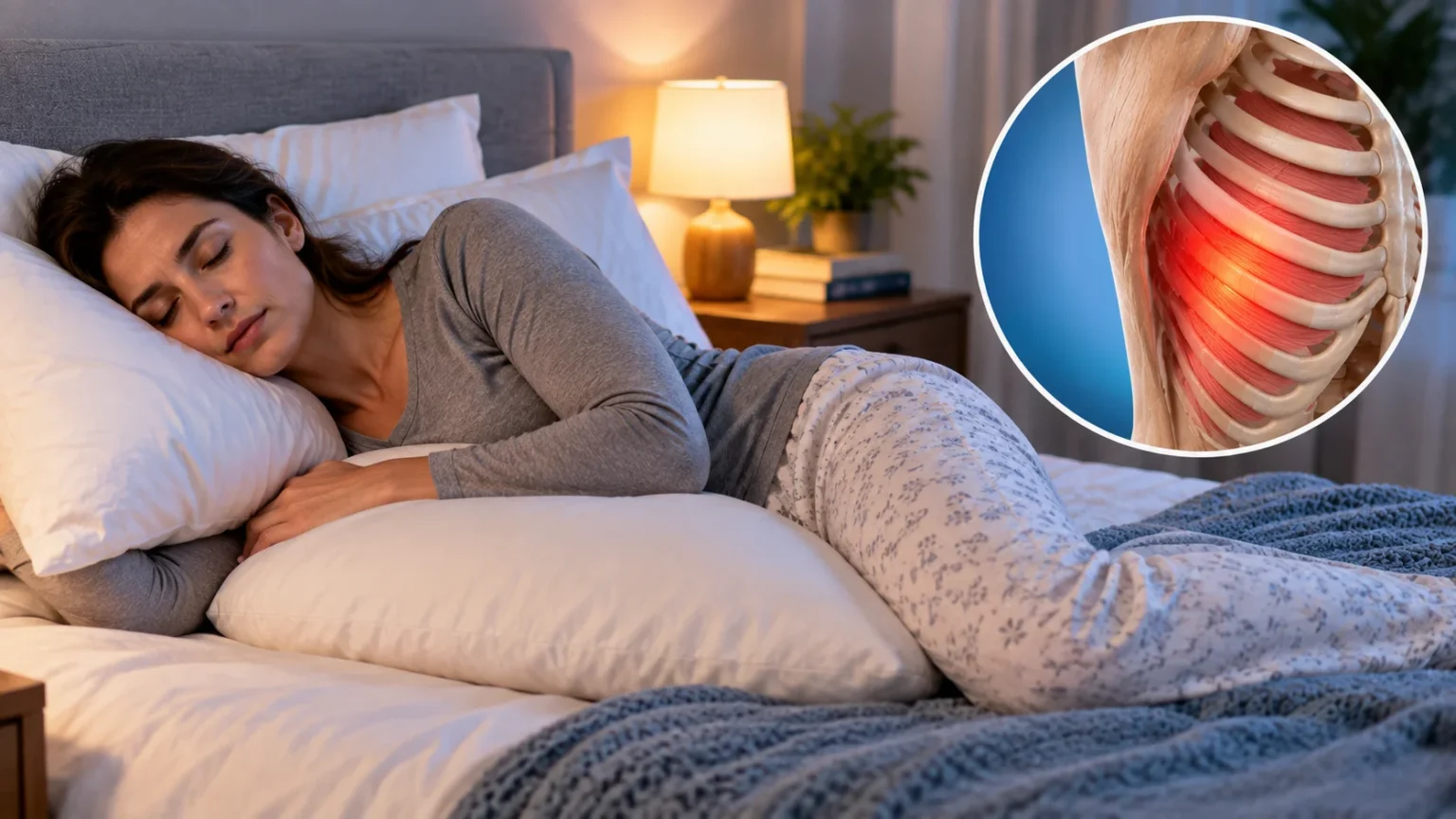
What Is an Intercostal Muscle Strain?
An intercostal muscle strain happens when the muscles between your ribs become overstretched, irritated, or partially torn. These muscles help your chest expand and contract as you breathe, while also supporting twisting and bending movements. When they become strained, even simple actions such as coughing, reaching, or rolling over in bed may become uncomfortable.
The strain can develop after heavy lifting, sudden twisting, intense exercise, repetitive coughing, or an awkward movement. Some people notice sharp pain immediately, while others develop soreness gradually over several hours. Tenderness between the ribs, pain with deep breathing, and discomfort during upper-body movement are common symptoms associated with a mild strain.
Most mild intercostal strains improve gradually with rest and appropriate activity changes. However, chest and rib pain can have many causes, some of which require medical attention. If pain is severe, unexplained, associated with breathing difficulty, or feels different from normal muscle soreness, professional evaluation is more appropriate than assuming it is simply a strain.
Why Intercostal Muscle Pain Feels Worse at Night
Nighttime can make intercostal muscle pain feel more noticeable because there are fewer distractions from discomfort. During the day, movement and activity can take attention away from soreness, but lying quietly in bed may make every ache easier to notice. Pressure from the mattress may also irritate sensitive muscles around the ribs.
Sleeping naturally involves changing positions several times during the night. Rolling from one side to another can twist the chest and stretch the strained area without warning. A sudden turn, deep breath, cough, or sneeze may briefly increase pain and wake you from sleep, especially during the first few days after the injury.
The muscles also continue working while you breathe, so they are never completely inactive. Taking deeper breaths while sleeping or changing position can cause the rib cage to expand and pull on tender tissues. Finding a supportive sleeping position can therefore reduce unnecessary strain and make rest more comfortable while healing takes place.
Best Sleeping Position for Intercostal Muscle Strain
The best sleeping position is usually one that reduces direct pressure on the injured side and limits twisting through the upper body. Many people find sleeping on their back or on the opposite side more comfortable. The right position depends on where the strain is located and which movements increase your pain.
Your spine, shoulders, and hips should feel supported rather than twisted. Pillows can help maintain alignment and prevent you from rolling suddenly onto the painful area. The goal is not to remain completely motionless throughout the night, but to reduce abrupt movements that pull strongly across the strained intercostal muscles.
Try different positions during the day before bedtime so you can find the most comfortable setup without feeling rushed. Stay in each position for several minutes and notice whether pain increases or settles. If a position creates sharp discomfort, pressure, or difficulty breathing comfortably, switch to another posture instead of forcing yourself to tolerate it.
How to Sleep on Your Back Comfortably
Sleeping on your back can be helpful because it distributes body weight evenly and avoids putting direct pressure on either side of the rib cage. Use a pillow that keeps your neck in a neutral position rather than pushing your head too far forward. Your shoulders should feel relaxed against the mattress rather than rounded or tense.
Placing a pillow underneath your knees can reduce tension through the lower back and help your body stay centered. Some people also find slight upper-body elevation more comfortable, especially when lying completely flat increases chest discomfort. A wedge pillow is usually more stable than stacking several loose pillows that may shift during sleep.
If you tend to roll onto your side unconsciously, place pillows alongside your body to create gentle support. This can make sudden movements less likely without restricting you completely. A comfortable, stable position may reduce nighttime irritation and help you remain asleep for longer periods while the strained muscles gradually recover.
Is Side Sleeping Safe With an Intercostal Strain?
Side sleeping can be comfortable if you lie on the side opposite the strain. This position keeps direct body weight away from the tender area and may reduce irritation. Keep your shoulders and hips reasonably aligned so your chest does not rotate sharply toward the mattress while you sleep.
Holding a pillow against your chest can support the upper arm and reduce rotation through the rib cage. Another pillow between your knees can help keep your hips and spine aligned. These small adjustments can make side sleeping more stable and may reduce the twisting motions that often trigger pain during the night.
Sleeping directly on the injured side may feel uncomfortable, especially during the early stages of recovery. If pressure increases soreness, avoid that position until symptoms improve. As healing progresses, you may gradually return to your usual sleeping posture, provided it no longer causes sharp pain or makes the area significantly more tender afterward.
How Pillows Can Reduce Nighttime Pain
Pillows can make a major difference because they help support the body and reduce unwanted movement. A body pillow can be especially useful for side sleepers, since it supports the arms, chest, hips, and legs together. This can help keep the torso from rotating forward and pulling on the injured muscles.
Back sleepers may benefit from a small pillow under the knees and another supporting the neck. If slight elevation feels better, a wedge pillow can help keep the upper body raised without creating an unstable stack. Proper support can make breathing and turning feel easier while reducing unnecessary strain around the rib cage.
Experiment with pillow placement before bedtime to see what feels most comfortable. You may need different support depending on whether the strain is located toward the front, side, or back of the ribs. A setup that keeps your chest relaxed and your spine neutral is generally more helpful than simply using more pillows.
How to Get Into and Out of Bed With Less Pain
Getting into bed can sometimes hurt more than lying still because the movement involves bending, twisting, and supporting your upper body. Sit on the edge of the bed first, then lower yourself onto your side while bringing your legs onto the mattress together. Moving slowly can reduce sudden pulling through the injured rib muscles.
Once you are on your side, roll your shoulders and hips together if you want to move onto your back. Try to avoid twisting the upper body separately from the pelvis. Keeping the trunk relatively aligned can make the movement smoother and may reduce the sharp pulling sensation that often occurs with quick position changes.
When getting out of bed, reverse the process. Roll onto your side, move your legs toward the edge of the mattress, and use your arms to push yourself upright. This approach usually places less demand on the chest and abdominal muscles than trying to sit straight up quickly from a flat position.
Bedtime Relief Tips for Intercostal Muscle Strain
A calm bedtime routine can help reduce muscle tension and make sleep easier. Avoid heavy lifting, intense upper-body exercise, or repeated twisting shortly before bed because these movements can temporarily irritate the strained area. Gentle walking or relaxed movement may feel more comfortable while still allowing you to remain active.
Some people find cold or warmth soothing, depending on the stage of the injury and how the muscles feel. A wrapped cold pack may feel useful when the area is irritated after activity, while gentle warmth can sometimes relax tight muscles. Avoid placing extreme heat or ice directly against the skin for extended periods.
Pain relief should support rest rather than encourage you to ignore worsening symptoms. If you use over-the-counter pain medicine, follow the product directions and consider your health conditions and other medications. Persistent or severe pain that repeatedly prevents sleep may need professional assessment rather than increasingly aggressive self-treatment.
Breathing Comfortably With an Intercostal Strain
Deep breathing can sometimes increase discomfort because the ribs expand and stretch the muscles between them. However, repeatedly taking very shallow breaths because you are afraid of pain may also make you feel tense and uncomfortable. Try to breathe normally and calmly rather than deliberately restricting your breathing throughout the night.
Before bed, sit or lie in a supported position and take several slow, comfortable breaths. Avoid forcing your lungs to expand as deeply as possible if doing so creates sharp pain. The goal is to maintain natural breathing while keeping your shoulders, jaw, abdomen, and upper chest as relaxed as you comfortably can.
If breathing becomes genuinely difficult, unusually painful, or accompanied by chest pressure, dizziness, sweating, or other concerning symptoms, seek medical attention. Significant breathing problems should not be automatically blamed on a muscle strain. Chest discomfort can have causes involving the lungs, heart, ribs, or other structures that may need evaluation.
What to Avoid While Sleeping With a Rib Muscle Strain
Avoid sleeping in positions that repeatedly place strong pressure on the painful area. Even if you normally prefer sleeping on that side, direct compression may make soreness more noticeable during the early stages of recovery. Temporarily changing your position can help reduce irritation while the strained tissues settle.
Try not to twist sharply when adjusting blankets, reaching toward a bedside table, or changing position. Small movements can sometimes cause surprisingly strong discomfort because intercostal muscles are involved in rotation and rib movement. Keeping frequently used items within easy reach can reduce unnecessary stretching during the night.
You should also avoid trying to force your body into a perfectly rigid posture. Staying tense for hours can create additional discomfort in the shoulders, back, and hips. The aim is comfortable support, not complete immobility, so allow gentle position changes when needed as long as they do not create sharp or worsening pain.
How Long Does an Intercostal Muscle Strain Take to Heal?
Recovery time depends on how severe the strain is and how much stress the area continues to experience. Mild strains may improve noticeably within days or a few weeks, while more significant injuries can take longer. Pain should generally move in the direction of gradual improvement rather than becoming progressively worse.
During recovery, avoid suddenly returning to heavy lifting, forceful twisting, or demanding upper-body exercise simply because you feel better one morning. Muscles may still be healing even after resting pain decreases. Gradually reintroducing normal activities gives the tissues more time to adapt without repeatedly irritating the same area.
Sleep comfort should also improve as the strain heals. You may notice that rolling over becomes easier, deeper breathing feels less uncomfortable, and you need fewer pillows for support. If symptoms remain unchanged for an extended period or become worse despite reasonable rest, it may be time to seek professional advice.
When Should You See a Doctor?
Seek medical attention if chest or rib pain is severe, unexplained, or accompanied by trouble breathing. Pain associated with chest pressure, fainting, significant dizziness, sweating, coughing up blood, or a sudden feeling of serious illness should not be managed as an ordinary muscle strain. These symptoms may require urgent evaluation.
Professional assessment is also appropriate after a significant fall, collision, or direct blow to the chest. Rib fractures and other injuries can sometimes feel similar to muscle strains at first. Significant swelling, bruising, worsening pain, or difficulty taking normal breaths after trauma should be checked rather than treated entirely at home.
You should also seek advice if your symptoms fail to improve, repeatedly interrupt sleep, or interfere substantially with normal activities. A healthcare professional can help determine whether the pain is muscular or related to another condition. An accurate diagnosis makes it easier to choose appropriate treatment, movement, and recovery strategies.
How to Support Recovery During the Day
What you do during the day can strongly influence how comfortable you feel at night. Avoid activities that repeatedly reproduce sharp pain, but do not assume complete bed rest is necessary for a mild strain. Gentle walking and comfortable daily movement can help you stay mobile without placing excessive stress on the rib muscles.
Pay attention to posture during sitting and working. Slouching, leaning heavily to one side, or remaining twisted for long periods may increase tension around the chest and back. Change positions regularly and keep frequently used objects within easy reach so you do not repeatedly stretch or rotate the injured area.
Return to exercise gradually as symptoms improve. Begin with comfortable activities before progressing to heavy lifting, forceful rotation, or high-intensity upper-body training. Giving the muscles enough time to recover can make nighttime pain easier to manage and may reduce the chance of repeatedly aggravating the same strain.
Conclusion
Learning how to sleep with intercostal muscle strain usually comes down to reducing pressure, limiting sudden twisting, and supporting your body in a comfortable position. Back sleeping or lying on the uninjured side often works well. Pillows can provide extra stability and make nighttime position changes less painful.
Your daytime habits matter too. Gentle movement, sensible activity modification, comfortable breathing, and gradual recovery can all make sleeping easier as the muscles heal. Avoid forcing stretches or pushing through sharp pain simply because you want the strain to recover faster.
Most mild muscle strains improve gradually, but chest and rib pain should always be taken seriously when symptoms are severe, unexplained, or associated with breathing difficulty. Seek professional care when necessary. The safest sleep strategy is one that supports rest while also respecting signs that the problem may need further evaluation.
FAQs
What is the best way to sleep with an intercostal muscle strain?
Sleeping on your back or on the uninjured side is often more comfortable. Use pillows to support your body, reduce twisting, and prevent direct pressure on the painful ribs.
Can I sleep on the side with an intercostal strain?
You can if it feels comfortable, but direct pressure may worsen soreness during early recovery. Sleeping on the opposite side is often easier until tenderness has decreased.
Should I sleep sitting up with an intercostal muscle strain?
Some people feel better with their upper body slightly elevated. A wedge pillow may provide comfortable support, but you do not necessarily need to sleep fully upright unless advised by a healthcare professional.
Why does my rib muscle strain hurt more at night?
Nighttime pain may feel stronger because pressure from sleeping positions, rolling movements, and rib expansion during breathing can irritate the strained muscle. Reduced daytime distractions can also make discomfort feel more noticeable.
How long will sleeping be uncomfortable after an intercostal strain?
It depends on the severity of the injury. Mild strains may improve within days or weeks, while more significant strains can take longer. Persistent or worsening pain should be professionally evaluated.