

The clamshells exercise is a simple lower-body movement that can strengthen important muscles around your hips and glutes. It requires little equipment, takes up very little space, and can be adapted for beginners or more experienced exercisers. Despite its simple appearance, proper technique matters if you want to get the most from the movement.
Clamshells are commonly added to hip-strengthening routines, warm-ups, rehabilitation programs, and home workouts. Performing them correctly can help you activate the side glutes without relying heavily on larger surrounding muscles. Learning the right setup, movement pattern, repetitions, and common mistakes can make this small exercise much more effective.
What Is the Clamshells Exercise?
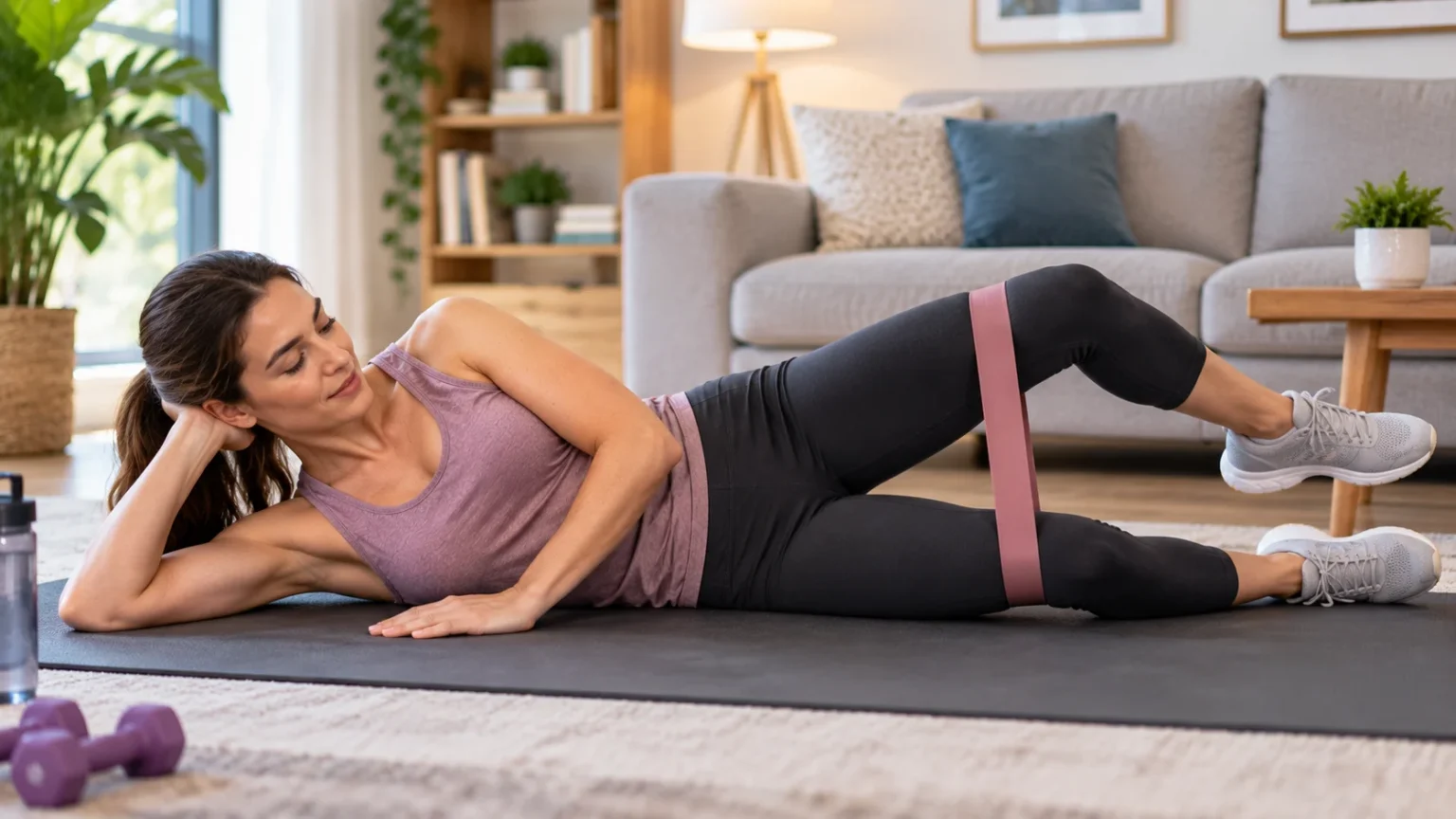
The clamshells exercise is a side-lying movement where you bend your knees and lift your top knee while keeping your feet together. The motion looks similar to a clamshell opening and closing, which explains its name. Although the range of motion is relatively small, the exercise can create noticeable tension around the outer hip and glute area.
Unlike squats or lunges, clamshells do not require you to support your full body weight while standing. This makes them useful when you want to focus more directly on specific hip muscles. They can also be performed on a mat, carpet, or other comfortable surface without needing heavy gym equipment.
The exercise is often used as part of a broader lower-body routine rather than as a complete workout by itself. It can complement movements such as bridges, squats, lateral walks, and step-ups. Its main purpose is usually to strengthen and improve control around the hips rather than build large amounts of overall leg strength.
What Muscles Do Clamshells Work?
Clamshells primarily target muscles around the outer hip and buttocks. The gluteus medius is especially involved because it helps control the position of the pelvis and move the thigh outward. The gluteus minimus and other smaller hip muscles can also contribute as you rotate the top leg away from the lower leg.
Your gluteus maximus may participate depending on your hip position and how the movement is performed. Deep hip rotator muscles also contribute to controlling the outward rotation of the thigh. Because several muscles work together, maintaining proper alignment helps keep the exercise focused on the intended areas rather than allowing other body parts to compensate.
Your core muscles also provide some stability while you perform the exercise. They help prevent your pelvis and torso from rolling backward as the top knee rises. Although clamshells are not primarily an abdominal exercise, maintaining gentle core engagement can improve your position and make the hip muscles work more effectively.
What Are the Benefits of Clamshells?
One major benefit of clamshells is that they strengthen the muscles responsible for supporting and controlling the hip. Stronger hip muscles can contribute to better lower-body movement during activities such as walking, climbing stairs, running, and exercising. They can also help you maintain better control of your pelvis while your legs move independently.
Clamshells are also convenient because they require very little equipment. Beginners can perform the exercise using only body weight, while more advanced users can add a resistance band around the thighs. This flexibility makes clamshells easy to include in home workouts, gym sessions, warm-ups, or short mobility and strengthening routines.
Another benefit is the exercise’s relatively low-impact nature. Because you perform the movement while lying on your side, there is no jumping or heavy loading through the feet. This makes clamshells a practical strengthening option for many people who want to train the glutes without immediately performing more demanding standing exercises.
How to Do Clamshells Exercise Correctly
Begin by lying on one side with your hips and shoulders stacked on top of each other. Bend both knees comfortably while keeping your feet together, and support your head with your lower arm or a pillow. Your knees can sit slightly forward from your hips instead of being pulled tightly toward your chest.
Gently brace your midsection and keep your pelvis facing forward. Without separating your feet, slowly raise your top knee as far as you can while maintaining your position. Pause briefly near the top, then lower the knee under control until your legs return to the starting position.
Complete your planned repetitions before carefully turning over and repeating the exercise on the opposite side. Move slowly enough that you can feel the outer hip working throughout each repetition. Quality matters more than lifting the knee as high as possible, especially when you are learning proper clamshell technique.
Proper Clamshell Form and Technique
Correct pelvic position is one of the most important parts of good clamshell form. Your top hip should remain approximately stacked above the lower hip instead of rolling backward as the knee opens. If your pelvis rotates with the leg, the movement may appear larger even though the target muscles are doing less controlled work.
Your feet should normally remain touching throughout the exercise. Think about rotating the thigh from the hip rather than simply throwing the knee upward. Slow movement makes it easier to notice whether your hips are staying still and whether you are using momentum instead of muscular control.
Your neck and shoulders should also remain relaxed. Avoid pushing your head forward or holding unnecessary tension through your upper body while focusing on the legs. Comfortable alignment allows you to concentrate on the muscles around the hip and makes the exercise easier to repeat with consistent form.
Common Clamshell Exercise Mistakes
Rolling the pelvis backward is one of the most frequent mistakes people make during clamshells. This often happens when someone tries to lift the knee much higher than their available hip rotation allows. Keeping the pelvis relatively still usually results in a smaller movement, but it also places greater emphasis on controlled hip muscle activity.
Another mistake is moving too quickly. Rapid repetitions can encourage momentum and make it difficult to feel whether the glutes are actually doing the work. Raising and lowering the knee slowly gives you more time to maintain alignment and can make even bodyweight clamshells feel significantly more challenging.
Using too much resistance can also reduce exercise quality. A very strong resistance band may cause your hips to rotate or encourage you to shorten the movement excessively. Start with body weight or light resistance and increase the difficulty only when you can perform each repetition without losing control.
How Many Clamshells Should You Do?
A common starting point is around 10 to 15 controlled repetitions on each side. Beginners may complete one or two sets while learning the movement, while more experienced exercisers may perform additional sets based on their workout goals. The correct amount depends on your current strength, exercise selection, and overall training routine.
You do not need to perform extremely high repetitions if your form begins to break down. Stop or rest when you can no longer keep your pelvis steady or control the lowering phase. A smaller number of clean repetitions can be more useful than many rushed repetitions performed with poor positioning.
As your strength improves, you can gradually add repetitions, sets, slower tempos, or resistance. Progressing one variable at a time makes it easier to maintain proper technique. The goal is to challenge the hip muscles enough to encourage improvement without turning a controlled exercise into a movement dominated by momentum.
Clamshell Exercise Variations
The standard bodyweight clamshell is usually the easiest place to begin. Once you can perform it comfortably, you can place a light resistance band around your thighs just above the knees. The band increases resistance as your top knee moves upward, requiring the outer hip muscles to work harder.
Another option is the elevated clamshell, where you keep your knees together while lifting the feet slightly before opening the top knee. This variation changes the stability demands and can feel considerably more difficult. It should generally be introduced only after you can maintain good alignment during the basic version.
You can also experiment with slower repetitions or short pauses at the top of the movement. Holding the open position briefly can increase the time your hip muscles remain under tension. These simple adjustments often provide enough progression without requiring heavier equipment or dramatically changing the exercise.
When Should You Add Clamshells to Your Workout?
Clamshells can work well near the beginning of a workout as part of a lower-body warm-up. Performing a small number of controlled repetitions may help you become more aware of your glute muscles before exercises such as squats or lunges. Keep the volume reasonable so you do not unnecessarily fatigue the muscles before heavier training.
They can also be performed later in a workout as an accessory exercise. After larger movements are complete, clamshells can provide additional targeted work for the outer hips and glutes. Resistance bands are particularly useful in this situation because they allow you to increase difficulty without adding complex equipment.
Some people prefer to perform clamshells as part of a short home strengthening routine on separate days. The exercise can easily be combined with glute bridges, side leg raises, bird dogs, or other controlled movements. Where you place it matters less than performing it consistently with appropriate resistance and proper technique.
Who Should Be Careful With Clamshells?
Clamshells should feel like controlled muscular work around the hip rather than sharp pain in the hip, knee, back, or pelvis. If the movement repeatedly produces pain, stop rather than forcing additional repetitions. People recovering from injuries or surgery should follow the exercise recommendations provided by their healthcare or rehabilitation professional.
The side-lying position may also be uncomfortable for people dealing with pain around the ribs or torso. If you are recovering from an intercostal muscle strain, comfortable positioning and support can be especially important. Avoid lying directly on a painful area if the pressure increases symptoms.
Pregnant people or anyone with medical conditions that affect comfortable positioning should also modify exercises when appropriate. Pillows, different body positions, or alternative hip exercises may provide better comfort. Exercise should be adapted to the individual rather than forcing the body into a position simply because it is considered standard technique.
How to Make Clamshells More Effective
Focus first on feeling the target hip muscles rather than trying to create the largest possible movement. A smaller range performed without pelvic rotation may challenge your glutes more effectively than opening the knee very high. Slow repetitions can make it easier to notice exactly where the movement is coming from.
You can also improve the exercise by maintaining consistent tension. Instead of allowing the top knee to completely relax between every repetition, control the lowering phase and begin the next repetition smoothly. This keeps the muscles engaged and prevents the movement from becoming a series of quick, disconnected motions.
Finally, combine clamshells with other movement patterns. Hip strength is useful in multiple directions, so one exercise should not carry the entire workload of your lower-body program. Squats, bridges, step-ups, lateral movements, and appropriate single-leg exercises can complement clamshells and create a more balanced strengthening routine.
How to Progress Clamshells Over Time
Progress should begin with excellent bodyweight technique. Once you can complete your desired number of repetitions without rolling your pelvis backward, consider adding a light resistance band. Choose enough resistance to challenge your muscles while still allowing smooth, controlled movement through a comfortable range.
You can then increase difficulty by slowing the lowering portion of each repetition. Taking three or four seconds to lower the knee can make a familiar set noticeably harder without requiring stronger resistance. Brief pauses at the top of each repetition can create a similar challenge and encourage better muscular control.
Eventually, clamshells can become one smaller part of a more advanced hip-strengthening program. Standing band walks, single-leg bridges, split squats, and other exercises can challenge the same region under different conditions. Progression does not mean abandoning clamshells completely, but your routine should gradually expand as your strength and control improve.
Conclusion
The clamshells exercise is a simple but useful movement for strengthening the muscles around the hips and glutes. It can be performed with body weight or resistance bands and requires very little space. The key is maintaining good alignment instead of trying to lift the knee as high or as quickly as possible.
Keep your hips stacked, feet together, and torso stable while opening the top knee in a controlled manner. Avoid rolling backward, rushing repetitions, or choosing resistance that makes proper form difficult. Small adjustments to tempo and resistance can provide plenty of challenge as your strength develops.
Clamshells work best as part of a balanced lower-body program rather than as the only exercise you perform. Combine them with appropriate strength, mobility, and functional movements to train your hips in different ways. Consistent practice with good technique will generally be more valuable than performing large numbers of careless repetitions.
FAQs
What muscles do clamshells work?
Clamshells mainly work the gluteus medius and other muscles around the outer hip. Deep hip rotators, the gluteus minimus, and stabilizing core muscles may also contribute.
Are clamshells good for beginners?
Yes. Bodyweight clamshells are relatively simple and can be adjusted to suit different strength levels. Beginners should focus on slow movement and keeping the pelvis stable.
How many clamshells should I do?
Many beginners can start with roughly 10 to 15 controlled repetitions per side for one or two sets. Your ideal volume depends on your strength and training program.
Should I use a resistance band for clamshells?
A resistance band can make clamshells more challenging, but it is not required. Add light resistance only after you can perform the bodyweight version without losing proper alignment.
Why do I feel clamshells in my hip?
Clamshells intentionally activate muscles around the outer hip and glute area. Muscular effort is expected, but sharp, pinching, or persistent pain is a reason to stop and reassess the movement.