

Hamstring curls are one of the simplest ways to strengthen the muscles along the back of your thighs without needing a full gym setup. With bodyweight, resistance bands, sliders, or common household equipment, you can train your hamstrings effectively at home. The key is choosing the right variation and performing each repetition with controlled movement.
Strong hamstrings support walking, running, jumping, bending, and many lower-body exercises. They also work closely with the glutes and calves to control movement at the hips and knees. Regular hamstring training can therefore contribute to balanced leg strength while making everyday movements and workouts feel more controlled.
However, hamstring curls only work well when technique comes first. Moving too quickly, arching your back, or using more resistance than you can control may shift tension away from the target muscles. This guide explains how to perform hamstring curls at home, useful variations, common mistakes, benefits, and practical progression tips.
What Are Hamstring Curls?
Hamstring curls are exercises that involve bending the knee against resistance so your heel moves toward your buttocks. This movement primarily targets the hamstrings, a group of muscles located along the back of the thigh. Different variations can be performed standing, lying down, seated, or using sliding movements from the floor.
At a gym, hamstring curls are commonly performed using dedicated leg curl machines. At home, however, you can recreate a similar knee-flexion movement with resistance bands, ankle weights, sliders, towels, or even just your bodyweight. Each option changes the difficulty slightly while still challenging the hamstrings through their primary function.
Home hamstring curls are particularly convenient because they require very little space. You can include them in a leg workout, strength circuit, rehabilitation-style routine, or warm-up depending on the variation. Starting with a simple version also makes it easier to focus on technique before adding heavier resistance or more advanced movements.
What Muscles Do Hamstring Curls Work?
The primary muscles worked during hamstring curls are the biceps femoris, semitendinosus, and semimembranosus. Together, these muscles form the hamstring group and help bend the knee. They also contribute to hip extension, which means they are active during movements such as running, climbing stairs, hinging, and getting up from a chair.
Your calves may assist during certain curl variations because one of the calf muscles crosses the knee joint. The glutes and core can also contribute by helping stabilize your pelvis and torso. Their role becomes especially noticeable during floor-based movements such as slider hamstring curls and bridge curls.
Although hamstring curls primarily train knee flexion, a complete lower-body routine should include other movement patterns as well. Hip-hinge exercises, squats, bridges, and lateral movements can help train the surrounding muscles. Combining several exercises usually produces more balanced strength than relying on one hamstring movement alone.
How to Do Standing Hamstring Curls at Home
Stand upright beside a wall, chair, or counter if you need balance support. Keep your feet around hip-width apart and shift your weight gently onto one leg. Bend the opposite knee and bring your heel toward your buttocks without allowing your thigh to swing dramatically forward or backward.
Pause briefly when your knee reaches a comfortable bend, then lower your foot slowly toward the floor. Keep your torso upright and avoid leaning forward to create extra range. Your hips should remain relatively level while the hamstring controls both the lifting and lowering phases of the repetition.
Complete around 10 to 15 controlled repetitions before switching legs. Bodyweight curls are a good starting point for beginners because they allow you to practice the movement without significant resistance. Once the exercise feels easy, you can add ankle weights or a resistance band to make the hamstrings work harder.
How to Do Resistance Band Hamstring Curls
Secure a resistance band to a stable anchor close to floor level and loop the other end around one ankle. Lie face down with your legs extended behind you and position yourself far enough away to create light tension. Keep your hips pressed comfortably toward the floor and your torso relaxed.
Bend your knee slowly, bringing your heel toward your buttocks while maintaining control of the band. Stop before your hips lift or your lower back starts arching significantly. Pause briefly at the top, then extend your knee gradually while resisting the band’s pull back toward the starting position.
Choose a band that allows smooth movement rather than forcing you to twist or compensate. Around 8 to 15 repetitions per leg can work well for general strength training. Increase resistance gradually only after you can control both directions of the movement while keeping your pelvis and upper body stable.
How to Do Slider Hamstring Curls
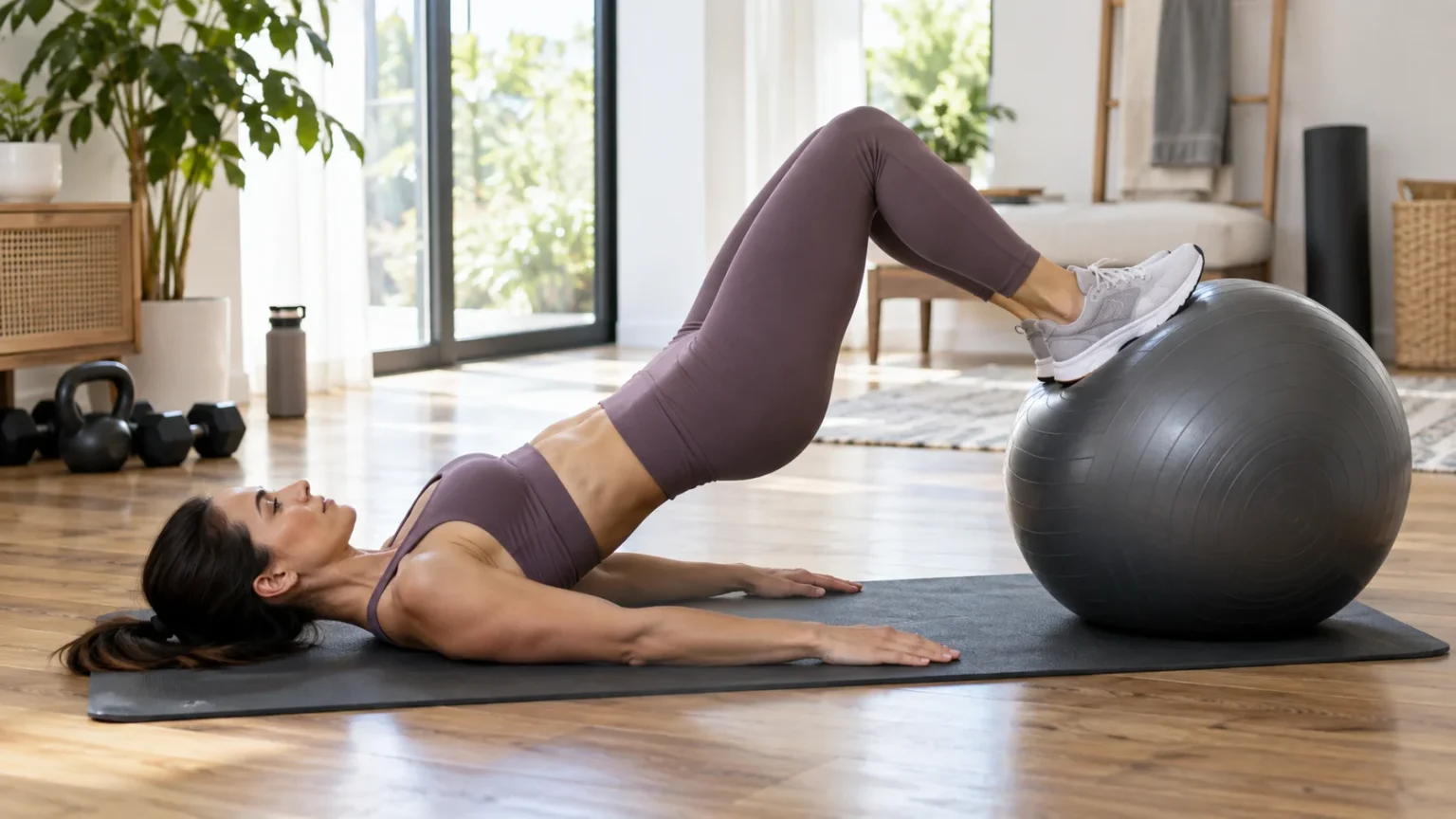
Slider hamstring curls are an effective equipment-light variation that trains both knee flexion and hip stability. Lie on your back with your knees bent and place your heels on exercise sliders. On a smooth floor, small towels or furniture sliders may work as alternatives when they can move safely without slipping unpredictably.
Lift your hips into a bridge and slowly slide your heels away from your body while keeping your hips controlled. Extend your legs only as far as you can without dropping your pelvis or losing abdominal control. Then dig your heels into the sliders and pull your feet back toward your body.
This variation can be challenging because your hamstrings work throughout a larger movement while helping support the hips. Beginners may start with a shorter sliding range or lower their hips between repetitions. As strength improves, work toward maintaining a stable bridge while extending and curling both legs with consistent control.
Benefits of Doing Hamstring Curls at Home
Hamstring curls can help increase strength along the back of your thighs without requiring expensive equipment. Stronger hamstrings may support better control during running, walking, jumping, and lower-body strength exercises. They also contribute to knee flexion and hip stability during many everyday activities and athletic movements.
Another benefit is the ability to train the hamstrings directly. Squats and lunges involve the hamstrings, but they do not always challenge knee flexion as directly as curls do. Including both compound leg exercises and hamstring curls can help create a more rounded lower-body training routine.
Home variations also make it easy to adjust the difficulty. You can begin with standing bodyweight curls and progress to bands, sliders, ankle weights, or single-leg variations. This flexibility makes hamstring curls suitable for many fitness levels as long as resistance and range of motion match your current ability.
Common Hamstring Curl Mistakes
One common mistake is moving too quickly. Swinging the lower leg toward your body uses momentum and reduces the amount of controlled tension placed on the hamstrings. Slow down the lifting phase and especially the return so the muscles remain engaged instead of letting gravity or resistance do most of the work.
Arching the lower back is another frequent problem, particularly during lying resistance band curls. If your pelvis lifts and your back extends aggressively, you may be trying to use too much resistance or excessive range. Keep your abdominal muscles gently engaged and stop the curl before your position begins to change noticeably.
People also sometimes choose resistance that is too heavy because they assume more weight automatically creates better results. Heavy resistance is only useful when you can control it. Select a level that allows full, smooth repetitions without twisting your hips, shortening the movement excessively, or using the rest of your body to compensate.
How to Make Home Hamstring Curls More Effective
Focus on controlled repetitions rather than simply trying to complete a target number quickly. Taking two or three seconds to lower your leg can increase the challenge without adding extra weight. This slower eccentric phase keeps the hamstrings under tension and may make a relatively simple home exercise feel substantially more demanding.
You can also increase difficulty gradually by adding resistance bands, ankle weights, longer holds, or more demanding variations. Another option is training one leg at a time, which can expose differences in strength and increase the load placed on each hamstring. Make one progression at a time so your technique remains consistent.
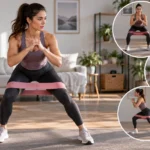
Balanced lower-body training should also include exercises for the hips and glutes. For example, adding a banded monster walk can complement hamstring curls by challenging the hip and glute muscles in a different direction. Combining movement patterns can help develop more complete lower-body strength and control.
How Many Hamstring Curls Should You Do?
Beginners can often start with two sets of around 10 to 12 repetitions per leg. Choose resistance that feels challenging near the end of each set without causing your technique to break down. If you can easily perform significantly more repetitions, the movement may be ready for a modest increase in difficulty.
For general strength development, two to four sets of approximately 8 to 15 repetitions can work well. You do not need to reach complete muscular failure during every set. Finishing with a few controlled repetitions still possible often provides enough challenge while helping you maintain good movement quality.
Training the hamstrings two or three times per week may be appropriate for many people depending on the rest of their program. Remember that deadlifts, bridges, running, and other exercises may already challenge these muscles. Give your legs enough recovery between demanding sessions rather than assuming more frequent training always means faster progress.
Best Hamstring Curl Variations for Home Workouts
Standing hamstring curls are one of the easiest variations for beginners because they require no floor space and little equipment. They can also be useful as part of a warm-up before a more demanding leg workout. Add an ankle weight or resistance band once bodyweight repetitions no longer feel challenging.
Lying band curls allow you to create more direct resistance throughout the knee-flexion movement. They are useful when you want something closer to the feeling of a traditional leg curl machine without buying large equipment. Adjusting band thickness or your distance from the anchor provides an easy way to control difficulty.
Slider curls are generally more demanding because they combine hamstring work with hip and core control. Single-leg sliders make the exercise even harder and should usually be attempted only after the two-leg version feels manageable. The best variation is the one you can perform with stable positioning and a challenging but controlled range.
Hamstring Curls vs. Other Hamstring Exercises
Hamstring curls mainly emphasize knee flexion, while exercises such as Romanian deadlifts emphasize hip extension. Both movement patterns involve the hamstrings but challenge them differently. Including both types in a workout can provide more complete training than repeatedly using only curls or only hip-hinge exercises.
Glute bridges and hip thrusts also involve the hamstrings, although the glutes usually perform a major share of the work. Meanwhile, Nordic hamstring curls place substantial demands on the hamstrings during knee extension and are far more difficult than basic home curls. Beginners should build strength gradually before attempting demanding Nordic variations.
You do not need dozens of hamstring exercises in one session. A simple routine might pair a hip-hinge movement with one hamstring curl variation and a glute exercise. Choosing a few movements, performing them consistently, and progressing them gradually is usually more practical than constantly changing exercises without allowing measurable improvement.
When to Avoid or Modify Hamstring Curls
Muscular effort or mild fatigue during hamstring curls is expected, but sharp pain is not. Stop the exercise if you feel sudden pain in the back of the thigh, knee, hip, or lower back. Pain that persists or worsens with activity may require evaluation rather than simply reducing the resistance and continuing.
Anyone recovering from a recent hamstring strain, knee injury, surgery, or significant lower-body problem should follow appropriate rehabilitation guidance. The amount of knee bending and resistance you can safely tolerate may depend on your stage of recovery. Returning too aggressively can overload tissues that are not yet prepared for demanding exercise.
It is also worth modifying the exercise if you repeatedly experience cramping. Reduce the resistance, shorten the range, rest longer between sets, and make sure you are not rushing repetitions. Frequent unexplained cramping, weakness, swelling, or persistent pain should be discussed with an appropriate healthcare professional rather than managed solely through exercise adjustments.
Conclusion
Hamstring curls at home are a practical way to strengthen the muscles along the back of your thighs without relying on a gym leg curl machine. Standing curls, resistance band curls, and slider variations can all be effective when performed with appropriate resistance and controlled technique.
Keep your hips stable, avoid using momentum, and control both the bending and straightening phases of each repetition. Start with a variation that matches your current ability, then gradually add resistance, repetitions, longer pauses, or more advanced movements as your hamstrings become stronger.
For balanced lower-body development, combine hamstring curls with hip-hinge exercises, glute strengthening, squats, and other movements that train your legs in different ways. Consistent practice and gradual progression matter more than using the hardest variation immediately. Stop or modify any exercise that produces sharp or persistent pain.
FAQs
Can you do hamstring curls without a machine?
Yes. Standing bodyweight curls, resistance band curls, slider curls, and ankle-weight curls can all train the hamstrings at home without a traditional leg curl machine.
What can I use for hamstring curls at home?
You can use resistance bands, ankle weights, exercise sliders, or towels on a suitable smooth floor. Bodyweight standing curls are also an easy equipment-free option for beginners.
How many hamstring curls should beginners do?
Beginners can start with about two sets of 10–12 controlled repetitions per leg. Increase repetitions or resistance gradually once you can maintain stable posture and smooth technique.
Are hamstring curls good for building muscle?
Hamstring curls can contribute to muscle development when resistance progressively increases and nutrition and recovery are appropriate. Combining curls with hip-hinge exercises can provide more complete hamstring training.
Why do my hamstrings cramp during curls?
Cramping can occur from fatigue, excessive resistance, or unfamiliar exercise demands. Reduce the difficulty and rest if needed, and seek professional advice if cramping is severe, persistent, or accompanied by other symptoms.