


Cat Dandruff: Causes, Treatment & When to Worry
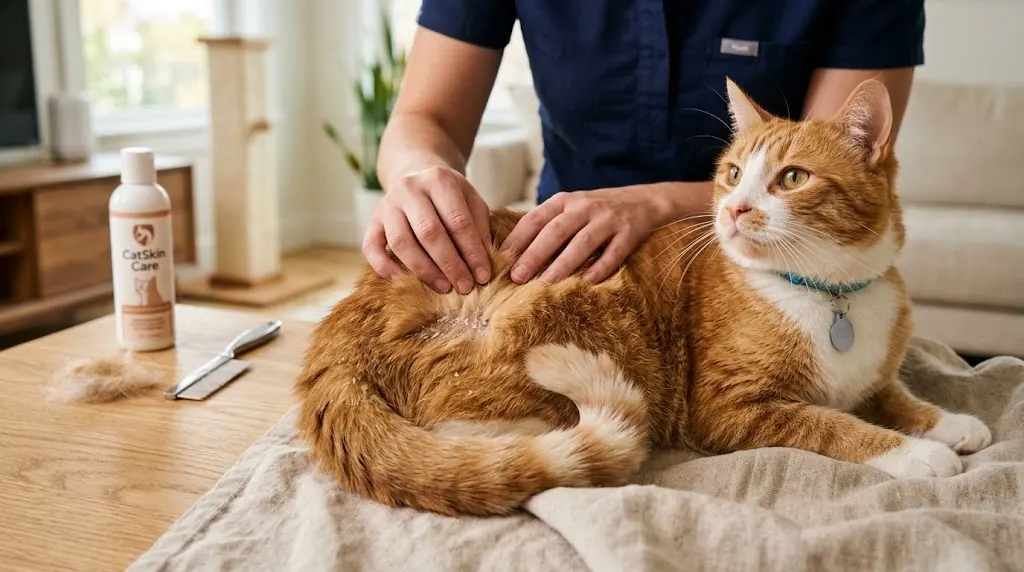
Cat dandruff appears as small white or gray flakes of dead skin that become visible in a cat’s fur, especially along the back, near the base of the tail, or around areas the cat struggles to groom. A small amount of skin shedding can be normal, but noticeable or persistent flakes may indicate dry skin, grooming difficulties, parasites, allergies, nutritional problems, or an underlying health condition. Some cats have dandruff only occasionally, particularly during seasonal changes or dry indoor weather. Others develop recurring flakes together with itching, hair loss, redness, or greasy skin. Looking at the entire pattern rather than the flakes alone helps determine whether veterinary attention may be needed.
Healthy feline skin continuously renews itself, with older skin cells naturally shedding as new cells develop underneath. Normally, these tiny cells are difficult to notice because grooming removes much of the debris and the skin barrier maintains appropriate moisture. Dandruff becomes more obvious when skin cells accumulate or are produced and shed faster than usual. Long-haired cats may show flakes trapped between hairs, while dark-coated cats can make even mild dandruff particularly visible. Understanding the difference between occasional dry flakes and a persistent skin problem can help cat owners respond appropriately without overreacting to every speck of white material.
Several factors can contribute to dry, flaky skin in cats. Low humidity, inadequate grooming, obesity, dehydration, an unbalanced diet, external parasites, allergic skin disease, fungal infections, and certain systemic illnesses are among the possibilities. Older cats or cats with arthritis may groom less effectively because reaching the back becomes uncomfortable. Fleas or mites can create itching and inflammation that increases skin debris. In some cases, dandruff is secondary to a medical condition rather than the primary problem itself. Because multiple causes can look similar at home, persistent or severe cases should be evaluated by a veterinarian.
Treatment depends on identifying what is causing the dandruff. Mild dryness may improve with better grooming, appropriate hydration, improved environmental humidity, and a nutritionally complete diet. Parasites require appropriate parasite control, while infections, allergies, pain, or systemic disease may need veterinary diagnosis and targeted treatment. Human anti-dandruff shampoos, essential oils, and random home remedies should generally not be used on cats because some ingredients can irritate feline skin or be unsafe if licked during grooming. Cat-specific care is important because feline skin and metabolism differ from those of people.
This guide explains the causes of cat dandruff, treatment options, grooming strategies, dietary considerations, warning signs, and when to worry about flaky skin. It also covers why dandruff may appear near the tail, how dandruff differs from flea dirt, and what owners can do safely at home. The goal is to help you understand what the flakes may mean without assuming that every case signals serious disease. Most mild cases are manageable, but changes in appetite, behavior, weight, coat quality, itching, or skin condition deserve closer attention. Early recognition often makes underlying problems easier to address.
What Is Cat Dandruff?
Cat dandruff is the visible accumulation of dead skin cells within a cat’s coat. These flakes may look white, pale gray, or slightly yellow and can range from tiny specks to larger pieces of dry skin. They are commonly noticed when brushing the cat, parting the fur, or seeing flakes against dark hair. Dandruff is not itself a specific disease. Instead, it is a physical sign that skin cells are shedding in a noticeable way. The underlying reason can be as simple as temporary dryness or as complex as a dermatologic or systemic health condition that requires professional evaluation.
Normal skin constantly produces new cells while older cells move toward the surface and eventually shed. In healthy cats, this process is usually subtle because the skin barrier controls moisture and routine grooming removes loose cells. When skin becomes too dry, irritated, inflamed, greasy, or poorly groomed, the shedding process becomes more visible. Dandruff may therefore reflect changes in both skin biology and grooming behavior. It can occur across the entire body or be concentrated in one location. The distribution of flakes can provide useful clues about what is contributing to the problem.
Dandruff is often easiest to see along a cat’s back. Cats that are overweight, elderly, or experiencing joint pain may have difficulty turning far enough to groom this area thoroughly. As grooming declines, loose hair, oils, and dead skin can accumulate. Long-haired cats can experience a similar problem because dense coats make complete grooming more difficult. In these cases, regular gentle brushing may reduce visible flakes while also allowing owners to inspect the skin. However, sudden grooming difficulty can itself be a sign of pain or illness and should not automatically be dismissed as poor coat maintenance.
Some cats develop flakes with oily rather than dry skin. This can create a greasy coat, clumped hair, odor, or yellowish scale. Sebum is the natural oil produced by skin glands, and too much or too little can change coat condition. Disorders involving excessive scaling or abnormal oil production may sometimes be described broadly as seborrheic skin changes. These situations may require more than moisturizing because infections, inflammation, parasites, or other conditions can contribute. Evaluating whether the skin is dry, oily, red, itchy, or damaged helps narrow possible causes.
The most important point is that dandruff is a symptom rather than a diagnosis. Owners can notice the flakes, but determining why they are occurring may require examining the skin, grooming behavior, parasite exposure, diet, environment, and general health. Mild flakes without other symptoms may respond to simple supportive care. Persistent dandruff, however, should not be treated repeatedly without understanding its cause. A veterinarian can investigate contributing conditions when home care does not improve the problem or when other warning signs are present.
Common Causes of Cat Dandruff
Dry environmental conditions are a common reason cats develop mild flaky skin. Indoor heating during colder months can reduce humidity substantially, and air conditioning may also contribute to dry environments. A cat spending most of its time indoors can therefore experience seasonal skin changes even when otherwise healthy. Dry skin may become more noticeable after grooming because brushing loosens accumulated flakes. Maintaining comfortable indoor humidity and ensuring access to fresh water can help support normal skin hydration. However, very heavy scaling or inflamed skin should not be attributed to dry air without considering other possible explanations.
Reduced grooming is another major cause. Cats normally spend considerable time cleaning and distributing natural oils through their coat. Obesity can make it difficult for a cat to bend and reach the lower back or tail region. Arthritis, injury, dental pain, weakness, or age-related changes can also interfere with grooming. Owners may notice dandruff concentrated in areas the cat cannot easily reach. Brushing can help remove buildup, but it is equally important to consider why grooming behavior has changed, particularly if the decline appears sudden or is accompanied by reduced activity.
Parasites can cause flaky skin through irritation and inflammation. Fleas are common examples, but mites and other external parasites may also affect the coat and skin. Affected cats may scratch, chew, overgroom, develop crusts, or lose hair in addition to producing flakes. Some cats react strongly to relatively small numbers of fleas because of hypersensitivity to flea saliva. Indoor cats are not completely protected from parasites because fleas can be introduced through other pets, people, or the environment. Appropriate veterinary parasite prevention is therefore relevant even when a cat rarely goes outside.
Allergies can also contribute to dandruff and skin inflammation. Cats can develop reactions associated with flea bites, food, or environmental allergens. Allergic skin disease may cause itching around the head, neck, back, abdomen, or other areas, depending on the individual cat. Some cats groom excessively rather than visibly scratching, which can make itching less obvious to owners. Hair thinning, scabs, redness, and recurrent ear or skin problems may appear alongside dandruff. Because allergic conditions can resemble infections or parasite problems, veterinary evaluation is often needed to identify the most likely trigger.
Underlying medical conditions can sometimes alter skin and coat quality. Illnesses that affect metabolism, hydration, nutrition, mobility, or immune function may contribute to dull fur, increased scaling, or reduced grooming. Diabetes, chronic kidney problems, hormonal abnormalities, gastrointestinal disease, and other disorders may occasionally be associated with poor coat condition, although dandruff alone cannot diagnose any of them. Weight loss, increased thirst, appetite changes, vomiting, lethargy, or altered urination are more concerning when they appear with skin changes. These combinations warrant veterinary assessment rather than cosmetic treatment alone.
Why Does My Cat Have Dandruff Near the Tail?
Dandruff near the base of the tail and lower back is particularly common because this area can be difficult for some cats to groom. Cats with excess body weight may simply be unable to bend far enough to clean the region effectively. Older cats with arthritis or spinal discomfort may also avoid the twisting motion needed to reach it. When grooming decreases, dead skin, loose hair, and natural oils accumulate. Owners may notice flakes, a greasy patch, or clumped fur. If brushing improves the area but the cat still cannot groom normally, mobility and weight should also be considered.
Fleas often concentrate around the back and base of the tail, making parasite irritation another important possibility. A cat may scratch, lick, or chew the area repeatedly. Small scabs or patches of broken hair can sometimes develop. Flea dirt may also be mistaken for dandruff, although flea dirt is typically dark rather than white. Because cats groom frequently, actual fleas may be difficult to find even when they are present. A veterinarian can recommend an appropriate flea-control strategy based on the cat’s age, health, weight, lifestyle, and other animals in the household.
Oil buildup can also be noticeable around the tail. Skin in this region contains sebaceous glands, and some cats may develop especially greasy fur or visible debris. In intact male cats, increased oil production around the upper tail can sometimes be particularly noticeable, although other cats may develop greasy changes as well. Oily skin may trap dirt and dead cells, creating a dandruff-like appearance. If the area develops blackheads, odor, inflammation, or infection, simple brushing may not be enough. Veterinary evaluation can determine whether additional treatment is appropriate.
Local irritation should also be considered when flakes are restricted to one area. A collar, topical product, chemical exposure, matting, or repeated scratching may damage the skin barrier. In long-haired cats, tightly tangled fur can pull on the skin and trap moisture or debris. Severe mats should be handled carefully because feline skin is thin and can be accidentally cut with scissors. Professional grooming or veterinary assistance may be safer when mats are close to the skin. After the coat is cleared, the underlying skin should be checked for redness, wounds, parasites, or infection.
Persistent dandruff near the tail should therefore be evaluated in context. A few dry flakes on an otherwise comfortable, active cat may simply reflect grooming or environmental dryness. Flakes accompanied by intense licking, biting, scabs, hair loss, pain, odor, or greasy discharge suggest a more significant skin problem. Reduced ability to reach the area can also reveal obesity or musculoskeletal discomfort. Looking beyond the dandruff often provides more useful information than treating the flakes themselves. The location is a clue, not a diagnosis.
Cat Dandruff vs Flea Dirt
Cat dandruff and flea dirt can both appear as small particles in the coat, but they usually look different. Dandruff is generally white, pale gray, or cream-colored because it consists largely of shed skin cells. Flea dirt is usually dark brown or black and often resembles tiny grains of pepper. It is composed primarily of digested blood passed by fleas. The particles may be easiest to notice around the tail, lower back, neck, or abdomen. Distinguishing between the two matters because flea dirt suggests current or recent flea activity that needs appropriate parasite control.
A simple visual inspection can provide useful clues, although it is not always definitive. Part the coat in several locations and look close to the skin. White flakes that resemble dry skin support dandruff, while dark specks raise suspicion for flea dirt. Fleas themselves may move quickly and disappear into dense fur, so failing to see a live flea does not rule out infestation. Cats are also effective groomers and may remove many adult fleas. Evidence on the coat therefore needs to be considered together with scratching, scabs, hair loss, and parasite-prevention history.
One commonly used way to examine suspected flea dirt is to place a few dark particles on a damp white surface. Material containing digested blood may produce a reddish-brown stain as it becomes wet. Ordinary dirt generally does not create the same effect. This method can provide a useful clue at home, but it is not a substitute for veterinary evaluation when a cat is significantly itchy or unwell. If fleas are suspected, treatment should address the animal and potentially the environment according to professional guidance. Flea populations can persist even when only a few adult fleas are seen.
A cat may have both dandruff and flea-related skin irritation at the same time. Flea bites can inflame the skin and increase flaking, while repeated scratching may damage the protective skin barrier. Cats with flea allergy can develop substantial discomfort from relatively limited exposure. Consequently, seeing white flakes does not automatically mean parasites are absent. Owners should check for dark debris, excessive grooming, scabs, and areas of thinning hair. Regular veterinarian-recommended parasite prevention can help reduce one important cause of chronic feline skin problems.
Avoid using unverified flea treatments simply because dark debris is present. Products intended for dogs can be dangerous to cats, particularly when they contain ingredients that feline bodies handle poorly. Essential oils and concentrated homemade mixtures may also create toxicity or skin irritation. Feline flea treatment should be selected specifically for cats and appropriate for the individual animal’s weight and health. When uncertain, veterinary guidance is safer than improvising. Treating parasites correctly protects the cat while avoiding unnecessary exposure to harmful substances.
Can Diet Cause Dandruff in Cats?
Nutrition plays an important role in maintaining healthy feline skin and coat. Cats require adequate protein, essential fatty acids, vitamins, minerals, and other nutrients to maintain the skin barrier and produce healthy hair. A nutritionally complete commercial diet formulated for the cat’s life stage usually provides these requirements. Cats eating severely unbalanced homemade diets or inappropriate foods may develop coat and skin changes over time. However, visible dandruff does not automatically mean a nutritional deficiency is present. Many other conditions are more common, so diet should be considered as part of the overall picture.
Essential fatty acids are particularly relevant because they contribute to skin barrier function and coat quality. Omega-3 and omega-6 fatty acids are often discussed in connection with skin health, but supplementation should not be approached casually. Adding excessive oil can increase calorie intake, upset digestion, or create nutritional imbalance. Cats with certain medical conditions may also have specific dietary requirements. A veterinarian can determine whether a diet change or supplement is appropriate. A balanced diet is more important than simply adding one popular ingredient in hopes of eliminating flakes.
Food allergies can occasionally contribute to feline skin disease. Affected cats may experience itching, excessive grooming, hair loss, scabs, or recurrent skin problems in addition to possible flaking. Diagnosing food allergy usually requires a properly controlled elimination diet rather than switching randomly among commercial foods. Changing brands repeatedly can make the situation harder to interpret because many diets share similar protein ingredients. If food allergy is suspected, veterinary supervision can help ensure the trial is nutritionally adequate and performed long enough to provide meaningful information.
Hydration can indirectly affect overall skin health, although dandruff should not be treated simply by forcing extra water. Cats naturally vary in how much they drink depending on their food, activity, temperature, and medical status. Wet food can increase dietary moisture for cats that tolerate it appropriately. Multiple clean water sources or cat fountains may encourage some individuals to drink. Sudden excessive thirst, however, should not be interpreted as a positive sign of hydration. Increased drinking can accompany several medical conditions and deserves veterinary attention when persistent.
The safest nutritional approach is therefore to feed a complete and balanced feline diet and avoid unnecessary supplements unless there is a clear reason for them. If dandruff appears after a major dietary change or occurs alongside digestive problems, itching, or weight changes, discuss the pattern with a veterinarian. Nutrition may be involved, but it should not become the default explanation for every skin symptom. Identifying the actual cause prevents owners from spending months changing foods while an unrelated parasite, infection, mobility problem, or illness remains untreated.
How to Treat Cat Dandruff at Home
Mild dandruff in an otherwise healthy, comfortable cat can sometimes be managed initially with gentle grooming and environmental support. Regular brushing removes loose skin cells and distributes natural oils through the coat. Choose a brush appropriate for the cat’s coat length and avoid scraping or irritating the skin. Short sessions are often better tolerated than aggressive grooming. If the cat becomes painful, defensive, or unusually sensitive over a particular area, stop and investigate further. Pain during brushing can indicate skin inflammation, matting, injury, or musculoskeletal discomfort rather than simple dry skin.
Improving indoor humidity can help when dry air appears to contribute to flaky skin. A properly maintained humidifier may be useful during seasons when heating systems make the home especially dry. The goal is comfortable environmental humidity rather than creating a damp room. Humidifiers should be cleaned according to manufacturer instructions because poorly maintained units can accumulate microorganisms. Cats should also have reliable access to fresh water. These measures support general comfort but will not treat parasites, infections, allergies, or systemic disease if those problems are causing the dandruff.
Review the cat’s diet to ensure it is complete and appropriate for its age and health. Avoid rapidly adding oils, vitamins, or supplements without professional guidance. Nutritional excesses can be harmful just as deficiencies can. If the cat is overweight and cannot reach its back, gradual veterinarian-guided weight management may eventually improve self-grooming. Older cats that groom less should also be assessed for arthritis or other pain rather than assuming they have simply become lazy. Addressing the reason for poor grooming provides a more lasting solution than brushing alone.
Bathing is usually unnecessary for uncomplicated feline dandruff unless a veterinarian recommends it. Most cats maintain their coats through self-grooming, and frequent bathing can remove natural oils or create additional dryness. If a medicated or moisturizing shampoo is needed, it should be specifically appropriate for cats. Human dandruff shampoos may contain ingredients or concentrations unsuitable for feline skin. Cats also lick their coats extensively after bathing, increasing the importance of product safety. Never apply essential oils or strongly scented products to a cat’s skin without veterinary approval.
Monitor the response to home care over time. Mild flakes that decrease with grooming and improved environmental conditions are less concerning than dandruff that continues worsening. Check for new itching, redness, sores, odor, hair loss, appetite changes, weight loss, increased thirst, or reduced activity. If these signs appear, move beyond home treatment and contact a veterinarian. Home care should support mild uncomplicated cases, not delay diagnosis when evidence points to a more significant medical problem.
Veterinary Treatment for Cat Dandruff
Veterinary treatment begins by determining why dandruff is occurring rather than simply removing visible flakes. The veterinarian may ask when the problem started, whether the cat is itchy, what food it eats, what parasite prevention is used, and whether grooming behavior has changed. A physical examination can assess skin condition, coat quality, body weight, mobility, and general health. The distribution of lesions can provide useful clues. Depending on findings, additional tests may be recommended. The diagnostic approach is tailored to the individual cat because many different problems can create a similar flaky appearance.
If parasites are suspected, the veterinarian may examine skin or coat samples and recommend appropriate flea or mite treatment. Parasite control often needs to include every relevant pet in the household and sometimes the environment, depending on the organism involved. Treatment should be continued according to professional guidance rather than stopped as soon as visible parasites disappear. Flea life stages can remain in the environment for some time. Effective prevention can therefore require consistency. Using products formulated specifically for cats is essential because some canine parasite treatments can be dangerous to them.
Skin infections may require targeted therapy. Bacterial or fungal problems can develop primarily or occur secondary to allergies, scratching, or other skin damage. Treatment might involve topical medication, oral medication, medicated shampoos, or a combination depending on the diagnosis and severity. Randomly using leftover antibiotics or antifungal products is not recommended because the wrong treatment may fail or complicate evaluation. A veterinarian can determine whether an infection is actually present. Successful treatment also requires addressing the underlying reason the skin barrier became abnormal in the first place.
If the cat appears unable to groom because of pain or obesity, treatment may focus on the contributing condition. Arthritis management can improve comfort and mobility, allowing some cats to resume more normal grooming behavior. Weight management can increase flexibility while reducing stress on joints. These improvements take time and should be approached gradually. Meanwhile, owners may need to assist with regular brushing. This example illustrates why a dermatologic-looking sign can sometimes originate from a completely different health problem.
Blood tests or other diagnostic investigations may be recommended when dandruff occurs alongside broader signs of illness. Weight loss, excessive thirst, vomiting, poor appetite, weakness, or major behavioral changes can point toward systemic disease. Improving the underlying medical condition may gradually improve skin and coat quality as well. Cosmetic treatments alone cannot correct dandruff caused by poor overall health. Veterinary evaluation is therefore particularly important when flakes are only one part of a larger change in the cat’s condition.
When Should You Worry About Cat Dandruff?
A small amount of occasional dandruff in an otherwise healthy cat is not usually an emergency. However, persistent, severe, or rapidly worsening dandruff deserves closer attention, particularly when the skin underneath appears abnormal. Redness, swelling, crusting, open sores, bleeding, or unpleasant odor suggest more than simple dryness. These signs can indicate inflammation, infection, parasites, or self-trauma from scratching. Veterinary assessment helps determine the cause before extensive skin damage develops. Early treatment can also reduce discomfort and prevent secondary complications.
Intense itching is another reason to seek veterinary advice. A cat that constantly scratches, chews, licks, or pulls out hair is likely uncomfortable even if dandruff initially seems like the most visible issue. Excessive grooming can cause bald patches, broken hairs, wounds, and skin infections. Fleas, allergies, mites, and other dermatologic problems may be responsible. Cats sometimes hide discomfort well, so repetitive grooming behavior deserves attention. A sudden increase in scratching should not be dismissed simply because the cat remains active and continues eating.
Changes in general health make dandruff more concerning. Contact a veterinarian if flaky skin develops together with unexplained weight loss, decreased appetite, excessive thirst, increased urination, vomiting, diarrhea, weakness, or marked lethargy. These symptoms can indicate an illness affecting more than the skin. Older cats deserve particular attention because age-related diseases can change coat quality and grooming behavior. Dandruff may be one visible clue among several subtle changes. A complete evaluation is more appropriate than treating the coat in isolation.
Sudden inability or unwillingness to groom also warrants attention. Cats with arthritis, injuries, dental disease, obesity, or other painful conditions may stop reaching certain parts of the body. Owners may first notice flakes, mats, or greasy fur along the back. Watching how the cat moves, jumps, climbs stairs, or enters the litter box can reveal additional clues. Reduced grooming is not always a behavioral choice. Identifying and treating discomfort can improve both quality of life and coat condition.
Emergency veterinary care is generally more relevant when dandruff accompanies severe systemic symptoms rather than for flakes alone. Difficulty breathing, collapse, severe weakness, repeated vomiting, inability to urinate, or other acute signs require urgent attention regardless of the skin condition. For non-emergency dandruff, a routine appointment is appropriate when the problem persists despite reasonable grooming or when other skin changes develop. Knowing the distinction prevents both unnecessary panic and prolonged delay. The cat’s overall condition should guide urgency.
How to Prevent Cat Dandruff
Regular grooming is one of the simplest ways to help prevent visible dandruff, particularly in long-haired, older, or overweight cats. Brushing removes loose fur and dead skin while distributing natural oils throughout the coat. It also gives owners an opportunity to notice lumps, parasites, sores, or changes in skin condition early. The grooming schedule should match the cat’s coat type and tolerance. Some cats enjoy daily brushing, while others prefer shorter sessions every few days. Gentle consistency is more beneficial than occasional aggressive grooming that damages skin or makes the cat fearful.
Maintaining a healthy body weight can also support normal grooming. Cats carrying excess weight may struggle to reach the back, tail, and hindquarters. A veterinarian can help determine an appropriate weight and feeding strategy. Weight loss in cats should be gradual because rapid restriction can create serious health risks. Activity, portion control, appropriate food, and environmental enrichment can all contribute to a sustainable plan. As flexibility improves, some cats become better able to maintain their own coat. This benefits skin health while also supporting mobility and overall wellness.
Consistent parasite prevention helps reduce dandruff associated with fleas and other external parasites. The best prevention approach depends on geographic location, lifestyle, household pets, age, and health. Even indoor cats may require protection because parasites can enter the home in several ways. Veterinarian-recommended products are preferable to unverified home remedies. Never assume a product is safe for cats simply because it is labeled for another pet. Feline sensitivity to certain chemicals makes species-specific treatment especially important.
A complete and balanced diet supports healthy skin from within. Feed food formulated for the cat’s life stage and follow professional guidance when special medical diets are necessary. Fresh water should remain available, and wet food can contribute additional moisture when appropriate for the individual cat. Avoid excessive supplementation unless recommended. Healthy skin depends on multiple nutrients working together rather than one “miracle” ingredient. A stable appropriate diet usually provides a stronger foundation than frequently switching foods based on trends.
Routine veterinary care can help identify health changes before they become severe. Physical examinations may reveal weight changes, dental disease, arthritis, parasites, or other conditions that influence grooming and coat quality. Older cats may benefit from closer health monitoring because chronic illnesses become more common with age. Owners should mention changes in coat texture, dandruff, grooming habits, thirst, appetite, and activity during appointments. Prevention is not about guaranteeing that flakes will never occur. It is about maintaining the conditions that make healthy skin and effective grooming more likely.
Common Mistakes When Treating Cat Dandruff
One of the most common mistakes is using human anti-dandruff shampoo on a cat. Human skin products are designed for different skin chemistry and may contain ingredients that are too harsh or inappropriate for feline use. Cats also groom themselves by licking their coats, which increases the possibility that topical substances will be swallowed. Even products described as natural are not automatically safe. If shampoo is needed, choose one specifically recommended for cats and the condition being treated. Many mild cases do not require bathing at all.
Essential oils are another area where caution is necessary. Owners may encounter online suggestions involving tea tree, peppermint, eucalyptus, citrus, or other concentrated oils for skin or parasite problems. Cats metabolize certain compounds differently from humans, and concentrated essential oils can cause toxicity or irritation. Applying them directly to fur also makes ingestion likely during grooming. A pleasant smell or natural origin does not establish safety. Veterinary-approved treatments provide a more reliable approach to feline skin problems.
Overbathing can make dry skin worse. Washing removes dirt but also strips some of the natural oils that protect the skin and coat. Cats generally do not need frequent routine baths unless there is a specific medical or grooming reason. A cat with severe matting, mobility limitations, or certain dermatologic conditions may need specialized bathing, but the approach should fit the individual situation. More shampoo does not necessarily mean cleaner or healthier skin. Gentle brushing often provides a better first step for uncomplicated flakes.
Changing food repeatedly is another mistake. When owners suspect nutrition or food allergy, they may move from one brand to another every few weeks. This makes it difficult to determine whether any ingredient is actually responsible. Proper elimination diet trials require careful planning and consistency. They also need enough time to produce useful information. Random diet switching can upset digestion and create unnecessary expense without addressing the real cause. Veterinary guidance is particularly valuable when allergy is seriously suspected.
Finally, owners should avoid focusing exclusively on the flakes. Dandruff may be the most visible symptom, but grooming ability, skin inflammation, parasites, body weight, diet, mobility, and general health can be more important. Removing flakes with a brush may make the coat look better temporarily without solving the underlying issue. Track whether dandruff returns and look for additional changes. Effective treatment comes from identifying why skin cells are accumulating rather than simply making them less visible.
Cat Dandruff in Kittens, Adults and Senior Cats
Kittens can develop dandruff, but obvious persistent flaking deserves attention because young cats may be more vulnerable to parasites, infections, and nutritional problems. Recently adopted kittens can arrive with fleas, mites, or fungal skin conditions depending on their previous environment. Their small body size also makes inappropriate treatments more dangerous. Products must be suitable for the kitten’s age and weight. If a kitten has dandruff together with itching, hair loss, crusts, diarrhea, poor growth, or lethargy, veterinary evaluation is preferable to experimenting with home remedies.
Healthy adult cats may develop occasional dry flakes because of seasonal humidity, grooming changes, or mild environmental factors. In this age group, persistent itching often raises concern for parasites or allergic skin disease. Lifestyle is relevant because indoor-outdoor cats may encounter more environmental exposures, while indoor cats can still experience fleas and allergies. Adult cats can also become overweight and gradually lose the ability to groom their backs effectively. Monitoring body condition and coat quality together can therefore provide useful information.
Senior cats commonly experience coat changes because aging can affect mobility, flexibility, and overall health. Arthritis may make twisting and grooming painful, especially around the back and hips. Dental discomfort can also interfere with normal grooming behavior. Older cats sometimes spend less time maintaining their coats, resulting in mats, greasy patches, loose hair, and dandruff. Owners can assist with gentle brushing, but a decline in grooming should prompt consideration of discomfort or illness. Improving mobility may benefit much more than coat appearance alone.
Systemic disease becomes a greater concern when older cats develop skin changes alongside other symptoms. Increased thirst, urination changes, weight loss, appetite changes, vomiting, weakness, or reduced interaction warrant veterinary evaluation. Chronic diseases can alter hydration, nutrition, energy levels, and grooming habits. Dandruff may therefore appear indirectly rather than because the skin itself is the main problem. Regular senior wellness evaluations make it easier to recognize these patterns early. A gradual coat decline should not automatically be accepted as an unavoidable part of aging.
Care should ultimately be individualized at every life stage. A young kitten with widespread scaling requires a different assessment from an overweight adult that cannot groom its back or an elderly cat with reduced mobility. Age narrows the list of likely explanations but does not provide a diagnosis. Owners should pay attention to how quickly the dandruff developed, where it appears, whether it causes discomfort, and what other changes accompany it. These observations give veterinarians valuable information and help determine the most appropriate next step.
Can Cat Dandruff Affect Humans?
Ordinary cat dandruff itself is primarily shed feline skin and does not behave like an infection that spreads between people and pets. However, the underlying cause of flaky skin matters. Certain fungal infections and some parasites can potentially affect humans or other animals. This is one reason unexplained scaling combined with hair loss, crusting, or skin lesions deserves veterinary assessment. The visible flakes alone cannot identify whether the problem is contagious. Determining the cause helps protect both the affected cat and other members of the household.
People with cat allergies may also react to proteins associated with feline skin secretions, saliva, and dander. The term cat dander is sometimes confused with dandruff, but the concepts are not exactly identical. Dander refers to extremely small skin particles that can carry allergenic proteins and become airborne. Dandruff describes larger visible flakes. A cat can produce allergens even when no obvious dandruff is present. Consequently, eliminating visible flakes does not necessarily eliminate cat allergy symptoms in sensitive individuals.
If a cat develops circular areas of hair loss, broken hairs, crusting, or scaling, a fungal infection such as ringworm may be one possibility among several. Some fungal skin infections can spread between animals and humans, making early diagnosis important. Children, older adults, and people with reduced immune function may require extra caution around suspected contagious skin conditions. Owners should avoid assuming every flaky patch is ringworm, however, because many conditions look similar. Veterinary testing may be necessary to establish the cause.
Good household hygiene can help while a skin problem is being investigated. Wash hands after handling affected areas, clean grooming tools appropriately, and avoid sharing brushes between pets until contagious conditions have been ruled out. Follow veterinary instructions for environmental cleaning if a specific infectious condition is diagnosed. Excessive disinfection without a diagnosis is usually unnecessary and can expose pets to irritating chemicals. Targeted cleaning based on the actual problem is more effective than repeatedly treating the entire home without guidance.
If people in the household develop unexplained skin lesions while a cat is experiencing significant dermatologic disease, both veterinary and human medical advice may be appropriate. Do not attempt to treat the cat using human medications prescribed for a household member. The same visible condition can require different products, doses, and safety considerations across species. Coordinated diagnosis protects everyone involved. Most simple feline dandruff is not a threat to people, but determining the underlying cause matters when additional signs suggest an infectious problem.
Conclusion
Cat dandruff is usually a visible sign of increased skin-cell shedding or inadequate removal of those cells from the coat. Mild flakes may be related to dry indoor air, seasonal changes, or reduced grooming and can sometimes improve with gentle brushing and better environmental support. However, dandruff can also occur with parasites, allergies, skin infections, obesity, pain, or systemic illness. The flakes themselves therefore tell only part of the story. Owners should look at the condition of the skin, the cat’s grooming behavior, and overall health before deciding how concerned to be.
Treatment should always match the underlying cause. A cat that simply needs grooming assistance may improve with regular brushing, while a cat with fleas requires effective parasite treatment. Allergies, infections, arthritis, or medical disease need different approaches. Applying random shampoos or supplements can delay useful treatment and occasionally cause harm. Cats have specific sensitivities that make some human products and home remedies inappropriate. When treatment is necessary, feline-specific products and professional guidance are the safer options.
Owners can support healthy skin by maintaining an appropriate diet, providing fresh water, keeping the cat at a healthy weight, using consistent parasite prevention, and helping with grooming when needed. Indoor humidity may also matter during very dry seasons. Regular coat inspection allows problems to be noticed before they become severe. These routine habits are particularly valuable for long-haired, overweight, and senior cats. Preventive care cannot eliminate every dermatologic condition, but it can reduce several common contributors to visible dandruff.
Knowing when to worry about cat dandruff is equally important. Persistent flakes, intense itching, hair loss, scabs, redness, greasy skin, odor, or open sores justify veterinary evaluation. Dandruff associated with weight loss, appetite changes, increased thirst, reduced activity, or other signs of illness deserves even closer attention. A sudden decline in grooming can also indicate pain. Urgent care is generally required when serious symptoms such as collapse, breathing difficulty, or other acute illness accompany any skin changes.
In many cats, dandruff can be managed successfully once its cause is identified. The key is resisting the temptation to view every flaky coat as simply “dry skin.” Observe where the flakes occur, whether the cat is itchy, how well it can groom, and whether its behavior or health has changed. Start with gentle supportive care when symptoms are mild, but seek veterinary help when the problem persists or additional warning signs appear. That balanced approach protects the skin while also ensuring a more important underlying health issue is not overlooked.
Frequently Asked Questions About Cat Dandruff
Is cat dandruff normal?
A small amount of occasional flaking can occur in otherwise healthy cats, particularly during dry weather or when loose skin cells become trapped in the coat. Persistent, heavy, itchy, greasy, or inflamed dandruff is less likely to be normal and should be investigated.
Why does my cat have white flakes on its back?
White flakes on the back may result from dry skin, reduced grooming, obesity, arthritis, parasites, allergies, or other skin problems. If the cat cannot comfortably reach its back or has itching, hair loss, redness, or scabs, veterinary evaluation may be appropriate.
How can I get rid of my cat’s dandruff?
Gentle brushing, appropriate hydration, a balanced diet, and comfortable indoor humidity may improve mild dandruff. Persistent cases require treatment of the underlying cause, which could include parasite control, treatment for infection or allergy, or management of a medical or mobility problem.
Can I use human dandruff shampoo on my cat?
Human anti-dandruff shampoos should generally not be used on cats unless a veterinarian specifically directs you to use a particular product. Cats have different skin characteristics and may ingest shampoo residues when grooming, making feline-specific products the safer choice.
When should I take my cat to the vet for dandruff?
See a veterinarian when dandruff persists, becomes severe, or occurs with itching, hair loss, redness, sores, greasy skin, odor, weight changes, excessive thirst, poor appetite, or reduced activity. A sudden inability to groom or signs of pain are also good reasons to arrange an examination.