


Nipple Piercings: Pain, Healing, Risks & Aftercare
Nipple piercings are a popular form of body modification, but getting one involves more than choosing attractive jewelry and tolerating a few seconds of discomfort. The nipple contains sensitive tissue, and a fresh piercing creates a wound that may take many months to mature fully. During that time, normal healing changes can sometimes look similar to irritation or infection, which is why good aftercare and realistic expectations matter. Factors such as jewelry quality, piercing technique, friction, health, and daily habits can all influence recovery. Some people experience relatively uncomplicated healing, while others need more time and professional support. Understanding the process beforehand can make the experience safer and easier to manage.
It is also important to remember that nipple piercing pain, healing time, sensitivity changes, and appearance vary considerably from person to person. There is no single pain score or exact recovery date that applies to everyone. A professional piercer can assess anatomy, recommend appropriate jewelry, and explain what should be expected during each stage of healing. Medical care may also be necessary when symptoms suggest a significant infection, allergic reaction, abscess, or another complication. This guide explains nipple piercing healing, aftercare, pain, jewelry, risks, infection warning signs, rejection, and long-term considerations in practical language. It is intended for general education rather than diagnosis or individual medical treatment.
What Are Nipple Piercings and How Are They Done?
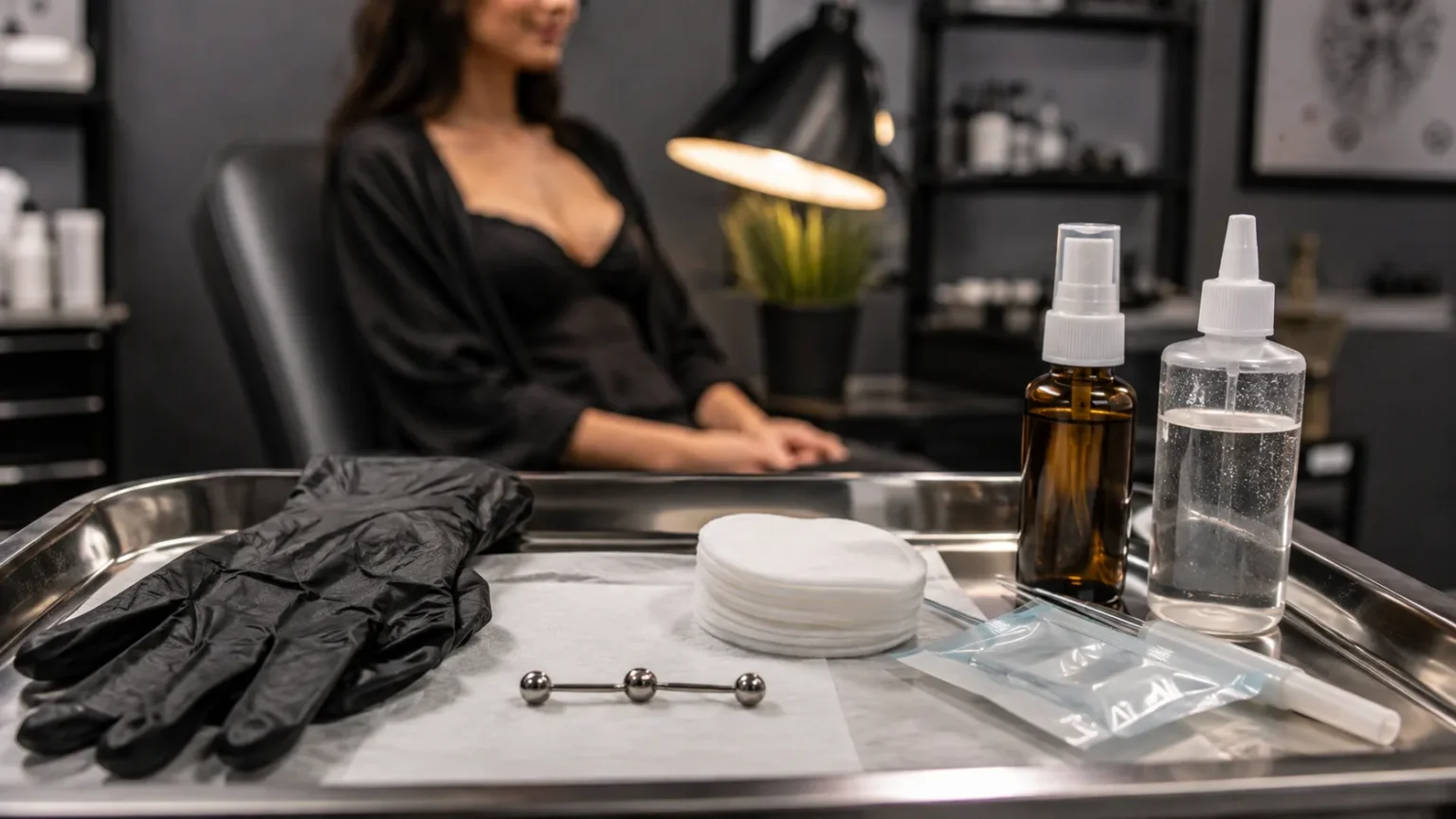
A nipple piercing is usually placed horizontally through suitable nipple tissue, although other orientations may be possible depending on anatomy and personal preference. The jewelry commonly used for an initial piercing is a straight barbell that leaves enough room for early swelling without creating excessive movement. Before piercing, a professional piercer evaluates the nipple, discusses placement, marks the entry and exit points, and prepares the area using hygienic procedures. A sterile single-use needle is then passed through the tissue before suitable jewelry is inserted. The actual needle procedure is usually completed very quickly. However, the quality of the placement and jewelry can influence comfort and healing for months afterward.
Professional technique matters because nipple anatomy differs widely between individuals. A piercing that is placed too deeply may create unnecessary discomfort, while one positioned too close to the surface can be more vulnerable to migration or rejection. Piercing through inappropriate tissue can also increase the risk of complications and poor healing. An experienced piercer should assess whether the anatomy can safely support the requested placement rather than automatically agreeing to perform it. Good positioning should allow the jewelry to sit naturally without excessive pressure on surrounding tissue. If anatomy is unsuitable, a responsible piercer may suggest an alternative or recommend against the procedure.
The studio environment is another important consideration when choosing where to get nipple piercings. Piercing equipment that comes into contact with the body should be appropriately sterilized, and needles should be sterile and single-use. The piercer should wash their hands, use fresh gloves, prepare a clean working area, and provide clear aftercare instructions. Jewelry should be made from body-compatible materials suitable for fresh piercings rather than inexpensive fashion jewelry of uncertain composition. A reputable studio should also be willing to explain its sterilization procedures and answer questions without becoming defensive. Feeling rushed or pressured is a reasonable reason to choose another professional.
Many people choose to have both nipples pierced during the same appointment, while others prefer to begin with one. Having both done together means both piercings pass through early healing at approximately the same time, which some people find convenient. On the other hand, two fresh piercings can make sleeping positions, exercise, clothing, and accidental bumps more difficult temporarily. Pain may also feel different from one side to the other even during the same appointment. There is no requirement to pierce both nipples simply for symmetry. The best choice depends on personal preference, anatomy, comfort, and willingness to manage the healing process.
Before the appointment, it helps to eat normally, stay hydrated, wear clean comfortable clothing, and avoid arriving when you feel unwell. People taking medications or managing health conditions that could influence bleeding, immunity, or wound healing should consider discussing body piercing with an appropriate healthcare professional beforehand. Alcohol or recreational substances should not be used as a way to reduce nervousness before piercing because they can interfere with judgment and may create additional problems. Preparing mentally is useful as well because anxiety can make a brief procedure feel more stressful. A trustworthy piercer should explain each stage so you know what is happening. Knowing what to expect often makes the experience more manageable.
How Painful Are Nipple Piercings?
Nipple piercing pain is often described as sharp, intense, and brief rather than prolonged at the same intensity. The nipple contains many nerve endings, so it is reasonable to expect the needle to be noticeable. However, pain tolerance differs dramatically, meaning one person’s experience cannot reliably predict another person’s. Some people describe the piercing as highly painful for a few seconds, while others find it easier than expected. Adrenaline can also influence how the procedure feels at the time. After the needle passes, the sensation usually changes from sharp pain to warmth, throbbing, tenderness, or soreness around the new piercing.
The second nipple may sometimes feel more painful when both are pierced during one appointment. This does not necessarily mean anything went wrong with the procedure. Anticipation may increase after experiencing the first piercing, and the body’s initial adrenaline response can change as the appointment continues. Other people report almost no meaningful difference between the two sides. Individual anatomy and sensitivity may also contribute to variations in pain. Because experiences are so personal, online nipple piercing pain ratings should be treated as rough descriptions rather than guarantees. Choosing a skilled piercer is more useful than trying to predict an exact pain score.
Tenderness after nipple piercing can last longer than the initial sharp pain. During the first several days, the area may feel sore when clothing moves across it or when the jewelry is accidentally bumped. Mild localized swelling can make the jewelry feel more noticeable than it will after early healing settles. Some people also notice temporary sensitivity when showering, exercising, changing clothes, or sleeping. These sensations should generally become easier to manage as the tissue begins recovering. Increasing or severe pain, especially when accompanied by spreading redness, significant warmth, fever, or worsening swelling, should not automatically be dismissed as ordinary healing.
Pain is also influenced by what happens after leaving the piercing studio. Tight clothing, rough fabrics, snagging the barbell on a towel, sleeping directly on the chest, or repeatedly touching the jewelry can keep the tissue irritated. A well-fitting clean shirt or soft supportive garment may help some people protect the area from accidental movement, while others prefer looser clothing. The goal is to reduce friction without creating excessive pressure. Even small repeated trauma can make a piercing remain tender for longer than expected. Treating the area gently during the early healing period is therefore just as important as getting through the piercing procedure itself.
People sometimes consider using numbing creams before nipple piercing, but applying products without discussing them with the piercer is not ideal. Certain topical products can change the texture or appearance of the tissue, irritate the skin, or make assessment more difficult. Pain medication may also be inappropriate for some people depending on medical conditions, allergies, or other medicines being taken. If pain management is a concern, it is better to discuss it with a qualified healthcare professional and the piercer before the appointment. The procedure itself is generally brief, while healing requires much more patience. Preparing for several months of careful aftercare is more important than focusing only on those few seconds of pain.
Nipple Piercing Healing Time and What to Expect
Nipple piercing healing time is usually measured in months rather than weeks. Many nipple piercings may take around six to twelve months to mature, and some take longer depending on the person and circumstances. A piercing can look calm on the outside long before the channel through the tissue is fully established. This is why changing jewelry too early, unnecessary handling, or assuming the piercing is completely healed can create setbacks. Healing is rarely a perfectly straight progression from sore to healed. Periods of improvement can be followed by temporary irritation after pressure, friction, illness, or accidental trauma.
During the first few days, mild swelling, tenderness, warmth, and a small amount of bleeding can occur. The nipples may appear slightly larger or more sensitive than usual, and the jewelry can feel unfamiliar against clothing. Small amounts of clear or pale fluid can also appear as the body begins repairing the wound. This fluid can dry around the jewelry and create light crusting. Gentle cleaning is usually sufficient, and crust should not be aggressively picked away. Significant worsening, strong foul odor, extensive swelling, or thick discharge combined with increasing pain deserves closer attention rather than being assumed to be routine.
As healing progresses, the piercing may produce occasional whitish or pale-yellowish lymph-like fluid that dries around the jewelry. This does not automatically mean the nipple piercing is infected, especially when there is no spreading redness, worsening pain, fever, or major swelling. Fresh piercings can alternate between looking completely calm and becoming temporarily irritated. Hormonal changes, exercise, friction, pressure, sweating, and accidental catching may make the area more sensitive for a short period. The important pattern is whether symptoms settle when irritation is reduced. A piercing that becomes progressively more painful or inflamed instead of gradually stabilizing should be assessed professionally.
Several months into healing, the piercing may feel comfortable enough that it is easy to forget it is still maturing internally. This period can lead people to change nipple jewelry prematurely or become less careful about snagging and pressure. The channel can remain delicate even when the outer openings look healthy. Jewelry changes during healing are best handled by an experienced piercer when a change is genuinely needed, such as downsizing a bar that has become excessively long after swelling decreases. Unnecessary removal can irritate the channel and make reinsertion difficult. Keeping appropriate jewelry in place provides stability while the tissue continues strengthening.
A healed nipple piercing should generally feel comfortable during normal daily activities and should not remain persistently swollen, painful, or actively draining. Even after healing, however, piercings can occasionally become irritated after trauma or pressure. The channel may also begin narrowing if jewelry is removed, and there is no guaranteed amount of time it will stay open without jewelry. Some long-established piercings remain open longer than others, but every person’s tissue behaves differently. If you want to keep the piercing, leaving suitable jewelry in place is usually the most predictable approach. Long-term care still includes keeping jewelry clean, checking threaded ends, and avoiding unnecessary trauma.
Nipple Piercing Aftercare: What Helps Healing?
Good nipple piercing aftercare is usually simple rather than aggressive. The main goals are keeping the area reasonably clean, minimizing irritation, and allowing the body’s natural healing process to continue without repeated interference. Wash your hands before touching the area when contact is genuinely necessary. Sterile saline suitable for wound care is commonly used to gently rinse fresh piercings, and normal shower water can also help remove softened debris. After cleaning, the area can be carefully dried using a clean disposable material or allowed to air dry. The jewelry should not need to be rotated, twisted, or moved back and forth during routine cleaning.
Overcleaning can be just as irritating as poor hygiene. Strong antiseptics, hydrogen peroxide, rubbing alcohol, harsh soaps, and concentrated homemade mixtures may damage or dry healing tissue. Tea tree oil and other essential oils are also commonly suggested online, but they can irritate sensitive skin and are not necessary for normal piercing aftercare. Repeatedly scrubbing around the holes may reopen delicate tissue and prolong inflammation. A piercing does not need to feel completely sterile every moment of the day to heal successfully. Gentle, consistent care combined with minimal handling is usually more useful than constantly applying different products in an attempt to speed healing.
Showering is generally easier to manage than soaking a fresh piercing for long periods. During early healing, extra caution around swimming pools, hot tubs, lakes, and other bodies of water is sensible because fresh piercing channels are vulnerable to contamination and irritation. If exposure cannot be avoided, discuss appropriate precautions with your piercer or healthcare professional based on the situation. After normal showering, make sure soap or shampoo residue does not remain trapped around the jewelry. Avoid using rough bath sponges or towels directly over the nipple piercing. Towels can also catch jewelry surprisingly easily, so careful drying helps prevent painful accidental pulls.
Clothing can play a major role in nipple piercing aftercare because the piercing is in frequent contact with fabric. Choose clean garments that reduce rubbing and do not repeatedly catch on jewelry. Some people find a soft supportive bra or fitted cotton shirt more comfortable because it limits movement, while others prefer loose clothing because pressure bothers them. Either choice can be reasonable if it feels comfortable and does not irritate the piercing. Sleeping positions may also need temporary adjustment, especially for people who normally sleep on their stomach. Reducing prolonged pressure can help prevent soreness and irritation bumps from developing around the piercing openings.
Hands-off healing is particularly important when intimacy or sexual contact is involved. Fresh nipple piercings should be protected from pulling, biting, sucking, rough touching, and contact with bodily fluids while healing because these activities can introduce bacteria or cause tissue damage. Communication with partners is important so accidental pressure does not occur. The same principle applies to sports, changing clothes, carrying bags, or any activity that could catch the jewelry. A painful snag can create swelling even when the piercing had previously been healing well. Patience during the healing period protects the long-term result and is usually easier than repeatedly trying to recover from preventable irritation.
Nipple Piercing Risks and Possible Complications
Infection is one of the complications people worry about most, although not every irritated piercing is infected. Normal healing may include mild redness, tenderness, light swelling, and small amounts of pale fluid, particularly early in recovery. Infection becomes more concerning when symptoms progressively worsen instead of improving, especially when redness spreads beyond the piercing area. Increasing heat, severe pain, significant swelling, pus-like drainage, red streaking, fever, or feeling generally unwell can also require medical attention. An abscess or deeper breast infection is more serious than ordinary surface irritation. Anyone experiencing significant or rapidly worsening symptoms should seek appropriate healthcare evaluation rather than relying entirely on home remedies.
If infection is suspected, removing nipple jewelry on your own may not always be the safest first action. The piercing channel can begin closing around an active infection, potentially interfering with drainage. However, every situation is different, and jewelry sometimes does need to be removed for specific complications or medical procedures. A qualified healthcare professional should guide treatment when significant infection is possible. Antibiotics may be necessary in some cases, but they should be selected based on proper medical assessment rather than using leftover medication. Piercers can provide valuable guidance about jewelry and irritation, but they cannot replace medical diagnosis and treatment when someone is genuinely ill.
Migration and rejection are different from infection. Migration occurs when the jewelry gradually moves from its original position, while rejection happens when the body increasingly pushes the jewelry toward the surface. Warning signs can include the tissue between the openings becoming thinner, the bar becoming more visible, the holes changing position, or the piercing appearing shallower over time. Poor placement, unsuitable anatomy, pressure, trauma, or inappropriate jewelry may contribute to these problems. Once significant rejection is underway, simply cleaning the piercing more frequently usually does not solve the underlying problem. An experienced piercer should assess changes early because removing a failing piercing at an appropriate time may help limit tissue damage and scarring.
Metal sensitivity and contact irritation can also create problems that resemble poor healing. Nickel-containing or low-quality jewelry may cause itching, redness, rash-like irritation, or persistent inflammation in sensitive individuals. Fresh nipple piercings generally do better with high-quality body jewelry made from appropriate materials, such as verified implant-grade titanium or other professional piercing materials suited to the individual. Jewelry finish is important as well because rough surfaces can irritate the channel every time the bar moves. The size must also be appropriate, since jewelry that is too tight can place pressure on swelling while jewelry that is excessively long may catch more easily. A professional jewelry assessment can often identify avoidable sources of irritation.
Scarring is possible with any piercing because the procedure creates a channel through body tissue. Some people develop small visible marks after removal, while others experience more noticeable scar tissue. Individuals who are prone to raised scars or keloids may have a higher concern and may want medical advice before undergoing elective piercing. Trauma, infection, rejection, and repeated irritation may also increase the chance of a more obvious scar. Piercing bumps should not automatically be labeled as keloids because several types of irritation and scar responses can look similar. Correct identification matters because squeezing, cutting, or treating a bump with harsh home remedies can make the area worse rather than improving it.
Choosing Safe Nipple Jewelry and Avoiding Irritation
Initial nipple piercing jewelry should prioritize safety, fit, and material quality over decorative appearance. Straight barbells are commonly selected because they can provide a stable shape while the piercing heals. The bar needs sufficient room for expected swelling without being so long that it constantly shifts or catches on clothing. Decorative pieces, heavy jewelry, chains, shields, and complex designs are usually better considered after the piercing has fully matured. Fresh tissue benefits from jewelry with a smooth surface and simple construction. A professional piercer should measure the anatomy individually rather than assuming that one standard bar length works for everyone.
Material quality can strongly influence comfort, particularly during the long nipple piercing healing process. Implant-grade titanium is popular because it is lightweight and generally suitable for people concerned about nickel sensitivity. Other high-quality professional piercing materials may also be appropriate when their composition and manufacturing quality are verified. Cheap mystery-metal jewelry can contain substances that irritate healing skin or may have poorly finished surfaces. Gold jewelry also varies greatly in quality, so simply seeing the word “gold” does not automatically make a piece appropriate for a fresh piercing. Choosing jewelry from a reputable professional piercer helps reduce uncertainty about materials, threading, polish, and construction.
Threading style is another detail that many first-time clients do not think about. Internally threaded or threadless jewelry is commonly preferred in professional piercing because rough external threads do not need to pass directly through the fresh piercing channel during insertion. Smooth manufacturing and securely fitted ends help reduce unnecessary mechanical irritation. Jewelry should be checked periodically after healing because threaded ends can sometimes loosen through normal movement. However, repeatedly tightening or manipulating fresh jewelry can also irritate the site. If a ball or end appears loose during healing and you are unsure how to handle it safely, a piercer can usually secure or replace the jewelry with minimal trauma.
Downsizing may be recommended after initial swelling has settled. Fresh nipple jewelry is often slightly longer to prevent the ends from pressing into swollen tissue, but that extra length may become inconvenient later. A bar that moves too freely can catch on clothing and create leverage that keeps the piercing irritated. Downsizing means replacing it with appropriately fitted jewelry once the anatomy and healing stage allow it. This should not be treated as an invitation to begin changing nipple jewelry frequently. A professional piercer can determine whether swelling has decreased enough and whether the piercing is stable enough for a carefully performed change.
Once nipple piercings are completely healed, there are many more jewelry options, but comfort should still matter. Rings, decorative barbells, and other designs can behave differently from the original jewelry and may place pressure on the piercing channel in new ways. Heavy pieces worn continuously may stretch or irritate tissue, while rough edges can catch on fabric. If a new design causes soreness, swelling, or persistent crusting, returning to simpler well-fitted jewelry may help. Jewelry trends should never be more important than tissue health. A healed piercing may be more durable than a fresh one, but it can still become irritated when subjected to repeated pulling, pressure, poor materials, or inappropriate fit.
Exercise, Intimacy, Sensitivity and Everyday Life With Nipple Piercings
Exercise does not necessarily have to stop completely after nipple piercing, but activities should be adjusted according to comfort and the risk of trauma. Running, gym workouts, contact sports, and movements that cause the chest to bounce or rub against clothing may feel uncomfortable during early healing. Clean supportive clothing can reduce movement for some people, provided it does not press painfully against the jewelry. Sweat itself is not a reason to panic, but showering afterward and avoiding prolonged damp, dirty clothing can support good hygiene. Activities involving direct chest impact require greater caution. Listening to discomfort is important because repeated mechanical irritation can prolong healing even when there is no infection.
Sleeping can require experimentation during the first few weeks. Stomach sleeping puts direct pressure on nipple jewelry and may leave the area sore in the morning. Side sleeping may be more comfortable, although blankets, pillows, and loose clothing can still catch on jewelry. Some people sleep in a clean soft shirt or comfortable supportive garment to reduce unexpected movement. There is no universal sleeping outfit required for nipple piercing aftercare. The best arrangement is one that protects the jewelry without creating tight pressure. As tenderness decreases, normal sleeping habits can gradually become easier, but direct pressure should still be avoided if it consistently causes irritation.
Sexual activity requires more deliberate precautions because nipples may normally be touched during intimacy. A healing piercing is still a wound, even when it looks attractive and feels less sore. Oral contact, saliva, rough handling, biting, pulling, and twisting can introduce bacteria or create tears in fragile tissue. Partners should understand that the piercing needs time before normal nipple stimulation resumes. Once fully healed, sexual activity can usually be approached according to personal comfort, but jewelry can still catch or pull during vigorous movement. Clear communication helps protect both comfort and the piercing itself, particularly during the extended healing period.
Changes in nipple sensitivity are difficult to predict. Some people report increased sensation after healing, others notice little difference, and some experience reduced or altered sensitivity. Early tenderness should not be mistaken for the final long-term result because inflammation and unfamiliar jewelry can temporarily make the area feel different. Nerve responses and healing patterns vary between individuals, so nipple piercing should not be pursued with a guarantee that it will increase sexual sensitivity. Placement and complications may also influence sensation. Anyone experiencing persistent numbness, severe nerve-like pain, or another concerning sensory change should seek professional evaluation rather than assuming it is an expected outcome.
Daily habits eventually become much easier once a nipple piercing is fully established, but awareness of snagging remains useful. Towels, lace fabrics, mesh clothing, loofahs, seat belts, sports equipment, and even pets can unexpectedly catch protruding jewelry. Many painful piercing stories begin with a completely ordinary moment rather than a medical complication. Moving carefully while changing clothes and drying after showers can prevent unnecessary trauma. Long-term nipple piercing care does not require constant attention, but suitable jewelry and sensible habits help maintain comfort. If a previously healed piercing suddenly becomes irritated, think about recent pressure, jewelry changes, physical activity, or accidental impact before assuming something more serious is occurring.
Breastfeeding, Removal and Long-Term Nipple Piercing Considerations
Having nipple piercings does not automatically mean someone will be unable to breastfeed in the future. Many people with current or previous nipple piercings are able to produce and feed breast milk, although individual outcomes cannot be guaranteed. Piercing can create scar tissue or affect some milk ducts, but the breast contains multiple pathways for milk rather than depending on one single opening. Previous infection, significant scarring, surgery, anatomy, and other health factors may also influence breastfeeding. Anyone planning pregnancy or concerned about future feeding can discuss their situation with a qualified healthcare professional or lactation specialist. A past nipple piercing by itself should not be assumed to eliminate breastfeeding ability.
Jewelry should not remain in place while a baby is nursing because loose parts can create a choking risk and metal jewelry can interfere with the baby’s latch or injure the mouth. Repeatedly removing and reinserting jewelry for every feed may also become impractical and can irritate the piercing channel. For this reason, many people choose to remove nipple jewelry during pregnancy or before breastfeeding begins. Piercing channels can narrow or close after jewelry removal, even when they have existed for years. If keeping the piercing long term is important, future repiercing can be discussed with a professional after breastfeeding and tissue changes have settled.
Pregnancy can change the breasts and nipples significantly, which may affect the comfort and fit of existing jewelry. Enlargement, tenderness, and skin changes can make previously comfortable barbells feel tight. Jewelry that begins pressing into tissue should not simply be ignored because prolonged pressure can cause irritation or embedding. A professional piercer can evaluate fit, while pregnancy-related health questions should be discussed with the appropriate healthcare provider. Getting a new nipple piercing during pregnancy is generally not a practical choice because healing requires many months and pregnancy introduces additional considerations. Waiting until the body has recovered and feeding plans are clear provides a more predictable situation.
People may eventually decide they no longer want nipple piercings, and removal is usually straightforward when no active complication is present. Once jewelry is removed, the openings may shrink quickly or gradually depending on how long the piercings existed and how the person’s body heals. Small marks, dimples, or visible scars can remain. If the piercing is actively infected, embedded, severely swollen, or otherwise abnormal, professional advice should be obtained before attempting removal. Forcing stuck jewelry can tear tissue or worsen inflammation. A piercer can help with uncomplicated jewelry removal, while medical professionals should manage significant infection, abscesses, or other health complications.
Long-term satisfaction with nipple piercings depends partly on having realistic expectations before getting them. They require a relatively long healing period, can become irritated from ordinary daily activities, and may occasionally need professional attention. At the same time, many people keep healed nipple piercings comfortably for years without making them a major part of daily maintenance. Choosing a skilled piercer, using high-quality jewelry, following gentle aftercare, and responding appropriately to warning signs can reduce avoidable problems. The decision should be based on personal preference rather than pressure from a partner or trend. Taking the healing commitment seriously gives the piercing a better chance of becoming a comfortable and sustainable body modification.
Frequently Asked Questions
How long do nipple piercings take to heal?
Nipple piercing healing commonly takes around six to twelve months, although some piercings can take longer. A piercing may look healed externally before the tissue inside the channel has fully matured.
How painful is a nipple piercing?
Most people describe nipple piercing as a brief but intense sharp sensation followed by tenderness or throbbing. Pain varies considerably depending on anatomy, individual pain tolerance, anxiety, and the skill of the piercer.
How do I know if my nipple piercing is infected?
Increasing pain, spreading redness, significant warmth, worsening swelling, pus-like drainage, fever, or feeling unwell can be warning signs of infection. Mild crusting or pale fluid alone can occur during normal healing, so concerning or worsening symptoms should be evaluated by a healthcare professional.
Can nipple piercings affect breastfeeding?
Many people with current or previous nipple piercings can breastfeed, although scar tissue or previous complications may affect milk flow in some cases. Jewelry should be removed during nursing because it can interfere with latch and create a choking or injury risk.
When can I change my nipple piercing jewelry?
Avoid changing jewelry simply because the piercing has stopped hurting, since internal healing may still be incomplete. If jewelry needs to be downsized or replaced during healing, having an experienced professional piercer perform the change is generally the safest approach.