21 Organization Hacks for a Clutter-Free Home
A clutter-free home does not have to mean bare rooms or perfectly arranged shelves. It means everyday belongings have useful places, important items are easy to find, and tidying does not take over your day. A few practical organization habits can make even a small home feel calmer and easier to manage.
The best home organization system fits the way you live. A family with young children may need open baskets and simple labels, while someone working from home may need an orderly desk and a clear place for papers. Start with the areas that cause daily frustration, then try one change at a time.
The 21 organization hacks below cover entryways, kitchens, bedrooms, bathrooms, and shared spaces. Many use items you already own, so you can test a system before buying storage products. Focus on making belongings easy to put away, not just attractive to look at.
Entryway Organization Hacks
1. Create a landing zone. Set aside a small tray, shelf, or table for the things you bring home every day, such as keys, a wallet, and sunglasses. Keeping these essentials together makes it easier to leave on time. Choose a spot near the door that does not block the path through your entryway.
2. Add a hook for each regular bag. Wall hooks can keep backpacks, purses, and reusable shopping bags off the floor. Place them at a height that works for the people who use them, including children. A hook gives each bag a visible home and makes it easier to grab before heading out.
3. Use a shoe boundary. Place a shoe rack, mat, or low basket near the entrance to keep footwear from spreading through the house. Assign a section to each household member if that makes the system easier to follow. Keep only the pairs used regularly in this spot and store seasonal shoes elsewhere.
Kitchen Organization Hacks
4. Group items by task. Keep the tools you use for making coffee, preparing breakfast, or packing lunches close together. This turns a jumble of kitchen supplies into useful activity zones. Store each group near where you use it, so you do not have to cross the room or open several cupboards to finish one task.
5. Arrange pantry items by category. Place baking supplies, snacks, canned goods, and breakfast foods in separate sections. Grouping similar items helps you see what you have before shopping and makes it simpler for other household members to put things away. Use clear containers if they suit your routine, but keep original packaging when it is more practical.
6. Make a “use first” area. Choose one visible shelf or basket for foods that should be eaten soon, such as opened packages or produce nearing its best. Check this spot before preparing meals or buying groceries. The habit can help you reduce food waste and prevent forgotten items from getting pushed to the back.
Closet and Bedroom Organization Hacks
7. Turn hangers in one direction. Face all your hangers the same way so clothes are easier to scan. When you wear and return an item, turn its hanger around. After a season, you can see which pieces you reached for and review the rest based on fit, comfort, and how you actually dress.
8. Organize clothing by category. Keep shirts with shirts, trousers with trousers, and sleepwear in its own drawer or basket. Within each group, arrange clothes by color only if it helps you find items faster. A clear category system makes getting dressed easier and highlights where you may have more than you need.
9. Use the space under the bed thoughtfully. Store items you use occasionally, such as spare bedding or off-season clothes, in low containers under the bed. Choose containers that slide out easily and label them so their contents are clear. Avoid using this area as a catch-all for belongings you have not decided how to organize.
Bathroom and Laundry Organization Hacks
10. Give daily toiletries a small tray. Keep the products you use each morning or evening together on a tray or in a compact basket. This makes the counter easier to wipe and helps prevent everyday items from spreading across the sink. Store occasional-use products elsewhere so the tray stays useful rather than crowded.
11. Assign each person a bathroom spot. If several people share a bathroom, use labeled baskets, drawer sections, or shelves for personal items. This reduces mix-ups and makes it easier to clear shared surfaces after use. Keep commonly used products within reach, and store backup supplies in a separate cabinet or closet.
12. Set up a simple laundry flow. Place a hamper where clothes naturally come off, then keep detergent and other laundry supplies together nearby. If you sort clothes by color or fabric, use separate sections or small labeled baskets. A clear path from hamper to washer to closet makes laundry less likely to pile up.
Living Room and Shared Space Hacks
13. Give remote controls one home. Use a small basket, tray, or drawer to hold the remotes and other items that tend to vanish between cushions. Choose a spot everyone can reach and return things to it after watching television. A consistent home makes it easier to find small items without searching the whole room.
14. Keep a return basket for stray belongings. Place a basket in a shared space and add items that belong in other rooms as you notice them. Empty it once a day or at a time that fits your routine. This collects clutter in one temporary spot while helping you return items without making repeated trips.
15. Protect clear surfaces. Choose one table, counter, or shelf to keep mostly clear, even when the rest of the room is in use. This gives you a usable place for meals, reading, or everyday tasks. If objects keep landing there, add a nearby basket or tray for the items that need a proper home.
Paper, Small Items, and Digital Organization Hacks
16. Create an incoming-paper station. Use a folder, tray, or wall pocket for mail, school notices, and documents that need attention. Sort it regularly so the station does not become a permanent pile. Recycle obvious junk mail promptly and file important papers in a consistent place once you have handled them.
17. Use small dividers in drawers. Drawer organizers, small boxes, or repurposed containers can separate items such as batteries, stationery, hair accessories, or kitchen tools. Dividers make contents easier to see and help prevent small belongings from mixing together. Measure the drawer first, and start with containers you already have.
18. Store cables with the devices they belong to. Use a labeled pouch, small box, or cable tie to keep chargers and accessories together by device or purpose. This reduces the familiar tangle of loose cords and makes packing easier. Keep only cables you can identify and use, rather than holding on to every spare wire.
Keep Your Home Organized Day to Day
19. Reset one room before bed. Spend five minutes returning belongings to their usual homes, clearing a surface, or folding a blanket. Focus on the spaces you use most, such as the kitchen or living room. A short reset makes the next morning feel more manageable without turning tidying into a long nightly project.
20. Try the one-in, one-out rule. When you bring home a new item in a crowded category, review whether there is an older one you can donate, recycle, or discard. This works especially well for clothes, mugs, toys, and books. Treat it as a gentle reminder to check your storage, not a strict rule for every purchase.
21. Label storage where it helps. Labels are useful for shared shelves, pantry containers, children’s baskets, and boxes stored out of sight. Choose clear words that describe what belongs inside, rather than broad labels such as “miscellaneous.” Avoid labeling every object; focus on places where a label will help someone put things back correctly.
Choose Storage That Fits Your Routine
Storage works best when it supports the way you use a room. Frequently used belongings should be easy to reach, while seasonal or occasional items can go higher up or farther back. If putting something away requires moving several other items, the system may be too complicated to maintain.
Measure shelves, drawers, and cupboards before buying organizers. A container that is too large can waste space, while one that is too small may overflow quickly. Try baskets, jars, boxes, or trays you already own before shopping, then choose new storage only when you know what you need.
Leave some breathing room in shelves and containers so items can move in and out easily. Overfilled storage makes it hard to find belongings and can lead to new piles around the room. Review a container when it becomes difficult to use instead of adding another bin to hold the overflow.
Build an Organization Routine That Lasts
Organization is easier to maintain when it is part of a routine you already follow. Put keys away when you get home, return cooking tools after dinner, or clear your desk before closing your laptop. Linking a small action to a familiar part of the day makes it more likely to become a habit.
Choose a weekly moment to check the areas that gather clutter fastest. You might review the entryway, clear the kitchen counter, or empty the basket of items that belong elsewhere. A brief check helps you spot a small buildup early, before it turns into a larger sorting project.
Simple Decluttering Hacks, like setting a 10-minute timer and organizing one small area at a time, help you make steady progress.
Make Organization Easier in a Small Home
In a small home, every storage area needs to work efficiently. Use wall hooks, over-door organizers, and shelves to make use of vertical space, while keeping walkways clear. Choose furniture with storage only when it meets a real need and does not make the room feel crowded.
Look for underused spaces, such as the backs of cupboard doors, the area under a bed, or a narrow wall beside a desk. Use these spots for items that fit their dimensions and are safe to access. Keep heavier belongings low and frequently used items within comfortable reach.
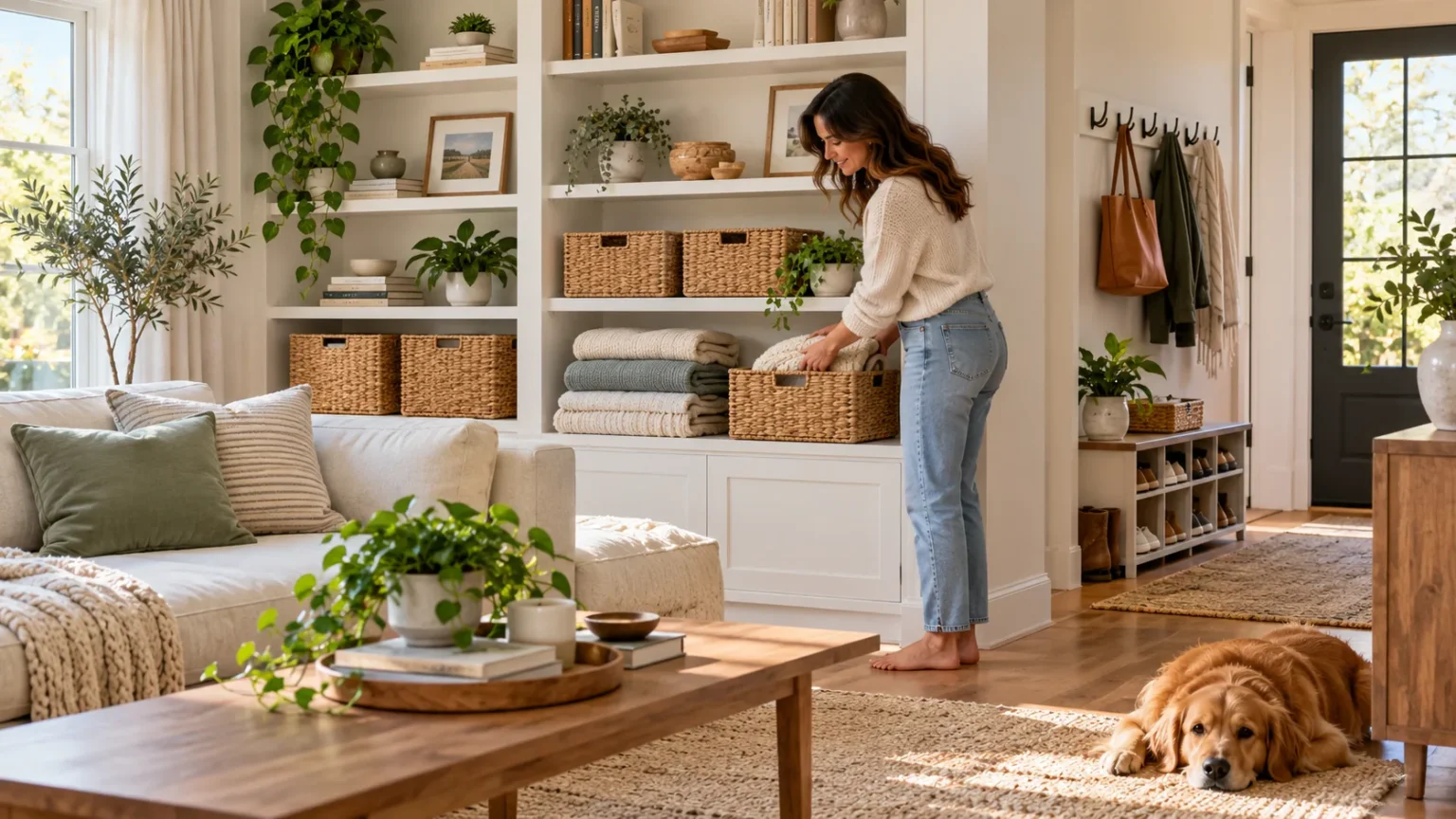
Use multipurpose storage carefully. A basket can hold blankets in the living room or supplies in a home office, but it should have a clear purpose. When one container becomes a home for unrelated odds and ends, review its contents and assign belongings more suitable locations.
Conclusion
A clutter-free home comes from practical systems that make belongings easy to find and put away. Start with a high-traffic area, try a few of these 21 organization hacks, and keep the ones that suit your household and daily routines.
You do not need matching containers or a full weekend to get organized. Simple changes—such as a landing zone, a return basket, or a five-minute evening reset—can make everyday tasks smoother and reduce the amount of time spent searching for things.
Review your systems when they stop working for you. A household’s needs change, and storage can be adjusted as people, routines, and belongings change. With regular small resets and useful homes for everyday items, it becomes easier to keep clutter under control.
FAQs
How do I organize my home when I feel overwhelmed?
Choose one small area, such as a drawer or entryway shelf, and work on it for 10 minutes. Finish by putting items away or removing donations and rubbish so the space stays clear.
What is the best way to keep a home clutter-free?
Give everyday belongings convenient, consistent homes and return them after use. A short daily reset and occasional review of crowded areas can help prevent clutter from building up.
Should I buy storage containers before organizing?
It is usually easier to sort and measure first, then choose containers for the items you plan to keep. This helps you avoid buying organizers that do not fit your space or routine.
How can I organize a small home?
Use vertical space with shelves and hooks, store occasional items under beds, and keep frequently used belongings easy to reach. Clear pathways and avoid overfilling storage areas.
How often should I declutter and reorganize?
Do quick resets daily or weekly, depending on your household, and review storage when a space becomes difficult to use. Small check-ins often take less effort than occasional large clear-outs.