

Posterior Chain: Muscles, Benefits & Best Exercises
If you have ever performed a deadlift, climbed a steep hill, sprinted across a field, or simply stood up from a chair, you have relied heavily on your posterior chain. This group of muscles runs primarily along the back of the body and helps produce many of the powerful movements involved in everyday life, exercise, and sports.
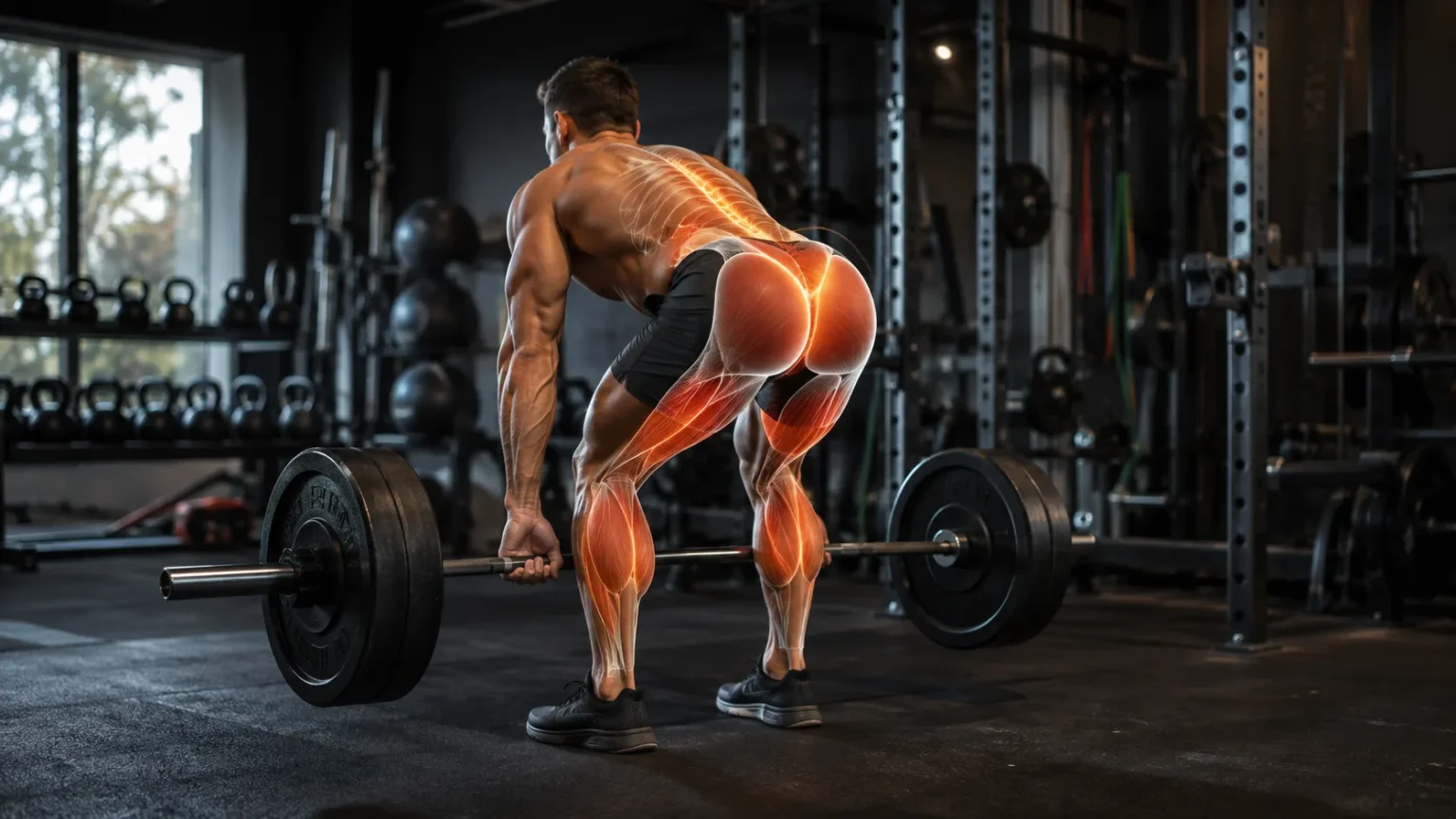
The posterior chain includes major muscles such as the glutes, hamstrings, spinal erectors, and calves, along with several smaller supporting muscles. Together, they help extend the hips, stabilize the spine, control the knees and ankles, maintain upright posture, and transfer force between the lower and upper body.
Developing these muscles can contribute to stronger lifting, more powerful running and jumping, better movement control, and greater resilience during physical activity. A balanced posterior chain workout can also complement exercises that emphasize the front of the body, helping prevent your training routine from becoming unnecessarily dominated by quadriceps, chest, and pressing movements.
However, posterior chain training does not require performing the heaviest possible deadlift. Beginners and experienced athletes can strengthen these muscles through exercises such as glute bridges, Romanian deadlifts, hip thrusts, back extensions, Nordic hamstring curls, and kettlebell swings. The key is choosing movements appropriate for your ability and performing them with controlled technique.
What Is the Posterior Chain?
The posterior chain is a functional term used in fitness and strength training to describe muscles located primarily along the back side of the body. Rather than functioning as one single anatomical structure, these muscles work together during movements that involve hip extension, spinal stabilization, knee control, and pushing the body forward.
Some of the largest posterior chain muscles are found around the hips and thighs. The gluteus maximus produces powerful hip extension, while the hamstrings help extend the hip and bend the knee. These muscles become especially important when running, jumping, climbing, hinging, or lifting an object from the floor.
The muscles surrounding the spine also contribute significantly. The erector spinae and other deep trunk muscles help stabilize the torso and maintain spinal position while forces travel through the body. The calves contribute at the lower end of the chain by helping control the ankle and produce force during walking, running, and jumping.
Thinking of these muscles as a chain is useful because movement rarely occurs through one isolated muscle. During a deadlift, for example, the hips, hamstrings, glutes, trunk, and upper back must coordinate. Training the posterior chain therefore focuses on improving how these areas work both individually and together.
Which Muscles Make Up the Posterior Chain?
The gluteal muscles are among the most important components of the posterior chain. The gluteus maximus is particularly important for hip extension, while the gluteus medius and minimus contribute to hip stability and control. Strong glutes help with movements ranging from standing up to sprinting, jumping, squatting, and climbing stairs.
The hamstrings run along the back of the thigh and consist primarily of the biceps femoris, semitendinosus, and semimembranosus. They help bend the knee and extend the hip. Because they cross important joints, the hamstrings play a major role in running mechanics, deceleration, jumping, and many hip-hinge exercises.
Along the back of the torso, the erector spinae and surrounding back muscles help maintain and control spinal position. The latissimus dorsi and upper-back musculature can also contribute to whole-body posterior-chain movements by stabilizing the torso and connecting forces between the shoulders, trunk, pelvis, and lower body.
The calves, particularly the gastrocnemius and soleus, complete an important part of the lower posterior chain. They help control the ankle and generate plantar flexion when you walk, run, jump, or rise onto your toes. Smaller muscles around the hips, pelvis, and spine also contribute to stability and coordinated movement.
Why Is the Posterior Chain Important?
The posterior chain is fundamental to hip extension, one of the most important movement patterns in the human body. Hip extension occurs when you straighten the hip after it has been flexed, such as when standing up from a chair, climbing stairs, finishing a deadlift, or driving your body forward during running.
These muscles also help control the trunk while forces pass through the body. When lifting something from the floor, the hips must generate force while the torso remains appropriately controlled. A well-trained posterior chain makes it easier to coordinate this movement without relying excessively on one joint or muscle group.
Athletic movements depend particularly heavily on posterior-chain strength. Sprinting requires powerful hip extension, jumping demands coordinated force production through the hips and legs, and changing direction requires the muscles to both produce and absorb force efficiently.
The posterior chain matters outside the gym too. Carrying groceries, gardening, walking uphill, lifting luggage, picking up children, and getting out of a low chair all require some combination of hip, trunk, and leg strength. Training these muscles can therefore support both athletic performance and everyday physical capacity.
What Happens When Your Posterior Chain Is Weak?
A relatively weak posterior chain may make certain movements feel more difficult or less coordinated. For example, someone who struggles to use the hips effectively during a hinge may compensate by relying more heavily on the knees or changing the way the trunk moves during lifting.
Weakness can also become noticeable during activities that require repeated hip extension. Walking uphill, sprinting, climbing stairs, or performing repeated deadlifts may feel unusually demanding when the glutes and hamstrings lack sufficient strength or endurance for the task.
However, it is important not to blame every posture problem, injury, or episode of back pain on a “weak posterior chain.” Human movement is influenced by strength, mobility, technique, training history, fatigue, anatomy, previous injuries, sleep, workload, and many other factors.
If pain rather than simple weakness is limiting movement, repeatedly adding heavier posterior chain exercises may not solve the problem. Persistent or severe pain, numbness, weakness, or symptoms following an injury should be evaluated appropriately before aggressively increasing training loads.
Benefit 1: A Strong Posterior Chain Builds Powerful Hip Extension
Hip extension is the movement that brings your thigh and torso back toward a straight position after the hip bends. The gluteus maximus and hamstrings are major contributors, making posterior-chain strength especially valuable in movements requiring forceful extension of the hips.
Think about the top portion of a deadlift. After lifting the weight from the floor, you finish by extending the hips until you are standing tall. Similar mechanics appear during jumping and sprinting, although they occur much more quickly and involve different forces.
Training exercises such as hip thrusts, deadlifts, Romanian deadlifts, and kettlebell swings can strengthen the muscles involved in this movement. The appropriate exercise depends on experience, mobility, equipment, goals, and how comfortably you can perform the technique.
Improving hip extensor strength can benefit athletes, recreational exercisers, and people who simply want everyday tasks to feel easier. It is one of the main reasons posterior-chain development belongs in a balanced resistance-training program.
Benefit 2: It Can Improve Strength for Lifting
Many common strength exercises depend on the posterior chain. Deadlifts, Romanian deadlifts, good mornings, hip thrusts, kettlebell swings, back extensions, and certain squat variations all require the hips and back-side musculature to produce or control force.
A stronger posterior chain can therefore improve your capacity to lift loads while maintaining better control. The hamstrings and glutes produce force at the hips while the trunk muscles help maintain an appropriate torso position throughout the movement.
Strength should still be developed progressively. Being able to generate large amounts of force is useful only when the body can control the load. Beginners often benefit from learning the hip-hinge movement with lighter resistance before progressing toward heavier barbells.
For general fitness, there is no requirement to perform extremely heavy deadlifts. Dumbbells, kettlebells, resistance bands, machines, and bodyweight movements can all help strengthen the posterior chain muscles when resistance and difficulty gradually progress.
Benefit 3: Posterior Chain Training Supports Running and Sprinting
Running is much more than repeatedly moving the legs forward. The body must push against the ground to propel itself, and muscles around the hips, thighs, calves, and trunk work together throughout each stride.
The glutes contribute to powerful hip extension while the hamstrings perform important roles during different phases of running. The calves help manage forces at the ankle and contribute to propulsion as the foot leaves the ground.
This is particularly important during sprinting, where forces and movement speeds become much greater. Athletes often include hip-extension exercises, eccentric hamstring strengthening, sprint training, and other posterior-chain work to develop physical qualities relevant to faster running.
Strength exercises alone do not guarantee greater speed because sprint performance also depends on technique, coordination, training specificity, body composition, and genetics. However, sufficient glute and hamstring strength provides an important physical foundation for running performance.
Benefit 4: It Can Support Jumping and Explosive Movement
Jumping requires rapid force production through several joints. The hips extend, knees straighten, and ankles contribute force as the body pushes away from the ground. This coordinated action involves both posterior and anterior muscle groups rather than one isolated chain.
The gluteus maximus is particularly important during powerful hip extension. Hamstrings assist at the hip while the calves contribute around the ankle, meaning several major posterior-chain muscles participate as the body accelerates upward.
Exercises such as deadlifts and hip thrusts can help develop general strength, while kettlebell swings, jumps, bounds, and other faster exercises can introduce more explosive qualities when appropriate. Strength and speed training serve different purposes and can complement one another.
Beginners should establish movement control before adding high-impact plyometric training. Landing quality, gradual volume progression, and sufficient recovery are important because explosive exercises place greater demands on muscles, tendons, joints, and the nervous system.
Benefit 5: It Helps You Perform Everyday Movements
Posterior-chain strength is useful even if you never plan to sprint or lift a barbell. Everyday activities frequently involve bending at the hips, standing up, carrying objects, walking, climbing, and maintaining the body against gravity.
Picking a box up from the floor is one example. The hips and knees bend as you lower toward the object, and muscles throughout the legs and trunk help return you to standing. Stronger muscles generally provide greater capacity for handling these routine physical demands.
Getting out of a chair also requires significant lower-body strength. While the quadriceps contribute substantially, the glutes and other hip muscles help extend the hips and bring the body upright. Similar demands appear during stair climbing and walking uphill.
Maintaining functional strength through resistance training becomes particularly valuable as people age because muscle strength tends to decline without sufficient physical activity. A balanced program that includes posterior-chain movements can support the ability to continue performing everyday tasks independently.
Benefit 6: Posterior Chain Training Can Improve Movement Balance
Many gym routines naturally emphasize muscles that are easy to see in the mirror. Chest presses, shoulder presses, abdominal exercises, and quadriceps-focused leg movements can gradually dominate training while pulling, hip-hinge, and hamstring exercises receive less attention.
There is nothing inherently wrong with training these front-side muscles. The problem appears when a program repeatedly develops only a limited range of movement patterns. Balanced resistance training should provide appropriate work for both the front and back sides of the body.
Adding rows, hip hinges, hamstring exercises, hip extension movements, and calf work can create a more comprehensive routine. This does not require maintaining an exact one-to-one ratio between every muscle group; training needs differ according to goals and individual weaknesses.
Think of posterior chain training as part of whole-body development rather than a corrective punishment for training the front of your body. Well-rounded programs develop pushing, pulling, squatting, hinging, carrying, and other useful patterns according to the individual’s needs.
Benefit 7: Strong Hamstrings May Support Injury-Prevention Programs
Hamstring strains are common in sports involving high-speed running, particularly when athletes repeatedly sprint, accelerate, and change direction. Because the hamstrings experience substantial force during sprinting, preparing them for those demands is an important part of athletic conditioning.
Eccentric exercises require muscles to produce force while lengthening. The Nordic hamstring curl is a well-known example and has been extensively studied as part of hamstring-strengthening and injury-prevention programs in athletic populations.
Evidence supports including Nordic hamstring work in appropriately designed programs for many athletes, although no exercise can guarantee someone will remain injury-free. Training exposure, sprinting demands, previous injuries, fatigue, workload, strength, and numerous other factors also influence injury risk.
Nordic curls are demanding, so beginners should not assume they need to immediately perform full repetitions from the floor. Assisted variations, smaller ranges of motion, controlled progressions, and other hamstring exercises can help build the strength necessary to progress safely.
Best Exercise 1: Romanian Deadlift
The Romanian deadlift, commonly called the RDL, is one of the most useful exercises for developing the hamstrings, glutes, and hip-hinge pattern. Unlike a conventional deadlift that normally begins from the floor, an RDL typically starts from a standing position.
Begin with the weight close to your thighs and soften your knees slightly. Push your hips backward while keeping the load close to your legs and maintaining a controlled trunk position. Descend only as far as you can while maintaining the hinge and feeling tension through the hamstrings.
Drive your feet into the floor and extend your hips to return to standing. Avoid turning the exercise into a squat by excessively bending the knees, and do not force the weight toward the floor if your available range of motion ends higher.
RDLs can be performed with a barbell, dumbbells, kettlebells, or other resistance. Beginners often find dumbbells especially accessible because they can start light and concentrate on learning the hip hinge technique before progressively adding resistance.
Best Exercise 2: Hip Thrust
The hip thrust places a strong emphasis on hip extension and is widely used to train the glutes. It is typically performed with the upper back supported on a bench while the feet remain planted on the floor and resistance is positioned across the hips.
From the lowered position, push through your feet and extend the hips until your torso and thighs approach a straight line. The movement should come primarily from the hips rather than aggressively arching the lower back at the top.
Barbells are commonly used for loaded hip thrusts, but beginners can start with bodyweight or lighter resistance. Machines, dumbbells, resistance bands, and dedicated hip-thrust equipment also provide ways to increase difficulty.
The barbell hip thrust can complement rather than necessarily replace deadlifts and squats. Different exercises challenge muscles through different positions and ranges, so combining movement patterns often creates a more complete lower-body training program.
Best Exercise 3: Glute Bridge
The glute bridge is a simple posterior-chain exercise that requires little or no equipment. Lie on your back with your knees bent and feet on the floor, then press through your feet and extend the hips until the body forms a controlled line from shoulders toward knees.
Pause briefly near the top and focus on using the glutes rather than exaggerating lower-back extension. Return toward the floor under control and repeat. The exercise can be particularly useful for beginners learning how hip extension feels before attempting more complicated hinge movements.
Once bodyweight repetitions become easy, resistance can be added across the hips. Bands, dumbbells, or barbells can increase difficulty, while single-leg variations provide another progression by increasing the demand placed on each side.
A glute bridge is not automatically superior to squats, deadlifts, or hip thrusts. Its main advantage is simplicity. It provides an accessible way to train hip extension at home, during warm-ups, or within beginner strength programs.
Best Exercise 4: Conventional Deadlift
The deadlift trains several areas of the posterior chain simultaneously and teaches the body to produce force while lifting an external load. Depending on body structure, technique, and deadlift variation, the glutes, hamstrings, spinal erectors, upper back, quadriceps, and grip all contribute.
A conventional deadlift normally begins with the weight on the floor. The lifter establishes a stable position, creates tension through the trunk and upper body, and pushes through the floor while the hips and knees extend until standing.
Technique matters because individual anatomy influences the exact starting position. Trying to copy another person’s hip height or torso angle precisely may be inappropriate. The goal is a stable, repeatable setup that allows force to be produced efficiently without losing control of the load.
You do not need to deadlift from the floor to build a strong posterior chain. Trap-bar deadlifts, elevated deadlifts, dumbbell variations, and machines may suit certain people better. Exercise selection should fit your mobility, experience, equipment, and training goals.
Best Exercise 5: Nordic Hamstring Curl
The Nordic hamstring curl specifically challenges the hamstrings eccentrically. Kneel with your ankles secured beneath a stable support or held by a partner, maintain a relatively straight line through the torso and thighs, and slowly lower your body forward.
The hamstrings work intensely to resist gravity as the body moves toward the floor. Because the exercise is demanding, most beginners cannot control a full repetition immediately. That is completely normal and does not mean the exercise is being performed unsuccessfully.
Assistance can make the movement more accessible. Resistance bands can support part of the body weight, or the athlete can lower through only the range they can control before using the hands to catch themselves and return to the starting position.
The Nordic hamstring exercise has become particularly valuable in sports conditioning because eccentric hamstring strength is important during high-speed running. Volume should still progress gradually because the exercise can produce substantial muscle soreness when introduced too aggressively.
Best Exercise 6: Back Extension
Back extensions train the muscles involved in extending and stabilizing the hips and trunk. They are usually performed on a 45-degree hyperextension bench, horizontal back-extension station, or similar piece of equipment that allows the torso to move around the hips.
Depending on technique, the movement can emphasize the glutes, hamstrings, or spinal erectors to different degrees. A hip-focused variation involves hinging around the hips while keeping the trunk controlled, then using the hip extensors to return to the starting position.
The name “back extension” sometimes leads people to dramatically arch the lower spine at the top. That is unnecessary. Returning to a controlled neutral standing relationship between the hips and torso generally provides sufficient range without repeatedly forcing excessive spinal extension.
Beginners can use bodyweight before holding a plate, dumbbell, or other resistance. Back extensions are particularly convenient as an accessory exercise because loading can be increased gradually without requiring the same technical demands as a heavy barbell deadlift.
Best Exercise 7: Kettlebell Swing
The kettlebell swing is a dynamic hip-hinge exercise that uses rapid hip extension to propel the kettlebell. The arms guide the weight, but the primary force should come from the hips rather than turning the movement into a slow front raise.
As the kettlebell travels backward, the hips hinge and the hamstrings load. The hips then extend quickly, allowing momentum to move the kettlebell forward. The body returns immediately into the next hinge as the kettlebell moves back.
Because swings happen quickly, learning a controlled hip hinge first is useful. Someone who cannot comfortably perform an RDL or unloaded hinge may benefit from mastering those slower movements before adding ballistic speed.
When performed appropriately, kettlebell swings can develop posterior-chain endurance and explosive hip extension. They should still be introduced progressively, particularly for people unfamiliar with ballistic resistance training.
Best Exercise 8: Good Morning
The good morning is another hip-hinge movement that targets the hamstrings, glutes, and trunk musculature. A barbell is commonly positioned across the upper back, similar to a back squat, while the lifter pushes the hips backward and allows the torso to incline forward.
Because the load sits farther from the hips than during many other hinge exercises, even relatively modest resistance can create substantial demand. Beginners should therefore learn the movement with very light weight rather than treating it as an exercise that needs heavy loading.
Maintain controlled knees and push the hips backward while keeping the torso stable. Stop at the point where you can maintain your intended position, then drive the hips forward to return to standing.
Good mornings are useful but not mandatory. If an RDL feels more comfortable or easier to control, it can fulfill a similar training role. The best posterior chain exercise is not simply the hardest movement but one you can perform effectively and progressively.
Best Exercise 9: Calf Raise
The calves are sometimes forgotten when people discuss posterior-chain training because attention usually goes directly to the glutes and hamstrings. However, the gastrocnemius and soleus play important roles in ankle movement, walking, running, and jumping.
Calf raises provide a straightforward way to strengthen these muscles. From a stable standing position, rise onto the balls of the feet by lifting the heels, pause briefly, and lower under control through a comfortable range of motion.
Standing calf raises tend to place substantial demand on the gastrocnemius, while seated variations with the knees bent can increase the relative contribution of the soleus. Including both positions can provide broader calf development.
Progressive resistance remains important just as it does for other muscles. Once high-repetition bodyweight calf raises become easy, adding resistance can continue the training stimulus rather than performing endlessly increasing numbers of repetitions.
How to Build a Posterior Chain Workout
A good posterior chain workout does not need every exercise listed above. In many cases, selecting one primary hip-hinge exercise, one additional hip-extension movement, one hamstring-focused exercise, and appropriate calf or back work is enough to create a productive session.
For example, a session could include Romanian deadlifts followed by hip thrusts, assisted Nordic curls, and calf raises. Another person might use trap-bar deadlifts, back extensions, leg curls, and kettlebell swings depending on their equipment and training experience.
Beginners can often start with two or three working sets per exercise using resistance that allows controlled technique. As strength and experience increase, training volume, resistance, repetitions, or exercise difficulty can gradually progress according to the person’s goals.
Recovery matters too. Training the posterior chain hard every day does not necessarily produce faster results. Muscles need enough recovery between demanding sessions, and the optimal training frequency depends on total volume, intensity, exercise selection, sleep, nutrition, and the rest of the weekly program.
How Often Should You Train Your Posterior Chain?
For many people, training major muscle groups around two or more times across the week can work well when total training volume is distributed appropriately. That does not mean performing maximal deadlifts multiple times every week; different sessions can use different exercises and intensities.
Someone might perform heavier deadlifts on one day and lighter Romanian deadlifts or hip thrusts later in the week. This approach exposes the muscles to repeated training while avoiding the need to make every session equally demanding.
Beginners may require less total work because a relatively small stimulus can produce progress when resistance training is new. More experienced lifters often require greater training volume or more challenging loads, although recovery capacity still limits how much useful work can be performed.
Pay attention to performance rather than soreness alone. Constant severe soreness is not evidence of a better workout. A productive posterior chain training program allows strength and movement quality to improve over time without repeatedly leaving you unable to train normally.
Common Posterior Chain Training Mistakes
One common mistake is using too much weight before mastering the hip hinge. When the load becomes the main priority, technique may change and the intended muscles may no longer be challenged as effectively. Starting lighter makes it easier to learn how to move through the hips while maintaining control.
Another mistake is assuming every posterior-chain exercise should be felt primarily in the lower back. The spinal erectors will work during many movements, but excessive lower-back discomfort is not a required sign of effective training. Glutes and hamstrings should contribute significantly during hip-dominant exercises.
People also sometimes focus entirely on deadlifts while neglecting other functions. The posterior chain includes several muscles with different roles, so adding hamstring knee-flexion work, hip-extension movements, and calf exercises can create more complete development.
Finally, avoid changing exercises constantly. Progressive overload requires enough consistency to improve technique and track performance. Keeping several reliable posterior chain exercises in your program for a meaningful period is often more productive than chasing a different variation every workout.
How to Strengthen Your Posterior Chain Safely
Start with movements you can control. Bodyweight bridges, light RDLs, supported hinges, and machine-based exercises can help develop confidence before heavier or faster training. There is no benefit in rushing toward advanced exercises when basic movement quality is still developing.
Increase resistance gradually. Progressive overload can involve adding weight, repetitions, sets, range of motion, or exercise difficulty, but those changes do not need to occur simultaneously. Small improvements accumulated consistently can produce substantial strength gains over time.
Warm-ups should prepare you for the activity rather than exhaust the muscles before training begins. A few minutes of general movement followed by lighter versions of the exercises you plan to perform can help you practice technique and gradually prepare for heavier working sets.
Normal muscular effort and temporary post-training soreness can occur, but sharp pain, sudden weakness, numbness, or symptoms that persist or worsen should not simply be trained through. If an injury or medical condition affects your exercise choices, seek individualized guidance from an appropriate healthcare or exercise professional.
The Bottom Line on Posterior Chain Training
The posterior chain describes an interconnected group of muscles running primarily along the back of your body. The glutes, hamstrings, spinal erectors, calves, and supporting back and hip muscles help control important movements at the hips, spine, knees, and ankles.
These muscles contribute to lifting, running, jumping, climbing stairs, walking uphill, standing from a chair, and many other everyday activities. Strengthening them can improve physical capacity and complement training for muscles on the front of the body.
Some of the best posterior chain exercises include Romanian deadlifts, hip thrusts, glute bridges, conventional or trap-bar deadlifts, Nordic hamstring curls, back extensions, kettlebell swings, good mornings, and calf raises. You do not need to perform all of them to build an effective program.
Choose a few exercises suited to your goals and experience, master their technique, and gradually increase the challenge over time. Consistency, progressive resistance, balanced training, sufficient recovery, and pain-free movement will usually matter far more than searching for one perfect posterior-chain exercise.
Frequently Asked Questions About the Posterior Chain
What are the main posterior chain muscles?
The main posterior chain muscles include the glutes, hamstrings, erector spinae, and calves, along with supporting muscles in the hips and back. Together, they contribute to hip extension, stability, running, lifting, and jumping.
What is the best exercise for the posterior chain?
There is no single best exercise for everyone. Romanian deadlifts and deadlift variations train several posterior-chain muscles together, while hip thrusts, Nordic curls, back extensions, and calf raises provide more targeted work.
How do I know if my posterior chain is weak?
Difficulty with hip-hinge movements, poor strength during hip extension, or reduced performance in activities such as climbing and lifting may suggest strength limitations. These signs are not diagnostic, however, because technique and other factors can contribute.
How often should I train my posterior chain?
Many people can train posterior-chain muscles two or more times per week as part of a balanced resistance program. Appropriate frequency depends on exercise intensity, volume, experience, recovery, and overall training goals.
Can I strengthen my posterior chain at home?
Yes. Glute bridges, single-leg bridges, assisted Nordic curls, bodyweight hip hinges, resistance-band exercises, and calf raises can all train posterior-chain muscles with minimal equipment.