


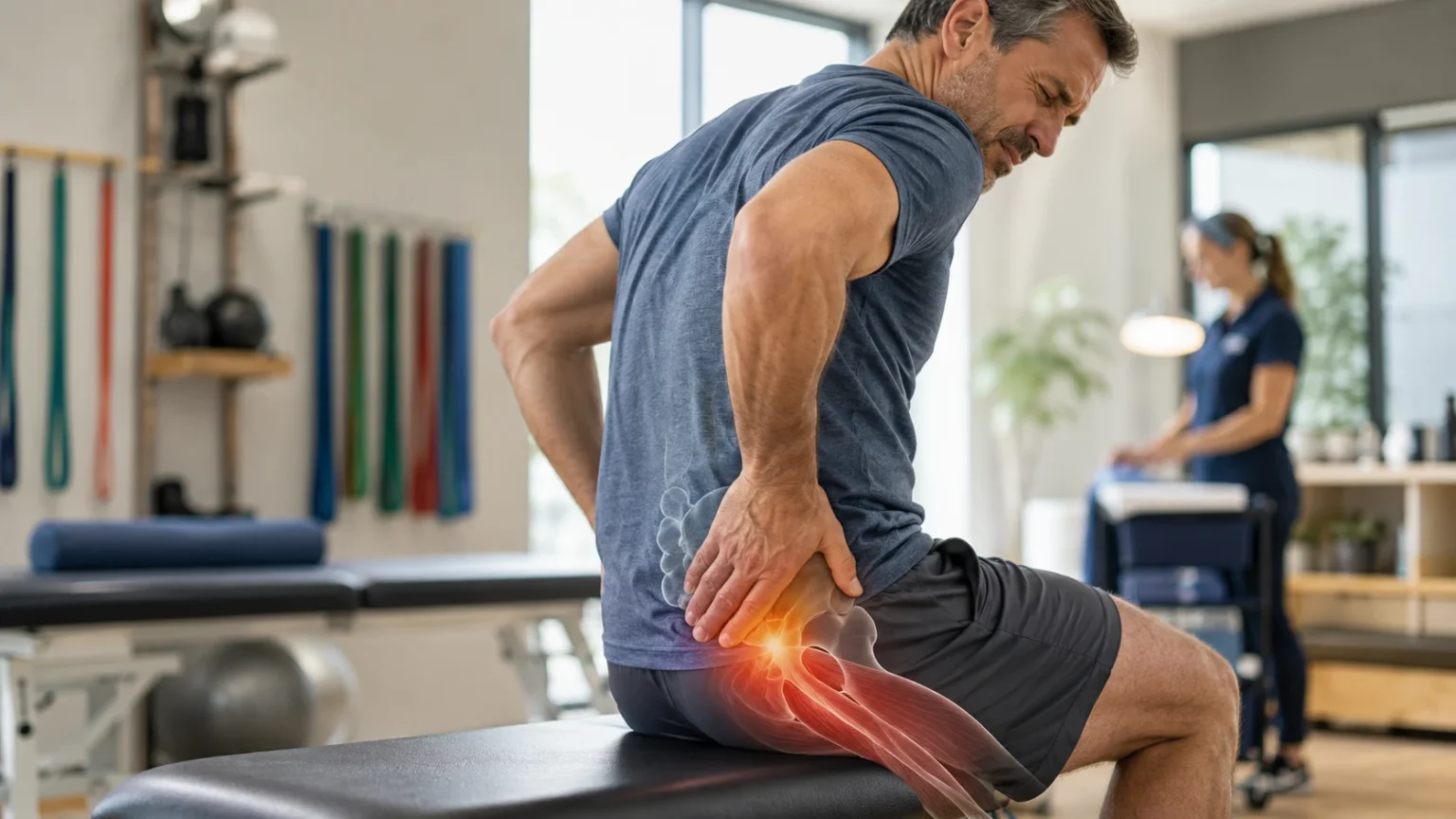
Ischial Tuberosity: Pain, Causes & Treatment Options
Pain deep in the lower buttock can turn everyday activities such as sitting at a desk, driving, running, or bending forward into uncomfortable tasks. One possible source is the ischial tuberosity, the firm part of the pelvis commonly called the “sit bone.” Because several important muscles and soft tissues attach around this area, discomfort here can have more than one possible cause.
Ischial tuberosity pain may develop gradually after repetitive exercise or prolonged sitting, or it may appear suddenly following a sports injury. Problems involving the proximal hamstring tendon are particularly important because the hamstrings attach to the ischial tuberosity. A nearby bursa, nerves, muscles, and other structures can also contribute to pain around the same region.
This overlap explains why simply describing discomfort as “sit bone pain” does not provide a complete diagnosis. Two people can feel pain in almost exactly the same location while having very different underlying problems. One may have tendon overload, another may have ischial bursitis, while someone else may be experiencing pain referred from a nerve or another part of the hip or lower back.
Fortunately, many causes of pain around the ischial tuberosity can improve with appropriate activity modification and rehabilitation. The right treatment depends on what structure is irritated, whether the problem developed suddenly or gradually, and how much it interferes with normal movement. Understanding the anatomy and common causes is therefore the first useful step toward finding relief.
What Is the Ischial Tuberosity?
The ischial tuberosity is a thickened area of bone located toward the bottom of each side of the pelvis. You can think of the two ischial tuberosities as the bony points underneath your buttocks that accept much of your weight when you sit upright. This is why they are commonly referred to as your sit bones.
The ischial tuberosity also acts as an important attachment point for muscles and tendons. Most notably, the hamstring muscle group begins at the lower pelvis around this region before running down the back of the thigh. These muscles help extend the hip and bend the knee, making them important during walking, running, jumping, climbing, and many sports.
A small cushioning structure called the ischial or ischiogluteal bursa is located around the region as well. A bursa is a fluid-containing sac that helps reduce friction where tissues move over one another. When this bursa becomes irritated or inflamed, pain can develop directly around the sit bone and become particularly noticeable while sitting.
Because bone, tendon, bursa, muscle, and nerves all occupy a relatively compact area, accurately identifying the source of symptoms can sometimes be challenging. Pain felt at the ischial tuberosity does not automatically mean the bone itself is damaged. In many cases, the uncomfortable sensation originates from one of the surrounding soft tissues.
What Does Ischial Tuberosity Pain Feel Like?
Ischial tuberosity pain is often described as a deep ache, tenderness, pressure, or pulling sensation in the lower buttock near the point where the buttock meets the upper thigh. Some people can identify one especially sensitive spot, while others experience more diffuse discomfort extending into the back of the thigh.
Sitting is a common trigger because the body’s weight places pressure directly over the ischial tuberosity. Hard chairs, benches, cycling seats, and long car journeys may be particularly uncomfortable. Someone with proximal hamstring tendinopathy can also notice pain during running, lunging, bending at the hip, or activities that stretch and load the hamstring tendon.
The way symptoms begin can provide useful clues. Gradually developing pain related to running or repeated loading may suggest a tendon problem, whereas a sudden sharp pain during sprinting, jumping, slipping, or forceful stretching raises concern for an acute hamstring injury. Significant tears can also cause weakness, bruising, swelling, or difficulty walking normally.
Pain that burns, tingles, travels farther down the leg, or feels electrical may suggest nerve involvement rather than an isolated bursa or tendon problem. Because posterior hip and buttock pain can arise from several structures, symptoms that persist, progressively worsen, or are accompanied by neurological changes are worth having professionally assessed.
Common Causes of Ischial Tuberosity Pain
One of the most common problems considered when pain occurs around the hamstring attachment is proximal hamstring tendinopathy. This condition generally involves persistent pain and reduced loading tolerance in the tendon near its origin at the ischial tuberosity. Runners and other active people can develop symptoms gradually, particularly when training load rises faster than the tendon can comfortably tolerate.
Another possible cause is ischial bursitis, sometimes called ischiogluteal bursitis. Irritation of the bursa near the sit bone may produce localized buttock pain and tenderness, particularly when pressure is applied to the area. Repetitive physical stress can contribute, and sitting may become uncomfortable because the irritated tissue is compressed beneath the pelvis.
Acute hamstring strains and tendon tears can also produce pain directly around the ischial tuberosity. A particularly severe injury occurs when the proximal hamstring tendon pulls partly or completely away from the pelvis, known as an avulsion. These injuries usually happen during sudden high-force movements and may cause immediate pain, weakness, bruising, and difficulty continuing activity.
Not every episode of lower buttock pain originates from the hamstring or bursa. Deep gluteal conditions, irritation of nearby nerves, ischiofemoral impingement, and referred pain from surrounding areas can resemble hamstring origin pain. This is why persistent symptoms deserve a broader assessment rather than assuming every painful sit bone represents bursitis or tendinopathy.
Why Does the Ischial Tuberosity Hurt When Sitting?
Sitting naturally puts pressure through the ischial tuberosities. When the tissues surrounding a sit bone are healthy, this pressure usually causes no problem. If the proximal hamstring tendon, bursa, or another nearby structure is irritated, however, compression may make an ordinary chair feel surprisingly uncomfortable.
People with proximal hamstring tendinopathy often report discomfort close to the lower buttock that becomes worse with prolonged sitting. Hip flexion can increase compression around the hamstring origin, which also helps explain why certain positions involving both sitting and bending forward may provoke symptoms. Exercise-related loading can cause additional discomfort.
With ischial bursitis, sitting can place direct pressure on an already sensitive bursa. Someone may therefore notice discomfort after spending long periods at a desk, driving, sitting on hard surfaces, or performing activities that repeatedly stress the region. The pain can sometimes be mistaken for a hamstring problem because the structures are located close together.
Pain while sitting can also have neurological causes. Research and clinical reports have described pain around the ischial region arising from irritation of nerves such as branches of the posterior femoral cutaneous nerve or inferior cluneal nerves. Radiating, burning, numb, or unusual sensory symptoms are therefore useful details to mention during a medical assessment.
Ischial Tuberosity Pain From Proximal Hamstring Tendinopathy
Proximal hamstring tendinopathy typically develops through repeated loading rather than one dramatic injury. Running, sprinting, hills, lunges, deep hip-flexion exercises, and sudden increases in training volume may aggravate symptoms. Pain is usually felt close to the hamstring attachment beneath the buttock and may become noticeable during or after activity.
Unlike a major hamstring tear, chronic tendinopathy may not cause obvious bruising or swelling. A person may still be able to run or exercise but notice gradually increasing discomfort, slower recovery after training, or pain after sitting. Tenderness near the hamstring origin and pain during tests that load or stretch the tendon can support the clinical diagnosis.
Treatment increasingly focuses on education, load management, and progressive exercise rather than complete long-term rest. Rehabilitation aims to gradually improve the hamstring’s ability to tolerate force while also addressing strength and movement throughout the kinetic chain. The exact exercises and progression should match the individual’s symptoms and activity goals.
Recovery may take time because tendons generally adapt gradually. Repeatedly testing the painful area with aggressive stretching, sprinting, or heavy loading can make symptom management more difficult for some people. A physiotherapist or sports medicine professional can help determine how much activity is appropriate while building strength without repeatedly provoking significant pain.
Ischial Bursitis and Sit Bone Pain
Ischial bursitis occurs when the bursa around the ischial region becomes irritated and painful. Because the bursa is located near the area that contacts a chair while sitting, symptoms frequently become noticeable during direct pressure. People may describe localized aching, tenderness, or discomfort near one sit bone.
The condition is sometimes associated with repeated physical stress or pressure around the lower buttock. Symptoms can overlap strongly with proximal hamstring tendinopathy because both conditions affect structures close to the ischial tuberosity. In unusual cases, bursitis can also produce more obvious swelling or a palpable mass, which requires appropriate medical evaluation.
Initial management commonly aims to reduce repeated irritation. Adjusting activities, limiting prolonged pressure on the painful area, and gradually restoring comfortable movement may help. Depending on the diagnosis and the person’s medical history, a clinician might also consider physical therapy or medication for short-term symptom management rather than immediately turning to invasive treatment.
Persistent cases sometimes require additional evaluation or targeted treatment. Image-guided injections are used in selected patients with refractory ischial bursitis, although the evidence base is considerably smaller than that for many common musculoskeletal conditions. Treatment decisions should therefore be individualized rather than assuming every case of sit bone pain requires an injection.
How Is Ischial Tuberosity Pain Diagnosed?
Diagnosis usually begins with a detailed discussion of how the pain started. A healthcare professional may ask whether symptoms appeared suddenly or gradually, which movements make them worse, whether sitting is uncomfortable, and whether there is numbness, weakness, bruising, or pain traveling farther down the leg. Exercise habits and recent changes in training can also provide useful clues.
During the physical examination, the clinician may assess tenderness around the ischial tuberosity, hamstring strength, flexibility, hip movement, walking pattern, and neurological function. Different movements may be used to determine whether loading or stretching the proximal hamstring reproduces familiar symptoms. The lower back and surrounding hip structures may also need examination because several conditions can cause posterior hip pain.
Imaging is not necessarily required for every mild episode of pain. When a significant acute injury is suspected, an X-ray may help identify an avulsion fracture in which a tendon pulls away a fragment of bone. MRI provides detailed images of soft tissues and can help determine the location and severity of a hamstring tendon or muscle injury.
Ultrasound can also visualize the proximal hamstring tendon and surrounding structures in experienced hands. Imaging becomes particularly valuable when the diagnosis remains unclear, symptoms are severe, conservative treatment has not worked as expected, or a significant tear is suspected. Results should still be interpreted alongside symptoms and physical examination rather than in isolation.
Ischial Tuberosity Pain Treatment Options
The best ischial tuberosity treatment depends on the underlying cause. Mild overuse-related problems often begin with reducing the activities that repeatedly aggravate symptoms rather than stopping all movement. A temporary reduction in running intensity, long periods of sitting, or exercises that heavily compress the painful area may create space for recovery.
For proximal hamstring tendinopathy, rehabilitation generally emphasizes progressive strengthening and careful load management. Exercises may gradually move from lower-load contractions toward heavier hamstring strengthening and eventually sport-specific loading. Current research does not establish one universally superior treatment protocol, which is why rehabilitation should be adapted to the individual’s response.
Some persistent tendon conditions have been treated with shockwave therapy, corticosteroid injections, or platelet-rich plasma injections. Evidence comparing these approaches remains limited, and systematic reviews have not established one intervention as clearly superior across patients. PRP has also continued to be investigated rather than being considered a guaranteed solution.
Surgery is usually reserved for particular injuries rather than ordinary sit bone pain. Complete proximal hamstring tendon avulsions and selected significant tears may require surgical repair, while chronic tendinopathy is generally approached conservatively first. The decision depends on factors such as tear severity, tendon retraction, activity demands, symptoms, and response to previous treatment.
How to Relieve Ischial Tuberosity Pain at Home
Start by identifying the activity that consistently increases your symptoms. If running, sprinting, long drives, or prolonged sitting produces a significant flare, temporarily reducing that specific load may be more useful than complete bed rest. The aim is usually to keep moving within a tolerable range while giving irritated tissue an opportunity to settle.
If sitting is painful, changing position regularly may reduce continuous pressure on the area. Standing periodically, altering chair height, and avoiding especially hard seating surfaces can make daily activities more manageable. A pressure-relieving cushion may feel comfortable for some people, although it should be considered a symptom-management tool rather than a treatment for the underlying cause.
Cold packs can sometimes help manage pain after a recent sports-related soft-tissue injury. They should be wrapped rather than placed directly against bare skin. Acute hamstring injuries may initially need a greater reduction in activity, particularly if walking is painful or swelling and bruising are developing.
Over-the-counter pain medication may be appropriate for some people but is not suitable for everyone. Anti-inflammatory medicines can have gastrointestinal, kidney, cardiovascular, and medication-interaction considerations, so people with medical conditions or those taking other medicines should check with a healthcare professional rather than using them automatically or for prolonged periods.
What Exercises Help Ischial Tuberosity Pain?
There is no single exercise program that is appropriate for every form of sit bone pain. An exercise that helps proximal hamstring tendinopathy could be inappropriate immediately after a significant tendon tear. Before beginning aggressive strengthening, the nature and severity of the injury should be reasonably clear.
For chronic proximal hamstring tendinopathy, rehabilitation commonly progresses through exercises that restore hamstring strength and loading capacity. The program may also include gluteal, trunk, and lower-limb strengthening because running and athletic movements distribute forces across multiple joints and muscle groups rather than relying on the hamstrings alone.
Stretching deserves particular attention. People often assume any tight or painful hamstring needs aggressive stretching, but repeatedly placing a painful proximal tendon into deep hip flexion can aggravate symptoms in some cases. Early rehabilitation may therefore prioritize controlled strengthening and symptom-guided movement before adding more demanding stretching or high-load activities.
The eventual goal should be returning to the activities that matter to you rather than simply completing generic exercises. A runner may need progressively faster running, while someone whose primary problem is prolonged sitting may need a different progression. Physical therapy can be particularly valuable when symptoms keep returning despite attempts to manage the problem independently.
When Should You See a Doctor for Ischial Tuberosity Pain?
Seek prompt medical evaluation if pain began with a sudden pop or tearing sensation and is followed by substantial bruising, swelling, weakness, or difficulty walking. These symptoms can occur with a significant hamstring tear or tendon avulsion and may require imaging to determine the extent of injury.
Persistent numbness, tingling, marked weakness, or pain traveling down the leg also deserves evaluation because these symptoms may indicate nerve involvement. Chronic proximal hamstring injuries can occasionally irritate or compress the nearby sciatic nerve, and other neurological conditions can produce symptoms around the lower buttock.
You should also arrange an assessment when pain continues to worsen despite reducing aggravating activities, repeatedly returns when exercise resumes, interferes substantially with sleep or normal daily activities, or prevents you from sitting comfortably for extended periods. Persistent pain does not automatically indicate serious damage, but it is a reason to clarify the diagnosis.
Urgent medical care is appropriate when buttock or pelvic pain occurs with major trauma, rapidly increasing swelling, fever, significant unexplained illness, new bowel or bladder dysfunction, numbness around the saddle region, or severe progressive leg weakness. These symptoms extend beyond the usual pattern of uncomplicated tendon or bursa irritation and should not be managed solely through home exercises.
How Long Does Ischial Tuberosity Pain Take to Heal?
Recovery time varies widely because ischial tuberosity pain describes a location rather than one specific injury. Mild irritation may settle relatively quickly once the provoking activity is addressed, while chronic proximal hamstring tendinopathy can require a longer period of progressive rehabilitation. A major tendon injury can take considerably longer.
Acute muscle strains also vary according to severity. Mild strains generally recover faster than complete tears, while rehabilitation after surgical repair of a proximal hamstring avulsion can extend for many months. AAOS notes that rehabilitation following proximal hamstring repair typically requires at least several months because of the severity of the injury.
Trying to return to full activity based only on the number of weeks that have passed can therefore be misleading. Recovery should also consider pain, strength, movement, tolerance of daily activities, and ability to perform progressively demanding exercises without a substantial symptom flare afterward.
Patience is particularly important with tendon-related problems because rehabilitation relies on gradually rebuilding tissue tolerance. Repeated cycles of complete rest followed by an immediate return to full training may keep symptoms recurring. A steady, progressive increase in load is generally more useful than alternating between doing nothing and doing too much.
Can Ischial Tuberosity Pain Be Prevented?
Not every injury can be prevented, but gradually increasing physical demands may reduce avoidable overload. Large jumps in running mileage, sprint volume, hill training, or strength-training intensity can expose tissues to loads they have not yet adapted to tolerate. Progressing exercise gradually gives muscles and tendons more opportunity to adjust.
Maintaining adequate strength throughout the hamstrings, gluteal muscles, and surrounding lower-body musculature can also support athletic movement. Fatigue, poor conditioning, and muscle imbalance are recognized factors associated with hamstring injury risk, particularly during activities involving high-speed or powerful movements.
People who spend much of the working day sitting can benefit from changing positions instead of remaining in one posture for hours. Regular movement breaks can reduce continuous pressure on the sit bones while supporting general musculoskeletal comfort. This does not guarantee prevention of bursitis or tendon pain, but it is a practical habit with little downside for most people.
Finally, respond to recurring pain rather than repeatedly training through it. A small increase in discomfort after unfamiliar exercise does not always mean injury, but consistently worsening localized pain is useful information. Early load adjustment and an appropriate strengthening plan may prevent a manageable problem from becoming a long-lasting limitation.
Final Thoughts on Ischial Tuberosity Pain
The ischial tuberosity is more than the bone you sit on. It is an important attachment point for the hamstrings and sits close to bursae, nerves, and other structures that can contribute to pain. This anatomy explains why discomfort around the lower buttock has several possible causes rather than one universal diagnosis.
Proximal hamstring tendinopathy and ischial bursitis are two conditions frequently associated with pain when sitting, but acute hamstring tears, nerve irritation, and other deep gluteal problems can produce similar symptoms. Paying attention to how the pain started and which movements provoke it can provide valuable diagnostic clues.
Treatment usually begins conservatively when there is no major injury. Activity modification, progressive rehabilitation, reduced aggravating pressure, and targeted physical therapy may help restore comfortable movement. Injections and surgery have roles in selected situations, but they are not automatically necessary for everyone with pain around a sit bone.
If pain is severe, follows a sudden injury, includes significant weakness or neurological symptoms, or refuses to improve, getting an accurate diagnosis matters more than repeatedly trying different stretches. Once the source of the symptoms is identified, treatment can focus on the tissue actually responsible and help you return more confidently to sitting, walking, exercise, and everyday life.
Frequently Asked Questions
Why does my ischial tuberosity hurt when I sit?
Sitting places direct pressure around the sit bones. Proximal hamstring tendinopathy, ischial bursitis, or irritation of nearby tissues can make this pressure painful, especially during prolonged sitting.
What is the most common cause of sit bone pain?
Proximal hamstring tendon problems and ischial bursitis are common considerations, but several conditions can create similar pain. The pattern of symptoms and a physical examination help determine the actual cause.
Can ischial tuberosity pain be caused by sciatica?
Yes, nerve-related pain can sometimes be felt around the buttock and posterior thigh and may resemble local sit bone pain. Burning, tingling, numbness, or radiating leg pain makes neurological involvement more important to assess.
Is walking good for ischial tuberosity pain?
Gentle walking may be comfortable for many mild overuse problems, but it depends on the cause and severity. If walking clearly increases pain, causes limping, or follows a major acute injury, professional assessment is advisable.
Can ischial tuberosity pain heal on its own?
Mild irritation can improve with appropriate activity changes, but chronic tendon problems or significant injuries may need structured rehabilitation. Persistent, worsening, or severe symptoms should be evaluated rather than simply waiting indefinitely.