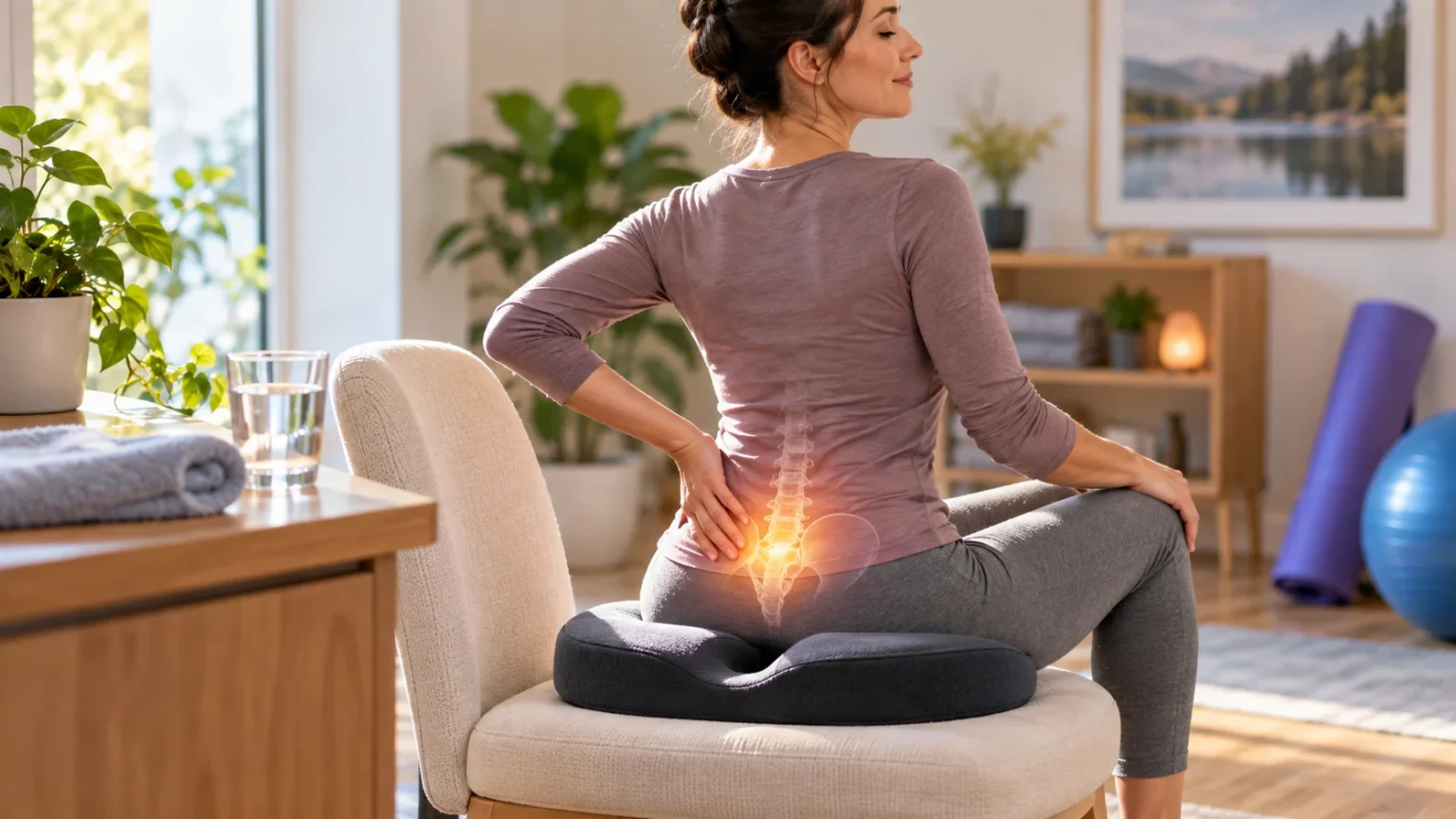
Tailbone pain can make ordinary activities such as sitting, driving, bending, or getting up from a chair surprisingly uncomfortable. The medical term for pain around the tailbone is coccydynia, and symptoms may range from mild tenderness to sharp pain that interferes with work, exercise, sleep, or daily routines.
Relief often starts with reducing pressure on the coccyx and changing the activities that aggravate it. Heat, ice, supportive cushions, gentle movement, and temporary activity adjustments can help many mild cases. Persistent, severe, or unexplained pain should be evaluated because treatment depends on what is causing the discomfort.
What Is Tailbone Pain?
The tailbone, medically called the coccyx, is a small group of fused bones located at the bottom of the spine. It sits just below the sacrum and helps support the body when you sit. Several muscles, ligaments, and tendons also attach around this region, which is why irritation can affect more than the bone itself.
Tailbone pain usually feels most noticeable when direct pressure is placed on the coccyx. Sitting on a hard chair, leaning backward, rising from a seated position, or remaining seated for long periods may increase discomfort. Some people experience aching or tenderness, while others describe a sharp or burning sensation around the lower spine.
Pain may remain centered directly over the coccyx or spread slightly into the surrounding buttock and pelvic region. Symptoms can sometimes resemble other lower-back, pelvic floor, or sacroiliac problems. Identifying the exact location and activities that trigger discomfort can help a healthcare professional determine whether the coccyx is truly the source.
Common Causes of Tailbone Pain
Falls are a common reason for developing tailbone pain. Landing directly on the buttocks can bruise the tissues around the coccyx or, less commonly, cause a fracture or displacement. Sports injuries, slipping on stairs, or falling backward onto a hard surface can all place sudden pressure on this sensitive area.
Prolonged sitting can also irritate the coccyx, particularly when someone sits on a firm surface or maintains poor posture for many hours. Cycling, rowing, and other activities that repeatedly load the tailbone region may also contribute. Pregnancy and childbirth can sometimes strain tissues around the coccyx because of pressure and movement within the pelvis.
Sometimes the reason is less obvious. Pelvic floor muscle tension, degenerative joint changes, referred pain, or changes in walking mechanics may contribute to discomfort around the lower spine. Lower-body problems can alter movement patterns as well, which is why understanding issues such as knee bone spurs may also be useful when evaluating broader musculoskeletal pain.
How to Get Immediate Relief From Tailbone Pain
The first step is usually reducing direct pressure on the painful area. Avoid sitting continuously for long periods and stand or walk briefly whenever possible. If sitting is unavoidable for work or travel, changing position regularly can prevent the coccyx from carrying constant pressure for several hours.
Short-term activity modification can also help irritated tissues settle. Temporarily reduce activities such as cycling, rowing, prolonged driving, or exercises that place direct pressure on the tailbone. Complete bed rest is generally unnecessary for mild pain, and comfortable movement is often preferable to remaining completely inactive throughout the day.
Pay attention to the activities that consistently make symptoms worse. If a particular chair, position, workout, or daily habit triggers pain, modifying that factor may provide more relief than repeatedly treating the discomfort afterward. Improvement often comes from combining pressure reduction with several smaller adjustments rather than relying on one quick solution.
Best Sitting Positions for Tailbone Pain
Sitting posture can make a noticeable difference when your coccyx is irritated. Try sitting upright with your feet supported and your weight distributed through the sitting bones rather than leaning backward onto the tailbone. A slight forward lean from the hips can sometimes reduce direct pressure and make longer periods of sitting more tolerable.
A coccyx cushion can also be useful. These cushions usually have a cutout at the back so the tailbone is not pressed directly into the chair. Wedge-shaped cushions are often preferred over very soft seats because excessive sinking may encourage poor posture and place pressure back onto the painful region.
Even with a supportive cushion, avoid remaining seated for hours without moving. Set reminders to stand, stretch, or walk briefly during work sessions. Alternating between sitting and standing can be particularly useful for desk workers because it changes loading patterns and reduces the amount of uninterrupted pressure placed on the coccyx.
Should You Use Ice or Heat for Tailbone Pain?
Ice may be helpful soon after a fall, impact, or activity-related flare when the area feels irritated or swollen. Wrap an ice pack in a thin towel rather than applying it directly to the skin. Short applications can help reduce discomfort, particularly during the first day or two after an acute injury.
Heat may feel better when muscle tightness or stiffness is contributing to the pain. A warm compress, heating pad on a comfortable setting, or warm bath can relax surrounding muscles and make gentle movement easier. Avoid excessive temperatures, prolonged exposure, or falling asleep directly on a heating device.
There is no universal rule that one option is always better. Some people respond more comfortably to cold, while others prefer warmth once the initial irritation has settled. You can use whichever method provides relief without worsening symptoms, but persistent pain after a significant injury should be assessed rather than managed only with temperature therapy.
Gentle Stretches and Movement for Tailbone Pain
Gentle movement can prevent stiffness around the hips, lower back, and pelvis while the coccyx recovers. Short walks are often a simple starting point if walking does not increase symptoms. Movement should remain comfortable, and you do not need to push through sharp pain simply to stay active.
Hip and glute stretches may help when surrounding muscle tension contributes to discomfort. Gentle knee-to-chest stretches, piriformis stretches, or comfortable hip mobility exercises can sometimes reduce tension around the pelvis. Move slowly, avoid bouncing, and stop any stretch that causes sharp pain directly around the coccyx or increases symptoms afterward.
Deep breathing can also help some people reduce unnecessary tension through the abdominal and pelvic muscles. Lie comfortably, breathe slowly into the lower ribs and abdomen, and allow the muscles around the pelvis to relax rather than constantly bracing. If movement consistently worsens symptoms, a physical therapist can help determine which exercises are appropriate.
Daily Habits That Can Reduce Tailbone Pain
Small changes to your routine can significantly reduce repeated irritation. If you work at a computer, adjust your chair height, desk setup, and monitor position so you are not constantly slouching backward. Keeping frequently used items within easy reach can also reduce awkward leaning and repeated movements that strain the lower spine.
Driving may require similar adjustments. Position the seat so you can reach the pedals comfortably without reclining too far backward, and consider using a suitable coccyx cushion for longer trips. If possible, take brief walking breaks during long journeys rather than remaining in the same seated position for several consecutive hours.
Constipation can sometimes make coccyx discomfort feel worse because straining increases pressure through the pelvic region. Adequate fluids, fiber-rich foods, and regular movement can support comfortable bowel habits. If constipation is persistent or severe, speak with a healthcare professional rather than relying on repeated straining or self-treatment.
Best Sleeping Positions for Tailbone Pain
Sleeping directly on your back may increase discomfort for some people because the tailbone remains close to the mattress surface. Side sleeping can reduce pressure on the coccyx and may be more comfortable during a painful flare. Placing a pillow between the knees can help keep the hips and lower spine in a more relaxed position.
Sleeping on the stomach may also reduce direct tailbone pressure for some individuals, although this position can bother the neck or lower back. If you choose it, experiment with pillow height so you do not create discomfort elsewhere. The best position is usually the one that allows you to rest without increasing symptoms overnight.
Mattress firmness can also influence comfort, but there is no single mattress type that works for everyone. A surface that is extremely hard may create pressure, while one that is excessively soft may allow poor spinal positioning. Focus on supporting your body comfortably rather than assuming that a particular firmness level will automatically treat coccyx pain.
Medicines and Professional Treatment Options
Over-the-counter pain relievers or anti-inflammatory medicines may help some people manage temporary discomfort. However, these medicines are not suitable for everyone, particularly people with certain stomach, kidney, cardiovascular, bleeding, or medication-related concerns. Follow product directions and ask a healthcare professional if you are uncertain about which option is appropriate.
Physical therapy may be useful when pain continues or involves muscle tension, posture, movement mechanics, or pelvic floor dysfunction. A therapist can assess how you sit, walk, bend, and move before recommending individualized exercises. Treatment may include mobility work, strengthening, posture changes, manual techniques, and strategies for gradually returning to normal activity.
Persistent cases may require further medical evaluation or specialist treatment. Depending on the cause, a clinician may consider imaging, injections, or other targeted interventions after conservative measures have been tried. Surgery for coccyx pain is uncommon and is generally reserved for carefully selected cases that have not improved with less invasive treatment.
How Long Does Tailbone Pain Take to Heal?
Recovery time depends heavily on what caused the pain. A mild bruise or irritation from prolonged sitting may improve gradually over days or weeks, especially when pressure on the area is reduced. More significant trauma, fractures, childbirth-related injuries, or persistent mechanical problems may take considerably longer to settle.
Recovery is not always perfectly linear. You may feel better for several days and then notice symptoms again after a long car journey, hard workout, or extended period of sitting. Temporary flare-ups do not necessarily mean the injury has returned to the beginning, but repeated aggravation can slow overall progress.
Instead of focusing only on the number of days since symptoms started, watch for functional improvement. Sitting should gradually become more comfortable, tenderness should decrease, and everyday activities should become easier. If symptoms remain unchanged or worsen despite several weeks of sensible adjustments, seek professional evaluation to identify the underlying problem.
When Should You See a Doctor for Tailbone Pain?
Medical assessment is appropriate when pain follows a significant fall or accident, especially if symptoms are severe or make walking and sitting difficult. A healthcare professional can examine the area and determine whether additional testing is needed. Sudden severe pain should not automatically be assumed to be a simple bruise.
Seek prompt medical attention if tailbone pain occurs with leg weakness, numbness, loss of bowel or bladder control, fever, unexplained swelling, drainage, or severe worsening symptoms. These signs are not typical of simple coccyx irritation and may indicate another condition requiring timely investigation.
You should also make an appointment if pain persists for several weeks, repeatedly returns, or has no clear cause. Unexplained weight loss, nighttime pain, or a history of serious illness should also be discussed with a clinician. Proper evaluation can rule out uncommon causes and help create a more targeted treatment plan.
How to Prevent Tailbone Pain From Returning
Reducing repeated pressure is one of the best prevention strategies. Avoid sitting for very long periods without breaks, use an appropriate chair, and consider a coccyx cushion when necessary. Improving your workstation setup can help you maintain a more comfortable position throughout the day rather than repeatedly leaning onto the lower spine.
Regular strength and mobility exercises can also support better movement around the hips, trunk, and lower body. Strong muscles cannot prevent every tailbone problem, but balanced conditioning can make everyday movement easier and reduce unnecessary compensation. Build exercise gradually rather than suddenly increasing training intensity, cycling volume, or other repetitive activities.
Finally, respond early when mild discomfort begins. Continuing to sit or train through increasing pain can turn temporary irritation into a longer-lasting problem. Taking short breaks, adjusting your posture, modifying aggravating activities, and allowing irritated tissues time to settle can make recurrence less likely and help you return to normal activities more comfortably.
Conclusion
Tailbone pain can be frustrating because sitting is part of so many everyday activities. Practical relief usually begins by reducing pressure on the coccyx, changing sitting habits, using a supportive cushion, and temporarily avoiding movements that repeatedly aggravate the area. Heat, ice, and gentle activity can also help depending on the cause.
Recovery may take time, particularly after a fall, childbirth, or repeated irritation. Comfortable walking, gentle mobility, good posture, and gradual return to normal activity can support improvement without placing unnecessary stress on the tailbone. Pay attention to how your symptoms respond rather than forcing activities that consistently make the pain worse.
Most mild cases improve with conservative measures, but ongoing or severe pain deserves medical assessment. Seek prompt help if symptoms occur with fever, neurological changes, bowel or bladder problems, or major trauma. Identifying the underlying reason for persistent coccyx pain allows treatment to focus on the cause rather than only temporary symptom relief.
FAQs
What is the fastest way to relieve tailbone pain?
Reducing direct pressure is usually the first step. Use a coccyx cushion, limit prolonged sitting, change positions frequently, and consider short periods of ice or heat depending on what feels most comfortable.
Is walking good for tailbone pain?
Gentle walking is often reasonable when it does not worsen symptoms. It can reduce prolonged sitting and help maintain mobility, but decrease your activity and seek advice if walking causes significant pain.
How should I sit with tailbone pain?
Sit upright or with a slight forward lean and keep both feet supported. A wedge-shaped coccyx cushion with a rear cutout can reduce direct pressure on the painful area.
Can tailbone pain go away on its own?
Mild irritation or bruising can improve gradually with pressure reduction and activity changes. Persistent, unexplained, worsening, or recurrent pain should be evaluated to rule out injury or another underlying condition.
When should I worry about tailbone pain?
Seek medical care for severe pain after trauma or symptoms accompanied by fever, weakness, numbness, bowel or bladder changes, unexplained swelling, weight loss, or pain that does not improve over time.