


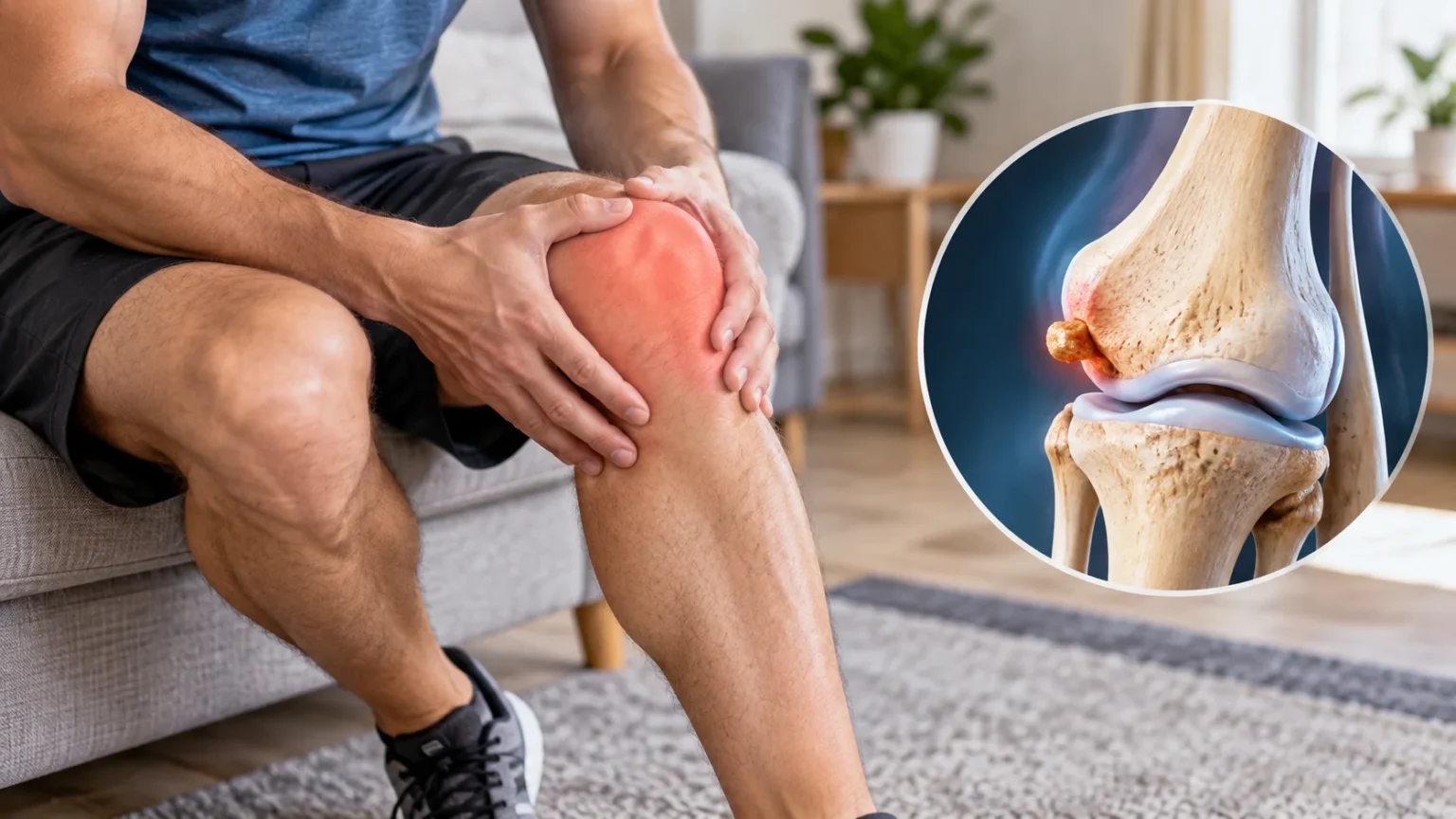
A knee bone spur is a small bony growth that can develop around the edges of the knee joint. These growths, also called osteophytes, are often associated with long-term joint changes such as osteoarthritis. Some people have bone spurs without noticeable symptoms, while others experience pain, stiffness, swelling, or reduced movement.
Bone spurs do not always cause problems simply because they appear on an X-ray. Symptoms often depend on where the spur forms, the condition of the surrounding cartilage, and whether nearby tissues become irritated. Understanding the difference between a bone spur and the broader joint condition causing it can make treatment decisions easier.
If knee discomfort is affecting walking, exercise, or everyday activities, knowing what may be happening inside the joint can help you respond appropriately. This guide explains what knee bone spurs are, common causes and symptoms, how they are diagnosed, available treatment options, useful exercises, and signs that deserve medical attention.
What Is a Knee Bone Spur?
A knee bone spur is an extra area of bone that develops along the edge of a joint. The medical term for this growth is an osteophyte. Bone spurs often form gradually as the body responds to long-term stress, cartilage changes, or instability within the knee rather than appearing suddenly after one ordinary movement.
The knee contains several areas where osteophytes can develop, including around the femur, tibia, and kneecap. The body may create additional bone as part of its attempt to increase the surface area of a stressed joint. Although this response may initially be protective, larger spurs can sometimes restrict movement or irritate surrounding structures.
Having a bone spur does not automatically mean you will experience severe knee pain. Many osteophytes are discovered incidentally during imaging performed for another reason. When symptoms occur, they are often related to the underlying joint degeneration, inflammation, or mechanical changes rather than the bony growth alone.
What Causes Bone Spurs in the Knee?
Osteoarthritis is one of the most common conditions associated with knee bone spurs. As cartilage gradually changes and becomes thinner, the forces passing through the joint may be distributed differently. The body may respond by forming new bone around the joint margins, which is why osteophytes are frequently visible on imaging in people with knee arthritis.
Age-related joint changes can also increase the likelihood of developing bone spurs, although age alone does not determine how painful or limited a person will become. Previous knee injuries, repeated joint stress, and certain movement patterns may contribute to changes over time. Genetics can also influence an individual’s tendency to develop osteoarthritis.
Body weight, occupation, and long-term activity demands may affect the amount of stress placed on the knee, but bone spur formation is usually multifactorial. It is rarely accurate to blame one habit or single event. A clinician will often consider your overall history, symptoms, physical examination, and imaging rather than focusing on one possible cause.
Common Knee Bone Spur Symptoms
Knee bone spur symptoms can include aching pain, stiffness, swelling, and reduced range of motion. Some people notice discomfort after prolonged walking, climbing stairs, standing, or getting up after sitting. The knee may also feel less flexible, particularly in the morning or after remaining inactive for an extended period.
A bone spur can sometimes contribute to a catching, grinding, or clicking sensation during movement. However, these sensations are not specific to osteophytes and can occur with several other knee conditions. The severity of symptoms does not always match the size of the spur seen on an X-ray.
Some people experience little or no discomfort despite having noticeable bone changes on imaging. Others may have substantial pain even when imaging changes appear relatively modest. This difference is important because treatment decisions should generally be based on symptoms, function, and quality of life rather than the appearance of an X-ray alone.
Where Does Knee Bone Spur Pain Usually Occur?
The location of pain can depend on which part of the knee is affected and what other joint changes are present. Some people feel discomfort along the inner or outer joint line, while others notice pain around or behind the kneecap. Symptoms may feel deep within the joint rather than directly over the bone spur itself.
Pain around the kneecap can become more noticeable during stairs, squatting, or getting up from a low chair. Spurs around the inner or outer compartments of the knee may be associated with discomfort during weight-bearing activities. However, location alone cannot reliably confirm that an osteophyte is responsible for the pain.
Pain that spreads far beyond the knee, causes significant numbness, or follows an unusual pattern may point toward another problem. Hip, back, nerve, tendon, and soft-tissue conditions can sometimes produce symptoms that are mistaken for knee joint pain. Persistent symptoms deserve a proper assessment when the source remains unclear.
How Are Knee Bone Spurs Diagnosed?
Diagnosis usually begins with a discussion of your symptoms and medical history. A healthcare professional may ask when the pain started, which activities aggravate it, whether swelling occurs, and how symptoms affect your daily life. They may also examine your knee movement, strength, stability, tenderness, and walking pattern.
X-rays are commonly used to identify knee osteophytes and other signs of osteoarthritis. Imaging may show joint-space narrowing, bony changes, and the location of bone spurs. However, an X-ray should be interpreted alongside your symptoms because visible structural changes do not always explain exactly how much pain someone experiences.
Additional imaging is not always required. MRI scans may sometimes be considered when a clinician suspects other problems involving cartilage, ligaments, menisci, or soft tissues. Blood tests may occasionally be ordered when inflammatory arthritis, infection, or another medical condition is being considered rather than typical age-related joint degeneration.
Can a Knee Bone Spur Go Away?
Bone spurs generally do not disappear through stretching, exercise, massage, or medication because they are actual areas of new bone formation. However, that does not mean symptoms cannot improve. Many people become more comfortable and functional through conservative treatment without needing the spur itself to be physically removed.
Treatment often focuses on reducing irritation, improving strength, maintaining joint mobility, and helping the knee tolerate everyday loads more effectively. Pain levels can change significantly even when the osteophyte remains visible on imaging. This is why symptom improvement is possible without altering the underlying bone growth.
Surgical removal may be considered in selected cases, particularly when significant mechanical problems or advanced joint damage are present. Surgery is not usually recommended simply because an X-ray shows a spur. The decision depends more on persistent symptoms, functional limitations, overall knee condition, and response to nonsurgical treatment.
Knee Bone Spur Treatment Options
Initial treatment often involves activity modification, exercise, and strategies for managing discomfort. Temporarily reducing activities that repeatedly trigger intense pain can help, but complete inactivity is generally unnecessary for many people. Maintaining comfortable movement can prevent additional stiffness and help preserve strength around the knee.
Physical therapy may focus on strengthening the quadriceps, hamstrings, glutes, and other muscles that help support the knee. A therapist may also work on movement patterns, balance, flexibility, and gradual increases in activity. The goal is typically to improve function rather than trying to somehow “break down” the bone spur.
Pain-relieving medications or injections may be considered depending on symptoms, medical history, and professional guidance. These treatments can have benefits and risks, so they are not appropriate for everyone. If symptoms remain severe despite conservative care, an orthopedic specialist may discuss whether surgical options should be considered.
Exercises That May Help With Knee Bone Spurs
Strengthening the muscles surrounding the knee can improve support and make everyday activities easier. Exercises such as straight-leg raises, seated knee extensions, bridges, and controlled sit-to-stand movements may be useful depending on your symptoms. Begin with a manageable range and avoid assuming that significant pain is required for an exercise to be effective.
Low-impact aerobic activities may also help maintain general fitness without placing extremely high repetitive loads through the knee. Walking, stationary cycling, and water-based exercise are commonly used options. The best activity is one you can perform consistently without producing a major increase in symptoms afterward.
Exercise should be adjusted rather than automatically abandoned when mild discomfort occurs. Reducing depth, resistance, speed, or total repetitions can make movements more tolerable. If the knee becomes increasingly swollen, unstable, or painful during a program, professional guidance can help determine whether your exercise selection or diagnosis needs to be reconsidered.
Activities to Modify When Your Knee Hurts
Deep squats, repeated jumping, prolonged kneeling, or high-impact activity may aggravate symptoms in some people with knee osteoarthritis and bone spurs. This does not mean these activities are permanently forbidden. Temporarily reducing the most irritating movements can create space to build strength and gradually increase tolerance.
Walking distance may also need short-term adjustment when symptoms flare. Instead of stopping walking completely, some people do better with shorter, more frequent sessions. Changing terrain, pace, footwear, or recovery time can also make physical activity easier to manage while the knee is particularly sensitive.
Pay attention to how your knee responds later in the day and the following morning. A small temporary increase in discomfort may be manageable, but large or lasting symptom increases can indicate that the activity level was too demanding. Gradual progression is usually more sustainable than repeatedly alternating between complete rest and excessive activity.
Knee Bone Spurs and Other Musculoskeletal Pain
Knee joint pain can feel different from discomfort caused by a strained muscle, irritated tendon, or nerve problem. Osteoarthritis-related symptoms often include stiffness and activity-related aching, while tendon problems may feel more localized around the affected structure. However, symptom patterns can overlap, so self-diagnosis based on location alone may be unreliable.
Understanding how different musculoskeletal conditions behave can make it easier to recognize when symptoms need further evaluation. For example, learning about typical bicep tendonitis symptoms illustrates how tendon-related pain can differ from joint changes such as osteophytes. Different body regions require different examinations and treatment strategies.
The important point is that a painful area does not automatically reveal which tissue is responsible. Bone, cartilage, tendons, ligaments, muscles, and nerves can all contribute to musculoskeletal discomfort. If symptoms are persistent or limiting, an assessment can help identify the most likely source rather than treating every ache in the same way.
Can Weight Management Help Knee Symptoms?
Body weight can influence the mechanical load passing through the knee during walking, stairs, and other weight-bearing activities. For people who are above a weight that is comfortable or healthy for them, gradual weight management may help reduce stress on painful knees. However, weight is only one factor affecting osteoarthritis symptoms.
Strength, activity levels, sleep, previous injuries, joint structure, and overall health also influence how someone experiences knee pain. People at many different body sizes can develop osteoarthritis and bone spurs. Treatment should therefore remain individualized rather than assuming weight loss alone will solve the problem.
When weight management is appropriate, sustainable nutrition and regular activity are generally more practical than extreme diets or aggressive exercise. Knee-friendly movement can help maintain fitness while symptoms are addressed. A healthcare professional or registered dietitian can provide personalized guidance when medical conditions or significant weight changes need to be considered.
When Is Surgery Considered for a Knee Bone Spur?
Surgery may be discussed when knee symptoms remain severe despite an appropriate period of nonsurgical treatment. Significant pain, loss of function, mechanical restriction, or advanced osteoarthritis can influence the decision. The presence of a bone spur by itself is generally not enough reason to proceed directly to an operation.
The type of surgery depends on the condition of the entire knee rather than simply the osteophyte. In advanced arthritis, joint replacement may sometimes be more appropriate than removing an individual spur. In other situations, a specialist may determine that surgery is unnecessary because symptoms can still be managed conservatively.
Surgical decisions should consider your daily limitations, goals, overall health, imaging findings, and response to previous treatments. Asking what problem the surgery is intended to solve can be useful. Understanding expected recovery, benefits, limitations, and potential complications can also help you make a more informed decision with your orthopedic team.
When Should You See a Doctor?
Consider medical evaluation when knee pain lasts for several weeks, repeatedly returns, or significantly interferes with walking, sleep, work, or exercise. Persistent swelling, reduced motion, or increasing stiffness can also justify an assessment. Early evaluation does not necessarily mean you will need scans, injections, or surgery.
Seek more urgent care if the knee becomes extremely swollen, hot, or red, particularly when these symptoms occur with fever or feeling unwell. Significant injury followed by inability to bear weight, obvious deformity, or severe instability also deserves prompt attention. These features may indicate something more serious than a typical osteoarthritis flare.
Sudden calf swelling, unexplained severe pain, or neurological symptoms should also not simply be blamed on a bone spur. New symptoms can have causes unrelated to known knee arthritis. A healthcare professional can help determine whether further testing or treatment is required based on your specific presentation.
How to Protect Your Knees Long Term
Regular strength training is one of the most practical ways to support knee function over time. Exercises that build the quadriceps, hamstrings, hips, and calves can improve your ability to manage walking, stairs, lifting, and recreational activity. Resistance should increase gradually instead of jumping suddenly from inactivity to demanding workouts.
Maintaining regular movement can also help limit stiffness. Changing positions throughout the day, walking within your tolerance, and performing comfortable mobility exercises can keep the knee active. You do not need to protect an osteophyte by avoiding every movement that places normal load through the joint.
Long-term knee health is usually built through consistency rather than one special treatment. Appropriate exercise, recovery, symptom monitoring, and medical management when necessary can all play a role. If your symptoms change significantly, reassessing the situation is more useful than continuing the same routine simply because it worked previously.
Conclusion
A knee bone spur, or osteophyte, is an extra area of bone commonly associated with osteoarthritis and long-term joint changes. Some bone spurs cause no noticeable symptoms, while others occur alongside pain, stiffness, swelling, or reduced movement. Imaging findings should always be considered together with how your knee actually feels and functions.
Treatment usually focuses on improving comfort and function rather than trying to remove the bone spur itself. Strengthening exercises, activity modification, physical therapy, and appropriate pain-management strategies can help many people remain active. Surgery is generally reserved for cases where significant symptoms continue despite conservative care.
Pay attention to persistent or changing symptoms rather than assuming every knee problem comes from a known spur. Severe swelling, major injury, inability to bear weight, fever, or worsening functional limitations deserve professional assessment. With an appropriate plan, many people can continue exercising and managing daily activities despite having knee osteophytes.
FAQs
Is a bone spur in the knee serious?
A knee bone spur is not automatically serious and may cause no symptoms. Its importance depends on associated arthritis, pain, stiffness, swelling, restricted movement, and how much the condition affects everyday function.
What does a knee bone spur feel like?
Symptoms may include aching, stiffness, swelling, reduced movement, or grinding during activity. However, some people have significant bone spurs on imaging without experiencing noticeable pain or functional limitations.
Can exercise make a knee bone spur worse?
Appropriate exercise does not necessarily worsen a bone spur and can improve strength and function. Exercises may need modification if they consistently cause substantial pain, swelling, or worsening symptoms afterward.
Can you remove a knee bone spur without surgery?
Exercises, medications, and physical therapy can reduce symptoms but do not physically remove established bone growth. Surgery may remove or address bone changes in selected cases when significant symptoms justify an operation.
Can knee bone spurs cause difficulty walking?
Yes, knee pain, stiffness, reduced motion, or advanced osteoarthritis associated with bone spurs can make walking harder. Persistent walking limitations should be evaluated so the underlying cause and appropriate treatment can be identified.