The quadriceps stretch is a simple mobility exercise used to lengthen the muscles at the front of the thigh. It is commonly included in warm-ups, cool-downs, sports routines, rehabilitation programs, and everyday flexibility work. When performed correctly, it can help maintain comfortable hip and knee movement without requiring any special equipment.
Your quadriceps work during walking, running, climbing stairs, squatting, cycling, and many other lower-body activities. Because these muscles are active so often, they may sometimes feel tight or fatigued after exercise or prolonged sitting. Gentle stretching can provide a useful way to move the muscles through a different range and improve overall mobility.
However, effective stretching is not about pulling the heel as hard as possible toward the body. Proper alignment, controlled breathing, and a comfortable intensity are more important than forcing a deep position. Understanding the correct quadriceps stretch form can help you gain the benefits while reducing unnecessary strain on the knee or lower back.
What Is a Quadriceps Stretch?
A quadriceps stretch is an exercise designed to lengthen the muscles located at the front of the thigh. The most familiar version involves bending the knee and bringing the heel toward the buttocks while keeping the thighs relatively close together. This position places the quadriceps under gentle tension and can improve awareness of the front thigh.
Quadriceps stretches can be performed while standing, lying on the side, lying face down, or kneeling. Each variation changes the amount of balance, hip extension, and knee bending required. Some versions are easier for beginners, while others provide a stronger stretch or allow greater control over body position.
Stretching should create a mild to moderate pulling sensation rather than sharp pain. The exact range will vary between individuals depending on mobility, anatomy, training history, and current muscle sensitivity. A smaller, controlled stretch is generally more useful than forcing the leg into a position that feels uncomfortable or unstable.
Understanding the Quadriceps Muscles
The quadriceps are a group of four muscles located at the front of the thigh. These muscles include the rectus femoris, vastus lateralis, vastus medialis, and vastus intermedius. Together, they play a major role in straightening the knee and supporting the lower body during standing, walking, running, jumping, and climbing.
Three of the quadriceps muscles primarily cross the knee joint, while the rectus femoris crosses both the hip and knee. Because of this two-joint position, the rectus femoris can also assist with hip flexion. Stretching it effectively often involves bending the knee while keeping the hip extended rather than allowing the thigh to move far forward.
The quadriceps also help control the knee when the body absorbs force. For example, they work when lowering into a squat, walking downstairs, or landing from a jump. Keeping these muscles strong and comfortable through an appropriate range of motion can support efficient lower-body movement during both everyday tasks and exercise.
How to Do a Standing Quadriceps Stretch
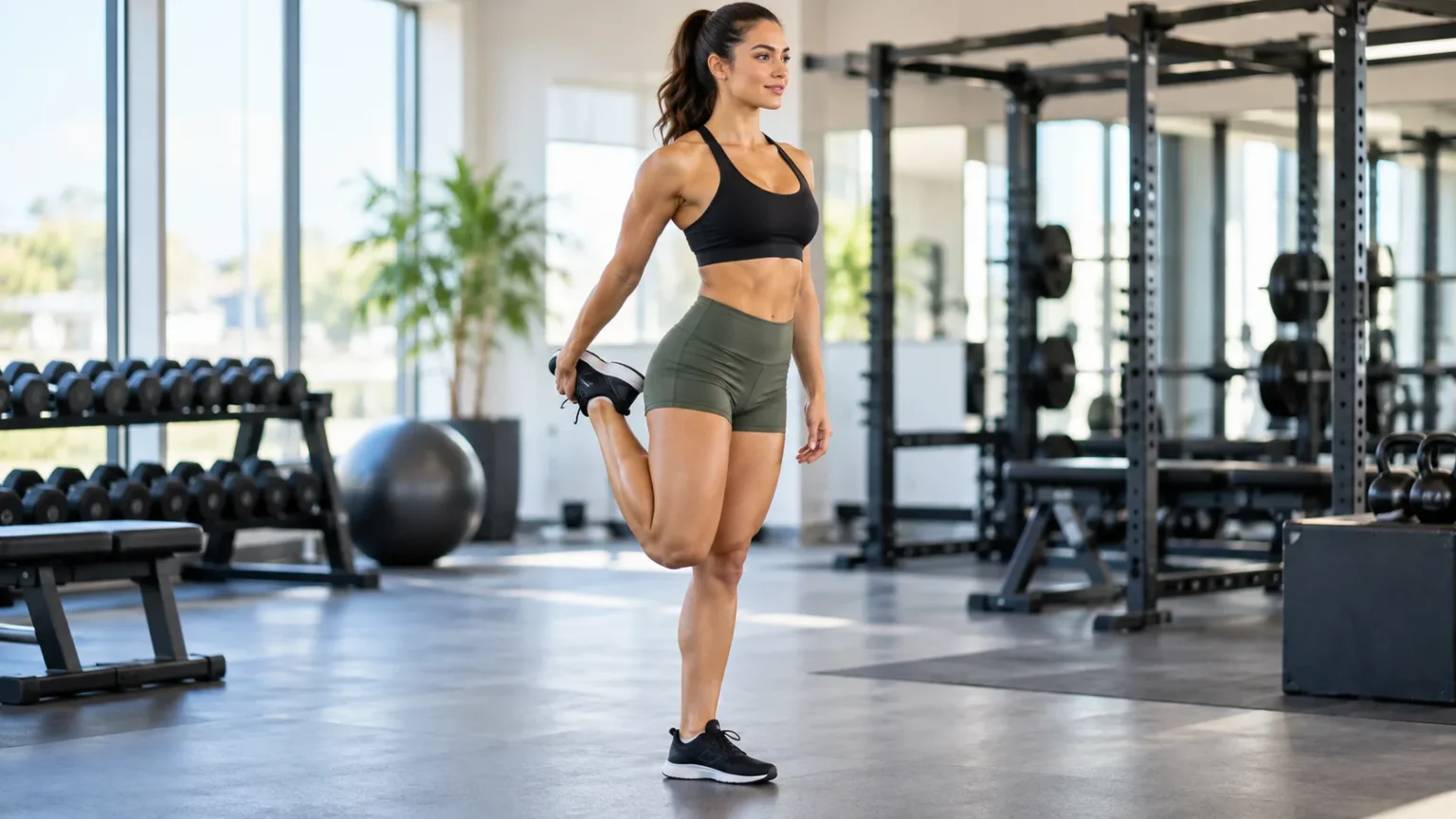
Begin by standing upright next to a wall, chair, or other stable surface if you need support. Shift your body weight onto one leg, bend the opposite knee, and gently bring the heel toward the buttocks. Hold the ankle or upper part of the foot with the hand on the same side.
Keep your knees relatively close together and avoid allowing the stretching leg to drift far forward. Gently engage your abdominal muscles and keep the pelvis in a neutral position rather than arching the lower back. You should feel a comfortable stretch through the front of the thigh without sharp pressure around the knee.
Hold the position while breathing slowly, then release the foot with control and repeat on the other side. Many people find that 20 to 30 seconds feels comfortable, although there is no need to force a specific duration. The quality of the position matters more than simply holding the stretch for as long as possible.
Benefits of Quadriceps Stretching
Regular quadriceps stretching can help maintain flexibility around the front of the thigh and knee. This may make movements such as walking, running, lunging, and squatting feel more comfortable, particularly after periods of inactivity or demanding exercise. Stretching can also provide a useful way to explore how each leg moves and whether one side feels noticeably more restricted.
Quadriceps stretches may support hip mobility because the rectus femoris crosses the hip joint. When this muscle feels stiff, extending the hip comfortably can sometimes become more difficult. A well-positioned quad stretch combines knee bending with controlled hip extension, which can make it useful for people who spend long periods sitting.
Stretching can also feel relaxing after training and may help reduce the sensation of muscular tightness. However, flexibility work should not replace strength training, recovery, or appropriate activity progression. The quadriceps function best when they are both strong and capable of moving comfortably through the ranges required for daily activity and exercise.
Common Quadriceps Stretch Mistakes
One common mistake is arching the lower back to create the appearance of a deeper stretch. This often happens when the hip moves forward and the ribs flare upward. Instead, gently tighten the abdominal muscles and keep the pelvis controlled so the stretching sensation remains focused on the front of the thigh.
Another mistake is pulling the foot aggressively toward the buttocks. More force does not automatically create a better stretch and may increase pressure around the knee. Move only until you feel a comfortable pulling sensation, then allow the muscles to relax gradually rather than trying to reach the maximum possible range immediately.
Poor balance can also interfere with the standing quad stretch. If you are constantly wobbling, you may tense other muscles and lose the intended position. Holding a wall or chair is completely acceptable and can actually improve the stretch by allowing you to focus on alignment instead of trying to maintain balance.
Quadriceps Stretch Variations
The side-lying quadriceps stretch is useful for people who find standing difficult or uncomfortable. Lie on one side, bend the top knee, and gently hold the ankle while guiding the heel toward the buttocks. Keep the hips stacked and avoid letting the top knee move too far forward during the stretch.
A prone quadriceps stretch is performed while lying face down. Bend one knee, reach back for the ankle, and gently bring the heel toward the body while keeping the hips in contact with the floor. A stretching strap can be placed around the ankle if reaching the foot comfortably is difficult.
More advanced variations may involve a kneeling hip-flexor and quadriceps stretch, sometimes called a couch stretch. This position can create substantial tension through the front thigh and hip, so it should be approached gradually. Beginners should use padding, support, and a smaller range before progressing to deeper versions of the movement.
When Should You Stretch Your Quadriceps?
Quadriceps stretching can be performed after exercise when the muscles are warm and you want to include flexibility work in your cool-down. A gentle static stretch may feel comfortable after activities such as running, cycling, hiking, or lower-body strength training. The stretch should remain controlled even if the muscles feel tired.
Before demanding activity, dynamic movement is often more practical than holding long static stretches. Exercises such as walking lunges, controlled leg swings, bodyweight squats, and easy cycling can gradually prepare the quadriceps for movement. A brief quad stretch may still be appropriate if it feels useful, but it should not leave the legs feeling overly relaxed before explosive exercise.
You can also stretch during the day if prolonged sitting makes the front of the thighs feel stiff. Short movement breaks can be especially useful for people who work at a desk for many hours. Combining stretching with walking and regular position changes may provide more benefit than remaining seated all day and stretching only once.
What Causes Tight Quadriceps?
Quadriceps may feel tight after demanding lower-body exercise, especially when training volume or intensity increases suddenly. Running hills, cycling, squatting, jumping, or performing unfamiliar exercises can leave the muscles temporarily fatigued and sensitive. This feeling does not always mean the muscles have physically shortened.
Long periods of sitting can also create a sense of stiffness through the front of the hips and thighs. Reduced movement means the joints and muscles spend considerable time in similar positions. Standing, walking, and moving the hips and knees regularly can help restore comfortable movement without requiring aggressive stretching.
Muscle soreness, limited mobility, weakness, and overuse may also contribute to how the quadriceps feel. When discomfort follows demanding activity, general recovery habits and strategies that may help reduce inflammation can complement sensible stretching. Persistent or worsening pain, however, should not be treated as ordinary tightness without further assessment.
How to Improve Quadriceps Flexibility Safely
Consistency is usually more useful than occasional aggressive stretching. Performing comfortable quadriceps stretches several times throughout the week can gradually improve tolerance to the position. You do not need to push into pain or force the heel to touch the buttocks for the exercise to be worthwhile.
Combine stretching with strength training whenever possible. Exercises such as squats, split squats, step-ups, and controlled leg extensions help build quadriceps strength through different ranges of motion. Strong muscles that can tolerate lengthened positions may be more useful for daily movement than focusing on passive flexibility alone.
Progress slowly and pay attention to how the knees and hips respond. Some people naturally have more flexibility than others, and achieving an extreme range is not necessary for normal function. Your goal should be comfortable, useful movement that supports the activities you actually perform rather than matching someone else’s stretching position.
When to Be Careful With Quadriceps Stretching
People with recent knee injuries, thigh strains, hip problems, or surgery should be careful when introducing quadriceps stretches. Deep knee bending can place pressure on irritated structures depending on the condition. A healthcare or rehabilitation professional can recommend suitable ranges and variations when recovery needs to be managed carefully.
Stop stretching if you experience sharp, catching, burning, or worsening pain. A normal stretch should generally feel like controlled tension through the muscle rather than joint pain. Numbness, significant swelling, bruising, or sudden weakness are also reasons to avoid forcing the stretch and consider professional evaluation.
It is also important to distinguish ordinary post-exercise stiffness from an injury. Mild tightness often improves with gentle movement, recovery, and time, while significant pain may require a different approach. Stretching an injured muscle aggressively can irritate the tissue rather than helping it recover, so symptoms should guide how much movement is appropriate.
Conclusion
The quadriceps stretch is a practical way to maintain flexibility through the front of the thigh and support comfortable hip and knee movement. It can be performed standing, lying down, or in kneeling positions depending on your mobility, balance, and experience. The basic movement requires very little equipment and can fit easily into most exercise routines.
Proper form is more important than trying to achieve the deepest possible stretch. Keep the pelvis controlled, avoid excessive lower-back arching, and use enough support to maintain balance. A comfortable pulling sensation is sufficient, and there is no benefit in forcing the knee or hip into a painful position.
For the best results, combine quadriceps stretching with regular movement, progressive strength training, and appropriate recovery. Flexibility is only one part of healthy lower-body function. If thigh or knee discomfort is persistent, severe, or accompanied by swelling or weakness, professional assessment may be more appropriate than continued stretching.
FAQs
How long should you hold a quadriceps stretch?
Many people hold a comfortable quadriceps stretch for about 20 to 30 seconds. The exact duration matters less than maintaining good alignment and avoiding pain or excessive pulling around the knee.
Should you stretch your quadriceps every day?
Gentle daily stretching may be comfortable for some people, but it is not mandatory. Frequency should depend on your mobility needs, training schedule, muscle soreness, and how your body responds.
Why do my quadriceps feel tight after sitting?
Long periods of sitting keep the hips and knees in similar positions, which can create a feeling of stiffness. Walking, changing positions, and gentle mobility exercises may help restore comfortable movement.
Can quadriceps stretching help knee mobility?
Quadriceps stretching may support comfortable knee movement when muscle stiffness is contributing to restriction. However, knee pain or limited mobility can have many causes and may require professional evaluation.
Is a standing or lying quadriceps stretch better?
Neither variation is automatically better. Standing stretches require more balance, while lying versions provide greater stability. Choose the position that allows comfortable tension and good alignment without unnecessary strain.