

What Is a Torn Oblique Muscle?
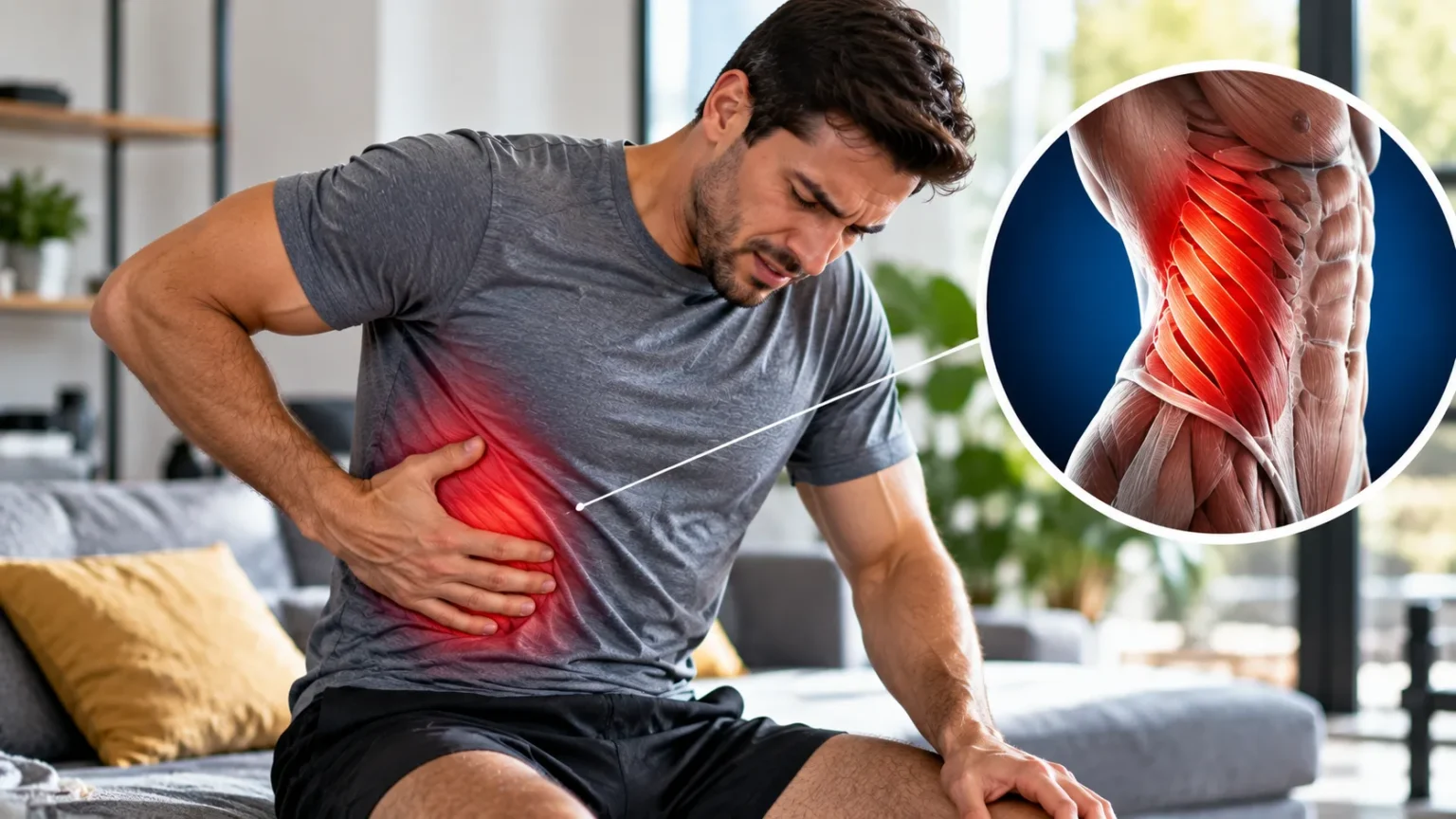
A torn oblique is an injury involving one of the muscles located along the sides of your abdomen. These muscles help you twist, bend, stabilize your trunk, and support everyday movements such as walking, lifting, and reaching. When the fibers are overstretched or torn, the result can be sharp side pain, tenderness, weakness, and difficulty moving comfortably.
The abdominal obliques include the external and internal oblique muscles on both sides of your torso. Together, they support rotation and side bending while helping stabilize the spine and pelvis. Because they are involved in so many movements, an oblique strain can affect activities ranging from getting out of bed to exercising, coughing, sneezing, or carrying groceries.
A torn oblique can range from a mild strain involving a small number of muscle fibers to a more serious tear that causes significant weakness and bruising. Most injuries are minor and improve with appropriate rest and gradual rehabilitation. However, severe or persistent symptoms should be assessed to rule out other causes of abdominal or rib pain.
Common Causes of a Torn Oblique
Sudden twisting is one of the most common causes of oblique muscle injuries. Sports such as baseball, tennis, golf, cricket, football, and swimming often involve forceful trunk rotation that can overload the abdominal muscles. A quick movement performed without adequate preparation may stretch the muscle beyond its normal capacity and cause microscopic or larger tears.
Heavy lifting can also strain the obliques, especially when a person twists while holding weight or uses poor technique. Moving furniture, lifting boxes, performing deadlifts, or carrying an uneven load can place significant stress on the abdominal wall. Fatigue increases the risk because tired muscles may be less capable of controlling sudden or powerful movements.
Repetitive activity is another possible cause. Frequent rotational movements, intense core workouts, or returning to exercise too quickly after inactivity may gradually irritate the muscle. In some cases, repeated coughing or sneezing can also strain the abdominal wall, particularly when the muscles are already tight, fatigued, or recovering from a previous injury.
Torn Oblique Symptoms to Watch For
The most noticeable symptom of a torn oblique is usually pain along the side of the abdomen or lower ribs. The discomfort may feel sharp during the initial injury and later become sore, tight, or aching. Pain often becomes worse when rotating the torso, bending sideways, sitting up, lifting, coughing, sneezing, or taking certain deep breaths.
Tenderness may develop over the injured area, and some people notice swelling or mild bruising. The abdominal muscles may feel weak, especially during movements that require trunk stability. More significant tears can make normal activities uncomfortable, including rolling over in bed, standing from a chair, getting into a car, or reaching overhead.
Symptoms can sometimes resemble other problems involving the ribs, abdomen, back, or internal organs. Muscle pain generally changes with movement and may be reproduced by contracting or stretching the affected area. Persistent pain, unexplained abdominal symptoms, breathing difficulty, fever, or pain unrelated to movement should not automatically be assumed to be an oblique strain.
Torn Oblique vs Intercostal Muscle Strain
Oblique injuries and intercostal muscle strains can feel similar because both may cause pain around the side of the torso and lower ribs. Intercostal muscles are located between the ribs and help support chest wall movement during breathing. Oblique muscles are positioned more broadly along the side of the abdomen and are heavily involved in rotation and trunk stabilization.
Intercostal pain often becomes more noticeable with deep breathing, coughing, sneezing, or movements that expand the rib cage. Oblique pain may be especially noticeable during twisting, side bending, sit-ups, or other movements that directly activate the abdominal wall. Because the muscle groups are close together, identifying the exact source can sometimes be difficult without examination.
If your discomfort seems to involve the rib area as well as your side, learning about intercostal strain may help you understand how the symptoms can overlap. A healthcare professional can distinguish between these injuries when pain is severe, persistent, or difficult to locate accurately.
How Serious Is an Oblique Tear?
Oblique strains are often categorized according to severity. A mild Grade 1 strain involves limited muscle fiber damage and usually causes manageable pain without major loss of strength. People can often continue basic daily activities, although twisting, lifting, and vigorous exercise may remain uncomfortable until the area begins to heal.
A Grade 2 injury involves a greater number of torn fibers and typically causes stronger pain, tenderness, weakness, and sometimes bruising. Movement may become noticeably restricted, and returning to sport or exercise too early can aggravate the injury. Recovery often takes longer because the muscle needs adequate time to rebuild strength and tolerate normal loading again.
A severe Grade 3 tear involves substantial or complete disruption of the muscle fibers. These injuries are less common but can produce significant pain, swelling, bruising, and loss of function. Severe abdominal muscle tears require professional assessment, and imaging may sometimes be used to evaluate the extent of damage and rule out other injuries.
Immediate Relief for a Torn Oblique
The first priority after an oblique injury is to stop the movement that caused the pain. Continuing to twist, lift, or train through sharp discomfort can worsen irritated muscle fibers. Relative rest allows the injured area to settle while still permitting gentle daily movement that does not increase symptoms or cause significant discomfort.
Applying a cold pack wrapped in cloth for short periods may help manage soreness and swelling during the early phase. Avoid applying ice directly to the skin. Some people later prefer gentle warmth once the initial irritation has reduced because warmth can make tight surrounding muscles feel more comfortable before light movement.
Comfortable positioning can also make a difference. Sleeping on your back with support under the knees or on the uninjured side may reduce tension through the abdominal wall. Avoid aggressive stretching, forceful massage, or exercises that reproduce sharp pain during the early stages, because injured muscle fibers need time before they can tolerate heavier loading.
How Long Does a Torn Oblique Take to Heal?
Healing time depends on the severity of the tear, your activity level, overall health, and whether the muscle is repeatedly irritated during recovery. Mild strains may improve substantially within a few weeks. Moderate injuries can take several weeks longer, particularly when the person participates in sports that require frequent twisting, sprinting, or powerful trunk movement.
Pain improving does not necessarily mean the muscle has completely recovered. Strength and flexibility often return gradually after everyday discomfort has decreased. Returning immediately to intense exercise because the area “feels better” can overload tissue that has not yet regained its previous capacity and may contribute to another strain.
Recovery should therefore be based on function rather than time alone. Ideally, you should be able to walk, bend, rotate, and perform basic core movements without significant discomfort before progressing. Athletes may need additional sport-specific strengthening and movement drills before returning fully to competition or high-intensity training.
Safe Movement During Oblique Recovery
Complete inactivity is usually unnecessary for mild muscle strains unless a healthcare professional recommends otherwise. Gentle walking can help maintain mobility and prevent general stiffness as long as it does not worsen symptoms. The key is choosing movements that remain comfortable and avoiding activities that produce sharp pain or noticeably increase soreness afterward.
As symptoms settle, controlled trunk movements may gradually be reintroduced. Small rotations, gentle side bends, and basic core stabilization exercises can help restore confidence and movement tolerance. The progression should remain slow, because aggressively stretching an injured muscle can irritate healing fibers and delay the return to normal strength.
Later rehabilitation often focuses on strengthening the abdominal wall, hips, lower back, and surrounding trunk muscles. Exercises may progress from low-load isometric contractions to controlled rotation and eventually more demanding movements. Athletes should rebuild speed and power gradually rather than moving directly from basic rehabilitation into explosive twisting exercises.
Exercises That May Help After the Acute Phase
Gentle abdominal bracing is often one of the first strengthening movements introduced once sharp pain has improved. This involves lightly tightening the abdominal muscles without holding your breath or moving the trunk. The goal is not to produce maximum tension but to help the core muscles begin working comfortably again without excessive strain.
Modified side planks may eventually strengthen the obliques and surrounding stabilizing muscles. Beginners can perform the movement from the knees before progressing toward a full side plank. The exercise should feel controlled rather than painful, and duration can be increased gradually as strength and confidence return throughout the recovery process.
Resistance-band rotations and controlled cable exercises can be introduced later when daily movements and basic exercises are comfortable. These movements help prepare the obliques for the rotational demands of sport and everyday lifting. Rehabilitation should be adjusted or stopped if pain becomes sharp, symptoms worsen afterward, or movement quality begins to break down.
What to Avoid With an Oblique Strain
Avoid activities that directly reproduce sharp pain, particularly heavy lifting, powerful twisting, aggressive sit-ups, and high-intensity sports. Exercising through pain does not necessarily speed recovery and may repeatedly stress healing muscle fibers. Modifying your training temporarily is usually more productive than trying to maintain your normal workout despite obvious symptoms.
Deep stretching should also be approached carefully during the early stages. A strong side stretch may feel as though it is loosening the muscle, but forcing the injured tissue into an uncomfortable position can increase irritation. Gentle mobility is generally more appropriate until the area can move through a normal range without significant pain.
You should also avoid repeatedly testing the injury throughout the day. Constantly twisting or pressing the sore area to check whether it still hurts can keep the region irritated. Instead, monitor overall improvement in everyday activities, strength, and movement tolerance over several days while gradually increasing activity only when symptoms remain manageable.
How to Prevent Another Oblique Injury
A proper warm-up can help prepare the trunk for activities involving rapid movement and rotation. Begin with general movement to raise body temperature, followed by controlled mobility and activity-specific exercises. Athletes involved in rotational sports should gradually increase speed and intensity instead of moving immediately into maximum-effort swings, throws, or changes of direction.
Building balanced core strength is also important. Training should include not only crunches but also anti-rotation exercises, side stabilization, hip strength, and controlled rotational movements. Stronger muscles around the abdomen, hips, and spine can improve force distribution and reduce excessive stress on one specific area during demanding movements.
Good lifting technique can reduce risk during everyday tasks and strength training. Keep loads close to the body when practical and avoid suddenly twisting while holding something heavy. Increasing exercise intensity gradually, allowing adequate recovery, and responding early to persistent muscle tightness can also decrease the likelihood of recurring abdominal strains.
When Torn Oblique Pain Might Be Something Else
Side pain is not always caused by a muscle injury, even if symptoms appear after physical activity. Problems involving the ribs, kidneys, digestive system, gallbladder, lungs, or other internal structures can sometimes create discomfort in a similar location. This is particularly important when pain does not clearly change with movement or muscle contraction.
A hernia can also cause discomfort around the abdominal wall and may be mistaken for a muscle strain. Some hernias create a noticeable bulge that becomes more obvious during coughing, lifting, or straining. Persistent localized pain, pressure, or a new abdominal lump should be assessed rather than repeatedly treated as a simple muscle injury.
Symptoms such as fever, vomiting, unexplained shortness of breath, fainting, blood in urine or stool, severe abdominal tenderness, or worsening pain require medical attention. These signs are not typical of an uncomplicated oblique strain and may indicate another condition that needs more urgent evaluation and appropriate treatment.
When to See a Doctor for a Torn Oblique
Medical evaluation is appropriate when pain is severe, continues to worsen, or does not begin improving with reasonable activity modification. Significant bruising, swelling, weakness, or difficulty standing upright can suggest a more substantial muscle injury. A clinician can examine the area and determine whether imaging or additional testing is necessary.
Seek prompt medical attention if the pain follows a major fall, collision, or blow to the ribs or abdomen. Trauma can cause rib fractures, internal injuries, or other problems that may initially resemble a pulled muscle. Difficulty breathing, dizziness, severe abdominal pain, or rapidly increasing symptoms deserve urgent assessment rather than home treatment.
Recurring oblique strains should also be evaluated, especially when they repeatedly return during similar movements. Poor trunk strength, inadequate recovery, movement mechanics, training errors, or previous scar tissue may contribute to repeated injury. Identifying these factors can help create a more effective rehabilitation plan and reduce the likelihood of another painful setback.
Conclusion
A torn oblique usually occurs when the abdominal muscles are overloaded during twisting, lifting, exercise, sports, or sudden movement. Typical symptoms include side pain, tenderness, weakness, and discomfort when rotating or bending the torso. The severity can range from a mild strain to a more significant muscle tear requiring longer recovery.
Early management generally involves reducing aggravating activity, protecting the injured area, and allowing symptoms to settle before gradually restoring movement. Gentle mobility and progressive strengthening can then help rebuild muscle capacity. Returning to demanding exercise too quickly may increase the risk of reinjury, even when everyday pain has already improved.
Most mild oblique strains recover with conservative care, but severe or unusual symptoms should not be ignored. Significant bruising, worsening pain, breathing problems, abdominal symptoms, or prolonged weakness deserve professional evaluation. Understanding the difference between a routine muscle strain and warning signs can help you respond appropriately and recover more safely.
FAQs
What does a torn oblique feel like?
A torn oblique commonly causes sharp or aching pain along the side of the abdomen, especially during twisting, bending, coughing, or sitting up. Tenderness, weakness, and occasional bruising may also occur.
Can a torn oblique heal on its own?
Mild and moderate oblique strains often improve with activity modification, gradual movement, and appropriate rehabilitation. More severe tears or symptoms that fail to improve should be assessed by a healthcare professional.
Can I exercise with a torn oblique?
Avoid exercises that reproduce sharp pain during the early recovery period. Gentle walking and comfortable movement may be appropriate, followed by progressive core strengthening once normal daily activities become easier.
How do I know if my oblique injury is serious?
Severe pain, significant bruising, major weakness, inability to move comfortably, or symptoms worsening instead of improving may indicate a more significant injury. Medical assessment can help determine the extent of the damage.
Can coughing cause an oblique strain?
Yes. Frequent or forceful coughing repeatedly contracts the abdominal muscles and may strain the obliques, particularly when the muscles are already fatigued or irritated. Persistent pain after coughing should be evaluated if it does not improve.