

Home exercises offer a practical way to stay active without needing a gym membership, expensive equipment, or a complicated training schedule. With enough space to move safely, people can improve strength, flexibility, balance, coordination, and cardiovascular fitness from home. The key is choosing appropriate exercises and performing them with good technique.
A home workout routine can be adapted for beginners, experienced exercisers, busy professionals, and people returning to activity after a break. Bodyweight exercises, resistance bands, light weights, and simple household items can support many fitness goals. Consistency matters more than having a large collection of equipment or following an overly complicated program.
However, exercising at home does not mean technique and safety should be ignored. Poor form, excessive training volume, and progressing too quickly can increase the chance of muscle or joint discomfort. Understanding the benefits, correct form principles, and best practices for home exercises can help you build a routine that is effective, sustainable, and easier to maintain.
What Are Home Exercises?
Home exercises are physical activities performed in your house, apartment, garden, or another personal space rather than a traditional gym. They can include strength training, cardio, stretching, mobility work, balance exercises, and bodyweight movements. Many routines require little or no equipment, making them accessible to people with different budgets and fitness levels.
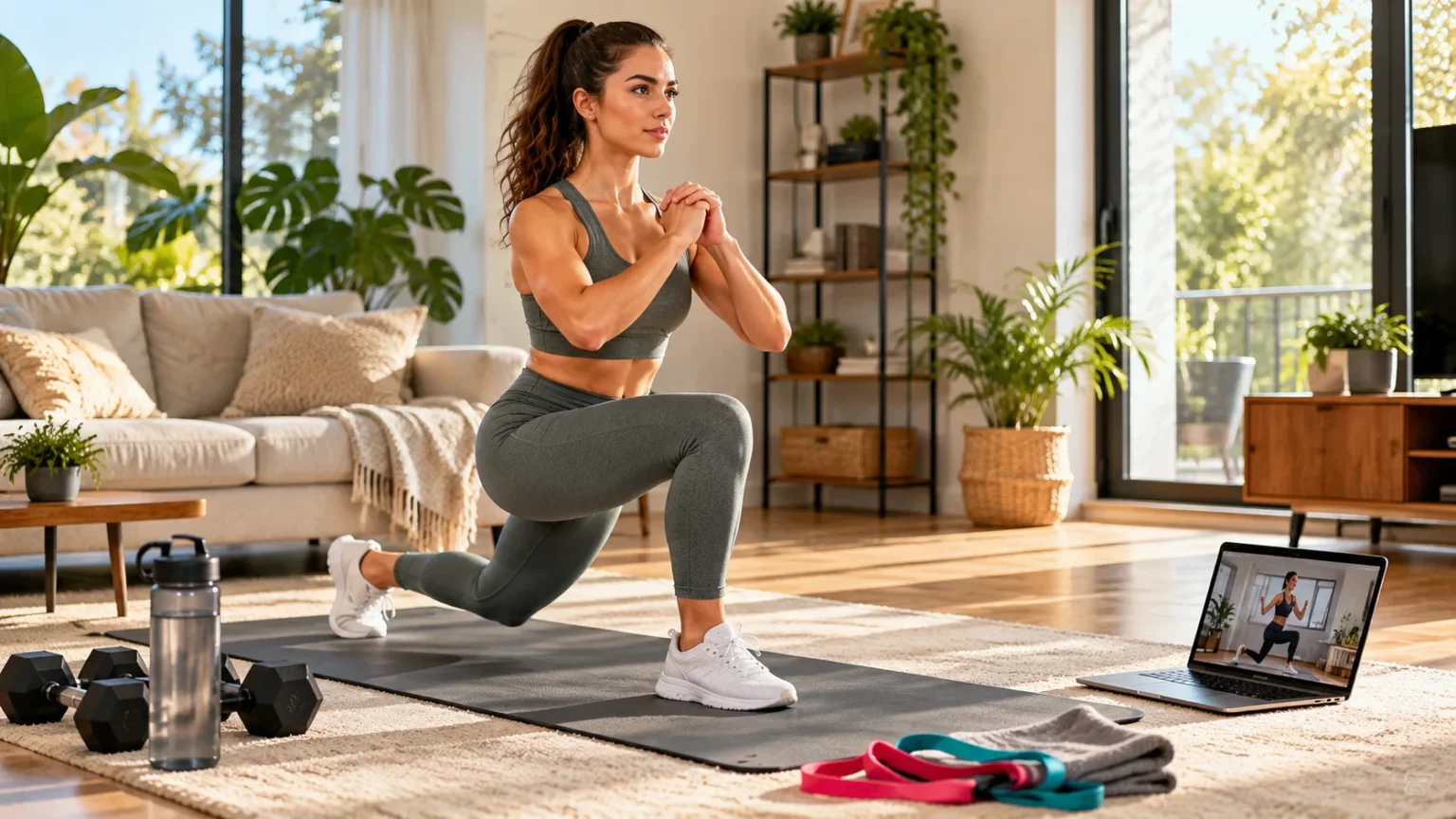
Common home exercises include squats, lunges, push-ups, glute bridges, planks, step-ups, jumping jacks, and mobility drills. Resistance bands, dumbbells, kettlebells, or adjustable weights can provide additional challenge when available. The best exercises depend on your current fitness level, movement ability, goals, and any physical limitations.
Home training can be structured in many ways. Some people prefer full-body workouts several times per week, while others divide training into upper-body, lower-body, and cardio sessions. A simple routine that you can perform consistently is usually more valuable than an advanced program that feels difficult to follow regularly.
Benefits of Exercising at Home
Convenience is one of the biggest advantages of home exercise. You do not need to travel to a gym, wait for equipment, or organize your schedule around facility opening hours. Removing these barriers can make it easier to fit short workouts into busy mornings, lunch breaks, evenings, or weekends.
Home exercise can also be cost-effective. Many effective movements use body weight as resistance, meaning you can start without purchasing equipment. If you eventually want more variety, inexpensive resistance bands or a pair of adjustable dumbbells can significantly expand the number of exercises available without requiring a dedicated home gym.
Privacy is another benefit for people who feel uncomfortable exercising around others. Training at home allows you to practice unfamiliar movements, learn proper form, and progress at your own pace. This environment can help beginners build confidence before deciding whether they want to add classes, outdoor exercise, or gym-based training later.
Start With Clear and Realistic Fitness Goals
A successful home workout routine begins with understanding what you want to achieve. Your goal might be increasing general fitness, becoming stronger, improving mobility, supporting weight management, or simply moving more often during the week. Clear goals make it easier to select suitable exercises and measure meaningful progress.
Keep goals realistic based on your starting point and available time. Someone who has been inactive may benefit from three short sessions per week rather than attempting intense daily workouts immediately. Beginning with manageable expectations allows muscles, joints, and cardiovascular fitness to adapt while making the routine easier to maintain.
Consider using simple performance goals instead of focusing only on appearance. For example, you could aim to complete ten controlled push-ups, hold a plank comfortably for longer, walk for thirty minutes, or perform deeper squats with good form. Performance-based targets provide clear evidence that your physical capacity is improving.
Warm Up Before Your Home Workout
A warm-up gradually prepares your body for the movements and intensity ahead. It can increase body temperature, improve joint movement, and help muscles transition from resting activity into exercise. A warm-up does not need to be long, but it should relate to the type of workout you plan to complete.
For a full-body home workout, begin with several minutes of easy movement such as marching, arm circles, gentle squats, hip rotations, or controlled lunges. Progressively increase the range and speed rather than starting with your hardest exercise immediately. Dynamic movement is usually more useful before training than long, aggressive static stretches.
Use the warm-up to check how your body feels that day. Mild stiffness may improve as you move, but sharp pain or significant limitation should not simply be ignored. Adjusting exercises when something feels unusually uncomfortable can help you avoid turning a minor irritation into a more significant problem.
Focus on Proper Exercise Form
Good exercise form helps place stress on the intended muscles while reducing unnecessary strain on joints and surrounding tissues. Move with control rather than rushing through repetitions simply to finish faster. In many exercises, maintaining a stable trunk and comfortable joint alignment is more important than lifting heavier weight.
For squats, keep your feet stable and allow the knees to track naturally in line with the feet while your torso remains controlled. During push-ups, maintain a straight body position and avoid letting the lower back collapse. Planks should involve steady abdominal tension without excessively arching or rounding the spine.
If you are uncertain about technique, begin with an easier variation. Wall push-ups can help develop pressing strength before floor push-ups, while chair-assisted squats can improve control before deeper repetitions. Progressing through manageable variations helps your body learn movement patterns without adding more resistance than you can safely control.
Build a Balanced Home Exercise Routine
A balanced routine should train more than one muscle group or fitness quality. Include exercises that involve pushing, pulling when equipment allows, squatting, hinging, core stability, and lower-body movement. Combining several movement patterns helps develop more complete strength instead of repeatedly training only the areas you find easiest.
Lower-body exercises may include squats, split squats, step-ups, calf raises, and glute bridges. Upper-body movements can include push-ups, overhead presses, rows with resistance bands, and floor presses. Core exercises such as dead bugs, bird dogs, and planks can improve trunk control without requiring hundreds of traditional abdominal repetitions.
Cardiovascular activity should also have a place in your weekly plan. Brisk walking, stationary cycling, stair climbing, marching, dancing, or low-impact circuits can raise your heart rate effectively. You can separate cardio and strength sessions or combine them depending on your fitness level, preferences, and available time.
Progress Your Workouts Gradually
Your body adapts when exercise becomes gradually more challenging over time. This principle, often called progressive overload, can involve adding repetitions, resistance, sets, range of motion, or exercise difficulty. Progress does not always require heavier weights, especially when training at home with limited equipment.
For example, you might begin with eight controlled squats and eventually increase to twelve or fifteen. Later, you could add resistance or progress toward split squats. Changing one variable at a time makes it easier to see how your body responds without suddenly increasing training stress too much.
Avoid increasing workout difficulty simply because you feel motivated on a particular day. Muscles and connective tissues need time to adapt to higher workloads. Gradual progress is especially important after a long break from exercise because enthusiasm can return faster than physical conditioning, increasing the chance of soreness or strain.
Include Rest and Recovery Days
Exercise creates physical stress, and recovery gives the body time to adapt to that stress. Training the same muscle groups intensely every day may reduce performance and increase soreness. Beginners often benefit from leaving at least a day between demanding full-body strength workouts while staying lightly active between sessions.
Recovery does not always mean remaining completely inactive. Gentle walking, mobility work, or comfortable stretching can help you continue moving without repeating the same training load. Sleep, nutrition, hydration, and overall stress levels also influence how prepared you feel for your next workout.
Pay attention to discomfort that feels different from normal post-exercise soreness. Persistent sharp pain, increasing weakness, or pain that changes the way you move may indicate an injury that deserves attention. For example, understanding symptoms of an oblique strain can help you recognize when side or abdominal pain should not simply be trained through.
Use Equipment Safely at Home
Home workout equipment can make training more challenging, but it should be used carefully. Resistance bands should be checked for cracks or damage before use because worn bands may snap unexpectedly. Dumbbells and other weights should be stored securely so they do not create trip hazards between workouts.
Make sure you have enough space for the movement you are performing. Clear furniture, rugs, toys, and other obstacles away from your training area, especially when doing lunges, jumping exercises, or movements requiring wide arm positions. A stable, non-slippery surface is particularly important during lower-body and balance exercises.
Choose resistance you can control through the full movement. Using a weight that forces you to swing, twist, or shorten the range excessively usually reduces exercise quality. Increase resistance only after you can perform the current version consistently with good technique and without unusual pain.
Stay Consistent Without Overtraining
Consistency is one of the most important factors in improving fitness. A moderate workout performed regularly often produces better long-term results than occasional intense sessions followed by long periods of inactivity. Establish a weekly schedule that fits realistically around work, family responsibilities, sleep, and other commitments.
Short sessions can still be useful when time is limited. A twenty-minute workout containing squats, push-ups, glute bridges, rows, and core work can train several major muscle groups efficiently. You can also divide physical activity into shorter periods throughout the day when completing one longer workout is difficult.
However, more exercise is not always better. Frequent exhaustion, declining performance, unusual irritability, persistent soreness, or difficulty sleeping can sometimes indicate that training and recovery are poorly balanced. Adjusting workout intensity or taking additional rest can help you return to exercise more effectively than continually forcing yourself through fatigue.
Adapt Home Exercises to Your Fitness Level
Beginners should prioritize movement quality and confidence before adding speed or resistance. Start with stable, simple exercises and use shorter workout sessions while your body becomes accustomed to regular activity. Modifying an exercise is not a failure; it is a practical way to train at the level that matches your current ability.
Intermediate exercisers can increase difficulty through resistance, unilateral movements, slower tempos, or more challenging exercise variations. Single-leg work, elevated push-ups, resistance-band rows, and loaded carries can provide meaningful progression. Advanced trainees may need heavier equipment or more complex programming to continue increasing strength significantly.
Age, previous injuries, mobility limitations, and health conditions should also influence exercise selection. People with medical concerns or significant physical limitations may benefit from professional guidance before beginning a new program. A personalized approach allows exercise to remain challenging without ignoring individual safety considerations.
Track Progress and Adjust Your Routine
Tracking workouts can help you identify whether your fitness is actually improving. Record exercises, repetitions, sets, resistance, and how difficult the session felt. You do not need complicated software; a notebook or simple phone note can provide enough information to recognize trends over several weeks.
Progress may appear in several forms. You might complete more repetitions, use greater resistance, move through a larger comfortable range, recover faster between sets, or finish a workout with less fatigue. These changes can be valuable even when body weight or physical appearance changes slowly.
Review your routine every few weeks rather than changing exercises constantly. If you are improving and enjoying the program, there may be no reason to replace everything. Make adjustments when exercises become too easy, goals change, equipment becomes available, or certain movements repeatedly create discomfort.
Conclusion
Home exercises provide a convenient and flexible way to improve strength, mobility, cardiovascular fitness, balance, and overall activity levels. Effective home workouts do not require expensive equipment or large amounts of space. What matters most is selecting exercises that match your current ability and performing them consistently with appropriate technique.
Good form, gradual progression, proper warm-ups, and adequate recovery can make home exercise safer and more effective. A balanced routine should include multiple movement patterns while avoiding the temptation to increase difficulty too quickly. Paying attention to pain and fatigue can also help you recognize when an exercise should be modified.
The best home exercise routine is one you can realistically maintain. Start with manageable sessions, track your progress, and increase the challenge gradually as your strength and confidence improve. With a thoughtful approach, exercising at home can become a sustainable part of a healthy and active lifestyle.
FAQs About Home Exercises
Are home exercises as effective as gym workouts?
Home workouts can effectively improve strength, mobility, cardiovascular fitness, and general health. Their effectiveness depends on exercise selection, consistency, progression, and whether you have enough resistance for your specific fitness goals.
How many days a week should I exercise at home?
Many people can begin with three or four sessions per week while allowing enough recovery between harder workouts. The ideal frequency depends on workout intensity, fitness level, goals, and the activities performed.
What are the best home exercises for beginners?
Squats, wall push-ups, glute bridges, bird dogs, step-ups, and gentle walking are useful starting options. Beginners should select comfortable variations and focus on controlled movement before increasing repetitions or resistance.
Do I need equipment for home workouts?
No. Bodyweight exercises can provide an effective starting point for strength and fitness. Resistance bands, dumbbells, or other simple equipment can later add variety and make progressive overload easier.
How can I avoid injury while exercising at home?
Warm up properly, use controlled form, increase difficulty gradually, clear your exercise space, and avoid training through sharp pain. Adequate recovery between demanding sessions can also reduce unnecessary strain.