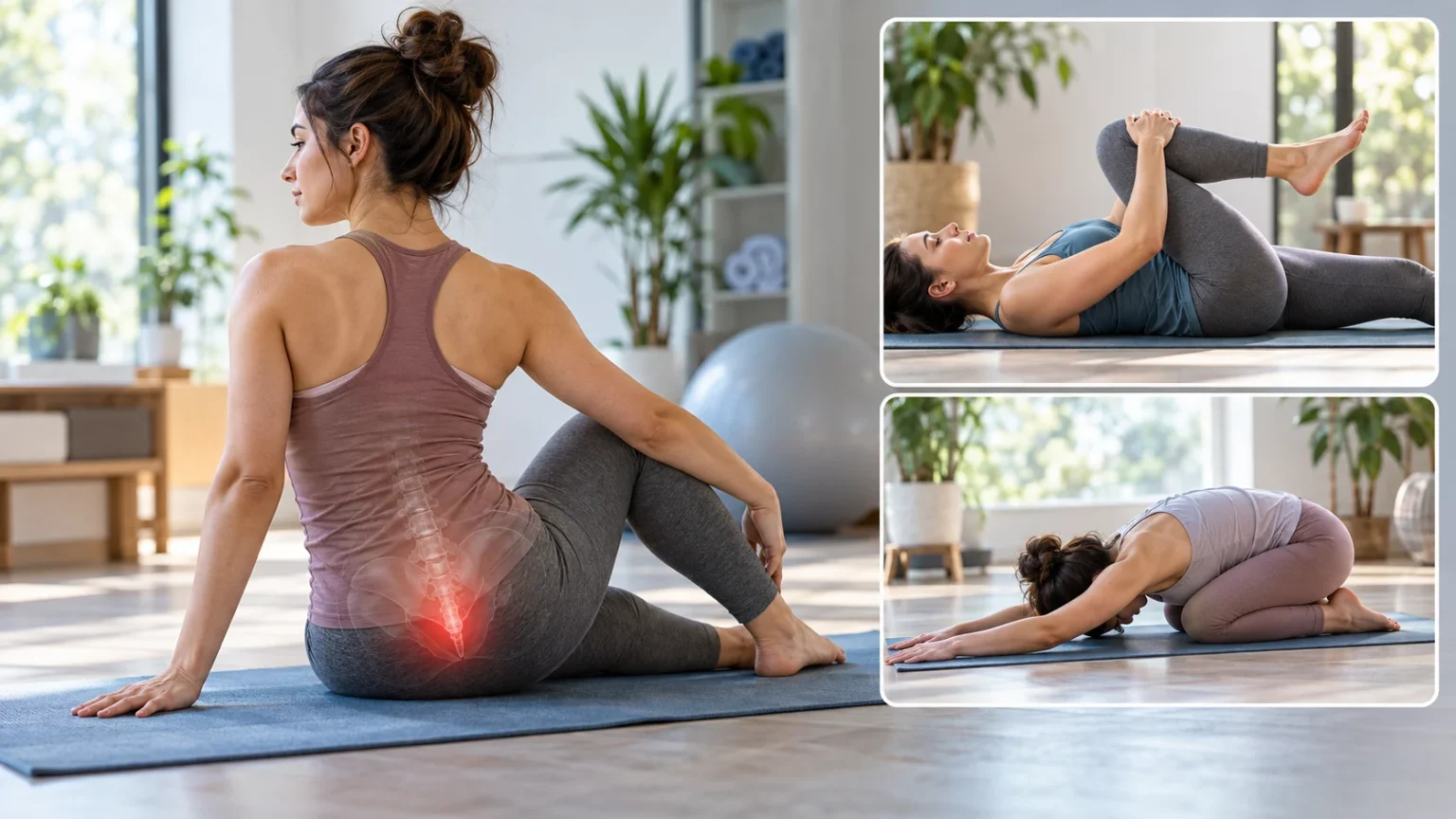
Tailbone pain can make sitting, bending, exercising, and even getting up from a chair uncomfortable. The tailbone, medically called the coccyx, sits at the bottom of the spine and connects with surrounding muscles, ligaments, and pelvic floor tissues. When these structures become irritated or tense, discomfort may develop around the lower spine and buttock area.
Gentle stretching may help some people reduce tightness around the hips, lower back, glutes, and pelvic region. However, stretching is not suitable for every cause of coccyx pain, especially after a significant fall, fracture, or severe injury. Understanding which movements may help, how to perform them safely, and when to seek professional care can make recovery more manageable.
What Causes Tailbone Pain?
Tailbone pain, also called coccydynia, can develop after a fall, prolonged sitting, repetitive pressure, childbirth, or irritation of the tissues surrounding the coccyx. Sitting on hard surfaces for long periods may increase pressure directly over the tailbone. Cycling, rowing, or other activities involving repeated seated pressure can sometimes contribute as well.
Muscle tension around the hips, glutes, pelvic floor, and lower back may also influence how the tailbone area feels. These muscles connect and coordinate around the pelvis, so stiffness in one region can affect movement elsewhere. Poor sitting habits or limited hip mobility can sometimes make pressure around the coccyx more noticeable.
Not every case of tailbone pain comes from tight muscles. Fractures, joint irritation, infection, nerve problems, or other medical conditions can occasionally cause similar symptoms. Persistent, severe, or unexplained pain should be evaluated rather than treated only with stretching at home.
Can Stretching Help Tailbone Pain?
Stretching may help when tailbone discomfort is influenced by muscle tightness around the hips, buttocks, lower back, or pelvic floor. Gentle movements can improve mobility and reduce the feeling of stiffness after prolonged sitting. The goal is to decrease unnecessary tension around the pelvis rather than stretch the coccyx itself.
The effectiveness of stretching depends on what is causing the pain. If discomfort began after a minor period of inactivity or prolonged sitting, mobility work may feel soothing. If the pain followed a hard fall or other significant trauma, stretching too aggressively could worsen symptoms and should be avoided until the area has been assessed.
Comfort should guide every movement. You should feel a mild stretch through surrounding muscles rather than sharp pain directly at the tailbone. Stop if a stretch causes increasing pain, numbness, tingling, or symptoms that continue worsening after the exercise.
Child’s Pose Stretch
Child’s pose gently stretches the lower back, hips, and surrounding tissues while allowing the spine to relax. Start on your hands and knees, then slowly move your hips backward toward your heels. Extend your arms forward or keep them beside your body depending on which position feels more comfortable.
Avoid forcing your hips all the way back if doing so increases pressure around the tailbone. Keep your knees slightly wider if that allows your pelvis to move more comfortably. Hold the position for about 20 to 30 seconds while taking slow breaths, then return gradually to the starting position.
This stretch can be particularly useful after long periods of sitting because it encourages movement through the hips and lower back. However, it should feel gentle rather than intense. If direct pressure or deep flexion increases your coccyx pain, skip this position and try another movement.
Knee-to-Chest Stretch
The knee-to-chest stretch targets muscles around the lower back and gluteal region. Lie on your back with both knees bent and your feet resting comfortably on the floor. Bring one knee slowly toward your chest while keeping the opposite leg bent or extended, depending on which position feels better.
Hold behind your thigh or around your shin without pulling aggressively. Keep your shoulders relaxed and allow your lower back to remain comfortable against the surface beneath you. Hold for 20 to 30 seconds, then slowly release and repeat on the opposite side.
You can also bring both knees toward your chest if this feels comfortable and does not increase pressure around the tailbone. This variation may create a broader stretch through the lower back. Avoid rocking forcefully or pulling the knees deeply toward the chest if your symptoms become worse.
Figure-Four Glute Stretch
The figure-four stretch targets the gluteal and deep hip muscles, which may become tight when sitting for long periods. Lie on your back with both knees bent, then place one ankle across the opposite thigh just above the knee. Your legs should create a loose figure-four shape.
For a deeper stretch, gently bring the supporting thigh toward your chest while keeping your head and shoulders relaxed. You should feel the stretch mainly through the buttock and outer hip rather than directly through the tailbone. Hold for approximately 20 to 30 seconds before switching sides.
Avoid pressing the crossed knee downward forcefully because this can place unnecessary stress on the hip. The movement should remain comfortable and controlled. If lying on your back increases coccyx pain, performing a seated version may be more comfortable, provided sitting itself does not aggravate symptoms.
Hip Flexor Stretch
Tight hip flexors can affect pelvic positioning and may contribute to tension around the lower back and hips. Begin in a half-kneeling position with one knee on a padded surface and the opposite foot in front. Keep your chest upright and gently shift your pelvis forward.
Avoid arching your lower back as you move. You should feel a mild stretch across the front of the hip on the kneeling side. Hold for 20 to 30 seconds while breathing comfortably, then switch legs and repeat the movement on the other side.
Placing a cushion under the knee can make the position more comfortable. If kneeling is difficult, a standing hip flexor stretch can be used instead. Improving hip flexibility may help reduce compensatory tension, but it should not create direct pain around the coccyx.
Piriformis Stretch
The piriformis is a small muscle deep within the buttock that helps control movement of the hip. Tightness around this area may contribute to discomfort through the buttocks and surrounding pelvic region. A gentle piriformis stretch can be performed using a similar setup to the figure-four position.
Lie on your back and cross one ankle over the opposite thigh. Slowly bring the supporting leg toward your chest until you feel a comfortable stretch through the crossed-side buttock. Keep your lower body relaxed and avoid pulling beyond the point where the movement feels mild.
Hold the position for 20 to 30 seconds before slowly releasing. Repeat on the other side even if discomfort is mainly felt on one side, unless a healthcare professional has advised otherwise. Stop immediately if the stretch causes shooting pain, numbness, or tingling down the leg.
Cat-Cow Stretch
Cat-cow encourages gentle movement through the spine and pelvis without requiring large amounts of resistance. Start on your hands and knees with your wrists below your shoulders and knees below your hips. Keep your movements slow so you can notice how different spinal positions affect your symptoms.
Gently round your back upward while allowing your head to lower slightly, creating the cat position. Then slowly move in the opposite direction by allowing your abdomen to lower while lifting your chest slightly. Avoid forcing either position or creating excessive arching through the lower back.
Repeat the movement five to ten times at a comfortable pace. The purpose is mobility rather than achieving the largest possible range. If rounding or arching your spine creates direct tailbone pain, reduce the movement or stop until you understand what is aggravating the area.
Seated Hamstring Stretch
Tight hamstrings can influence pelvic movement and may contribute to stiffness around the hips and lower back. Sit toward the front of a supportive chair and extend one leg forward with the heel on the floor. Keep the other foot planted comfortably beneath you.
Maintain a relatively straight back and gently hinge forward from your hips until you feel a stretch along the back of the extended thigh. Avoid rounding deeply through the spine or pressing hard into the painful tailbone area. Hold for 20 to 30 seconds, then repeat on the opposite side.
If sitting itself is painful, choose a standing hamstring stretch instead. Place one heel on a low stable surface and hinge forward slightly from the hips. The stretch should remain mild and controlled rather than becoming a test of maximum flexibility.
How to Stretch Safely With Tailbone Pain
Begin slowly, especially if you have been inactive or your pain recently started. Moving directly into deep stretches when the surrounding tissues are cold or sensitive can make discomfort worse. A few minutes of easy walking or suitable warm-up stretches can help prepare the body before longer mobility work.
Avoid bouncing or forcing yourself deeper into any stretch. Gentle tension is usually enough to improve mobility without irritating sensitive tissues. Holding each position for 20 to 30 seconds while breathing normally can be more useful than repeatedly pushing into pain.
Pay attention to how you feel during and after the routine. Mild muscular tension is acceptable, but sharp pain, burning, tingling, or increased coccyx discomfort suggests the movement should be modified. If symptoms consistently worsen after stretching, professional evaluation may be more appropriate than continuing the same routine.
Other Ways to Relieve Tailbone Pain
Reducing prolonged pressure on the coccyx can be just as important as stretching. Take regular standing or walking breaks if your job requires long periods of sitting. Changing positions frequently can prevent one small area from carrying continuous pressure throughout the day.
A coccyx cushion with a cutout at the back may reduce direct pressure while sitting for some people. Sitting with your feet supported and avoiding excessive slouching may also improve comfort. The goal is not to maintain a rigid posture but to distribute weight more comfortably and change position regularly.
Heat or cold may provide temporary relief depending on how the pain started and what feels best. Gentle walking can also maintain movement without placing heavy stress on the area. Over-the-counter medicines may help some people, but individual health conditions and medication interactions should be considered with a pharmacist or healthcare professional.
What Exercises Should You Avoid?
Exercises that place direct pressure on the tailbone may aggravate symptoms in some people. Sit-ups, certain floor-based abdominal movements, rowing, and prolonged cycling can become uncomfortable when the coccyx is already sensitive. Temporarily modifying these activities may allow irritation to settle.
Deep squats, aggressive hamstring stretches, or heavy lower-body exercises may also worsen pain if surrounding muscles or joints are irritated. This does not mean these exercises are permanently unsafe. They can often be reintroduced gradually once symptoms improve and comfortable movement returns.
Avoid using pain as something you must push through to make progress. Exercise should generally become easier as you adapt, not repeatedly create worsening coccyx discomfort. When several movements consistently trigger pain, a physiotherapist or other healthcare professional can help identify safer alternatives.
When Should You See a Healthcare Professional?
Consider getting medical advice if tailbone pain lasts for several weeks, keeps returning, or significantly interferes with sitting, sleeping, work, or exercise. A clinician can assess the coccyx, surrounding muscles, pelvic joints, and other possible sources of symptoms. Persistent pain may require a more specific management approach.
Seek care sooner if the pain began after a significant fall or direct impact. Severe swelling, major bruising, difficulty walking, increasing weakness, or pain that rapidly worsens should also be assessed. Imaging may sometimes be needed when a fracture or another structural injury is suspected.
Urgent medical attention is appropriate if tailbone pain occurs with loss of bladder or bowel control, numbness around the groin or saddle area, fever, or rapidly developing neurological symptoms. These features are not typical of simple muscular tightness and require appropriate medical evaluation.
Conclusion
Stretches for tailbone pain can help reduce tension around the hips, glutes, lower back, and pelvic region when muscle stiffness contributes to discomfort. Child’s pose, knee-to-chest movements, figure-four stretches, hip flexor stretches, and gentle spinal mobility are common options. Every movement should remain comfortable and controlled.
Stretching works best as part of a broader approach that includes regular movement, reduced pressure while sitting, sensible activity modification, and gradual strengthening when appropriate. Avoid forcing painful ranges or assuming that more flexibility will automatically solve coccyx discomfort. Different causes require different forms of care.
Persistent, severe, or worsening tailbone pain should be assessed professionally, particularly after significant trauma. Warning signs such as neurological changes, bladder or bowel problems, fever, or major weakness require prompt attention. Safe recovery starts with understanding your symptoms and choosing movements that support rather than aggravate them.
FAQs
What is the best stretch for tailbone pain?
There is no single best stretch for everyone. Gentle knee-to-chest, figure-four, hip flexor, and child’s pose stretches may help when tight muscles around the hips and lower back contribute to discomfort.
How often should I stretch for tailbone pain?
Gentle stretches can often be performed once or twice daily if they remain comfortable. Start with a small amount and reduce frequency if your tailbone pain increases afterward.
Can tight muscles cause tailbone pain?
Tightness around the glutes, hips, pelvic floor, and lower back may contribute to tension around the coccyx. However, tailbone pain can also result from injury, prolonged pressure, or other conditions.
Should I exercise if my tailbone hurts?
Light movement may be appropriate when symptoms are mild, but avoid exercises that increase direct pressure or pain. Persistent or severe symptoms should be assessed before returning to demanding activity.
When should I worry about tailbone pain?
Seek medical care for severe or persistent pain, particularly after a fall or injury. Bladder or bowel changes, saddle numbness, fever, weakness, or rapidly worsening symptoms require prompt evaluation.