


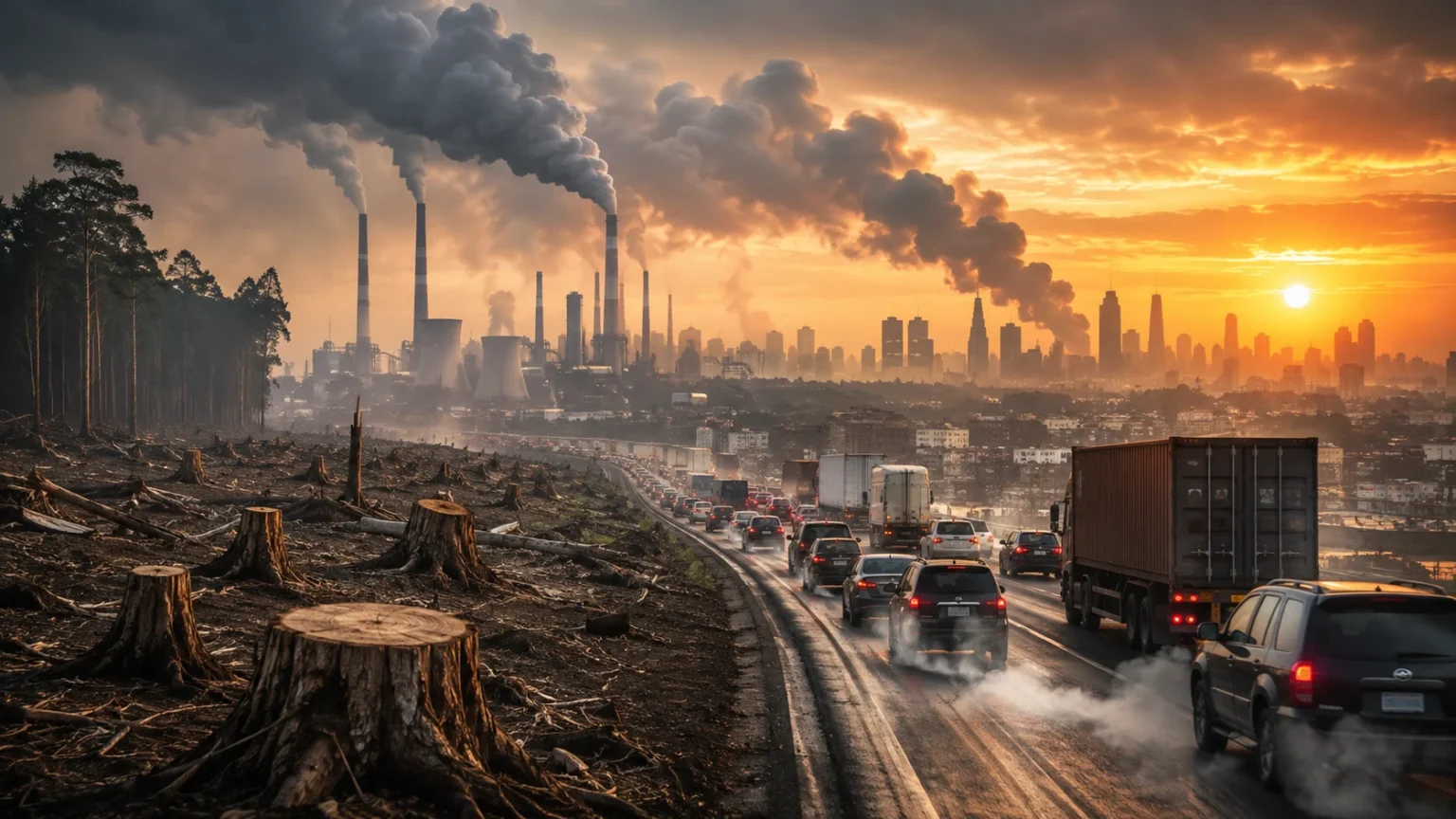
What Causes Climate Change? The Biggest Drivers Explained
Climate change happens when long-term patterns in Earth’s temperature, rainfall, oceans, seasons, and weather begin to shift. Earth’s climate has always changed naturally, but the rapid warming taking place today has a different dominant cause. Human activities are increasing the concentration of heat-trapping gases in the atmosphere and changing the planet’s natural energy balance.
The largest contributors are the burning of coal, oil, and natural gas for electricity, transportation, heating, manufacturing, and other activities. These processes release carbon dioxide and other greenhouse gases that prevent some heat from escaping into space. As concentrations increase, more energy remains within Earth’s climate system, gradually raising temperatures across the atmosphere, land, and oceans.
Deforestation, agriculture, industrial production, waste, and changes in land use also contribute to global warming. Some activities release carbon dioxide directly, while others produce powerful greenhouse gases such as methane and nitrous oxide. Although each source works differently, together they have significantly increased humanity’s impact on the climate since industrialization began.
So, what causes climate change today? The clearest answer is the accumulation of greenhouse gases produced mainly by human activity. Natural factors such as volcanic eruptions, changes in solar activity, and ocean cycles still influence short-term climate variations, but they do not explain the sustained warming trend observed over recent decades.
How the Greenhouse Effect Causes Global Warming
The greenhouse effect is a natural process that helps keep Earth warm enough for life. Sunlight reaches the planet and warms the surface, which then releases energy back toward space as infrared radiation. Greenhouse gases in the atmosphere absorb some of this outgoing energy and send part of it back toward the surface.
Without the natural greenhouse effect, Earth would be much colder. The problem is not that greenhouse gases exist but that their concentrations have increased rapidly because of human activities. Adding more carbon dioxide, methane, and nitrous oxide strengthens the heat-trapping effect and causes additional warming beyond the planet’s natural climate balance.
Carbon dioxide receives the most attention because human civilization releases enormous amounts of it by burning fossil fuels. Methane traps more heat per molecule over shorter periods and comes from activities such as livestock farming, oil and gas production, landfills, and rice cultivation. Nitrous oxide is strongly associated with fertilizer use and agricultural soil management.
These gases do not warm every location equally or produce identical weather every year. Instead, they increase the overall amount of energy stored within the climate system. That additional energy can influence temperatures, rainfall patterns, ocean heat, ice loss, sea levels, and the likelihood or intensity of certain climate extremes over time.
Burning Fossil Fuels Is the Biggest Human Cause
Burning fossil fuels is the most important human driver of modern climate change. Coal, oil, and natural gas contain carbon that has been stored underground for millions of years. When these fuels are burned, that carbon combines with oxygen and enters the atmosphere mainly as carbon dioxide, strengthening the greenhouse effect.
Coal has traditionally been used heavily for electricity generation and industrial production. Oil powers much of the global transportation system, including cars, trucks, aircraft, and ships. Natural gas is widely used for electricity, heating, manufacturing, and cooking, and its production can also release methane through leaks and other parts of the supply chain.
The challenge is that fossil fuels became deeply integrated into modern economies. Cities, factories, transport networks, buildings, and electricity systems were often designed around relatively inexpensive coal, oil, and gas. Replacing these systems therefore requires more than changing individual behavior; it requires investment in cleaner energy infrastructure and technologies across entire economies.
Renewable energy, electrification, energy storage, improved electricity grids, and greater energy efficiency can reduce fossil-fuel dependence. Solar and wind power have already expanded substantially in many markets, while electric vehicles and heat pumps are becoming increasingly important. Reducing fossil-fuel use remains central to limiting long-term global warming.
How Electricity Production Contributes to Climate Change
Electricity generation can produce significant greenhouse gas emissions when power plants burn coal, oil, or natural gas. These plants convert fossil-fuel energy into electricity while releasing carbon dioxide as a by-product. The amount of pollution depends on the fuel, efficiency of the facility, technologies used, and overall electricity demand.
Coal-fired electricity generally produces particularly high carbon emissions for the amount of electricity generated. Natural gas can produce fewer carbon dioxide emissions than coal during combustion, but methane leaks throughout gas production, processing, and transportation can increase its overall climate impact. This makes the full energy supply chain important when evaluating emissions.
Electricity demand is also increasing in many parts of the world as populations grow, economies expand, air-conditioning becomes more common, and new technologies require power. Electrification can lower emissions from vehicles and buildings, but its climate benefits are strongest when electricity increasingly comes from low-carbon energy rather than additional fossil-fuel generation.
Expanding solar, wind, hydropower, geothermal energy, nuclear power where appropriate, storage systems, and modern electricity networks can lower power-sector emissions. Energy efficiency can reduce demand at the same time. Cleaner electricity is particularly important because it can also support emission reductions across transportation, buildings, and parts of industry.
Deforestation and Land-Use Change Release Carbon
Forests play an important role in regulating the climate because trees remove carbon dioxide from the atmosphere through photosynthesis. Carbon is stored in trunks, branches, roots, leaves, and soils. Healthy forests therefore act as valuable carbon stores while also supporting wildlife, water systems, soil health, and local communities.
When forests are cut down or burned, some of their stored carbon is released into the atmosphere. At the same time, fewer trees remain available to absorb future carbon dioxide. This creates a double climate impact: existing carbon can be released while the landscape’s ability to remove additional carbon from the atmosphere becomes weaker.
Deforestation may occur for agriculture, cattle grazing, logging, mining, roads, settlements, and other forms of development. The climate impact depends on what type of ecosystem is removed, how the land is used afterward, and whether forests are eventually restored. Tropical forests are especially important because they store large amounts of carbon and contain exceptional biodiversity.
Protecting forests does not mean stopping all land development or agricultural production. Better land management, reforestation, sustainable forestry, improved crop yields on existing farmland, and protection of carbon-rich ecosystems can reduce pressure on natural areas. Land-use policies are therefore an important part of climate mitigation alongside cleaner energy.
Agriculture and Food Production Add Greenhouse Gases
Agriculture contributes to climate change through several different processes rather than one single source. Livestock, fertilizers, manure, rice cultivation, land clearing, agricultural machinery, food processing, and transportation can all create greenhouse gas emissions. The types of emissions also differ from those commonly associated with power plants and vehicles.
Cattle, sheep, and other ruminant animals produce methane during digestion through a process known as enteric fermentation. Manure management can create additional methane, while flooded rice fields can also release the gas. Because methane is a powerful greenhouse gas, reducing unnecessary methane emissions can help slow near-term warming.
Nitrogen fertilizers are essential for producing large amounts of food, but their use can increase nitrous oxide emissions from agricultural soils. Nitrous oxide has a strong warming effect and can remain in the atmosphere for a long period. Using fertilizer more efficiently can therefore benefit both farm economics and environmental performance.
Food waste also contributes indirectly because energy, land, fertilizer, water, and transportation are used to produce food that may never be eaten. Reducing waste, improving agricultural efficiency, protecting soils, managing livestock emissions, and adopting climate-smart farming practices can lower the climate footprint of food production without ignoring the need for reliable food supplies.
Transportation Emissions Are Another Major Driver
Transportation depends heavily on fossil fuels, making it another important source of greenhouse gas emissions. Most conventional cars, vans, trucks, aircraft, and ships burn petroleum-based fuels. Every time gasoline, diesel, or aviation fuel is burned, carbon dioxide produced during combustion enters the atmosphere.
Passenger vehicles are only one part of the transportation problem. Freight trucks move products across countries, ships carry global trade between continents, and aviation connects cities worldwide. Growing populations, expanding economies, urban sprawl, and increasing demand for travel can push transportation emissions higher when fossil-fuel dependence remains unchanged.
Reducing these emissions requires different solutions for different types of travel. Electric cars can reduce direct exhaust emissions, while public transportation, cycling, walking, and compact urban development can reduce the number of fuel-powered journeys. Cleaner electricity makes electric transportation increasingly beneficial from a climate perspective.
Heavy trucks, ships, and aircraft can be more difficult to decarbonize because they need large amounts of energy and often travel long distances. Improved vehicle efficiency, alternative fuels, electrification where practical, better logistics, rail investment, and technological innovation will therefore be necessary alongside changes in everyday passenger transportation.
Industry and Manufacturing Produce Climate Pollution
Industry makes many of the materials modern society depends on, including steel, cement, chemicals, plastics, fertilizers, glass, and manufactured products. Producing these materials requires large amounts of heat and electricity, much of which has historically come from fossil fuels. As a result, industrial activity is an important source of global greenhouse gas emissions.
Some industrial emissions come directly from chemical reactions rather than energy use alone. Cement production is a well-known example because manufacturing clinker involves heating limestone, which releases carbon dioxide during the chemical process. Simply powering the factory with cleaner electricity cannot eliminate all of these process emissions.
Steel manufacturing can also be highly carbon-intensive when coal is used to convert iron ore into usable metal. Cleaner production methods, recycled materials, electrified processes, green hydrogen, carbon capture, and improved efficiency could reduce industrial emissions, although different technologies are at different stages of commercial development.
Demand also matters because producing unnecessary materials consumes energy and resources. Longer-lasting products, better building design, recycling, material efficiency, reuse, and a circular economy can reduce the quantity of new materials required. Industrial climate solutions therefore involve both cleaner production and smarter use of the products society already creates.
Buildings Also Contribute to Climate Change
Homes, offices, schools, shops, hospitals, and other buildings require energy for heating, cooling, lighting, appliances, and equipment. When that energy comes from fossil fuels, buildings contribute directly or indirectly to greenhouse gas emissions. The size of the impact varies considerably depending on climate, construction standards, and energy sources.
Some buildings burn natural gas, heating oil, or other fuels directly for space heating and hot water. Others depend mostly on electricity, meaning their emissions are connected to the way local power is generated. As electricity grids become cleaner, electrified buildings can produce considerably fewer operational emissions.
Building construction also creates emissions before people ever move inside. Manufacturing cement, steel, glass, insulation, and other construction materials requires energy and resources. These emissions are sometimes called embodied carbon because they are associated with producing, transporting, and assembling the materials used in a building.
Better insulation, efficient windows, heat pumps, LED lighting, energy-efficient appliances, passive cooling, and smart building design can reduce energy demand. Retrofitting existing buildings is particularly important because many structures operating today will remain in use for decades, making efficiency improvements an opportunity for long-term emission reductions.
Waste and Landfills Release Methane
Waste may seem like a smaller climate issue than power stations or vehicles, but the way societies manage discarded materials can contribute to greenhouse gas emissions. Municipal waste includes food, paper, plastics, textiles, garden materials, packaging, electronics, and many other products that require energy and resources to manufacture.
Organic materials such as food waste can produce methane when they decompose in landfills under conditions with little oxygen. Capturing landfill gas can reduce some emissions and sometimes provide useful energy, but preventing unnecessary organic waste can avoid part of the problem before methane is produced.
Waste incineration can also produce carbon dioxide, particularly when materials made from fossil fuels such as plastics are burned. Recycling certain materials may reduce emissions by decreasing the amount of new raw material that must be extracted, processed, transported, and manufactured into replacement products.
A more circular approach focuses on reducing waste before disposal. Designing durable products, repairing equipment, reusing materials, recycling effectively, composting appropriate organic waste, and preventing food waste can reduce pressure on resources. These practices are most effective when supported by efficient waste-management infrastructure and responsible manufacturing systems.
Is Overpopulation the Main Cause of Climate Change?
Population growth can increase demand for food, housing, transportation, electricity, and manufactured products, so population is one factor influencing overall emissions. However, simply describing population as the main cause of climate change misses an important part of the picture: emissions per person vary dramatically among countries, communities, and income groups.
Two populations of the same size can have very different climate impacts depending on how electricity is generated, how transportation works, what industries operate, how efficiently buildings use energy, and how much people consume. A person living in a low-emission economy may have a much smaller carbon footprint than someone in a highly fossil-fuel-dependent system.
Historical responsibility also differs substantially. Some industrialized economies have released large amounts of carbon dioxide over many decades, while many developing countries contributed far less to accumulated emissions. Climate solutions therefore need to consider population alongside technology, development, energy systems, consumption patterns, and economic inequality.
Slowing emissions growth does not require treating people themselves as the environmental problem. Expanding clean energy, improving efficiency, supporting education, strengthening healthcare, building sustainable cities, and improving access to modern technology can help countries raise living standards without following the most carbon-intensive development pathways of the past.
Do Natural Factors Cause Climate Change?
Natural forces have changed Earth’s climate throughout its long history. Changes in the planet’s orbit, variations in solar energy, volcanic eruptions, ocean circulation, and other natural processes have influenced periods of warming and cooling. Understanding these forces helps scientists compare current changes with climate variations from the past.
Large volcanic eruptions can temporarily cool the planet because particles released high into the atmosphere may reflect some incoming sunlight back toward space. This cooling generally lasts a relatively short time compared with the long-lasting influence of accumulated carbon dioxide. Volcanoes therefore cannot explain the sustained modern warming trend.
Changes in solar activity can also influence Earth’s climate, but observations do not show an increase in solar energy capable of explaining the rapid warming seen in recent decades. Scientists can compare solar changes with measured temperatures and examine how different layers of the atmosphere respond to distinguish solar influences from greenhouse warming.
Natural climate variability still affects individual years and regions. El Niño and La Niña, for example, redistribute heat between the ocean and atmosphere and can temporarily raise or lower global average temperatures. These natural fluctuations operate on top of the longer-term human-driven warming trend rather than replacing it as an explanation.
How Scientists Know Humans Are Causing Climate Change
Scientists do not attribute climate change to humans based on temperature measurements alone. They study atmospheric chemistry, ocean temperatures, glaciers, sea ice, satellite observations, tree rings, ice cores, sea levels, radiation, climate models, and many other indicators. Together, these independent lines of evidence reveal a consistent picture.
Researchers can measure the increasing concentration of carbon dioxide in the atmosphere and study its chemical characteristics. They also understand the physical ability of greenhouse gases to absorb infrared radiation. This basic greenhouse physics has been studied for well over a century and can be tested through laboratory measurements and atmospheric observations.
Climate models provide another important tool. Scientists simulate Earth’s climate with and without human influences such as greenhouse gas emissions, aerosols, and land-use changes. Natural influences alone cannot reproduce the full pattern of recent global warming, while simulations that include human influences more closely match the observed long-term changes.
The pattern of warming also provides clues. The lower atmosphere has warmed while the upper stratosphere has cooled, which is consistent with increased greenhouse gases rather than simply a brighter Sun. Ocean warming, shrinking glaciers, changing ice cover, and other observations provide additional evidence that the climate system is accumulating energy.
Why Carbon Dioxide Matters So Much
Carbon dioxide is not the only greenhouse gas, and molecule for molecule it is not always the most powerful. Its importance comes from the enormous amount released by human activities, its widespread sources, and the fact that a portion of emitted carbon dioxide can influence the climate for very long periods.
Before large-scale industrialization, natural processes generally moved carbon between the atmosphere, vegetation, soils, and oceans in a more balanced way. Burning coal, oil, and gas transfers additional carbon from geological storage into the active carbon cycle much faster than natural systems can permanently remove it.
Plants and oceans absorb a significant portion of human-produced carbon dioxide, but they do not absorb all of it. The remainder accumulates in the atmosphere, causing concentrations to rise. Oceans absorbing carbon dioxide also experience changes in chemistry, creating another environmental consequence known as ocean acidification.
This cumulative behavior is why carbon dioxide reductions are so important for stabilizing long-term temperatures. Cutting annual emissions slows the rate at which additional carbon accumulates, while reaching net-zero carbon dioxide emissions is central to eventually stopping further human-caused warming from continuing indefinitely.
How Methane Accelerates Climate Change
Methane receives increasing attention because it is a highly effective heat-trapping gas. Although it does not remain in the atmosphere as long as carbon dioxide, methane has a powerful warming influence while it is present. Reducing methane emissions can therefore provide meaningful climate benefits relatively quickly.
Human-related methane sources include oil and natural gas systems, coal mining, livestock, manure, landfills, wastewater, and rice production. Leaks from fossil-fuel infrastructure can sometimes be detected and repaired, making methane reduction one of the areas where practical improvements can directly cut emissions.
Agricultural methane can be more complicated because it comes from biological processes that are closely connected to food production. Improvements in livestock feeding, manure management, rice cultivation, agricultural technology, and food-system efficiency can help reduce emissions while maintaining reliable food supplies.
Methane also occurs naturally, including emissions from wetlands. The important distinction is that human activities have added substantially to atmospheric methane concentrations. Addressing avoidable human-produced methane complements carbon dioxide reduction rather than replacing the need to move away from carbon-intensive fossil fuels.
Climate Feedbacks Can Strengthen the Initial Warming
Climate feedbacks are processes that can amplify or reduce an initial climate change. One example involves Arctic ice. Bright snow and ice reflect a large amount of sunlight, but darker ocean and land surfaces absorb more solar energy. When ice melts, more heat can be absorbed, contributing to further regional warming.
Water vapor creates another important feedback. Warmer air can contain more water vapor, and water vapor itself is a greenhouse gas. Human emissions do not primarily drive current climate change by directly adding water vapor; instead, initial warming allows atmospheric moisture to increase, which can amplify the warming.
Permafrost is another area scientists monitor carefully. Frozen soils contain large stores of organic carbon accumulated over long periods. As permafrost warms and thaws, microorganisms can break down some organic material and release carbon dioxide or methane, potentially adding another source of greenhouse gases.
Feedbacks help explain why preventing additional warming is important. They do not mean that climate change suddenly becomes completely uncontrollable, but they can intensify the response to human emissions. Lowering greenhouse gas emissions reduces the initial warming pressure that activates or strengthens many of these processes.
What Can Be Done About the Causes of Climate Change?
Reducing the causes of climate change begins with lowering greenhouse gas emissions. Expanding low-carbon electricity, improving energy efficiency, electrifying transportation and heating, reducing methane leaks, protecting forests, and developing cleaner industrial technologies can address several of the biggest emission sources simultaneously.
There is no requirement for every country to use exactly the same solution. Some regions have strong solar resources, while others may depend more heavily on wind, hydropower, geothermal energy, nuclear power, storage, or other technologies. The appropriate pathway depends on geography, economics, infrastructure, energy security, and development priorities.
Businesses can improve efficiency, purchase cleaner electricity, redesign supply chains, reduce waste, use lower-carbon materials, and measure emissions more carefully. Governments can accelerate changes through infrastructure investment, technology standards, public transportation, research, incentives, environmental regulations, and policies that make cleaner options practical and affordable.
Individuals also have a role, but climate change cannot be solved solely through personal lifestyle choices. Cleaner power grids, better public transport, efficient buildings, responsible businesses, sustainable food systems, and effective government policies give people more opportunities to reduce emissions without sacrificing essential needs or quality of life.
Understanding the Real Causes Helps Us Choose Better Solutions
Understanding what causes climate change matters because solutions work best when they target the largest sources of the problem. Modern climate change is primarily driven by greenhouse gases released through fossil-fuel burning, industry, agriculture, deforestation, transportation, buildings, and waste rather than by one isolated activity.
Natural climate forces still exist and will continue influencing year-to-year conditions. Volcanic eruptions, ocean cycles, and solar variations can temporarily alter global or regional temperatures, but they cannot explain the persistent warming associated with rapidly increasing greenhouse gas concentrations since industrialization.
The good news is that many technologies needed to reduce emissions already exist. Renewable electricity, efficient buildings, electric transportation, methane controls, forest conservation, improved agricultural practices, cleaner industrial technologies, and reduced waste can all contribute to slowing future climate change.
Climate change is a complicated global challenge, but its fundamental cause is understandable. Human activities have altered the atmosphere in ways that increase heat retention. The sooner societies reduce those emissions while building resilient communities, the greater the opportunity to limit additional warming and reduce future risks.
Frequently Asked Questions
What is the number one cause of climate change?
The largest cause of modern climate change is human greenhouse gas emissions, especially carbon dioxide released by burning coal, oil, and natural gas for energy, transportation, and industry.
What are the five main causes of climate change?
Major causes include fossil-fuel burning, deforestation, agriculture, industrial production, and transportation. These activities release carbon dioxide, methane, nitrous oxide, and other greenhouse gases.
Does the Sun cause climate change?
Changes in solar activity can affect Earth’s climate naturally, but they do not explain the sustained warming observed in recent decades. Modern warming is primarily linked to human-produced greenhouse gases.
How does deforestation cause climate change?
Cutting or burning forests can release stored carbon while reducing the number of trees available to absorb carbon dioxide. This increases greenhouse gas concentrations and can contribute to global warming.
Are humans really responsible for climate change?
Yes. Multiple lines of scientific evidence show that human activities, particularly greenhouse gas emissions from fossil fuels, are the dominant cause of the rapid global warming observed since the industrial era.