


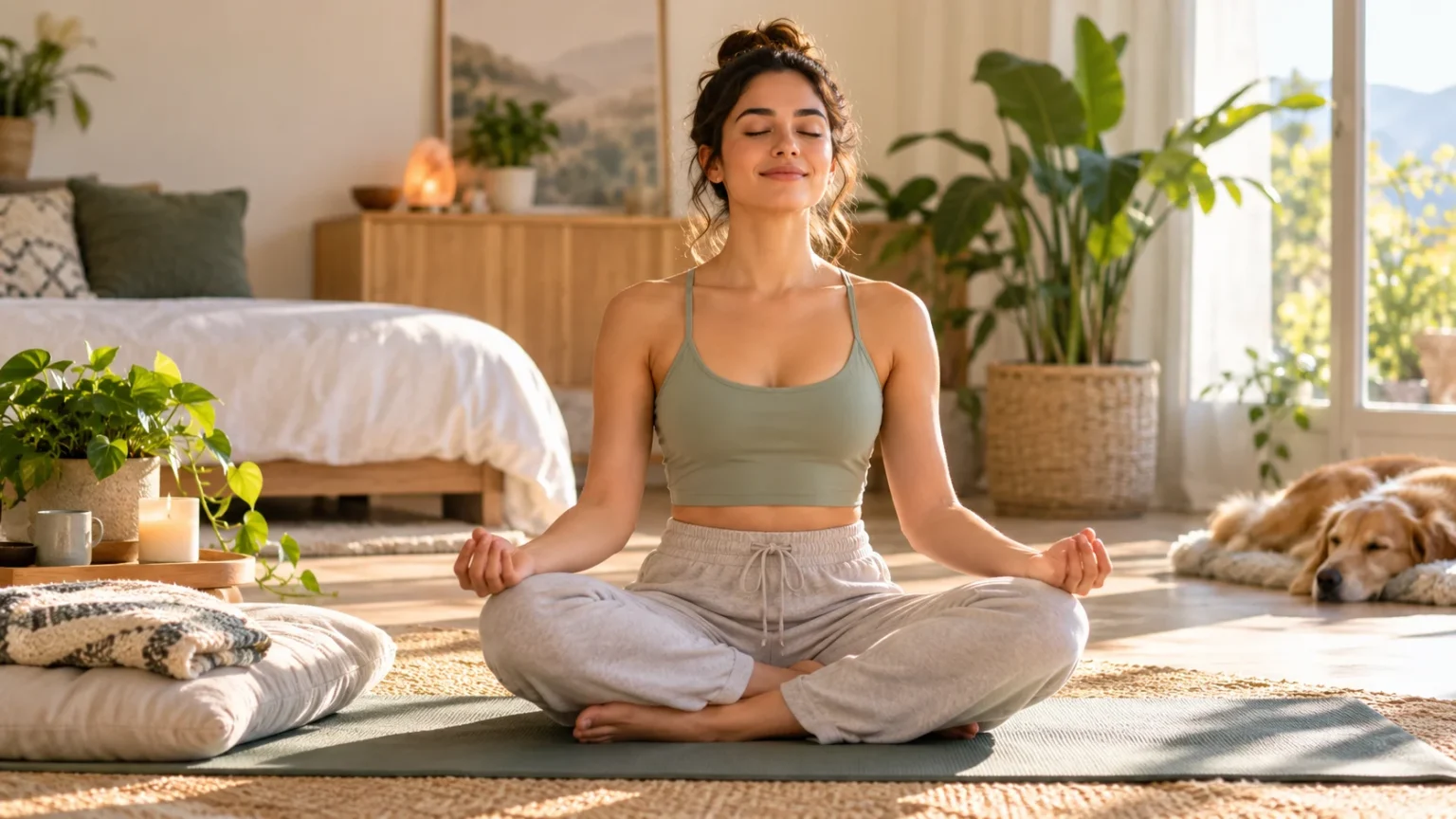
What Meditation Means for Beginners
Meditation is a simple practice that trains your attention and helps you become more aware of what is happening in the present moment. You do not need special equipment, advanced knowledge, or hours of free time to begin. For most beginners, meditation starts with sitting comfortably, noticing the breath, and gently returning attention whenever the mind wanders.
Many people assume meditation means completely emptying the mind, but that is not the goal. Thoughts will naturally appear because thinking is part of how the brain works. Meditation teaches you to notice those thoughts without becoming completely absorbed in them, then calmly bring your attention back to your chosen focus.
Learning how to do meditation step by step becomes easier when you keep expectations realistic. You may feel relaxed during some sessions and restless during others, and both experiences are normal. The purpose is not to create a perfect mental state but to develop greater awareness, patience, and the ability to return to the present.
Step 1: Choose a Quiet and Comfortable Place
Start by finding a place where you are unlikely to be interrupted for a few minutes. It does not need to be completely silent, but a calm environment can make meditation easier when you are learning. A bedroom, quiet corner, office, garden, or even a parked car can work if you feel safe and comfortable there.
Try to reduce obvious distractions before beginning your meditation practice. Put your phone on silent, close unnecessary browser tabs, and let other people know you need a few uninterrupted minutes if necessary. Creating a consistent meditation space can also help your mind associate that location with slowing down and focusing inward.
Do not worry about creating a perfect meditation room with candles, cushions, or special decorations. These things are optional rather than necessary. A simple chair or comfortable spot on the floor is enough, especially when your main goal is learning the basic meditation technique and building a habit you can maintain.
Step 2: Sit in a Comfortable Meditation Position
You can meditate while sitting on a chair, cushion, bed, or floor, so choose a position that feels comfortable and stable. Keep your back naturally upright rather than forcing yourself into a rigid posture. Your shoulders can remain relaxed, and your hands can rest on your thighs, knees, or lap.
If you are sitting in a chair, place both feet comfortably on the floor when possible. If you prefer sitting cross-legged, use a cushion underneath your hips if that makes the position easier. The most important part of meditation posture is being alert enough to stay awake while remaining relaxed enough that discomfort does not dominate your attention.
You do not need to copy traditional meditation poses if they cause pain or stiffness. Meditation can also be practiced while lying down, although beginners may become sleepy more easily in that position. Choose a posture that allows you to stay relatively still without feeling that you have to fight your body throughout the session.
Step 3: Set a Short Time Limit
Beginners often make meditation unnecessarily difficult by trying to sit for twenty or thirty minutes immediately. Start with just three to five minutes so the practice feels manageable. Short meditation sessions can help you learn the basic skill without becoming frustrated, bored, or overly concerned about how much time remains.
Use a gentle timer if you do not want to keep checking the clock. Knowing that the session will end automatically allows you to focus more fully on your breathing or another meditation object. Choose a quiet alarm sound so you are not suddenly startled at the end of a calm practice.
Once five minutes begins to feel natural, you can gradually increase your meditation time. Try seven minutes, then ten, and continue only if longer sessions feel helpful. There is no required duration that makes meditation successful, so regular short sessions are often more valuable than occasional long practices you struggle to maintain.
Step 4: Close Your Eyes or Soften Your Gaze
Closing your eyes can reduce visual distractions and make it easier to direct attention inward. However, keeping your eyes closed is not required for meditation. If closing them makes you uncomfortable, dizzy, sleepy, or overly distracted by thoughts, keep your eyes slightly open and look softly toward a neutral point.
When meditating with your eyes open, allow your gaze to remain relaxed rather than staring intensely at one object. Looking slightly downward at the floor can work well because it provides a simple visual field. Try not to examine every object in the room or repeatedly look around unless you need to adjust your surroundings.
Choose whichever approach helps you feel calm, alert, and present. Some people alternate between closed-eye and open-eye meditation depending on where they are practicing. There is no single correct method for everyone, and beginners usually benefit more from comfort and consistency than from following rigid rules about how meditation should look.
Step 5: Bring Attention to Your Natural Breathing
Once you are comfortable, begin noticing your breath without trying to control it. Pay attention to the sensation of air entering and leaving your nose, the movement of your chest, or the gentle rise and fall of your abdomen. Choose one area where the breath feels easiest to notice and let that become your main point of focus.
There is no need to take unusually deep breaths unless you personally find that comfortable. Meditation breathing can remain natural, quiet, and relaxed. Your job is simply to notice what each breath feels like, including changes in rhythm, temperature, pressure, or movement as you breathe in and out.
If focusing on the breath makes you uncomfortable, choose another neutral anchor such as sounds in the room or the feeling of your feet touching the floor. Meditation does not require one specific focus point. The important skill is repeatedly bringing attention back to something happening in the present moment.
Step 6: Notice When Your Mind Wanders
At some point during meditation, you will probably realize that you are thinking about work, food, conversations, plans, memories, or something completely unrelated. This is normal and does not mean you are bad at meditation. Every time you notice that your attention has wandered, you have actually become aware of what your mind is doing.
Try not to criticize yourself or become frustrated when thoughts appear. Simply recognize that your attention has moved away from your breath or chosen focus. You might silently label the experience as “thinking,” “planning,” or “remembering” before gently returning to your meditation anchor.
This process may happen dozens of times during one session, particularly when you are new to meditation. That repetition is part of the practice rather than a failure. Each return strengthens your ability to notice distraction and redirect attention, which is one of the main skills beginners develop through regular meditation.
Step 7: Return Your Attention Without Judging Yourself
Returning your attention gently is one of the most important parts of beginner meditation. When you notice that your mind has wandered, avoid treating the moment like a mistake that needs correction. Instead, calmly return to the sensation of breathing or whatever object you selected as your meditation focus.
Imagine that you are guiding your attention back rather than forcing it into position. A patient approach can make meditation feel less stressful and more sustainable. If you become annoyed every time your thoughts wander, the session may turn into a struggle instead of an opportunity to practice awareness and self-regulation.
Some meditation sessions will feel peaceful, while others may contain constant distractions. Neither type of session determines whether you are making progress. The useful habit is noticing what is happening and coming back, even when you have to repeat that process many times during the same five-minute practice.
Step 8: Relax Your Body While Staying Alert
As you continue breathing naturally, notice whether you are holding unnecessary tension in your body. Your jaw, shoulders, forehead, hands, or stomach may feel tight without you realizing it. Allow these areas to soften slightly while keeping your posture comfortable and supported.
You do not need to make every muscle completely loose. Meditation works best when relaxation is balanced with enough alertness to stay present. If your body becomes too relaxed and you start falling asleep, sit a little more upright, open your eyes slightly, or practice at a different time of day.
A brief body scan can help you reconnect with physical sensations if your thoughts feel especially busy. Move your attention slowly from your head toward your feet and notice areas of pressure, warmth, tightness, or comfort. Then return to your breath and continue the meditation without trying to change every sensation you notice.
Step 9: End the Meditation Slowly
When your timer sounds, avoid jumping up immediately if you have a few extra seconds available. Take one or two natural breaths and notice how your body feels. Become aware of the room again, including sounds, light, temperature, and the surface supporting your body.
If your eyes were closed, open them slowly and allow your vision to adjust. Stretch your hands, shoulders, or legs if needed before returning to normal activities. This gradual transition can help you carry some of the calm attention from meditation into the rest of your day.
You may also take a few seconds to notice what the session was like without judging whether it was good or bad. Perhaps you felt calm, distracted, sleepy, restless, or focused. Observing the experience objectively can help you understand your meditation practice and make useful adjustments over time.
How Often Should Beginners Meditate?
Consistency is usually more useful than duration when you are learning how to meditate. A five-minute session practiced most days can be easier to maintain than a thirty-minute session attempted once every few weeks. Choose a schedule that fits naturally into your daily life instead of creating an unrealistic commitment.
Many beginners find it helpful to meditate at the same time each day. You might practice shortly after waking, during a lunch break, after work, or before your evening routine. Connecting meditation to an existing habit can make it easier to remember and gradually turn the practice into part of your normal schedule.
Missing a day does not mean you need to restart or meditate twice as long the next time. Simply return to your usual practice when you can. Building a meditation habit works better when you approach consistency with flexibility rather than using missed sessions as a reason to abandon the routine completely.
Common Meditation Mistakes Beginners Should Avoid
One common mistake is expecting meditation to stop all thoughts immediately. Trying to force your mind to become completely silent usually creates more frustration because thoughts naturally continue to appear. Meditation is more about changing how you relate to thoughts than eliminating normal mental activity.
Another mistake is pushing through physical pain because you believe meditation requires sitting perfectly still. Mild restlessness is normal, but sharp or significant discomfort should not be ignored. Adjust your posture, use additional support, or choose a chair if sitting on the floor makes meditation unnecessarily difficult.
Beginners may also judge progress based only on how relaxed they feel after each session. Relaxation can happen, but meditation is not always peaceful or pleasant. Some days simply noticing distraction and returning repeatedly to the present moment can be a meaningful practice, even if you do not finish feeling completely calm.
Different Types of Meditation Beginners Can Try
Breath meditation is one of the easiest approaches because your breathing is always available as a focus point. However, it is not the only option. Guided meditation, body scan meditation, walking meditation, mindfulness meditation, and loving-kindness practices can all provide different ways to develop attention and awareness.
Guided meditation may be useful if you find silence difficult because a teacher or recording gives you instructions throughout the session. Walking meditation can suit people who struggle to sit still by encouraging slow movement and awareness of each step. Body scans focus attention on physical sensations and may help you notice areas where you are holding tension.
There is no need to practice every meditation style at once. Try one approach consistently for several sessions before deciding whether it suits you. Once you understand the basics, you can experiment with other methods and choose the techniques that feel most practical, comfortable, and supportive for your daily life.
Benefits You May Notice With Regular Meditation
Regular meditation may help you become more aware of your thoughts, emotions, and automatic reactions. With practice, you may notice that you recognize distraction or stress earlier instead of immediately responding to it. This increased awareness can create a small pause that allows you to choose how you want to react.
Some people also use meditation to support relaxation, concentration, sleep routines, or general stress management. These experiences can vary significantly, and meditation should not be expected to produce exactly the same result for everyone. Progress may be subtle and become easier to notice over weeks or months rather than after one session.
Meditation is best viewed as a skill that develops through repetition. You may become better at sitting with discomfort, returning your attention, or observing thoughts without immediately following them. These small changes can make the practice worthwhile even if every meditation session does not feel peaceful or dramatically different.
Conclusion
Learning how to do meditation step by step for beginners does not require complicated techniques. Find a comfortable place, choose a stable posture, set a short timer, and bring your attention to your natural breathing. When thoughts appear, notice them and calmly return to the present instead of trying to create a perfectly empty mind.
Start with only a few minutes each day and gradually increase the duration if you enjoy the practice. Keep your body comfortable, allow your breathing to remain natural, and finish each session slowly. Consistency matters more than sitting for long periods, especially while you are still learning how meditation feels.
Most importantly, avoid judging yourself based on whether your meditation feels calm or distracting. Wandering attention is normal, and bringing it back is part of the practice. With patience and regular repetition, meditation can become a simple daily habit that supports mindfulness, attention, relaxation, and greater awareness of your everyday experiences.
Frequently Asked Questions
How long should a beginner meditate?
Beginners can start with three to five minutes per session and gradually increase the duration. A short daily practice is often easier to maintain than starting immediately with long meditation sessions.
What should I think about while meditating?
You do not need to intentionally think about anything specific. Focus on your breathing or another present-moment sensation, and gently return your attention whenever you notice yourself becoming absorbed in thoughts.
Is it better to meditate with eyes open or closed?
Either approach can work. Closing your eyes may reduce distractions, while keeping them softly open can help if you feel sleepy, uncomfortable, or overly distracted when your eyes are closed.
What is the easiest meditation technique for beginners?
Simple breath awareness is one of the easiest options. Sit comfortably, notice where you feel your breathing most clearly, and gently return your attention to that sensation whenever your mind wanders.
How do I know if I am meditating correctly?
If you are intentionally paying attention and noticing when your mind wanders, you are practicing meditation. You do not need a completely silent mind or a deeply relaxed feeling for the session to count.