

The bird dog exercise is a simple bodyweight movement that strengthens the core while improving balance, coordination, and spinal stability. It is commonly used in home workouts, strength programs, rehabilitation routines, and warm-ups because it requires no equipment and can be adjusted for different fitness levels. Despite its simple appearance, correct form is important for getting the most from the movement.
Bird dogs train the body to keep the spine and pelvis stable while the arms and legs move independently. This makes the exercise useful for developing functional core control rather than simply performing repeated bending movements. Understanding proper technique, common mistakes, benefits, and progression options can help you perform bird dogs safely and effectively.
What Is the Bird Dog Exercise?
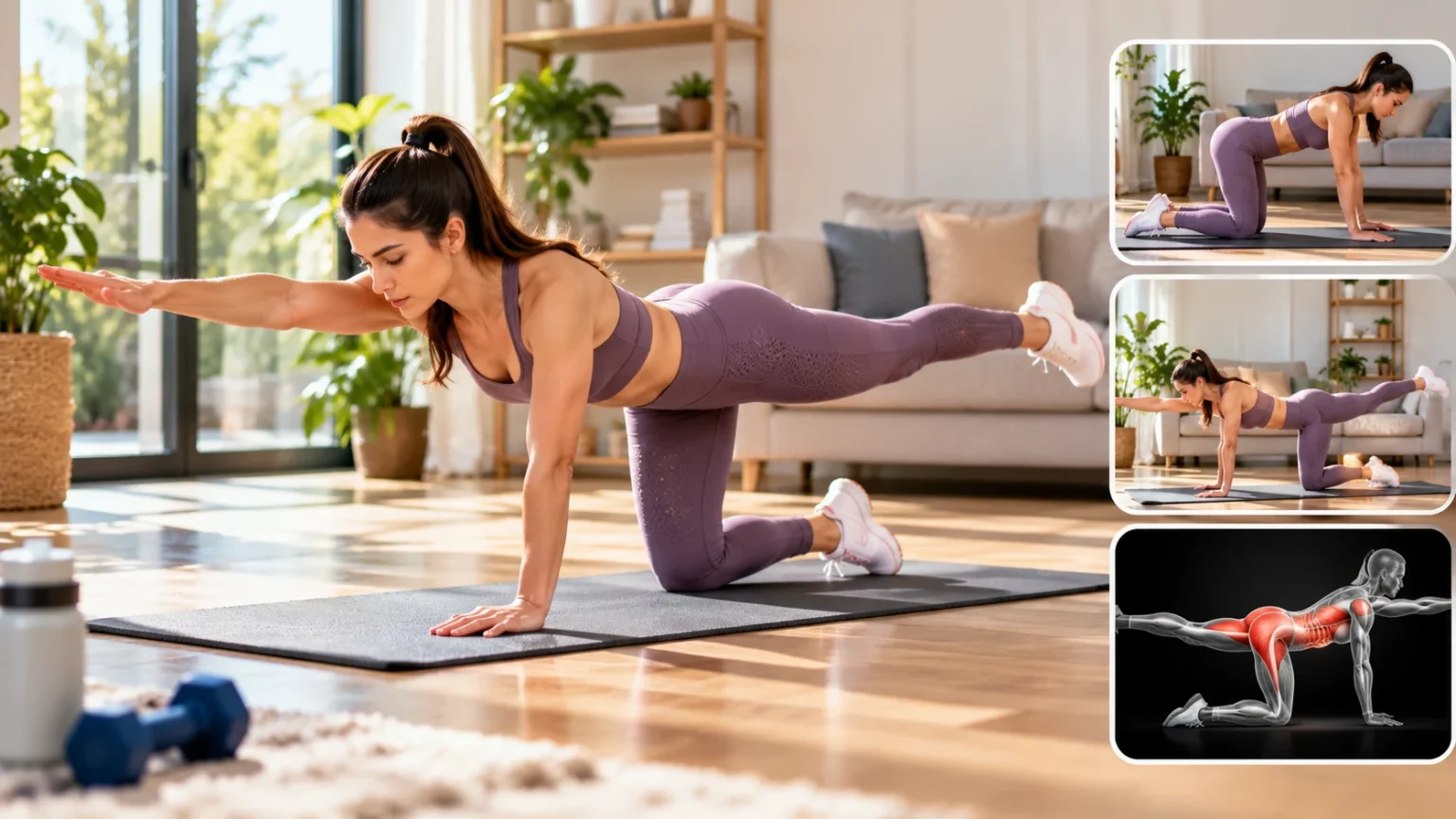
The bird dog exercise is performed from a hands-and-knees position while extending one arm and the opposite leg away from the body. For example, you might lift your right arm and left leg at the same time while keeping your torso stable. You then return to the starting position and repeat on the opposite side.
The movement primarily challenges the core muscles responsible for stabilizing the spine and pelvis. Your glutes, back muscles, shoulders, and hip stabilizers also contribute as you extend the limbs and maintain balance. Instead of producing large spinal movements, the exercise teaches your body to resist unwanted rotation and excessive arching.
Bird dogs are often included in core training because they develop control through a relatively low-impact movement. They can be useful for beginners learning basic stability as well as experienced athletes looking to improve coordination. The difficulty can also be increased through pauses, slower repetitions, resistance, or more challenging variations.
How to Perform a Bird Dog Correctly
Begin on your hands and knees with your wrists positioned approximately beneath your shoulders and your knees beneath your hips. Keep your head in a neutral position so your neck follows the natural line of your spine. Gently brace your abdominal muscles without holding your breath or excessively rounding your back.
Slowly extend one arm forward while simultaneously extending the opposite leg behind you. Reach in both directions rather than trying to lift the arm or leg as high as possible. Your shoulders and hips should remain relatively level while your core works to prevent your torso from rotating or shifting to one side.
Pause briefly when the arm and leg are extended, then return them to the starting position with control. Repeat the movement on the opposite side while maintaining steady breathing. Move slowly enough that you can feel your core and glutes working throughout the exercise instead of using momentum to complete each repetition.
What Muscles Do Bird Dogs Work?
Bird dogs mainly work the muscles that stabilize the trunk. The deeper abdominal muscles help maintain spinal position, while the obliques assist in resisting rotation. The muscles running along the back also contribute to keeping the torso controlled as the opposite arm and leg move away from the center of the body.
The glute muscles become active when you extend the leg behind you. Your gluteus maximus contributes to hip extension, while smaller hip stabilizers help keep the pelvis level. The hamstrings may also assist, although the movement should generally feel controlled rather than like an aggressive leg lift.
The shoulders and upper back contribute when the arm reaches forward. Muscles around the shoulder blade help stabilize the upper body while your supporting arm bears weight. Because several muscle groups must work together, the bird dog is often considered a functional exercise that improves coordination between the core and limbs.
Benefits of the Bird Dog Exercise
One of the main benefits of bird dogs is improved core stability. Instead of moving the spine repeatedly, the exercise teaches the abdominal and back muscles to maintain a controlled position while the limbs move. This type of stability is useful during many everyday activities and strength-training exercises that require a strong, steady trunk.
Bird dogs can also improve balance and coordination because opposite limbs must move together without allowing the body to rotate excessively. This cross-body pattern requires communication between different muscle groups. Practicing the movement regularly may help develop better body awareness, especially when performed slowly with careful attention to positioning.
Another advantage is that bird dogs require very little equipment or space. They can be performed at home, in a gym, or as part of a warm-up before other exercises. The movement is also easy to modify, making it accessible for beginners while still offering progression options for stronger or more experienced individuals.
Bird Dogs for Core Strength and Stability
Core strength is about more than developing visible abdominal muscles. The core helps transfer force between the upper and lower body while controlling the spine and pelvis. Bird dogs train this function by challenging you to keep your torso stable while moving your arm and leg in opposite directions.
During the exercise, your abdominal muscles must resist rotation as your weight shifts from four points of contact to two or three. Maintaining this position teaches your body to create tension without excessive movement. This can support better control during exercises such as squats, lunges, deadlifts, and overhead movements.
For better core engagement, focus on keeping your ribs and pelvis controlled throughout each repetition. Avoid allowing the lower back to arch when the leg extends behind you. A smaller range of motion performed with excellent stability is generally more useful than reaching farther while losing control of the trunk.
Common Bird Dog Exercise Mistakes
One common mistake is raising the leg too high. When the leg travels above a comfortable hip level, the lower back may arch and the pelvis can rotate. Instead, reach the foot backward while keeping the hips relatively level and stopping when you can no longer maintain a stable spinal position.
Another frequent mistake is shifting too much body weight onto the supporting side. Some movement is natural, but excessive leaning reduces the stability challenge and may make the exercise less controlled. Press through the supporting hand and knee while keeping your torso centered as much as possible throughout the repetition.
Moving too quickly can also reduce the effectiveness of bird dogs. Fast repetitions may allow momentum to replace muscular control, particularly when coordination is still developing. Slow the movement down, pause briefly in the extended position, and return carefully so your core remains engaged during both the lifting and lowering phases.
How Many Bird Dogs Should You Do?
Beginners can often start with about 6 to 10 controlled repetitions on each side for two or three sets. The exact number depends on your current strength, balance, and exercise goals. Quality matters more than quantity, so stop the set when you can no longer maintain proper alignment or smooth movement.
If the exercise becomes easy, increase the challenge rather than performing very high numbers of repetitions. You might hold the extended position longer, slow down each repetition, or use an advanced variation. Progressing difficulty can provide a stronger training stimulus while keeping the workout efficient and focused on good technique.
Bird dogs can be included in a core workout several times per week depending on your overall training routine. They may also be used during warm-ups because they activate the core, glutes, and shoulders. Consider your total training volume and recovery rather than assuming the exercise must be performed every day.
Bird Dog Variations for Different Fitness Levels
A beginner variation is to move only one limb at a time. You can extend one arm while keeping both knees on the floor, or extend one leg while keeping both hands planted. This reduces the balance challenge and allows you to practice maintaining a stable spine before combining opposite arm and leg movements.
Once the standard bird dog becomes comfortable, adding a pause can increase difficulty. Hold the extended position for three to five seconds while keeping your hips square and core engaged. Longer pauses increase the demand on the stabilizing muscles without requiring any additional equipment or complicated changes to the exercise.
More advanced options include resistance-band bird dogs or bird dog rows. A resistance band can increase the challenge for the extending arm or leg, while a rowing variation requires greater stability from the supporting side. These progressions should only be introduced after you can consistently perform the standard exercise with controlled form.
Bird Dog vs Dead Bug Exercise
Bird dogs and dead bugs are both core stability exercises, but they use different positions. Bird dogs are performed on the hands and knees, while dead bugs are usually performed lying on the back with the arms and legs raised. Both movements involve moving opposite limbs while trying to maintain a stable torso.
The bird dog places more demand on balance because the body is supported above the floor. It also involves weight-bearing through the shoulders and requires the hips to remain controlled while one leg extends backward. Dead bugs provide more back support from the floor and may feel easier for people who struggle with quadruped positioning.
Neither exercise is automatically better than the other. They train similar principles through different movement patterns and can work well together in a balanced core routine. Choosing between them depends on comfort, fitness level, training goals, and whether one position allows you to maintain better control than the other.
How to Make Bird Dogs More Effective
The most important way to improve bird dogs is to slow down. Treat each repetition as a stability exercise rather than trying to complete as many as possible. Reach your hand forward and foot backward while keeping your trunk steady, then return to the starting position without allowing your hips or shoulders to suddenly shift.
Focus on creating gentle tension through the abdomen before moving your limbs. Imagine keeping your torso firm enough that an object placed on your lower back would remain relatively still. This mental cue can help reduce unnecessary rotation and encourage better coordination between your abdominal muscles, back, hips, and shoulders.
Breathing should remain controlled throughout the exercise. Exhale gently as you extend the arm and opposite leg, then inhale as you return to the starting position. Avoid holding your breath unless specifically instructed during a training program, because relaxed breathing can make it easier to maintain steady core engagement.
When to Modify or Avoid Bird Dogs
Bird dogs should generally feel like controlled muscular work rather than sharp pain. If the exercise causes significant discomfort in your wrists, shoulders, knees, hips, or lower back, stop and check your positioning. Placing a folded mat beneath the knees or modifying the range of motion may make the exercise more comfortable.
People with certain injuries, recent surgery, or significant back problems may need professional guidance before adding bird dogs to their routine. A physical therapist or qualified healthcare professional can determine whether the movement is appropriate and recommend modifications based on your symptoms, mobility, strength, and stage of recovery.
You should also reduce the difficulty if you cannot keep your torso reasonably stable. There is no benefit in forcing a full arm-and-leg extension if your back arches or your pelvis rotates substantially. Start with smaller movements and gradually increase the range as your strength, balance, and coordination improve.
Conclusion
The bird dog exercise is an effective bodyweight movement for developing core stability, balance, coordination, and control. It also engages the glutes, back, shoulders, and hip stabilizers while teaching the body to maintain a steady trunk as the arms and legs move independently.
Proper technique is more important than performing a large number of repetitions. Keep your spine controlled, hips level, core engaged, and movements slow while reaching through the opposite arm and leg. Avoid excessive lower-back arching or body rotation simply to increase your range of motion.
As bird dogs become easier, you can progress them through longer pauses, slower repetitions, resistance bands, or more advanced variations. Consistent practice with good form can make the exercise a valuable addition to core workouts, warm-ups, home routines, and balanced strength-training programs.
FAQs
Are bird dogs good for beginners?
Yes. Bird dogs are generally suitable for beginners because they require no equipment and can be modified easily. Beginners can start by moving one arm or leg at a time before progressing to opposite-limb extensions.
How many bird dogs should I do?
A practical starting point is 6 to 10 repetitions per side for two or three sets. Focus on slow, controlled movement and stop when your hips or spine can no longer remain stable.
What muscles do bird dogs strengthen?
Bird dogs primarily strengthen and coordinate the core stabilizers, glutes, back muscles, shoulders, and hip muscles. The exercise also trains multiple muscle groups to work together while resisting unwanted spinal rotation.
Can bird dogs help with lower back strength?
Bird dogs can help strengthen muscles involved in spinal and pelvic stability. However, people with ongoing or significant back pain should seek professional guidance because the appropriate exercise depends on the underlying cause.
Should you do bird dogs every day?
Bird dogs can be performed regularly if they fit your exercise program and you recover comfortably. Daily practice is not required, and a few well-controlled sessions each week may be enough for many people.