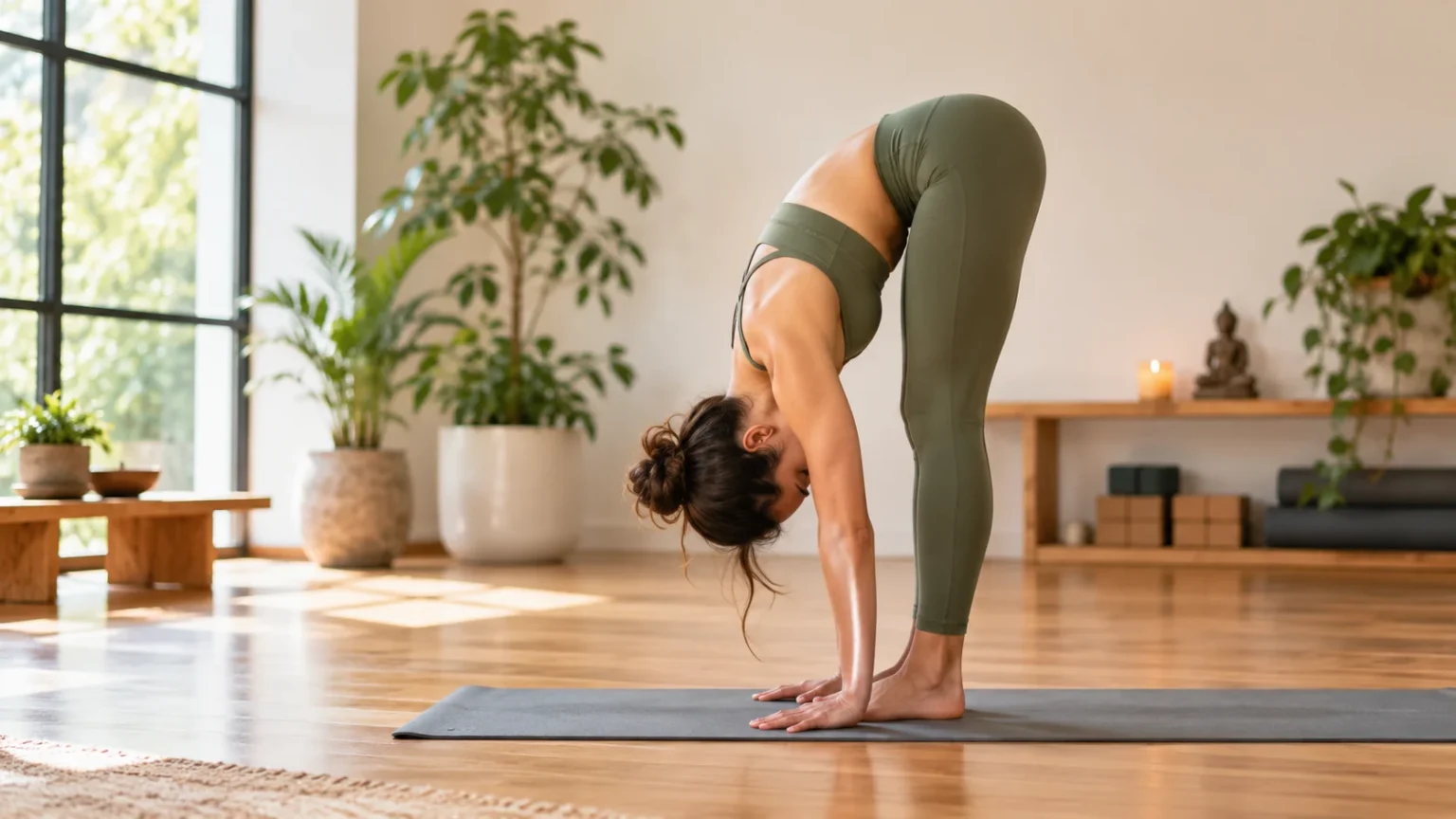
Also known as Uttanasana in yoga, the standing forward bend primarily stretches the muscles along the back of the body, especially the hamstrings and calves. Although the pose looks simple, correct technique is important for avoiding unnecessary strain. This guide explains how to perform the movement, its benefits, common mistakes, useful modifications, and important safety considerations.
What Is a Standing Forward Bend?
A standing forward bend is a yoga posture performed by folding the upper body toward the legs from a standing position. The movement primarily occurs at the hips, while the knees may remain slightly bent to accommodate individual flexibility. Depending on mobility, the hands can rest on the legs, yoga blocks, or floor.
In traditional yoga practice, this pose is called Uttanasana, a Sanskrit term commonly interpreted as an intense stretch or extension. It frequently appears in Sun Salutation sequences and other flowing yoga routines. The posture can also be practiced independently as a gentle stretching exercise when performed within a comfortable range.
Although the standing forward bend is generally associated with hamstring flexibility, several other structures contribute to the movement. The calf muscles, hip joints, spinal muscles, and surrounding connective tissues all influence how the posture feels. Individual differences in flexibility and body proportions mean that the position may look different from one person to another.
How to Perform a Standing Forward Bend Correctly
Begin by standing upright with your feet approximately hip-width apart and your weight distributed evenly. Relax your shoulders, keep your knees soft, and take a comfortable breath. As you prepare to move, focus on maintaining balance and creating a controlled folding motion rather than attempting to reach the floor immediately.
Slowly hinge forward from your hips while allowing your knees to bend as needed. Bring your chest toward your thighs and let your arms move downward naturally. Depending on your flexibility, place your hands on your thighs, shins, yoga blocks, or the floor without forcing the movement.
Maintain steady breathing and avoid bouncing or pulling yourself deeper into the stretch. Keep your neck relaxed and distribute your weight comfortably across both feet. To return upright, bend your knees, engage your legs, and rise slowly using controlled movement rather than abruptly lifting your upper body.
1. Standing Forward Bend for Hamstring Flexibility
The hamstrings are muscles located along the back of the thighs that help control hip and knee movements. A standing forward bend places these muscles into a lengthened position as the upper body folds forward. This makes the posture a useful component of flexibility routines when performed without excessive pulling or discomfort.
Begin with your feet planted securely and your knees slightly bent. Slowly move your hips backward while bringing your upper body forward, stopping when you feel mild tension along the backs of your thighs. Keep the movement smooth and avoid attempting to straighten your knees beyond your comfortable flexibility range.
Regular hamstring stretching may gradually improve range of motion for some individuals. However, flexibility changes depend on consistency, personal anatomy, and overall activity levels. A comfortable stretch is more beneficial than forcing the muscles into an uncomfortable position, particularly when tightness or previous injuries affect the lower body.
2. Standing Forward Bend for Lower Back Comfort
The standing forward bend allows movement through the hips and spine, potentially creating a feeling of gentle stretching along the back. Some people find this position relaxing after prolonged standing or sitting. However, forward bending does not relieve every type of lower back discomfort and may aggravate certain spinal conditions.
When practicing for general comfort, maintain a generous bend in your knees and support your hands on your thighs or a stable surface. This reduces the need to reach toward the floor and allows better control over the movement. Avoid pulling your upper body downward or forcing your spine into an exaggerated rounded position.
Individuals with herniated discs, persistent nerve symptoms, or pain aggravated by bending should seek professional guidance before attempting the pose. A physical therapist may recommend alternative movements based on the underlying condition. The goal is comfortable mobility rather than stretching through pain or assuming that every back problem responds positively to forward bending.
3. Standing Forward Bend With Bent Knees
A bent-knee standing forward bend is a practical modification for beginners and people with limited hamstring flexibility. Bending the knees reduces tension along the back of the legs, making it easier to hinge at the hips. This variation can also help maintain balance while learning the movement.
Stand with your feet comfortably apart and soften both knees before folding forward. Bring your torso toward your thighs while allowing your arms to hang naturally or rest on supports. Keep your breathing steady and avoid trying to straighten your legs if doing so creates discomfort or excessive pulling.
The depth of the bend is less important than maintaining a comfortable, controlled position. As flexibility develops, some individuals may gradually reduce the knee bend without forcing the movement. Others may continue using bent knees permanently, which is an appropriate variation rather than a sign of incorrect technique.
4. Standing Forward Bend With Yoga Blocks
Yoga blocks provide additional support when the floor feels difficult to reach. They can help reduce unnecessary strain by bringing a stable surface closer to your hands. This modification is especially useful for beginners who want to practice a comfortable forward fold without relying on excessive spinal rounding.
Place two yoga blocks in front of your feet on a stable, nonslip surface. Slowly hinge forward from your hips and rest your hands on the blocks while keeping your knees comfortably bent. Adjust the block height so that your shoulders remain relaxed and your breathing feels natural.
Avoid pressing excessive body weight into the blocks or positioning them where they might slip. The blocks should provide comfortable support rather than encourage a deeper stretch than your body can manage. As mobility changes, you can adjust their height while continuing to prioritize balance, control, and pain-free movement.
5. Standing Forward Bend for Calf Stretching
The calf muscles contribute to ankle movement and can influence how the standing forward bend feels. Depending on knee positioning and ankle mobility, some individuals experience gentle tension along the backs of their lower legs. However, the pose generally emphasizes the hamstrings more directly than isolated calf stretching exercises.
Begin with your feet flat on the floor and slowly fold forward while maintaining stable ankle alignment. Keep your knees softly bent and notice how the stretch changes with small adjustments in position. Avoid forcing your heels downward or pulling your legs into an uncomfortable position to increase tension.
If your primary goal is calf flexibility, a wall-supported calf stretch may provide a more targeted option. Standing forward bends can still complement a broader lower-body mobility routine. The most suitable exercise depends on which muscles feel restricted and whether your ankles, knees, and back tolerate the position comfortably.
6. Standing Forward Bend for Relaxation and Body Awareness
Many yoga practitioners use standing forward bends as an opportunity to slow down and focus on breathing. The posture encourages attention to body positioning, muscular tension, and balance. Practicing with controlled movement may promote a sense of relaxation, although individual experiences vary and the pose is not a medical treatment for stress.
Begin by standing comfortably and taking a few natural breaths before moving forward. Fold only as far as your body allows without strain, then maintain a relaxed neck and shoulders. Focus on breathing steadily instead of trying to achieve a particular shape or match someone else’s flexibility.
Gentle movement combined with mindful breathing may support overall well-being and improve awareness of physical sensations. However, hanging the head below the heart can cause discomfort or dizziness in some individuals. If you experience lightheadedness, stop the pose and return to a comfortable position carefully.
7. Standing Forward Bend for Beginners
Beginners often assume that a successful standing forward bend requires touching the toes or placing the palms flat on the ground. In reality, the purpose is to practice controlled hip movement and a comfortable stretch. Flexibility varies naturally, and reaching the floor is not necessary to experience the exercise.
Start by standing near a wall or stable surface if you need additional support. Bend your knees slightly, hinge forward gradually, and place your hands on your thighs or yoga blocks. Maintain a comfortable position for a few natural breaths before returning upright slowly.
Beginners should prioritize movement quality over stretch depth or holding time. If the position creates pulling behind the knees, lower back discomfort, or dizziness, reduce the range of motion. With regular, gentle practice, body awareness and confidence may improve without requiring aggressive stretching or complicated yoga techniques.
8. Common Standing Forward Bend Mistakes to Avoid
One common mistake involves forcing the knees completely straight while trying to reach the floor. This can create excessive tension in the hamstrings and surrounding tissues, particularly when flexibility is limited. Allowing a comfortable knee bend helps reduce unnecessary strain and makes the movement easier to control.
Another mistake is pulling the upper body downward using the hands or bouncing repeatedly to deepen the stretch. These actions can increase discomfort without providing meaningful benefits. A slow hip hinge and steady breathing are generally more appropriate than sudden movements or attempts to push beyond the available range.
Rushing out of the posture can also cause problems, especially for individuals prone to dizziness. Returning upright too quickly may produce lightheadedness or temporary imbalance. Bend your knees, rise gradually, and pause if necessary before moving into another exercise or standing activity.
9. Benefits of Practicing Standing Forward Bend
One potential benefit of standing forward bends is improved flexibility along the backs of the thighs. The posture encourages hip flexion and may help individuals become more comfortable with controlled forward-folding movements. Regular stretching can support mobility when combined with appropriate strength training and other physical activities.
The exercise also encourages awareness of posture, balance, and breathing. Learning to move through the hips while maintaining stable footing can improve coordination during the activity itself. However, a standing forward bend alone does not guarantee better posture or prevent injuries, since physical function depends on several interacting factors.
Standing forward bends are convenient because they generally require minimal equipment and can be adapted to different mobility levels. A chair, wall, or yoga blocks can make the posture more accessible. These variations allow individuals to practice within comfortable limits rather than forcing a single technique regardless of flexibility or physical ability.
10. Standing Forward Bend vs. Seated Forward Bend
The standing forward bend and seated forward bend both involve moving the torso toward the legs, but they differ in body positioning. Standing variations require additional balance and weight-bearing control, while seated versions provide a more supported base. Both can stretch the hamstrings, although the sensations and demands may differ.
A seated forward bend is typically performed while sitting with the legs extended or positioned in a modified arrangement. The upper body then moves forward from the hips while the person remains supported by the floor. This may reduce standing balance demands but can still place substantial tension on the hamstrings and lower back.
Neither posture is automatically better for everyone because comfort depends on flexibility, spinal tolerance, and individual preferences. People with certain back conditions may find one variation less comfortable than the other. Choosing an appropriate version involves considering movement control, available support, and whether the exercise can be performed without pain.
11. Standing Forward Bend vs. Downward Facing Dog
Standing forward bend and downward facing dog are common yoga poses that stretch muscles along the back of the body. However, their positions and physical demands differ significantly. Standing forward bend involves folding at the hips while standing, whereas downward facing dog requires supporting body weight through both hands and feet.
Downward facing dog engages the shoulders, arms, and trunk more directly because the upper body helps support the position. Standing forward bend places less weight through the arms and may feel more accessible when upper-body strength or wrist comfort is limited. Both poses can be modified according to mobility and experience.
Choosing between the two exercises depends on your goals and physical abilities. Individuals seeking a simple hamstring stretch may prefer a supported standing forward bend, while others may enjoy the broader muscular demands of downward facing dog. Neither exercise should involve forcing joints into painful positions or ignoring existing injuries.
12. How Long Should You Hold a Standing Forward Bend?
The appropriate holding time depends on flexibility, comfort, and the purpose of your stretching routine. Beginners may find that holding a gentle forward bend for approximately 10 to 20 seconds feels manageable. There is no requirement to remain in the position for an extended period to make the practice worthwhile.
More experienced individuals sometimes hold comfortable stretches for around 20 to 30 seconds as part of general flexibility training. However, longer holds are not automatically more effective, especially if discomfort increases. Maintaining natural breathing and avoiding excessive pulling are more important than reaching a specific time target.
People who experience dizziness, back pain, or unusual pressure sensations should shorten or avoid the position as appropriate. Repeating a comfortable stretch during a balanced mobility routine may be preferable to holding one difficult posture for too long. Personal tolerance should guide how long the pose is maintained.
13. How Often Should You Practice Standing Forward Bend?
Standing forward bends can be included in regular stretching or yoga routines when they feel comfortable. Some individuals practice gentle variations several times per week, while others incorporate them into short daily mobility sessions. The appropriate frequency depends on existing flexibility, exercise habits, and physical tolerance.
Consistency is useful for maintaining familiarity with the movement and gradually improving stretching comfort. However, repeatedly forcing a deep forward bend does not produce better results and may aggravate sensitive muscles or joints. Gentle practice with appropriate rest is more practical than trying to achieve rapid flexibility improvements.
The posture is most beneficial when combined with other exercises that support mobility, balance, and muscular strength. Hip strengthening, controlled leg movements, and varied physical activity can complement stretching routines. Rather than relying on a single yoga pose, aim for a balanced approach that supports comfortable movement throughout the body.
14. When Should You Avoid Standing Forward Bend?
Standing forward bends may need to be avoided or modified when certain medical conditions are present. Individuals with acute back injuries, severe dizziness, or pain aggravated by spinal flexion should seek professional guidance. People recovering from surgery or managing significant joint problems may also require individualized movement recommendations.
Those with glaucoma or other eye-pressure-related conditions should consult their eye specialist before performing prolonged positions with the head lowered. Similar caution is appropriate for individuals who experience fainting or significant blood pressure changes when bending. A supported, partial forward fold may sometimes be an alternative, depending on medical advice.
Pregnant individuals may also need to modify the posture as their bodies change, especially to maintain balance and accommodate the abdomen comfortably. Avoid compressing the belly or forcing deep bends. The safest variation depends on pregnancy stage, individual comfort, and any medical complications that could affect exercise suitability.
15. Tips for Improving Standing Forward Bend Safely
Improving your standing forward bend begins with practicing a comfortable hip hinge and maintaining proper support. Bend the knees as needed, keep your feet stable, and allow flexibility to develop gradually. Using yoga blocks or a chair can help you focus on movement technique without excessive pressure on the lower back.
A gentle warm-up before stretching may make the movement feel more comfortable. Walking, controlled hip movements, or other light activities can prepare the body for flexibility exercises. Avoid attempting your deepest stretch immediately after prolonged inactivity, particularly if the hamstrings or lower back feel unusually stiff.
Progress should be measured through comfort, control, and confidence rather than how close your hands come to the floor. Different body proportions and joint structures influence the appearance of the pose. Practicing within your natural range and respecting physical limitations helps make standing forward bends a sustainable part of a balanced fitness routine.
Conclusion
The standing forward bend is a versatile yoga posture that encourages hamstring flexibility, controlled hip movement, and body awareness. It can be practiced independently or included in yoga sequences and general stretching routines. Understanding proper technique helps individuals approach the pose comfortably without unnecessary strain.
Effective practice involves bending from the hips, keeping the knees soft when needed, and maintaining steady breathing throughout the movement. Supports such as yoga blocks and chairs can make the exercise more accessible. Avoiding bouncing, excessive pulling, and abrupt movements helps maintain control while respecting individual flexibility limits.
Whether you are new to yoga or expanding an existing mobility routine, standing forward bends can provide a practical stretching option. The posture works best alongside other suitable exercises that support strength and movement quality. With gradual practice and appropriate modifications, it can become a comfortable part of regular physical activity.
Frequently Asked Questions (FAQs)
1. What is the standing forward bend good for?
The standing forward bend primarily stretches the hamstrings and encourages hip mobility. It may also promote relaxation and body awareness when practiced comfortably, although it should complement other strengthening and movement exercises.
2. Is standing forward bend good for lower back pain?
Some people find gentle forward bending comfortable, but it can worsen certain back conditions. Individuals with persistent pain, disc problems, or nerve symptoms should seek professional advice before practicing this posture.
3. Should your knees be straight during a standing forward bend?
No, keeping the knees slightly bent is appropriate and often helpful. A comfortable knee bend reduces excessive hamstring tension and allows beginners to practice controlled movement without forcing unnecessary flexibility.
4. How long should beginners hold a standing forward bend?
Beginners may start with approximately 10 to 20 seconds if the position feels comfortable. Maintaining natural breathing and avoiding pain are more important than holding the posture for a particular duration.
5. Can standing forward bends improve flexibility?
Yes, regular, gentle standing forward bends may help improve hamstring flexibility and comfort with hip movement. Results vary, and gradual practice is generally more appropriate than forcing deeper stretches or overstretching.