


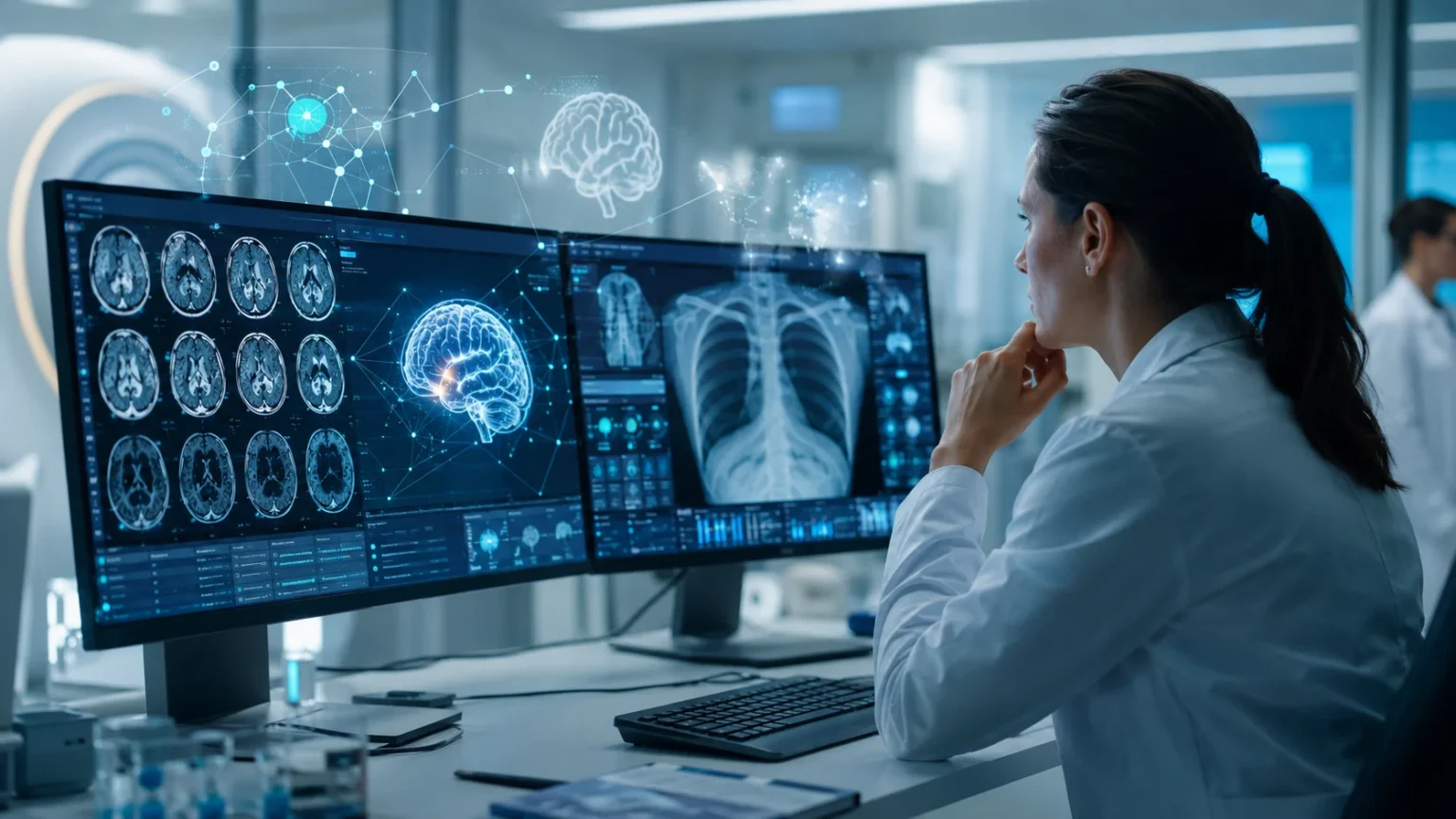
How Is AI Used in Medical Diagnosis?
Artificial intelligence is becoming an increasingly important part of modern healthcare, particularly in areas where clinicians must examine large amounts of complex medical information. AI systems can analyze medical images, laboratory results, heart signals, electronic health records, and other health data to identify patterns that may support faster or more accurate diagnoses.
So, how is AI used in medical diagnosis? In most real-world settings, artificial intelligence works as a diagnostic support tool rather than an independent replacement for doctors. Algorithms can highlight suspicious abnormalities, estimate disease risk, prioritize urgent cases, or provide additional information that clinicians consider alongside symptoms, medical history, physical examinations, and other test results.
Machine learning and deep learning are particularly useful because certain medical datasets contain patterns that are difficult to identify consistently with the human eye alone. AI can process thousands or millions of examples during development and learn statistical relationships that help it distinguish between normal findings and potentially concerning abnormalities.
However, AI medical diagnosis is not simply about creating an algorithm with impressive accuracy. Healthcare systems must determine whether a tool performs reliably with real patients, works across different populations, protects patient information, fits clinical workflows, and actually helps professionals make safer decisions. Human oversight therefore remains central to responsible use.
What Is AI in Medical Diagnosis?
AI in medical diagnosis refers to computer-based systems designed to analyze health information and assist with identifying diseases, abnormalities, risks, or other clinically meaningful patterns. These systems can process images, numerical measurements, written medical records, genetic information, physiological signals, and combinations of several data types.
Traditional medical software generally follows predefined rules written by programmers. Machine-learning systems work differently because they learn patterns from training data. For example, an algorithm can be shown many medical images labeled according to whether a disease is present and gradually learn which visual features help separate one category from another.
Deep learning is a more advanced form of machine learning commonly used in AI medical imaging. Neural networks can process highly detailed scans and detect complicated visual patterns, making them useful for radiology, pathology, dermatology, ophthalmology, and other specialties where diagnosis relies heavily on images.
Artificial intelligence does not necessarily produce a final diagnosis. Depending on the application, it may provide a probability, highlight a suspicious region, classify an image, recommend further evaluation, or alert clinicians that a patient’s information resembles patterns associated with a particular condition.
How Does AI Medical Diagnosis Work?
The process usually begins with data. Developers collect relevant medical information such as X-rays, CT scans, laboratory measurements, ECG recordings, pathology slides, or electronic health records. The quality and representativeness of this information strongly influence how well the resulting system performs.
During training, a machine-learning algorithm searches for patterns connecting inputs with known outcomes. If researchers are developing an AI system to identify pneumonia on chest images, for example, the algorithm studies many labeled examples to learn which combinations of image features are associated with the condition.
The model is then evaluated using information it did not see during training. This step helps researchers determine whether it has learned useful patterns rather than simply memorizing its original dataset. Additional external and clinical validation may be needed before a system is suitable for real healthcare environments.
When deployed appropriately, the trained model processes new patient information and produces an output for clinicians. The professional then considers that output together with symptoms, medical history, examination findings, laboratory testing, and clinical judgment before deciding what the information means for the individual patient.
Why Is AI Useful in Medical Diagnosis?
Modern healthcare produces enormous amounts of data. A single patient may have years of medical records, laboratory tests, medications, scans, vital signs, specialist reports, genetic information, and other clinical observations. Reviewing every available detail consistently can become difficult.
AI can process large datasets quickly and identify statistical patterns that deserve attention. This ability is valuable when healthcare professionals must evaluate hundreds of images, monitor numerous patients, or make decisions using many variables simultaneously.
Artificial intelligence may also improve consistency for clearly defined tasks. Human performance can vary because of workload, fatigue, experience, case complexity, and differences in interpretation. A carefully validated algorithm can provide the same type of analysis every time it receives comparable input.
The greatest potential comes from combining machine processing with medical expertise. AI can rapidly analyze information, while clinicians provide context, recognize unusual circumstances, communicate with patients, assess competing explanations, and determine whether an algorithm’s recommendation makes sense for the individual in front of them.
How Is AI Used in Medical Imaging?
Medical imaging is one of the most developed areas of artificial intelligence in healthcare. Radiologists routinely work with X-rays, CT scans, MRI studies, ultrasound images, and other detailed examinations containing enormous amounts of visual information.
Deep-learning algorithms can analyze these images and look for features associated with particular abnormalities. Depending on the intended use, a system may identify suspicious lung nodules, highlight possible fractures, measure anatomical structures, detect bleeding, or draw attention to regions that deserve closer examination.
AI can also help prioritize cases. If an algorithm detects findings associated with an urgent condition, the examination may be flagged so that a clinician can review it sooner. This can be valuable in busy imaging departments where large numbers of examinations arrive continuously.
Importantly, an AI imaging tool is usually designed for a defined purpose rather than every possible diagnosis. An algorithm developed to detect one abnormality should not automatically be assumed to understand all diseases visible on the same image. Clinical interpretation remains broader than a single AI task.
How AI Helps Radiologists
Radiologists must examine complex images while integrating information from previous scans, symptoms, laboratory findings, and medical history. AI can support this work by handling measurements and detection tasks that are repetitive or time-consuming.
For example, algorithms may measure tumors, quantify organ volumes, compare current images with earlier examinations, or identify areas that resemble known abnormalities. Automating some of these activities can allow radiologists to concentrate more attention on interpretation and difficult cases.
AI can also function as an additional set of computational eyes. A radiologist may reach an interpretation and then consider an algorithm’s output as another piece of information, potentially prompting a second look at an area that might otherwise receive less attention.
The relationship should not be understood as a competition between radiologists and machines. Radiologists evaluate the complete examination within a patient’s clinical situation, whereas many AI systems solve narrower problems. Combining their strengths may produce more useful results than relying exclusively on either one.
How AI Is Used to Detect Cancer
Cancer diagnosis often involves several types of information, including imaging, laboratory testing, pathology, genetic data, symptoms, and physical examination. AI can assist at different points within this diagnostic pathway.
In medical imaging, machine-learning systems may analyze mammograms, CT scans, MRI examinations, or other images for patterns associated with suspicious lesions. The purpose may be to highlight regions that require closer professional review rather than automatically declaring whether a patient has cancer.
Artificial intelligence is also becoming important in digital pathology. When tissue samples are converted into high-resolution digital images, algorithms can examine cellular structures and identify patterns that may be associated with malignancy or clinically relevant characteristics.
Cancer remains highly complex, and no single AI result can capture every factor required for diagnosis and treatment. Biopsy findings, tumor type, molecular characteristics, disease stage, patient health, and other clinical information often need to be combined before an appropriate conclusion can be reached.
How AI Is Used in Breast Cancer Screening
Breast cancer screening produces large numbers of mammograms that specialists must carefully examine for suspicious changes. Artificial intelligence can analyze these images for patterns associated with masses, calcifications, tissue distortion, and other potentially concerning features.
An AI system may provide a risk score or highlight a region that deserves additional attention. This can help radiologists manage screening workloads and potentially identify subtle abnormalities that need closer investigation.
However, a suspicious AI finding does not automatically mean someone has cancer. Mammograms can show benign changes that resemble concerning abnormalities, while some cancers can be difficult to visualize. Further imaging, clinical evaluation, or biopsy may be necessary.
The goal of AI-assisted screening is therefore to improve how imaging information is evaluated rather than eliminate the diagnostic process. Appropriate systems must be validated with the populations and screening environments in which they will actually be used.
How AI Helps Diagnose Lung Conditions
Chest imaging contains extensive information about the lungs, heart, blood vessels, bones, and surrounding structures. AI can help analyze chest X-rays and CT examinations for certain predefined abnormalities.
Algorithms may assist with detecting lung nodules, pneumonia-like changes, collapsed lungs, pulmonary abnormalities, or other imaging findings depending on the system’s approved or intended purpose. They can also quantify particular features that would otherwise require time-consuming manual measurement.
In lung cancer evaluation, AI can help identify or measure nodules visible on CT scans. These findings still need clinical interpretation because most pulmonary nodules are not automatically cancerous, and their significance depends on features such as size, growth, appearance, and patient risk factors.
AI may be especially useful when combined with previous imaging. Automated comparison can help specialists recognize changes that have occurred over time, although doctors still determine whether those changes are clinically significant and what further testing may be appropriate.
How AI Is Used in Digital Pathology
Pathologists examine tissue and cells to diagnose cancers, inflammatory conditions, infections, and many other diseases. Traditionally, this involves studying prepared slides through a microscope, often at multiple levels of magnification.
Digital pathology allows these slides to be scanned into extremely detailed digital images. Once digitized, machine-learning algorithms can help identify tissue structures, count cells, detect suspicious regions, or measure features associated with disease.
AI can potentially reduce repetitive work such as counting large numbers of cells or searching huge tissue areas for small abnormalities. The pathologist can then concentrate on interpreting difficult findings and integrating them with other laboratory and clinical information.
Pathology is particularly challenging because tissue appearances can vary substantially between diseases and patients. Specimen preparation, staining methods, scanner differences, and biological variation can affect images, so reliable AI requires careful validation under realistic laboratory conditions.
How AI Helps Diagnose Heart Disease
Cardiology uses many different data sources, including ECG recordings, echocardiograms, CT images, MRI scans, blood tests, wearable sensors, and medical histories. AI can analyze these complex signals and identify patterns associated with cardiovascular disease.
Machine-learning models can support detection of abnormal rhythms, heart-function changes, structural abnormalities, and certain cardiovascular risks. Some algorithms analyze signals that contain more information than can be easily recognized through traditional visual inspection.
AI can also combine several clinical variables to estimate the likelihood that a person may develop a cardiovascular problem. Such predictive analytics in healthcare may help clinicians recognize patients who require additional evaluation or closer monitoring.
However, cardiovascular predictions are probabilities rather than guarantees. Age, symptoms, medications, family history, other diseases, test quality, and individual circumstances remain important. A cardiologist must interpret AI information within the larger clinical picture.
How AI Analyzes ECG Results
An electrocardiogram records the electrical activity of the heart. Doctors use ECGs to investigate heart rhythm disturbances, conduction problems, heart attacks, and other cardiovascular conditions.
AI can analyze the waveform at a very detailed level and identify patterns associated with certain diseases. Machine-learning systems may detect abnormalities that are obvious to clinicians as well as subtler statistical features that are more difficult to recognize visually.
This has made AI ECG interpretation an active area of medical research and product development. Algorithms may support screening, triage, rhythm classification, or risk prediction depending on how a particular tool is designed and validated.
An ECG remains only one source of medical information. Symptoms, blood tests, imaging, physical examination, medications, and previous heart conditions may all influence the final diagnosis. AI analysis should therefore support rather than replace comprehensive cardiovascular evaluation.
How AI Is Used in Eye Disease Diagnosis
Ophthalmology is particularly suitable for AI because many eye conditions can be evaluated using highly structured digital images. Retinal photographs provide detailed information about blood vessels, the optic nerve, and other structures at the back of the eye.
Deep-learning systems can analyze retinal images for features associated with diseases such as diabetic retinopathy. This condition can damage vision in people with diabetes and may initially develop without obvious symptoms.
Some AI systems can help determine whether a retinal image shows signs that warrant specialist assessment. This could increase screening capacity in settings where trained eye specialists are limited or where large diabetic populations need regular examinations.
Yet image quality and patient characteristics matter. An algorithm may be unable to interpret a poor-quality photograph or may perform differently in populations underrepresented during development. Systems therefore need clear procedures for handling uncertain or ungradable results.
How AI Helps Detect Diabetic Retinopathy
Diabetic retinopathy occurs when diabetes damages blood vessels in the retina. Regular eye screening is important because early disease may not noticeably affect vision even while retinal changes are developing.
AI can analyze fundus photographs for abnormalities such as hemorrhages, deposits, or other retinal changes associated with diabetic eye disease. The system can then classify the image according to predefined levels of concern.
Automated screening may help identify patients who need referral to an eye-care professional while reducing unnecessary specialist review of clearly normal images. This can be particularly useful when screening demand exceeds local specialist capacity.
A screening result still needs appropriate follow-up. AI does not treat diabetic retinopathy, and people with suspicious findings require professional assessment to determine disease severity and whether monitoring, injections, laser treatment, or another intervention may be appropriate.
How AI Is Used in Dermatology
Dermatology often relies heavily on visual examination, making skin images another area where computer vision can contribute. AI models can analyze photographs or specialized dermoscopic images for patterns associated with different skin conditions.
Systems have been studied for classifying skin lesions and helping identify images that may resemble melanoma or other forms of skin cancer. They can also assist with broader pattern recognition involving inflammatory or infectious skin conditions.
However, photographs do not contain everything a dermatologist uses during diagnosis. Doctors may ask how long a lesion has been present, whether it has changed, whether it causes symptoms, where else findings appear, and whether the patient has relevant medical or family history.
Lighting, camera quality, skin tone, lesion location, and image angle can also influence algorithmic performance. Dermatology AI therefore needs diverse training data and careful real-world evaluation to avoid producing misleading results for particular patient groups.
How AI Is Used in Neurological Diagnosis
Neurological disorders can involve complicated combinations of symptoms, imaging findings, electrical signals, cognitive changes, laboratory tests, and long-term patient histories. AI can help researchers and clinicians analyze several of these data types.
Brain MRI and CT scans can be processed using machine-learning systems designed to identify abnormalities such as lesions, bleeding, or structural changes. Automated measurements may also help specialists quantify features that would otherwise be evaluated manually.
Algorithms can analyze electroencephalogram recordings, movement patterns, speech, or other signals for features associated with neurological conditions. These approaches may support earlier recognition or monitoring when they are sufficiently validated.
Neurology demonstrates why AI and doctors need to work together. Similar neurological symptoms can arise from very different causes, and diagnosis often depends on a detailed history and physical examination that goes far beyond patterns contained in one test.
How AI Can Help Detect Stroke
Stroke requires rapid assessment because treatment decisions can be highly time-sensitive. Imaging such as CT scans is commonly used to determine whether bleeding, blocked blood vessels, or brain changes are present.
AI systems can analyze brain imaging and highlight findings associated with particular types of stroke. Some tools can rapidly alert clinical teams when an examination contains a potentially urgent abnormality.
This kind of automated triage may shorten the time between imaging and specialist review in appropriate workflows. The advantage comes not from AI independently treating the patient but from helping the healthcare team recognize high-priority cases quickly.
Stroke treatment decisions remain complex. The time symptoms began, neurological examination, imaging findings, medications, medical history, bleeding risk, and available treatment facilities may all influence what should happen next. Experienced clinicians remain responsible for those decisions.
How AI Helps Diagnose Bone Fractures
Fractures are commonly evaluated using X-rays, but some injuries can be subtle or difficult to see depending on their location, image quality, and orientation. Computer-vision algorithms can assist by highlighting areas that appear suspicious.
AI may be particularly useful in busy emergency settings where large numbers of imaging examinations need prompt review. A flagged image can encourage clinicians to inspect a specific region more carefully.
The technology can also support less experienced readers by providing an additional opinion. However, a negative algorithm result does not necessarily exclude a fracture, especially if the injury falls outside the system’s intended use or is poorly visible on the original image.
Clinical symptoms remain important. If a patient has severe pain or functional problems despite an apparently normal X-ray, clinicians may order additional views, CT, MRI, or follow-up imaging based on the suspected injury.
How AI Uses Laboratory Test Results
Medical diagnosis frequently depends on blood, urine, tissue, and other laboratory tests. AI can analyze combinations of laboratory measurements and search for patterns associated with disease, deterioration, or particular clinical outcomes.
Traditional laboratory interpretation often focuses on individual results and reference ranges. Machine-learning models can examine relationships between numerous measurements simultaneously, potentially identifying complex patterns that are harder to recognize manually.
AI may also combine laboratory information with vital signs, age, diagnoses, medications, and other health-record data. This approach can support risk prediction for conditions such as infection, deterioration, or complications in carefully validated settings.
Abnormal laboratory values do not exist in isolation. Dehydration, medications, pregnancy, exercise, chronic illness, timing, and many other circumstances can influence results. Clinicians therefore determine whether an algorithmically identified pattern makes sense for the patient.
How AI Is Used to Detect Sepsis
Sepsis is a dangerous response to infection that can progress rapidly and requires prompt medical attention. Hospitals collect numerous measurements that may provide early clues that a patient’s condition is worsening.
AI-based systems can analyze combinations of vital signs, laboratory measurements, medications, diagnoses, and other electronic health-record information. They may generate alerts when a pattern resembles previous cases associated with increased sepsis risk.
The potential benefit is earlier recognition. If a system identifies concerning changes before they become obvious, the healthcare team can evaluate the patient and determine whether further testing or treatment is necessary.
However, excessive false alarms can create alert fatigue, while missed cases can produce false reassurance. A clinically useful sepsis system must therefore be evaluated not only for statistical performance but also for how it affects real healthcare decisions and patient outcomes.
How AI Uses Electronic Health Records
Electronic health records contain years of patient information, including diagnoses, test results, prescriptions, procedures, specialist notes, and hospital visits. AI can help organize and analyze this complex longitudinal information.
Machine-learning systems may identify combinations of historical factors associated with particular risks. Clinical teams can then use those predictions to determine which patients may need closer follow-up, additional testing, or preventive interventions.
Natural language processing can also extract information from written clinical notes. Important details that are difficult to capture in structured database fields may be identified and organized automatically for appropriate medical applications.
EHR data can contain missing values, coding differences, errors, and information shaped by how individual healthcare systems operate. Algorithms trained on one hospital’s records may therefore behave differently elsewhere, making external validation extremely important.
How AI Supports Clinical Decision-Making
Clinical decision-support systems are designed to provide healthcare professionals with information relevant to diagnosis, treatment, or patient management. AI is increasingly expanding what these systems can analyze.
An AI system might combine symptoms, test results, medications, and medical history to suggest conditions that deserve consideration. It could also flag potentially dangerous medication combinations or recommend that a clinician review an unusual trend.
The purpose should be to strengthen professional reasoning rather than encourage automatic acceptance. Doctors need to know whether recommendations fit the individual patient and whether important information may be missing from the algorithm’s input.
Effective AI clinical decision support should therefore fit naturally into healthcare workflows. Even an accurate model can become unhelpful if it produces too many alerts, arrives at the wrong moment, or makes recommendations without sufficient explanation.
Can AI Help Doctors Make a Differential Diagnosis?
A differential diagnosis is a list of possible conditions that could explain a patient’s symptoms. Doctors narrow this list by considering medical history, examination findings, tests, disease probability, and how different conditions typically present.
Generative and predictive AI systems can help suggest possibilities based on the information provided. This may be useful when symptoms could have several explanations or when a rare condition deserves consideration.
AI can also organize possible diagnoses according to patterns learned from medical information. Used correctly, this may encourage clinicians to consider alternatives instead of becoming fixed too early on one explanation.
The danger is that an algorithm may suggest an incorrect diagnosis confidently or overlook important context. Clinicians must therefore independently evaluate each possibility rather than treating an automatically generated differential diagnosis as authoritative.
How Generative AI Is Being Used in Diagnosis
Generative AI and large language models can process written medical information and produce conversational responses. They have attracted attention for answering clinical questions, summarizing patient records, and generating possible diagnostic explanations.
More advanced multimodal models can potentially work with several forms of information, such as text and images. This creates opportunities for systems that consider symptoms alongside photographs, reports, or other medical data.
However, generative AI differs from purpose-built diagnostic devices. A general conversational model may produce fluent medical explanations without having undergone the clinical validation required for a specific diagnostic use.
Fluency should never be confused with medical reliability. Generative systems can produce inaccurate information, omit important possibilities, or express uncertainty poorly. Their use in diagnosis therefore requires careful evaluation and appropriate professional oversight.
Can AI Diagnose Disease From Symptoms?
AI systems can analyze symptom descriptions and generate possible explanations, particularly when they have access to additional information such as age, medical history, medications, and test results.
Symptom-checking tools may help users understand whether a problem deserves routine care, urgent evaluation, or emergency attention. They can also organize information before someone speaks with a healthcare professional.
Symptoms alone, however, are often insufficient for diagnosis. Chest pain, fatigue, dizziness, abdominal discomfort, fever, and headaches can each have numerous causes ranging from minor conditions to serious emergencies.
Physical examination and diagnostic testing frequently provide information that cannot be captured through a text conversation. AI symptom assessment should therefore be viewed as guidance or decision support rather than a guaranteed diagnosis.
How AI Helps With Rare Disease Diagnosis
Rare diseases create a difficult diagnostic challenge because individual clinicians may encounter them infrequently. Patients can sometimes experience long diagnostic journeys before the correct explanation for their symptoms is identified.
AI can compare combinations of symptoms, laboratory results, medical history, and genetic information with patterns associated with known rare conditions. This can help prioritize diseases that clinicians may want to investigate further.
Natural language processing may also help extract relevant information from lengthy medical records. Instead of manually searching years of documentation, clinicians may be able to identify recurring symptoms or unusual patterns more efficiently.
Yet rare diseases also expose one of AI’s weaknesses: limited examples. If very little high-quality training information exists for a condition, a model may have difficulty learning reliable patterns. Specialist expertise and genetic or laboratory confirmation therefore remain essential.
How AI Is Used in Genetic Diagnosis
Genetic testing can produce an enormous amount of information. A person’s genome contains millions of variants, most of which are harmless, making it challenging to determine which changes may contribute to disease.
Machine-learning systems can help prioritize genetic variants according to their predicted biological effects and relationships with known conditions. This allows specialists to concentrate attention on variants that appear more clinically relevant.
AI may also combine genetic information with symptoms and family history. This integrated approach can be particularly valuable when investigating inherited disorders involving several possible genes.
Genetic interpretation remains complex because scientific understanding continues to evolve. A variant considered uncertain today may later become better understood, while predicted associations may not always prove clinically meaningful. Genetic specialists remain important for interpretation and counseling.
How AI Supports Personalized Diagnosis
Traditional medical guidelines often describe what happens across groups of patients, but individual people can differ substantially in genetics, lifestyle, age, medical history, medications, and disease presentation.
AI can analyze many patient characteristics simultaneously and identify patterns associated with particular outcomes. This has contributed to interest in precision medicine, where healthcare decisions are increasingly tailored to individual biological and clinical differences.
For diagnosis, personalized models may estimate a person’s disease risk or determine which additional tests are most informative. This could help clinicians move beyond broad population averages when enough reliable patient-specific data are available.
Personalization must be used carefully because complex models may appear precise even when their predictions contain substantial uncertainty. Individual healthcare decisions should therefore consider both algorithmic estimates and the patient’s wider medical circumstances.
How AI Can Help Detect Disease Earlier
Many diseases are easier to manage when identified before they become advanced. AI may contribute to earlier detection by recognizing subtle patterns within imaging, laboratory results, physiological signals, or longitudinal medical records.
Algorithms can monitor changes over time and identify deviations from a patient’s previous pattern. This approach may be more informative than considering each measurement as an isolated event.
AI can also screen large populations efficiently. If a validated system identifies people with a higher probability of having a disease, healthcare resources can potentially be directed toward those who need confirmatory assessment.
Earlier detection is only beneficial when the finding is clinically meaningful. Excessive screening can create false positives, anxiety, additional procedures, and overdiagnosis, so healthcare systems must consider both benefits and potential harms.
What Is Predictive Analytics in Healthcare?
Predictive analytics uses historical and current information to estimate the likelihood of a future clinical event. Machine learning can calculate these probabilities using many variables simultaneously.
Hospitals may use predictive systems to estimate risks such as deterioration, readmission, complications, or development of particular conditions. Clinicians can then decide whether higher-risk patients need closer monitoring.
Predictive analytics can also support preventive care by identifying people who may benefit from earlier testing or lifestyle interventions. The quality of the prediction depends heavily on the data and population used to develop the model.
A risk score is not a diagnosis. Someone with a high predicted probability may never develop the condition, while a lower-risk patient still can. Predictive tools therefore need careful communication to avoid creating unnecessary certainty.
Can AI Diagnose Patients Without a Doctor?
Certain carefully designed medical technologies can perform specific automated assessments, but this is very different from replacing a doctor for general diagnosis. Most medical problems require interpretation across multiple kinds of information.
A physician considers symptoms, physical examination findings, patient preferences, medical history, family history, medications, lifestyle, test accuracy, and possible alternative explanations. Many of these factors are difficult to represent fully within a single AI system.
AI also performs best within the problem it was designed to solve. A specialized eye-screening algorithm, for example, should not be assumed to evaluate unrelated neurological, cardiovascular, or systemic conditions.
For most healthcare situations, AI-assisted diagnosis is a more accurate description than autonomous diagnosis. Artificial intelligence can provide valuable computational support while trained professionals remain responsible for comprehensive clinical assessment.
Is AI More Accurate Than Doctors?
There is no simple answer because performance varies by task, disease, data quality, model, clinical environment, and the expertise of the healthcare professional being compared.
AI can perform exceptionally well on narrow pattern-recognition tasks. An algorithm trained specifically to classify one kind of medical image may match or exceed human performance within a carefully controlled evaluation.
Real clinical diagnosis is much broader. Patients rarely arrive with perfectly prepared datasets and one predefined question. They describe symptoms, provide incomplete information, have multiple conditions, and sometimes present in ways that differ from textbook patterns.
The most useful comparison is therefore often AI plus doctors versus either alone. A well-designed system may improve clinical performance by combining computational pattern recognition with human understanding, although this benefit must be demonstrated rather than assumed.
What Are the Benefits of AI in Medical Diagnosis?
One major benefit is speed. AI can analyze large numbers of images, signals, or records rapidly, potentially helping clinicians identify cases that require urgent attention.
Consistency is another advantage. A validated algorithm applies the same mathematical process each time it evaluates comparable data, reducing some forms of variation that can occur during repetitive human tasks.
AI also provides scalability. In places where specialist expertise is limited, carefully validated diagnostic tools may help extend certain screening or triage capabilities to more patients.
Finally, artificial intelligence can uncover complex patterns involving many variables simultaneously. This may support earlier detection, personalized risk assessment, and more efficient use of healthcare resources when systems are implemented responsibly.
What Are the Risks of AI Medical Diagnosis?
AI can make mistakes, and those errors can matter greatly in healthcare. A false negative may delay necessary treatment, while a false positive can create anxiety, unnecessary testing, and potentially harmful interventions.
Models can also fail when real patients differ from their training data. Changes in equipment, population characteristics, disease prevalence, clinical workflow, or data collection methods may reduce performance.
Another risk is automation bias. Healthcare professionals may place excessive trust in an algorithm simply because its output appears precise or technologically advanced, potentially overlooking evidence that points toward another conclusion.
Patient privacy, cybersecurity, transparency, and accountability also matter. Diagnostic systems may process sensitive health information, making responsible data handling and clearly defined responsibility essential.
What Is Algorithmic Bias in Medical AI?
Algorithmic bias occurs when an AI system performs differently across patient groups in ways that may create unfair or unsafe outcomes. This can result from unrepresentative training data, measurement differences, historical healthcare inequalities, or flawed model design.
If a dataset contains too few examples from a particular population, the algorithm may learn less reliable patterns for that group. This is especially concerning when diagnostic decisions affect access to testing or treatment.
Bias can also be subtle. A model may indirectly learn socioeconomic or demographic patterns from variables that appear medically neutral, creating differences that developers did not intentionally design.
Reducing bias requires diverse datasets, subgroup evaluation, transparent reporting, ongoing monitoring, and involvement from clinicians and affected communities. High average accuracy does not guarantee equally good performance for every patient.
Why Clinical Validation Matters
A model can perform extremely well during development and still fail in actual clinical practice. Validation is therefore one of the most important stages of creating trustworthy medical AI.
Researchers must evaluate whether the tool works on patients and data that were not used to train it. External validation can show whether performance remains reliable across different hospitals, scanners, populations, and healthcare environments.
Real-world evaluation is also important because clinicians interact with algorithms in ways that laboratory testing cannot fully predict. A model may change workflow, influence decision-making, create additional alerts, or produce unexpected consequences.
Clinical validation therefore asks a broader question than “Is the algorithm accurate?” It asks whether the technology is safe, useful, reliable, and appropriate for the specific medical purpose for which it is being introduced.
Why Explainable AI Matters in Medicine
Some advanced AI systems are difficult to interpret because they may use millions of internal parameters to produce a prediction. This creates concerns when clinicians need to understand why a recommendation was generated.
Explainable AI attempts to make model behavior easier to interpret. In imaging, for example, a system might highlight the region that contributed strongly to its classification.
Explanations can help clinicians identify obvious errors and decide whether an output is consistent with medical knowledge. They can also support trust when users understand the information influencing a prediction.
However, not every explanation accurately reveals the true reasoning process of a complex model. Explainability should therefore complement rigorous performance testing rather than becoming a substitute for evidence that a system is safe and clinically effective.
How Patient Privacy Affects Medical AI
Healthcare information is among the most sensitive types of personal data. Medical AI development may involve imaging, genetic records, diagnoses, medications, laboratory results, or detailed clinical histories.
Organizations need strong safeguards governing how these data are collected, stored, shared, and processed. Privacy protections become especially important when information is used across institutions or accessed by external technology providers.
De-identification can reduce certain risks, but medical datasets may still contain combinations of information that require careful handling. Genetic information presents additional challenges because it is inherently connected to individuals and biological relatives.
Responsible AI healthcare systems therefore require security, governance, access controls, and compliance with applicable privacy rules. Diagnostic performance should never be pursued by ignoring patients’ rights over sensitive health information.
Will AI Replace Doctors in Diagnosis?
AI is more likely to change diagnostic work than eliminate doctors. Algorithms can automate particular tasks, but physicians perform a much broader role involving examination, communication, interpretation, treatment decisions, ethics, and patient relationships.
A doctor may use AI to analyze a scan or calculate disease risk while still determining whether the result fits the patient’s symptoms and circumstances. This allows automation to handle specific computational work without transferring overall responsibility.
Healthcare also contains enormous uncertainty. Patients may have several diseases simultaneously, present atypically, misunderstand questions, or require difficult decisions where personal goals matter as much as numerical probabilities.
The future is therefore likely to involve doctors using AI rather than AI simply replacing doctors. Professionals who understand how to question, validate, and appropriately apply machine-generated information may become more effective diagnosticians.
How AI Could Change the Patient Experience
AI could make parts of diagnosis faster by helping healthcare systems organize information before appointments. Medical records could be summarized, urgent findings prioritized, and routine measurements processed automatically.
Patients may also gain access to tools that help them organize symptoms and understand when professional evaluation is appropriate. This could make healthcare navigation easier when used responsibly.
However, medicine is not only an information problem. Patients often need reassurance, explanation, empathy, difficult conversations, and a professional who understands their priorities and concerns.
Technology should therefore strengthen rather than weaken the clinician-patient relationship. The best diagnostic AI may work largely behind the scenes, reducing administrative or analytical burden so professionals have more time to interact meaningfully with patients.
What Is the Future of AI in Medical Diagnosis?
Future diagnostic systems will likely become increasingly multimodal. Instead of analyzing only an X-ray or laboratory value, AI may combine images, medical records, genetics, physiological signals, and patient-reported information.
This could create more comprehensive decision-support systems capable of identifying relationships across different types of health data. Such tools may help clinicians understand complicated cases where no single test provides the answer.
AI will also become more integrated into clinical workflows. Rather than functioning as separate software that professionals must open manually, algorithms may provide information directly within imaging platforms, laboratory systems, and electronic health records.
At the same time, expectations for evidence will become increasingly important. Better technical performance alone will not be enough; healthcare organizations will need proof that AI improves meaningful outcomes without introducing unacceptable safety, privacy, fairness, or workflow problems.
How Should Patients Think About AI Diagnosis?
Patients should understand that artificial intelligence is a medical tool rather than an all-knowing digital doctor. Its reliability depends on what it was designed to do and whether it has been appropriately tested.
If AI contributes to a diagnosis, patients can still ask healthcare professionals what the result means, how certain it is, whether other explanations are possible, and whether additional testing is required.
People should also be cautious about consumer AI systems that claim to diagnose diseases without proper clinical evaluation. A fluent chatbot response can sound medically convincing while still being incomplete or incorrect.
For serious symptoms or important medical decisions, qualified healthcare professionals remain the appropriate source of diagnosis. AI may increasingly support those professionals, but safe medicine still requires clinical context and accountability.
How Is AI Used in Medical Diagnosis Today?
Today, AI supports diagnosis through medical imaging, digital pathology, ECG analysis, retinal screening, clinical decision support, predictive analytics, laboratory-data interpretation, and evaluation of electronic health records.
Some applications are mature enough to be incorporated into regulated medical devices, while others remain in clinical research or limited implementation. The level of autonomy differs substantially between systems.
Most tools focus on specific tasks rather than diagnosing every possible disease. This narrow specialization allows developers to test performance against clearly defined medical objectives.
The wider direction is clear: AI in medical diagnosis is becoming a growing part of healthcare, but the most responsible applications combine carefully validated technology with trained professionals who understand both its strengths and its limitations.
Final Thoughts
Understanding how AI is used in medical diagnosis shows why artificial intelligence has generated so much interest across healthcare. Algorithms can examine complex images, physiological signals, laboratory results, and medical records at a speed and scale that humans cannot easily match.
Its greatest value may come from assisting clinicians with narrow tasks: highlighting abnormalities, prioritizing urgent cases, measuring structures, estimating risk, or finding patterns hidden within large datasets.
At the same time, diagnosis involves more than pattern recognition. Medical professionals interpret symptoms, examine patients, evaluate uncertainty, consider alternative explanations, communicate risks, and determine what should happen next.
AI should therefore be seen as a powerful clinical tool rather than a universal replacement for medical expertise. As systems become more capable, combining computational intelligence with human judgment offers the most promising path toward safer, faster, and more personalized diagnosis.
Frequently Asked Questions About AI in Medical Diagnosis
How is artificial intelligence currently used in medical diagnosis?
AI is used to analyze medical scans, ECGs, pathology images, retinal photographs, laboratory results, and health records. It can highlight abnormalities, estimate risks, and help clinicians prioritize patients for further evaluation.
Can AI diagnose diseases better than doctors?
AI can perform extremely well on certain narrow diagnostic tasks, but overall medical diagnosis requires broader clinical knowledge and patient context. Performance depends on the disease, algorithm, dataset, and healthcare setting.
Can AI diagnose cancer?
AI can help detect suspicious patterns associated with cancer in medical imaging and pathology. However, cancer diagnosis may require specialist interpretation, biopsy, laboratory testing, and other clinical evidence before it can be confirmed.
Will AI replace doctors in medical diagnosis?
AI is more likely to assist doctors than replace them. Clinicians remain essential for physical examination, interpretation, communication, treatment decisions, ethical judgment, and evaluating whether an AI result makes sense for an individual patient.
What are the main risks of AI in healthcare diagnosis?
Important risks include incorrect predictions, biased algorithms, poor performance in new populations, privacy problems, cybersecurity threats, and excessive reliance on automated recommendations without sufficient clinical oversight.