


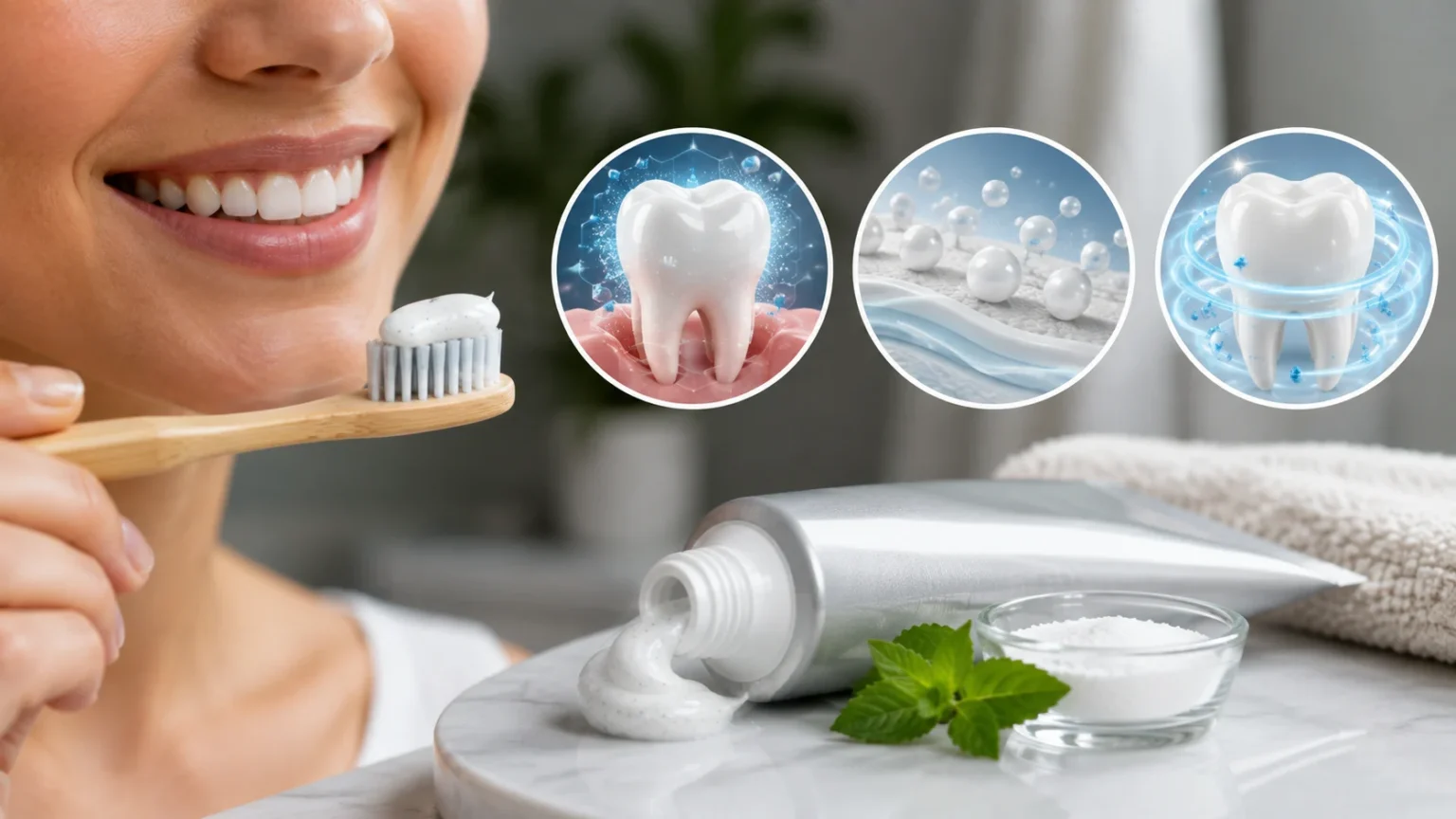
Hydroxyapatite Toothpaste: Benefits and Safety
Hydroxyapatite toothpaste has become one of the most talked-about alternatives to traditional fluoride toothpaste. Often marketed for enamel remineralization, cavity prevention, sensitive teeth, and gentle whitening, it contains a mineral closely related to the material naturally found in teeth and bones. Interest has grown rapidly as consumers look for oral-care products that support enamel while avoiding ingredients they personally prefer not to use.
The appeal of hydroxyapatite is easy to understand. Tooth enamel continually experiences periods of mineral loss and mineral repair, particularly after exposure to acids produced when oral bacteria metabolize sugars and carbohydrates. Hydroxyapatite particles are designed to interact with the tooth surface, potentially filling microscopic irregularities and supplying mineral components that support remineralization of early enamel damage.
Research into hydroxyapatite toothpaste has expanded in recent years. Clinical and laboratory evidence suggests it can promote remineralization and may help prevent dental caries, while some trials have found cavity-prevention performance comparable with conventional fluoride toothpaste under specific study conditions. However, fluoride remains the established standard behind cavity-protection toothpastes carrying the American Dental Association Seal of Acceptance.
Understanding the difference between promising evidence and established dental guidance can make choosing toothpaste much easier. This guide explains what hydroxyapatite toothpaste is, how it works, its potential benefits, possible side effects, nano-hydroxyapatite safety, its role in sensitive teeth, and how it compares with fluoride toothpaste so you can make a more informed oral-care decision.
What Is Hydroxyapatite Toothpaste?
Hydroxyapatite is a calcium-phosphate mineral that forms a major structural component of natural tooth enamel and bone. In toothpaste, synthetic hydroxyapatite is incorporated as an active mineral ingredient designed to interact with areas of the tooth surface that have experienced microscopic mineral loss. Because of its similarity to dental mineral, it has attracted substantial interest as a biomimetic oral-care ingredient.
You may see the ingredient listed simply as hydroxyapatite or as nano-hydroxyapatite, commonly abbreviated as nHA. Nano-hydroxyapatite consists of much smaller particles intended to interact closely with microscopic defects in the enamel surface and exposed dentinal tubules. Different manufacturers may use different particle sizes, concentrations, and formulations.
Unlike ingredients that work mainly by cleaning or polishing teeth, hydroxyapatite is intended to contribute mineral material to the tooth surface. Research has found that hydroxyapatite-containing toothpastes can support remineralization of enamel and dentin lesions, although results depend on formulation and study design.
This biomimetic concept is a major reason hydroxyapatite toothpaste has become popular. Instead of simply removing plaque and food debris, these products aim to support the mineral surface of the teeth during routine brushing. That potential makes hydroxyapatite especially interesting for people researching early enamel damage, tooth sensitivity, cavity prevention, or fluoride-free dental care.
How Does Hydroxyapatite Toothpaste Work?
Your teeth constantly experience a process known as demineralization and remineralization. After eating fermentable carbohydrates, bacteria within dental plaque can produce acids that temporarily reduce the mineral content of enamel. Saliva naturally helps neutralize acids and provides calcium and phosphate that support the repair of early mineral loss.
Hydroxyapatite toothpaste is designed to complement this natural repair process. Small hydroxyapatite particles can deposit on the enamel surface and interact with microscopic irregularities created during demineralization. Research suggests that these particles may help create a mineral layer and contribute to the remineralization of early enamel lesions.
Nano-hydroxyapatite may also penetrate or cover small surface defects because of its particle size. This has generated interest in its use for both enamel remineralization and dentin sensitivity. When exposed dentinal tubules become blocked or covered, external triggers may have less direct access to the nerves responsible for sensitivity.
It is important to understand that remineralization has limits. Toothpaste can potentially support the repair of very early mineral loss, sometimes seen as early white-spot lesions, but it cannot rebuild large portions of enamel destroyed by an established cavity. A physical cavity or structural tooth damage may require professional dental treatment.
Hydroxyapatite Toothpaste Benefits
The most widely discussed hydroxyapatite toothpaste benefit is its ability to support enamel remineralization. Laboratory and clinical studies suggest hydroxyapatite particles can deposit onto demineralized tooth surfaces and contribute calcium-phosphate material that supports early enamel repair. This makes it particularly interesting as an ingredient in preventive oral care.
Hydroxyapatite may also help reduce tooth sensitivity by interacting with exposed dentin. Sensitive teeth often develop when dentinal tubules become exposed because of gum recession, enamel wear, or other changes. Blocking these microscopic pathways can reduce the movement of fluid within the tubules and potentially make teeth less reactive to cold, heat, sweetness, or touch.
Another possible benefit is smoother-looking enamel. By depositing mineral onto microscopic surface irregularities, hydroxyapatite toothpaste may make the enamel surface feel smoother and potentially improve its visual appearance. Some products therefore advertise gentle whitening or brightness benefits without relying exclusively on aggressive abrasive ingredients.
The most important potential benefit, however, remains preventive rather than cosmetic. Evidence is growing that hydroxyapatite toothpaste can contribute to caries prevention, with recent clinical research and meta-analysis supporting its anticaries activity in fluoride-free formulations. At the same time, the overall evidence base is smaller than the decades of research supporting fluoride.
Can Hydroxyapatite Toothpaste Prevent Cavities?
Dental cavities begin when repeated acid exposure causes enamel to lose minerals faster than those minerals can be replaced. During the earliest stages, this process can sometimes be reversed through effective oral hygiene, dietary management, saliva, and remineralizing agents. Hydroxyapatite toothpaste aims to support this mineral-replacement phase before damage progresses into a physical cavity.
An 18-month randomized clinical trial compared fluoride-free hydroxyapatite toothpaste with toothpaste containing 1,450 ppm fluoride in adults. The study was designed to evaluate whether the hydroxyapatite formulation could prevent progression of dental caries compared with the established fluoride control.
A later systematic review and meta-analysis examining clinical and in-situ research concluded that evidence supporting hydroxyapatite as an anticaries ingredient has expanded. The review included several clinical trials and found growing evidence that fluoride-free hydroxyapatite oral-care products can reduce dental caries.
That does not mean fluoride and hydroxyapatite should automatically be considered interchangeable for every person. Someone with frequent cavities, reduced saliva, orthodontic appliances, exposed roots, or another high-risk condition may need a more individualized preventive plan. A dentist can recommend toothpaste based on personal cavity risk instead of relying on a general product claim.
Hydroxyapatite Toothpaste for Enamel Remineralization
Enamel is the highly mineralized outer layer protecting each tooth. Although it is extremely strong, repeated acid attacks can gradually remove calcium and phosphate from its structure. This early mineral loss may sometimes appear as chalky or white areas before an actual cavity forms.
Hydroxyapatite has attracted attention because its composition resembles the mineral already present in enamel. When toothpaste containing hydroxyapatite reaches a demineralized surface, particles may attach to microscopic irregularities and contribute to the formation of a mineral-rich layer. Studies have demonstrated remineralizing effects on early enamel lesions.
This process should not be described as completely “regrowing enamel.” Mature enamel does not regenerate biologically in the same way that skin heals after a cut. Remineralization instead involves restoring mineral to areas where the enamel structure remains present but has begun losing mineral content.
This distinction matters when evaluating marketing claims. Hydroxyapatite toothpaste may support early enamel repair and remineralization, but it cannot close a large cavity, restore a fractured tooth, or replace missing enamel. Structural dental problems still require assessment and, when appropriate, restorative treatment from a dentist.
Hydroxyapatite Toothpaste for Sensitive Teeth
Tooth sensitivity commonly occurs when dentin becomes exposed. Dentin contains microscopic tubules that communicate with the inner part of the tooth, and stimuli such as cold drinks, hot foods, sweet substances, or brushing may trigger short, sharp discomfort when these tubules are open.
Hydroxyapatite particles can deposit onto exposed dentin and help block or narrow these tubules. By creating a mineral layer over the surface, the toothpaste may reduce the movement of fluid that contributes to sensitivity. This mechanism explains why hydroxyapatite appears in a growing number of products marketed specifically for sensitive teeth.
Regular use matters because the protective mineral layer can be affected by brushing, acidic foods, and everyday oral conditions. Someone who switches between products frequently or uses hydroxyapatite only occasionally may not experience the same effect as someone following a consistent oral-hygiene routine.
Persistent sensitivity should still be evaluated professionally. Cavities, cracked teeth, worn enamel, gum recession, grinding, aggressive brushing, and dental infections can all produce sensitivity. Toothpaste may reduce the symptom while leaving the underlying cause untreated, so recurring or severe pain deserves a dental examination.
Does Hydroxyapatite Toothpaste Whiten Teeth?
Hydroxyapatite toothpaste is sometimes promoted as a whitening toothpaste, but its whitening mechanism differs from conventional bleaching treatments. It does not usually change the internal color of teeth in the same way that peroxide-based whitening products can. Instead, improvements may come from surface cleaning and changes in enamel smoothness or light reflection.
Hydroxyapatite particles can settle into tiny surface irregularities, potentially creating a smoother mineral surface. A smoother enamel surface can reflect light differently and may make teeth appear brighter or more uniform. Some formulations also contain mild polishing ingredients that help remove external stains.
This means people with coffee, tea, tobacco, or other surface discoloration may notice some improvement depending on the complete toothpaste formula. However, deep intrinsic discoloration caused by aging, medications, trauma, or internal tooth changes will generally not disappear simply by switching to hydroxyapatite toothpaste.
Anyone seeking a dramatic whitening result should therefore keep expectations realistic. Hydroxyapatite’s main value is related to mineral support rather than powerful bleaching. Professional whitening or evidence-based peroxide products may provide stronger cosmetic changes when appropriate, although people with sensitive teeth should discuss whitening options carefully with a dental professional.
What Is Nano-Hydroxyapatite Toothpaste?
Nano-hydroxyapatite toothpaste contains hydroxyapatite particles engineered at the nanoscale. These tiny particles are designed to resemble the mineral structures naturally found in enamel and interact closely with microscopic enamel defects. Their small size is one reason they have become particularly popular in remineralizing toothpaste formulations.
Nano-sized particles can potentially reach small irregularities that larger particles may not access as effectively. This makes nano-hydroxyapatite toothpaste especially interesting for early enamel remineralization, surface smoothing, and dentinal-tubule occlusion associated with tooth sensitivity.
The word “nano” understandably raises safety questions because nanoparticles can behave differently from larger particles. Safety therefore depends not simply on whether an ingredient is nanosized but also on characteristics such as particle shape, size distribution, concentration, solubility, and how the product is used.
Regulatory scientific reviews have evaluated nano-hydroxyapatite specifically for oral-care products and established safety conditions based on particle characteristics and concentration. This means consumers should look beyond broad statements that all nanoparticles are either completely dangerous or automatically harmless; the specific formulation matters.
Is Hydroxyapatite Toothpaste Safe?
Available research generally describes hydroxyapatite as a biocompatible dental material because calcium-phosphate minerals of this type closely resemble mineral naturally found in teeth and bones. It has also been used beyond toothpaste in dentistry and biomedical applications, contributing to interest in its oral-care safety.
For ordinary toothpaste use, hydroxyapatite is intended to remain primarily within the oral environment and then be spat out after brushing. As with any toothpaste, people should follow the product instructions and avoid intentionally swallowing large quantities, particularly when supervising young children.
Safety discussions become more technical with nano-hydroxyapatite because particle characteristics matter. Regulatory scientific evaluations have concluded that specific forms of nano-hydroxyapatite can be used safely in toothpaste within defined concentration and particle-shape conditions, while emphasizing that conclusions cannot automatically be generalized to every possible nanoparticle form.
Consumers can reduce uncertainty by choosing products from reputable manufacturers that clearly disclose ingredients and follow applicable cosmetic or oral-care regulations. People with unusual reactions, significant oral disease, or complex medical conditions can also discuss their toothpaste choice with a dentist rather than relying solely on marketing claims.
Hydroxyapatite vs Fluoride Toothpaste
The comparison between hydroxyapatite vs fluoride toothpaste is one of the most common questions surrounding the ingredient. Both are used to support enamel and reduce the risk of tooth decay, but they work through somewhat different mechanisms. Fluoride has a very long history of use in preventive dentistry and a large evidence base supporting cavity prevention.
Fluoride promotes remineralization while helping create enamel mineral that is more resistant to acid attack. It can also influence bacterial processes involved in tooth decay. Because of this extensive evidence, the American Dental Association requires toothpaste making a cavity-protection claim to contain fluoride to qualify for its Seal of Acceptance.
Hydroxyapatite works primarily by supplying enamel-like calcium-phosphate particles that can deposit onto tooth surfaces and contribute to mineral repair. Recent trials and reviews indicate that hydroxyapatite toothpaste can provide meaningful caries-preventive effects and may perform comparably with fluoride toothpaste in certain studied populations.
The evidence bases are not equal in size, however. Fluoride has decades of large-scale research and public-health use behind it, while hydroxyapatite has a growing but comparatively smaller body of clinical evidence. People at high risk of cavities should therefore discuss switching from fluoride to fluoride-free toothpaste with their dentist instead of assuming every alternative provides identical protection.
Is Hydroxyapatite Better Than Fluoride?
Calling one ingredient universally “better” oversimplifies the evidence. Fluoride remains one of the best-established ingredients for preventing cavities, and professional dental recommendations continue to rely heavily on fluoride toothpaste. Its effectiveness has been studied across different ages, populations, and oral-health conditions for decades.
Hydroxyapatite has several attractive characteristics. It resembles natural tooth mineral, can promote remineralization, may help reduce sensitivity, and has shown promising anticaries results in clinical research. For someone who specifically wants a fluoride-free toothpaste, hydroxyapatite is one of the more evidence-supported alternatives currently available.
However, individual cavity risk matters. A person who rarely develops cavities and maintains excellent oral hygiene presents a different situation from someone with dry mouth, numerous restorations, gum recession, orthodontic treatment, or repeated decay. High-risk patients sometimes need stronger fluoride strategies, including prescription-strength products.
The better question is therefore not simply “Which ingredient wins?” but which toothpaste best matches your dental needs. A dentist can evaluate enamel condition, cavity history, saliva, gums, diet, medications, and other factors before recommending whether conventional fluoride, hydroxyapatite, or another formulation makes the most sense.
Can You Use Hydroxyapatite and Fluoride Together?
Hydroxyapatite and fluoride do not necessarily have to be viewed as mutually exclusive ingredients. Some oral-care formulations may combine mineral-supporting ingredients, and a person’s broader preventive routine can include different treatments recommended for different purposes.
Someone could, for example, use a particular toothpaste while receiving fluoride varnish professionally when indicated. The appropriate combination depends on personal cavity risk and the products being used. More intervention is not always automatically better, particularly when products are being layered without a clear reason.
People who are attracted to hydroxyapatite solely because they believe fluoride is inherently unsafe should also consider the strength of the evidence supporting fluoride toothpaste when used appropriately. Established dental guidance continues to recognize fluoride toothpaste as an effective cavity-prevention strategy.
If your primary goal is maximizing cavity prevention rather than avoiding a particular ingredient, discussing your routine with a dentist is more useful than treating fluoride and hydroxyapatite as opposing sides. Preventive dentistry works best when toothpaste choice is considered alongside brushing technique, interdental cleaning, diet, saliva, and professional care.
Can Hydroxyapatite Toothpaste Reverse Cavities?
The answer depends on what someone means by a cavity. Very early tooth decay begins with mineral loss before a physical hole forms. At this early stage, remineralization strategies can sometimes restore minerals and stop or reverse progression if the enamel structure remains sufficiently intact.
Hydroxyapatite toothpaste may support this process by supplying mineral particles that interact with demineralized enamel. Research showing enamel remineralization provides a reasonable basis for using hydroxyapatite as part of preventive care for early mineral loss.
Once decay has progressed enough to create a physical cavity, toothpaste cannot rebuild the missing tooth structure. The damaged area may require a filling or another restorative treatment depending on its size, location, symptoms, and progression.
Waiting for toothpaste to repair an established cavity can allow decay to spread deeper toward the dental pulp. If you have persistent toothache, visible holes, food trapping, broken enamel, or significant sensitivity in one tooth, seek a dental examination rather than relying only on a remineralizing toothpaste.
Hydroxyapatite Toothpaste and Early White Spots
Chalky white spots on teeth can sometimes represent areas where enamel has lost mineral. They are commonly noticed around orthodontic brackets, near plaque-retentive areas, or after periods of inadequate oral hygiene. However, not every white mark represents active demineralization, so proper diagnosis matters.
Because early white-spot lesions can retain much of their underlying structure, they are a major target for remineralization strategies. Hydroxyapatite toothpaste may deposit calcium-phosphate mineral into and over these areas, potentially improving surface mineralization when combined with better plaque control and dietary changes.
Laboratory and clinical research examining hydroxyapatite has demonstrated its ability to contribute to enamel remineralization, including applications involving early lesions.
Appearance does not necessarily improve instantly even when a lesion becomes less active. Mineral changes, enamel porosity, and optical properties can affect how a white spot looks. A dentist can help determine whether the priority is preventing progression, improving appearance, or investigating another cause of discoloration.
Does Hydroxyapatite Protect Against Enamel Erosion?
Dental erosion occurs when acids chemically dissolve enamel without bacterial activity being the primary cause. Frequent acidic drinks, citrus products, stomach acid from reflux, repeated vomiting, and certain occupational exposures can contribute to progressive enamel erosion.
Because hydroxyapatite provides calcium-phosphate mineral and can coat microscopic enamel defects, researchers have investigated whether it may help strengthen or remineralize surfaces affected by acid exposure. Its mineral-deposition properties make it a reasonable ingredient for supporting vulnerable enamel.
However, toothpaste alone cannot overcome repeated strong acid exposure. Someone who drinks acidic beverages throughout the day or experiences frequent reflux may continue losing enamel despite using a remineralizing product. Identifying and reducing the source of acid remains essential.
Enamel erosion can eventually cause yellowing, sensitivity, rounded tooth edges, thinning, and structural damage. If these changes are already noticeable, a dentist can determine whether preventive measures are sufficient or whether additional treatment is required to protect weakened teeth.
Can Hydroxyapatite Help With Gum Recession?
Hydroxyapatite does not regrow lost gum tissue. When gums recede, the root surface of the tooth can become exposed, leading to sensitivity and a higher vulnerability to certain forms of wear and decay. Gum recession can result from periodontal disease, aggressive brushing, tooth position, aging, or other factors.
Where hydroxyapatite may help is with root sensitivity. By depositing over exposed dentin and blocking microscopic tubules, hydroxyapatite toothpaste may reduce painful responses to cold air, drinks, foods, or brushing.
The underlying recession still needs attention. Brushing too aggressively should be corrected, while gum inflammation or periodontal disease may require professional treatment. Continuing to lose gum tissue while relying on sensitivity toothpaste alone can allow the underlying problem to progress.
If your teeth suddenly appear longer, your gums bleed regularly, or recession is becoming more noticeable, schedule a dental assessment. A toothpaste can support comfort and surface protection, but it cannot replace diagnosis and management of gum disease or significant tissue loss.
Is Hydroxyapatite Toothpaste Good for Children?
Hydroxyapatite toothpaste is sometimes marketed heavily toward parents because it may offer remineralizing benefits without fluoride. Its enamel-like mineral composition makes it attractive to families concerned about young children swallowing toothpaste while they are still learning to brush and spit.
Children, however, also have a particularly important need for effective cavity prevention. Dental caries can progress quickly in primary teeth, and fluoride toothpaste remains central to mainstream professional recommendations for preventing tooth decay in children.
Hydroxyapatite research includes encouraging evidence, but parents should avoid assuming that choosing any fluoride-free product automatically provides the same protection as an appropriately formulated fluoride toothpaste. The child’s cavity history, diet, brushing quality, saliva, and professional fluoride exposure can all influence the appropriate choice.
A pediatric dentist can provide individualized advice, particularly for children who have already developed cavities or early enamel lesions. Whichever toothpaste is used, adult supervision, twice-daily brushing, appropriate amounts of toothpaste, and limiting frequent sugary foods and drinks remain extremely important.
Are There Side Effects of Hydroxyapatite Toothpaste?
Most people can use appropriately formulated hydroxyapatite toothpaste without major problems. As with virtually any oral-care product, however, side effects can occasionally come from the complete formulation rather than the hydroxyapatite itself.
Some people develop mouth irritation from flavorings, foaming agents, preservatives, essential oils, or other toothpaste ingredients. Burning, peeling tissue, persistent soreness, swelling, or a rash around the mouth after switching products may indicate sensitivity to one of these components.
The abrasiveness of a toothpaste also matters. A product marketed for intense whitening could contain polishing agents that contribute to surface wear if the formulation is excessively abrasive or if someone brushes aggressively. Hydroxyapatite itself should therefore not be evaluated independently from the entire ingredient list and product design.
If a new toothpaste consistently causes discomfort, stop using it and discuss the reaction with a dentist when necessary. Severe swelling, difficulty breathing, or other symptoms suggesting a significant allergic reaction require prompt medical attention, although such reactions are uncommon.
Is Nano-Hydroxyapatite Safe?
Nano-hydroxyapatite safety has received particular scientific attention because extremely small particles require more detailed evaluation than ordinary mineral powders. Safety assessments consider particle dimensions, shape, concentration, dissolution, exposure route, and whether particles can enter tissues.
Current regulatory evaluations have concluded that defined forms of nano-hydroxyapatite can be considered safe in toothpaste when they meet specified physical and concentration requirements. Those conclusions are formulation-specific rather than proof that every imaginable nano-hydroxyapatite particle is automatically safe.
Particle shape is especially relevant because safety reviews distinguish acceptable particle characteristics from shapes that may raise additional concerns. Reputable toothpaste manufacturers are expected to formulate products in accordance with applicable regulatory standards rather than using undefined nanomaterials.
For ordinary consumers, the practical takeaway is to choose established products rather than attempting to purchase raw nano-hydroxyapatite powders from unknown suppliers. A finished toothpaste manufactured under appropriate quality controls provides considerably greater reassurance than an unverified DIY dental formulation.
Should You Swallow Hydroxyapatite Toothpaste?
Toothpaste is designed primarily for brushing and spitting rather than intentional consumption. Even when the active ingredient itself has a favorable safety profile, toothpaste contains several additional substances, including flavorings, surfactants, humectants, abrasives, and preservatives that are not intended to be consumed in large amounts.
Accidentally swallowing a small amount during normal brushing is different from deliberately eating toothpaste. Young children who have not learned to spit reliably should always be supervised, regardless of whether the toothpaste contains fluoride or hydroxyapatite.
Marketing terms such as “non-toxic” or “safe if swallowed” should not be interpreted as encouragement to consume unrestricted quantities. Safety always depends on dose as well as ingredient composition.
If someone swallows a very large amount of any toothpaste and develops symptoms, appropriate medical or poison-control advice may be necessary depending on the product and quantity. Keeping toothpaste away from unsupervised young children remains sensible even when using fluoride-free products.
How Long Does Hydroxyapatite Toothpaste Take to Work?
The timeframe depends on what you want the toothpaste to accomplish. Someone using hydroxyapatite for surface smoothness or sensitivity may notice changes earlier than someone hoping to improve an early enamel lesion. Biological and chemical changes in enamel develop gradually with repeated exposure.
Consistent brushing is therefore more important than expecting a dramatic result after one or two applications. Most preventive toothpastes are designed to work as part of a long-term oral-hygiene routine rather than as occasional treatments.
Sensitivity can also fluctuate because of diet, temperature, brushing technique, gum condition, and dental disease. Improvement after starting hydroxyapatite toothpaste can be encouraging, but worsening pain or discomfort isolated to a specific tooth deserves professional evaluation.
Cavity prevention should be judged over months and years rather than days. The goal is reducing demineralization and supporting remineralization repeatedly throughout daily life, while controlling plaque and limiting the frequency of dietary sugar and acid exposure.
How to Choose the Best Hydroxyapatite Toothpaste
Start by checking whether hydroxyapatite appears clearly in the ingredient list rather than relying only on phrases such as “mineral repair” or “enamel strengthening.” Some products contain nano-hydroxyapatite, while others use larger particles, and manufacturers may disclose different levels of detail about concentration.
Consider the rest of the formulation as well. People prone to mouth ulcers or irritation may prefer toothpaste without certain strong foaming agents or flavors, while someone primarily concerned about surface stains may prioritize a formulation with appropriate polishing properties.
Do not assume that the most expensive product or the product with the highest advertised hydroxyapatite percentage is automatically the most effective. Particle characteristics, formulation stability, brushing habits, and independent clinical evidence can matter alongside concentration.
Most importantly, match the product to your oral-health risk. Someone seeking mild sensitivity relief has different needs from a patient who repeatedly develops cavities. Your dentist can help determine whether a hydroxyapatite toothpaste is reasonable alone or whether fluoride-based prevention would be more appropriate.
How to Use Hydroxyapatite Toothpaste Effectively
Good toothpaste cannot compensate for poor brushing technique. Brush thoroughly twice daily using a soft-bristled toothbrush and enough time to clean the outer, inner, and chewing surfaces of every tooth. Gentle pressure is usually sufficient; aggressive scrubbing can contribute to gum recession and tooth wear.
Make sure the bristles reach along the gumline, where plaque commonly accumulates. People often concentrate on the visible front teeth and spend too little time on molars, inner surfaces, and areas near the gums where dental disease frequently begins.
Cleaning between teeth is also important because toothbrush bristles cannot effectively reach every interproximal surface. Floss, interdental brushes, water flossers, or another dentist-recommended method can complement brushing depending on individual needs.
Finally, remember that toothpaste represents only one part of cavity prevention. Frequent sugary snacks, acidic drinks, dry mouth, inadequate plaque removal, smoking, and missed dental care can substantially influence oral health. The strongest routine combines effective toothpaste with consistent hygiene and sensible dietary habits.
Who May Benefit From Hydroxyapatite Toothpaste?
People interested in a fluoride-free toothpaste with evidence for remineralization may find hydroxyapatite particularly appealing. It offers a more scientifically plausible alternative than many fluoride-free products that rely mainly on herbal extracts, charcoal, or ordinary cleaning ingredients.
People with mild dentin sensitivity may also benefit because hydroxyapatite can help occlude exposed dentinal tubules. Someone who experiences short discomfort from cold drinks or air may therefore consider a hydroxyapatite sensitivity formulation after ruling out significant dental disease.
Orthodontic patients and people concerned about early enamel demineralization may also encounter hydroxyapatite products. However, these groups can have elevated cavity risk, so decisions about replacing fluoride should ideally be made with professional guidance rather than solely from online recommendations.
Ultimately, hydroxyapatite is best viewed as one useful tool within preventive dentistry rather than a universal solution. Its growing evidence base makes it noteworthy, but the most appropriate toothpaste still depends on the person using it.
When Should You Talk to a Dentist?
Talk to a dentist if you are considering abandoning fluoride despite having a history of frequent cavities. High-risk patients may benefit from stronger preventive approaches than ordinary over-the-counter toothpaste can provide, and switching products without considering that risk may reduce protection.
A dental examination is also appropriate for persistent sensitivity. Sensitivity can result from exposed dentin, but it may also come from decay, cracks, leaking restorations, gum disease, or pulp problems. Treating the sensation without identifying the cause can allow disease to progress.
Visible holes, broken teeth, recurring gum bleeding, swelling, severe toothache, or pain that wakes you from sleep require more than a remineralizing toothpaste. Hydroxyapatite cannot repair advanced structural dental disease.
Preventive conversations can also be useful before problems develop. Your dentist can evaluate cavity risk, gum health, enamel erosion, dry mouth, diet, and brushing habits and recommend an oral-care routine suited to your needs rather than relying on a one-size-fits-all recommendation.
The Bottom Line on Hydroxyapatite Toothpaste
Hydroxyapatite toothpaste is a promising oral-care option based on a mineral closely related to the natural mineral structure of teeth. Research supports its ability to contribute to enamel remineralization, and a growing clinical evidence base suggests it may help prevent dental caries and reduce sensitivity.
Its ability to deposit mineral onto enamel and dentin makes hydroxyapatite different from toothpaste ingredients that provide only cleaning or cosmetic effects. This biomimetic mechanism is one reason it has attracted increasing attention in preventive dentistry.
Fluoride nevertheless remains the more established cavity-prevention ingredient, supported by decades of research and current professional dental guidance. The ADA currently requires fluoride in toothpastes earning its Seal of Acceptance for cavity protection.
For many people, hydroxyapatite toothpaste can be a reasonable option, particularly when fluoride-free oral care is specifically desired. The best decision depends on cavity risk, tooth sensitivity, enamel condition, age, dental history, and professional advice, rather than assuming that one toothpaste ingredient is universally superior to another.
Frequently Asked Questions
Is hydroxyapatite toothpaste actually good for teeth?
Yes, research suggests hydroxyapatite can support enamel remineralization and may help reduce tooth sensitivity and cavity development. Its effectiveness depends on the formulation and consistent oral hygiene.
Is hydroxyapatite toothpaste better than fluoride?
Not universally. Hydroxyapatite has promising evidence, but fluoride has a larger and longer-established evidence base for cavity prevention. The best option depends on individual dental needs.
Can hydroxyapatite toothpaste rebuild enamel?
It can support remineralization of early enamel mineral loss, but it cannot regrow large amounts of missing enamel or repair an established physical cavity.
Is nano-hydroxyapatite toothpaste safe?
Defined forms of nano-hydroxyapatite have been considered safe for toothpaste under specific regulatory conditions relating to concentration and particle characteristics.
Does hydroxyapatite toothpaste help sensitive teeth?
It may help by depositing mineral over exposed dentin and blocking microscopic tubules associated with sensitivity. Persistent or severe sensitivity should still be evaluated by a dentist.