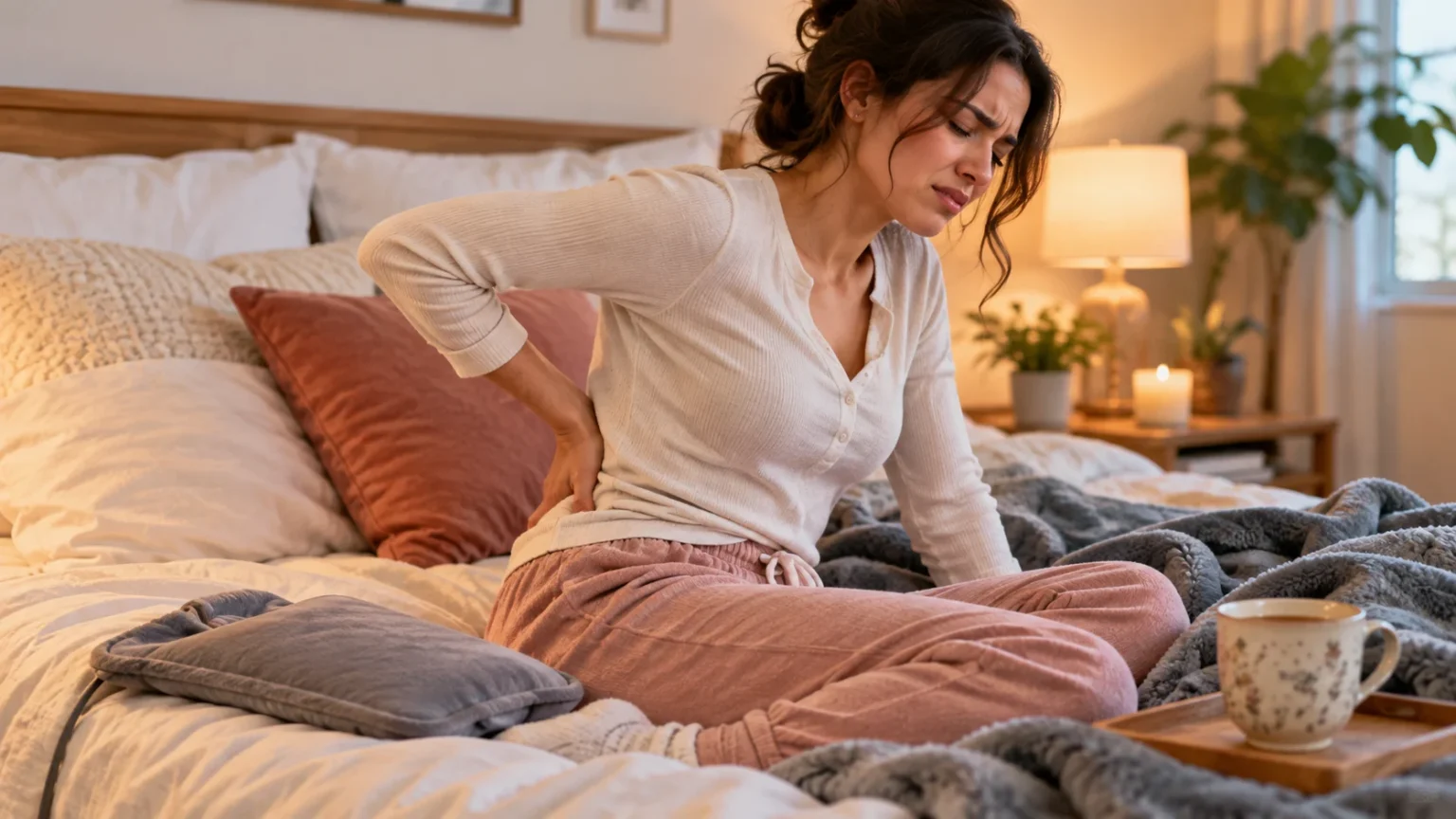
Period back pain is a common symptom that can appear before or during menstruation. It may feel like a dull ache, pressure, tightness, or cramping across the lower back, sometimes alongside abdominal cramps, fatigue, bloating, or headaches. For some people, the discomfort is mild, while for others it can interfere with sleep, exercise, work, and everyday movement.
Menstrual back pain often happens because the uterus contracts during a period and nearby nerves and muscles can also become sensitive. Hormonal changes may increase inflammation and make discomfort feel stronger around the pelvis and lower back. However, severe or unusual back pain can sometimes be related to conditions such as endometriosis, fibroids, or other pelvic health concerns.
Understanding when period back pain is expected and when it deserves medical attention can help you manage symptoms more confidently. Gentle movement, warmth, rest, stretching, and certain over-the-counter medicines may provide relief for many people. The sections below explain common causes, practical relief options, and warning signs that should not be ignored.
Why Does Your Back Hurt During Your Period?
The uterus contracts during menstruation to help shed its lining. These contractions are influenced by hormone-like substances called prostaglandins, which can also contribute to inflammation and pain. Because the uterus sits close to muscles, nerves, and structures in the lower back and pelvis, menstrual cramps may sometimes be felt beyond the abdomen.
This type of discomfort is known as referred pain, meaning the pain is felt in an area different from where the original contractions occur. You might notice an ache across the lower back even though the uterus is the main source of the cramping. The sensation can come and go with menstrual contractions or remain as a steady feeling of pressure.
Muscle tension can make the pain feel stronger as well. When abdominal cramps become uncomfortable, people sometimes tighten the lower back, hips, or pelvic muscles without realizing it. This protective tension can add another layer of soreness, especially if you also spend long periods sitting or resting in one position.
What Does Period Back Pain Feel Like?
Period-related back pain commonly feels like a dull or heavy ache across the lower back. Some people describe a pulling or throbbing sensation that appears at the same time as abdominal cramps. The discomfort may stay near the center of the back or spread across both sides toward the hips.
The pain may begin a day or two before menstrual bleeding starts and continue through the first few days of the period. For many people, symptoms become milder as menstrual flow decreases. The pattern can vary from month to month depending on stress, sleep, activity levels, and individual hormonal changes.
Sharp, severe, or one-sided back pain is less typical of ordinary menstrual soreness. Pain that shoots down the leg, causes numbness, or appears with significant weakness may involve the spine or nerves rather than menstruation alone. Paying attention to the quality and location of your pain can help identify when another cause should be considered.
How Hormonal Changes Can Affect Back Pain
Hormonal changes occur throughout the menstrual cycle and can influence how the body experiences pain. Prostaglandin levels often rise around the beginning of menstruation, encouraging uterine contractions. Higher levels may be associated with stronger cramps and more noticeable discomfort in the lower abdomen and back.
Hormonal fluctuations can also contribute to bloating and temporary fluid changes. A feeling of abdominal fullness or pelvic heaviness may alter how comfortable certain sitting or lying positions feel. Some people become more aware of muscle tightness around the hips and lower back during this part of the cycle.
Pain sensitivity may also change around menstruation. This means an activity or position that normally feels comfortable may become more noticeable when cramps are present. These temporary changes do not necessarily indicate injury, but recurring severe pain should not be dismissed simply because it happens during a period.
Can Sitting Too Long Make Period Back Pain Worse?
Long periods of sitting can make lower-back stiffness more noticeable, especially when menstrual cramps are already causing muscle tension. Remaining in one position reduces movement through the hips and spine and may leave the back feeling stiff when you stand. This can add to the aching sensation that accompanies menstruation.
Try changing position throughout the day rather than searching for one perfect posture. Standing briefly, walking around the room, or gently moving the hips can help break up long sitting periods. Understanding the general standing desk benefits may also be useful if desk work keeps you seated for many hours.
Standing continuously is not necessarily better than sitting. Staying upright in one position for several hours can also make the back and legs feel tired. Alternating between sitting, standing, walking, and comfortable rest usually provides more movement variety than relying on one posture all day.
Can Endometriosis Cause Period Back Pain?
Endometriosis occurs when tissue similar to the lining of the uterus grows outside the uterus. It can cause significant pelvic pain and may also contribute to lower-back discomfort around menstruation. Some people experience pain that is much stronger than typical menstrual cramping or continues beyond the first few days of a period.
Other possible symptoms include painful intercourse, discomfort during bowel movements, heavy periods, persistent pelvic pain, or difficulty becoming pregnant. However, symptoms vary widely, and some people have relatively mild discomfort. Lower-back pain by itself is not enough to determine whether endometriosis is present.
If period pain repeatedly interferes with work, school, exercise, sleep, or normal daily activities, discuss it with a healthcare professional. Severe menstrual pain should not automatically be accepted as something you simply have to tolerate. Medical evaluation can help identify whether endometriosis or another condition may be contributing.
Can Fibroids or Other Pelvic Conditions Cause Back Pain?
Uterine fibroids are noncancerous growths that can develop in or around the uterus. Depending on their size and location, they may contribute to pelvic pressure, heavy menstrual bleeding, cramping, or lower-back discomfort. Some people do not experience any symptoms, while others notice significant changes in their periods.
Other pelvic conditions may also cause discomfort that becomes more noticeable during menstruation. Adenomyosis, ovarian cysts, pelvic infections, and certain reproductive health conditions can sometimes produce pelvic or back pain. The symptoms may overlap, making it difficult to identify the cause without a proper medical assessment.
Consider seeking evaluation if your period symptoms have changed significantly from your usual pattern. Increasing pain, very heavy bleeding, abdominal swelling, unusual discharge, or pain between periods may provide clues that something beyond ordinary menstrual cramping is present. A healthcare professional can determine whether further testing is needed.
How to Relieve Period Back Pain at Home
Heat is one of the simplest ways to make menstrual back pain feel more manageable. A heating pad, warm water bottle, or warm shower may help relax tense muscles around the lower back and abdomen. Use a comfortable temperature and protect your skin rather than applying intense heat directly for long periods.
Gentle movement may also help reduce stiffness. Short walks, easy mobility exercises, or changing positions regularly can feel better than staying completely still for many hours. The goal is not to perform a demanding workout while you are uncomfortable but to keep the body moving within a range that feels manageable.
Rest is still important when symptoms are tiring. Try finding a supported position, such as lying on your side with a pillow between your knees or resting on your back with your legs supported. Combining comfortable rest with occasional gentle movement can prevent the lower back from becoming excessively stiff.
Gentle Stretches for Period Back Pain
A knee-to-chest stretch can provide a gentle feeling of release through the lower back and hips. Lie on your back and slowly bring one knee toward your chest while keeping the other leg comfortable. Hold without pulling aggressively, then switch sides and notice whether the movement feels soothing.
Child’s pose is another option when kneeling feels comfortable. Move your hips gently toward your heels while reaching your arms forward and allowing the back to relax. Use pillows for support if necessary, and avoid forcing the hips or spine into a range that increases pelvic or abdominal discomfort.
Pelvic tilts can also encourage light movement through the lower back. Lie with your knees bent and gently flatten and release the lower back against the floor. Keep the motion small and controlled, and stop if you experience sharp pain, dizziness, numbness, or symptoms that are different from your usual period discomfort.
Does Exercise Help With Period Back Pain?
Light to moderate exercise may help some people manage menstrual discomfort by encouraging movement, circulation, and general relaxation. Walking, cycling at an easy pace, yoga, or gentle strength training can be reasonable options when symptoms are mild. Exercise intensity should match how you feel rather than following a rigid routine.
You do not need to force yourself through a difficult workout when pain is significant. Reducing weight, shortening the session, or choosing lower-impact activity can make exercise more comfortable. Some days, a short walk or mobility routine may be more appropriate than running, jumping, or heavy lower-body training.
Regular physical activity throughout the month may also support overall strength and mobility. Strong hip, abdominal, and back muscles can help with daily movement, though exercise is not a guaranteed treatment for menstrual pain. Persistent severe symptoms still deserve medical evaluation even if you are physically active.
Can Pain Medicine Help With Menstrual Back Pain?
Over-the-counter pain medicines are commonly used for menstrual cramps and related back discomfort. Nonsteroidal anti-inflammatory drugs, often called NSAIDs, can reduce pain and inflammation and may be particularly useful when prostaglandins contribute to cramping. Follow the product label or advice from a healthcare professional.
These medications are not suitable for everyone. People with certain stomach, kidney, cardiovascular, bleeding, or medication-related concerns may need to avoid specific pain relievers. If you are unsure whether a medicine is safe for you, speak with a pharmacist or healthcare provider before taking it.
Pain medicine can reduce symptoms, but repeated severe pain should still be investigated. Needing increasingly large amounts of medication or being unable to function without pain relief may indicate that the underlying menstrual problem deserves assessment. Treatment may need to focus on the cause rather than symptom relief alone.
How Lifestyle Habits Can Affect Period Back Pain
Sleep can influence how strongly pain is perceived. A poor night’s sleep may leave you feeling more sensitive to cramps, fatigue, and muscle tension the following day. Maintaining a regular sleep routine and using pillows to support comfortable positions may make menstrual nights easier to manage.
Stress can also contribute to muscle guarding around the abdomen, hips, shoulders, and lower back. Slow breathing, relaxing activities, and gentle movement may help you notice and release unnecessary tension. Stress reduction does not mean the pain is psychological; it is simply one factor that can influence how the body responds to discomfort.
Hydration and regular meals may support general well-being during menstruation as well. There is no single food or drink that reliably eliminates period back pain, but skipping meals or becoming dehydrated can make some people feel more fatigued. Choose habits that help you feel steady rather than relying on restrictive menstrual “detox” routines.
When Period Back Pain May Not Be From Your Period
Back pain that happens during menstruation is not always caused by menstruation itself. Muscle strain, poor lifting technique, prolonged sitting, joint irritation, or a spinal problem can occur at the same time as a period. The timing may make the symptoms seem connected even when another issue is responsible.
Pain that travels down one leg with tingling, numbness, or weakness may suggest nerve irritation such as sciatica. Similarly, sharp pain after lifting or exercise may be more consistent with a musculoskeletal injury. These symptoms should be evaluated based on their own pattern rather than assumed to be normal menstrual pain.
Kidney or urinary problems can also cause back or side pain. Fever, burning during urination, blood in the urine, nausea, or pain higher in the back may point toward another cause. Seek medical attention when back pain appears with symptoms that do not fit your usual menstrual pattern.
When Should You Get Help for Period Back Pain?
Talk with a healthcare professional if menstrual back pain regularly interferes with work, sleep, school, exercise, or daily activities. Pain that progressively becomes stronger over several cycles also deserves evaluation. Significant symptoms may be related to endometriosis, fibroids, adenomyosis, or another pelvic health condition.
Seek prompt medical attention for sudden severe pelvic or back pain, especially when it is accompanied by fainting, dizziness, fever, persistent vomiting, or unusually heavy bleeding. Severe one-sided pain can also require assessment. These symptoms may indicate something more urgent than routine menstrual cramping.
Get medical advice if you develop new numbness, leg weakness, bowel or bladder control changes, or numbness around the groin. These neurological symptoms are not typical of ordinary period pain. Persistent unexplained pain outside your menstrual cycle should also be evaluated rather than repeatedly treated at home.
Conclusion
Period back pain often develops because uterine contractions, prostaglandins, referred pain, and muscle tension affect the lower back and pelvis during menstruation. The discomfort can range from a mild ache to stronger cramping that interferes with normal activities. For many people, symptoms improve as the period progresses.
Heat, gentle movement, comfortable stretching, rest, and appropriate over-the-counter pain relief may help manage mild symptoms. Changing positions regularly can also reduce stiffness caused by spending long periods sitting or lying down. Pay attention to your individual pattern and choose strategies that make movement and daily tasks more comfortable.
Severe, worsening, or unusually persistent period back pain should not be ignored. Heavy bleeding, fainting, fever, significant weakness, neurological symptoms, or pain that dramatically changes from your normal pattern deserves professional assessment. Identifying the cause can lead to more appropriate and effective treatment.
FAQs
Is Back Pain Normal During Your Period?
Mild to moderate lower-back aching can occur during menstruation because uterine contractions and referred pain affect nearby areas. Severe or disabling back pain, however, should be discussed with a healthcare professional.
Why Does My Lower Back Hurt Before My Period Starts?
Hormonal changes and increasing prostaglandin activity can begin before menstrual bleeding. These changes may trigger uterine contractions and muscle tension, causing lower-back or pelvic discomfort before the period officially begins.
What Helps Period Back Pain Fast?
Heat, comfortable movement, supported rest, gentle stretching, and appropriate pain medicine may provide relief. The best option depends on your symptoms, medical history, and how strongly the pain affects daily activities.
Can Period Back Pain Be a Sign of Endometriosis?
Yes, lower-back pain can occur with endometriosis, particularly when it accompanies severe pelvic pain or painful periods. However, back pain alone cannot diagnose endometriosis, so recurring severe symptoms need professional assessment.
When Should I Worry About Back Pain During My Period?
Seek medical advice for severe or worsening pain, heavy bleeding, fever, fainting, persistent vomiting, leg weakness, numbness, or bowel and bladder changes. Pain that regularly disrupts daily life also deserves evaluation.