Squats are one of the most useful lower-body exercises because they train several major muscle groups at the same time. They are commonly used to build leg strength, improve hip mobility, support everyday movement, and develop better lower-body control. Whether you perform bodyweight squats at home or weighted squats in the gym, proper technique makes a major difference.
The squat movement mainly targets the quadriceps and glute muscles, but the hamstrings, calves, core, and smaller stabilizing muscles also contribute. Because so many areas work together, squats can be an efficient addition to strength training and general fitness routines. The exact muscles emphasized may change depending on your stance, depth, resistance, and squat variation.
This guide explains what squats work, how to perform them correctly, common mistakes to avoid, useful variations, and practical tips for building strength safely. It also covers how many squats to do, how often to train them, and how to modify the movement when necessary.
What Muscles Do Squats Work?
Squats primarily work the quadriceps, gluteus maximus, and other muscles surrounding the hips and thighs. As you bend your knees and lower your body, these muscles help control the descent. When you stand back up, they produce force to extend the knees and hips.
The hamstrings and calves also contribute, although they are usually considered supporting muscles rather than the main drivers of a basic squat. They help stabilize the knees, control the lower body, and maintain balance throughout the movement. Your ankle mobility and foot position can also influence how these muscles participate.
Your core works throughout the squat to stabilize the spine and pelvis. The abdominal muscles, obliques, and deeper trunk muscles help prevent excessive bending or twisting while your lower body moves. This makes squats more than just a leg exercise because successful repetitions require coordination throughout the entire body.
How Squats Work the Quadriceps
The quadriceps are located at the front of the thighs and are heavily involved in knee extension. During the lowering phase of a squat, they work to control how quickly your knees bend. During the upward phase, they contract to help straighten the knees as you return to standing.
Squat depth and torso position can influence quadriceps involvement. A more upright squat with greater knee movement generally places considerable demand on the quadriceps. Front squats, goblet squats, and heel-elevated squats are often used when someone wants to place additional emphasis on the front of the thighs.
Strong quadriceps can support everyday movements such as climbing stairs, standing from a chair, and walking uphill. They also contribute to running, jumping, and other athletic movements. Squats provide a practical way to strengthen them while training multiple muscles at the same time.
How Squats Work the Glutes
The gluteus maximus is one of the main muscles responsible for hip extension during a squat. It becomes especially important as you rise from the bottom position and drive your hips forward. Deeper squats may increase the amount of movement through the hips and create greater demand on the glutes.
The gluteus medius and smaller muscles around the hips also help maintain alignment. They contribute to keeping the knees from collapsing inward and help stabilize the pelvis during the exercise. Their role becomes even more noticeable during single-leg squat variations or movements requiring additional balance.
If your goal is to strengthen the glutes, focus on reaching a comfortable depth while maintaining control rather than simply pushing your hips backward as far as possible. Driving through the whole foot and maintaining stable knee alignment can help keep the movement balanced and effective.
Do Squats Work the Hamstrings?
The hamstrings help stabilize the hip and knee during squats, but they are not usually the primary muscle group. Because they cross both joints, their length changes less dramatically than it does during movements such as Romanian deadlifts. They still contribute to controlling the hips and supporting the lower body.
Your hamstrings may become more involved depending on the squat variation and your individual mechanics. Wider stances or movements with more hip flexion can increase the feeling of tension through the back of the thighs. However, squat training alone may not provide complete hamstring development.
For balanced lower-body strength, squats can be combined with exercises such as deadlifts, leg curls, bridges, or hip hinges. These movements challenge the hamstrings in different positions. Training muscles through several movement patterns can create a more complete lower-body routine.
Do Squats Work the Calves?
The calf muscles help stabilize your ankles during squats. They assist in controlling forward movement of the lower leg while keeping the feet firmly connected to the ground. Although they are not the main target, they play an important supporting role in maintaining balance.
Ankle mobility can influence squat technique significantly. If your ankles cannot move comfortably forward, you may compensate by lifting your heels, leaning excessively, or reducing squat depth. Gentle ankle mobility work can sometimes make the movement feel smoother and more controlled.
Squats should not usually replace direct calf exercises if calf strength or muscle growth is a major goal. However, regular squatting still requires the calves to stabilize the lower leg. Combining squats with calf raises provides more focused training for this area.
How Squats Engage the Core
The core muscles help keep your torso stable while your hips and knees move. During a squat, your abdominal muscles and spinal stabilizers work together to maintain posture and resist excessive rounding or arching. This becomes increasingly important when additional weight is added.
A proper brace can improve stability without requiring you to hold your breath through every repetition. Before descending, gently tighten your midsection as if preparing for a light impact. Maintain this tension while keeping your ribs and pelvis in a controlled position.
Heavy barbell squats require even greater trunk stability because the core must support both your body and the external load. However, bodyweight and goblet squats still train core control. This is one reason squats can contribute to overall functional strength rather than only leg development.
How to Do a Bodyweight Squat Correctly
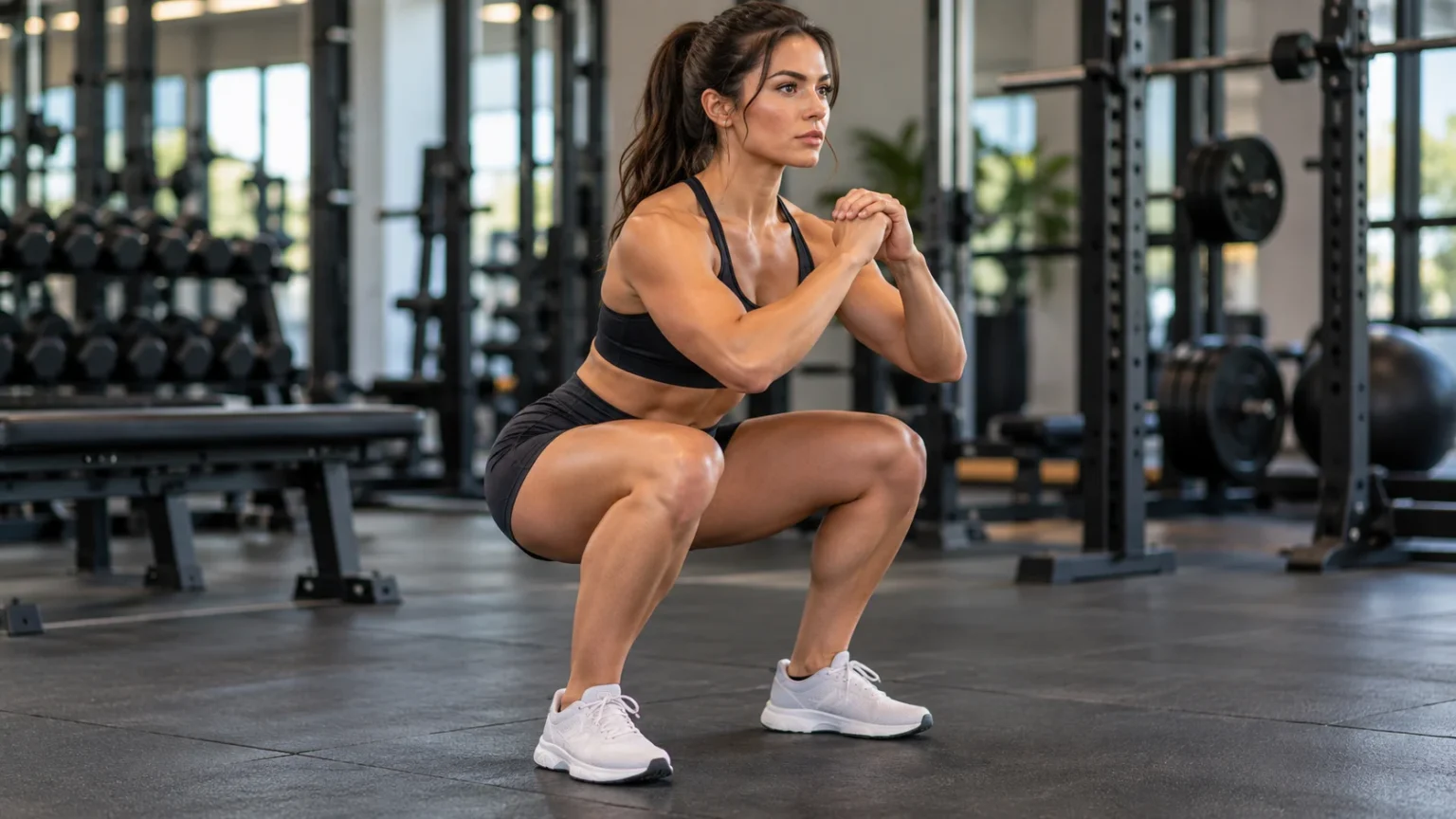
Begin by standing with your feet around shoulder-width apart or slightly wider. Turn your toes slightly outward if that feels natural for your hip structure. Keep your chest comfortable, your head neutral, and your weight distributed across the heel, base of the big toe, and base of the little toe.
Bend your knees and hips together as you lower your body toward the floor. Keep your knees tracking in the same general direction as your toes rather than allowing them to collapse inward. Descend only as far as you can while keeping your feet grounded and your movement controlled.
Push through your feet and extend your knees and hips to return to standing. Avoid aggressively locking the knees or leaning backward at the top. Repeat the movement slowly until you can maintain the same technique throughout the entire set.
How Deep Should You Squat?
There is no single squat depth that works perfectly for everyone. Your ideal depth depends on hip structure, ankle mobility, training experience, comfort, and individual goals. Some people can comfortably squat below parallel, while others may perform better with a slightly shallower range.
A useful guideline is to squat as deeply as you can while maintaining control and keeping your heels grounded. If your lower back rounds significantly, your knees become painful, or your heels lift, reducing the depth may help. You can gradually work on mobility and strength before attempting a deeper range.
Deeper squats are not automatically better if technique breaks down. A controlled squat through a comfortable range can still provide meaningful strength benefits. Over time, improved mobility and coordination may allow you to increase depth without forcing the movement.
Common Squat Mistakes to Avoid
One common mistake is allowing the knees to collapse inward during the descent or ascent. This may happen because of fatigue, poor control, or a load that is too heavy. Focus on keeping your knees aligned with your feet throughout the movement without aggressively forcing them outward.
Another mistake is letting the heels rise off the floor. This can shift your balance forward and make the squat less stable. Limited ankle mobility, narrow positioning, or trying to squat too deeply may contribute, so adjusting stance or reducing depth can often improve technique.
Rounding or excessively arching the back is another issue to watch for. Your spine does not need to remain completely rigid, but large changes in position under load may reduce control. Maintaining a stable torso and using an appropriate weight can help you squat more consistently.
Benefits of Doing Squats Regularly
Squats strengthen several lower-body muscles at once, making them highly efficient for building general strength. They can improve your ability to stand, sit, climb stairs, lift objects, and perform other everyday movements. These practical benefits make squats useful for many different fitness levels.
They can also improve coordination and mobility because multiple joints must move together. The hips, knees, ankles, and trunk all contribute during each repetition. Practicing the movement consistently can help you develop better control through common lower-body positions.
Squats are also highly adaptable. Beginners can start with chair-supported or bodyweight variations, while experienced lifters can use barbells, dumbbells, kettlebells, or machines. This scalability makes the squat useful across many different training goals.
Squat Variations and What They Target
Goblet squats involve holding a dumbbell or kettlebell in front of the chest. This position often helps people maintain a more upright torso and can make it easier to learn squat mechanics. The quadriceps, glutes, and core all work throughout the movement.
Sumo squats use a wider stance and typically involve more outward rotation of the hips. This variation still trains the quadriceps and glutes but may create a different sensation through the inner thighs and hip muscles. Your stance should remain comfortable rather than being forced excessively wide.
Split squats and Bulgarian split squats increase the demand on each leg independently. They challenge the glutes, quadriceps, hip stabilizers, and balance more than a standard bilateral squat. Single-leg variations can be useful for building coordination and addressing side-to-side strength differences.
Squats vs Lunges: What Is the Difference?
Squats generally involve both legs working together while your body moves vertically through hip and knee flexion. This allows you to train both sides simultaneously and often handle greater resistance. Squats are commonly used for general leg strength and muscle development.
Lunges place more emphasis on one leg at a time. They require additional balance and can challenge hip stability, coordination, and side-to-side control. Walking lunges, reverse lunges, and stationary lunges each provide slightly different movement demands.
Neither movement needs to replace the other. Squats and lunges can complement one another in a lower-body workout because they challenge similar muscles in different ways. Combining them can provide both bilateral strength and single-leg control.
How Many Squats Should You Do?
Beginners can often start with two or three sets of around 8–12 bodyweight squats. This provides enough practice to learn the movement without creating unnecessary fatigue. If your form begins to break down, stop the set rather than forcing additional repetitions.
As your strength improves, you can increase repetitions, sets, or resistance. For muscle-building goals, moderate repetition ranges such as 8–15 repetitions are commonly used. The final repetitions should feel challenging without causing major changes in technique.
For strength-focused training, heavier resistance with fewer repetitions may be used once technique is consistent. The exact training plan depends on your experience and goals. Progress gradually instead of increasing both weight and volume at the same time.
How Often Should You Do Squats?
Many people can train squats two or three times per week depending on intensity and overall workout volume. Beginners may need more recovery between challenging sessions, especially when they are new to lower-body strength training. Muscle soreness is common initially but should gradually become more manageable.
If you perform heavy squats, lunges, deadlifts, and other demanding leg exercises, your total lower-body workload matters more than squat frequency alone. Too much volume can reduce recovery and make technique worse. Balance challenging sessions with enough rest.
Lighter bodyweight squats may be performed more frequently because they create less fatigue. However, daily training is not automatically necessary for progress. Consistency, gradual progression, proper technique, and adequate recovery are more important than simply performing squats as often as possible.
Can Squats Cause Back Pain?
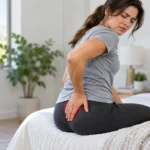
Squats should not automatically cause back pain when performed with appropriate technique and resistance. However, using too much weight, losing trunk control, or forcing a range of motion beyond your current ability can place additional stress on the lower back. Existing back conditions may also influence how comfortable squatting feels.
If you experience lower-back discomfort, review your stance, depth, core control, and load. Reducing the weight and using a goblet or supported squat may help you practice the movement more comfortably. Persistent or severe pain should be evaluated rather than repeatedly trained through.
Back discomfort can also occur for reasons unrelated to exercise, including prolonged sitting, muscular tension, and hormonal changes. For example, this guide on period back pain explains common causes and relief considerations when lower-back discomfort occurs around menstruation.
Squats for Beginners
Beginners can start with chair squats to learn the basic movement. Stand in front of a sturdy chair, lower yourself under control until you lightly touch the seat, and then stand back up. The chair provides a clear depth target and can make the exercise feel less intimidating.
Once chair squats feel comfortable, progress to unsupported bodyweight squats. Focus on stable feet, controlled knee movement, and a comfortable squat depth. There is no need to add weights until you can repeatedly perform the movement with consistent technique.
When you are ready for resistance, a light goblet squat can be a useful next step. Holding the weight in front of your body often encourages an upright position. Increase the load gradually and continue prioritizing movement quality over how much weight you can lift.
How to Make Squats More Effective
Control the lowering phase instead of dropping quickly into the bottom position. Taking two or three seconds to descend can increase muscular tension and improve awareness of your technique. Pause briefly at the bottom if you can maintain a comfortable and stable position.
Use a range of motion that challenges you without forcing poor technique. As your mobility and strength improve, you may gradually increase squat depth. Consistent, controlled repetitions are usually more productive than chasing depth before your body is ready.
Progressive overload is also important when strength or muscle growth is the goal. Gradually add resistance, repetitions, sets, or more challenging variations over time. Change one variable at a time so you can track progress without creating unnecessary fatigue.
When Should You Modify or Avoid Squats?
Modify squats if the movement causes sharp pain in your knees, hips, back, or ankles. Reducing depth, adjusting your stance, removing resistance, or using a chair for support may make the exercise more comfortable. Pain should not be treated as something you must push through.
People with recent lower-body surgery, major injuries, or significant joint problems may need professional guidance before performing loaded squats. A physical therapist or qualified healthcare professional can recommend suitable modifications based on your condition and mobility.
If you feel only normal muscular effort, mild fatigue, or stretching around the hips and ankles, that may simply reflect the demands of the movement. However, sudden pain, joint instability, numbness, or worsening symptoms should be taken seriously and assessed when necessary.
Conclusion
Squats mainly work the quadriceps and glutes while also involving the hamstrings, calves, core, and smaller stabilizing muscles. Because several muscle groups and joints work together, the squat is an efficient exercise for developing lower-body strength, mobility, and coordination.
Proper squat technique involves stable feet, controlled knee movement, comfortable hip and ankle motion, and a supported torso. Squat only as deeply as you can maintain good control, and increase resistance gradually rather than prioritizing heavy weight before learning the movement.
Squats can fit into beginner workouts, muscle-building programs, athletic training, and general fitness routines. Choose a variation that matches your current ability, allow adequate recovery, and modify the exercise if you experience pain or difficulty maintaining proper technique.
FAQs
What muscles do squats work the most?
Squats mainly work the quadriceps and gluteus maximus. The hamstrings, calves, hip stabilizers, and core also contribute by supporting the movement and keeping your body stable.
Do squats make your glutes stronger?
Yes, squats can strengthen the glutes because the gluteus maximus helps extend the hips as you stand. Squat depth, stance, resistance, and overall training volume can influence how strongly the glutes are challenged.
Are squats good for beginners?
Yes. Beginners can start with chair squats or bodyweight squats to learn proper technique. Resistance should be added gradually once the movement feels stable, controlled, and comfortable.
How many squats should I do per day?
There is no required daily number. Beginners may start with two or three sets of 8–12 repetitions during workouts, then adjust volume based on strength, goals, and recovery.
Why do my knees hurt when I squat?
Knee discomfort may relate to technique, excessive load, mobility limitations, previous injury, or another underlying issue. Reduce the depth or resistance and seek professional assessment if the pain is persistent or severe.