


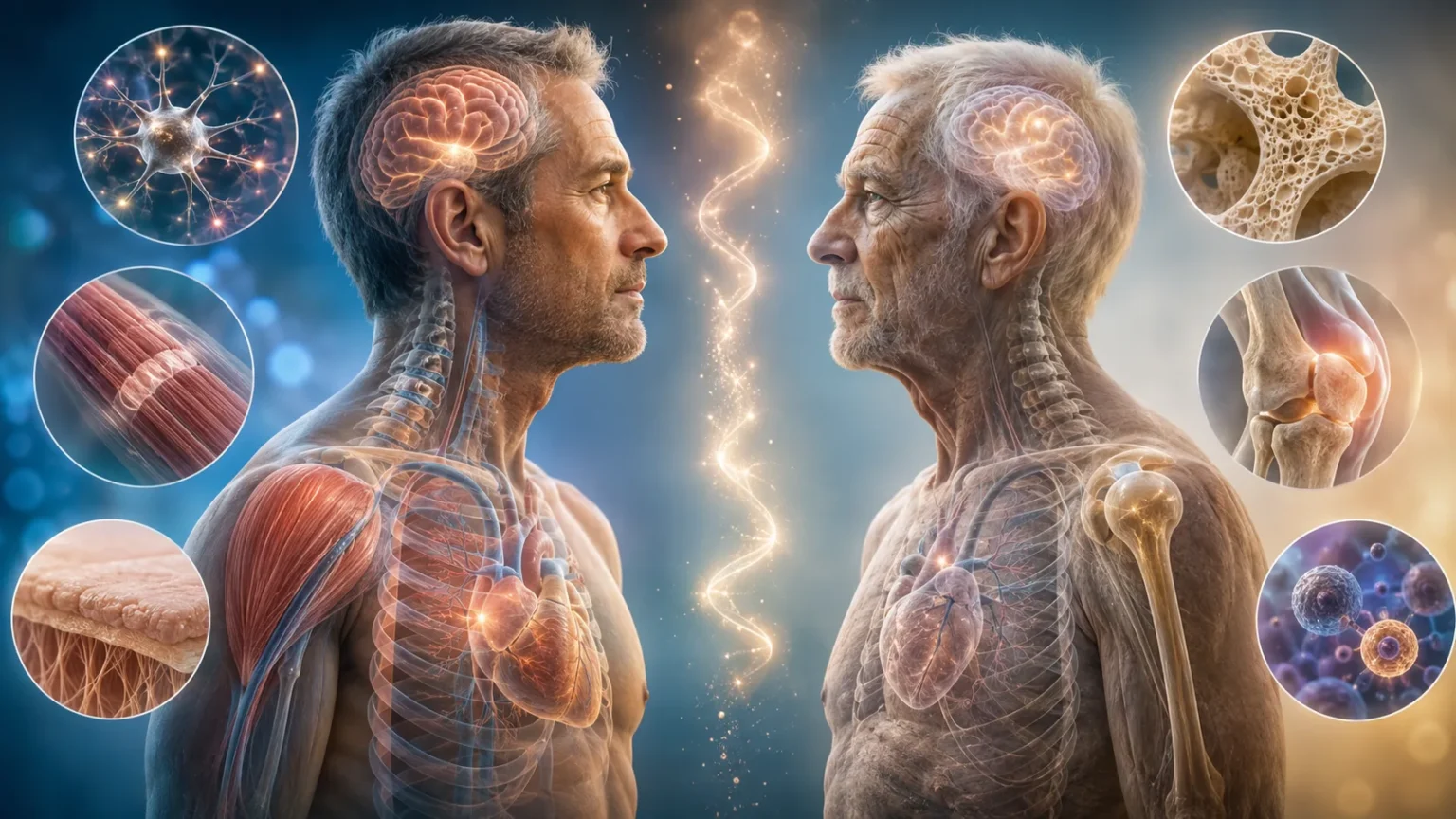
What Happens Inside the Body as We Age?
Aging can be easy to notice from the outside. Hair may gradually turn gray, skin develops lines, and movement can feel different from earlier decades. Yet some of the most important changes happen where we cannot see them—in our cells, muscles, blood vessels, bones, immune system, brain, hormones, and the countless biological processes that keep the body functioning every day.
So, what happens inside the body as we age? There is no single biological switch that suddenly turns on. Aging develops gradually as cells accumulate damage, repair systems become less efficient, body composition changes, tissues lose some resilience, and organs adapt differently to decades of use. Genetics, environment, health conditions, movement, nutrition, sleep, stress, and other influences all help shape the process.
Importantly, normal aging does not mean that illness, severe weakness, dementia, or loss of independence is inevitable. Two people of the same chronological age can have very different levels of strength, memory, cardiovascular fitness, mobility, and overall health. Even different organs inside one person may show signs of biological aging at different rates.
Understanding how the body changes with age can make growing older feel less mysterious. It can also help people distinguish gradual, expected changes from symptoms worth discussing with a healthcare professional. From cellular aging and muscle loss to immune function and brain health, here is what scientists understand about the remarkable process happening inside us over time.
Aging Begins at the Cellular Level
Every organ is made from cells, so some of the deepest changes associated with aging begin at the cellular level. Throughout life, cells are exposed to normal metabolic activity, environmental influences, inflammation, and occasional damage to DNA and other cellular structures. The body has sophisticated repair systems, but those systems do not work with exactly the same efficiency forever.
Mitochondria—the structures that help cells produce usable energy—also change with age. When mitochondrial function becomes less efficient, cells may handle energy production and metabolic stress differently. These changes do not happen equally in every tissue, which helps explain why muscles, the brain, heart, skin, and other organs can follow different patterns of aging.
Some aging cells enter a state known as cellular senescence. These cells stop dividing but may remain within tissues and release signaling molecules that influence neighboring cells and inflammation. Cellular senescence has useful roles earlier in life, including wound healing, but the accumulation of senescent cells is being studied as one contributor to age-related tissue changes.
Scientists now describe aging through interconnected biological processes rather than one cause. These include changes involving DNA stability, epigenetic regulation, protein quality control, nutrient sensing, mitochondria, cellular senescence, stem cells, inflammation, communication between cells, and the gut microbiome. Aging is therefore better understood as a network of interacting changes.
What Happens to the Brain as We Age?
The brain changes across adulthood, but normal brain aging is not the same thing as dementia. Certain cognitive tasks may take longer with age, especially rapidly recalling a name, switching between several tasks, or processing unfamiliar information under time pressure. At the same time, vocabulary, accumulated knowledge, judgment, and skills developed through experience can remain strong.
Physical changes also occur inside the aging brain. Some regions may gradually change in volume, communication between neurons can become less efficient, and blood flow or chemical signaling may shift. Different types of brain cells appear to age differently, meaning the effects are not uniform across every part of the brain or every individual.
The brain also retains an important capacity known as neuroplasticity, allowing neural networks to adapt in response to learning, experience, and activity. Staying mentally engaged, maintaining social connections, managing cardiovascular risk factors, being physically active, getting sufficient sleep, and addressing hearing or vision problems can all support overall brain health as people grow older.
Forgetfulness that occasionally makes it harder to remember a name is different from cognitive problems that consistently disrupt everyday independence. Getting lost in familiar surroundings, repeatedly forgetting important recent events, being unable to manage familiar tasks, or experiencing major personality or reasoning changes deserves medical evaluation rather than being automatically dismissed as normal aging.
How the Heart and Blood Vessels Change With Age
The cardiovascular system works continuously throughout life, and gradual changes can develop in both the heart and blood vessels. Arteries can become stiffer with age, making it harder for them to expand and contract as easily as they once did. These changes can contribute to increases in blood pressure and place additional demands on the heart.
The heart itself can adapt over time. Its walls may become somewhat thicker, and its ability to respond rapidly to intense physical demands may change. Maximum heart rate and exercise capacity generally decline with age, which is one reason strenuous activity can feel different in later adulthood even when someone remains physically active.
These changes do not mean cardiovascular disease is an unavoidable part of aging. Blood pressure, cholesterol, smoking, diabetes, physical activity, body composition, sleep, diet, genetics, and other factors strongly influence cardiovascular health. Managing these modifiable risks can make a meaningful difference in how well the cardiovascular system functions over time.
Regular movement remains especially important because the heart and blood vessels respond to how they are used. Aerobic activity can support cardiovascular fitness, while strength and balance activities help preserve overall function. New chest pressure, unexplained shortness of breath, fainting, or sudden changes in exercise tolerance should not simply be attributed to getting older.
What Happens to Muscles as We Get Older?
Muscle mass and strength tend to decline gradually as adulthood progresses, a process that can eventually contribute to sarcopenia, the age-related loss of muscle mass, strength, and physical function. The process often begins subtly, which means someone may lose physical capacity before noticing an obvious change in appearance.
Several factors contribute. Muscle fibers change, activity levels may decline, nerve-to-muscle communication can become less efficient, hormonal environments shift, and muscles may respond differently to dietary protein and exercise. Illness, long periods of inactivity, inadequate nutrition, and certain medications can accelerate losses beyond what would be expected from aging alone.
Strength matters for much more than lifting heavy objects. Strong muscles help people rise from chairs, climb stairs, carry groceries, maintain balance, protect joints, stabilize bones, and recover after illness. Losing too much strength can gradually reduce independence, which makes muscle preservation one of the most important aspects of healthy aging.
Fortunately, older muscles can still respond to training. Progressive resistance exercise can improve strength and function even later in life, while adequate nutrition supports the body’s ability to maintain tissue. Aerobic exercise, strength training, and balance activities together offer a more complete approach than relying on walking alone.
What Happens to Bones and Joints With Age?
Bones may appear solid and permanent, but they are living tissues that continuously undergo breakdown and rebuilding. As people age, the balance between these processes can shift, causing bone mineral density to decline. If enough bone is lost, the risk of osteoporosis and fractures can increase.
Hormonal changes can influence this process significantly. Bone loss often accelerates around and after menopause because declining estrogen affects the normal balance of bone remodeling. Men experience age-related bone changes too, although the pattern and timing can differ. Genetics, nutrition, medications, smoking, alcohol, and physical activity also influence bone health.
Joints change in a different way. Cartilage can become thinner, connective tissues may become stiffer, and flexibility can decline. These changes can affect movement, but persistent joint pain is not automatically something everyone must accept as a normal consequence of getting older. Conditions such as osteoarthritis deserve proper assessment and management.
Weight-bearing activities and resistance exercise can provide useful mechanical stimulation to bones while helping maintain the muscles that protect mobility. Adequate calcium, vitamin D, protein, and overall nutrition are also relevant. Protecting bone health matters because maintaining strength and balance can reduce falls as well as the likelihood of serious injury when falls occur.
How Metabolism and Body Composition Change
Many adults feel that their metabolism has “slowed down” with age, but the underlying story is more complicated than one metabolic switch. Body composition changes play an important role. People commonly lose some lean muscle while gaining or redistributing body fat, particularly when physical activity decreases.
Muscle tissue requires energy and plays an important role in glucose metabolism. As muscle mass decreases and body fat increases, the body may handle calories and blood sugar differently. Insulin sensitivity can also decline in some people, increasing the importance of physical activity, nutrition, and maintaining a healthy body composition.
Where fat is stored can change as well. Older adults may accumulate a greater proportion of visceral fat around abdominal organs even when overall body weight changes relatively little. Visceral fat is metabolically active and has stronger associations with cardiometabolic health risks than some fat stored beneath the skin.
These changes do not mean weight gain is guaranteed with age. Energy intake, physical activity, muscle preservation, medications, sleep, health conditions, and genetics all influence body weight. Focusing on strength, function, waist changes, nutritional quality, and metabolic health can sometimes provide more useful information than focusing on the number on a scale alone.
What Happens to the Immune System as We Age?
The immune system also changes over time through a process often called immunosenescence. Some immune responses become less efficient, meaning older adults can have greater difficulty responding to certain infections or developing the same immune response they had when younger.
At the same time, aging can be associated with persistent low-grade inflammation sometimes described as inflammaging. Unlike the short-term inflammation that helps the body respond to an injury or infection, chronic low-level inflammatory signaling may remain active and interact with multiple age-related biological processes.
The combination creates an interesting paradox: parts of the immune response may become less effective while inflammatory activity can become more persistent. This helps researchers understand why aging affects infection risk, wound healing, vaccine responses, tissue function, and several chronic conditions in complex ways.
Supporting immune health does not require mysterious “immune-boosting” products. Good nutrition, appropriate physical activity, sufficient sleep, vaccination when recommended, not smoking, managing chronic health conditions, and following medical guidance provide a more evidence-based foundation. Persistent infections, unexplained fever, or unusual symptoms should be medically assessed.
How Skin, Hair and Connective Tissues Change
Skin becomes one of the most visible signs of aging because its structure changes gradually over decades. Production and organization of collagen and elastin change, contributing to thinner, less elastic skin. The skin may also hold less moisture, making dryness and irritation more common in later life.
The layer of fat beneath the skin can become thinner in certain areas, while blood vessels and sweat glands may function differently. As a result, skin can become more fragile and may bruise or tear more easily. Healing can also take longer because cellular repair and circulation do not necessarily work with their younger efficiency.
Hair changes as pigment-producing cells become less active, causing gray or white hair. Hair follicles can also produce thinner strands, and hair density may gradually decrease. Hormones, genetics, nutrition, medications, stress, and medical conditions all influence how quickly these changes appear.
Sun exposure has an especially strong effect on visible skin aging and can add to changes caused by biological aging itself. Protecting skin from excessive ultraviolet exposure, avoiding tobacco smoke, maintaining adequate nutrition, moisturizing dry skin, and checking changing skin lesions are practical parts of healthy skin care throughout adulthood.
What Happens to Vision, Hearing, Taste and Smell?
The sensory systems also change with age. The eye’s lens becomes less flexible, which is why many adults eventually find close-up reading more difficult. Pupils may respond differently to changes in light, making nighttime environments or rapid transitions between bright and dark areas more challenging.
Hearing can gradually decline, particularly for higher-frequency sounds, and understanding conversation becomes harder when background noise is present. Hearing loss is easy to underestimate because it often develops gradually, but untreated hearing difficulties can affect communication, relationships, safety, and social participation.
Taste and smell may also become less sensitive in some people. Medications, dental health, smoking, infections, neurological conditions, and other factors can contribute in addition to aging. Reduced smell or taste can influence appetite and may encourage people to add excessive salt or sugar in an attempt to make food more flavorful.
Sensory changes deserve attention rather than resignation. Corrective lenses, cataract treatment, hearing devices, improved lighting, dental care, and medical assessment can address many problems. Sudden vision loss, sudden hearing loss, or an abrupt change in smell or neurological function is not a normal feature of gradual aging.
How the Digestive System Changes With Age
The digestive system generally remains capable of functioning effectively throughout life, but changes can occur in appetite, intestinal movement, medication use, oral health, and the way the body processes nutrients. Some older adults experience constipation more frequently, particularly when activity, fluid intake, dietary fiber, or medications change.
The gut microbiome—the enormous community of microorganisms living in the digestive tract—also changes over time. Researchers are studying how these shifts may interact with inflammation, immune function, metabolism, medications, diet, and overall health. The relationship is complex, and there is no single “young” microbiome people can simply recreate.
Appetite can decrease for several reasons. Changes in taste and smell, medications, dental problems, social isolation, illness, digestive symptoms, or reduced energy needs can all influence how much someone eats. Inadequate intake becomes especially important when it contributes to unintended weight loss or insufficient protein and micronutrients.
A nutrient-dense diet becomes valuable because the body still requires protein, vitamins, minerals, fiber, and other nutrients even when overall calorie requirements change. Persistent digestive symptoms, difficulty swallowing, blood in stool, unexplained weight loss, or a major change in bowel habits should be evaluated rather than assumed to be normal aging.
How the Kidneys and Bladder Change Over Time
Kidneys filter the blood, regulate fluid and electrolytes, and help remove waste products from the body. Kidney function can gradually decline with age, although the degree varies widely between individuals. Diabetes, high blood pressure, cardiovascular disease, medications, and kidney disorders can produce changes beyond ordinary aging.
Reduced kidney reserve also matters when medications are prescribed because some drugs leave the body through the kidneys. Healthcare professionals may consider kidney function when choosing dosages, particularly in older adults taking several medications. This is one reason periodic medication reviews can become increasingly useful with age.
The bladder and urinary system can change too. Bladder capacity or muscle function may differ, and some people experience increased urgency, nighttime urination, leakage, or difficulty emptying the bladder. Changes in pelvic-floor muscles, the prostate, hormones, medications, and health conditions can all contribute.
Urinary problems should not automatically be accepted as an unavoidable part of getting older. New incontinence, blood in the urine, painful urination, inability to empty the bladder, or dramatic changes in urinary frequency can have treatable causes and are worth discussing with a healthcare professional.
How Hormones Change as the Body Ages
Hormones act as chemical messengers, influencing metabolism, reproduction, muscle, bone, sleep, appetite, stress responses, and many other processes. Hormone levels and tissue sensitivity can change gradually with age, but the pattern depends heavily on the hormone and the individual.
Menopause produces one of the clearest hormonal transitions. Production of estrogen and progesterone declines significantly as reproductive cycles end. These changes can influence temperature regulation, sleep, vaginal and urinary tissues, skin, cardiovascular health, and bone remodeling, although symptoms differ substantially from person to person.
Men also experience hormonal changes, but testosterone typically declines more gradually rather than through a direct equivalent of menopause. Low testosterone symptoms can overlap with sleep problems, medications, obesity, chronic illness, depression, or other conditions, so symptoms should not be diagnosed from age alone.
Hormonal aging is therefore more complicated than simply saying that every hormone declines. Some hormone patterns change, some tissues become more or less sensitive, and health conditions can influence laboratory values. People experiencing significant symptoms should seek appropriate evaluation rather than relying on anti-aging supplements or hormone products marketed without strong evidence.
Why Sleep Often Changes as We Get Older
Sleep can change in timing, depth, and continuity across adulthood. Older people may become sleepy earlier in the evening and wake earlier in the morning. Sleep can also become lighter or more fragmented, making awakenings during the night more noticeable.
These changes do not mean older adults stop needing meaningful sleep. Poor sleep can affect mood, attention, memory, metabolism, cardiovascular health, immune function, and daytime energy at any age. Pain, medications, nighttime urination, stress, inactivity, sleep apnea, and other health conditions can interfere with sleep beyond normal age-related changes.
Sleep disorders are sometimes overlooked because difficulty sleeping is dismissed as “just aging.” Loud snoring with breathing pauses, excessive daytime sleepiness, persistent insomnia, or unusual nighttime behavior may deserve assessment. Treating an underlying sleep problem can improve quality of life considerably.
Consistent sleep schedules, daytime physical activity, morning light exposure, a comfortable sleep environment, and careful timing of caffeine or alcohol may help support sleep. Medication choices also matter because some common drugs can influence alertness or sleep quality, especially when several medications are used together.
Why Recovery Can Take Longer With Age
You may notice that a hard workout, illness, injury, or sleepless night takes longer to recover from than it once did. Aging tissues often have less physiological reserve, meaning the body can still respond to stress but may need more time to return to its usual level of function.
Muscle repair, immune responses, hormone signaling, circulation, sleep, nutrition, and cellular energy systems all influence recovery. When several of these systems change simultaneously, the difference may become more noticeable after unusually demanding physical activity or significant illness.
This does not mean older adults should avoid physical challenges. In fact, appropriate exercise helps maintain the body’s ability to respond to stress. The key is matching intensity, recovery time, nutrition, and progression to current fitness rather than expecting the body to behave exactly as it did decades earlier.
Sudden or extreme loss of stamina is different from gradual age-related change. If everyday activities unexpectedly become exhausting, weakness progresses rapidly, or recovery after minor activity becomes unusually difficult, medical evaluation can help identify conditions such as anemia, heart disease, infection, medication effects, or other treatable causes.
Can We Slow the Effects of Aging?
No proven method can completely stop biological aging, and products promising to reverse the entire process deserve skepticism. However, a substantial part of healthy aging involves maintaining the function of systems that remain adaptable, including muscles, cardiovascular fitness, balance, brain health, and metabolic health.
Physical activity is one of the most practical tools available. Aerobic exercise supports cardiovascular fitness, resistance training helps preserve muscle and bone, and balance activities can reduce fall risk. People do not need to become athletes; regular activity matched to their health and abilities can provide meaningful benefits.
Nutrition matters too. A varied eating pattern built around nutrient-dense foods can provide protein, fiber, healthy fats, vitamins, and minerals needed for tissue maintenance. Avoiding tobacco, limiting harmful alcohol use, maintaining social connections, sleeping adequately, and managing conditions such as high blood pressure or diabetes also support long-term health.
Preventive healthcare becomes another part of the picture. Vaccinations, medication reviews, blood pressure management, vision and hearing care, cancer screening when appropriate, dental care, and discussions about changing symptoms can identify problems before they significantly affect independence or quality of life.
Normal Aging vs Signs You Should Not Ignore
One of the dangers of talking about aging is making serious symptoms sound inevitable. Moving a little more slowly, needing reading glasses, developing wrinkles, or taking longer to recall an occasional word can occur gradually with age. Severe disability or sudden decline should not automatically be put in the same category.
Changes that are sudden, progressive, or disruptive deserve more attention. New confusion, sudden weakness, chest discomfort, unexplained shortness of breath, repeated falls, significant unintentional weight loss, blood in urine or stool, persistent pain, or rapid deterioration in everyday abilities can indicate health problems rather than ordinary aging.
The same principle applies to mental health. Depression, severe anxiety, prolonged social withdrawal, or major loss of interest in life should not be dismissed because someone is older. Emotional health remains important throughout the lifespan, and treatable mental health conditions can occur at any age.
A useful question is whether the change is gradual, expected, and manageable or new, severe, and interfering with daily life. When you are uncertain, a healthcare professional can evaluate symptoms in context rather than assuming that chronological age explains everything happening in the body.
The Science of Aging Is Still Evolving
Researchers increasingly distinguish between chronological age and biological age. Chronological age simply measures how many years someone has lived, while biological aging attempts to describe how tissues and physiological systems are changing. Two people born on the same day can therefore have very different health and functional profiles.
Scientists are studying biomarkers in blood, DNA-related patterns, proteins, metabolism, immune function, organ health, and physical performance to better understand the pace of biological aging. Researchers have even found evidence suggesting different organs within one individual may show different patterns of age-related change.
The modern “hallmarks of aging” framework highlights interconnected biological processes such as genomic instability, epigenetic alterations, mitochondrial dysfunction, cellular senescence, chronic inflammation, changes in nutrient sensing, impaired cellular cleanup, stem-cell exhaustion, and altered communication between cells.
Research into these mechanisms may eventually lead to better ways of extending healthspan—the years of life spent in relatively good health. For now, however, the most reliable approach remains less dramatic: staying physically active, protecting cardiovascular health, eating well, avoiding tobacco, maintaining relationships, sleeping adequately, and receiving appropriate healthcare.
Final Thoughts: What Really Happens Inside the Body as We Age?
So, what happens inside the body as we age? Aging begins at the cellular level but gradually influences nearly every system. Cells repair themselves differently, muscles can become smaller, bones may lose density, arteries become less flexible, immune responses shift, skin becomes thinner, and sensory or cognitive processing may change.
These processes do not follow the same timeline for everyone. Genetics matter, but so do physical activity, nutrition, smoking, alcohol, sleep, social environment, chronic conditions, medical care, and decades of accumulated experiences. Even within one person, the heart, brain, muscles, kidneys, and other organs may not age at identical rates.
The encouraging part is that aging does not eliminate the body’s ability to adapt. Muscles can become stronger with training, cardiovascular fitness can improve, the brain can continue learning, health conditions can be managed, sensory problems can often be treated, and supportive habits can preserve function well into later life.
Rather than thinking of healthy aging as trying to remain permanently young, it is more useful to focus on maintaining function, resilience, independence, and quality of life. Aging is unavoidable, but the way people experience it can vary enormously—and many of the choices made throughout adulthood can influence that journey.
At what age does the body start aging?
Biological aging is a gradual lifelong process rather than something that begins on one birthday. Different tissues and functions begin measurable age-related changes at different stages of adulthood.
What part of the body ages the fastest?
There is no single body part that always ages fastest in everyone. Research suggests organs can age at different biological rates depending on genetics, lifestyle, environmental exposures, health conditions, and other factors.
Why do muscles get weaker as we age?
Muscle fibers, nerve signaling, activity levels, hormones, and the body’s response to nutrition can change with age. Together these factors may contribute to sarcopenia, the age-related decline in muscle mass, strength, and function.
Does your brain slow down as you age?
Some processing and recall tasks may become slower, but normal aging does not automatically mean dementia or major intellectual decline. Knowledge, vocabulary, judgment, and learned skills can remain strong throughout later adulthood.
Can healthy habits slow age-related decline?
Healthy habits cannot stop aging, but physical activity, nutritious food, adequate sleep, avoiding tobacco, maintaining social connections, and managing medical conditions can support physical and cognitive function as people age.