

What Is the Obturator Internus Muscle?
The obturator internus is a deep muscle located within the pelvis that plays an important role in hip movement and pelvic stability. Although it is much less familiar than muscles such as the glutes or hamstrings, it contributes to everyday movements including walking, standing, turning, and changing direction. It also has close anatomical relationships with several important nerves and pelvic floor structures.
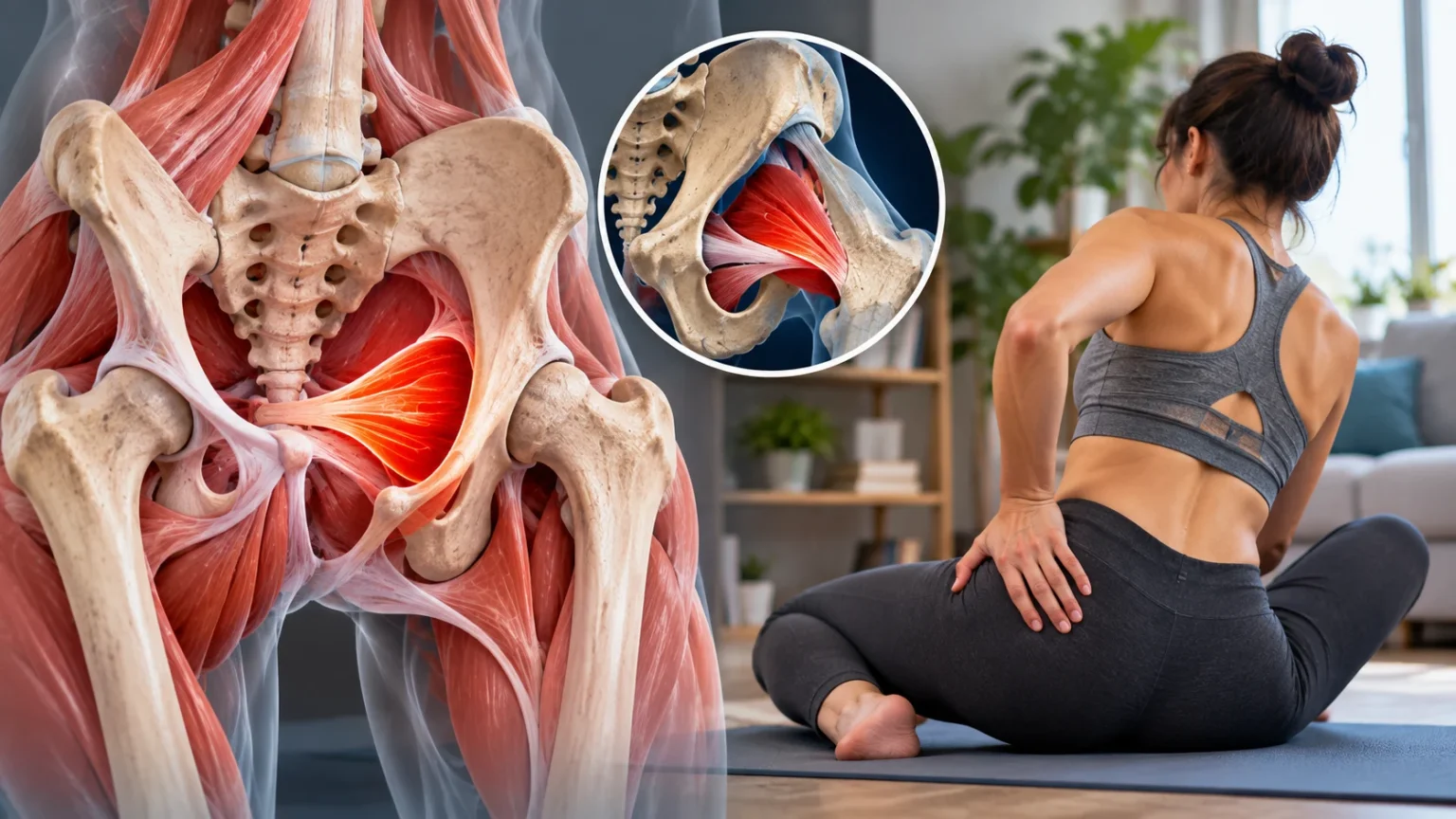
This muscle begins on the inner surface of the pelvis around the obturator foramen and then passes through the lesser sciatic foramen. From there, its tendon travels toward the upper part of the femur and attaches near the greater trochanter. Its unusual curved pathway allows it to influence both hip rotation and the stability of the femoral head within the hip joint.
Because the obturator internus sits deep inside the pelvis, discomfort associated with it may be difficult to identify precisely. Symptoms can sometimes be confused with hip, buttock, pelvic floor, or nerve-related conditions. Understanding its anatomy and normal function helps explain why irritation or excessive tension in this small muscle can sometimes affect several nearby areas.
Where Is the Obturator Internus Located?
The obturator internus lies along the inner wall of the pelvis. Its broad muscular portion originates around the obturator membrane and nearby pelvic bones before narrowing into a tendon. The muscle is positioned deep beneath many more familiar structures, which makes it impossible to see or easily feel from the surface of the body.
After leaving the pelvis, the tendon bends sharply around the lesser sciatic notch. This change in direction is one of the most distinctive anatomical features of the muscle. It then passes between other deep hip rotators before reaching its insertion on the medial surface of the greater trochanter of the femur.
Its position places it close to the pelvic floor, sciatic nerve, pudendal nerve, hip joint, and several smaller stabilizing muscles. Because so many structures share this compact region, symptoms in the deep buttock or pelvic area can sometimes overlap. A detailed clinical examination may therefore be needed when pain or dysfunction persists in this location.
Obturator Internus Origin and Insertion
The origin of the obturator internus is broad compared with its narrow tendon. It arises mainly from the pelvic surface of the obturator membrane and surrounding portions of the pubis and ischium. This large area of attachment provides a stable base from which the muscle can generate rotational force and help control the position of the hip.
The fibers gradually converge toward the lesser sciatic foramen, where they form a tendon. The tendon exits the pelvis and changes direction before traveling laterally toward the femur. This anatomical arrangement creates a pulley-like effect that allows the muscle to influence the hip differently depending on whether the joint is extended or flexed.
The tendon eventually inserts on the medial surface of the greater trochanter, near the attachment points of other deep hip rotators. These neighboring muscles often work together rather than acting independently. Their coordinated activity helps guide the femoral head within the hip socket while supporting controlled rotation during walking, sports, and everyday movements.
What Does the Obturator Internus Muscle Do?
One of the main functions of the obturator internus is external rotation of the hip when the leg is relatively straight. External rotation means turning the thigh outward so the front of the leg moves away from the body’s midline. This action is used during changes of direction, certain athletic movements, and everyday adjustments in standing posture.
When the hip is flexed, the muscle can contribute to abduction, which moves the thigh away from the body’s midline. This changing role demonstrates how muscle function depends on joint position. The obturator internus therefore does more than simply rotate the hip; it participates in complex coordination during movements involving bending, stepping, and weight transfer.
The muscle also helps stabilize the femoral head within the acetabulum, or hip socket. Deep stabilizers provide small but important adjustments that keep the joint centered as larger muscles produce movement. This stabilization is particularly important during single-leg activities such as walking, climbing stairs, running, and balancing on one leg.
How the Obturator Internus Supports Hip Stability
The hip is designed to provide both mobility and stability, which means muscles around the joint must constantly control movement. The obturator internus helps provide this control by creating a stabilizing force around the back of the hip. Its action can assist in keeping the femoral head aligned while the body moves through different positions.
During walking, the hip repeatedly moves between flexion and extension while supporting changing amounts of body weight. Deep rotator muscles such as the obturator internus make small adjustments throughout this cycle. These adjustments help prevent excessive rotation and support smoother movement between the pelvis, femur, and surrounding joints.
Weakness, fatigue, or excessive tension in deep hip stabilizers may alter movement patterns in some people. Larger muscles can sometimes compensate, which may contribute to stiffness or discomfort elsewhere around the hip and pelvis. Rehabilitation therefore often looks at the entire movement system rather than focusing on one isolated muscle without considering surrounding structures.
Relationship Between the Obturator Internus and Pelvic Floor
The obturator internus has an important anatomical relationship with the pelvic floor. A layer of connective tissue covering the muscle provides attachment for part of the pelvic floor musculature, meaning these structures are mechanically linked. Changes in tension or movement within one region can therefore potentially influence the way nearby tissues behave.
Because of this connection, clinicians working with pelvic pain sometimes assess the obturator internus alongside pelvic floor muscles. Excessive muscle tension, trigger points, or poor coordination may contribute to discomfort in certain cases. However, pelvic pain can have many possible causes, so symptoms should not automatically be attributed to the obturator internus without a thorough evaluation.
Treatment strategies may include relaxation, movement retraining, breathing techniques, hip mobility work, or strengthening depending on what an assessment identifies. Strengthening is not always appropriate when a muscle is already overactive or painful. Pelvic health physiotherapists can help determine whether the muscle needs greater strength, improved flexibility, better coordination, or reduced tension.
What Can Cause Obturator Internus Pain?
Obturator internus discomfort may develop after repetitive hip rotation, prolonged sitting, intense exercise, trauma, or activities that place repeated demands on deep hip muscles. Sports involving sudden changes of direction can sometimes increase stress in this area. Symptoms may also develop gradually when movement patterns repeatedly overload the muscle over time.
Muscle tightness or trigger points can sometimes produce deep aching sensations around the buttock, hip, or pelvic region. Because the muscle is located deep inside the pelvis, people may find it difficult to identify exactly where the discomfort originates. Pain can also overlap with symptoms caused by other muscles, joints, nerves, or pelvic structures.
Nerve-related symptoms require particular attention because several nerves pass near the deep pelvic region. Burning, tingling, numbness, or radiating discomfort may indicate nerve involvement rather than a simple muscle problem. Similar sensory symptoms can occur elsewhere in the body, and learning about conditions such as foot neuropathy can help illustrate how nerve-related pain differs from ordinary muscular soreness.
Symptoms Associated With Obturator Internus Dysfunction
Possible symptoms include deep buttock pain, discomfort around the back of the hip, or aching that feels difficult to locate precisely. Some people notice symptoms while sitting for long periods, rotating the hip, exercising, or moving from sitting to standing. Others may experience stiffness rather than sharp pain, particularly after repetitive physical activity.
Pelvic discomfort can sometimes occur when the muscle is excessively tense or involved in pelvic floor dysfunction. Symptoms may be felt around the rectal, vaginal, or perineal region in some cases, although these sensations can have many other causes. Persistent pelvic symptoms should therefore be evaluated appropriately rather than self-diagnosed based on one muscle.
Pain that travels down the leg, numbness, tingling, weakness, or major changes in bladder or bowel function require broader assessment. These symptoms may indicate involvement of nerves or other structures. The location of pain alone cannot reliably identify the obturator internus as the source, which is why clinical testing and medical history are important.
How Obturator Internus Problems Are Evaluated
Evaluation usually begins with a detailed discussion about where symptoms are felt, when they started, and which activities make them better or worse. A clinician may ask about exercise, sitting habits, injuries, pelvic symptoms, hip movement, and previous medical conditions. This information helps distinguish muscular pain from possible joint, nerve, or pelvic floor problems.
Physical examination may include assessment of hip rotation, strength, mobility, balance, and movement patterns. Tenderness in nearby deep hip muscles may also be assessed where appropriate. Pelvic floor examination may sometimes be considered when symptoms suggest pelvic muscle involvement, but this should be performed by a suitably trained healthcare professional with the patient’s informed consent.
Imaging such as MRI or other testing is not always required for muscle-related discomfort. It may be considered when symptoms are severe, persistent, related to trauma, or suggest another condition that needs investigation. Diagnosis should be based on the overall clinical picture rather than one isolated movement or tenderness test.
Exercises for the Obturator Internus Muscle
Exercises for the obturator internus depend on whether the main problem involves weakness, tightness, poor coordination, or irritation. Gentle hip mobility movements may be useful for some people, while others benefit more from progressive strengthening. The goal should be restoring comfortable, controlled movement rather than forcing the hip into extreme stretches or repeatedly provoking painful symptoms.
Strengthening may include controlled hip rotation, side-lying movements, resistance-band exercises, bridges, or balance activities that engage the deep stabilizers alongside the glutes. Proper technique is more important than using heavy resistance. Exercises should progress gradually because small stabilizing muscles often work best through controlled repetition rather than maximum-force movements.
When excessive tension is suspected, relaxation and mobility may need to come before strengthening. Slow breathing, gentle hip movements, supported stretches, and pelvic floor relaxation may be included depending on the individual’s symptoms. If an exercise consistently increases deep pelvic pain, numbness, or radiating symptoms, stop and seek professional advice rather than continuing through discomfort.
Obturator Internus Stretching and Mobility
Stretching the obturator internus directly can be difficult because the muscle is deep and its function changes according to hip position. Certain gentle hip rotation and flexion positions may influence the deep external rotators. However, forcing the hip aggressively into a stretch can irritate surrounding structures and is rarely necessary for improving mobility.
Mobility exercises are usually more effective when movements remain slow, comfortable, and controlled. Gentle hip rotations, supported figure-four positions, and relaxed lower-body movements may help some people reduce stiffness. Breathing naturally during these exercises can also help prevent unnecessary muscle guarding, particularly when tension is related to stress or pelvic floor overactivity.
Stretching should never cause sharp pain, strong pelvic pressure, numbness, or symptoms traveling down the leg. These sensations can suggest irritation of tissues that should not simply be stretched harder. A physiotherapist can identify which movements are restricted and determine whether stretching, strengthening, manual therapy, or another approach is most appropriate.
When Should You Seek Medical Advice?
Mild muscle soreness after activity may improve with rest, gradual movement, and reduced training intensity. Medical advice becomes more important when pain persists, repeatedly returns, or interferes with walking, sitting, sleep, or everyday activities. Ongoing symptoms deserve assessment because many conditions around the hip and pelvis can produce similar discomfort.
Seek evaluation sooner if symptoms include significant weakness, persistent numbness, unexplained swelling, fever, severe pain after an injury, or difficulty bearing weight. Sudden changes in bladder or bowel control, numbness around the saddle region, or rapidly worsening neurological symptoms require urgent medical attention because they may indicate a more serious condition.
Pelvic pain associated with sexual activity, urination, bowel movements, or persistent pelvic floor symptoms should also be discussed with an appropriate clinician. These symptoms can involve several muscles, nerves, organs, or joints rather than only the obturator internus. A complete assessment provides a better basis for safe treatment than trying to identify one muscle through symptoms alone.
Conclusion
The obturator internus muscle is a small but important structure that connects the inner pelvis with the upper femur. It contributes to external hip rotation, hip abduction in certain positions, and stabilization of the femoral head. Its deep location and relationship with the pelvic floor and nearby nerves make it an important part of coordinated hip and pelvic movement.
Problems involving this muscle may produce deep hip, buttock, or pelvic discomfort, but these symptoms are not specific to the obturator internus. Other muscles, joints, nerves, and pelvic structures can create similar sensations. Accurate assessment is therefore important when pain persists, spreads, or occurs with neurological or pelvic floor symptoms.
Healthy function depends on a balance of strength, mobility, relaxation, and coordination. Gentle movement and appropriate exercise can support recovery when muscular dysfunction is involved, but the right approach varies between individuals. Persistent or concerning symptoms should be evaluated by a qualified healthcare professional who can determine the most appropriate treatment plan.
FAQs
What is the main function of the obturator internus muscle?
The obturator internus mainly helps externally rotate the hip and stabilize the femoral head inside the hip socket. When the hip is flexed, it can also assist with moving the thigh outward.
Where do you feel obturator internus pain?
Pain may be felt deep in the buttock, hip, or pelvic region and can sometimes worsen with sitting or hip movement. However, several nearby structures can produce similar symptoms.
Can the obturator internus affect the pelvic floor?
Yes. The obturator internus is closely connected anatomically with pelvic floor structures through surrounding connective tissue. Excessive tension or poor coordination in this region may sometimes contribute to pelvic discomfort.
Can a tight obturator internus irritate nerves?
Tension or dysfunction around the deep pelvis may occur near several important nerves and can sometimes accompany nerve-like symptoms. Persistent burning, numbness, tingling, or radiating pain should be professionally evaluated.
How do you relax the obturator internus muscle?
Gentle hip mobility, relaxed breathing, supported stretches, and reducing aggravating activities may help some people. Persistent pelvic or hip symptoms are better managed with guidance from a physiotherapist or pelvic health specialist.